-8.6 C
New York
Home Blog Page 201

Italy’s Saipem signs preliminary UK deal for CO2 transport, storage

0

Saipem has signed a Letter of Intent, received by the Northern Endurance Partnership (NEP), a joint venture between the operator bp, Equinor, and TotalEnergies, and Net Zero Teesside Power (NZT Power), a joint venture between bp and Equinor, stating that the company has been selected for the award of the NEP and Net Zero Teesside Power (NZT) projects. The two projects are related to the development of CO2 offshore transportation and storage facilities to the East Coast Cluster in the United Kingdom.

The final award to Saipem is subject to the receipt of relevant regulatory clearances and positive Final Investment Decisions (FID) by the projects and UK government, planned for September 2024 or earlier.

Saipem’s scope of work covers the Engineering, Procurement, Construction and Installation of a 28” and approximately 145 Km offshore pipeline with associated landfalls and onshore outlet facilities for the NEP project, and the Engineering, Procurement, Construction and Installation of the water outfall for the Net Zero Teesside Power (NZTP) project.

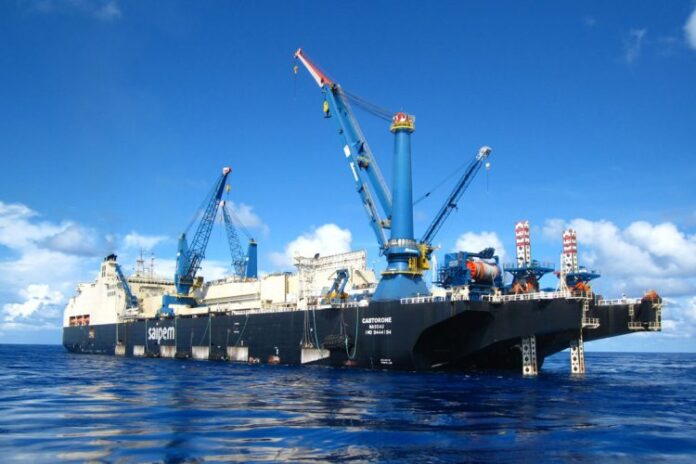
The pipeline offshore operations will be performed by Saipem’s flagship vessel Castorone, and the nearshore operations will be performed by the Saipem’s shallow water pipelay Castoro 10.

When completed, the Projects will serve the East Coast Cluster in Teesside with the transportation and storage of around 4 million tonnes of CO2 per year from 2027.

This letter of intent consolidates Saipem positioning in the low and zero carbon segments, thanks to a unique combination of engineering and technology know-how, competencies and assets along the whole Carbon Capture and Storage value chain.

Alessandro Puliti, Chief Executive Officer, Saipem said:

“We are extremely proud to be the selected contractor for the offshore CO2 pipelines and associated facilities of NEP and NZT contracts. Saipem is fully committed to provide the best competences and its flagship vessel Castorone to support NEP and NZTP partnerships and contribute to the realization of the first zero-carbon industrial hub in the North-East of England and the achievement of the UK’s Net Zero targets”.


Declaration of Southern Ocean offshore wind zone

0

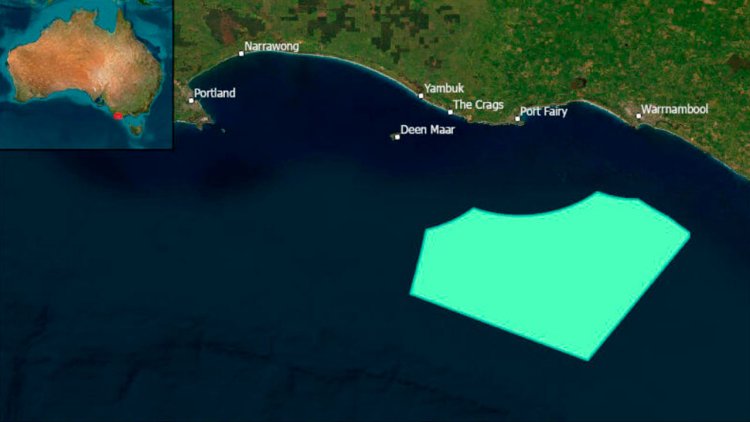
The Albanese Government has officially declared an offshore wind zone in the Southern Ocean off western Victoria, paving the way for energy and job security in a region home to one of Australia’s largest smelters.

This is the third officially declared offshore wind zone in the country and will support future onshore manufacturing in Victoria powered by cleaner, cheaper energy.

The new industry will bring new job opportunities to Portland and surrounds with 1,740 jobs during construction and 870 ongoing operation jobs such as engineers, labourers, technicians, operators, riggers, divers, and administrators.

Western Victoria is well suited to offshore wind, with world-class wind resources, high-quality shipping infrastructure and an aluminium smelter that draws up to 10 percent of Victoria’s electricity.

The zone could generate up to 2.9GW of offshore wind energy – enough to power over 2 million homes, that’s equivalent to two-and-a-half Portland Smelters.

After extensive community consultation with local leaders, industry and community groups, the final area is 1,030 km2 – one fifth of the originally proposed zone. It is located at least 15 – 20km from Victoria’s coast, and the zone no longer includes an area off South Australia. The declared area works around the Bonney Upwelling, Deen Maar Island and shipping routes, taking into account the environmental, cultural heritage and economic significance of these areas. 

Minister for Climate Change and Energy Chris Bowen said the declaration was a major step towards Australia’s clean energy future.

“The Southern Ocean offshore wind zone has the potential to create thousands of new, high-value jobs and help secure cleaner, cheaper more reliable energy for regional Victoria,” said Minister Bowen.

“Australia has abundant renewable energy, the cheapest form of energy, and the government is committed to helping Australians benefit from these natural resources, including offshore wind.”

Victorian Minister for Energy and Resources Lily D’Ambrosio said wind farms off Victoria’s coast would help power the state with affordable, clean energy.

“Victoria is leading the way in offshore wind, with the first wind zones in the country declared off the coast of Gippsland and the southwest coast,” said Minister D’Ambrosio.

“This is another step closer to delivering our target of at least 2 gigawatts of offshore wind energy by 2032 and will also help us get to net zero by 2045.”

Feasibility licence applications for offshore wind projects in the Southern Ocean zone will open from 6 March until 2 July 2024.

During the feasibility licence stage, developers must undertake detailed environmental assessments and engage in further consultation, including how the project will coexist with shipping, tourism and fishing industries.

Construction can only begin after the feasibility stage is completed and developers have gained subsequent environmental and management plan approvals, as well as demonstrating how projects will benefit Australian industry and jobs.

Confirmed gas discovery in the North Sea

0

The gas was first proven in wells 16/7-2 and 16/7-10, drilled in 1982 and 2011, respectively.

15/9-25 is the first well in production licence 1138, which was awarded in Awards in Pre-defined Areas (APA) in 2021.

The overall gas volume is calculated at between one and three million standard cubic metres (Sm3) of recoverable oil equivalent (o.e.).

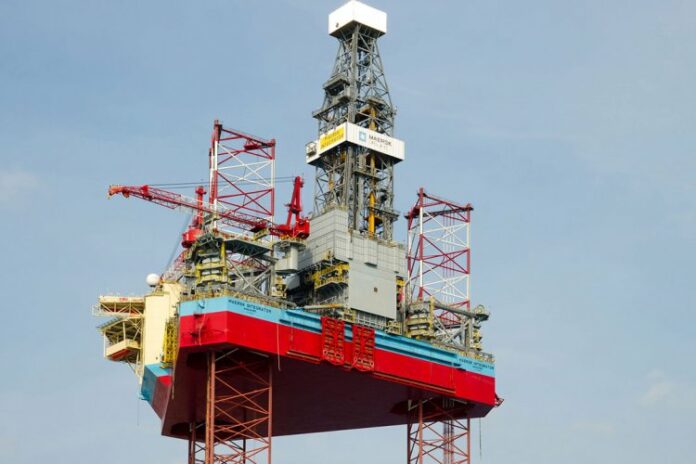
The well was drilled using the Noble Integrator rig northeast of the Sleipner area, about 210 kilometres west of Stavanger.

Licensees Harbour Energy, Sval and Aker BP will consider whether there is a technical and financial basis for tying the discovery into existing infrastructure in the area.

The primary exploration target for the well was to prove petroleum in Middle Jurassic and Triassic reservoir rocks in the Hugin and Skagerrak formations.

The secondary exploration target was to delineate gas proven in wells 16/7-2 and 16/7-10 in reservoir rocks in the Ty Formation from the Palaeocene.

In the primary exploration target, well 15/9-25 encountered a 22-metre thick layer of aquiferous sand with very good reservoir quality in the Hugin Formation in the Vestland Group. In the Ty Formation, the well encountered a 10-metre gas column in a 118-metre thick sandstone reservoir with very good reservoir quality. The gas/water contact was encountered 2330 metres below sea level, which confirms the contact encountered in nearby wells.

The well was not formation-tested, but extensive data acquisition and sampling were carried out.

Well 15/9-25 was drilled to a measured depth of 2872 metres below sea level, and was terminated in the Smith Bank Formation in the Upper Triassic.

Water depth at the site is 84 metres. The well has been permanently plugged and abandoned.

Marine Renewables Canada and the National Hydropower Association strengthen ties

0

The National Hydropower Association (NHA) in the United States and Marine Renewables Canada (MRC) have signed a Memorandum of Understanding (MoU) to enhance collaboration and knowledge-sharing in the development of marine energy resources.

Both organizations are prominent advocates for marine energy in their respective countries and are committed to advancing marine energy solutions. 

By leveraging their respective expertise and resources, NHA and MRC aim to drive innovation, overcome challenges, and accelerate the transition towards a clean energy future by strengthening and growing marine energy potential.

Marine energy presents a significant opportunity to decarbonize energy portfolios in the U.S. and Canada, offering deployment possibilities in offshore power, “Blue Economy” markets, rural and remote communities, and utility-scale grid applications.

According to the U.S. National Renewable Energy Laboratory (NREL), marine energy resources in the United States alone are estimated to be as high as 2,300 terawatt hours per year, equivalent to 56% of the nation’s total electricity generation in 2021. Utilizing just one-tenth of these resources equals 5.6% of total electricity generation and could power over 22 million homes. For comparison, all domestic installed hydropower and solar power capacity each generated approximately 5.6% of total U.S. electricity in 2023.

Canada boasts some of the world’s most promising tidal, wave, river current, and offshore wind energy resources. Over the past decade, the country has made significant strides in developing its marine renewable energy sector, with ongoing tidal energy projects in the Bay of Fundy and efforts to displace diesel in remote communities with marine energy solutions.

Elisa Obermann, Executive Director of Marine Renewables Canada, expressed optimism about the collaboration, stating,

“At this stage in industry development, we need to work together to advance marine energy to a truly commercial clean energy solution. This strengthened collaboration with NHA will support our collective memberships in tackling challenges and bolster U.S. and Canadian efforts to address joint priorities for sector growth.”

“While progress is being made in the marine energy sector, there are still challenges to growing the sector in the United States and internationally,” added Malcolm Woolf, President and CEO of NHA, highlighting the significance of the partnership. “By working more closely with Marine Renewables Canada, we hope to collaborate on key challenges, build partnerships amongst our memberships, and share information and best practices that can help accelerate the sector’s development.”

South Fork Wind completes construction offshore of New York

0

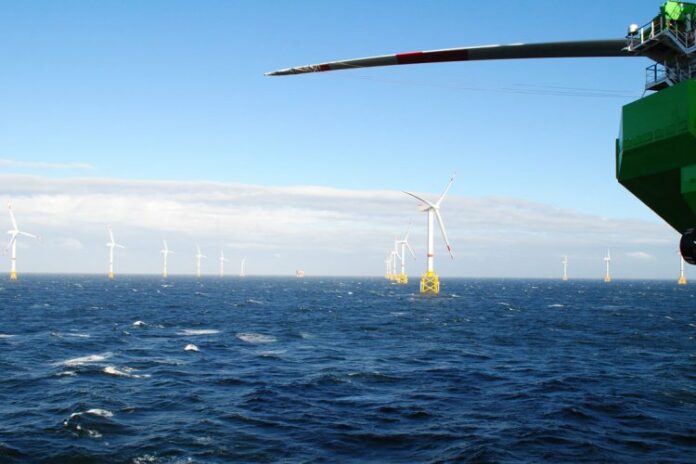
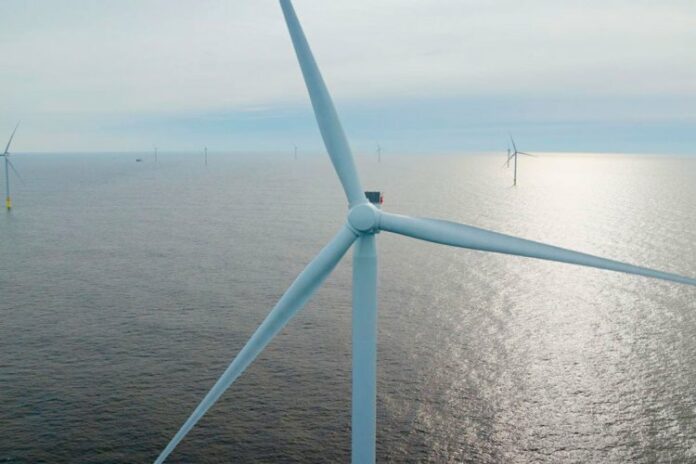
Governor Kathy Hochul today, alongside the United States Secretary of the Interior Deb Haaland and other elected officials, announced the completion of the landmark South Fork Wind project, with all 12 offshore wind turbines constructed and the wind farm successfully delivering power to Long Island and the Rockaways. 

All 12 of South Fork Wind’s turbines are installed and the wind farm is delivering clean power to the local Long Island electric grid, with commissioning in its final stage. At full capacity, the approximately 130-megawatt wind farm will generate enough renewable energy to power approximately 70,000 homes. The renewable energy is generated roughly 35 miles off the coast of Montauk, and will eliminate up to six million tons of carbon emissions over the life of the project, the equivalent of taking 60,000 cars off the road for the next twenty years.

First approved by the Long Island Power Authority (LIPA) Board of Trustees in 2017, South Fork Wind began construction in February 2022, beginning with the onshore export cable system that links the project to the Long Island electric grid. The wind farm reached its “steel in the water” milestone in June 2023 with the installation of the project’s first monopile foundation, and its final turbine was installed in February.

South Fork Wind’s successful completion supports progress toward New York’s Climate Leadership and Community Protection Act requirements to achieve 70 percent renewable energy by 2030 and install nine gigawatts of offshore wind by 2035. This milestone follows Governor Hochul’s recent announcement of two offshore wind project awards, Empire Wind I and Sunrise Wind, for over 1,730 megawatts and $2 billion in near-term economic development investments.

Hundreds of U.S. workers and three Northeast ports supported South Fork Wind’s construction, helping to stand up the foundations of a new domestic supply chain that’s creating local union jobs across the Northeast and beyond.

South Fork Wind’s turbines were staged and assembled by local union workers at State Pier in New London, Connecticut. The project’s advanced foundation components were completed by local union workers at Ørsted and Eversource’s fabrication hub at ProvPort, in Rhode Island. Its crew vessels and crew change helicopter is based out of Quonset Point, Rhode Island. South Fork Wind includes the first U.S.-built offshore wind substation, built by more than 350 U.S. workers across three states, with New York union workers supporting its installation offshore.

Long Island-based contractor Haugland Energy Group LLC (an affiliate of Haugland Group LLC), installed the underground duct bank system for South Fork Wind’s onshore transmission line and led the construction of the project’s onshore interconnection facility. LS Cable installed and jointed the onshore cables with support from Long Island’s Elecnor Hawkeye. The onshore cable scope of work alone created more than 100 union jobs for Long Island skilled trades workers. Roman Stone, also on Long Island, manufactured concrete mattresses to protect the undersea cables, and Ljungstrom, located in western New York, in partnership with Riggs Distler & Company, Inc., provided specialized structural steelwork. 

The first hybrid electric vessel built in South America will use a Corvus battery system

0

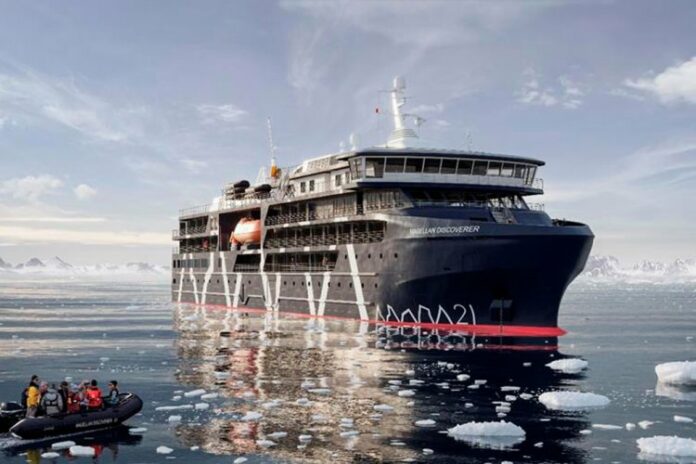
The vessel is a luxury polar expedition cruise ship to be built at the Chilean shipyard, Astilleros y Servicios Navales S.A. ASENAV for cruise operator Antarctica 21. 

Corvus Energy will supply an Orca Energy Storage system to be used for zero-emission operation mode. The battery system will be part of ABB’s full power plant delivery onboard the ship. The 93-meter, 163-passenger vessel will have all the latest technology onboard for sustainable operation like solutions for regenerating energy from the lifts, and heat exchangers that will collect warmed air before it is expelled outside. Along with the cutting-edge hybrid-electric propulsion system, the Magellan Discoverer will be able to operate within the stringent Tier III emission standards.

“We are very proud to have been selected by ASENAV and Antarctica21 to be part of the very first hybrid vessel built in South America and to collaborate with Corvus Energy, ensuring the vessel achieves full performance,” says Dick Bjorkqvist, Global Segment Manager, Cruise, ABB Marine & Ports. “This truly innovative project further strengthens our contribution to the marine industry with leading technologies for improved efficiency.”

As with other regions, the interest in hybrid and electric vessel propulsion in Latin America is increasing. In recent months, Corvus Energy has secured projects for battery systems onboard vessels planned for operations both in Panama and Argentina as well as ongoing sales projects in other Latin American countries.

Ole-Jacob Irgens, Executive Vice President of Corvus Energy states “It means a lot for us to be a supplier for such an important project in the region. Going forward, we do expect a significant uptake of electric and hybrid projects across segments in South America. With our unsurpassed experience from more than 1,000 projects worldwide, we will do our best to serve as an expert resource and reliable partner when ship owners, operators, designers and shipbuilders pursue the electrification of shipping.”

The Magellan Discoverer is planned to join the Antarctica21 fleet for the 2026-27 Antarctic season. The vessel will be operating from King George Island around the Falkland Islands (Islas Malvinas), South Georgia and Antarctica. It will be the second sustainable expedition cruise ship for Antarctica21, joining its sister vessel, the Magellan Explorer, currently in operation.

Wärtsilä signs a Lifecycle Agreement with UK-based P&O Ferries

0

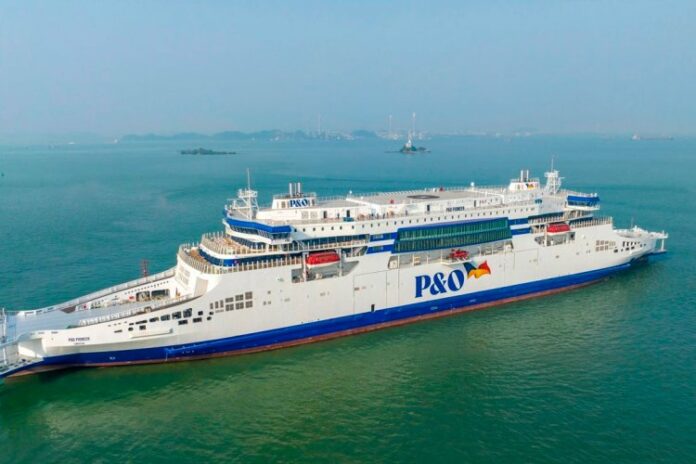
Technology group Wärtsilä has signed a Lifecycle Agreement with UK-based P&O Ferries. The five-year agreement covers two vessels, the M/V Pioneer and the M/V Liberté, and is designed to optimise and ensure minimal impact on their operations, while providing maintenance cost predictability. The order was booked by Wärtsilä in January 2024.

Ferries have a huge role to play in meeting the growing demand for environmentally sustainable transport options. That’s why it is especially crucial for ferry operations to run smoothly and efficiently, in order to avoid unnecessary costs, fuel consumption and emissions.

The scope of the Lifecycle Agreement with P&O Ferries includes parts and maintenance services, as well as maintenance planning, operational support and Wärtsilä’s unique Expert Insight predictive maintenance service. This means issues can be identified before they cause a delay in the schedule. Delays are a big pain point for ferry operators because delays mean they need to make up the time through increasing speed which, consequently, results in higher fuel bills and emissions.

“We are focused on making P&O Ferries the best ferry company in Europe and this includes doing everything possible to reduce our carbon footprint and protect the environment,” says Stephen Pitt, Senior Procurement Manager, P&O Ferries. “The ability to leverage Wärtsilä’s advanced digital solutions is central to this – helping us to improve vessel uptime, save fuel and decrease emissions.”

Both vessels feature hybrid propulsion with battery power and four high-efficiency Wärtsilä 31 main engines. They are expected to produce 40 percent fewer emissions than the ships they replace. By ensuring their optimal performance, the agreement will further enhance the ships’ environmental sustainability.

“Wärtsilä shares P&O Ferries’ commitment to decarbonising shipping operations. We are, therefore, extremely pleased to support these two environmentally friendly ferries by optimising their operational performance. The Lifecycle Agreement represents a partnership for highest operational efficiency, and the experts supported by digitals tools to ensure minimal interruption, as well as reliable and sustainable operations,” comments Lee Martindale, General Manager, Sales for UK & Ireland, Wärtsilä.

The M/V Pioneer commenced commercial operations in June 2023, while the M/V Liberté is scheduled to enter service in early 2024. The 230-metre long ships are the world’s largest double-ended ferries, and sail between Dover, England and Calais, France.

DMC to supply rudder systems for the world’s largest Pure Car and Truck Carriers

0

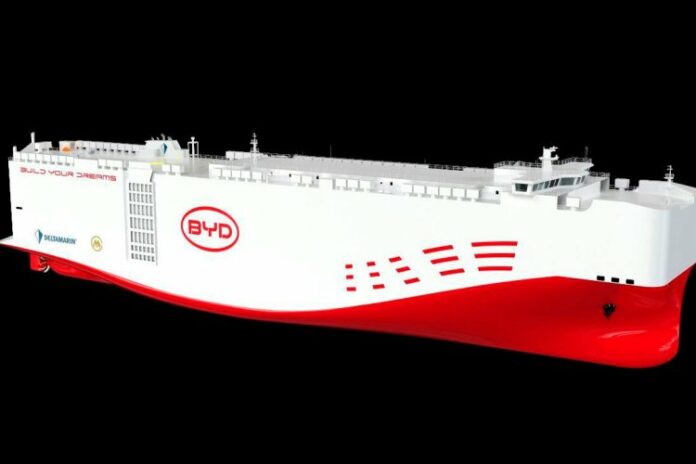
The vessels are being built at China Merchants Jinling Shipyard (Jiangsu) Co., Ltd and China Merchants Heavy Industry (Jiangsu) Co., Ltd for their client BYD Auto, China’s largest manufacturer of electric and hybrid vehicles. When launched, the PCTCs will be the largest of their class in the world.

For each PCTC, Damen Marine Components (DMC) will be supplying an Atlantic Rudder with Asymmetric Rudder Technology (ART™) and a Silent Bulb. With no moving parts these spade rudders are highly dependable and with a slim profile offer minimal resistance. Their excellent course-keeping capabilities make them a popular choice for long-distance, ocean-going vessels. Each rudder is custom-built to take account of the hull shape and the propeller angles of the vessel on which it will be installed. Optimised in this way, the asymmetric leading edge (ART™) smooths the water flow over the rudder to maximum effect, reducing resistance and cavitation, and fuel consumption.

The customer has also opted to have a DMC Silent Bulb mounted on each rudder. This energy saving device minimises the likelihood of cavitation around the rudder by mitigating the inevitable flow losses caused by the propeller. This dual approach not only prolongs the rudder’s lifespan but also amplifies the maximum propeller thrust, thanks to the significantly enhanced propeller efficiency.

“We selected Damen Marine Components for the rudder systems as they have a long track record for developing and building top quality, low maintenance steering equipment,” says Mr. Fei Li, purchasing director of China Merchants Jinling Shipyard. “As a leading manufacturer of low-emissions vehicles and one that exports all over the world, the reliability of its PCTCs is vital to BYD Autos’ operations.”

“We are very pleased that China Merchants Jinling Shipyard has come to us for this mission-critical equipment,” says Bogdan Mocanu, Area Sales Manager at DMC. “We value their endorsement of our products and are confident that our rudders will give many years of economical and trouble-free operations.”

The first vessel is scheduled for delivery in 2025.

ABB and Kuenz land automatic stacking cranes contract

0

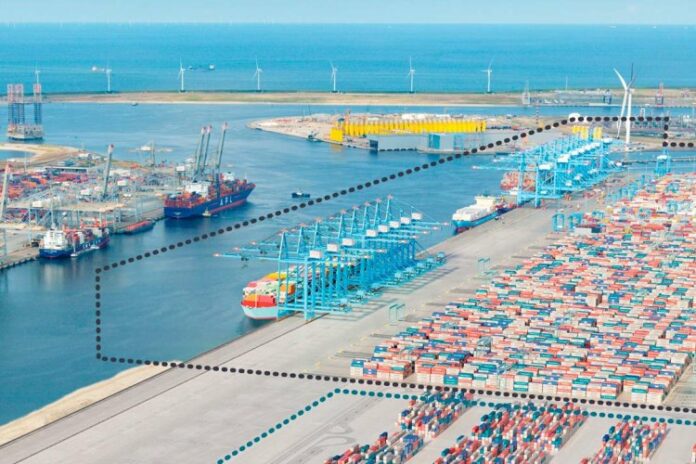
ABB and crane builder Kuenz have secured the largest single order of Automatic Stacking Cranes (ASC) ever made by a European terminal, as part of the groundbreaking ‘phase 2’ expansion of APM Terminals Maasvlakte II (APMT MVII) facility in Rotterdam, the Netherlands. 

The companies will deliver 62 ASC and one Intermodal Yard Crane equipped with the latest electrical and automation technology enabling the terminal to double container capacity at APMT MVII. The financial details of the order were not disclosed.

For the expansion, APMT MVII is building on the achievements of the existing facility which deploys the highest level of yard crane automation, with fully automated stacks, automated guided vehicle (AGV) transfer zone as well as fully automatic handling of external trucks.

“This is an important step in the expansion for APMT MVII. ABB and Kuenz once again proved to be the best solutions for the handling of our containers,” said Hans Jongejan, Project Director MVII-Expansion. “The combination between the reliable automatic handling provided by ABB and Kuenz’s aerodynamic cranes makes this a sustainable choice. This allows us to not only become the most modern gateway to Europe but also the most efficient and sustainable. We look forward to another successful cooperation.”

The high level of automation with the separation of personnel and handling operations delivers safety as well as efficiency gains. Experience from the current facility also underlines how automation enables smoother and ‘machine-friendly’ operations with less risk of damage to equipment, demonstrated in record-low maintenance hours for the terminal.

“Working with ABB as our systems partner for the expansion of APMT MVII continues a success story that started more than 10 years ago in the same location,” said David Moosbrugger, Managing Director, Kuenz. “We are both delighted and proud that APM Terminals has chosen to work with our two companies once more as their partners in the MVII expansion project.”

The scope of delivery from ABB includes control and information systems, automation sensors and software, and remote control capability to optimize the crane efficiency for remote crane management. Continuous development and solid revision management make it possible for APMT MVII to run both the existing facility and the expansion as a unified efficient facility at a high automation and performance level.

“We are proud of the trust APMT MVII has, once again, placed in our crane automation and control systems, and we are excited to contribute to shaping the future of one of the leading container terminal operators in the world,” said Clara Holmgren, Business Line Manager Ports, ABB Marine & Ports. “The precision, reliability and 24/7 availability continue to make a compelling case for our automation solutions, especially where high productivity and performance are essential.”

Ranged along 1,000 meters of new quay, the APMT MVII expansion will significantly increase the capacity of APMT MVII during 2027, strengthening APMT MVII’s position among Europe’s leading container terminals. Yard operations will be highly sustainable as well as automated, with each all-electric crane optimized for 1 over 6-high stacking to make most efficient use of land.

World’s largest tidal barrage energy project proposed in the UK

0

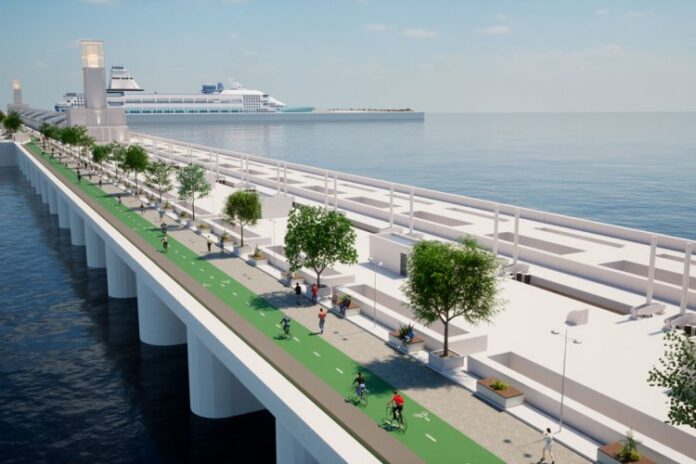
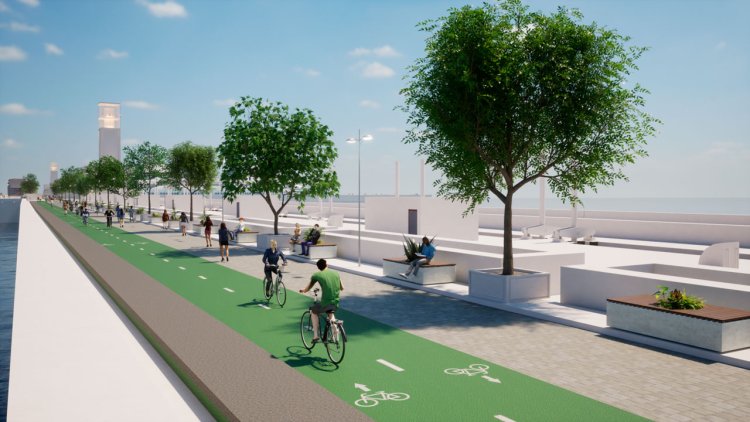
A plan to build a barrier across the Mersey is starting to take shape. If it goes ahead, the ambitious project would becomes the largest tidal range facility in the world, while also offering pedestrians and cyclists safe passage across the river.

Plans appear to have been floating around for a while now. Authorities in Liverpool note that first mentions date back as far as 1924, followed by reports and viability studies in the 1980s. Politician John McDonnell recently recalled that he attended his first meeting on a Mersey barrage proposal back in 2015, but things seem to be moving forward at last.

“For as long as I can remember, there has been talk of building a tidal barrage on the Mersey,” said Liverpool City Region’s mayor, Steve Rotheram, in 2022 as he inked a collaboration deal with South Korean state water company K-Water. “Thanks to devolution – we’re working to make it a reality. There are still huge technical and financial challenges to overcome but Mersey Tidal Power has the potential to provide enough clean, green, predictable energy to power up to one million homes for over a century.”

K-Water has been operating the Sihwa Lake Tidal Power Station since 2011, which was installed on a 12.5-km-long (7.76-mile) sea wall originally constructed to mitigate flooding and for irrigation of surrounding farmland. The facility features 10 submerged turbines rated at 25.4 MW each that generate power twice a day at high tide (outflow is sluiced away through gates). This one-way system has an annual production capacity of 552.7 GWh of electricity.
The Liverpool City Region Authority has been working on the technical aspects of several Mersey proposals for around three years (including a man-made lagoon), and Rotheram has now confirmed that the region has selected a bridge/barrage option between Liverpool and the Wirral to go through to the formal planning stage.
Interestingly, a barrage proposal across the Mersey between Dingle on the Liverpool side and New Ferry on the Wirral bank was abandoned in 2011 due to medium-term profitability concerns. Rotheram brought the scheme back to life as part of his Mayoral election campaign in 2017, and development cash was injected into the project in early 2020.

In addition to being the first pedestrian and cycling route to join the two regions over the river, the structure will also house 28 turbines driven by the flow of water in and out of the Mersey – generating electricity “using the energy available from the difference in height of the tides, which can be up to 10 meters (33 ft) in Liverpool.” Total capacity is expected to be 700 MW, which would make this the largest tidal range scheme in the world.

The design will include sluice gates to allow water through when needed, which could help mitigate increased risks of flooding caused by climate change, as well as marine navigation locks to help keep the busy river traffic flowing.

The actual location of the barrage has yet to be determined, with the Liverpool Echo stating that previous options might no longer be viable and that the Authority is currently looking into locations “closer to the mouth of the river that may align to regeneration aspects around Liverpool Waters and Wirral Waters.”

Assuming it gets the official nod later this week, the multi-billion-pound project will be sent to the UK’s Planning Inspectorate later in the year for feedback on the kind of surveys needed to complete documentation relating to its environmental impact.

The red tape could take years to cut through, but it’s hoped that the project – which will require government cash – could be realized by 2040. The operational lifetime of the facility is expected to match that of hydropower installations, and exceed 120 years.

“I think the brilliant thing about tidal range is that we’re trying to build something that will operate for more than 100 years,” said Martin Land, Director of the Mersey Tidal Power project. “So it’s not just about net zero for 2050, it’s about net zero for 2150 and, of course, our Liverpool City Region ambition is to be there by 2040.”

Estimates for localized cost of energy for the proposed Mersey Tidal Power project have not been forthcoming, but a technology brief from the International Renewable Energy Agency on 2014 reported that K-Water’s Sihwa plant cost $117 per kWh to construct while producing electricity at $0.02 per kWh. The older but smaller La Rance facility in France cost $340 per kWh and produces electricity at $0.04 to $0.12 per kWh. The same brief estimated that the Mersey barrage would cost $820 per kWh – though that’s not based on current construction budget figures.

Source: New Atlas, Liverpool City Region Authority