-8.6 C
New York
Home Blog Page 200

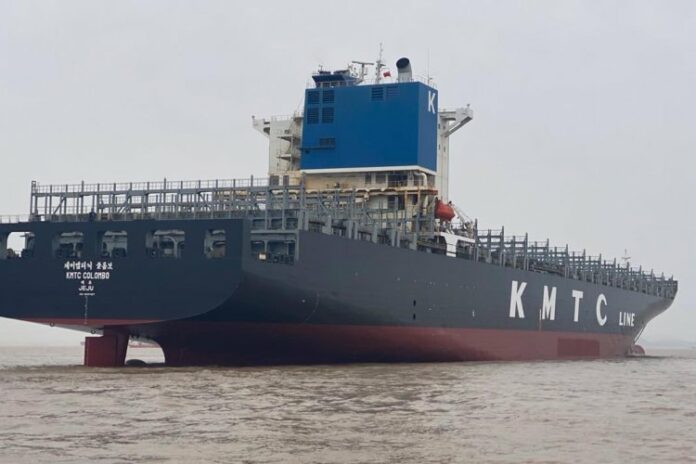
Wärtsilä signs agreement with Korea Maritime Transport Co

0

This agreement follows a similar five-year agreement signed a year earlier to cover four KMTC Panamax container vessels operating with Wärtsilä 7RT-flex96C-B main engines. The technical support provided by Wärtsilä, together with the security of supply for key components and other benefits under the terms of the contract, ensures the vessels’ operational reliability and delivers significant maintenance cost savings.

“We have been very happy with the earlier Wärtsilä agreement and are pleased to renew it for these two ships. It allows us to save time and resources on maintenance issues as well as enable efficient engine management with reliability,” says Mr. Woo Y.O, General Manager, Repair & Supply Team, KMTC Ship Management Co. Ltd.

In addition to the secured availability of contracted key components, the scope of the agreement includes the Wärtsilä Health check which is an annual main engine’s condition assessment by two-stroke technical engine experts. This ensures that the engines operate within design boundaries, whilst providing maximised operation intervals for the key components. The scope also includes some specific component services and overhauls. Furthermore, Wärtsilä provides dedicated agreement management and technical support by local experts.

“The signing of a new agreement with KMTC demonstrates the value that our agreements can offer to our customers, especially at a time where the industry is so heavily focused on the decarbonisation transition. We appreciate the strong relationship between our companies and look forward to continuing our operational support for their fleet,” comments Do Hyun Kim, Sales Manager / Owner Account, Wärtsilä Marine Business Sales for Korea.

Wärtsilä’s Lifecycle Agreements provide long-term cost predictability and availability by using data-driven technical support and maintenance at every step from planning to execution. The customer benefits from proactive support and recommendations by experts at Wärtsilä Expertise Centres, who help to optimise maintenance intervals according to actual needs, while preventing unexpected downtime.

DeepSea implements its solution across Ardmore Shipping’s fleet

0

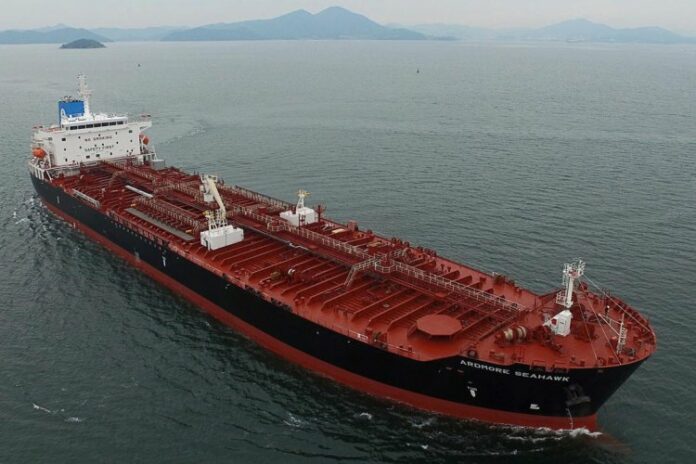
DeepSea Technologies has announced that it is partnering with Ardmore Shipping to implement Pythia, its voyage optimisation tool, across Ardmore’s fleet – enabling AI-driven insights that will help the ship owner to meet the goals of its Energy Transition Plan (ETP) while driving business performance.

During the first year of the partnership, which involved a full-scale trial of the technology on Ardmore vessels, DeepSea and Ardmore collaborated to refine a series of algorithms powered by DeepSea’s AI-generated vessel behaviour models, coupled with Ardmore’s extensive historical data. This breakthrough allows an AI approach to be used within the context of tramp trade. Outcomes of this 12-month collaboration saw a promising decrease in fuel consumption and, in turn, emissions.

Ardmore’s ETP guides its approach to increasing efficiency through the trial and implementation of a range of readily available maritime technologies and fitting these together to achieve optimal performance of its fleet. To date, Ardmore has invested in fuel-efficient engines, advanced hull designs, and a vast array of other technologies that optimise fuel consumption and reduce emissions. These technologies will now be complemented by DeepSea’s voyage optimisation services. 

The optimisation of non-liner trade is challenging due to operational obstacles that include uncertain arrival times and frequently-changing destinations. With defined contracts, owners and operators of tramp vessels have historically faced little pressure to adopt technologies to optimise vessel performance. The growth of regulation to support efficiency improvements across the sector as part of shipping’s energy transition means owner-operators want better information and guidance to help reduce energy consumption and maintain efficient vessels.

Since its foundation, Ardmore has been one of the first movers in adopting new technologies and was one of the first tanker companies to harness high-frequency data as part of the operation of its vessels. This partnership sees the company expanding this approach, with the introduction of AI-driven insights that are dynamically updated based on the high-frequency data streamed from on-board sensors.

Ha Eun Ruppelt, Ardmore Shipping’s Commercial Project Manager, said:

“Through this collaboration with DeepSea, we’re further upgrading and future-proofing our fleet for operation in today’s dynamic tanker market, aligning with our commitment to innovation and sustainability. This evolution aims to further optimise fleet performance, resulting in smarter decision-making. We look forward to developing this partnership further, and exploring how to extract the most value in terms of emissions and fuel savings through the use of DeepSea’s technologies.”

Konstantinos Kyriakopoulos, DeepSea’s CEO, said:

“We’re very excited to be expanding our collaboration with a visionary leader in the tanker space, known for its focus on quality and its successful adoption of new technologies. Together with the Ardmore team, we’ve shown how AI-powered voyage optimisation can be adapted to address the unique challenges of the tanker sector, leveraging hyper-accurate modelling of each vessel’s unique fuel profile to deliver demonstrable reductions in emissions and optimally balance fuel cost and revenue opportunity to increase commercial efficiency.”

Fincantieri and Saipem: collaboration in the subsea domain

0

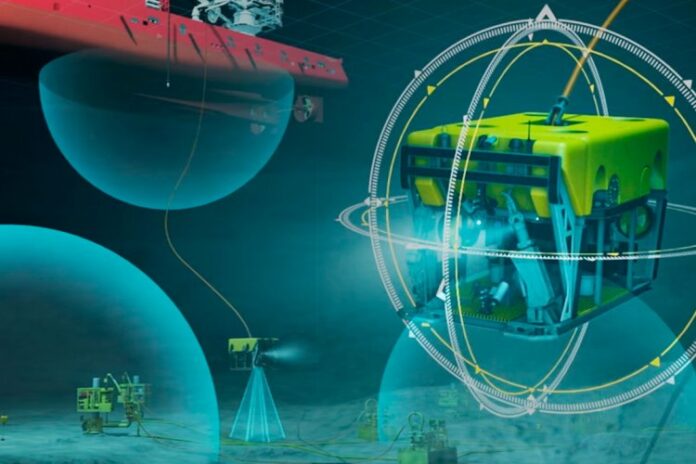
Fincantieri and Saipem have signed a Memorandum of Understanding to evaluate commercial and industrial opportunities for cooperation in the field of autonomous subsea vehicles and their integration with surface and underwater units.

The Memorandum, signed at Palazzo Marina, the headquarters of the General Staff of the Italian Navy, is among the initiatives aimed at promoting and developing national excellence in the Underwater sector.

The agreement aims to enable the two companies to participate in major programmes in the Italian and international markets in the area of surveillance and control of critical underwater infrastructure and rescue activities, through the use of specific complementary technologies from Fincantieri and Saipem. The collaboration involves the integration of surface vessels and submarines built by Fincantieri with the drone development programme “Hydrone” developed by Sonsub, Saipem’s centre of excellence for subsea technologies and solutions.

Saipem is in fact the first company in the world to have qualified and commercialised resident autonomous subsea drones for intervention and inspection activities at depths of up to 3,000 m. Designed and industrialised between Marghera (Venice) and Trieste, they have already been deployed for the control and maintenance of underwater infrastructure in the offshore energy market at the service of major energy companies.

Fincantieri has placed itself at the centre of development programmes in the Underwater sector, with extremely promising business opportunities, also thanks to its ability to guide an effective integration between the Defence and civil industries. Since 1929, the Group has built 180 submarines, 105 of which at the Muggiano shipyard.

Forth Ports submits plans for development at Harbour 31

0

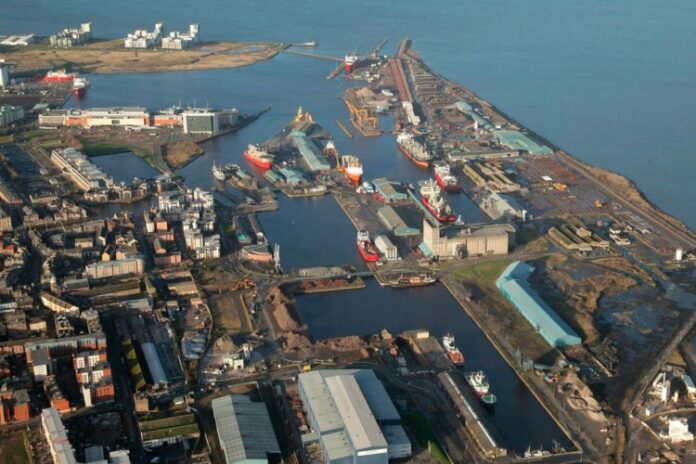
Forth Ports has submitted an application for Planning Permission in Principle (PPP) to The City of Edinburgh Council (CEC) for Harbour 31, an exciting new housing, commercial and retail development on a 4.7 acre waterfront site at The Port of Leith.

The proposed redevelopment of the site, close to the new FirstStage film studio, will provide 337 new homes including studios, 1, 2 and 3 bedroom apartments – which will be in line with the CEC’s approved affordable housing policy – and approximately 244sqm of commercial space.

The apartments will be formed over a four-plot development with heights ranging from five to eight storeys with a focus on communal green spaces for the residents to enjoy and integrated sustainable travel options.

Harbour 31 is situated to the south of Edinburgh Dock within the Port of Leith and is currently used for industrial port activities. It is located close to existing and other proposed residential developments and the extended Edinburgh tram network.

The redevelopment of this area of Leith represents an exciting opportunity to create a new neighbourhood while providing high quality architecture, landscaping and public space which will enhance the city’s connection to the waterfront.

As well as benefiting from the recently opened tram extension with a tram stop designed for The Port of Leith, the proposed development will include a new transport corridor to encourage sustainable modes of transport including a bus route, cycle lane and walking route linking Bath Road to Ocean Way. The apartments will all have access to bike storage.

There will be car parking provision, given the location of the site and the excellent public transport provision and local amenities in the vicinity, car parking provision will be around 20% and include accessible parking spaces and be EV ready.

Pamela Smyth, Chief Legal and Property Officer, of landowners Forth Ports Group, said:

“At Harbour 31 we want to create a vibrant new quarter for people to live and work in, as new green jobs come to Leith. The port is transitioning into Scotland’s largest renewables hub and, coupled with the benefits which will be unlocked as part of the Forth Green Freeport, Leith will be completely regenerated.

“With the option to walk or cycle to work or get the tram into the city centre, this new neighbourhood will be a key part of the continued regeneration of Leith.”

In addition, an application has been made for listed building consent for works associated with alterations to Edinburgh Dock for the provision of surface drainage for the proposed development.

Hong Kong: river trade vessels involved in spate of smuggling cases

0

Hong Kong Customs on March 7 detected a suspected smuggling case involving a river trade vessel. 

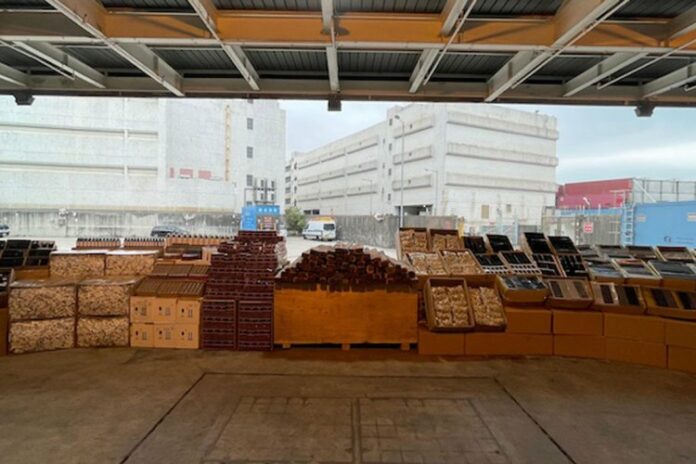
A large batch of suspected smuggled goods, including over 25,000 cosmetic products, about 3 500 bottles of fragrance oil, about 50,000 electronic parts, about 2,500 mobile phones, about 50 kilograms of birds’ nests and about 650kg of suspected scheduled red sandalwood, with a total estimated market value of about $24m, was seized. Photo shows the suspected smuggled goods seized

​On February 29 and March 2 Hong Kong Customs detected two suspected smuggling cases involving river trade vessels. Suspected smuggled goods with a total estimated market value of about HK$211m was seized. Seized goods included over 130,000 hard disks, about 200 000 electronic product accessories, about 160,000 cigarettes, about 

13,000 bottles of health products and about 3,000 boxes of pharmaceutical products.

On March 7, a river trade vessel departing from Hong Kong and bound for Nansha of Guangzhou was selected for inspection. Upon examination, Customs officers onboard the vessel found large batches of suspected smuggled goods, including over 25 000 skincare products, about 3,500 bottles of fragrance oil, about 50,000 electronic parts, about 2,500 mobile phones, about 50 kilograms of birds’ nests and about 650kg of suspected scheduled red sandalwood with a total value of HK$24m
 
An investigation into both incidents is ongoing.

LNG-fueled car carrier CERULEAN ACE delivered

0

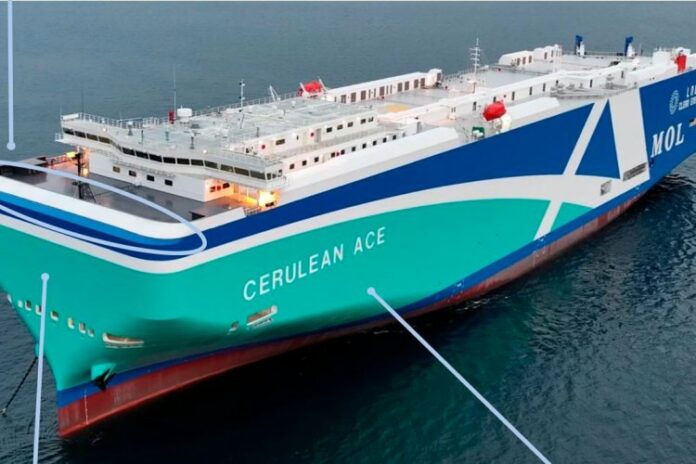
Mitsui O.S.K. Lines has announced that on March 13, the LNG-fueled car carrier CERULEAN ACE was delivered at the Onishi Shipyard of Shin Kurushima Dockyard Co. 

The vessel will transport cars, including those produced by Mazda Motor Corporation.

MOL has decided to operate 14 new LNG-fueled car carriers and the CERULEAN ACE is the first of 11 to be built in Japan under the “BLUE” series. The use of LNG fuel reduces carbon dioxide (CO2) emissions by about 25-30%, sulfur oxide (SOx) emissions by about 98%, and nitrogen oxide (NOx) emissions by about 85% compared to comparable vessels using conventional fuel oil.

CERULEAN ACE Specifications

  • Ship type: 7,050RT type LNGDF car carrier (high-pressure main engine)
  • Shipyard: Shin Kurushima Dockyard, Onishi Shipyard
  • LOA: 199.95m
  • Breadth: 38.00m
  • Capacity: 7,050 units

Singapore port announces world’s first successful use of ammonia as a marine fuel

0

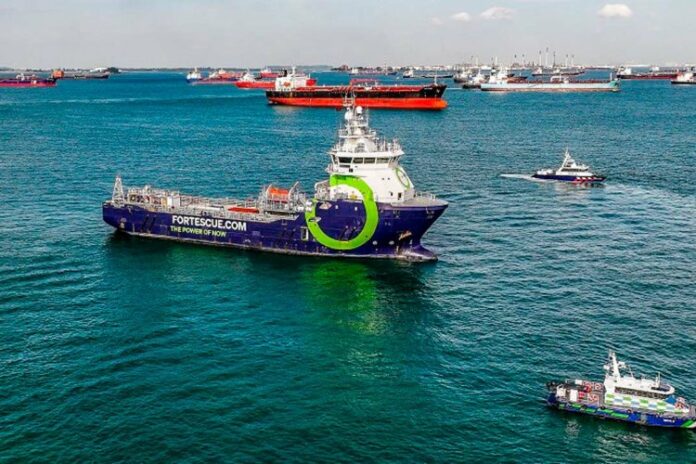
Fortescue, with the support from the Maritime and Port Authority of Singapore (MPA) government agencies, research institutes, and industry partners, has successfully conducted the world’s first use of ammonia, in combination with diesel in the combustion process, as a marine fuel onboard the Singapore-flagged ammonia-powered vessel, the Fortescue Green Pioneer, in the Port of Singapore.

The Fortescue Green Pioneer was loaded with liquid ammonia from the existing ammonia facility at Vopak Banyan Terminal on Jurong Island for the fuel trial.

In completing the fuel trial, the Fortescue Green Pioneer has also received flag approval from the Singapore Registry of Ships (SRS) and the “Gas Fuelled Ammonia” notation by classification society DNV to use ammonia, in combination with diesel, as a marine fuel.

The Fortescue Green Pioneer started its journey towards becoming the world’s first ocean-going ammonia-powered vessel in 2022 when Fortescue successfully converted a four-stroke engine to run on ammonia, in combination with diesel, at its land-based testing facility in Perth, Western Australia.

Following the success of the land-based testing, conversion work commenced on the vessel at Seatrium’s Benoi yard from July 2023. This included the installation of the gas fuel delivery system, safety systems and infrastructure, and the successful conversion of two of the vessel’s four engines to enable the use of ammonia, combined with diesel in the combustion process, to power the vessel.  The two remaining engines onboard the Fortescue Green Pioneer will operate on conventional fuels when required.

An ammonia plume model was jointly developed by the Agency for Science, Technology and Research’s Institute of High Performance Computing (A*STAR’s IHPC), Nanyang Technological University’s Maritime Energy and Sustainable Development Centre of Excellence (MESD), the Technology Centre for Offshore and Marine, Singapore (TCOMS), and the National University of Singapore’s Tropical Marine Science Institute (TMSI) to determine the safety envelope, model the dispersion of an ammonia plume in an event of an incident, and to support the safety and incident response planning. The model, which accounted for the Fortescue Green Pioneer’s vessel and engine design parameters, behaviour of ammonia within Singapore’s tropical climate, sea current conditions, and surrounding vessels, infrastructure, and geometries, was used to guide the operations. It will be continually enhanced as operations for new maritime fuels scale up in the Port of Singapore.  

The fuel trial was conducted over a period of seven weeks and included rigorous testing of the Fortescue Green Pioneer’s ammonia storage systems, associated piping, gas fuel delivery system, retrofitted engines, and seaworthiness. 

The two four-stroke retrofitted engines served as proxy for the commercialisation of ammonia-fuelled marine engines under development globally. The post-combustion nitrogen oxide (NOx) levels met the local air quality standard, while efforts to reduce the pilot fuel for combustion ignition and nitrous oxide (N2O) emissions post-combustion will continue as more ammonia-fuelled marine engines and ammonia sources with lower greenhouse gas emissions become available.

The five cubic metres (three tonnes) of liquid ammonia used for the fuel trial was supplied by Vopak using its existing infrastructure at the 10,000m3 Vopak Banyan Terminal on Jurong Island. A second tranche of three tonnes of liquid ammonia will be loaded for the Fortescue Green Pioneer to conduct further tests and trials over the next few weeks.

Fortescue engaged DNV to be part of the innovation process from the very early stages of this project. The Fortescue Green Pioneer’s ammonia fuel systems and engine conversion received class approval by DNV based on DNV’s Technology Qualification process to ensure that the new technology and systems fitted onboard, which were not covered under existing regulations, will function within specified limits and acceptable levels of confidence.

Mr Teo Eng Dih, Chief Executive, MPA, said,

“The safe conduct of this fuel trial supports the holistic assessment of the use of ammonia as a marine fuel, and the development of standards and safety procedures. This will inform the crew training, emergency and bunkering procedures which MPA, agencies and the tripartite community are developing in support of making available safe and cost-efficient solutions as MaritimeSG and the international shipping community undergo the energy transition.” 

SBM Offshore and Technip Energies sign a Partnership Agreement to form EkWiL

0

SBM Offshore and Technip Energies have announced the signing of a Memorandum of Understanding for the creation of a joint venture entity, EkWiL.  The new company will be a Floating Offshore Wind (FOW) pure player, capable of proposing a wide range of solutions to clients.

EkWiL will combine the people expertise, engineering and delivery capabilities, and complementary technologies of Technip Energies and SBM Offshore, creating integrated floating solutions and leading delivery offerings for the Floating Offshore Wind market.  This unique positioning will enhance execution certainty and cost competitiveness to these innovative projects.

The 50/50 JV will operate as a fully integrated team, bringing together knowledge, innovation and capacities to develop the two leading-edge technologies (Semi-submersible INO15 by T.EN™ and Tension Leg Platform Float4Wind®) covering a large spectrum of the Floating Offshore Wind market, and bring them to commercial deployment. 

Bruno Chabas, CEO of SBM Offshore, commented:

“Our aim is to become a recognized leading contractor in developing floating offshore wind infrastructures.  Collaboration is fundamental to position our ambitions sustainably while managing the pace of infrastructure development and the challenging economics of these pioneering systems. We are pleased to share our experience with the right partner, broadening the range of solutions and reinforcing our energy transition commitment.”

Arnaud Pieton, CEO of Technip Energies, commented:

“Joining forces and collaborating are necessary to capture the potential of the nascent floating offshore wind market. By leveraging the synergies of complementary technologies and supply chain experience, EkWiL will increase predictability to meet market demand and deliver on our ambition to provide new energy solutions.”

As is customary for transactions such as these, there are a number of matters that Parties will attend to for completion of the transactions, which includes satisfactory conclusion of due diligence, engagement with employee representative bodies to complete relevant consultations, and having in place all necessary regulatory approvals.  

New AI tool to solve boulder troubles for offshore wind developers

0

“We have successfully developed an AI-driven software that can automatically identify boulders down to 25 centimetres in height, with the power to remove duplicated boulders from seabed survey data. This will dramatically simplify and expedite the boulder identification process, with the associated time and cost savings for developers,” says Alison Wells, CEO of Ocean Geophysics.

Large, individual boulders as well as boulder fields with thousands, sometimes millions of smaller boulders pose a big challenge for the planning of offshore wind farms and cable routes. An analysis of the seabed is a prerequisite prior to any construction work.

Today, side-scan sonar – a system for detecting objects on the seafloor – is commonly used to identify boulders on the seabed. This analysis is then used to choose the ideal placement of wind turbines, substations or subsea cables for offshore wind farm developments.

Detecting big boulders is relatively straightforward. However, boulder fields with thousands or tens of thousands of boulders pose significant and costly obstacles to developers. As developers must obtain both the amount and positioning of boulders to calculate the time and cost of boulder clearance. The cost of hiring offshore vessels to conduct boulder clearance is obviously substantial.

“There have been instances in our industry where millions of boulders have had to be identified manually one by one. It is tedious and prone to human error, a process we wanted to ameliorate in order to reduce the time and cost associated with boulder identification – and subsequent boulder clearance – work,” adds Alison Wells.

Ocean Geophysics’ new AI-driven boulder identification tool leverages a machine learning algorithm that allows for the automatic detection of boulders as small as 25 cm in size and automatically removes duplicates. The software can process entire seabed survey areas quickly, taking around one second per side-scan line to detect all boulders.

“This means that boulder identification work, which previously took weeks or months to complete, can now be done in a few seconds,” says Alison Wells.

NYK and Astomos Energy christen new dual-fuel LPG carrier

0

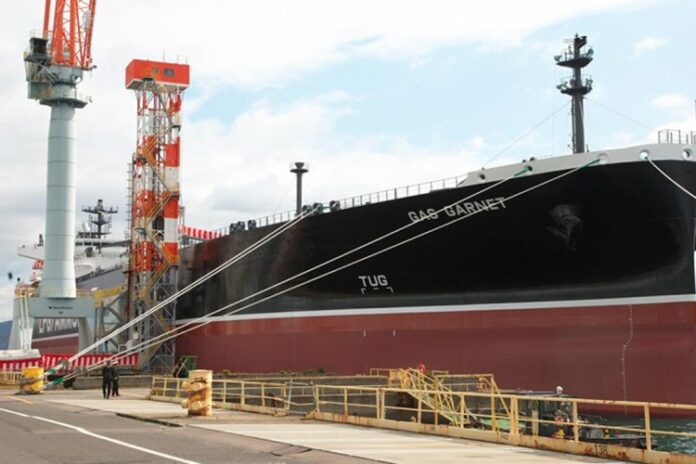
On March 1, a naming ceremony was held at the Sakaide Works of Kawasaki Heavy Industries Ltd. for the first new LPG carrier jointly owned by NYK and Astomos Energy Corporation (“Astomos Energy”) since the two companies shared ownership of Gas Capricorn from 2003. 

The vessel was christened “Gas Garnet” by Yoshihito Takahashi, senior executive officer of Astomos Energy, and the ceremonial rope was cut by his wife. NYK Managing Executive Officer Hironobu Watanabe attended the ceremony with others from NYK to welcome the ship and pray for safe voyages.

The vessel has a dual-fuel engine that uses heavy oil and LPG. In addition, the ship is equipped with a shaft generator that generates electricity by rotating the shaft connecting the main engine to the propeller, enabling the vessel to stop operating the diesel generator during standard navigation and realize full LPG-fueled navigation. Compared to conventional heavy oil-fueled vessels, SOx (sulfur oxides) and CO2 (carbon dioxide) in the exhaust gas are reduced by more than 95% and 20%, respectively, when the ship is fueled by LPG.