-8.7 C
New York
Home Blog Page 199

Wärtsilä report: Sustainable shipping fuels can reach cost parity with fossil fuels by 2035

0

Sustainable shipping fuels could reach cost parity with fossil fuels as early as 2035 with the help of decisive emissions policy such as carbon taxes and emissions limits, according to a new report launched today by technology group Wärtsilä.

The report, titled ‘Sustainable fuels for shipping by 2050 – the 3 key elements of success’, reveals that the EU Emissions Trading Scheme (ETS) and FuelEU Maritime Initiative (FEUM) will see the cost of using fossil fuels more than double by 2030. By 2035, they will close the price gap between fossil fuels and sustainable fuels for the very first time.

Transporting 80% of world trade, shipping is the engine room of the global economy. However, despite being the most efficient and environmental way to transport goods, it emits 2% of global emissions, equivalent to the annual emissions of Japan. Without action, this could increase by more than 45% by 2050.

In 2023, the International Maritime Organization (IMO) set a target of achieving net zero emissions by 2050. Existing decarbonisation solutions, such as fuel efficiency measures, could cut up to 27% of emissions. Wärtsilä’s report argues that sustainable fuels will be a critical step in eliminating the remaining 73% but radical action is needed to scale them. The industry suffers from a “chicken and egg” challenge – ship owners won’t commit to a fuel today that is expensive, only produced in small quantities, and may be usurped by another fuel that scales faster and more affordably. Meanwhile, it is difficult for suppliers to scale production without clear demand signals.

Wärtsilä has produced new modelling that shows a timeline of which fuels are likely to become widely available on a global scale, when and at what cost. To accelerate this timeline, the report argues that decisive policy implementation, industry collaboration, and individual operator action must coalesce to scale the production of these fuels.

Roger Holm, President of Wärtsilä Marine & Executive Vice President at Wärtsilä Corporation says: “Achieving net zero in shipping by 2050 will require all the tools in the toolbox, including sustainable fuels. As an industry, we must focus on coordinating action across policymakers, industry and individual operators to bring about the broad system change required to quickly and affordably produce a mix of sustainable fuels. Policy in Europe is showing just how impactful action at the international level can be, closing the cost gap between fossil- and low-carbon fuels for the first time.”

Decisive Policy: Wärtsilä’s modelling shows sustainable fuels will be 3-5 times more expensive than today’s fossil fuels in 2030. As ETS and FEUM show, policy is key to closing the price gap. The report argues that policymakers should:

  1. Maximise certainty: Set an internationally agreed science-based pathway for phasing out fossil fuels from the marine sector, in line with IMO targets.
  2. Boost cost competitiveness: Adopt a global industry standard for marine fuel carbon pricing.
  3. Collaborate: Increase global collaboration between governments on the innovation and infrastructure necessary to deliver sustainable fuels at scale worldwide.

Industry collaboration: The sector must collaborate with stakeholders from inside and outside shipping. The report calls on industry to:

  • Pool buying power: Initiate sector-wide procurement agreements to pool demand from multiple shipping operators.
  • Collaborate with other sectors: Convene with leaders in aviation, heavy transport, and industry to establish a globally recognised framework for the production and allocation of sustainable fuels.
  • Share skills: Establish an industry-wide knowledge hub for the purpose of sharing expertise, skills and insights.

Individual actions: Every euro an operator saves in fuel costs at today’s prices, could be worth 3-5 times that by 2030. That means companies such as Carnival Corporation, which made a 5-10% efficiency gain through its Service Power Upgrade Program, could cut its fleetwide fuel costs by as much as $750 million per year in 2030.[vi] All operators can benefit from improving the efficiency of their vessels – the technology is readily available today.

Holm adds:

“If there is one take away from our report, it is that smaller operators need not feel powerless. They have a major role in accelerating towards net-zero emissions shipping. Taking steps to improve fuel efficiency and invest in fuel flexibility can deliver immediate returns, reducing both emissions and operating costs. But action must be swift – we have the lifecycle of just a single vessel to get this right.”
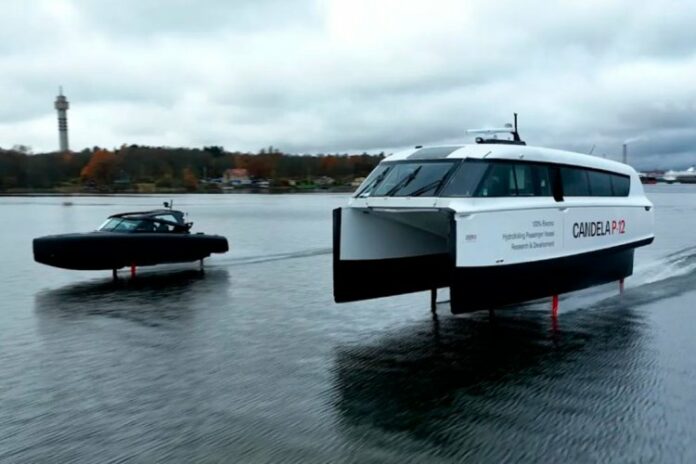
Candela’s electric ferries multiply as the startup lines up $25M in new funding

0

Electric boat maker Candela is approaching cruising speed with $25 million in new funding and the first commercial deployment of its new P-12 ferry in New Zealand. 

Candela has been slowly upping the size of its vessels for years, starting with the considerably smaller C-7 and C-8 (noting the length in meters) — of which, as of this week, they have now produced a total of 70. The P-12, a ferry design that can handle up to 30 passengers, made its debut late last year.

Just last week, the P-12 was given its first assignment: ferry people around New Zealand’s Lake Manapōuri, a scenic destination but also, more importantly, the site of the country’s largest hydroelectric power station. And now staff at that station can get to work via clean-running boat rather than driving, which the companies estimate will save around 240 tons of emissions per year. It’s a start, and it will help keep the lake clean and quiet.

International interest in these boats is also evident in the participation of Groupe Beneteau, a more than century-old boating company that makes thousands of vessels yearly, in the funding round. Groupe Beneteau CEO Bruno Thivoyon expressed in the press release that investing in Candela makes sense as part of the company’s “ecological transition objectives, scaling up innovative solutions for more sustainable boating.”

Candela’s boats use hydrofoils with electric engines mounted on the bottom to effectively fly above the surface of the water once they get past a certain speed, vastly reducing energy consumption — historically and understandably a sticking point for electric boating. 

Source: techcrunch

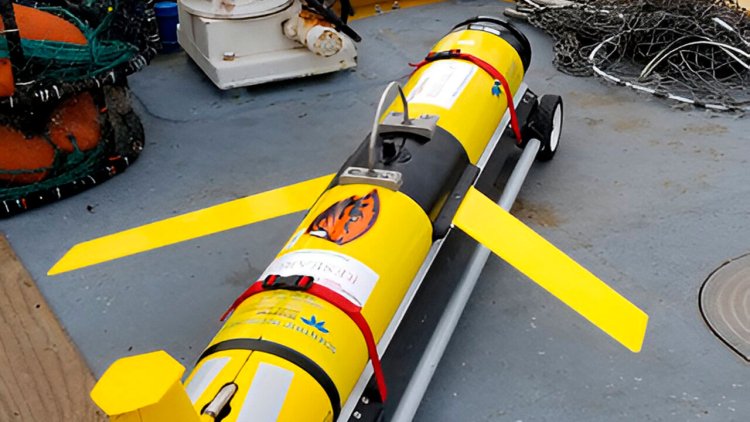
Autonomous underwater gliders help to research ocean hypoxia

0

Low oxygen conditions that pose a significant threat to marine life are widespread and increasing in coastal Pacific Northwest ocean waters as the climate warms, a new study shows.

Researchers have found that in 2021, more than half the continental shelf off the Pacific Northwest coast experienced the low-oxygen condition known as hypoxia, said the study’s lead author, Jack Barth of Oregon State University.

“We’ve known that low oxygen conditions are increasing based on single points of study in the past, but this confirms that these conditions are occurring across Pacific Northwest coastal waters,” said Barth, an oceanography professor in the College of Earth, Ocean, and Atmospheric Sciences. “The 2021 season was unusually strong compared to past years but with climate change, we are headed in a direction where this may be the norm.”

The new study, published recently in Scientific Reports, is based on data collected by an unprecedented number of research vessels and autonomous underwater gliders that were collecting measurements in the ocean during summer 2021.

The vast amount of data gave researchers a more complete and nuanced understanding of hypoxia’s severity and spatial distribution in the coastal waters of the northern California Current, said Barth, who also serves as special advisor to OSU’s Marine and Coastal Opportunities program.

“This picture has been needed for a long time by policymakers and fisheries managers who make decisions about ocean uses,” he said.

On average, nearly half of the continental shelf, an area the same size as Oregon’s Willamette Valley and slightly smaller than the state of Connecticut, experienced hypoxia during the summer upwelling period in 2021.

Wind-driven upwelling brings deeper, colder, nutrient-rich water to the surface of the ocean, fueling a productive upper-ocean food web. However, that same upwelling pushes deep, low-oxygen water near the ocean’s bottom toward the coast. Dissolved oxygen levels are driven even lower near the seafloor by decay of naturally occurring phytoplankton raining down from above. When oxygen levels drop significantly, many marine organisms, including economically and culturally important Dungeness crabs, cannot relocate quickly enough and die of oxygen starvation.

Some areas of the coastal ocean saw higher rates of hypoxia than others, the data showed. Areas of the southern Oregon coast experiencing less hypoxia, for example. Heceta Bank, a region about 35 miles off Florence that is known for its abundant and diverse marine life, also is more resilient to hypoxic conditions. However, the region inshore of Heceta Bank toward Cape Perpetua, where coastal waters are not as well flushed, is subject to hypoxia.

Mapping the varied rates of hypoxia along the coast also confirmed for scientists the interplay between the geography of the sea floor and ocean dynamics, Barth noted.

“I was amazed when I saw the maps,” he said. “It really corroborates our understanding of how underwater geography affects hypoxia.”

A comparison of maps from past years shows a consistent trend of hypoxia increasing over time. Hypoxia was basically nonexistent, at 2%, from 1950 to 1980, about 24% from 2009 to 2018, and 56% in 2021. That trend persists even when researchers account for year-to-year variability, Barth noted. Researchers are now developing maps for 2022 and 2023 using the 2021 maps as a guide.

The findings provide policymakers and fisheries managers additional decision-making tools as ocean conditions continue to change, Barth said.

“On land, we know where the grassland is, where the forests are, where the rivers run so we can sustainably use those resources. If we don’t have that kind of understanding of the ocean, how do we make plans for sustainable use of the ocean?” he said. “When we think about all the different uses of the ocean, from fisheries to marine reserves, and impacts such as heat waves and renewable energy development, we can manage all of those things better if we understand the environmental situation.”

The study also highlights the need for regular monitoring and mapping of hypoxia along the Pacific Northwest coast as conditions continue to change, Barth said.

“This effort is a demonstration of what we’re capable of doing if we coordinate our efforts,” he said. “Now that we have done this once and understand some of the key geographic features, we can target our sampling to best monitor these areas over time.”

Wind Auxiliary Propulsion technology secures Innovate UK funding

0

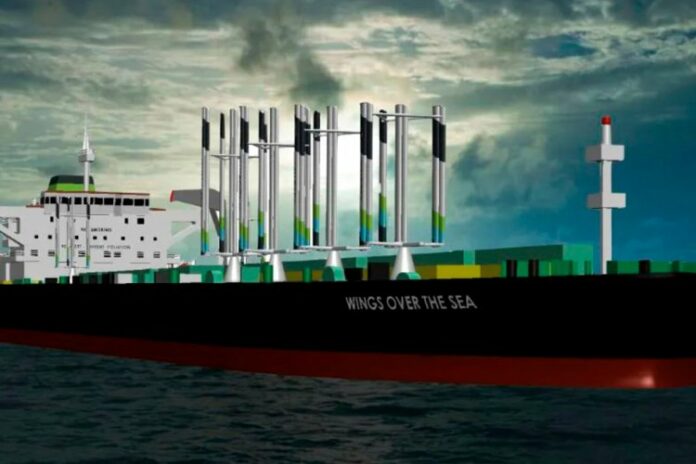
Awarded under the UK Department for Transport Clean Maritime Demonstration Competition, the £2.2m funding is to further develop Bristol-based WingTek’s Wingsail, a Wind Auxiliary Propulsion system designed to be retrofitted to existing commercial vessels.

In a statement, Neil Richards, WingTek managing director, said:

“WingTek’s innovative Wind Auxiliary Propulsion system has received a significant boost thanks to the help and support of Innovate UK leading to this grant. We are delighted to be working with a fantastic set of project partners at the University of Bristol and the National Composites Centre and we are now well supported to fast-track the development on the route to commercial production.”

The project will deliver two full-size operational prototypes, one on-shore for long-term testing and development and a second unit installed on a commercial UK vessel for sea-trials, with the project scheduled to complete by March 2025.

“Think of this as a renewable energy fuel saver for commercial ships,” said Richards. “Wind is free and available across the planet and can be harnessed by the world’s existing shipping fleets to reduce its consumption of fossil fuels.”

According to WingTek, there are around 55,000 commercial ships in excess of 5,000 tonnes worldwide that use an estimated 250 million tonnes of fossil fuels annually.

Richards said:

“Any reduction in this colossal fuel consumption has immediate benefits. The commercial and environmental value of adding WingTek Wingsails is evident – on routes such as the North Atlantic and the North Sea, the savings can be substantial and rise significantly when used in conjunction with weather routing.”

“We can save ship operators fuel costs and greenhouse gas emissions, whether the ship has a traditional engine burning fossil fuels or one burning newer, but more expensive, clean alternatives. Our wind propulsion systems can be retrofitted to existing vessels, designed into new-builds, and easily removed when decommissioned or re-installed on another vessel in the fleet,” Richards added.

Innovate UK awarded funding for the ‘Wings for Ships’ project as part of the UK Clean Maritime Demonstration Competition Round 3 (CMDC3). This is funding the development of wind-assisted ship propulsion aimed at helping the shipping industry reach Net Zero by 2050.

Source: The Engineer

ABB to deliver shoreside connection for DEME base in Vlissingen

0

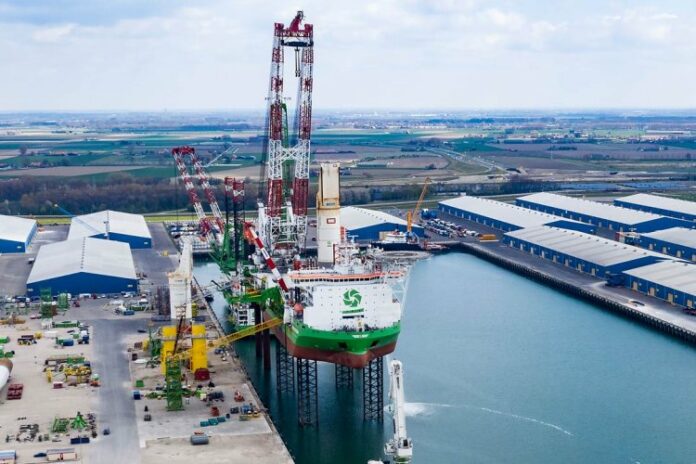
ABB has won the contract to provide a complete shore connection installation for the DEME Base in Vlissingen, the Netherlands. 

Shore connection enables the diverse fleet of dredgers, offshore construction and support vessels to avoid carbon emissions by shutting off their engines and drawing on shore power while at berth. DEME is a leading contractor in the fields of offshore energy, environmental remediation, dredging and marine infrastructure.

DEME has set itself a goal of cutting 40 percent from the greenhouse gases generated by its fleet by 2030 compared to 2008, moving significantly ahead of the revised emissions reduction target set by the International Maritime Organization in 2023. ABB will install shore power to connect to suitably equipped vessels calling at Vlissingen’s DEME base by the end of 2024, as part of the “Temporary Shore Power Grant Scheme for Marine Vessels 2022 – 2023”, a government-supported initiative that stimulates the construction and use of shore power facilities in Dutch seaports.

Offering a key route for ship owners to make measurable progress towards decarbonization, connecting to shore power for energy needs while at berth is expected to become mandatory at main EU ports listed in the trans-European transport network from 2030, under FuelEU Maritime regulations.

“This project is part of DEME’s wider strategy to integrate its sustainable business goals with daily operations,

” Marc De Boom, Department Manager, DEME Base Vlissingen. “DEME has high ambitions regarding CO₂ reductions, and we are proud to be the first Belgian marine contractor who achieved the highest level of the CO₂ performance ladder, which is widely used in the Netherlands and Belgium. We are happy to collaborate with ABB, an experienced and reliable technology leader with a solid track record in shore connection installations.”

Awarded after a private tender process, the DEME contract provides a strong example of the way ABB aligns with local interests to ensure that its solutions are flexible in helping meet decarbonization milestones. Ultimately planned as a 2MvA converter, ABB’s shoreside shore connection will run at a lower 1.75MvA until the local grid can deliver sufficient capacity between the substation and the power outlet at the dock. In a straightforward installation, the entire solution will be housed in two ISO containers – one 40-ft unit and one 20-ft unit.

“We are delighted to have secured this significant shore connection contract and look forward to working with DEME to support its ambitious commitments for maritime decarbonization,” said Frank van Delden, Account Manager, ABB Marine & Ports. “Given the diversity of the DEME fleet, this is a key reference for our shore power technology, showing that almost any type of vessel can avoid emissions by connecting to shore power at the quay.”

Stena Bulk enters into new partnership in the operation of existing IMOIIMAX tankers

0

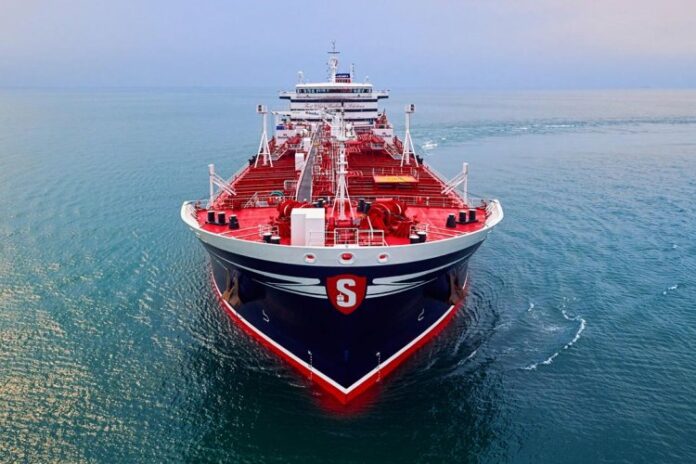
Leading tanker shipping company Stena Bulk has today announced it has entered into a new partnership with a prominent Gulf Co-operation Council investment institution in the operation of an undisclosed number of Stena Bulk’s existing IMOIIMAX tankers.

The venture, established in collaboration with Tufton Investment Management in London, will open further institutional investment opportunities for both partners.

Originally built between 2015 and 2018, Stena Bulk’s IMOIIMAX tankers are designed to carry IMO 2 and 3 cargoes as well as clean and dirty products, ensuring maximum cargo flexibility. The vessels are all equipped with eighteen cargo tanks of a max 3,000 m³ capacity as well as a nitrogen based inert gas system.

The design was developed by Stena Bulk and Stena Teknik together with the Chinese shipyard GSI. After several years in operation, the MR tankers have become known for their reliable and efficient design. Stena Bulk designed the IMOIIMAX tankers to have a minimised environmental footprint and optimised performance. 

Speaking on the new joint venture, Erik Hånell, President & CEO of Stena Bulk, said:

“We look forward to working closely with our partners to continue to maximise the potential of our IMOIIMAX tankers, exploring new horizons, expanding our market reach, and creating value for our customers. By working closely together over the coming years I know that we will continue to push new boundaries for MR tanker performance.”

Andrew Hampson, CEO of Tufton Investment Management Limited, commented:

“We are delighted to have facilitated this partnership between our long established GCC institutional clients and a company of the standing of Stena Bulk. We believe the excellence of Stena Bulk’s technical and operational capabilities represent an industry benchmark and we look forward to the success of the newly established partnership in the coming years.”
 

Louis Dreyfus joins zero-emission hydrogen race with wind farm ship

0

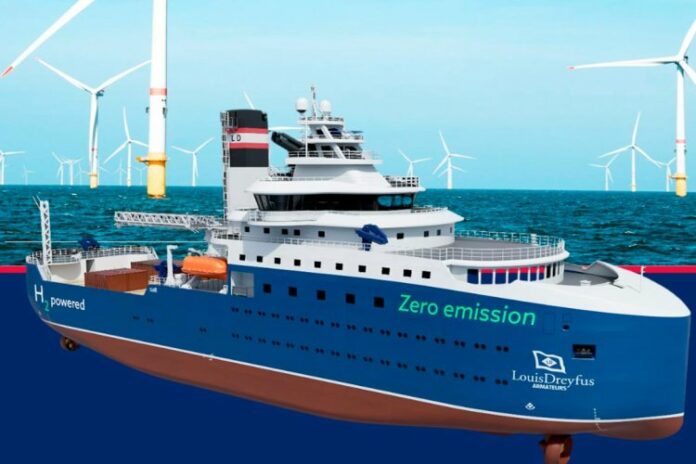
The liquid-hydrogen SOV, currently in the concept design phase, will be able to operate 95% of the time with zero carbon emission, with the vessel only releasing water during standard operations, said the company.

This would have a positive impact on offshore wind farm operations-related emissions by preventing the release of about 4,000 tonnes of CO2 per year, according to LDA.

LDA developed the concept design together with the Norwegian naval architecture company Salt Ship Design and in relation with key stakeholders including main equipment suppliers, class and flag authorities, and fuel providers, with support from the European Commission.

The French firm said the vessel will display a “best-in-class” CSOV operability footprint, with the capacity to have 90 technicians onboard, together with 14 days of endurance at sea without requiring additional offshore facility or heavy port infrastructure.

“We believe that H2 as fuel is one of the key enablers for reducing the impact of shipping industry in the coming years and help reaching the challenging carbon emission targets for the whole industry,” according to LDA.

In terms of other news coming from LDA, in June 2023, the company, together with its joint venture partner Tidal Transit, was selected by Siemens Gamesa to provide a 24-passenger crew transfer vessel (CTV) for operations and maintenance of the 497 MW Fécamp offshore wind farm in France.

TECO 2030 receives AIP from DNV for onboard compressed hydrogen fuel systems

0

TECO 2030 has received an additional Approval in Principle (AiP) from DNV regarding compressed hydrogen fuel systems. 

The Approval in Principle granted by DNV comes with no showstopper conditions, affirming the viability and safety of TECO 2030’s compressed hydrogen fuel system design. These systems are designed to be applicable for all ship types and encompass essential components such as the bunkering system, inerted tank connection space, fuel storage hold space, fuel supply system (including pressure control), and gas relief system.

TECO 2030’s commitment to safety and innovation is further underscored by the adherence to the alternative design approach outlined in MSC.1 – Circ.1455 for the final approval of the systems onboard vessels. This approach ensures rigorous evaluation and compliance with industry standards, enhancing confidence in the reliability and efficiency of the technology.

Prior to construction and installation onboard any specific vessel subject to classification, TECO 2030 will provide a complete set of documentation tailored to the particular ship. This documentation will undergo thorough review and approval by DNV in accordance with established classification procedures, ensuring adherence to the highest standards of quality and safety.

“We are delighted to receive this additional Approval in Principle from DNV for our compressed hydrogen fuel systems. This recognition validates our commitment and competence to driving sustainability in the maritime sector and underscores the potential of hydrogen as a clean energy solution for the future of shipping. We remain dedicated to advancing our technology and working collaboratively with industry partners to accelerate the transition towards zero-emission shipping,” says a passionate Tore Enger, Group CEO, TECO 2030.

ESL Shipping to sell its Supramax vessels

0

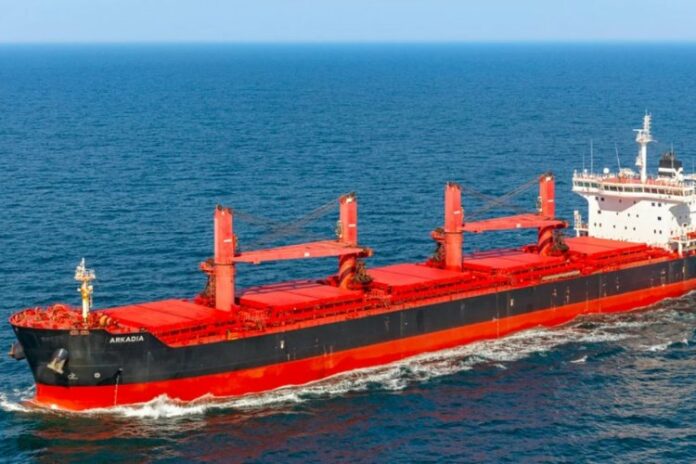
ESL Shipping has signed a memorandum of understanding to sell its two Supramax class vessels Arkadia and Kumpula to companies belonging to HGF Denizcilik Limited Sirket group, a Turkish shipping and logistics company. The sale of the vessels is part of a program announced in April 2023 to support and accelerate ESL Shipping’s low-carbon growth strategy.  

The delivery of the vessels is expected to take place in April-May 2024. The sales price is USD 37.1 million and it is paid fully in cash. Considering the carrying amount of the vessels and the cost to sell, the sales loss is expected to be approximately EUR 7 million.  

Following the sale of the Supramax vessels, ESL Shipping will continue to focus on Handysize and Coaster vessels and further develop its partnership strategy with the current and future customer base. In 2023, the operating profit of the Supramax vessels was EUR 1.6 (2022: 5.7) million.   

“The sale of the two Supramax vessels is well aligned with ESL Shipping’s low-carbon strategy. It also stabilizes ESL Shipping’s profit generation and frees up capital for Aspo’s and ESL Shipping’s future strategic growth efforts,” says Rolf Jansson, CEO of Aspo Group and Chairman of the Board of ESL Shipping. 

The two 1A ice-strengthened Supramax vessels of 56,000 dwt were originally received in 2012. The length of the vessels is 197 meters and the maximum draft with a full cargo is 13.0 meters. Both m/s Arkadia and m/s Kumpula have sailed under the Finnish flag. 

“As the traditional markets for our Supramax vessels on the Baltic Sea and the Arctic have changed significantly, now is the right time to sell these vessels. The sale will support our roadmap towards green shipping and our ambition to bring fossil-free handysize vessels to the market. The sale enables us to allocate even more resources to accelerate the green transition,“ says Mikki Koskinen, Managing Director of ESL Shipping.  

Where possible, the crews of the Supramax vessels will be re-employed in ESL Shipping’s remaining vessels.  

PowerCell Group collaborates on hydrogen fuel cell infrastructure demonstration

0

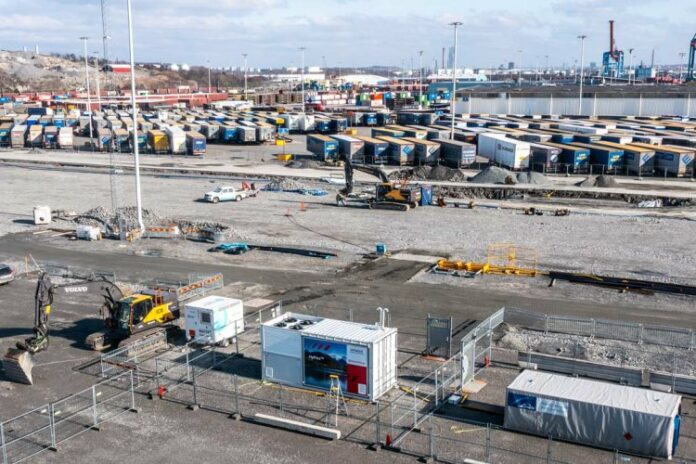
Project partners Port of Gothenburg, Skanska, PowerCell Group, Hitachi Energy, Linde Gas, Volvo Group and Skagerak Energy have conducted a joint field test to demonstrate the latest innovation in hydrogen-electric power infrastructure: the containerised Hyflex solution.

PowerCell Group has partnered with Hitachi Energy to develop a new product called Hyflex. The product is a flexible container solution that can be used in a wide range of applications for emission-free power production. Hyflex uses a 100kW hydrogen fuel cell from PowerCell in combination with batteries to generate power independently of the grid without emitting greenhouse gases when using green hydrogen. From March 4th-17th in the Port of Gothenburg, the project partners demonstrated that the solution is ready to replace fossil fuel solutions today in real life operations.

The trial was focused on off grid power generation for construction sites and vehicles, but the technology also has potential port applications, specifically with marine shore power connections (cold ironing) in mind.

When docked at port, ships remain predominantly powered by auxiliary engines to provide energy while the main engines are shut down. These auxiliary engines are typically powered by polluting oil-based fuels. Therefore, the development of more, and more sustainable shore power connections is key to reducing GHG emissions in ports.

Richard Berkling, CEO of PowerCell Group, commented:

“The green transition is underway, with hydrogen-electric solutions increasingly commercially valid for replacing fossil fuels in power generation – with demand for industrialised solutions supporting decarbonisation growing. At PowerCell, we see that the hydrogen industry is beyond the tech exploration stage and we are delivery emission-free fuel cell products to our customers. This makes us well-prepared and ready to be an enabler of the technology shift in the industry.

“The Hyflex has the potential to replace diesel generator sets across multiple platforms, as well as taking on new power generation applications. The current demonstrator has been developed with construction sites in mind, however we also recognise the need for marine and port electrification applications, such as sustainable ship-to-shore power.”

From a marine perspective, the demonstrator project is well-timed with the European Union’s latest regulations. Under FuelEU Maritime, it will be obligatory for passenger and container ships to use shore power supplies for all electricity needs while moored in major EU ports as of 2030, with a view to mitigating air pollution in ports, which are often close to densely populated areas.

Sustainable shore power connections lower ships’ total GHG emissions and eliminate the local emissions of sulphur oxides (SOx), nitrogen oxides (NOx), and particulate matter such as black carbon that ships burning oil-based fuels produce. Importantly, this improves local air quality and supports the respiratory health of nearby residents, port workers, passengers and crew.

Hydrogen and fuel cells can also deliver an independent ‘off grid’ energy source; adding a layer of resilience, if – for example – the grid is unstable or goes down. Hydrogen fuel cells are a strong option for shore power connections as they align well with the hydrogen infrastructure that many ports are already implementing or have planned.