-7.8 C
New York
Home Blog Page 198

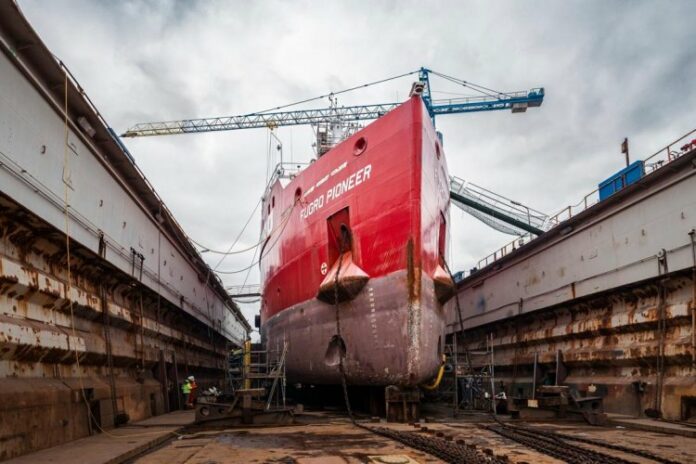
Fugro completes primary phase in first vessel conversion to green methanol fuel

0

Using green methanol as a fuel reduces carbon emissions by more than 90% compared to conventional diesel, allowing clients to run their projects in a more sustainable manner. This vessel conversion is part of Fugro’s journey to reach Net-Zero operations by 2035.

There is an increased focus on sustainability in tenders for the offshore market, and as such for Fugro’s clients. By embracing green methanol as a fuel, our clients are offered the significant opportunity to align their projects with environmental responsibility while maintaining operational efficiency.

The geophysical vessel was converted in the Netherlands as part of the Fugro-led consortium MENENS (Methanol as Energy Step Towards Emission-free Dutch Shipping) with a grant from the Netherlands Enterprise Agency (RVO). Converting the vessel to run on green methanol, further stimulates the green methanol market. The now-completed vessel adjustments to the Fugro Pioneer allow 2 of its 4 original engines to be replaced by methanol engines, ensuring services can still be offered in regions where green methanol is not yet available. The delivery and installation of the methanol capable engines are expected in the second half of 2024.   

Barbara Geelen, CFO Fugro:

“The methanol conversion of the Fugro Pioneer is not only a pivotal move in diminishing our vessel emissions as part of our Net Zero 2035 journey, but it also stimulates the green methanol market. We will continue to invest in innovative solutions that not only help our clients, but also support us in reaching our company objectives.”

European consortium works on innovative liquid hydrogen storage systems

0

Currently, liquid hydrogen is transported and stored using spherical storage tanks. However, these are not ideal for large-scale use. A European consortium led by the Federal Institute for Materials Research and Testing (BAM) is therefore working on a new, pioneering storage concept. The aim is to increase the capacity of suitable tanks by a factor of forty and at the same time reduce costs by 80 percent.

Liquid hydrogen (LH2) is transported and stored at minus 253 degrees Celsius, as it then has a particularly high energy density. Due to the extremely cold temperature, thermal insulation is particularly important. To date, the large LH2 storage tanks have been designed in a similar way to the small tanks for liquefied natural gas: they have a spherical shape to better withstand the pressure and minimize storage losses. They also have a complicated double wall that serves as thermal insulation.

However, spherical storage tanks have several disadvantages that make them unsuitable for large-scale use in the hydrogen economy:

  • The largest tank built to date has a volume of 5000 cubic meters. In the future, however, tanks for ships and stationary applications with at least ten to forty times this volume will be needed for liquid hydrogen. Scaling up the tanks accordingly is costly and involves technical risks.
  • The production time for spherical storage tanks is currently very long at over a year, as many of the processes build on each other and therefore have to take place successively.
  • When using insulation methods that have proven themselves in LNG tanks of 50,000-200,000 cubic meters in size, the walls for storing liquid hydrogen would have to be several meters thick.

In the NICOLHy project, BAM is working with four European partners to research new types of storage tanks for liquid hydrogen. For the first time, the principle of VIP thermal insulation (VIP = Vacuum Insulation Panel) is being tested for hydrogen storage.

It is known from building insulation, among other things. With VIP insulation, the loss of cold or heat is minimized by several panels arranged next to each other, which are based on a highly porous powder with a vacuum that is enclosed by a gas-tight membrane. The vacuum and the filling material together ensure that very minimal heat can flow

This structure makes it possible to achieve sufficient insulation against heat input from outside with a VIP insulation of just a few centimetres. Another advantage is that the tanks can be designed to be rectangular and fitted into the shape of a ship, for example. Compared to previous spherical storage tanks, the cargo space can thus be optimally utilized.

“Initial results show that the VIP insulation principle can be successfully used for the storage of liquid hydrogen,” explains Robert Eberwein, expert for tanks for dangerous goods and accident mechanics at BAM, who is coordinating the EU project. “Overall, the capacity can be almost doubled compared to spherical storage tanks, costs can be reduced by 80 percent and energy efficiency and safety can be increased at the same time. In the project, we will continue to research aspects such as sustainability, cost-effectiveness and safety. The modular storage technology could significantly accelerate the establishment of liquid hydrogen in the German and European energy industry.”

In addition to BAM, the project consortium includes the University of Bologna, the German Aerospace Center, the Norwegian University of Science and Technology and the National Technical University of Athens.

Study flags port infrastructure as barrier to CCS for shipping

0

A recent study commissioned by the Global Centre for Maritime Decarbonisation (GCMD), in collaboration with Lloyd’s Register and ARUP, has identified low port readiness as a major hurdle bottlenecking the adoption of Onboard Carbon Capture and Storage (OCCS) system as a practicable decarbonisation solution. 

Whilst the technologies required for offloading onboard captured CO₂ exist at high levels of maturity, safe operationalisation of captured CO₂ transfer by trained personnel has not been demonstrated.

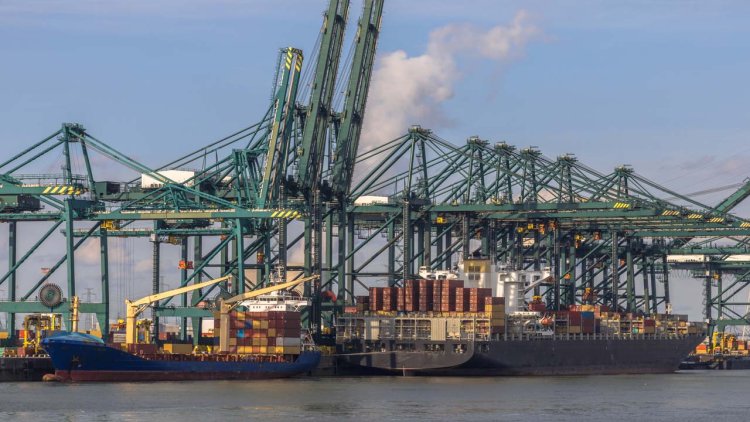
The report, titled “Concept study to offload onboard captured CO₂,” found that while a limited number of ports possess the infrastructure to offload liquefied CO₂ (LCO₂), they are primarily designed to handle food-grade CO₂. The higher purity standards that accompany this use limits the interoperability of facilities to handle onboard captured CO₂.

The study examined over ten planned LCO₂ related infrastructure projects worldwide. Located near, or with transport links from, CO₂-emitting industrial clusters, these projects are likely to handle much larger volumes of captured CO₂ than that from OCCS systems; port infrastructure needed for offloading, storing and transporting onboard captured CO₂ will likely need to be integrated with these projects for economies of scale. However, as many of such projects remain in concept phase and have not reached Final Investment Decision (FID), ports have not proceeded with offloading infrastructure investments. This chicken-and-egg dilemma highlights the overall infancy of the carbon value chain.

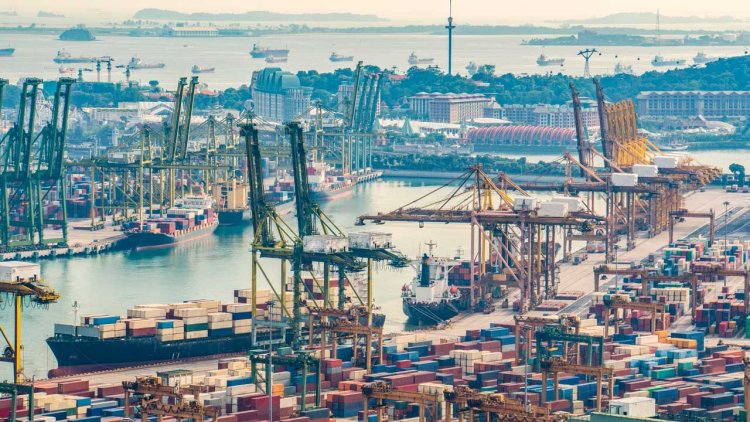
Furthermore, introducing LCO₂ offloading into already complex port operations will likely impact port efficiency and operational performance. The need for additional buffer zones to address the safety concerns of LCO₂ handling and storage will also add to existing space constraints at ports and terminals.
About the study: Addressing the gap in the carbon capture value chain

This 9-month long study aims to address a gap in the onboard carbon capture value chain. OCCS has recently gained traction as a potential interim solution to help international shipping meet IMO’s emissions reduction targets, with potential deliberations at future Marine Environment Protection Committee (MEPC) sessions. While achieving emissions reductions through OCCS hinges on successfully integrating a shipboard-compatible system within space constraints, equally important is addressing the fate of captured CO₂ by establishing its utilisation or sequestration pathways.

This study complements GCMD’s Project REMARCCABLE (Realising Maritime Carbon Capture to demonstrate the Ability to Lower Emissions) by addressing the feasibility of OCCS as a practicable, end-to-end solution at scale. For OCCS systems to be operationally feasible, the industry needs to develop a collaborative ecosystem to enable the value chain for managing captured CO₂.

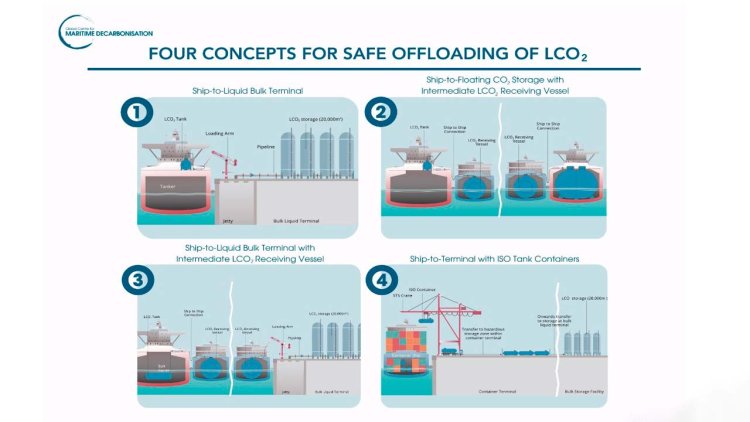
By systematically considering the needs of the entire value chain, this study evaluated four concept configurations of offloading infrastructure from a possible 162 scenarios, identified the operational standards and safety guidelines for handling LCO₂, developed models for the quantification of costs for scaled-up infrastructure, articulated manpower competency frameworks for offloading operations, and analysed the potential regulatory scenarios needed to address the current uncertainties surrounding LCO₂ offloading from OCCS.
Concepts for safe offloading of LCO₂

One of the key considerations is to examine how LCO₂ can be offloaded safely to the appropriate infrastructure.

The study determined that captured CO₂ in its liquefied form is likely the most efficient and cost-effective option for onboard storage and transport. Based on this, the study shortlisted four concepts covering key offloading modalities, such as Ship-to-Ship and Ship-to-Shore, serving as building blocks that can be combined to cover a wider range of offloading concepts. (Please see below for the infographics on these four concepts).

In ranking the operability of these concepts, the study identified Ship-to-Ship and Ship-to-Shore transfers using an intermediate LCO₂ receiving vessel as the most promising modalities for offloading at scale, with captured CO₂ eventually sequestered or used as feedstock for manufacturing synthetic fuels.

Ship-to-Terminal transfer of captured CO₂ stored in ISO tank containers was identified to be more compatible at smaller scales and for end uses that require higher grades of CO₂. This modality of transfer is also most compatible with existing port infrastructure and therefore easier to pilot today.
Safety considerations handling LCO₂

Handling LCO₂ onboard presents a unique set of safety challenges not commonly encountered when handling fuels in shipping. The study offers an in-depth examination of hazards, such as asphyxiation and toxicity, if a leak or a loss of containment takes place.

Unique to CO₂ is evaluation of its storage at conditions near its triple point, where the gaseous, liquid and solid phases of CO₂ co-exist. Storage at or near the triple point is sensitive to impurities, and minor changes in temperature and pressure can lead to a phase change from liquid to solid CO₂, leading to hazardous situations, such as blockage in pipes and build-up of pressure.

To address these hazards, a series of safety studies, including a Hazard Identification (HAZID) of offloading, Simultaneous Operations (SIMOPS) and a coarse Quantitative Risk Analysis (QRA), were conducted and mitigation measures and emergency response procedures articulated for handling LCO₂.
Professor Lynn Loo, CEO of GCMD, said,

“While pilots have successfully demonstrated numerous capture technologies onboard ships, it is still uncertain how captured carbon on merchant ships can be safely offloaded, and what the rest of the value chain looks like. This study sheds light on these challenges, and highlights recommendations to holistically address these concerns for parties interested in advancing OCCS / LCO₂ offloading concepts.”

Nick Brown, LR CEO, said:

“The maritime industry requires a comprehensive understanding of the safety and operational challenges posed by all emissions reduction technologies. This study, which focused on port readiness and considerations for the safe handling and offloading of LCO₂, addresses some of the gaps that exist in the carbon capture value chain and will support industry stakeholders in making informed investment decisions around carbon capture solutions and the creation of regulatory and operational guidelines.” 

Robert Cooke, Design Lead of Arup, said,

“As a result of the study, it has been promising to see how transferable existing CO₂ industrial knowledge is to an offloading application. Arup brought together energy and maritime capabilities to outline the concepts for onboard captured CO₂ offloading and develop how this new process can practically and safely integrate into busy port environments. We look forward to seeing the technologies and implementation develop into effective marine decarbonisation solutions.”

Rem Offshore orders next generation vessel

0

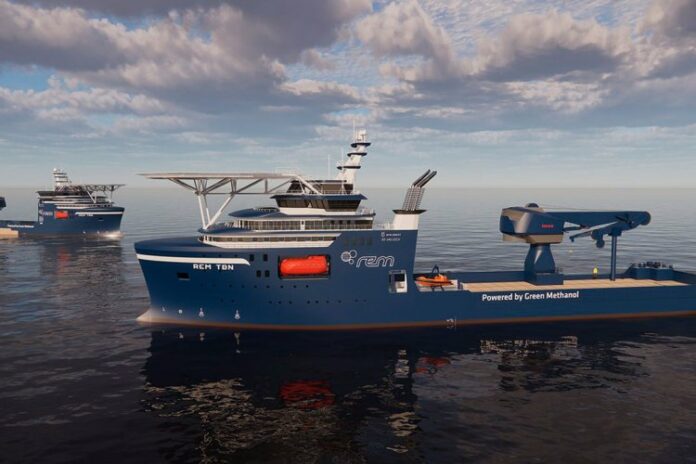
The vessel will be delivered in 2026 and will be the first of its kind that can perform heavy construction work in both offshore wind and subsea with net zero emissions. The contract also contains an option to build one more vessel.

Skipsteknisk has designed a very flexible platform in close cooperation with the Rem and Myklebust. The newbuilding is ground-breaking and uses a number of solutions where energy consumption is almost halved compared to comparable tonnage in today’s market, as well as meeting future requirements for zero emissions from end to end.The vessel will be equipped with dual-fuel methanol engines in combination with battery packs. All offshore lifting equipment, including the 250 T crane, is electric and regenerates power to the batteries. The working deck is over 1,400 m2, and it is also prepared for the installation of an offshore gangway for use in offshore wind.

“This is a big milestone for Rem Offshore. We are ordering our first net zero emission vessel and taking a big step into the future. We are looking forward to being able to offer the vessel to the market, and believe that our customers will appreciate the opportunity for more efficient and sustainable operations”, says Lars Conradi Andersen, CEO of Rem Offshore

Myklebust Verft has delivered newbuilds to Rem in the past, and was a natural choice according to Conradi Andersen. – We know Myklebust Verft well, it is a quality yard that delivers ships of a high standard. Adding in their competitiveness, it is natural for us to use the world-leading maritime cluster locally when renewing our fleet.

 Myklebust Verft is looking forward to add a new project to the backlog for a local customer. 

“We are very happy that Rem Offshore has chosen Myklebust Verft to build this environmentally friendly vessel. This assignment is a recognition of all our employees and the quality that Myklebust stands for. The project will also have major positive ripple effects in our area”, says Leiv Sindre Muren, CEO of Myklebust Verft.

Partners sign Certificate of Delivery and Acceptance for new HUGIN Superior AUV

0

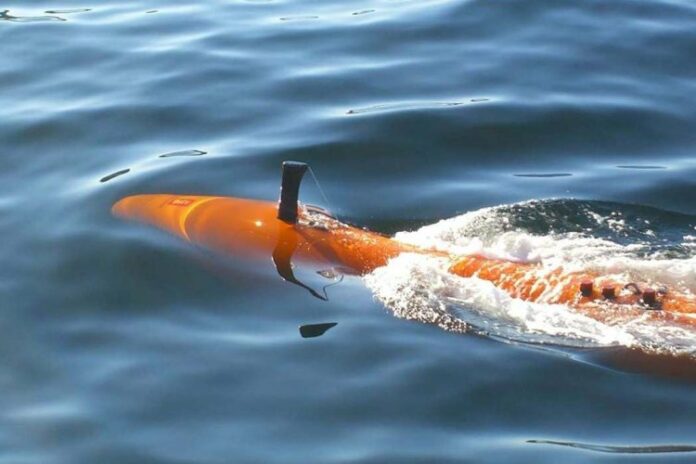
Ocean surveying and inspection specialist Argeo Subsea, CSI Nordics and Kongsberg Discovery have signed a three-party Certificate of Delivery and Acceptance for a new HUGIN Superior AUV.

The agreement, confirmed at Oceanology International in London, supports Argeo’s ambitious fleet expansion plans, as the firm looks to build the world’s most advanced AUV fleet, with seven high specification units. Argeo already has one HUGIN Superior in service.

CSI Nordics, a subsidiary of CSI Leasing, one of the largest independent equipment leasing in the world, will purchase the unit from Kongsberg Discovery, entering into a long-term leasing agreement with Argeo.

Argeo CEO Trond Crantz says the deal will amplify the company’s operational capacity, putting it in “a unique position within both the marine minerals, oil and gas and the renewables segment, increasing efficiency and productivity substantially.”

He comments:

“Our expansion plans will establish us as the premier authority in AUV technology worldwide. The strategic combination of Kongsberg’s highly advanced AUVs with Argeo’s proprietary cutting-edge electromagnetic sensor system, Argeo LISTEN, propels us ahead of competitors”.

“Argeo LISTEN allows for efficient inspection of cables and pipelines, both buried and on seafloor, as well as rapid estimation of cathodic protection status and remaining lifetime. By integrating this state-of-the-art system into the Hugin Superior, our clients can expect expedited project completion and access to comprehensive data derived from multiple sensors concurrently, ensuring unparalleled quality and efficiency.”

Speaking on behalf of CSI, Kenneth Mitsem, General Manager at CSI Nordics, adds:

“We specialize in crafting leasing solutions that are both flexible and sustainable, designed to meet the rapidly changing needs of the modern market. Our strategic approach focuses on making advanced technology readily accessible, enabling businesses to quickly respond to new challenges and maintain a competitive edge.

“We’re proud to collaborate with Kongsberg and Argeo to develop smart leasing options, facilitating easier access to innovations like the HUGIN Superior from Kongsberg Discovery. This partnership underscores our shared commitment to enhancing the acquisition of technology critical for thriving.”

The Superior sits at the top of Kongsberg Discovery’s HUGIN AUV family of products, which, after 30 years of developmental milestones, is the world’s most commercially successful range of AUVs.

The unit’s standard specifications are second to none. It includes a HISAS 1032 dual receiver, EM2040 Mk2 Multibeam Echosounder, a UHD still image camera, laser profiler, sub-bottom profiler, magnetometer, in addition to sensors for methane, carbon dioxide, oxygen, and more. Combined with the latest in navigation technology, including MicroNavigation systems for enhanced accuracy, the Superior raises the bar for AUV capability.

Stene Førsund, EVP, Kongsberg Discovery, says:

“We’re delighted to be consolidating our relationship with Argeo and CSI, with the leasing of this advanced, high specification technology.

“With their second HUGIN Superior onboard they’ll be able to offer clients excellence in high-resolution seabed mapping and imaging, with the functionality needed for a broad range of applications, and the precision and reliability to go further, deeper and into more detail on missions, delivering powerful competitive advantage. Argeo can look forward to achieving some Superior results in the very near future.”

In addition to the Superior, the HUGIN family of AUVs includes a variety of models customised to meet diverse markets, budgets and operational flexibility. This includes the HUGIN Endurance, capable of conducting missions over a range of 1,200 nautical miles, and the soon-to-launch HUGIN Edge, weighing only 300kg and less than 4m in length.

Ventyr secures winning bid in Norwegian auction for Sørlige Nordsjø II offshore wind development

0

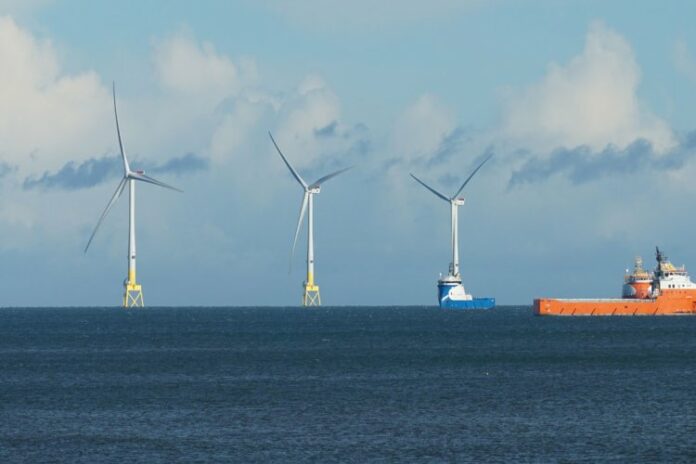
Ventyr, a consortium consisting of Parkwind and Ingka Investments, the investment arm of Ingka Group, the largest IKEA retailer, announces its success in the Norwegian auction for the development of the Sørlige Nordsjø II phase 1 area in the Southern Norwegian North Sea.

The Sørlige Nordsjø II project represents a critical step towards Norway’s ambitious goal of awarding 30 GW of offshore wind power by 2040. With the first turbines expected to be operational by 2030, this 1.5GW wind farm will play a crucial role in advancing the country’s renewable energy transition.

“We are thrilled to have secured the winning bid for the Sørlige Nordsjø II project,” said Jorne Bluekens, Project Manager at Ventyr. “This achievement underscores our commitment to driving positive change through renewable energy innovation. We look forward to working closely with our partners and stakeholders to bring this project to fruition and deliver tangible benefits to the local community.”

Ventyr is committed to delivering innovative and sustainable energy solutions. The cutting-edge and lean project concept focuses on maximizing efficiency while minimizing environmental impact.

The project places a strong emphasis on local ripple effects, ensuring that communities in the vicinity of the wind farm benefit from economic opportunities and job creation. Through strategic partnerships and community engagement, we are dedicated to fostering long-term prosperity and growth in the region. NorSea Group in Norway, one of the strategic partners of the project, is ready to play an important role in ensuring that it brings positive impacts to local communities.

“In NorSea we are proud and excited to be a partner in this winning project. We are looking forward to supporting the consortium with NorSea’s experience gained through six decades of offshore industry and convert this into a new energy and industry chapter for Norway, creating jobs and building competence”, says John E. Stangeland, CEO in NorSea.

”This is an important milestone in Norway’s offshore wind journey, and Parkwind is proud to be playing a key role in the development of Sørlige Nordsjø,” said François Van Leeuw, co-CEO of Parkwind. “We have a long track record of delivering successful offshore wind farms in the North Sea and look forward to bringing a new clean energy project to life in Norwegian waters.”

As part of a EUR 7.5 billion initiative to support of 100 percent renewable energy consumption across the value chain and beyond, Ingka Investments has invested and committed more than EUR 4 billion into renewable energy projects in wind and solar power. Out of the EUR 7.5 billion initiative, EUR 1 billion is committed to investments in innovation and transitional technologies, such as energy storage, hydrogen as energy carrier or grid infrastructure.

”We are delighted about the results of this first Norwegian auction. This is yet another investment that will enable a climate footprint reduction well beyond our retail consumption and into the IKEA value chain, and also support the transition to a renewable future. Offshore wind has a huge potential to contribute to Europe’s decarbonised energy goals, and we are looking forward to the next steps of this partnership”, said Frederik de Jong, Head of Renewable Energy at Ingka Investments.

Marlink delivers future-proof hybrid network solution for digital experience on board Exploris One

0

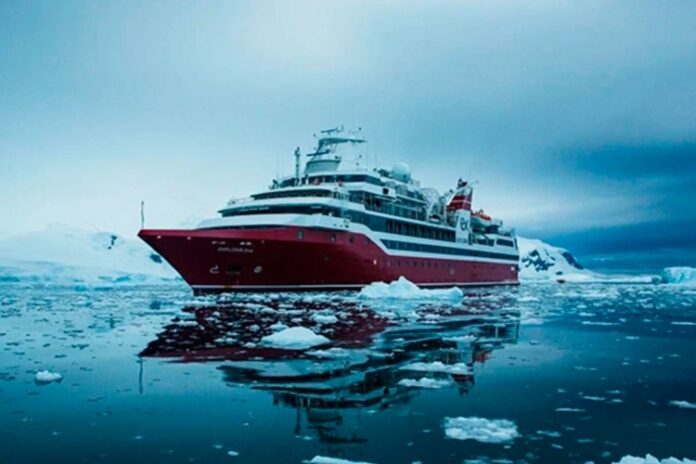
Marlink has installed a complete hybrid network solution for the new French expedition cruise company, Exploris, onboard Exploris One during the vessel’s refit in Valparaiso, Chile.

The solution provided is designed to deliver complete coverage and connectivity to the expedition cruise ship, including LEO from Eutelsat OneWeb, Starlink and Iridium, Marlink GEO VSAT, TV-RO and 5G GSM services. The network solution powers the onboard ethernet/Wi-Fi network and a customer portal. Whether guests are exploring remote islands or venturing into uncharted territories, they can now enjoy seamless, secure connectivity and unparalleled digital experiences onboard.

Designed to serve the French-speaking leisure market, the 144 guest ship began her season in December 2023 to South America and the Antarctic Circle and will offer 32 further departures during its inaugural season.

The programme features itineraries to locations including Antarctica, the Atlantic Islands, Western Europe, Svalbard, Iceland, Greenland, Canadian Arctic and South America. These remote and sometimes harsh locations require a hybrid network able to keep the vessel and its guests connected regardless of conditions.

Marlink’s technical team organised the installation of the antennas, below decks equipment and integration to the ship’s network during an extensive refit which saw the ice-capable vessel prepared for sailing to remote and polar regions.

Fugro introduces low-emission uncrewed vessels for Middle East’s ocean data needs

0

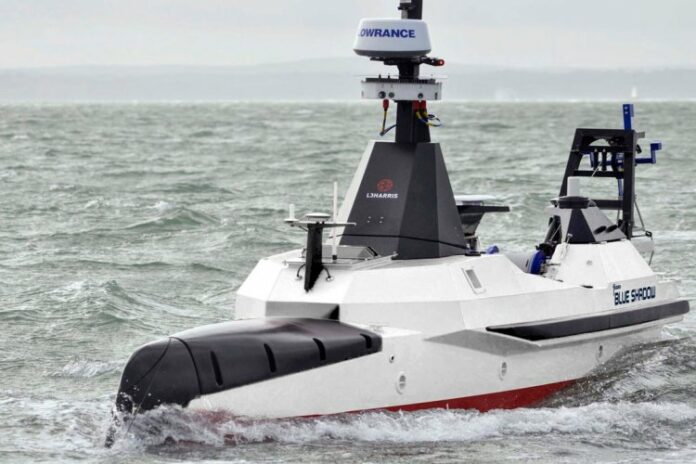
Following the successful launch of the Middle East’s first fully remote survey vessel in 2022, leading Geo-data specialist Fugro has announced the arrival of its Blue Shadow® class uncrewed surface vessel (USV), in the Middle East. 

Crafted for precise hydrographic mapping and bathymetry surveys, the Blue Shadow® will play a crucial role in addressing the rising demand for accurate hydrographic data in the Middle East, where infrastructure development, port expansion, and coastal management initiatives are at an all-time high.

Utilising state-of-the-art navigation and surveying technology, the Blue Shadow® efficiently collects vital data such as water depth and seafloor morphology, supporting the development of the blue economy in the Middle East while also aiding in understanding and protecting the delicate marine ecosystem. This advanced technology enables non-disruptive hydrographic surveys near existing offshore structures, resulting in efficient hydrographic surveys, reducing project timelines and providing crucial speed and accuracy in the dynamic maritime environment of the region.

With an ambitious goal to achieve net-zero emissions by 2035, Fugro is taking significant strides in minimising its environmental impact by including more remote operations in its surveys. Data acquisitions through USVs from remote operation centres contribute up to 90% less carbon emissions than traditional vessel operations whilst significantly reducing human exposure to hazardous environments. This initiative highlights Fugro’s dedication to sustainability and its commitment to advancing the science of the oceans, affirming its role as a leader in sustainable maritime operations.

Louis Burnard, Regional Director Marine Site Characterisation Middle East and India, said:

“This addition to the region’s fleet marks Fugro’s commitment to leveraging technology for a safe and liveable world. With the Blue Shadow® navigating our waters, we’re not just mapping the seabed, we’re forging a path for safer, more efficient maritime navigation in our region.”

ClassNK certifies the world’s first onboard CCS installation on Evergreen’s vessel

0

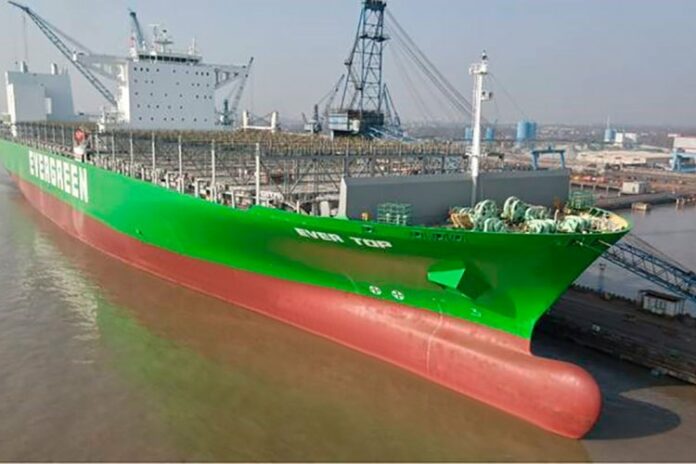
The notation signifies that the vessel is now equipped with an onboard CO2 capture and storage (CCS) systems, marking it as the world’s first Neopanamax container vessel to be retrofitted with such systems.

The CCS systems, designed and developed by Shanghai Marine Diesel Engine Research Institute, were installed at Huarun Dadong Dockyard Co., Ltd. (HRDD). ClassNK reviewed the system components and the installation plan, aligning with its comprehensive “Guidelines for Shipboard CO2 Capture and Storage Systems.” The risk assessment through Hazard Identification (HAZID) and the onsite installation process were also examined. Following confirmation of compliance with the relevant requirements, the ground-breaking “SCCS-Full” notation was duly affixed to the vessel.

Masaki Matsunaga, Corporate Officer / Director of Plan Approval and Technical Solution Division, ClassNK said,

“As the crucial action of first movers, ClassNK deeply respects the ambitious and practical application of CCS systems taken by Evergreen and involved parties to advance GHG abatement technology implementation. It is our great honor to be a part of this outstanding collaboration, and we are committed to supporting proactive initiatives toward decarbonization by providing appropriate standards, surveys, and certifications.”

Australia selects BAE Systems and ASC to build sovereign nuclear powered submarines

0

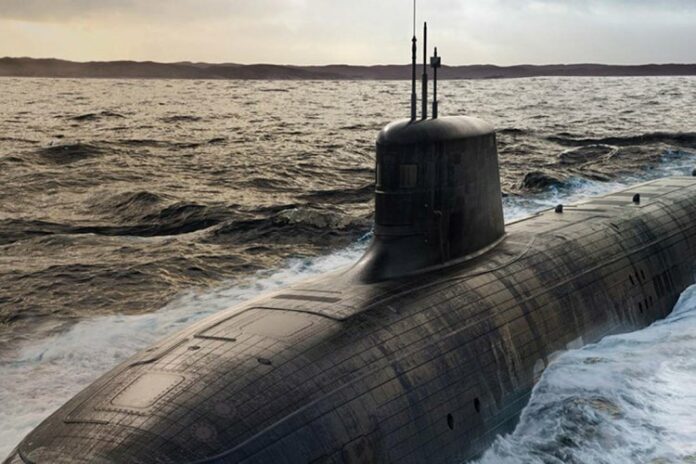
The Australian Government has selected BAE Systems and ASC Pty Ltd to build Australia’s new fleet of nuclear powered submarines in the latest significant development in the AUKUS trilateral security pact between the United States, the United Kingdom and Australia.

Australian Deputy Prime Minister, Richard Marles, and UK Defence Secretary, Grant Shapps, announced the news in Australia, marking the next step in the pathway for Australia to build and operate its own nuclear powered submarines.

Under the AUKUS agreement, Australia and the UK will operate a common submarine of the future, incorporating technology from all three nations, based on the UK’s next generation design which BAE Systems is leading.

BAE Systems and ASC Pty Ltd will now bring together their complementary skills, expertise and capabilities under a collaborative arrangement in Australia, ultimately leading to the establishment of a long-term, incorporated Joint Venture.

Charles Woodburn, BAE Systems Chief Executive, said:

“We’re extremely proud of our role in the delivery of this vitally important, tri-nation submarine programme. Our selection as a partner in Australia, alongside ASC, recognises our role as the UK’s long-term submarine design and build partner and as a key player in Australia’s maritime enterprise and wider defence landscape. Drawing on decades of experience in the UK and Australia, we look forward to working with ASC to develop an enduring, sovereign nuclear-powered submarine building capability for Australia. We’re already making good progress on the design and development of the next generation submarine in the UK where we have more than 1,000 people working on the SSN-AUKUS programme and major infrastructure investment underway. This latest step will ensure an integral connection between the UK design and the build strategy development in Australia as we work together to deliver next generation military capability as well as considerable social and economic value to all three nations.”

SSN-AUKUS will be the largest, most powerful and advanced attack submarines the Royal Navy has ever operated and will start to replace the Astute class, which BAE Systems is building at its site in Barrow-in-Furness in the North West of England, from the late 2030s. Australia expects to deliver its first SSN-AUKUS submarine in the early 2040s.

The UK Ministry of Defence awarded BAE Systems almost £4 billion for the next phase of the SSN-AUKUS programme in October. The funding covers development work through to 2028, enabling BAE Systems to progress the detailed design phase of the programme and procure long-lead items.  The award is also funding significant infrastructure investment in Barrow, which will see the site’s facilities double in size from 80,000 to 160,000 m2 by the late 2030s, as part of a multi-billion pound programme, and continued recruitment to support the national endeavour.

BAE Systems has already increased its UK submarines workforce to 13,500 with plans to grow to around 17,000 at its peak to support SSN-AUKUS in the UK, as well as the Astute and Dreadnought programmes, providing a significant employment boost for the region.

BAE Systems is the UK’s long-term submarine build partner and brings critical nuclear-powered submarine building experience and intellectual property. The involvement of BAE Systems in Australia ensures an integral connection between the SSN-AUKUS design led by BAE Systems in the UK and the development and maturation of the Australian build strategy.

BAE Systems has already delivered five of seven Astute class submarines to the Royal Navy in the UK, with the remaining two boats at advanced stages of construction at its shipyard in Barrow-in-Furness. The Company is also designing and building the UK’s next-generation nuclear deterrent submarines, Dreadnought, with construction underway on the first three of four new boats.

Rolls-Royce welcomed the announcement that the Australian Government would be investing in its ongoing AUKUS preparations. 

To meet the growth in demand from the Royal Navy, which includes AUKUS delivery commitments, work is already underway to double the size of the Rolls-Royce Submarines site in Raynesway, Derby.

Now jointly funded by UK MOD and the Australian Department of Defence, the expansion work announced last summer will create over 1,000 new jobs in Derby across a range of disciplines, including manufacturing and engineering. It will also see new manufacturing and office facilities being built on recently acquired land surrounding the existing Raynesway site.

In March 2023 it was confirmed that Rolls-Royce Submarines would provide all the nuclear reactor plants that will power new attack submarines as part of the tri-lateral agreement between Australia, the UK and US.