-7.8 C
New York
Home Blog Page 197

McDermott awarded offshore contract from PTTEP

0

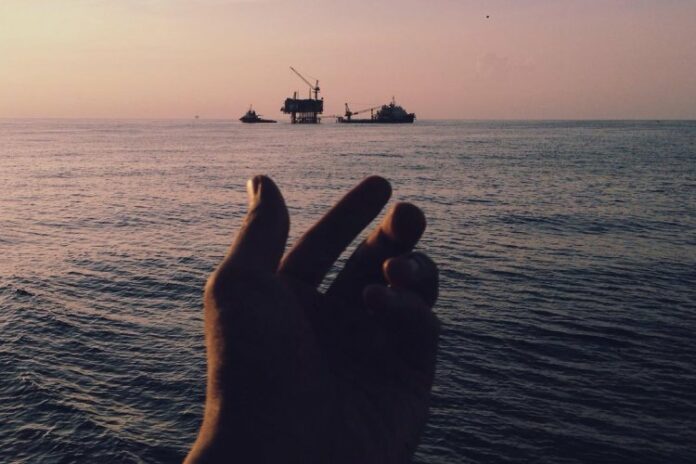
McDermott has been awarded a sizeable offshore transportation, installation and commissioning contract from PTTEP Sabah Oil Limited (PTTEP) for the Kikeh subsea gas lift project, located 75 miles (120 kilometers) northwest of the island of Labuan, offshore Sabah in East Malaysia.

Under the scope of the contract, McDermott will remove the existing flexible gas lift riser and perform the installation and commissioning of a new dynamic riser section and flowline comprised of two thermoplastic composite pipe jumpers. This will enable gas delivery to a subsea production system tied back to the Kikeh floating production, storage and offloading (FPSO) vessel.

“McDermott is uniquely positioned to deliver this project, having performed the installation of subsea infrastructure in the Kikeh field between 2011 and 2012, and again in 2014, in the nearby Siakap North-Petai field,” said Mahesh Swaminathan, McDermott’s Senior Vice President, Subsea and Floating Facilities. “We pioneered reel-lay installation for pipe-in-pipe production and water injection flowlines in the region, underscoring our commitment to engineering innovation. Returning to the Kikeh field not only reaffirms our expertise, but also presents another opportunity to deliver exceptional results through our unmatched experience in offshore transportation, subsea installations, and commissioning.”

Project management and engineering will be executed from Kuala Lumpur, Malaysia, with support from other McDermott offices.

Operated by PTTEP on behalf of partner Petronas Carigali and PT Pertamina Malaysia Exploration Production, the Kikeh field has been producing from the existing Kikeh FPSO since 2007. The Kikeh FPSO is the first and largest deepwater FPSO in Malaysia.
MOL’s innovation activities earn ClassNK innovation endorsement certification

0

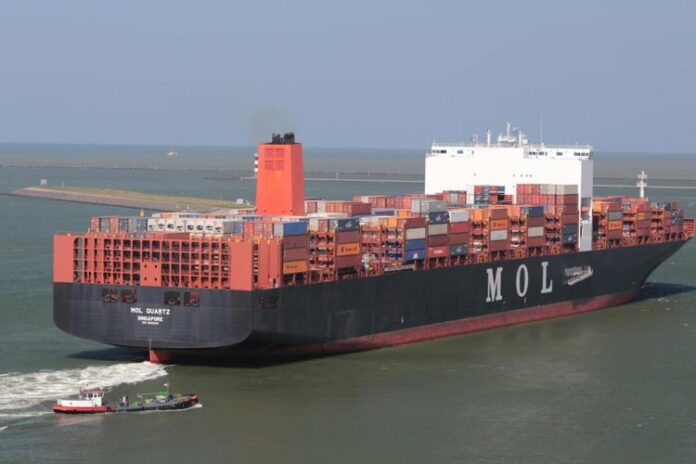
Mitsui O.S.K. Lines announces that “FOCUS”, a ship operation data analysis software system, and “Sustainable Seafaring, Wellness Living”, a living quarters concept that enhances seafarers’ wellbeing, have received Nippon Kaiji Kyokai (ClassNK)’s Innovation Endorsement Certification, which recognizes innovative initiatives in the maritime industry. 

“FOCUS” is an operational data analysis software system that collects and analyzes detailed data from ICT-enabled vessels. Based on detailed navigation and engine data obtained from vessels in operation, MOL monitors ship operations and analyzes propulsive performance, thereby streamlining communication and cooperation between vessels and shoreside personnel to enhance operating safety and reduce environmental impact.

ClassNK has verified the functions of “FOCUS”:

1. Vessel performance analysis that integrates abundant operational knowledge and naval architecture method.

2. Realization of sailing with low GHG emission and improvement of effective operation by precise performance analysis. 

3. Realization of safe vessel operation with effective support from shore side.

4. Utilization of noon report data by visualization and improvement of data accuracy.

5. Fleet Tour function utilizing general arrangement and photographs taken by 360 degree camera.

“Sustainable Seafaring, Wellness Living” is a concept for seafarers’ living quarters to realize seafarers’ wellbeing, conceived by young employees in MOL’s Technical Division and Maritime Safety Division after listening to the opinions and ideas of seafarers. They collaborated with shipyards, design companies, and other partners in bringing the concept to fruition.

In terms of hygiene, privacy, comfort, health, and convenience, improve life on board and create a stress-free environment. In addition, a new established “IKOI”, an onboard third place in the living quarters, which features an open design with ample light, providing a “healing space that can be used by anyone, regardless of whether they are officers or crewmembers.” 

ClassNK has reviewed the initiatives under this concept with the aim of: 

1. improving the basic living environment on board through specifications that contribute to hygiene, privacy, and health, regardless of the type of ship.

2. achieving a more attractive and rewarding environment with specifications for each type of ship that contribute to comfort, convenience, and quality of life, and 

3. realizing the well-being on board by establishing a new public space “IKOI” in the accommodation space. After conducting verifications on each, ClassNK has issued certificates to MOL.

Bureau Veritas certifies world’s first Floating Offshore Solar Prototype ‘Merganser’

0

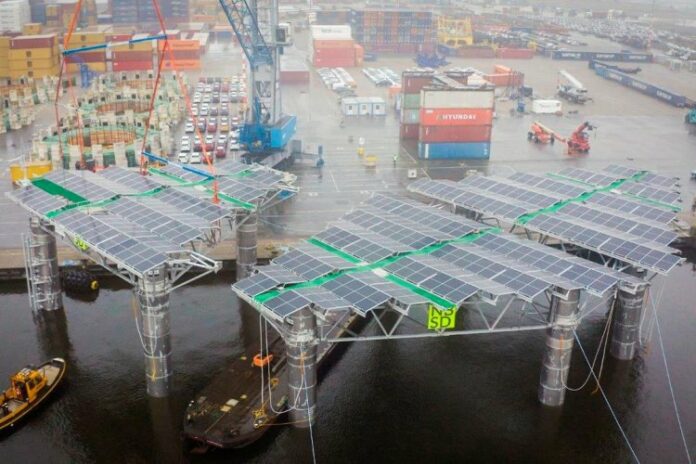
Bureau Veritas (BV) has awarded the Dutch-Norwegian renewable energy company SolarDuck the world’s first Prototype Certification for a floating offshore solar technology, as applied in SolarDuck’s 0.5 MW pilot “Merganser”. This certification represents a significant step forward in the development of marine renewable energy technologies for offshore applications.

The Merganser project, developed by SolarDuck and supported by RWE, features an offshore floating solar pilot with a capacity of 520 kWp. Comprising six interconnected platforms, the solution is designed to withstand challenging offshore conditions, including high waves, strong winds, and corrosive environments. The design has been certified to withstand a maximum wave height of 11.6 meters (with a directional 10-year return period) at a water depth of 21.5 meters (MSL) at the North Sea Farmers test site. It will be deployed off the coast of The Hague, Netherlands, providing a real-world operational environment to evaluate its performance and resilience in the dynamic North Sea.

Bureau Veritas has been actively supporting SolarDuck in its pioneering efforts to develop floating solar solutions. The certification of the Merganser prototype follows the Approval in Principle (AiP) granted for its floating structure. Throughout the certification process, Bureau Veritas meticulously evaluated the prototype against rules and standards, including guidance note NI631 on the Certification Scheme for Marine Renewable Energy Technologies. These assessments covered various aspects such as the floating structure, mooring system, stability analysis, materials, and electrical safety systems. Moving forward, the technology will be further evaluated for a type certification.   

Don Hoogendoorn, CTO of SolarDuck, commented:

“A key step in making the technology bankable is obtaining certification of the technology. As long-standing partners, SolarDuck has cooperated closely together with Bureau Veritas to verify the technology for the harsh North Sea conditions, marking a significant milestone in the development of our offshore floating solar technology”. 

“The certification of SolarDuck’s prototype Merganser reflects the collaborative efforts between Bureau Veritas and industry innovators in advancing sustainable energy solutions. Our expertise in assessing structural integrity and conducting design evaluations played an important role in meeting technical standards, highlighting our commitment to fostering innovation while ensuring safety and reliability in offshore renewable energy projects”, says Martijn Nieuwenhuijs, Country Chief Executive, Bureau Veritas Marine & Offshore Netherlands.

Davie awarded first contract for design of icebreaker fleet

0

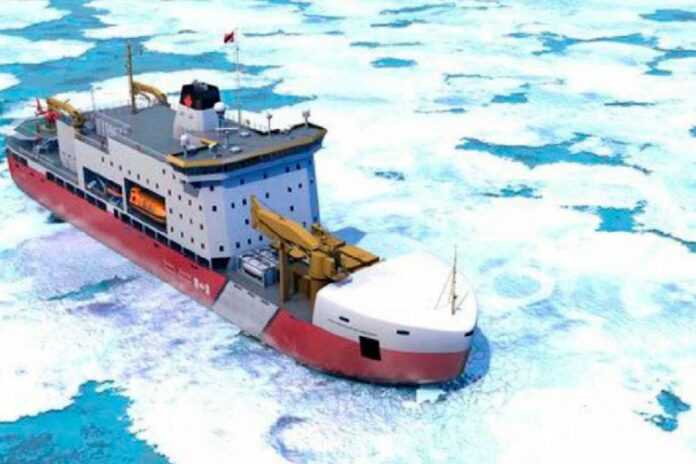
This major milestone marks the beginning of Davie’s NSS work package to replenish Canada’s Arctic fleet and each initiative under the contract will help advance upcoming design, construction, delivery and support phases for these strategic ships.

The Honourable Jean-Yves Duclos, Canada’s Minister of Public Services and Procurement (PSPC) said:

“This first contract awarded to Chantier Davie under the National Shipbuilding Strategy brings us a step closer to providing the Canadian Coast Guard with the next generation Arctic ships. They will be among the most advanced, sustainable and durable vessels tailored to the world’s harshest environments. The new fleet will be symbolic of Canada’s Arctic presence and crucial to keeping our country open for business year-round.”

Davie President and CEO, James Davies, said:

“This is a momentous first step in our journey to deliver a fleet of the largest and most advanced icebreakers ever built in and for Canada. My heartfelt thanks go to the dedicated teams at Davie, the Canadian Coast Guard and PSPC. They have spent countless hours preparing for this historic milestone. Now, we can’t wait to get working on renewing Canada’s Arctic fleet.”

Davie will establish a Program Icebreaker project management and design office, providing compelling opportunities for current and future generations of Canadian shipbuilders. Davie is committed to recruiting teams of highly skilled shipbuilding professionals, who will drive all aspects of constructing the world’s largest order book of heavy icebreakers.

Moreover, Davie will engage critical subcontractors to design and certify the vessel to established safety, environmental, and performance standards. Building on Davie’s proven track record of delivering vessels of exceptional quality and performance, this early phase is fundamental in guaranteeing sustained operational readiness and capability to best serve the CCG’s missions.

Julian Kenney, Program Director for the Program Icebreakers at Davie, said:

“Embarking on the design and construction of Canada’s new icebreaker fleet is a great source of pride for everyone at Davie. We have a strong partnership with the Canadian Coast Guard and our top priority is to design and build the icebreakers Canada needs to keep our waterways open, protect our environment, and secure the Arctic.”

Yara and Azane granted permit to build world’s first low emission ammonia bunkering terminal

0

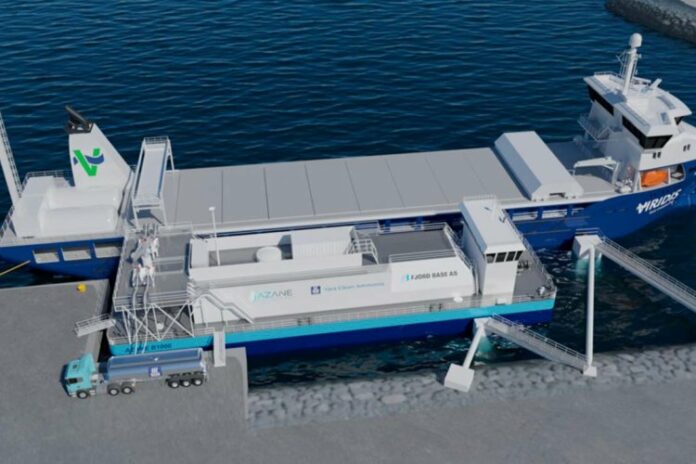
Ammonia is widely recognized as a low-emissions shipping fuel. Even though interest in ammonia as a decarbonized shipping fuel is high, the final leg of the journey, from the production plant to the vessel, has been missing. Now Yara Clean Ammonia, Azane and Fjord Base have demonstrated how the planned ammonia bunkering terminal can meet the strict safety requirement of the Norwegian Directorate for Civil Protection (DSB).

The planned terminal consists of a floating stationary barge with a capacity of 1000 cubic meters, or 650 tons, of low-emission ammonia. The permit allows for up to 416 operations annually, many of these expected to be bunkering operations for offshore supply vessels that regularly call at Fjord Base in Florø.

The planned terminal is part of Yara Clean Ammonia and Azane’s efforts to make low-emission ammonia a common fuel for shipping. With ammonia’s potential to fully decarbonize the maritime sector, the companies plan to roll out a network of terminals in Scandinavia.

This milestone is important to meet the growing demand for ammonia as shipping fuel, as well as incentives needed to enable ship operators and owners to switch from high-emitting, but cheaper fuels, to the low-emission alternative of ammonia. Demand seems to gain momentum in Norway as ENOVA, which manages the Norwegian Climate and Energy fund on behalf of the government, is planning ammonia grant tenders for both ammonia powered ships and ammonia infrastructure in 2024. There are multiple newbuilding projects in the pipeline, and ongoing ammonia-powered Platform Supply Vessels (PSV) tender processes.

Yara Clean Ammonia, Azane and Fjord Base will now commence work with their project partners to obtain a permit with the local municipality before a final investment decision.

Magnus Ankarstrand, President Yara Clean Ammonia, stated:

“We are grateful for the permit awarded from the Norwegian Directorate for Civil Protection. This acknowledges how ammonia can be used safely and efficiently as a shipping fuel at the site in Kinn. The ammonia terminal will enable the decarbonization of the maritime sector and showcase ammonia’s assets as a zero-emission shipping fuel. We look forward to working together with our partners and the local community in Kinn to complete the project and provide the shipping fuel for the future to the Norwegian offshore supply segment.”

Steinar Kostøl, VP Projects& Products, Azane, commented:

“This marks a milestone for ammonia as a fuel. Now we finally know with certainty the safety zones we will have to operate under when bunkering ammonia. The required safety zones are very encouraging and demonstrate how it will be possible to bunker ammonia in the biggest and busiest ports around the world.”

Stig Førde, CEO, Fjord Base, stated:

“The Fjord Base community welcomes with great enthusiasm the declaration of conformity issued by DSB. It underscores our commitment to providing our customers with innovative solutions aimed at minimizing their carbon footprint. The development of an ammonia bunkering terminal marks a significant step forward in this endeavor, bolstering our competitive edge at Fjord Base and showcasing our dedication to sustainability.”

Stena Bulk completes sale of two LNG tankers to BW LNG

0

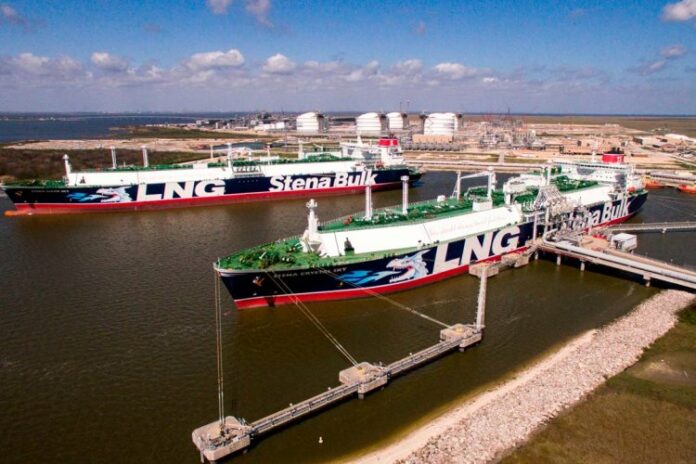
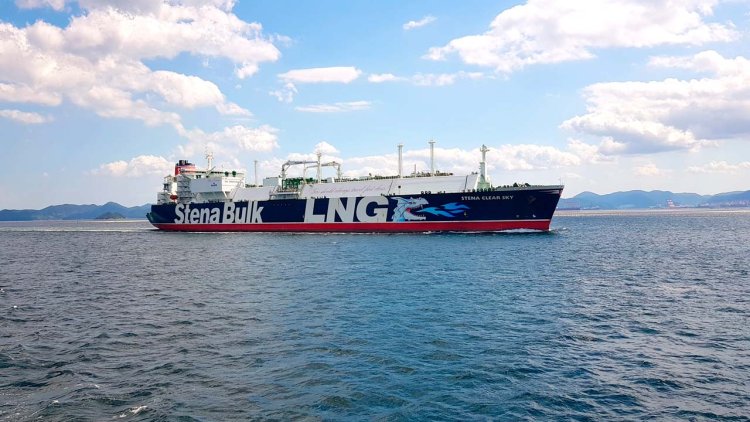
Stena Bulk has successfully completed the sale of two of its LNG carriers – Stena Crystal Sky and Stena Clear Sky – to BW LNG.

Both vessels were originally delivered in 2011 from Daewoo Shipbuilding & Marine Engineering in South Korea. Stena Crystal Sky and Stena Clear Sky each have an LNG carrying capacity of 174,000 cbm.

Speaking on the sale of the LNG carriers, Erik Hånell, President & CEO of Stena Bulk, said: “As part of our strategy to continuously look for new opportunities, Stena Bulk took the decision some time ago to sell Stena Crystal Sky and Stena Clear Sky. We are pleased to have been able to find a solid buyer in BW LNG for these two LNG carriers.

“Following the sale of these two vessels, we have one LNG tanker – Stena Blue Sky – still in our control. We will continue to be pragmatic about Stena Blue Sky, and the opportunities that slightly rationalising our fleet will bring. This news enables us to continue to build bridges towards a new era for Stena Bulk and our fleet.”

Ørsted selected by U.S. Department of Energy to receive industrial decarbonization funding

0

Ørsted has been selected by the Department of Energy (DOE) Office of Clean Energy Demonstrations to begin award negotiations for up to $100 million in federal funding to construct a groundbreaking Power-to-X facility, called Star e-Methanol, along the Texas Gulf Coast.

Ørsted’s project was selected as one of 33 projects across more than 20 states to demonstrate commercial-scale decarbonization solutions needed to move energy-intensive industries toward net-zero. It was one of a subset chosen for funding that, according to the DOE’s Funding Opportunity Announcement, represents a “world-leading, first-or early-of-a-kind, full facility build resulting in significant emissions reductions up to net-zero operations.”

“The production of e-methanol will be critical to achieving rapid decarbonization for the most hard-to-electrify sectors, and we are thrilled to have the U.S. Department of Energy’s support to develop and scale this new industry,” said Melissa Peterson, Head of Onshore and P2X Americas at Ørsted. “Beyond decarbonization, Ørsted’s investments in Texas and in the e-fuels industry will create new American jobs and deliver economic value and benefits to local communities.”

The U.S. industrial and transportation sectors accounts for 65 percent of U.S. greenhouse gas emissions. Ørsted is leveraging its renewable power portfolio to produce green hydrogen and e-methanol to reduce emissions from these sectors. Star e-Methanol is estimated to produce up to 300,000 metric tons of e-methanol annually which can be used directly as a marine shipping fuel, or as an input in sustainable aviation fuel or in chemical production, which all currently rely on energy-intensive fossil-derived fuels.

The Star e-Methanol project consists of multiple components to reach a net-neutral carbon solution. This includes building new onshore wind and solar projects in Texas to power the electrolysis of green hydrogen, capturing biogenic carbon from an industrial facility, and synthesizing the captured biogenic carbon with green hydrogen to create e-methanol. The resulting e-methanol will reduce CO2 emissions by more than 90 percent compared to conventional marine fuel.

The project is estimated to create 300 construction jobs and 50 permanent jobs for operations and maintenance. Many employees supporting the project will be based in Houston, where Ørsted opened a new office in early 2024. Ørsted has also committed to working with the University of Houston to create a meaningful community benefits plan that incorporates workforce development training, furthering STEM at educational institutions, and supporting environmental justice initiatives.

Eni, Fincantieri and RINA establish partnership for maritime transport decarbonization

0

Eni, Fincantieri, and RINA have signed an agreement to develop joint initiatives for the energy transition. The partnership formalises the commitment to develop joint projects, in line with the partners’ strategies, to decarbonise the maritime sector in the medium to long term with the goal of Net Zero by 2050. Additionally, the establishment of a permanent global observatory regarding future technological, regulatory, and market developments will be evaluated.

The three companies will conduct a comprehensive analysis and evaluation of the most sustainable alternatives to support the maritime decarbonisation pathway. This will also be based on the development of complementary solutions to fuels already available for other hard-to-abate sectors. The partnership’s areas of interest also include an analysis of the reference energy infrastructure and the development of new logistic structures, including the investments that the sector requires.

Giuseppe Ricci, Chief Operating Officer for Energy Evolution at Eni, commented:

“The collaboration with Fincantieri and RINA, two major Italian players, is a further step in our journey towards the transition and decarbonisation of maritime transport. To meet the objectives of the UN 2030 Agenda, it is important not only to manage what is immediate but also to act with a medium to long-term perspective, developing partnerships to create more sustainable solutions and products. The ability to network among the partners, with their wealth of skills and technological capabilities, can make a significant contribution to finding more effective solutions for decarbonising maritime transport and meeting the needs of shipowners and logistics operators, always leveraging a holistic approach”.

Pierroberto Folgiero, CEO and Managing Director of Fincantieri, said:

“We are highly committed to supporting our clients in addressing the industrial challenges of the maritime energy transition, and this initiative is aimed at initially creating a hub of study to harness Italy’s extraordinary expertise in new technologies, novel fuels, and their profound industrial implications for the ship system. We are very pleased to join forces with Eni and RINA in an alliance to materialize existing solutions and to pave the way for the future with a proactive ecosystem approach. Indeed, new technologies must be industrialized on board ships, just as new fuels must be produced and distributed at the dock. Only with a concept of “operationalizing innovation” can we lead our industry and project our shipbuilding leadership into the future”.

Carlo Luzzatto, CEO and General Manager of RINA, said:

“We strongly believe in the value of collaboration and the opportunities it brings, particularly when it involves players of international calibre such as Eni and Fincantieri. Together, we have the opportunity to share knowledge and experience and to contribute to more sustainable solutions that support the shipping supply chain. RINA brings to the partnership its engineering and technological skills, developed across various sectors, to support shipping in its journey towards reducing its carbon footprint, without excluding any energy options”.

The understanding may be the subject of subsequent binding agreements that the parties will define in compliance with the applicable legislation, including that relating to transactions between related parties.

Damen and Art Explora celebrate First B-shore converter commissioning for Art Explorer yacht

0

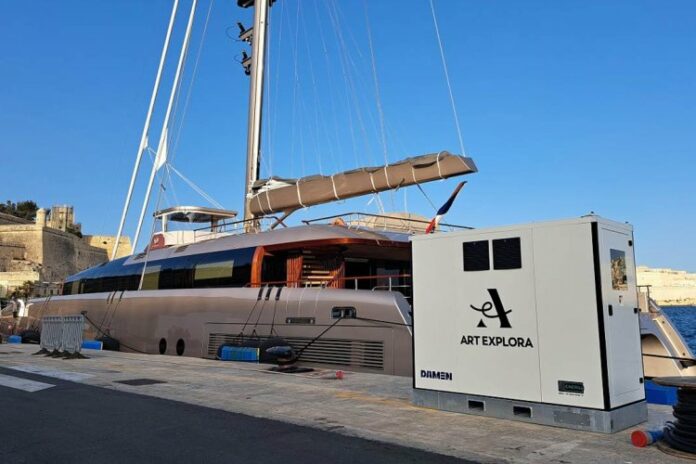
Damen and Art Explora recently celebrated the commissioning of the first B-Shore power converter in Malta. Damen had announced the development of the unique converter series in October 2022, in partnership with Mc Energy. The B-Shore provides a solution to shore power frequency fluctuations, adapts to any shore installation and ensures connection to shore power anytime, anywhere.

The Art Explorer yacht is the world’s largest sailing catamaran and museum boat. Designed by architects Axel de Beaufort and Guillaume Verdier, it is 47 metres long and 55 metres high. The ship belongs to a private owner and will be lent for six months a year to the Art Explora Foundation, which will use it as a museum. For the remainder of the year, the vessel will be used for charter and private purposes.

Due to the dual role of the yacht, a clear electrical separation was implemented between the hotel and museum segments. Art Explora system architect Guy Butterati said:

“Due to weight restrictions, it was not possible to install a second galvanic isolation for the museum system on board the yacht. In addition, we have plans to present the yacht as a museum beyond the borders of Europe. A less stable electrical network is expected in this new environment. The Damen B-Shore is the ideal solution for us to deal with these issues.”

Tom Busse, Project Manager at Damen Services, added:

“The plug-and-play concept of the B-Shore is very practical. Connecting and activating it doesn’t pose much of a challenge for an average electrical engineer. The activation of the B-Shore went smoothly on the first try, so we are happy, but more importantly, our customer is happy.”

The commissioning of the first B-Shore power converter marks a significant milestone in sustainable power management for maritime operations, underscoring Damen’s commitment to innovation and excellence in the maritime industry.

Wärtsilä signs agreement for CDWE’s new 216 metres-long marine installation vessel

0

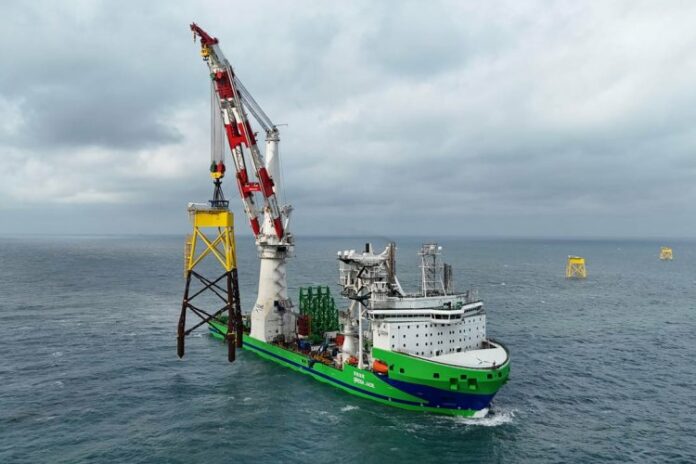
Technology group Wärtsilä has signed a long-term Guaranteed Asset Performance agreement with CSBC-DEME Wind Engineering Co Ltd (CDWE), a joint venture between CSBC Corporation and DEME Offshore. 

The agreement covers CDWE’s new 216 metres-long marine installation vessel (MIV), the ‘Green Jade’. The order was booked by Wärtsilä in Q1 2024.

Green Jade is designed and built in Taiwan with the mission to facilitate government policy to make Taiwan sustainable. As Green Jade will be managing diverse projects and varying offshore distances, operational reliability is of utmost importance. The extensive service support provided by the Wärtsilä Lifecycle Agreement will maximise the vessel’s uptime and significantly mitigate the risk of delays to the installation work by ensuring regular maintenance, timely repairs and access to technical support.

Marco Kanaar, CEO of CDWE, owner of the offshore heavy lift DP3 installation vessel Green Jade says:

“High utilisation of our Green Jade is of utmost importance to our business which is why we have selected the Wärtsilä thrusters and engines for its reputation for excellent quality and reliability. By formalising our partnership with Wärtsilä through this maintenance agreement, we are not only enhancing the operational efficiency and asset availability of our fleet but also fostering our joint commitment to nurturing local talent, facilitating employment opportunities and solidifying a foundation for sustained success in Taiwan’s offshore industry.” 

The full scope of the agreement includes remote operational support, a propulsion condition monitoring service and Wärtsilä’s Expert Insight predictive maintenance service. Expert Insight utilises artificial intelligence and rule-based advanced diagnostics to continuously monitor operating data. This secures asset availability and reliability.

“From the very first discussions it was clear that availability, maintenance flexibility and reliability were essential for this project with CDWE during project execution. This vessel holds a special flag administration and classification society exemption, permitting 7.5 years drydocking intervals. This is enabled with data, AI and close collaboration between us and the ship operator,” comments Henrik Wilhelms, Director, Agreement Sales, Wärtsilä Marine.

The agreement also includes comprehensive scheduled maintenance, including all major overhauls of the ship’s Wärtsilä engines and thrusters, along with original spare parts. The time-between-overhaul guarantees, provided by the agreement, decrease the frequency of overhauls. This not only significantly reduces the cost, but also minimises the environmental impact of the maintenance.