-7.4 C
New York
Home Blog Page 196

New project will accelerate green switch in maritime industry

0

The Advanced Zero Emission Analysis Tool is a numerical system that will assess the feasibility of zero-emissions modifications of existing vessels.

It can also be used in the design of new vessels.

Using the tool, owners, operators, system designers and engineers will be able to find the optimum green fuel options for their requirements.

The tool, developed by the University of Exeter’s Centre for Future Clean Mobility (CFCM) and Newcastle Marine Services, has been awarded a grant of more than £500,000 by Innovate UK.

“By the end of the project, the tool will be offered to the UK maritime industry,” said Professor Chris Smith, of CFCM.

“As well as helping a diverse range of vessels switch to green fuels, it will allow rapid and cost-effective evaluation of the large offshore support fleet required for the UK’s net-zero industries – contributing to the national effort to achieve net zero before 2050.”

Project lead Iman Ramzanpoor, Managing Director of Newcastle Marine Services, said: “We are enthusiastic about the collaboration with the Centre for Future Clean Mobility to create an innovative and robust software aimed at expediting and transforming the adoption of alternative fuels in the maritime industry.

“Through a comprehensive feasibility study encompassing technical and financial considerations conducted by the Advanced Zero Emission Analysis Tool, the project aims to streamline design and feasibility processes, rendering the shift to zero or lower emissions a compelling option for a diverse range of professionals including designers, operators, and policymakers in the UK and beyond.

“This initiative underscores our dedication to advancing sustainable maritime technology and supporting the UK’s aspirations to emerge as a global frontrunner in low carbon maritime practices.” The funding, which comes from the UK government’s Department for Transport, has been awarded as part of the Clean Maritime Demonstration Competition (CMDC).

Thousands of tonnes of microplastics found in Moreton Bay

0

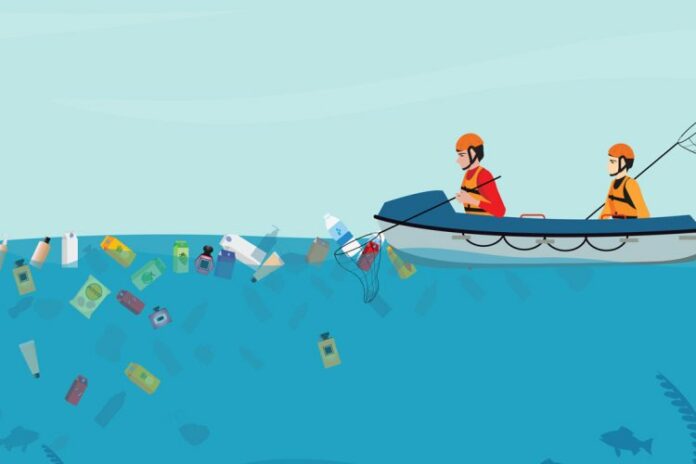
Dr Elvis Okoffo from UQ’s Queensland Alliance for Environmental Health Sciences said the team measured plastic stored within 50 surface sediment samples collected across Moreton Bay.

“The level of plastic contamination we found is equivalent to three Olympic swimming pools full of plastic or 1.5 million single use plastic bags,” Dr Okoffo said.

“The main types of plastic detected were polyethylene (PE) and polyvinyl chloride (PVC).

“PE is used for single-use items such as plastic food wrapping, bags and bottles and PVC is used in pipes, building materials, electronics, and clothing.

“These were the most used types of plastics in Australia between 2019-2020 and our findings suggest a direct link between the use of these plastics and their prominence in the coastal environment.”

The UQ research team used a mass based quantitative method to measure the concentration of seven common plastic types in the bay and its ecosystems, including mangroves, seagrasses and mud.

Associate Professor Helen Bostock Lyman from UQ’s School of the Environment said sediment samples were collected from across the bay using a small metal grabber lowered to the sea floor.

“The samples were put into glass jars, dried in the lab and analysed for plastic polymers using a solvent extraction and mass spectrometry technique which looks at the chemical signature of the different polymers,” Dr Bostock said.

“The advantage of this method is that we can quantitatively measure plastic concentrations of any size range.

“Understanding the types of plastic polluting coastal environments and the scale of the issue is critical to informing strategies to reduce future pollution.

“This is the first study to quantify plastic in Moreton Bay and one of the few studies that has quantified microplastic pollution in coastal areas around Australia.

“We are currently investigating how plastic has changed over time in Moreton Bay from sediment cores from the centre of the bay and we will be looking at the level of plastic contamination in organisms that live there.”

The research paper was published in Science of the Total Environment.

Japanese partners to set up marketing company for liquefied CO2 shipping

0

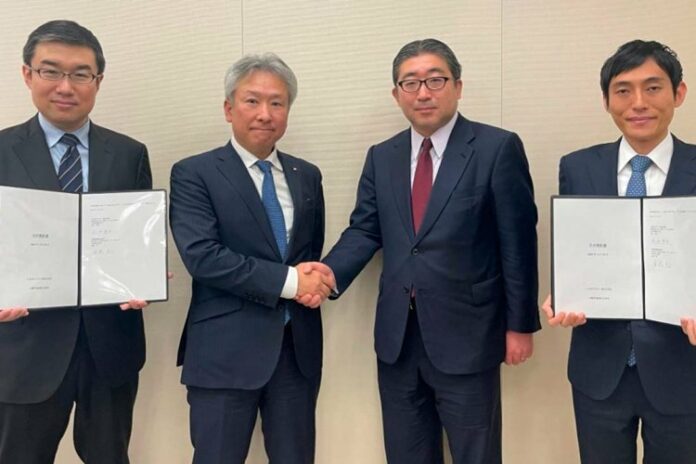
“K” LINE and Nippon Gas Line have announced the agreement to establish a marketing company for the purpose of providing the seamless and efficient integrated liquefied CO2 transportation service for carbon dioxide capture and storage (CCS) projects over the boundaries. 

The Japanese government is advancing the development a business environment to initiate CCS projects by 2030 in its “Basic Policy for Realizing of GX”. They plan to support the research and business development to scale up the CCS value chain at the same time to cost reduction by introducing hub and cluster structure. In relation to its development, cross-border CO2 transportation and the establishment of integrated transportation system by combination of various sized liquefied CO2 carriers has been studied.

“K” LINE group is promoting a variety of initiatives to support the low-carbon and carbon-free of its own operations and society in accordance with its long-term environmental policy, “K” LINE Environmental Vision 2050. “K” LINE will start operation of liquefied CO2 carriers for Northern Lights, the world’s first full-scale CCS project this year. “K” LINE set up a dedicated team for ship management of liquefied CO2 carrier in “K” LINE LNG Shipping (UK) Ltd. and is working to realize safe and reliable operation.

Nippon Gas Line, the only operator specializing in domestic LPG carriers, has accumulated extensive knowledge and experience in the operation, cargo handling, and ship management of pressurized gas carriers for over 60 years. Regarding CCS projects in particular, Nippon Gas Line is undertaking operation and ship management of a liquefied CO2 carrier and developing operation and cargo handling technology for low-temperature and low-pressure liquefied CO2.

“K” LINE and Nippon Gas Line determined to take initiatives in liquefied CO2 shipping for CCS projects. This collaboration of both companies will provide safe, stable and high-quality liquefied CO2 seamless transportation services by leveraging knowledge and experience together. Both companies will contribute to the realization of a carbon-neutral society through CO2 shipping. 

Launching of the the third Brazilian Scorpène submarine entirely made in Brazil

0

On March 27th, the third of the four Scorpène® submarines of the ProSub program was launched at the Itaguaí Naval base, in presence of the Brazilian President Luiz Inácio Lula da Silva and French President Emmanuel Macron. 

The Tonelero has been built entirely in Brazil by Itaguaí Construções Navais (ICN) thanks to years of successful technology transfer and partnership with Naval Group.

Only few weeks after the delivery of the Humaita, the Tonelero was successfully launched in Itaguaí and will soon start sea trials in order to be delivered in 2025. Angostura, the last submarine of the series will be launched in 2025.

The launching of the Tonelero demonstrates the success of the ProSub program which is a key extension of the French-Brazilian strategic defense cooperation agreement signed in 2008. This program not only provides the Brazilian Navy with new capabilities and contributes to its ambitious Amazonia Azul strategy, but it also enables Brazil to rely more and more on a sovereign national industrial base.

“The launching of the Tonelero is a major milestone for the Brazilian Navy, ICN, Naval Group and all our partners. This achievement is a result of our common work to make the ProSub program and its associated technology transfer a success. We are honoured by the high level of confidence the Brazilian Navy has placed in our expertise, and we remain fully committed to supporting the needs of the Brazilian Navy and contributing to the development a strong Brazilian naval industry.” Pierre Éric Pommellet, Chairman and CEO of Naval Group.

The Ocean Cleanup deploys its technology in Thailand for the first time

0

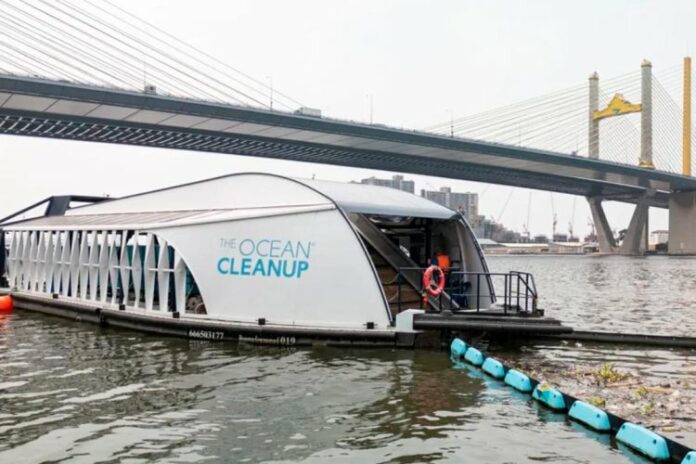
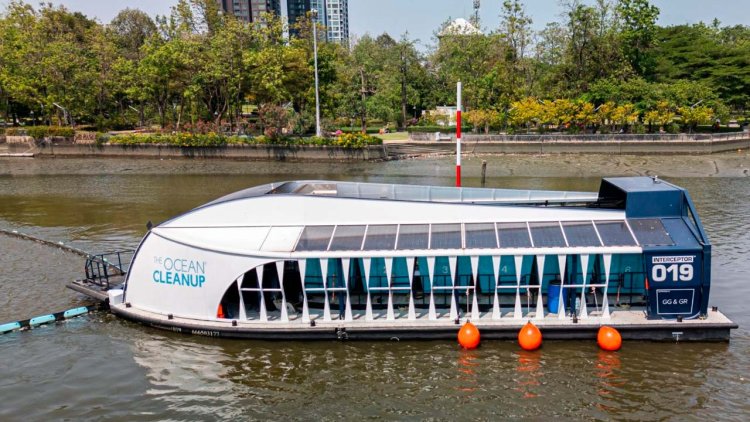
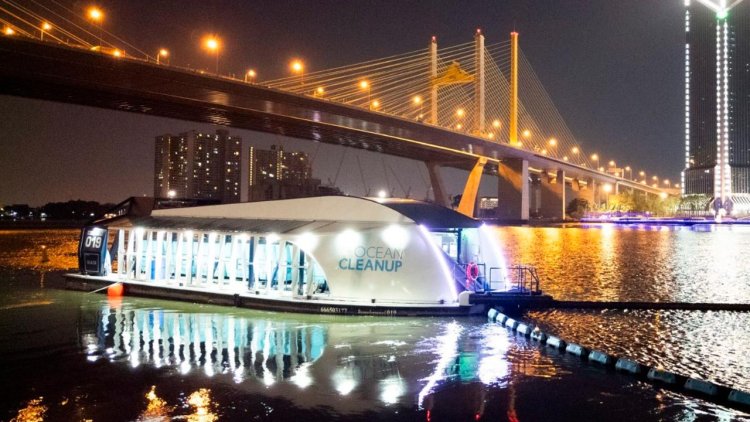
Together with partners The Ministry of Natural Resources and Environment, the Department of Marine and Coastal Resources, Bangkok Metropolitan Administration, The Coca-Cola Company, the Embassy of the Netherlands in Bangkok, Ecomarine, Asimar, and Chulalongkorn University, the project will see Interceptor 019 extract trash while helping us learn more about plastic pollution in Bangkok’s rivers and canals.

Interceptor 019 is part of The Ocean Cleanup’s long-term partnership with The Coca-Cola Company, which began in 2021 and aims to support the deployment of innovative technologies to help prevent plastic from entering the world’s oceans from rivers.

The Chao Phraya is a vital waterway that serves as the lifeblood of the city. As one of Asia’s major rivers, it is a source of livelihood for many local communities and is indispensable to Bangkok’s 11 million inhabitants.

Positioned near the Commemoration of H.M. the King’s 6th Cycle Birthday Park, Interceptor 019 is deployed within a key 16km stretch of the Chao Phraya where 61 canals flow into the river, often transporting plastic trash with them. Studies of the trash collected by Interceptor 019 will help us understand the composition of plastic floating in the river, with a focus on learning how to intercept trash before it reaches the last 50km of the Chao Phraya, where it enters the Gulf of Thailand and is emitted into the ocean.

Interceptor 019 is a solar powered, fully automated river cleanup solution, and is The Ocean Cleanup’s 5th Interceptor across Southeast Asia, joining deployments in Indonesia, Vietnam, and two deployments in Malaysia. Other Interceptors have been deployed under this partnership in Dominican Republic and L.A.

Pol. Gen. Patcharawat Wongsuwan, Deputy Prime Minister and Minister of Natural Resources and Environment, revealed;

“The Ministry’s ultimate vision is to restore and preserve the environment by incorporating natural resources and environmental concerns into the Government’s national agenda, as they form the foundation for social and economic development. The partnership to install the Interceptor 019 in the Chao Phraya River will undoubtedly bolster our proactive approach to managing natural resources, protecting the environment, and preserving biological diversity. It will be particularly crucial in addressing Thailand’s complex challenges stemming from plastic waste.”

“We are delighted to support The Ocean Cleanup and all partners in the collection and sorting of trash and plastic bottles retrieved from the Interceptor 019 on the Chao Phraya River. Our aim is to effectively manage all kinds of waste flowing into Bangkok’s busiest river. By reintegrating these valuable plastics into the cycle and segregating other wastes, it thereby helps reduce the need for virgin plastic and mitigating the flow of waste into the ocean,” said Chadchart Sittipunt, Bangkok Governor.

Boyan Slat, Founder and CEO of The Ocean Cleanup, said:

“Interceptor 019 marks a significant milestone in closing the tap on plastic pollution entering the oceans from Bangkok. This deployment is only the first step, alongside the Bangkok authorities and our other partners, in cleaning up the Chao Phraya. The lessons we learn here about eliminating ocean plastic emissions from major cities will be invaluable for other Interceptor projects around the world as we scale up our Rivers program.’’

Victor Wong, Vice President and General Manager of Coca-Cola Thailand, Myanmar, and Laos, expressed enthusiasm about the collaborative efforts with The Ocean Cleanup:

“The partnership that we’ve fostered with The Ocean Cleanup over the past two years has reached a milestone moment in Thailand with the implementation of the innovative Interceptor technology in Bangkok’s renowned Chao Phraya River. The insights gained from our collaboration in Bangkok will help to inform the roll-out of this technology in countries around the world and we’re happy to be providing our support to this initiative as we test and learn.”

“To promote ocean sustainability, the Netherlands believes collaboration, collective actions and innovative solutions that prevent and mitigate detrimental impacts are essential. Today I am pleased to support an important milestone for our aim to ending marine plastic pollution,” said Remco van Wijngaarden, Ambassador of the Kingdom of the Netherlands to Thailand.

Damen delivers ASD Tug 2811 to Brodospas

0

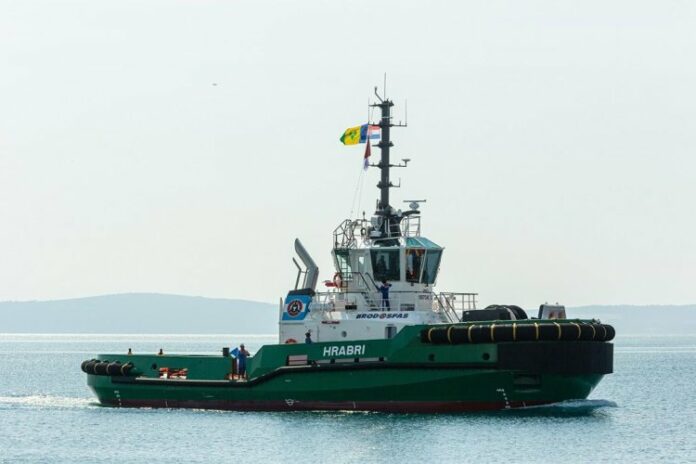
The Damen Shipyards Group has delivered an ASD Tug 2811 to Croatian vessel operator Brodospas. 

On 27th March, Brodospas held a ceremony, welcoming the vessel to its fleet and naming it Hrabri. 

Brodospas’ decision to entrust Damen Shipyards with the construction of the ASD Tug 2811 results from the company’s positive experience with Damen vessels to date. In recent years, Damen has delivered two Anchor Handling Vessels and two Fast Crew Supply Vessels to the company. 

The ASD Tug 2811 has been developed to provide a boost in safety, sustainability, reliability, and efficiency in operations. It features a flush fore deck, optimised for multiple towing modes, providing the tug with extreme versatility. Its ergonomic, user friendly design offers easy accessibility to winches, bollards, and fairleads. 

Based on a proven, standard design, Damen is able to tailor the ASD Tug 2811 to the specific requirements of its clients. For Brodospas, this includes installation of a firefighting system, towing hook, and for the vessel to sail under Croatian flag. 

The tug was constructed at Damen Song Cam Shipyard in Vietnam. The yard, which has just celebrated its tenth anniversary, constructs up to 40 Damen vessels each year. From Vietnam, the ASD Tug 2811 sailed on its own keel to Croatia, passing the Cape of Good Hope en route. 

 “We are delighted to celebrate the delivery of Hrabri to our esteemed partners, Brodospas. This milestone delivery marks yet another significant chapter in the enduring partnership between Damen Shipyards and Brodospas, which is rooted in collaboration and mutual trust. We look forward to witnessing Hrabri in action,” says Antonio Marte from Damen.

Brodospas Chairman, Zeljko Samarzija says:

“Brodospas has been engaged in different marine-technical services on the sea for 77 years. We are delighted to have such an excellent, long-term business cooperation with Damen. We are grateful to have this modern, powerful and reliable ASD Tug 2811 in our fleet. She proved herself worthy of her name Hrabri – which means courageous in Croatian – by sailing smoothly  from Vietnam, over the Indian and Atlantic oceans, through the Mediterranean to our Adriatic sea to be delivered to us as proud owners, here in the Port of Split. We look forward to future cooperation with Damen as we renew our fleet.” 

Hamburg Port Alliance brings relief supplies to Odesa

0

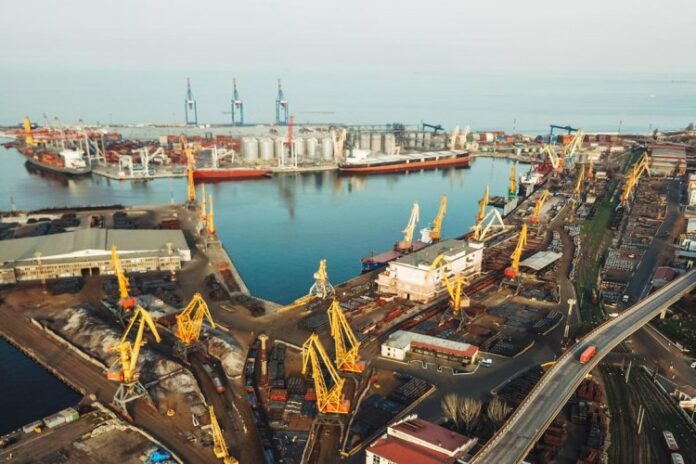
The “Hamburg-Odesa Port Bridge” action alliance, consisting of several Hamburg aid organisations, companies and associations, has sent urgently needed relief supplies to Odesa. The recipient is a children’s hospital in the Odesa region.

The Port of Hamburg and the Ukrainian Port of Odesa have a long-standing partnership – not least because of the Container Terminal Odesa (CTO), which the Hamburger Hafen und Logistik AG (HHLA) has been operating on the Black Sea for more than 20 years. Several partners have joined forces in the “Hamburg-Odesa Harbour Bridge” alliance to support the people of Odesa and the region affected by the war. The initiators “Der HAFEN HILFT”, the Ukrainian Relief Corps, the Hamburger Hafen und Logistik AG (HHLA), the Humanitarian Logistics Organisation (HLO) and Hafen Hamburg Marketing e.V. have jointly appealed to their networks for donations.

The funds were swiftly utilized to procure urgently needed relief supplies including medical consumables, food, and medical technology, requested by a children’s hospital in the Odesa region. The HHLA is organising the transportation of these materials from Hamburg’s Altenwerder Container Terminal to the Ukrainian port city with the help of its European logistics network, including its rail subsidiary Metrans.  

“The past few weeks have shown us once again how much the civilian population in Odesa is suffering as a result of the war. We are therefore pleased to be able to contribute to alleviating the emergency situation. At the same time, we are impressed by the willingness to donate and the efficiency of the network of Hamburg logistics companies. We would like to express our sincere thanks on behalf of all the partners involved,” concludes Axel Mattern, CEO of Port of Hamburg Marketing.

“Even more than two years after the start of the war, images of violence and destruction from Ukraine continue to shake us every day. HHLA feels a special bond with the Ukraine through its terminal in Odesa. A big thank you therefore goes to all those involved and the many committed employees who have made this further delivery of urgently needed goods possible,” says Angela Titzrath, HHLA CEO.

Donations can still be made to the North German-Ukrainian aid organisation with the reference “Port of Hamburg helps Odesa”. All necessary information can be found here: https://hilfe-ua.de/donate/.  

DeSantis’ office quietly backed Florida ban on wind energy

0

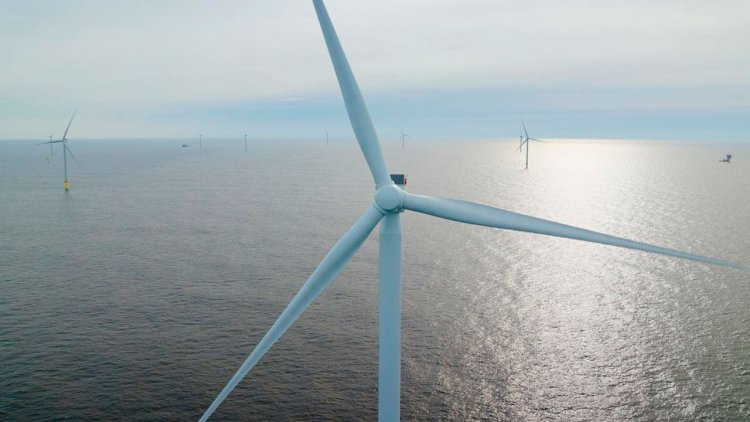
A version of that bill is now awaiting DeSantis’ signature to become law, which will ban offshore wind turbines in state waters. It also proposes to delete the majority of references to climate change found in state law, the Times previously reported.

Florida lawmakers passed the bills, Senate Bill 1624 and House Bill 1645, in early March, even though the state has no operational wind farms because Florida generally has slower wind speeds. Still, the ban on offshore turbines in state waters puzzled and frustrated opponents, who pointed to the fact that wind energy technology is rapidly improving and offshore wind energy could become more feasible in the near future. The bills’ sponsors, including Sen. Jay Collins, R-Tampa, said if that happens, they’d repeal the ban.

While debate over the bill continued in the halls of the Legislature, DeSantis’ office weighed in via email. Cody Farrill, a deputy chief of staff in the governor’s office, sent wording related to the wind ban multiple times to Collins and his staff in late January and early February. Some of the emails include Rep. Thad Altman, R-Indialantic, who, along with Collins in the Senate, sponsored a standalone ban on wind energy. That bill received no hearings, which by February meant it was in danger of dying.

“As discussed with Rep. Altman and Senator Collins, this is the preferred alternative for” the bills banning wind energy, wrote Farrill in one email addressed to the two lawmakers. It included an attachment with proposed bill language that would prohibit “the construction, operation, or expansion of a wind energy facility or an offshore wind energy facility in this state.”

That ban on all wind energy in the state is more expansive than the offshore-specific language eventually passed by lawmakers. In mid-February, similar language curbing wind energy was tacked on to a larger energy omnibus bill that had momentum in the Legislature, and was eventually passed by lawmakers.
The emails were first reported by independent journalist Jason Garcia of the Seeking Rents newsletter. They were provided to the Tampa Bay Times by the Energy and Policy Institute, a utilities watchdog group, which obtained them through a public records request.

The governor’s office did not respond to emails asking about his staff’s involvement and why the governor was interested in banning wind energy. Collins and Altman did not respond to voicemails seeking comment. Neither did Rep. Bobby Payne, R-Palatka, who sponsored the House version of the energy omnibus bill.

It’s unclear whether the governor’s office authored the original language that appeared in the first version of the wind energy ban, filed in early January. The first email included in the records request showing Farrill suggesting language tweaks was from Jan. 30.

In some of the suggestions, the governor’s office focused on banning wind energy facilities near “critical infrastructure.” At one point, a draft borrowed language from a separate law that limits land purchases by residents of certain foreign adversaries—including China, Russia, Iran, North Korea and Venezuela—near similar infrastructure.

“The close involvement of the governor’s office in the wind energy ban really seems to indicate that this is another DeSantis culture war in an attempt to win political points as opposed to addressing any serious issues that Floridians are actually concerned about,” said Alissa Jean Schafer, a research and communications manager at the Energy and Policy Institute. She said that the attempts to ban wind turbines near critical infrastructure could “lay a foundation for anti-renewables fear-mongering.”

During the legislative session, rumors spread that DeSantis was backing the offshore wind ban. A Times/Herald reporter in late February asked Florida House Speaker Paul Renner whether it was something the governor wanted.

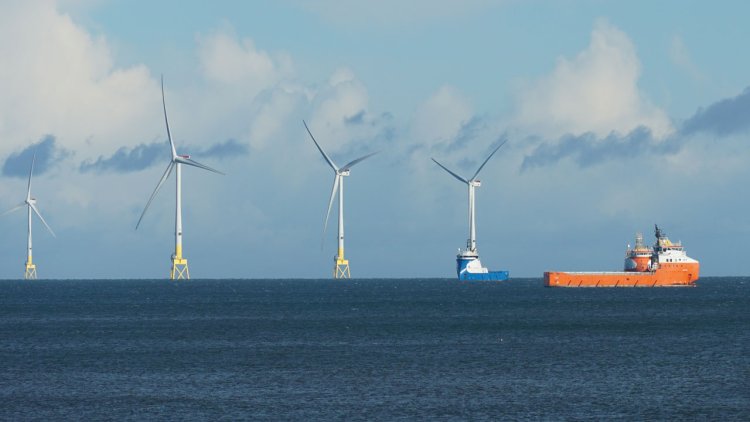
“I don’t know who wanted it,” Renner said at the time, adding that the prohibition made sense for the state. “It’s very similar to offshore drilling: Floridians don’t want to sit on the beach and look at oil derricks and they don’t want to sit on the beach and look at big windmills right off the beach.”
DeSantis’ office referenced the energy bill in a news release touting victories from the legislative session, under the section title of “Stopping the Woke.” The changes ensure “Florida’s energy policy focuses on the viability and availability of energy resources in the state, without subjecting the reliability of Florida’s grid to the pressures of the global Green New Deal regime,” his office wrote.

Other states, including Texas and those in the Midwest, have embraced wind as a clean source of energy. The power produced by the rotations of wind turbines helps the United States avoid 336 million metric tons of carbon dioxide emissions annually, according to the federal government, reducing the pollution that contributes to climate change.

A 2021 report from the nonpartisan Pew Research Center found that most Americans—77%—support expanding wind energy. But pollsters found that a wedge was starting to form, as backing among Republicans and conservative independents had dropped 13 percentage points just since the previous year.

It was the widest partisan gap since Pew started asking about wind power in 2016.

Source: Tampa Bay Times
by Emily L. Mahoney

Baltimore Key Bridge: How a domino effect brought it down in seconds

0

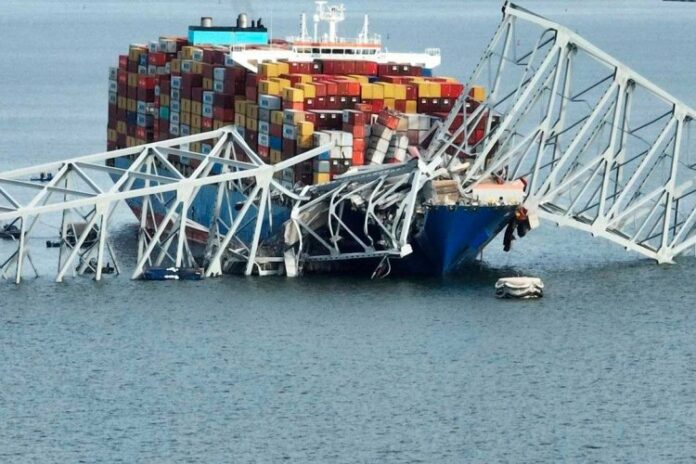
The cause was Singapore-flagged container ship, the Dali, which veered off course, colliding with one of the bridge’s supports, or piers. As the 300 meter-long vessel slammed into the structure, it triggered what’s known as a progressive collapse, where a domino effect leads to the entire structure failing. The bridge, built more than 45 years ago, crashed down into the frigid water at 1:28am eastern standard time (5:28 UTC).

But how could one ship bring down this 366m (1,200 ft) structure within seconds of the collision?

A progressive collapse involves the failure of a single element, like the pier, and results in the sequential failure of other connected components. These can include the metallic truss and the bridge’s deck. This type of collapse can have catastrophic consequences in terms of the risk to human life, as well as to the economy of an area and the local environment.

Although it’s impossible to account for every scenario, bridges can be built with inherent features that enhance their resistance to progressive collapse. Typically, bridges can withstand some degree of damage to a pier or part of the superstructure. The bridge deck can even remain safe for vehicles depending on the circumstances.

However, in the case of the Baltimore bridge collapse, the metallic truss was designed as one continuous system. The space between each support, or pier, is known as the truss span. The collapse of one of the piers effectively doubled the truss span to the next support. This dramatic increase in span exerted a much larger force on the remaining truss structure.

While continuous truss systems are favored because they can redistribute weight in the event of damage, in this case, the remaining truss elements couldn’t withstand all that extra force after the pier failed.

This resulted in the complete collapse of the truss section above the damaged pier. The collapse didn’t stop there, however. Due to the interconnected nature of the trusses, the remaining section was initially pulled upwards. The sudden release of this tension created a powerful dynamic effect, ultimately causing the entire bridge to collapse.

Rare event

It’s certainly not unknown for ships to strike bridge supports. On May 9, 1980, a strikingly similar event took place when a freighter collided with a support pier of the Sunshine Skyway Bridge in Tampa Bay, Florida. As a result, the bridge failed over a similar distance as the Baltimore collapse.

But while bridge designers are acutely aware of the potential for collisions, these are—at the same time—rather rare events. The impact forces on a support pier are also highly variable. A higher speed or heavier ship will significantly increase the force on the pier. And higher vessel traffic in the water boosts the probability of a collision.

In addition, the current method used in the US for calculating the collision force of a ship is based on research conducted between 1967 and 1976. However, a different method would have been used for the Key Bridge, which opened in 1977. Needless to say, vessels as heavy and fast as the Dali were not a common sight in 1977.

In fact, the collision force under some scenarios is likely to be well beyond the capacity of bridge piers to withstand. This is why bridges have other systems of protection, such as dolphins—a group of pilings situated in the water near a pier, which serve to deflect a vessel or take the energy out of a collision.

There isn’t any information about the system that was installed when the Key Bridge opened in 1977. And some observers have questioned whether the protective barriers around the Baltimore bridge were sufficient.

Regular structural assessments and retrofits are crucial to ensure a bridge meets current safety standards. Concrete and steel, the primary materials in this bridge, are susceptible to deterioration from factors like corrosion and other environmental conditions.

In general, insufficient maintenance or inadequate retrofits can be contributing factors when bridges collapse. However, it must be said there is no evidence this was a factor in this case—and the Key Bridge was said to be “up to code” when the disaster occurred.

There will be more detail to come on this dramatic and tragic event. And the findings will surely inform future approaches to the design and protection of bridges across busy waterways.

Source: The Conversation

Laura Hood, Politics Editor, Assistant Editor

Ponant and Farwind Energy partner to develop green hydrogen refueling solutions

0

PONANT and FARWIND Energy have defined a road map to develop production and use of renewable marine hydrogen. The plan is to share progress on the management of hydrogen on board and collaborate on development of first use cases and overcoming potential technological obstacles. 

“FARWIND Energy’s hydrogen production technology has the advantage of offering hydrogen refueling solutions in places where there are no means of production and supply. This collaboration is an opportunity to jointly develop a major project that associates a ship with her own source of renewable energy produced locally. It is an unprecedented revolutionary approach that makes total sense”, explains Mathieu Petiteau, Newbuilding and R&D Director at PONANT. “The Swap2Zero programme is the ideal demonstrator to scale up this solution and set new standards. This technological building block will be integrated into our other areas of R&D to support our decarbonization strategy”.

“We are proud to share our roadmap with PONANT, an innovative company committed to low carbon navigation. This collaboration opens up new perspectives for our highly innovative renewable energy production technology. Capable of being produced near the ship’s operating areas, our liquid hydrogen represents a promising solution to decarbonize maritime transport,” explains Arnaud Poitou, Chairman of FARWIND Energy.

A company with a mission, based in Nantes and the Caribbean, FARWIND Energy develops cutting edge solutions to enable renewable energy to be supplied as close as possible to its point of consumption and in a form adapted to requirements. Its energy ship technology aims to produce electricity at sea from offshore wind and transform it into hydrogen by the electrolysis of seawater. The hydrogen can be transported to shore to be used as a fuel, a solution particularly well suited to island territories, or refueling of a ship can take place at sea, helping accelerate the maritime transport industry’s energy transition.

By 2030, PONANT is working on one of the sector’s most innovative R&D projects. Swap2Zero is the first concept of a transoceanic vessel aiming to approach, as far as state-of-the-art technology will allow, carbon neutrality for its future ships, whether sailing, maneuvering, in port or at anchor. There are several steps to be taken. Wind power is at the heart of the project and low-temperature fuel cells operating on liquid hydrogen for propulsion are also being studied. The project aims to be a catalyst for new energy solutions with strong replicability potential for the rest of the industry.