-7.4 C
New York
Home Blog Page 195

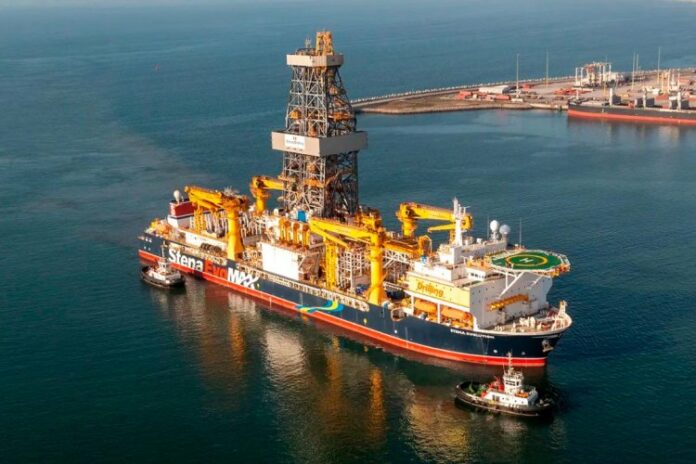
Stena Drilling announces 20K upgrade for Stena Evolution

0

With this enhancement, Stena Evolution will be capable of drilling and completing wells requiring 20,000 psi (20K) pressure control, enabling drilling in previously inaccessible reservoirs for our clients.

Stena Evolution is already equipped to handle a wide range of drilling operations, including exploration, development, and production activities in offshore oil and gas fields worldwide. Upgrading the vessel for 20K operations will enable Stena Drilling to remain in the forefront of technological advancement in the drilling industry.

The upgrade includes the installation of cutting-edge drilling equipment and technology aboard Stena Evolution. Stena Drilling, together with equipment supplier NOV, and Shell, will start the installation of the 20K Subsea blow-out preventer (BOP) and other key equipment in 2026. When this new 20K equipment package is installed, the Stena Evolution will be able to perform completion operations in the Sparta field on behalf of Shell in the US Gulf of Mexico.

“We are very excited and proud to announce the 20K equipment upgrade for the ‘Stena Evolution’,” expressed Erik Rønsberg, CEO, at Stena Drilling. “This investment reinforces our dedication to innovation within the offshore drilling sector and our commitment to delivering top-tier drilling services to our clients. It also reflects our full dedication and focus to the highest standards of safety and environmental responsibility.”

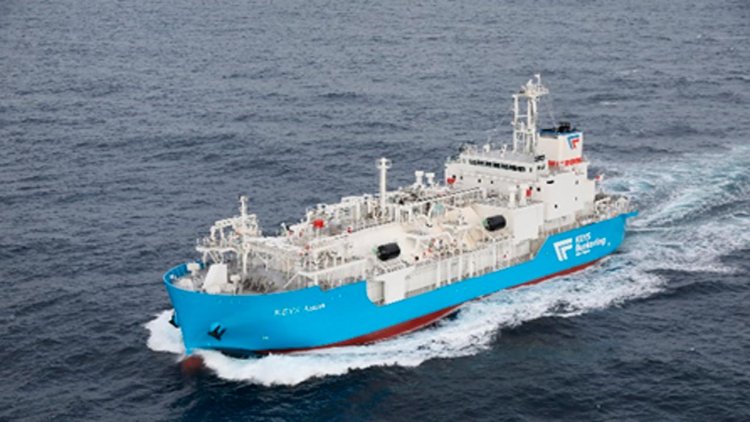
LNG bunkering vessel KEYS Azalea delivered

0

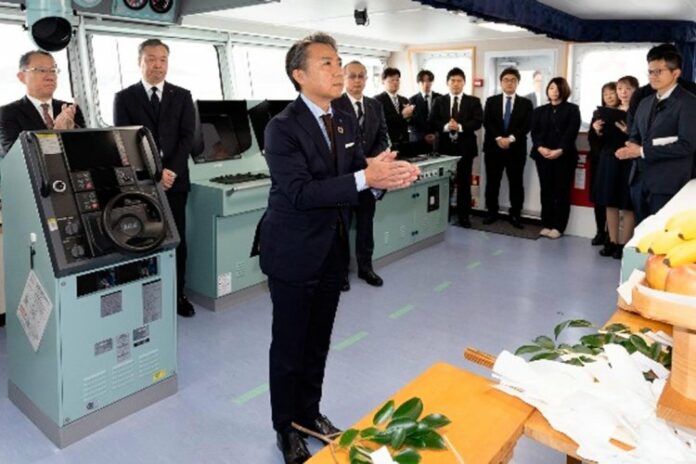
A ceremony for the LNG bunkering vessel “KEYS Azalea” was held on March 28 at the Yamatomachi Shipyard of Mitsubishi Shipbuilding Co., Ltd. in Yamaguchi Prefecture to mark the vessel’s delivery.

Officials from KEYS Bunkering West Japan Corporation (KEYS) and Japan’s Ministry of Land, Infrastructure, Transport, and Tourism (MLIT) attended and prayed for the vessel’s safe voyage.

KEYS, a joint venture established by Kyushu Electric Power Co., Inc., NYK Line, ITOCHU ENEX CO., LTD., and Saibu Gas Co., Ltd., will be the first to operate in the Kyushu and Setouchi areas.

KEYS Azalea will provide domestic coastal transport of LNG to consumers in the Kyushu and Setouchi areas and LNG bunkering for oceangoing vessels calling ports in the region. This is Japan’s first LNG bunkering project to supply LNG to vessels in this vast area. The construction of the ship was funded by a subsidy adopted under MLIT’s FY2021 LNG Bunkering Base Formation Project.

KEYS Azalea is Japan’s first LNG bunkering vessel equipped with a dual-fuel engine that can use both LNG and heavy oil as fuel for the main power generation system.

The four companies and KEYS will continue to contribute to reducing greenhouse gas emissions toward realizing a carbon-neutral society.

Japanese partners have created ‘wall climbing robot’ for ship inspection

0

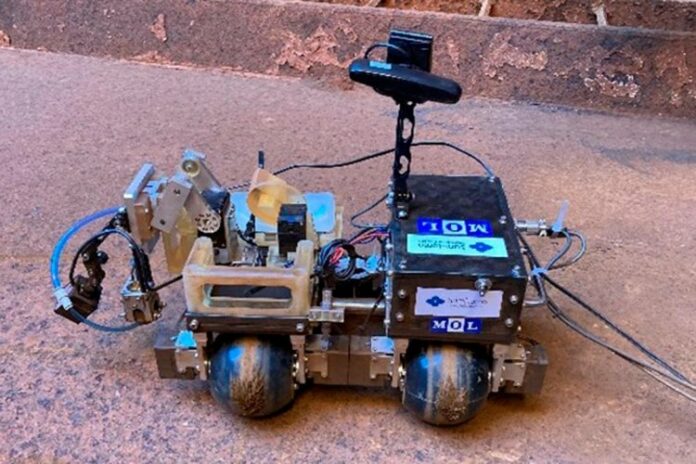
Sumitomo Heavy Industries, Mitsui O.S.K. Lines, and MOL Ship Management today announced that their jointly developed wall climbing robot for steel structures —intended to support ship inspection and maintenance work — has completed a demonstration test. It has earned the Nippon Kaiji Kyokai (ClassNK) “Innovation Endorsement Certification,” as a framework to support innovative initiatives.

This robot is characterized by its high traversability not only on vertical walls but also on curved surfaces and unevenness. It can move to high places that were previously difficult to access by humans or robots, and can take clear photographs and inspections of the relevant parts. 

Moreover, it is capable of measuring the thickness of steel plates by remote operation by the operator, and its measurement accuracy is as high as 0.01mm. This not only avoids the dangers of working at heights, but also eliminates the need for scaffolding, reducing labor and scaffolding costs. Furthermore, it can also work in confined spaces, eliminating the risk of oxygen deficiency for the crew. 

This innovative robot performance and technology, as well as its innovative functions for ship inspection, have been recognized, and it has obtained the Innovation Endorsement certification from ClassNK in the “Product & Solution” category, which targets products and systems that apply advanced initiatives.

Upon the application from those three companies, ClassNK has verified the function of “Wall Climbing Robot”:

1. Remote inspection in high places and various other locations such as hull planning, ballast tank, and boiler.
2. Acquisition of data necessary for periodic maintenance by equipping measurement tools such as thickness gauges and cameras.
3. Reduction of hazardous tasks for workers by remote operation.
4. Reduction of ancillary tasks such as scaffolding construction work, and issued a certificate.

Following the success of this demonstration test, MOL and MOLSHIP aim to further develop their ship operation and management technology, as well as SHIs’ robot development and manufacturing technology. They also aim to enhance the performance and functionality of robots and pursue digital transformation using detailed data obtained from robots. 

Van Oord duo dredging in the Prinses Amaliahaven in Rotterdam

0

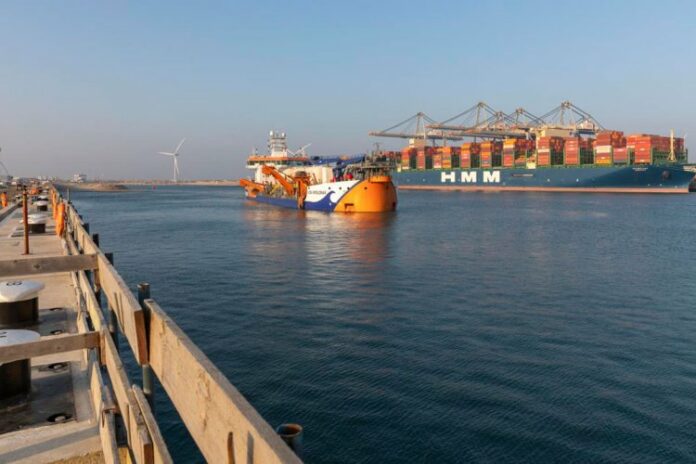
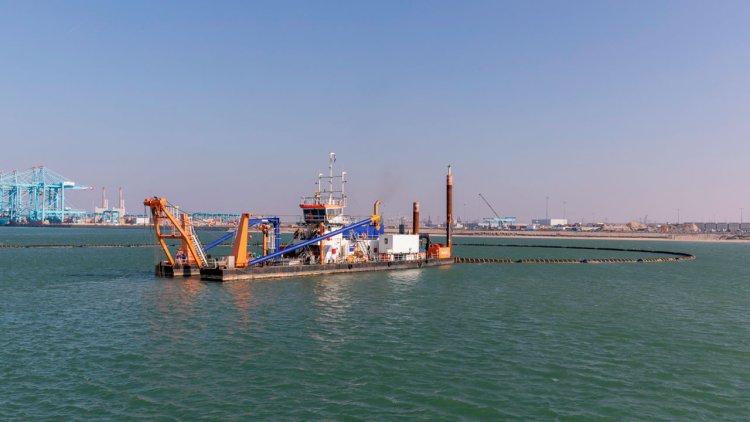
A consortium of Van Oord, HOCHTIEF and Ballast Nedam has constructed 2.4 kilometres of new quay wall. These new quays are now being dredged to a depth of more than 20 metres below sea level. This development means that the Port of Rotterdam Authority is ensuring an expansion of container capacity in Rotterdam.

In total 1,825 metres of deep-sea quay, 160 metres of inland shipping quay and 360 metres of earth-retaining walls have been created. Van Oord’s cutter suction dredger Biesbosch started dredging the new quay walls in December last year, trailing suction hopper dredger Vox Apolonia joined in March. The development of the Prinses Amaliahaven will potentially increase annual throughput capacity in the port of Rotterdam by four million TEU (standard size for containers). 

The dredged sand from the Prinses Amaliahaven will be used in the adjacent Prinses Alexiahaven, where Van Oord is reclaiming 45 hectares of new land. Besides sand, 1.5 million cubic metres of silt and clay that is not suitable for land reclamation will be dredged. The Vox Apolonia transports the silt to sea, after which the vessel would in principle returns empty. Combining the work of both projects, the Vox Apolonia is now dredging sand after depositing the silt and clay and transporting it to the Prinses Alexiahaven to then continue dredging in the Prinses Amaliahaven. This efficient way of working results in less fuel consumption and thus lower environmental costs.

For the underwater surveying and inspection works, Van Oord’s brand new Remotely Operated Vehicle (ROV) is being used. It is the first project on which this underwater robot is being deployed. It is equipped with a high-resolution 4K camera and sonar technology, enabling the drone to carry out reliable inspection under all kinds of conditions. The use of the drone is not only accurate, but also faster and safer. This new advanced technique means we can reduce physical diving activities on this project by more than 80%.

First hybrid fueling barge chartered in Singapore

0

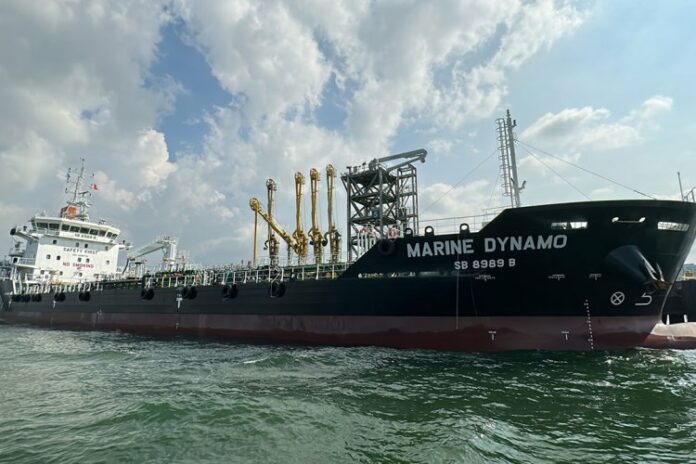
The hybrid ship will provide maritime customers in the region with Chevron fuel.

The bunker tanker is expected to consume approximately 20% less fuel compared to a conventional tanker as it goes about its operations, which can reduce emissions and costs.

“It’s also helping us take a step forward in our objective to deliver lower carbon and higher returns,” said Nayab Karimi, trading manager for fuels in Asia Pacific.

The barge also provides an opportunity to assess wider adoption of hybrid vessels, said Jennifer Chao, Chevron’s Asia Pacific commercial marine manager:

“We’re looking for opportunities like this to understand new technologies, test capabilities and collect data to determine if there is broader applicability for our global operations.”

Similar to a hybrid electric car, the vessel has an electric power system as well as an engine that runs on fuel. It will supplement with electricity during periods of high consumption to allow the engines to reduce fuel use.

Instead of three auxiliary engines, as a conventional fueling barge this size would have, the barge has two auxiliary engines and an electric power distribution system.

The vessel has the potential to use onshore charging facilities included in Singapore’s electrification plans. Powering up batteries without the need for fuel could further reduce fossil fuel consumption in this hard-to-abate sector.

Chevron is chartering the barge from V-Bunkers, the company that owns and operates the vessel.

New in-gate facility at Onne Port set to reduce congestion and costs for businesses

0

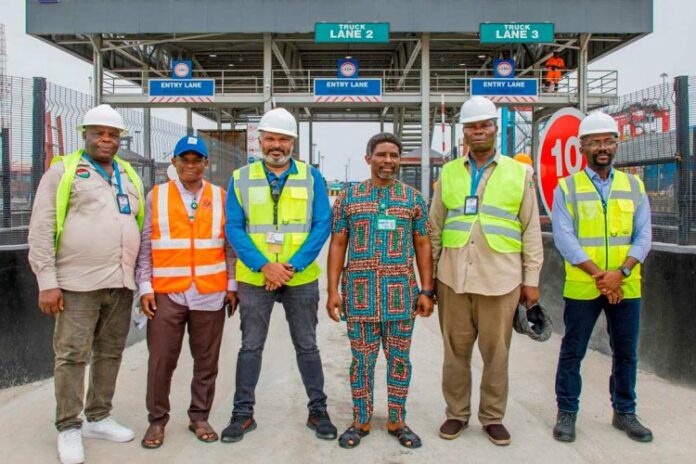
Hot on the heels of a new, on-terminal, container freight station (CFS), this investment brings WACT a step closer to its vision of becoming the gateway to Eastern Nigeria and beyond.

The new in-gate is part of WACT’s USD 115 million investment in a terminal upgrade project. It offers a comprehensive suite of logistics solutions designed to empower Nigerian businesses and improve overall port efficiency in line with the Federal Government’s drive to streamline ease of doing business in Nigeria.

WACT’s new in-gate complements the Nigerian Port Authorities’ recent launch of a new stretch of road within the port, showcasing a commitment to improved infrastructure.

Commenting on the project’s impact on reducing congestion and costs for businesses, WACT Managing Director, Jeethu Jose, said:

“The new gate will improve access and security; facilitate faster cargo movement; and reduce truck turnaround times to under 45 minutes.”

The new in-gate, combined with WACT’s Truck Appointment System (TAS), allows for faster booking and processing of imports, exports, and empty container drop-offs. At the same time, pre-submission and verification of information, combined with reduced congestion and faster truck turn times, will lead to lower costs and improved efficiency.

These latest improvements are offered at a terminal that already has no waiting time for vessels, no congestion and fast physical customs examinations. With all shipping line offices, customs offices and banks located within the terminal premises, it offers customers a one-stop-shop approach. WACT’s investment demonstrates confidence in Nigeria’s economy and contribution to facilitating international trade.

WACT is the first greenfield container terminal in Nigeria to be built under a Public-Private Partnership (PPP) model. The terminal is located within the Oil and Gas Free Zone in Onne Port, Rivers State. Over the years, it has grown to become the most efficient gateway to markets outside the Lagos area and is a major gateway to East Nigeria.

Latvian scientists develop technology for purifying marine exhaust gases

0

Scientists from SIA“WTM Solutions” in cooperation with LVR Flote, a subsidiary of the Freeport of Riga Authority, are implementing a research project aimed at developing an innovative exhaust gas treatment technology and a prototype gas treatment plant for diesel engines, as well as testing it in a real operating environment on LVR Flote vessels.

The project is implemented with the support of the EU Recovery Fund within the framework of the project “Mechanical Engineering Competence Centre”.

Dmitrijs Uspenskis, Senior Researcher at WTM Solutions:

“To meet the requirements for reducing sulphur emissions in exhaust gases, ships currently use scrubbers that separate sulphur from the rest of the fuel during combustion. As a result, the sulphur, together with soot and unburnt fuel residues, is transformed into hazardous waste in the scrubbers. Our technology allows us to remove nitrogen oxides, all aromatic and hydrocarbon particles (methane), extract the sulphur in its pure form and collect it for further use. We are currently working on a solution to neutralise the remaining CO2. We hope that during the next stage we will be able to implement this idea with the direct participation of Ivars Kalviņš, academician and President of the Latvian Academy of Sciences.”

Ultimately, the new technology will reduce harmful waste, contribute to the development of a circular economy and help the shipping industry to meet its targets for reducing not only sulphur but also CO2 emissions.

The project was launched on 1 September 2023. Initially, research work and gas emission measurements were carried out on board LVR Flote vessels. Based on the results and energy balance calculations, the technical design of a prototype gas treatment plant has been developed and production has started. According to the plan the prototype has to be built by the summer of this year and then its testing on board LVR Flote vessels has to be started.

“The components used in the development of our prototype are almost entirely manufactured locally in Latvia, with the exception of the electronics and ceramic components. The shipping industry is interested in our technology, and we have already started discussions with several large ship owners,” continued Dmitrijs Uspenskis.

The scientists’ idea has been implemented in close cooperation and with the support from the Mechanical Engineering and Metalworking Industry Association (MASOC), which is implementing the “Mechanical Engineering Competence Centre” project, while LVR Flote, provided a real-life environment for measurements, research and tests. “It is a pleasure to cooperate with organisations that not only in words but also in deeds stand up for technological development, actively support innovation, science and education,” said Dmitrijs Uspenskis.

LVR Flote Board member Kaspars Ozoliņš: “In line with our strategy, LVR Flote supports research and innovation projects that contribute to both the quality of our services and the development of the industry in general. As a technical services company, we are interested in practical solutions and WTM Solutions’ idea will help us to achieve the objectives of the Green Deal in a practical and efficient way. The introduction of such technology, from a sustainability perspective, extends both the life of ships currently operating on conventional fuels, and the efficient operation of vessels for which no environmentally friendly alternative is currently available, such as ice-class ships. We are glad that such an innovation is being created in Latvia, thus promoting the country’s excellence, and we are proud that the ships and crew of the LVR Flote participate in the promotion of technology development.”

The research project “Development and testing of a reactor prototype for marine engine exhaust gases treatment in a real operating environment” is to be implemented by August 31, 2024. The total cost of the planned project is 278.48 thousand euros, including 157.53 thousand euros of funding from the EU Recovery Fund.

Carnival Cruise Line orders 5th excel-class cuise ship

0

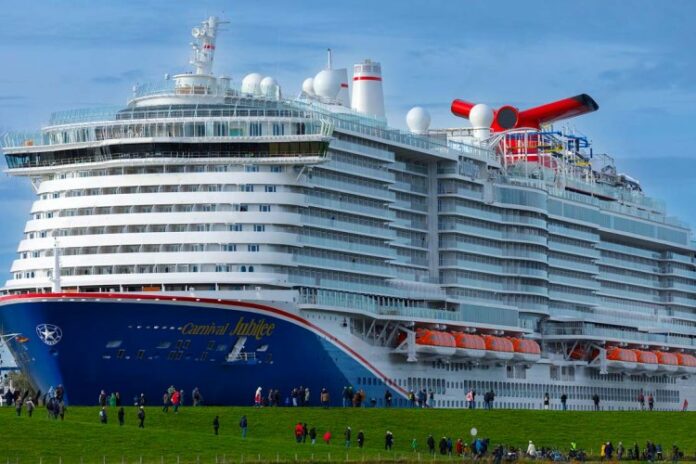
Carnival Corporation ordered an Excel-class cruise ship from MEYER WERFT in mid-February. The order is subject to financing, which is expected to be finalised in the course of the year.

“The Excel Class from MEYER WERFT and MEYER TURKU has been contributing to Carnival Corporation’s success for several years now. We look forward to continuing this success story together,” says Bernd Eikens, CEO of the MEYER Group. 

Since 2018 MEYER WERFT and MEYER TURKU have built nine cruise ships with LNG propulsion for four cruise lines in Carnival Corporation’s portfolio on a joint technical platform. The two new ships that have now been ships will also be built on this platform and, with a length of around 344 metres and a size of approximately 180,000 GT, will offer space for more than 6,400 guests.

“Carnival’s Excel-class fleet will soon consist of a quintet of these highly popular ships that offer outstanding guest amenities and tremendous operational efficiencies,” said Christine Duffy, president of Carnival Cruise Line. “Since the introduction of Mardi Gras in 2021 and the subsequent expansion with Carnival Celebration in 2022 and Carnival Jubilee in 2023, these Excel-class ships have generated excitement, demand and high guest satisfaction.”

This second major order in just a few weeks demonstrates the turnaround in the cruise market, which has reached and in some cases exceeded the record level of 2019.”We can see that the MEYER Group’s ships are operating very successfully and that we can therefore continue this ship platform,” explains Thomas Weigend, Chief Sales Officer of the MEYER Group.

MEYER WERFT’s order book now includes six cruise ships, one research vessel and the steel construction for four offshore converter platforms.

Fishers working from small vessels are at the greatest risk

0

In a recent report Personulykker i den norske fiskeflåten (Accidents involving personnel in the Norwegian fishing fleet/in Norwegian), researchers present a review showing that more than half of the 149 fishers who lost their lives in accidents occurring between 2000 and 2022 were working on small vessels.

Safety researcher Ingunn Holmen at SINTEF Ocean has been heading the work behind the report.

 “Sadly, we now have to add yet another fatality to the 155 lost so far since the new millennium”, says Holmen. On 4 March she received news that the fisher who fell overboard on 1 March had lost his life. 

“Yet another solitary fisher working on a small vessel”, says Holmen. “This fatality serves to underline the seriousness of our message.  When we know why accidents happen, it will be possible to prevent them more effectively, so we must increase our efforts to stop fishers losing their lives at work”, she says. 

Holmen believes that the Norwegian parliament’s commitment to a zero vision for deaths and serious injury in the fishing fleet must be followed up.

 “Our figures demonstrate that we have a long way to go, and our systematic review has provided useful information”, she says.

Holmen also thinks that both vessel owners and those working on fishing boats can make use of this information. She hopes too that other actors, such as special interest groups, the public authorities, insurance companies, educational institutions, the rescue services, technology suppliers and boat builders, will also sit up and take notice.
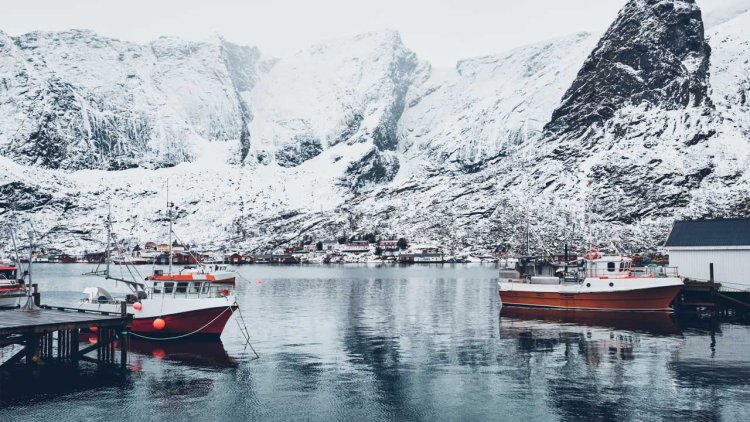
Drowning is the most common

“When you’re alone on board… if something starts to go wrong, it can go very badly wrong”. So said one of the informants interviewed in connection with the research project called Serious accidents in the coastal fishing fleet – causes and preventive measures. Solitary fishermen have no one on board to come to their aid if they fall into the sea, and it is once they are in the water that most of them lose their lives.

Eight out of ten fatalities among professional fishers occur by drowning following vessel accidents resulting in crew members falling overboard either into the open sea or harbour waters. These figures entail about 30 and 32 per cent respectively between shipwrecks and man-overboard incidents, while almost 17 per cent have drowned after a fall into the water while being transported either to or from their own vessel in harbour waters.

A little over 14 per cent died as a result of being struck or crushed by various objects, while the remaining seven per cent lost their lives due to fire, gas leakages, electric shock, being hit by falling objects, falls on board a vessel or on harbour premises, or injuries resulting from sharp or pointed objects.

Register reveals all

Thanks to the official Register of Norwegian Fishermen, we have a helpful list of all fishers resident in Norway who wish to hold fishing rights and obtain sickness and other welfare benefits, including the many who are self-employed. During the two decades between 1990 and 2010, the number of full-time professional fishers declined from 20,475 to half that total. Since 2010, numbers have remained relatively stable and, at the close of 2022, the Register held 9,597 persons recorded as full-time fishers. 

“Because we know how many have fishing as their primary occupation, as well as their ages, we’re able to say something about the numbers and age groups that are most vulnerable to accidents”, says Holmen. “This is in contrast to the aquaculture sector, where no equivalent register of those working in the industry exists”, she says.

The figures in the SINTEF report show that the age groups under 40 are under-represented in the fatality statistics. The most vulnerable group comprises those between 40 and 49, followed by those in the group 60 to 69. If we look at figures for the fleet’s larger sea-going vessels in isolation, we see that it is the under 40s who are most vulnerable to accidents. This correlates well with the fact that the average age for fishers on these vessels is somewhat younger.
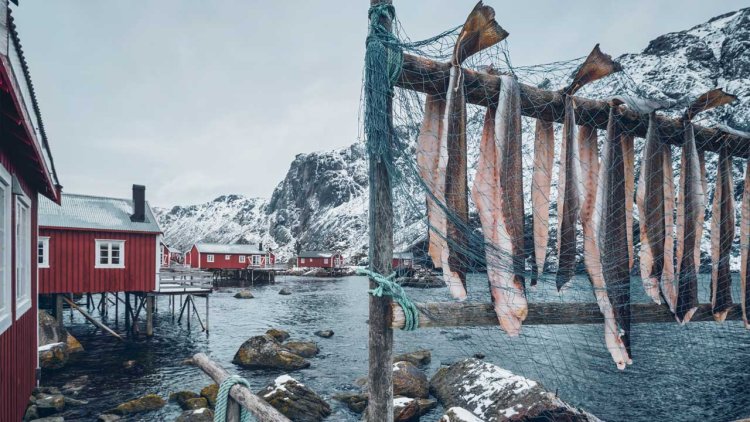
Accidents that don’t happen

In the first six months of 2023, the Norwegian Maritime Authority carried out a survey of maritime safety. About one quarter of respondents said that they had been involved in one or more situations that could have developed into a serious accident, but where the hazard was averted.

We work until we’re finished, especially if there’s a lot of fish. And sometimes, we probably go a little too far.

Holmen is convinced that records of near misses may be important as a basis for research and action linked to accident prevention. She also believes that it would be a good idea if so-called ‘harmless accidents’ were the subject of injury potential assessments.

 “When things are busy on board, it’s all too easy to disregard a near miss, even if it had a high injury potential, with the thought that ‘well everything turned out all right – nothing to make a fuss about’”, says Holmen. However, sharing experience and reporting near misses is the same as taking responsibility for one’s own and one’s colleagues’ safety.  A situation that turned out fine first time round may go very badly next time if the risk of injury is not identified and remedied”, she says, going on to add:

 “We’re well aware that a fisher’s working day, especially for those on smaller vessels, doesn’t allow much time for reporting near misses. But perhaps this makes it even more important to analyse the total accident picture in order to reveal common factors and assess trends across the various shipowners and vessel types.
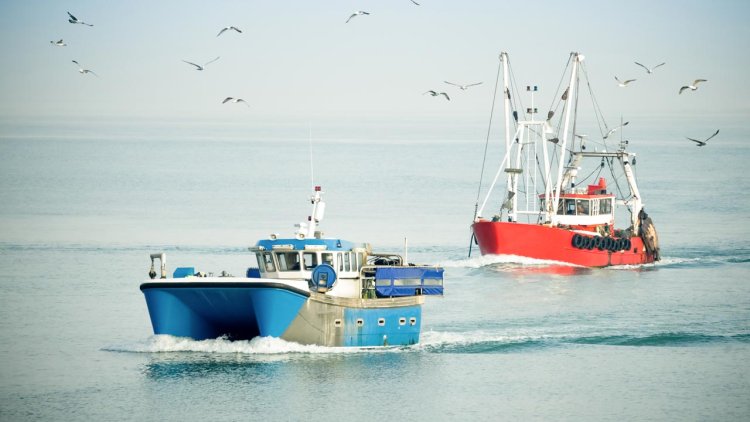
When the rules lead to risks

The Maritime Authority’s report also points out that management decisions implemented with the aim of reducing pressure on fish stocks may act as stressors on fishers because crews tend to intensify their work efforts during restricted catch periods. Respondents to the survey believe that in some situations, legislation and regulations may cause fishers to take big risks. As one respondent said: “We work until we’re finished, especially if there’s a lot of fish. And sometimes, we probably go a little too far”. This is especially true under the so-called ‘Olympic’ quota arrangement, where quotas are not allocated to individual vessels, but to a group.

This arrangement means that vessels pull out all the stops in order to secure the biggest possible proportion of the group quota. The risk associated with competitive fisheries was also highlighted by the Norwegian Accident Investigation Board during an inquiry into a fatal accident on the vessel ‘Hunter’ in 2023, when a fisher fell overboard while setting crab traps.

Another example of a situation in which legislation has in fact contributed to increased risk is the issue of the so-called ‘paragraph’ vessels. These are short, broad-beamed fishing vessels, ultra-adapted to obtain maximum catch volumes per metre within a given regulation length class. Such designs have been developed at the expense of seaworthiness and thus increase the risk of shipwreck.

 “It is important when we discuss safety in the sector to be aware of the consequences that stock management decisions have for fishers’ working conditions”, says Holmen. “The most recent quota proposals enable newer, smaller vessels under 11 metres to fish for two quotas under a so-called ‘ID quota’ arrangement, by which catch quotas previously allocated to old boats are merged and assigned to fewer, newer ones. This is an important safety measure because it offers fishers the opportunity to avoid solitary fishing expeditions”, says Holmen.

Source: SINTEF 

MODEC secures FEED for Shell’s Gato do Mato FPSO project in Brazil

0

MODEC has been successful in securing the Front-End Engineering and Design (FEED) for a Floating Production, Storage and Offloading (FPSO) system for Shell do Brasil Ltda on the Gato do Mato development, offshore Brazil.

Gato do Mato FPSO will be moored at a water depth of approximately 2,000m, some 250km off the coast of Brazil. MODEC will be responsible for the design of the hull and all related topsides facilities for the FPSO, which is projected to be moored by a SOFEC Spread Mooring system. The produced stabilized crude will be stored in the FPSO tanks and the oil will be offloaded to shuttle tankers to go to market.

MODEC has previously delivered sixteen FPSOs to Brazil and has two more under construction currently. The FPSO Gato do Mato would be the second unit to be delivered directly to Shell by MODEC for operation in Brazil.

MODEC President and CEO, Hirohiko Miyata, expressed his delight in securing the FEED project:

“MODEC is proud to be working on its nineteenth (19th) FPSO for Brazil and our second for Shell in Brazil. This milestone indicates the strong relationship between the two companies which now spans more than 20 years. We are excited about performing this FEED study for Shell.”