-5.7 C
New York
Home Blog Page 192

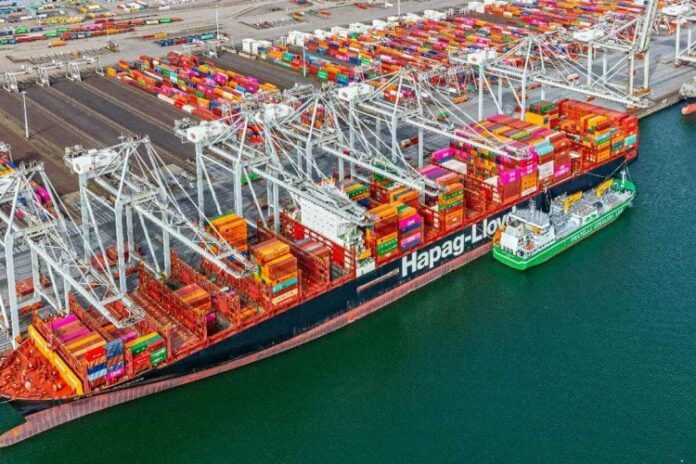
Hapag-Lloyd takes largest ship-to-ship LBM delivery to date

0

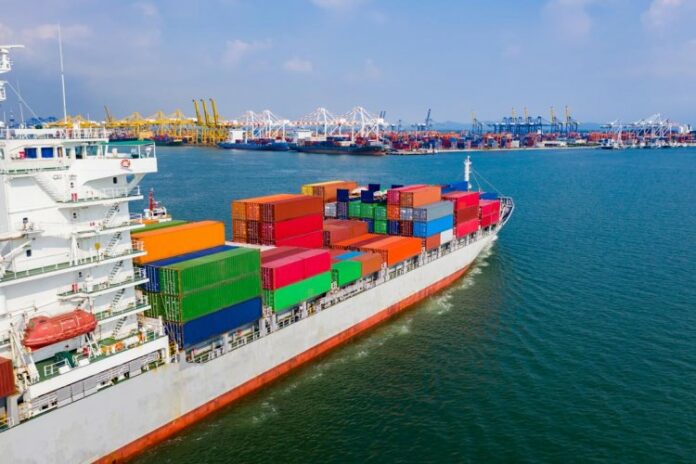
This transaction marks Hapag-Lloyd’s entry into using LBM as sustainable shipping fuel, representing the largest ship-to-ship bunkering operation known to date.

STX Group and Titan Clean Fuels have collaborated to liquify, store and deliver mass-balanced biomethane in Zeebrugge in Belgium under ISSC certification fully recognized under the European Union´s Renewable Energy Directive known as RED II.

“This pioneering deal demonstrates that bunkering large quantities of liquefied Biomethane is possible and scalable. However, there is still more progress required regarding the necessary infrastructure and the regulatory framework. For us, bunkering liquefied Biomethane is another measure in our step-by-step approach to further decarbonise our operations to reach our goal of becoming net-zero by 2045,” said Jan Christensen, Senior Director Fuel Purchasing at Hapag-Lloyd.

“Titan’s Alice Cosulich bunker vessel has successfully delivered LBM to Hapag-Lloyd’s Brussels Express container ship. We’d like to thank all the partners involved for another smooth operation. We have been encouraged by the demand for LBM so far, and this major bunkering represents a significant step in shipping’s clean fuels transition. Titan recognizes the LNG pathway via LBM and renewable e-methane as a practical, sustainable and cost-effective route to net-zero shipping emissions available today. We work every day towards full regulatory compliance for shipowners and operators of deep sea ships,” commented Caspar Gooren, Director of Renewable Fuels at Titan Clean Fuels.

“We congratulate Hapag-Lloyd on this landmark deal in the shipping sector. This transaction is a proof of how liquefied biomethane can be a powerful tool on the path to a lower carbon transport sector. At STX Group, we are proud to consistently be at the forefront of environmental markets and this is yet another example of how we are building long-term value through high-impact use cases,” said Sead Keric, Managing Partner of Renewable Gas at STX Group.

Liquefied biomethane (LBM), also known as bio-LNG, is an established sustainable bunker fuel that can even be net-zero emissions depending on the feedstock and is commercially available in Europe, Asia and North America. Biomethane is produced from sustainable biomass feedstocks such as industrial and agricultural waste streams that do not compete with food production. These are nationally or regionally defined, for example by the EU (RED II) in Europe and the EPA (Renewable Fuel Standards) in the USA.

LBM can be delivered in the form of physical molecules or “Mass Balanced” whereby biomethane is injected into the gas network and transported to liquefaction plants and LNG terminals using the existing infrastructure through a system of mass balancing. Mass balancing is expected to be a feature on many alternative fuel pathways and offers a practical way of delivering the volumes of clean marine fuel the shipping industry requires. 
Royal Bodewes selects DMC to supply steering gear, bridge controls and propeller nozzles

0

Damen Marine Components has been contracted by Royal Bodewes to supply steering, control and propulsion equipment for four vessels, to be delivered to the shipyard’s clients in the coming two years. The contracts mark the continued strong working relationship between DMC and Royal Bodewes. 

The first contract is for the steering gear and bridge controls for an 87-metre long Ro-Ro vessel currently under construction at the Royal Bodewes shipyard in Hoogezand, the Netherlands. DMC expects to deliver this project within the next two months, ready for vessel commissioning later this year. 

The remaining contracts are for the steering gear, bridge controls and propeller nozzles for three 120-metre Bodewes Eco Traders (9000DWT general cargo vessels). 

One of the most notable aspects that these four contracts have in common is the steering gear; an electric-hydraulic driven system which controls the position of the ship’s rudder.

“We have designed our steering gear with a plug-and-play philosophy,” says DMC Sales Manager Marnix de Bruijn. “This means that we manufacture and install the equipment onto a skid in our own factory in Hardinxveld-Giessendam, the Netherlands. There it can be FAT tested, witnessed by a class surveyor as required, before it is placed on board the ship. All Royal Bodewes has to do is to connect the hydraulic and electrical supply – this saves a lot of time and energy on board.”

“We have had a good working relationship with Damen Marine Components for a long time,” says Royal Bodewes Business Development Manager Martijn Beunk. “We have worked with them on numerous projects and their excellent price-quality ratio is one of the reasons for that. Furthermore, the DMC team are always available for advice and consultation during our design and engineering process.”

De Bruijn continues: “We are proud to be working with Royal Bodewes on this Ro-Ro ship and the three coastal cargo vessels. We aim to help them wherever possible by aligning our products and operations to match their shipbuilding strategy, which is highly efficient, and look forward to our continued collaboration.”

Container group pens MoU for 6-port green methanol shipping corridors

0

X-Press Feeders has signed of a memorandum of understanding (MOU) with six European ports: Port of Antwerp Bruges (Belgium), Port of Tallinn (Estonia), Port of Helsinki (Finland), Port of HaminaKotka (Finland), Freeport of Riga (Latvia) and Klaipeda Port (Lithuania).

Through this MOU, X-Press Feeders and the participating ports will pool resources and expertise to develop and implement sustainable practices for maritime operations.

The collaboration between the parties will begin with the establishment of these two shipping routes:

  • Green Baltic X-PRESS (GBX): Rotterdam > Antwerp Bruges > Klaipeda > Riga > Rotterdam
  • Green Finland X-PRESS (GFX): Rotterdam > Antwerp Bruges > Helsinki > Tallinn > HaminaKotka > Rotterdam

These services are scheduled to commence in Q3 2024, marking a significant step towards more environmentally sustainable shipping services in Europe. This development is significant as these will be the very first scheduled feeder routes in Europe powered by green methanol, an alternative fuel that produces at least 60% less greenhouse gas emissions than conventional marine fuel.

X-Press Feeders’ green methanol is sourced from fuel supplier OCI Global. The green methanol is made from green hydrogen and the decomposition of organic matter, such as waste and residues. OCI’s green methanol is independently certified by the International Sustainability and Carbon Certification (ISCC) Association headquartered in Germany. The ISCC system promotes and verifies the sustainable production of biomass, circular and bio-based materials and renewables.

X-Press Feeders’ Chief Operating Officer, Francis Goh, says:

“By working together – X-Press Feeders and the six partner ports – aim to efficiently implement green shipping corridors and lead the maritime industry in sustainability. We chose the Nordic and Baltic states as the first markets to deploy our green methanol powered vessels because we found the ports and our customers in these markets to be very receptive.”

“This MOU represents a significant milestone in our commitment to a sustainable future for the maritime industry. By collaborating with these leading European ports, we can collectively drive the adoption of green technologies that accelerate the decarbonization of our industry,” he adds.

“The Port of Antwerp-Bruges is honored to have signed this MOU with X-Press Feeders and fellow European ports, emphasizing our joint dedication to sustainable maritime practices. This partnership signifies a crucial step forward in nurturing eco-friendly shipping corridors and encouraging the use of alternative fuels. It reinforces our steadfast commitment to environmental stewardship in the Baltic Sea and Scandinavian region, which plays a vital role for our port,” says Luc Arnouts, Vice President, International Affairs, Port of Antwerp-Bruges.

“Making the maritime sector more sustainable and reducing its environmental footprint, is a priority for all stakeholders in our industry. It is extremely welcoming that the first tangible steps – towards greater sustainability in our industry – addresses fuel consumption. Port of Tallinn was one of the fastest ports in Europe to digitalize, and soon we can say the same about the introduction of new types of fuels,” says Margus Vihman, Commercial Manager, Port of Tallinn.

“This is a very important milestone for the Carbon-Neutral Port of Helsinki Manifestation. The only possible way to achieve significantly reduced cargo owners’ scope 3 emissions from maritime transportation, comes with shipping companies like X-Press Feeders taking the tangible steps,” says Vesa Marttinen, Vice President, Cargo, Port of Helsinki.

“Port of HaminaKotka Ltd is committed to promoting environmentally friendly practices in maritime transport by signing this Memorandum of Understanding aimed at accelerating the establishment of green shipping corridors in Europe. This initiative is a step towards a more sustainable future and more environmentally responsible shipping,” says Timo Rosendahl, Director of Traffic Operations, Port of HaminaKotka Ltd.

“This commitment is crucial for the port’s sustainability and competitiveness, as it aligns with the European Green Deal and meets client demands for greener transport solutions. The availability of green energy not only makes the port more efficient and safer but also significantly boosts its appeal for freight and investment projects,” says Edgars Suna, Freeport of Riga Authority Deputy CEO for Port Development Matters.

“In recent years, Klaipeda Port has taken significant strides towards sustainability. This year marks the commencement of construction for green hydrogen production and refueling stations at the port, along with the implementation of shore-side power supply (OPS) stations for roll-on/roll-off ferries. Furthermore, Klaipeda Port proudly enters 2024 with the Port Environmental Review System (PERS) certification, underscoring our commitment to environmental stewardship. Already, methanol bunkering operations are available at Klaipeda Port. The integration of Klaipeda Port into environmentally sustainable shipping services by X-Press Feeders is a testament to our unwavering dedication to fostering a greener port,” says Vladas Motiejūnas, Harbor Master of the Port of Klaipėda.

Belfast Harbour welcomes new pilot boat Hibernia to its marine fleet

0

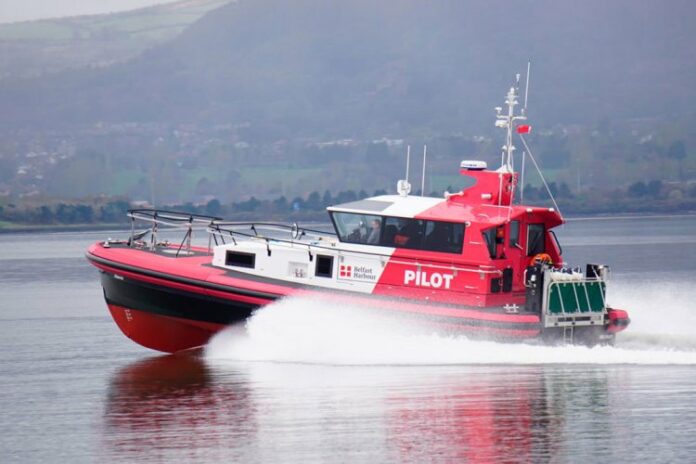
Hibernia will be tasked with transporting pilots to and from ships calling at Belfast as part of the service provided by Belfast Harbour which helps ships safely navigate through the port, to and from their designated berth.

Belfast Harbour handles more than 23.9 million tonnes of trade every year and its pilot boat fleet needs to operate 24 hours a day 365 days a year, therefore it is vital to ensure downtime is kept to a minimum.

The new vessel, built by Holyhead Marine Services, will replace PB4; the oldest pilot boat in Belfast Harbour’s fleet, which is being retired after 24 years of service.

With a lightweight, resin infused hull and refined shape, the new Hibernia has a fuel-efficient hull design and engines that are able to run on Hydrotreated Vegetable Oil (HVO) helping to reduce carbon emissions from pilot boat operations. It is also believed that it will be the first pilot vessel on the island of Ireland equipped with a selective catalytic reduction exhaust system, which reduces nitrous oxide emissions.

The name Hibernia has a strong history and connection with Belfast Harbour. William Ritchie started shipbuilding in the city in 1791, on the site of the future Harbour Office. Within a year, the 300 tonne Hibernia was launched, which began trading between Belfast, New York and the Caribbean. Over 230 years later Belfast Harbour is proud to bring the new Pilot Boat Hibernia into service at the Port.

Dr Theresa Donaldson, Chair of Belfast Harbour, has been named as the godmother of Pilot Boat Hibernia at a traditional naming ceremony designed to bring luck to the vessel and keep the crew safe.

Michael Robinson, Port Director at Belfast Harbour, said: “We are delighted to welcome Hibernia to our fleet of pilot boats at Belfast Harbour. We wanted to purchase a vessel that would advance and improve the resilience of this mission critical service. Our crew and engineers worked closely with the boat builder, Holyhead Marine Ltd, from the outset, as the project progressed from design through to delivery.

“We’re committed to becoming a green port and sustainability is a core element of everything that we do. We were able to incorporate environmental improvements into the design of Hibernia which will help us on this decarbonisation journey.”

Northrop Grumman completes assembly of Manta Ray UUV

0

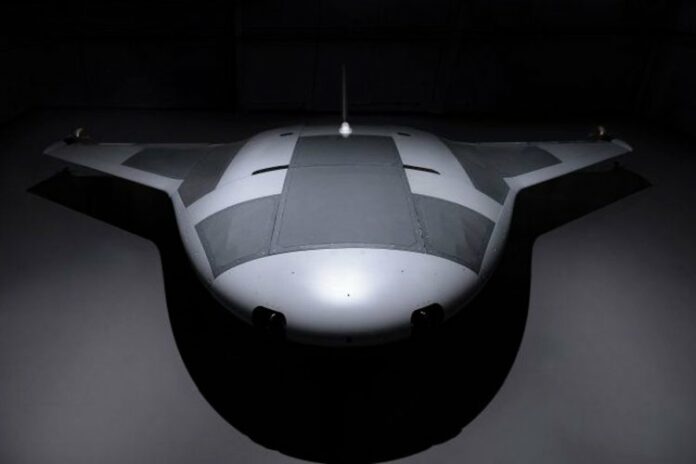
Taking its name from the massive “winged” fish, Manta Ray will operate long-duration, long-range missions in ocean environments where humans can’t go.

A new class of UUV, it is an extra-large glider that will operate long-duration, long-range and payload-capable undersea missions without need for on-site human logistics.

Manta Ray was built through a Defense Advanced Research Projects Agency (DARPA) program aimed at advancing key technologies to benefit future UUV designs, including techniques to manage energy, increased payload capacity, low-power propulsion and more. 

Manta Ray is:

  • Payload-capable to support a variety of missions
  • Autonomous, without the need for on-site human logistics
  • Energy-saving, with the ability to anchor to the seafloor and hibernate in a low-power state
  • Modular, for easy shipment in five standard shipping containers to support expeditionary deployment and in-field assembly world-wide

TECO 2030 receives AIP for containerized fuel cell power generator

0

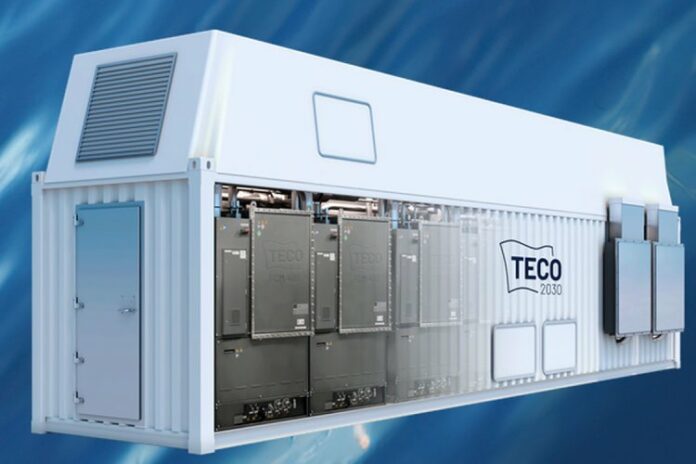
TECO 2030 has, in connection to the HyEkoTank project, received an Approval in Principe (AIP) from the Norwegian classification society DNV for a containerized fuel cell power generator (FCPG) for use onboard oceangoing applications.

The TECO 2030 containerized FCPG represents a pioneering solution in the maritime industry. It is a complete power generator system that can seamlessly integrate with a ship’s main switchboard, offering reliable and efficient power generation while emitting nothing but warm water and air, thus significantly reducing harmful emissions and environmental impact.

Included in the approval in principle are various integral components of the FCPG, ensuring its seamless integration and operational efficiency. These components encompass the fuel preparation system, fuel cell module holding room, electro technical room, battery room, HVAC and auxiliaries, inerting system, and airlock. Each element plays a crucial role in ensuring the reliability, safety, and performance of the FCPG system.

“We are pleased to announce that our fuel cell power generators have received an approval in principle from DNV. This proves it is safe to utilize onboard a vessel, for propulsion and auxiliary power,” says Tore Enger, Group CEO, TECO 2030. “This solution can of course be combined in series to facilitate multimegawatt installations and power requirements, without releasing any harmful emissions” Enger adds.

Moldova gets US gas via Greece’s Alexandroupolis FSRU

0

Energocom said in a statement it purchased these test volumes from Greece’s Depa and sold them to compatriot gas supplier Moldovagaz for usage in households.

“We will purchase 14,000 MWh of natural gas each day at the port of Alexandroupolis. There are about 28,000 MWh in total, which is equivalent to 2.6 million cubic meters of gas,” Victor Binzari, Energocom’s acting director said in the statement.

He said that the price is “competitive” and if the company agrees on a deal for the continuation of this collaboration, it “will notify the citizens in the near future”.

Binzari said that diversification of gas sources will further strengthen the country’s energy security and prepare market operators, as the Russian gas transit contract through Ukraine expires at the end of 2024 and the neighboring country has said it will not negotiate an extension.

Moldova is bounded by Ukraine to the north, east, and south, and by Romania to the west.

In April last year, Energocom signed a framework contract with DEPA as part of its plans to import LNG via Greece.

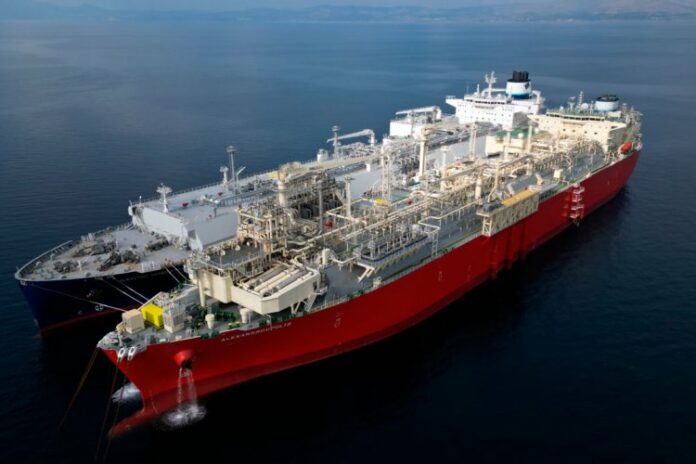
DEPA is a shareholder in Gastrade and previously said that it brought a commissioning cargo to the 153,600-cbm FSRU Alexandroupolis.

The 2018-built 174,000-cbm LNG carrier, GasLog Hong Kong, delivered on February 18 the commissioning cargo from the US to the FSRU.

The LNG carrier, chartered by France’s TotalEnergies, brought the shipment from Sempra’s Cameron LNG plant in Louisiana.

Following completion of the ship-to-ship LNG transfer, GasLog Hong Kong left the FSRU on February 27.

Gastrade told LNG Prime on February 29 that it expects to launch commercial operations at its FSRU-based LNG import terminal by the end of April.

The FSRU is located in the sea of Thrace at a distance of 17.6 km SW from the port of Alexandroupolis and 10 km from the nearest coast of Makri.

Also, it is connected to a high-pressure subsea and onshore gas transmission pipeline.

The pipeline will deliver natural gas to the Greek transmission system and onwards to the final consumers in Greece, Bulgaria, Romania, North Macedonia, Serbia and further to Moldova and Ukraine to the East and Hungary and Slovakia to the West, Gastrade previously said.

The Alexandroupolis LNG terminal will have a capacity of 5.5 Bcm.

This is Greece’s first FSRU and the second LNG import facility, adding to DESFA’s import terminal located on the island of Revithoussa.

Source: LNGPrime

Finnlines to establish a new daily maritime bridge between Sweden and Poland

0

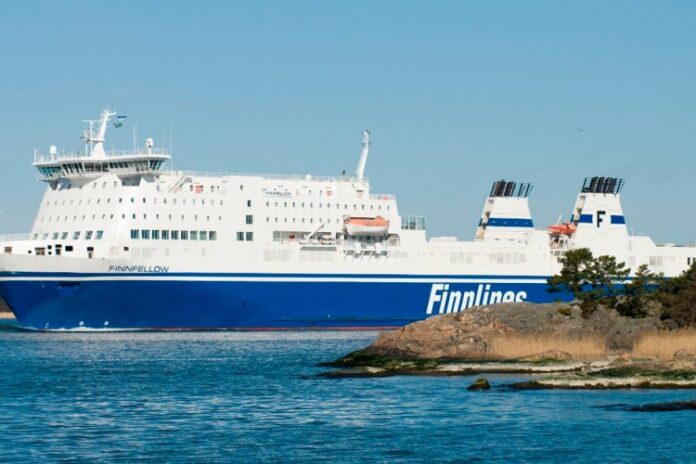
Finnfellow, which sails under the Swedish flag, has a capacity for 440 passengers and around 3,000 lane metres for cars and freight. The ship has previously operated on the Malmö–Travemünde line.

“The launch of a new route will benefit Swedish and Polish exports and imports and expands Finnlines’ operations outside Finland, as well as confirming Finnlines commitment to Polish security of supply by calling both the port of Gdynia and soon the port of Świnoujście,” says Antonio Raimo, Line Manager at Finnlines. “We have already strengthened the shore organization and opened an office in Świnoujście.”

Finnlines’ new route to Poland provides Malmö a direct connection to Continental Europe, in addition to the Öresund Bridge to Denmark and Finnlines’ Malmö–Travemünde route to Germany. This will also be a convenient way to travel to Poland from Sweden, Norway and Denmark.

“Finnlines has prepared the launch of a new line between Sweden and Poland thoroughly. We can offer spacious decks for cars and freight. Passengers and drivers have a quick and easy entrance to the accommodation. The sea voyage will surely be comfortable,” says Marco Palmu, Head of Finnlines Passenger Services.

“The new connection complements existing ones and gives us new routes to Europe. This  strengthens Copenhagen Malmö Port’s position as a hub in the Baltic Sea and Malmö’s position in  the heart of Northern Europe’s largest labour market region,” says Katrin Stjernfeldt Jammeh (S), Mayor of Malmö Municipality.

The connection will be opened on April 10, there will be a daily departure in each direction, in the morning from Malmö and in the evening from Świnoujście. The ship has over 180 passenger cabins and passengers have access to a Finnish sauna, buffet restaurant, bar, children’s play area and a shop. On night departures it is compulsory to book a cabin. However, passengers can also book a bed in a shared cabin. Pets are welcome, but their owners must book a pet cabin for the voyage, also on morning departures.

AROYA Cruises appoints VIKAND as Healthcare Partner for first cruise ship

0

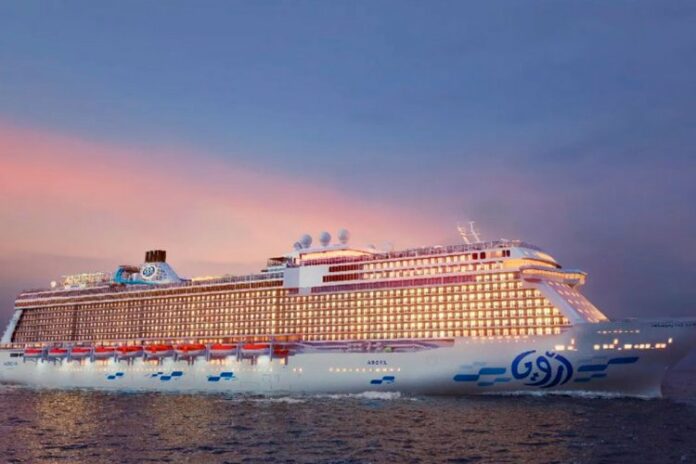
VIKAND is partnering with AROYA Cruises, a new premium luxury cruise brand developed by 100% Public Investment Fund owned company, Cruise Saudi. 

VIKAND will provide a comprehensive and full-scale medical management solution for AROYA Cruises, the first cruise line to be designed with Arabian preferences at its heart. The engagement spans from pre-launch support services, biomedical device specification and procurement as well as formulary supply, to ongoing maritime healthcare support through VIKAND’s all-inclusive, proactive medical management services.  

AROYA Cruises will provide guests with authentic Arabian experiences that celebrate Saudi’s rich cultural heritage and signature hospitality, while ensuring consistent high safety and quality standards supported by VIKAND. The ship is currently undergoing an extensive refurbishment to tailor all amenities to the highest standard in line with the taste of Arabian passengers. With 19 decks and 1,682 elegant cabins, this grand ship will redefine Arabian holidays and will set sail from Jeddah, Saudi Arabia in 2024.  

The partnership agreement was formalized with a signing ceremony, during which Lars Clasen, CEO of Cruise Saudi, said,

“We are delighted to be collaborating with VIKAND. Our clients expect a premium service, and we were impressed with their experience in delivering proactive health and wellness to guests and crew. It is important that our AROYA Cruises guests feel safe and can turn to trusted medical professionals should they feel unwell during a voyage.” 

“I am delighted that AROYA Cruises have entrusted VIKAND to help launch their first cruise ship and provide ongoing support for its medical needs,” said Peter Hult, CEO of VIKAND. “We understand that each ship is a delicate ecosystem, and our services integrate seamlessly to protect guests and crew against medical risks, helping to keep everyone onboard safe and healthy. We wish this new venture well and hope to nurture a long-term partnership with AROYA Cruises.”  

Fish farming ROV contractor enlarges fleet

0

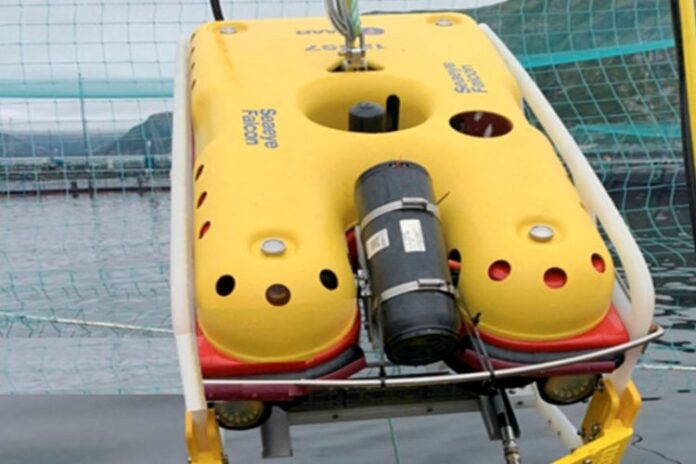
Aberdeen-based aquaculture supplier Underwater Contracting (UCO), which was already owner of the world’s largest fleet of Saab Seaeye Falcon underwater remotely operated vehicles (ROVs), has bought five more of the machines, it has announced.

The purchase gives UCO a total of 38 Falcon systems.

UCO, which also provides underwater services to the offshore energy, inspection, and construction markets, said the expansion was in response to major new multi-year contract wins across all sectors which will see it provide a range of services in Europe, North America, and the Middle East.

The company has also invested in additional equipment and now holds a stock of £250,000 dedicated Saab Seaeye Falcon spares and more than £350,000 worth of auxiliary equipment.

Managing director Mick Bower said: “Adding these additional systems to our fleet will enable us to respond to the upsurge in business and the major new contracts we have won in recent months.

“We have also made significant investment in adding to our stock of in spares and auxiliary equipment for the Falcons, so we can respond immediately to any issues or additional requirements that might arise during the delivery of our services for existing and new clients. Providing excellent customer service is integral to the way we run our business and having these items to hand when we need them, avoids unnecessary delays for our clients.”

UCO, which has enjoyed year-on-year growth since entering the market in 2017, specialises in the development of innovative and industry leading solutions for the aquaculture sector.

They include the FOOVER mortality recovery system, NetFix, a unique ROV-deployed system to repair small holes in fish farm nets, and the latest development – collar cleaning equipment for fish farms. These systems are now deployed around the world.

In 2022, UCO won what is still believed to be one of the largest ever aquaculture sector ROV contracts, from salmon farmer, Mowi. The multi-million-pound contract represented more than 27,000 ROV days over a five-year period, breaking down to 15 ROVs, working 365 days a year over five years in projects in Europe and North America.

Source: fishfarmingexpert