-7.3 C
New York
Home Blog Page 190

Finnlines has set sail from Malmö on its new route to Świnoujście

0

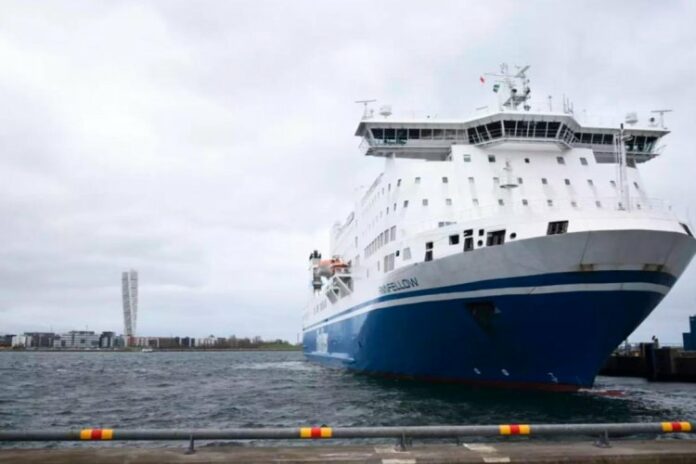
The shipping company Finnlines newly announced the launch of a new service between Malmö, Sweden and Świnoujście, Poland. 

Finnfellow will operate the route daily in both directions, in the morning from Malmö and with evening service from Świnoujście.

“We have prepared for the launch of this new line for some time now, and it is a joyful day to see Finnfellow set sail for Świnoujście. This is a significant opportunity for us to expand our services and by utilising our expertise and capabilities, we are committed to advancing the ro-pax services in the Southern Baltic Sea region,” says Antonio Raimo, Line Manager at Finnlines.

Finnlines’ new route to Poland marks its second expansion into the region, following nearly 30 years of successful operations on the Finland–Poland route. Finnlines aims to further expand its route network in this important market by connecting the West Pomerania area in Poland to Malmö, the third largest city in Sweden. Malmö offers convenient connections to other parts of Sweden as well as to Denmark. Finnlines has been operating from Malmö since 2002 and, in addition to the new Poland route, the shipping company also offers daily liner services to Travemünde in Germany.

“The launch of our new ro-pax service between Malmö and Świnoujście secures an important trade route on the Southern Baltic Sea corridor and further strengthens our position on the Baltic Sea. We expect a continued high growth rate in freight volumes as well as passenger travels,” says Tom Pippingsköld, President and CEO at Finnlines.
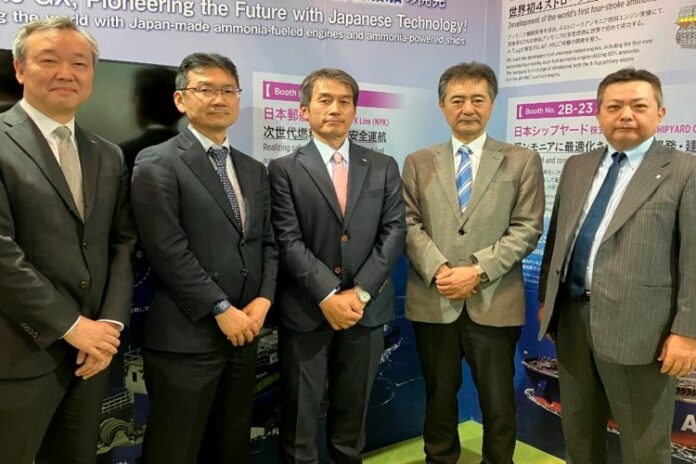
NYK set to achieve world’s first truck-to-ship fuel ammonia bunkering

0

NYK will supply fuel ammonia at the end of May to an NYK-owned ammonia-fueled tugboat (“A-tug”) scheduled to be completed in June. A ceremony marking the announcement was held on April 10 at Sea Japan 2024, an international event attended by many people involved in the maritime industry.

The announcement took place at the “GI Foundation for the Development of Ships with Domestic Ammonia-Fueled Engines” booth.

Last December, JERA, Resonac, and NYK signed an agreement to jointly study the supply of fuel ammonia to ships and have been working together to establish safe operation methods, build a system for transporting and receiving ammonia in port areas, and lobby relevant authorities to formulate various rules for the supply.

Having reached a safe and secure point of supplying fuel ammonia to ships, NYK has decided to supply fuel from an ammonia lorry (tank truck) at the end of May to the soon-to-be-completed A-Tug at the port of Yokohama. If realized, this will be the world’s first case of fuel ammonia replenishment to a ship using the truck-to-ship method.

On the same day, a fuel-supply agreement was also announced for the regular supply of fuel ammonia after the completion of the A-tug between Shin Nippon Kaiyosha, an NYK Group company that operates the A-tug, and JERA, a marine fuel ammonia supplier, marking a significant step toward the widespread use of fuel ammonia in the marine transport industry.

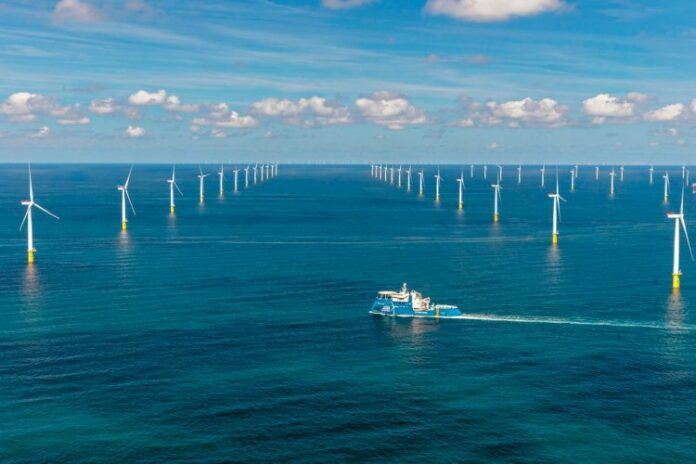
EnBW supplies green electricity from the He Dreiht offshore wind farm

0

Karlsruhe/Dillingen (Saar). EnBW Energie Baden-Württemberg AG (EnBW) and SHS – Stahl-Holding-Saar GmbH & Co. KGaA have signed a long-term 50-megawatt (MW) power purchase agreement (PPA) for a period of 15 years.

The green electricity supply will enable SHS to sustainably transform the business activities of its companies Saarstahl and Dillinger and reduce its own carbon emissions when manufacturing steel in the future.

The “He Dreiht” offshore wind farm is scheduled to enter operation at the end of 2025. Located 90 km north of Borkum, it will be able to supply the equivalent of 1.1 million households with renewable energy upon completion, with an output of 960 megawatts. SHS can cover an annual consumption of roughly 200 gigawatt hours (GWh) with the green electricity from the offshore wind farm.

“He Dreiht” is currently one of the largest energy transition projects in Europe with 64 turbines and an area of 63 square kilometers. The 64 monopiles for the wind farm are being supplied by Steelwind Nordenham, a company of the Dillinger Group. The individual monopiles each measure 70 meters in length, have a diameter of 9.2 meters and weigh up to 1,300 metric tons. High-performance plates from Steelwind’s parent company Dillinger, Europe’s leading manufacturer of heavy-plate products, are being used. These plates have been specially developed for use in the offshore wind sector and are known for their superior quality, even under adverse conditions at sea.

“The cooperation with EnBW is a real win-win situation. We supply the steel for the wind farm, while the electricity generated here from renewable sources in turn helps us to drive the transformation process for our companies Saarstahl and Dillinger. Our steel production operation is still based on classic blast furnace technology. From 2030, we want to generate fewer emissions when manufacturing 3.5 million metric tons – about 70 percent – of our steel” said Stefan Rauber, Chairman of the Board of Management of SHS – Stahl-Holding-Saar and Chairman of Dillinger und Saarstahl, explaining the upcoming transformation process.

“We are delighted to have signed the long-term power purchase agreement with Stahl-Holding-Saar. This allows us to supply an industrial partner with a further 50 MW of green electricity from our planned ‘He Dreiht’ offshore wind farm. The interest shown by customers proves that our strategy of constructing the wind farm without any state funding and hedging most of the electricity generated through long-term supply contracts is working really well. This is a good sign that the market mechanisms are functioning,” said EnBW CEO Georg Stamatelopoulos.

Cathelco launches ultrasonic biofouling protection, USP DragGone

0

Cathelco, part of Evac Group, is launching patented ultrasonic protection technology which protects against hull biofouling. 

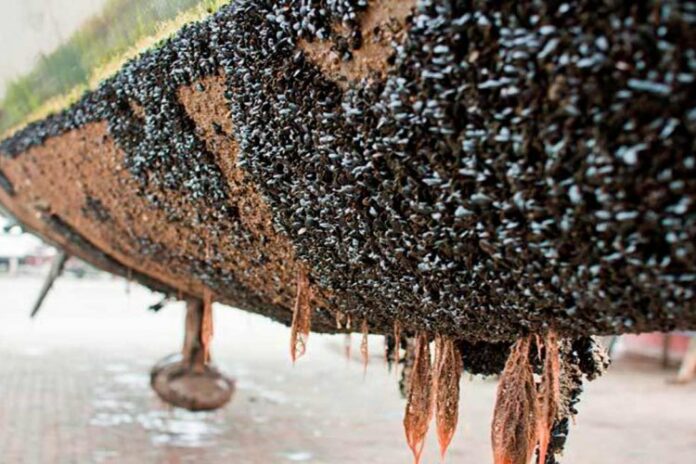
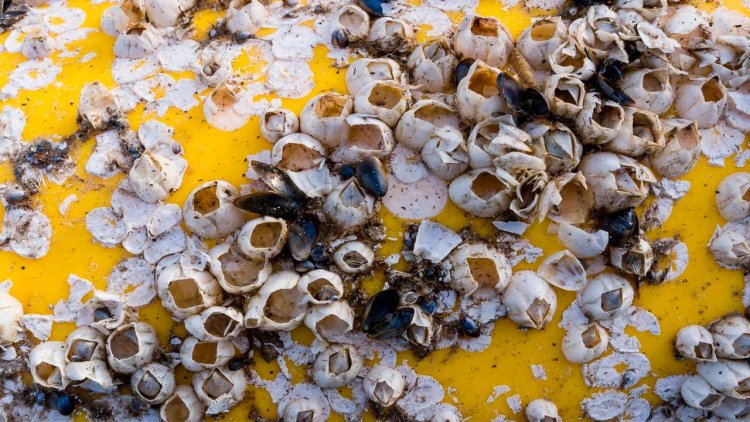
Biofouling is the accumulation of various aquatic organisms that gather on any part of a vessel that is exposed to sea water. This increases the drag as a vessel moves through the water, increasing the load on the engines, which in turn increases fuel costs and carbon emissions. Effective biofouling management prevents these accumulations, reducing friction and thereby reducing fuel consumption and associated GHG emissions.

Ultrasonic protection is a proactive solution, complementary to anti-fouling paint, which ensures the hull remains clean from day one for a newbuild, or as soon as it has been cleaned for existing vessels. With DragGone, transducers are attached to the inside of the hull and emit ultrasonic waves which disrupts any kind of a biological attachment to a hull surface. They vibrate the surface, which stops the microorganisms and algae from attaching to a vessel’s hull. This also mitigates the risk of the translocation of invasive aquatic species, which has a significant ecological impact.

DragGone combines two key technical differentiators from other ultrasonic antifouling systems; guided wave and heterodyning technology – two existing and established principles, applied to biofouling management for the first time. With guided wave technology, DragGone enables the waves to travel over longer distances than traditional ultrasonic fouling solutions, which means fewer cable runs, fewer control panels, and up to 60% fewer transducers. This makes it easier to install, easier to maintain, and reduces service costs. Heterodyning generates additional frequencies, which increases range and protects against a wider range of fouling species than standard, single frequency transducers.

Chris Hewitt, Product and Technical Manager, Cathelco, said:

“The more biofouling on the hull, the greater the drag, which reduces fuel efficiency. DragGone keeps the hull clean from biofouling which can help to reduce fuel consumption, thereby reducing emissions and also costs. The IMO recognises that biofouling management is an important part of the roadmap to a decarbonised future for shipping. In addition, these macro-organisms can play havoc in marine habitats if they detach from the hull and reproduce in areas where they are non-native. While much effort has gone into ballast water treatment over the past decade, hull and niche area biofouling is also a key contributor.”

Dr. Sasha Heriot, Product Development Business Manager, Cathelco, added:

“Hull cleaning is a reactive solution to biofouling management – if you have fouling on the hull you will have suffered from the effects of drag before it is cleaned, thereby impacting fuel efficiency. Hull cleaning is an expensive process with a possibility of coating damage, either during regular dry docking when the vessel is taken out of service, or by using cleaning robots, or divers, which has potential safety implications.”

Launching ceremony for the Sunflower Kamuy held 1st LNG-fueled ferry

0

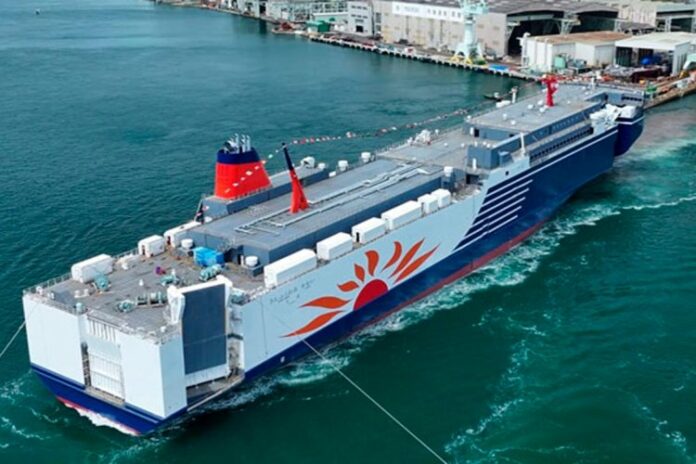
Mitsui O.S.K. Lines and its group company MOL Sunflower Ltd. today announced that the naming and launching ceremony for the first of two LNG-fueled ferries, which are under construction at Naikai Zosen Corporation, was held at Innoshima Shipyard on April 11.

The vessel was given its name Sunflower Kamuy by Tomoyasu Marutani, Chairman of Secoma Company Limited, and then his wife, Michiko Marutani, performed the ceremonial rope cutting. 

The vessel will be delivered at Naikai Shipbuilding in December 2024 and is slated to enter service on the late-night Oarai-Tomakomai route operated by MOL Sunflower in early 2025. The second of the two new vessels is scheduled to enter service on the same route within 2025.

With the addition of these vessels, the MOL Group will operate a fleet of four LNG-fueled ferries on east-west routes in Japan by 2025, joining the Sunflower Kurenai and Sunflower Murasaki, which went into service on the Osaka-Beppu route in 2023.

Mitsui granted AiP for methanol fuel supply system

0

Methanol is considered one of the promising alternative fuels for decarbonization, and a significant reduction in GHG emissions on a lifecycle basis is expected by using green methanol such as sustainable biomass-derived bio methanol and e-methanol synthesized from CO2 and renewable energy-derived hydrogen.

On the other hand, methanol poses risks in case of leakage due to its characteristics such as toxicity to humans and ease of ignition, necessitating appropriate safety measures. IMO has worked on establishing safety requirements for the use of methanol as a fuel, and “Interim Guideline for the Safety of Ships Using Methyl/Ethyl Alcohol as Fuel, IMO Res. MSC.1/Circ.1621” was released in 2020.

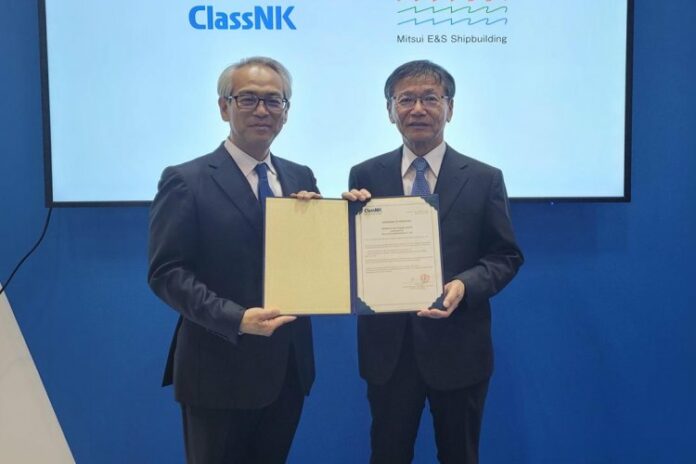
ClassNK has reviewed the conceptual design of the system developed by Mitsubishi Shipbuilding based on part A of its “Guidelines for Ships Using Alternative Fuels” incorporating contents of the IMO Interim Guidelines. Upon confirming they comply with the prescribed requirements, ClassNK issued the AiP.

Kongsberg to provide Promas propulsion systems for new US Coast Guard vessels

0

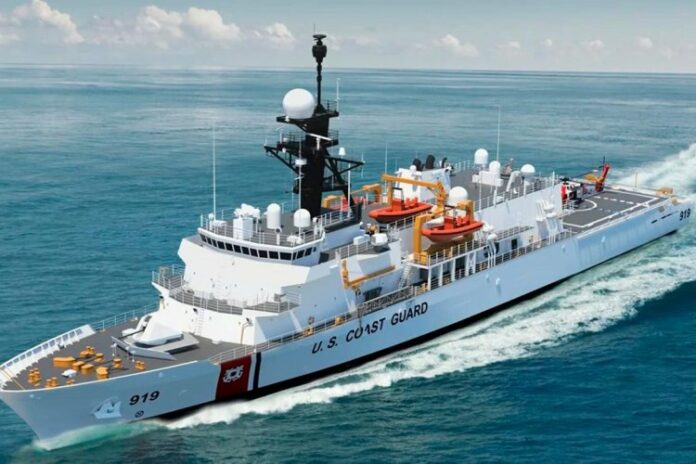
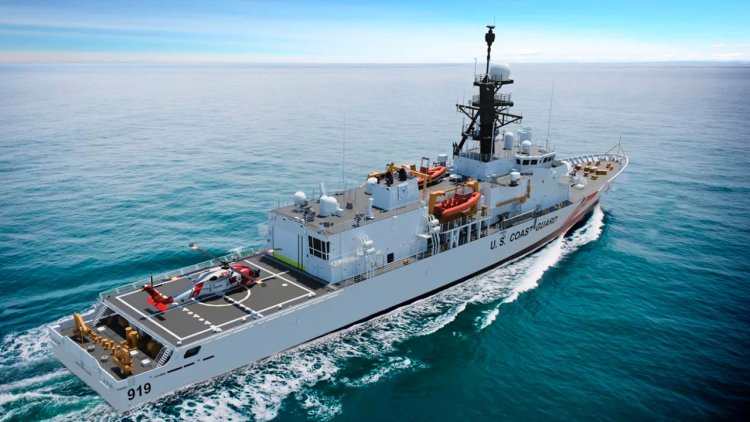
Kongsberg Maritime has been selected by Austal USA to supply its Promas propulsion system to the latest ship in the United States Coast Guard’s new Offshore Patrol Cutter (OPC) Heritage Class programme.

This initial contract is to supply Kongsberg Maritime equipment for the fifth ship, Coast Guard Cutter Pickering, which is the first to be built by Austal USA at their yard in Mobile, Alabama.

The Coast Guard’s new OPC programme represents a significant investment in maritime capability and is expected to run up to 25 ships. The new vessels will replace the Coast Guard’s medium endurance cutters and meet the need for long-term offshore capability to maintain current and future mission effectiveness.

Björn ten Eicken, Kongsberg Maritime, Vice President – Naval, said:

“Our Promas systems typically deliver efficiency savings of around 6%, so vessels are able to extend their range, something which can be crucial on longer missions.”

Promas combines rudder and controllable pitch propeller into one propulsion system which optimises the hydrodynamic properties of the ship and delivers increased efficiency and thrust while using less energy. For the OPC, as well as twin Promas, Kongsberg Maritime is contracted to supply steering gear, rudders, fin stabilisers and tunnel thrusters.

Björn ten Eicken, Kongsberg Maritime, Vice President – Naval, said: “Kongsberg Maritime has a proud history of supplying mission critical technology to United States Coast Guard programmes.

“We have supplied our propulsion systems for naval and governmental forces for more than 80 years, and we’re delighted to have developed an efficient and effective system specifically suited to the challenging and varied operations of these new ships. Our Promas systems typically deliver efficiency savings of around 6%, so vessels are able to extend their range, something which can be crucial on longer missions.

“We’re looking forward to working with the Coast Guard and Austal USA on delivering these highly-capable ships.”

The OPC vessels will be able to provide long range patrol capability. At 360 feet long, they will have a displacement of 3,700 long tons, maximum speed of 22.2 knots, and a range of 9,050 nautical miles at 14 knots. 

Google investing $1 bln to boost connectivity to Japan via two subsea cables

0

Google will invest $1 billion to improve digital connectivity between the U.S. and Japan through two new subsea cables, the Alphabet-owned, firm said on Wednesday amid a visit by the Japanese prime minister to boost ties between the countries.

The two subsea cables, Proa and Taihei, will improve connectivity between the U.S., Japan and multiple Pacific island countries and territories, Google said in a blog post.

“Building on the U.S.-Australia joint funding commitment for subsea cables last October, the United States and Japan plan to collaborate with like-minded partners to build trusted and more resilient networks and intend to contribute funds to provide subsea cables in the Pacific region,” a United States-Japan joint statement said on Wednesday.

The Pacific region has become a great area of interest for China and the U.S., who are jostling for influence in the zone with competing offers for infrastructure and military partnerships.

President Joe Biden has pushed for U.S. dominance in telecommunications services, seeing the industry as a key national security issue due to its control over information flows worldwide.
The U.S. pledged last year to jointly fund two undersea cables, to be built by Google, connecting the U.S. territory of Guam with hubs in Fiji and French Polynesia, and further branching out across remote Pacific Islands.

Google said the Proa subsea cable would connect the U.S., Japan, the Commonwealth of the Northern Mariana Islands (CNMI) and Guam, while the Taihei subsea cable would connect the U.S., Japan and Hawaii.

Additionally, Google said it would fund the construction of an interlink cable connecting Hawaii, the CNMI and Guam.

The tech giant also said it would work in collaboration with Japanese-based companies – including KDDI, Arteria Networks, Philippines-based Citadel Pacific and the CNMI – to improve the digital connectivity in the region.

Subsea cables are the backbone of the internet, carrying 99% of the world’s data traffic. 

Source: Reuters 
Reporting by Granth Vanaik in Bengaluru; Editing by Alan Barona

Damen Naval signs new contract with Dutch supplier for Anti-Submarine Warfare frigates

0

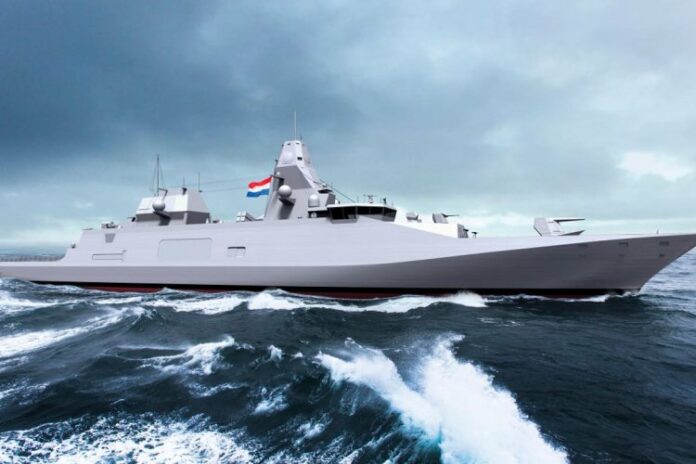
Damen Naval will partner with Hatenboer-Water on all freshwater systems on board the four Anti-Submarine Warfare Frigates (ASWF) that Damen Naval is building for the Netherlands and Belgium. With this contract, Damen Naval has once again found a Dutch supplier for the prestigious ASWF project.

“From the very beginning, we have said that we want to involve as many companies from the Dutch maritime manufacturing industry as possible in our projects,” explains Damen Naval Project Director Joop Noordijk. “Safe and clean water on board is essential and we look forward to working with Hatenboer-Water.”

Damen Naval signed the contract for the design and construction of the ASWF in June 2023. The frigates will be deployable for multiple tasks, although the emphasis will be on anti-submarine warfare. They are the replacements for the current Karel Doorman-class Multipurpose Frigates. With the end of life of these ships in sight, the Netherlands and Belgium have decided on a joint replacement programme. To this end, two frigates will be built for the Royal Netherlands Navy and two for the Belgian Navy.

Schiedam-based Hatenboer-Water has been supplying water supply systems to ships worldwide since 1906 and introduced the ‘Safe Water on Board’ concept, combining water treatment and distribution installation with global assistance for management and maintenance. The company also supplies the water systems for the F126 frigates that Damen Naval is building for the German navy.  

“From freshwater generators to pressure control and hot water production, every aspect will be meticulously developed to meet the highest standards of performance and reliability,” says Guy Heijnen, Chief Commercial Officer of Hatenboer-Water. “This collaboration not only confirms our commitment to providing high-quality solutions for maritime defence, but also highlights our shared vision of ensuring safety and efficiency at sea.”

The first vessel is scheduled to be delivered by Damen Naval in 2028.

New ZeroNorth`s service to enhance data integration between bunker suppliers and buyers

0

The bunker market’s legacy manual processes mean that data entries commonly contain inaccuracies, which leads to raised claims and additional costs. By directly and automatically transferring eBDN data into the procurement system, the new integration is a true step forward for transparency in the bunker market; improving operational efficiency, fostering stronger supplier relationships, and ensuring adherence to payment schedules.

The initial rollout of ZeroNorth’s eBDN solution has taken place in Singapore, one of the world’s most important bunkering hubs. Singapore has currently established itself as a hub for a digitalised bunker market, with the Maritime and Port Authority of Singapore (MPA) looking to make eBDN mandatory in the second half of 2024.

With 44,746 bunker deliveries conducted in Singapore in 2023, the city state’s share of fuel volumes was close to 23% of all marine fuel delivered in 2023 (51.8 million mt out of approximately 225 million mt globally).

It is clear that the adoption of eBDN in Singapore will create the foundation for the global rollout of the technology, significantly improving transparency across the bunker value chain in the years to come.

ZeroNorth is clearly seeing interest and enthusiasm for this integration. Effectively and digitally transferring key delivery data from the eBDN between supplier and buyer marks a pivotal moment in strengthening the exchange of data between all parties.

Kenneth Juhls, Managing Director, ZeroNorth Bunker, said:

“We are dedicated to leveraging technology to drive efficiency and sustainability in the maritime sector. The integration of eBDN dataflows is a testament to our commitment to innovation and our vision for a more connected, digital future for bunker fuel transactions.

“eBDNs represent the next frontier for bunker optimisation and hold the potential to be a true accelerant of digitalisation of the bunker value chain. It shows the latent power of the data we have at our fingertips and the positive impact that we can have if we are able to make that information available at speed. By breaking down the data silos between bunker suppliers and buyers, we’re helping everyone work together better.

“This makes it easier to build fuel strategies that are resilient to market complexities and that enable compliance with stricter regulations. We are grateful for the support of our customers and partners as we embark on this journey to transform the industry together.”