-7.3 C
New York
Home Blog Page 189

Norwegian Hydrogen and Provaris extend collaboration for hydrogen export in the Nordics

0

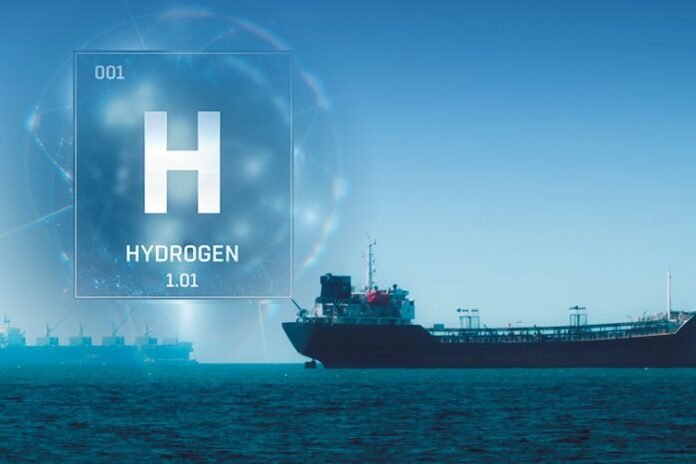
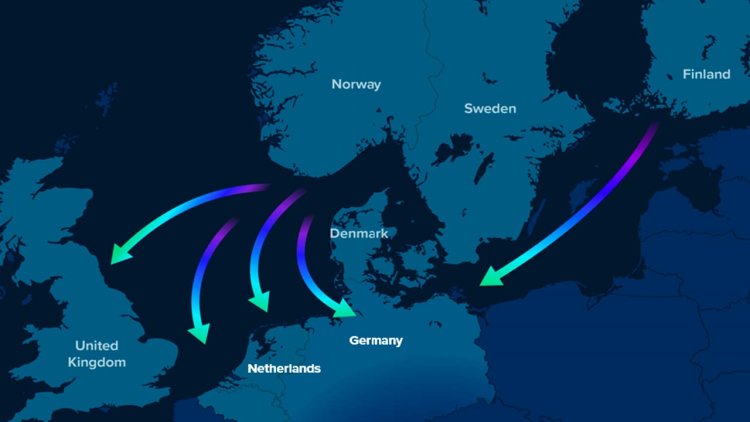
Provaris Energy Ltd and Norwegian Hydrogen AS has announced a new Collaboration Agreement to jointly progress the identification and development of several sites in the Nordic region for the large-scale production and export of hydrogen to European markets.

The projects will utilize locally available renewable energy to produce hydrogen for shipment to European ports. This will assist energy-intensive industries in making an impact on their decarbonization plans and target a scale and level of innovation that aligns with various European Union funding schemes.

New projects will be strategically located in areas with robust grid connections and power supplies. These sites will facilitate the construction of state-of-the-art electrolyzers, and hydrogen compression facilities linked to export jetties. Provaris’ H2Neo carriers will transport the hydrogen, while the H2Leo barge will serve for storage. The initiatives will also foster circular economies by utilizing by-products like clean oxygen and waste heat in local industries and district heating systems.
Jens Berge, Norwegian Hydrogen’s CEO commented:

“While we develop a comprehensive network of production sites and distribution infrastructure across the entire Nordic region, to reduce emissions in the Nordics, we have also identified several sites with significant export potential. While such locations could also be used to produce other derivatives such as e-methanol or green ammonia, we strongly believe that if the end demand is for gaseous hydrogen, nothing would be better than to avoid going via a derivative solely for transportation purposes. Provaris’ technology makes it possible to bring hydrogen in gaseous form all the way from production in the Nordics to the customers in continental Europe.”

Martin Carolan, Provaris Managing Director and CEO added:

“A new collaboration with Norwegian Hydrogen for greenfield sites in the Nordics builds on the success of our work together in 2023 and the platform they have developed in the Nordics as a producer of hydrogen. This partnership can accelerate development sites that will leverage Provaris’ downstream activities for supply of green hydrogen to German utilities who are seeking regional volumes of green hydrogen, and more recently, the joint development of a compressed hydrogen import terminal with Global Energy Storage (GES) at the Port of Rotterdam can provide market access to industrial offtake markets within the port and broader Europe.”
MAN Energy projects with ammonia engines firm up

0

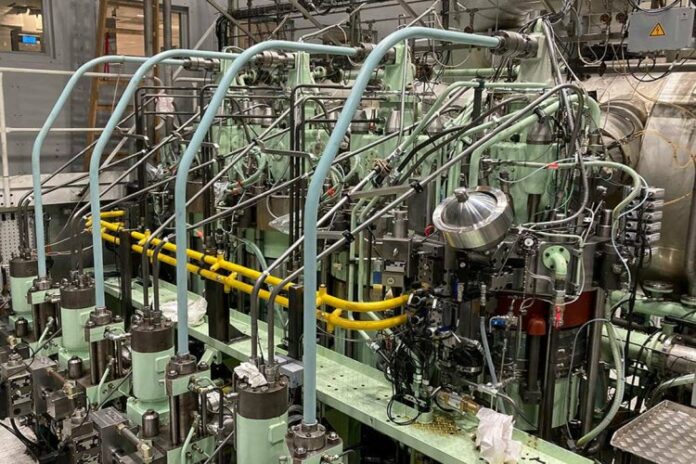
Imabari Shipbuilding will install an MAN B&W 7S60ME-Ammonia engine with SCR in connection with the construction of a 200,000 dwt class bulk carrier for a joint venture between K Line, NS United and Itochu Corporation. 

The business represents one of the first projects for MAN Energy Solutions’ ammonia-powered engine that is currently under development in Denmark. MITSUI E&S will build the engine in Japan.

Brian Østergaard Sørensen, Vice President and Head of Research & Development, Two-Stroke at MAN Energy Solutions, said:

“This project marks another important milestone in our ammonia-engine development and indeed for the maritime industry in general. It also confirms that we are on the right track in relation to our dual-fuel ammonia concept where we have gained a great understanding of ammonia’s unique characteristics as a marine fuel via our two-stroke engine testing, which we started in early June 2023. Equally as important, we are confident of how to handle it safely; it is very satisfying to see our hard work beginning to pay off.”

Bjarne Foldager – Country Manager, Denmark – MAN Energy Solutions, said:  

“The interest in this revolutionary engine had been overwhelming, even prior to our two-stroke ammonia-engine testing, but has even intensified after the important lessons learnt from ammonia-combustion testing on the test engine here in Copenhagen. While the current growth in shipping will increase greenhouse-gas emissions, alternative fuels like e-methanol, e-methane and green ammonia will eventually come to compete with fossil fuels but we need regulation to encourage their adoption in the industry. Regulatory clarity from the EU and IMO is improving but now we need the right market-based tools to be introduced in order to bring the industry towards carbon neutrality for 2050.”

Thomas S. Hansen, Head of Sales and Promotion, MAN Energy Solutions, said:

“MAN Energy Solutions has developed this engine since 2019 with over 100,000 man-hours recorded in that time. This first MAN B&W ammonia engine is a 60-bore type, which is applicable to a broad range of vessel segments. We believe that the success of ammonia as a marine fuel strongly relies on a safe introduction to the market. We will therefore monitor a number of engines entering operation at sea to ensure that the engine design and functionality of the auxiliary systems meet our expectations before the engine is formally introduced to our marine-engine programme as part of a full sales release. In the short term, we expect a fast uptake of ammonia-fuelled engines towards the end of the decade as we obtain positive seagoing experience from the first engines. In the long term, we expect ammonia to comprise around 35% of fuel used onboard large merchant-marine vessels by 2050 due to lower production cost compared to other e-fuels relevant for large merchant-marine vessels.”

New AIMS-developed reef monitoring technology used by scientists in Vietnam

0

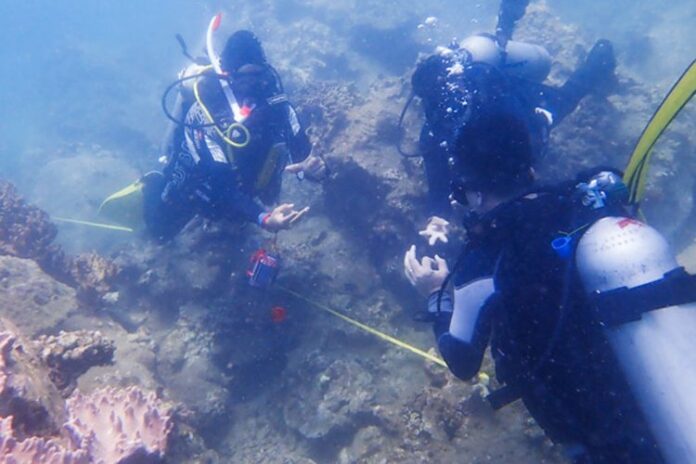
Working with their colleagues from Vietnam’s Institute of Oceanography, AIMS engineers and scientists used an autonomous imaging system (ReefScan Transom) attached to their watercraft to record high-resolution images over large areas of coral reefs.  

They then used machine learning and advanced analysis through ReefCloud to rapidly extract data from the images about the reef’s condition to provide comprehensive, standardised, and easily understandable reports. 

AIMS representatives trained the local reef monitoring professionals to use the technology and helped them adapt it to meet their national needs.  

Mr Scott Bainbridge, who leads the AIMS team that developed ReefScan, said the system enabled imagery collection across large scales. 

“This information, combined with underwater surveys, will generate a large volume of data to describe the status of Vietnam’s coral reefs,” he said. 

This latest exchange of knowledge between Australia and Vietnam builds on previous work. Last October, Institute of Oceanography representatives completed intensive training in advanced statistical analysis and coral identification at AIMS, in Townsville, Australia.  

AIMS Research Team Leader and ReefCloud Director Dr Manuel Gonzalez Rivero said reef monitoring was the backbone of informed management, but traditional methods of reef monitoring were labour-intensive and expensive. 

“As the effects from climate change and local pressures continue to threaten the sustainability of coral reefs, reef management informed by a timely scientific knowledge is critical to protecting the future of these valuable ecosystems,” he said. 

“Nha Trang is Vietnam’s first marine protected area and a valuable tourist region, so preserving coral reefs here is of high importance,” he said.  

“We expect the training and technologies provided by AIMS will assist in catalysing the scientific and conservation efforts in the region and throughout the country.  

“The collaboration between AIMS and the Institute of Oceanography will bring together coral reef managers from across the coastal waters of Vietnam, enabling collaborative and innovative conservation efforts nationwide.”

Co-funded by the Department of Foreign Affairs and Trade, the mission was part of the Marine Resources Initiative. A ReefScan unit was presented to the Institute of Oceanography, with two more units due to be delivered in June. 


DFDS to deploy fleet of battery electric vessels on the English Channel

0

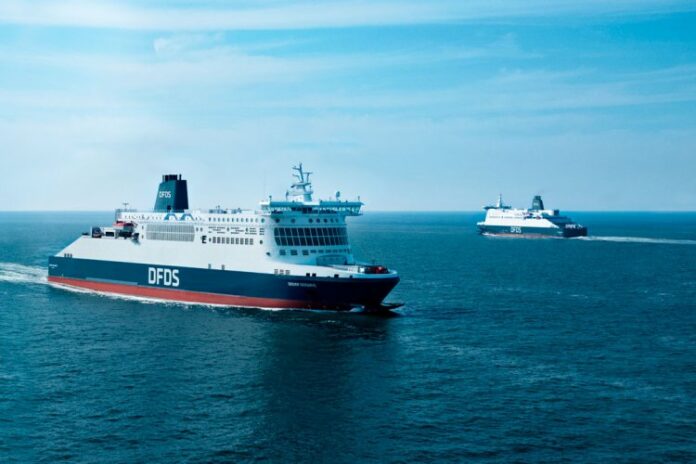
DFDS’s long-term goal is to have up to six battery-powered vessels operating on its routes on the Channel, with the first two in service by 2030.

The UK Minister for Investment and Regulatory Reform has visited DFDS headquarters in Copenhagen, Denmark to discuss decarbonisation of the shipping sector and the electrification of maritime traffic across the English Channel.

DFDS will deploy two battery-powered vessels in the Eastern Channel by 2030. This is a part of a program to invest in six green vessels – two methanol, two ammoniac and two electric – for a total of around DKK 7.3bn over the next six years. The long-term goal is to introduce up to six fully electric vessels on the channel, which would be the world’s largest electric ferries.

Because of the relative short distance between the UK and the European continent, the routes on the channel are optimal for electric ferry transport. The English Channel is one of the busiest shipping corridors in the world. It links two of the world’s biggest economies and accounts for 33% of the trade between the EU and the UK.

UK Minister for Investment and Regulatory Reform, Lord Dominic Johnson said:

“With its superb infrastructure, technological advances and proximity to Denmark, the UK is the partner of choice for green investments like this. DFDS’ commitment highlights the value of our trading relationship and the strategic importance of the English Channel shipping route.”

“The UK Government remains steadfast in its aim to reach net zero by 2050 and the green transition of the cross-Channel shipping will create British and Danish jobs and strengthen both our economies.”

The green transition of maritime transport on the Channel not only relies on the ships at sea. A sufficient power supply on land and infrastructure to accommodate recharging facilities in ports are equally important to be able to complete the fleet electrification.

“We have a shared ambition with the UK Government to decarbonise maritime traffic across the channel. The transition is not going to be easy. It requires significant investments in innovation, technology and infrastructure, and collaboration and partnerships between the public and private sectors. But I am confident that we will succeed. DFDS will invest in green vessels and cooperate with ports and governments on both sides of the channel to decarbonise cross channel transportation,” says Torben Carlsen, CEO of DFDS.

DFDS has 12 routes connecting UK to France, Germany, The Netherlands, Sweden and Denmark and employs 3,300 people in 5 ports, several logistics offices in the UK and onboard 3 UK flagged vessels.

MAN Energy receives an order for three dual fuel-methanol engines capable of running on methanol

0

MAN Energy Solutions has received an order for 3 × MAN 6L21/31DF-M (Dual Fuel-Methanol) GenSets capable of running on methanol in connection with the construction of a 7,990 dwt IMO Type II chemical bunker tanker.

The dual-fuel engines will form part of a diesel-electric propulsion system on board the vessel with electrical motors driving twin fixed-pitch propellers via gearboxes; an onboard battery-storage system will optimise the use of the dual-fuelled generators. MAN Energy Solutions’ licensee, CMP – an engine-manufacturing division of Chinese State Shipbuilding Corporation (CSSC) – will build the engines in China and the vessel is scheduled for delivery during Q4, 2025.

The newbuild will operate at the port of Singapore under charter to deliver marine fuels. The port itself is reported as laying plans for the steady supply of methanol from 2025 onwards in order to meet future, anticipated bunkering requirements for methanol-fuelled vessels. 

Bjarne Foldager – Country Manager, Denmark – MAN Energy Solutions, said:

“Seeing our trusted MAN L21/31 GenSets go into these ships as a methanol-fuelled version shows that maritime decarbonisation is a prominent consideration for shipowners in all vessel segments and sizes. It also clearly illustrates, regardless of the market one serves as shipowner, that our broad, dual-fuel portfolio enables everyone to take part in the green transition.”

Thomas S. Hansen – Head of Sales and Promotion – MAN Energy Solutions, said:

“The MAN L21/31 engine is well-established in the market having racked up some 2,750 sales. The reliability of its cost-effective, port fuel-injection concept now prominently positions the 21/31DF-M as the preferred, medium-speed, small-bore engine for GenSet and diesel-electric propulsion solutions, while also meeting market demands to balance both CAPEX and OPEX. With the shipping market currently experiencing an increased interest in methanol as marine fuel, and orders for methanol-fuelled ships steadily growing as part of many companies’ decarbonisation strategy, we feel that the introduction of this dual-fuel engine is timely.” 

Van Oord completes large-scale beach restoration project in Valencia

0

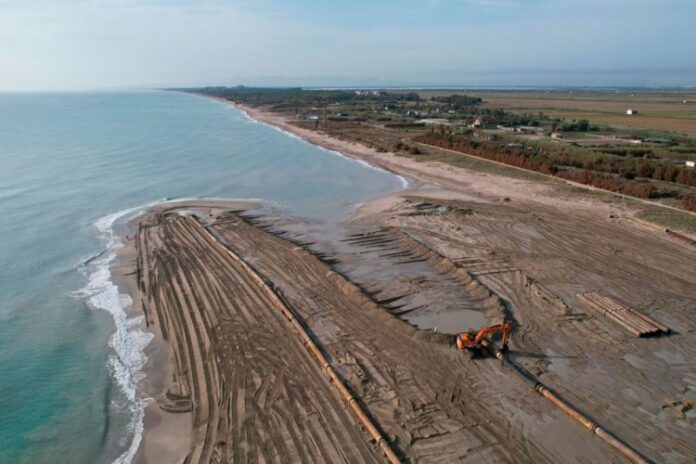
The Spanish government contracted the joint venture of Van Oord subsidiary Dravo S.A. and Rover Maritime to restore 7 kilometres of coastline and to extend 2 breakwaters to reduce erosion.  

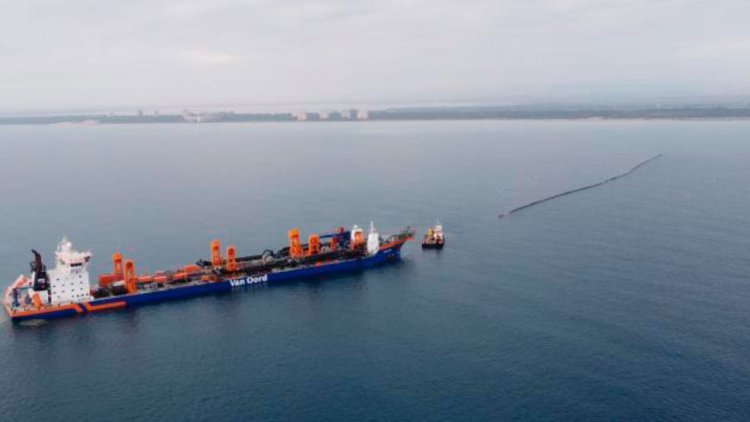
Van Oord deployed its largest trailing suction hopper dredger, the HAM 318, to apply 3.3 million cubic metres of sand, extending the beaches up to 150 metres wide. The dredged material was pumped ashore over a distance of 1.8 kilometres, using a combination of floating and submerged pipelines.  

The widened beaches protect low-lying coastal communities, agricultural areas and the Albufera National Park separating its fresh water from the salt water of the Mediterranean Sea. Another part of the project was restoration of the dunes. A combination of sand, strategically placed sand collectors and newly planted vegetation form the basis of the new dunes. The sand collectors, made from a local type of cordgrass, are placed in squares to trap sand blown along by the wind. Within those squares, the newly planted vegetation will firm up the forming dunes. In total 75.5 kilometres of sand collectors and 44,000 plants were placed to contribute to the overall ecological fortification of the area. The aim is not only to safeguard the natural environment, but also to enhance its ecological resilience.

Jesus Martin, Managing Director Dravo S.A, said:

‘Van Oord’s subsidiary Dravo S.A. looks back on the Valencia project with pride. Thanks to the expertise and commitment of the project team, the large-scale project has been successfully completed within budget and within the agreed execution period. The new beaches not only serve as coastal protection for Valencia, they also contribute to the restoration of the ecology within the area.’

The Spanish Government financed the project via the European Commission (EC). The EC started the NextGenerationEU fund in 2021, a temporary instrument to support recovery from the COVID-19 pandemic and build a greener, more digital and more resilient future. The fund means that members of the European Union have the opportunity to reform and invest in their countries. Part of this fund serves as a plan for recovery, transformation and resilience of coastal areas. The Valencia project, designed by the Ministry of Ecological Transition and Demographic Challenge, via the secretary of state for the environment and Valencia’s COSTAS office, met this pillar.

EST-Floattech delivers Octopus Series battery systems to Coastal Workboats’s vessel

0

The collaboration with Coastal Workboats Scotland marks a significant step towards lowering emissions in the UK’s maritime industry with EST-Floattechs technology.

This collaboration is realized due to Coastal Workboats receiving a £6 million (€7 million) grant to demonstrate the UK’s first commercial electric workboat and charging station. This grant, provided by the Clean Maritime Demonstration Competition (CMDC), underscores the industry’s recognition of the pressing need for cleaner, greener maritime operations and will boast the usage of electric workboats in a commercial environment.

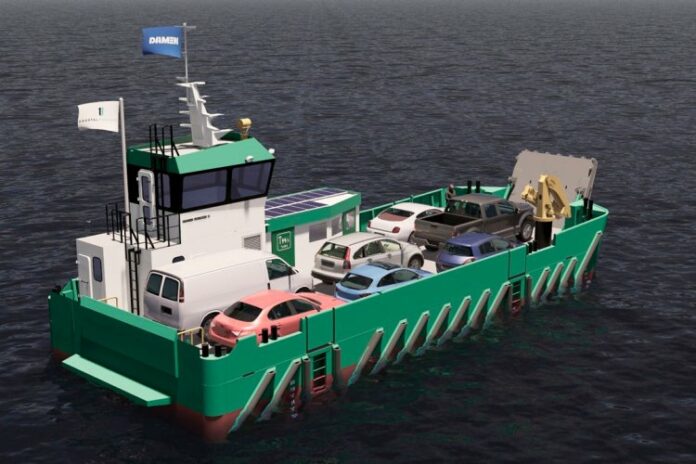
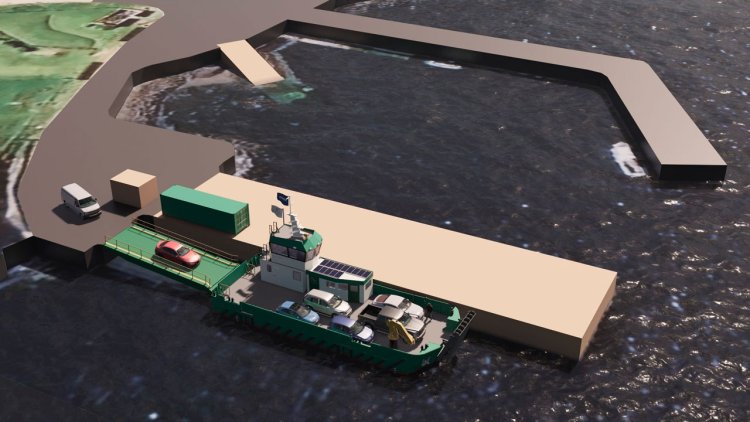
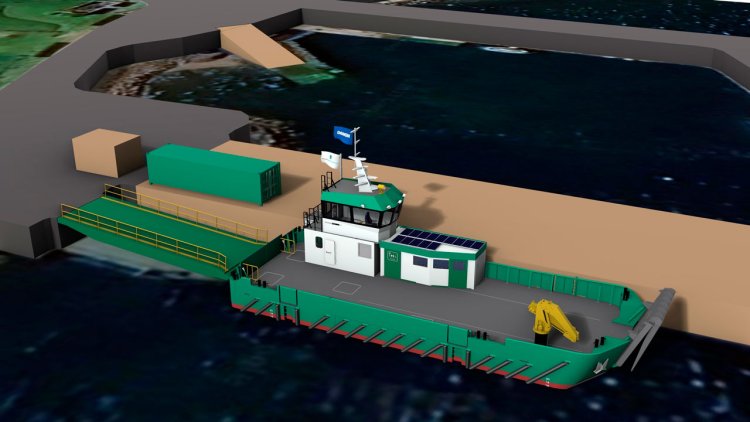
The vessel that will be built, the E-LUV, is set to be the UK’s first commercial electric workboat. This innovative vessel, a Ro-Ro and dry cargo transportation ferry, will be equipped with 2400 kWh of EST-Floattech’s Octopus High Energy battery system. The system will be placed as two independent battery systems on board, power a range of equipment, and be used for fully electric sailing. Starting for demonstration purposes in the Shetland Isles in a short trial, the E-LUV will be operating between West Burrafirth and Papa Stour. The route takes about 45 minutes, twice per day and five days per week, while showcasing the capabilities of energy storage solutions in maritime applications. 

Secondly EST-Floattech will supply 1.200 kWh of the Octopus High Energy battery system, to be placed in a 20 foot container that will support the charging of Coastal Workboats’ E-LUV vessel. It is also possible to place the containerized energy storage solution on board as a range extender. We will be collaborating with MJR Power & Automation for the system integration and the entire system will be placed inside the container by Renew Marine Ltd.

The E-LUV will adhere to Bureau Veritas classification standards, ensuring top-notch safety and quality. The battery system will not only be safer, but it will also need less maintenance. This Ro-Ro and dry cargo transportation ferry is set to become a new standard for emission-free voyages. This contract is a significant achievement for Coastal Workboats, a small, family-run yard, and also for EST-Floattech. 

Coastal Workboats’ Chief Engineering Manager Luke Parnell said:

“Our attraction to the Octopus Series quite simply comes down to safety. EST-Floattech have produced a class-approved product that brings to market a level of safety unseen previously. In particular, the passive nature of the heat dissipation system represents a marked step forward in safety, particularly for an application in the marine environment. Given our primary concern is safety above all, the Octopus was the perfect choice for us.”

Jelle Meindertsma, Sales Manager at EST-Floattech, states,

“We are proud to be contributing to lowering emissions in the maritime industry in the UK, working hand in hand with Coastal Workboats to bring sustainable, high-performance energy solutions to the forefront. Our collaboration on the E-LUV is a testament to our shared commitment towards a more environmentally responsible maritime future.”

Saipem receives authorization to proceed with the execution of the Whiptail project in Guyana

0

Saipem informs that it has received from ExxonMobil Guyana Limited and its Stabroek block coventurers the authorization to proceed with the execution of the Whiptail oilfield development project, situated in the offshore Guyana, at a water depth of approximately 2,000 meters.

The authorization has been granted subsequent to the final project sanction by the client and its coventurers and to the necessary regulatory clearances.

Saipem’s scope of work entails the detailed Engineering, Procurement, Construction, and Installation (EPCI) of a subsea production facility. The contract value is between 750 million and 1.5 billion USD.

As previously announced, Saipem had already started initial activities, namely the detailed engineering and procurement of the long lead items, and following the issued authorization the company can proceed with the execution of the remaining project activities.

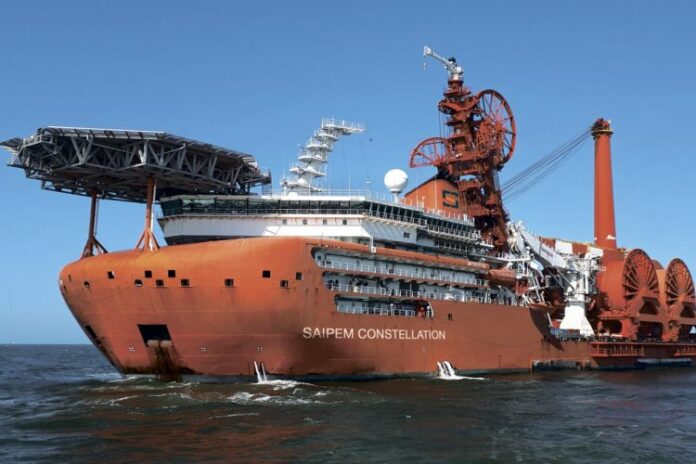
Saipem’s vessels FDS2, Castorone and Constellation will be used for the offshore installation. Furthermore, for the on-site construction of part of the submarine items, Saipem will deploy its Guyana Offshore Construction Facility, located at the Port of Georgetown, and an additional local fabrication facility, proof of the company’s continued commitment to the sustainable growth in the country.

Saipem had been previously awarded five additional contracts by ExxonMobil Guyana for projects in the same region: Liza Phase 1 and Phase 2, Payara, Yellowtail and UARU.

Scientists find clever way to harvest blue energy from waves

0

Researchers have found a clever way to get more power from the ocean’s waves, making it easier to turn the sea’s natural rhythms into electricity.

The team’s breakthrough involves a special device that captures “blue energy” from waves.

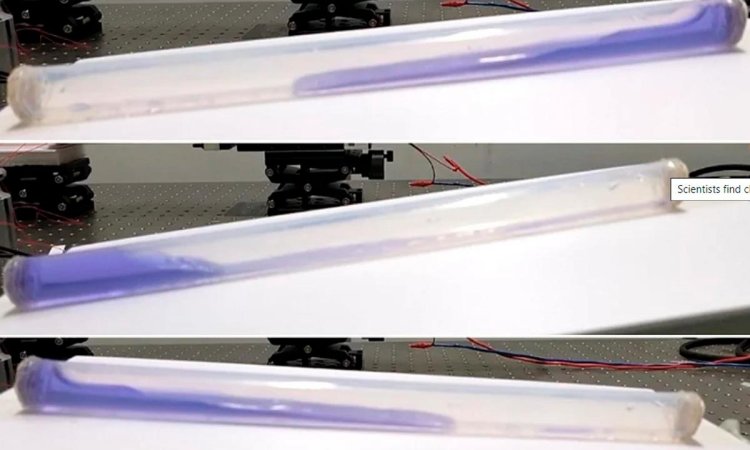
This device, known as a liquid–solid triboelectric nanogenerator (TENG), works by converting the movement of water inside a tube into electric power.

Imagine a tube half-filled with water; when the tube tilts back and forth, the water sloshes around, and this action can generate electricity.

Traditionally, these TENG devices had a major flaw: they didn’t produce enough electricity to be widely useful. But the researchers, led by Guozhang Dai, Kai Yin, and Junliang Yan, thought of a simple yet effective improvement.

They moved the part that collects energy, called an electrode, from the middle of the tube to the end where the water hits hardest when the tube rocks.

It’s a bit like putting the catcher where the baseball is most likely to fly in a game of catch.

To test their idea, the researchers built two TENG devices using clear plastic tubes and copper foil as the electrode.

One device had the electrode in the traditional center position, while the other had it at the end.

Then, they filled the tubes with water and set them on a benchtop to rock back and forth, mimicking wave motion.

The results were exciting. The device with the electrode at the end produced more than double the electricity of the traditional setup. In a vivid demonstration, this energy was enough to power a string of 35 LED lights, blinking on and off as the water moved.

This simple tweak could mean big things for harvesting energy from the ocean.

The researchers envision their improved TENGs being used to collect wave energy on a larger scale, helping to power coastal communities, charge batteries for underwater research equipment, or even support underwater communication systems without needing cables.

The beauty of this invention lies in its simplicity and potential impact.

By tapping into the constant power of ocean waves, we could access a vast and renewable energy source, bringing us one step closer to a cleaner, more sustainable future.

The study can be found in ACS Energy Letters.

Keel laying ceremony for the CLV vessel Nexans Electra

0

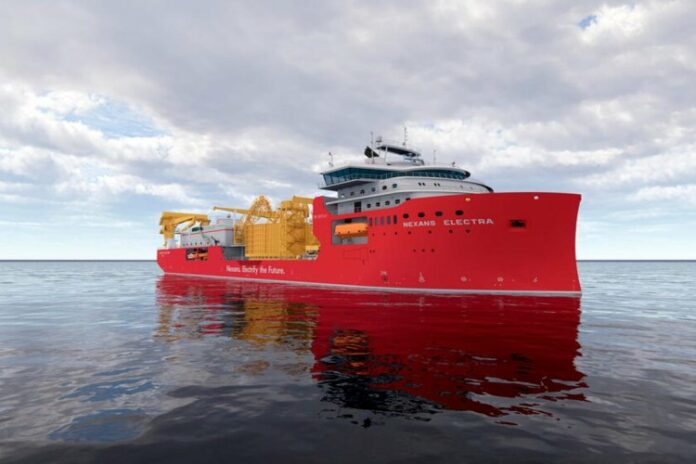
On 4 April 2024, the keel laying ceremony took place for the DP3 cable laying vessel (CLV) Nexans Electra. 

The keel laying is a significant milestone and marks the commencement of assembling the main components of a newbuild vessel. The Nexans Electra is the second ship ordered by Nexans at Ulstein Verft and an updated version of Nexans’ flagship, the Nexans Aurora, a 2021 delivery.

“We are excited to see the first major milestone of the construction of the Electra underway and look forward to seeing the ship completed in its entirety,” says Marco Bregman, Director Installation & Services at Nexans.

The hull construction is well underway in Crist, Poland, while the remaining engineering, outfitting, system integration, equipment preparations, testing, sea trials, and finalisation will occur at Ulstein Verft in Norway. The ST-297 design has been developed by Skipsteknisk in Ålesund, a Norwegian ship design and engineering company.

The Nexans Electra will be outfitted for power cable laying with a two-carousel solution, including bundle laying, cable jointing, repair, cable system protection, and trenching. She can simultaneously lay up to four cables and will be outfitted to perform effectively in challenging weather conditions. Her exceptional manoeuvrability and station-keeping capabilities make her a valuable asset.

During the steel-cutting ceremony in January, Frode Beyer, Nexans’ project manager, expressed satisfaction with the close collaboration between designers, engineers, the shipyard, and the shipowner, which enabled construction to begin on schedule. The project continues to progress according to plan.

The vessel’s name, Nexans Electra, was chosen through an internal naming contest at Nexans. It aligns with the company’s slogan, ‘Electrifying the future’. 

“In the upcoming months, the project management will prioritize several key areas,” says Runar Toftesund, project manager at Ulstein Verft.

 “First, there will be a continued focus on hull construction, ensuring the structural integrity and foundation of the vessel. The hot work outfitting and paintwork will be carried out in Crist. Parallel to this process, collaboration with Nexans and other main suppliers will remain crucial to sustain the project’s momentum and drive progress.”

Nexans Electra measures 149.9m in length and 31m in beam and has a dead weight of 17,000 t. She can accommodate up to 90 people. 

This cable-laying vessel boasts impressive features:

  • A split turntable on deck can hold up to 10,000t of cable.
  • An under-deck turntable with a 3,500t cable capacity.
  • A fibre optic basket holding 450t.