-9.3 C
New York
Home Blog Page 188

Eureka Shipping announces construction of new cutting-edge cement carrier for Great Lakes trade

0

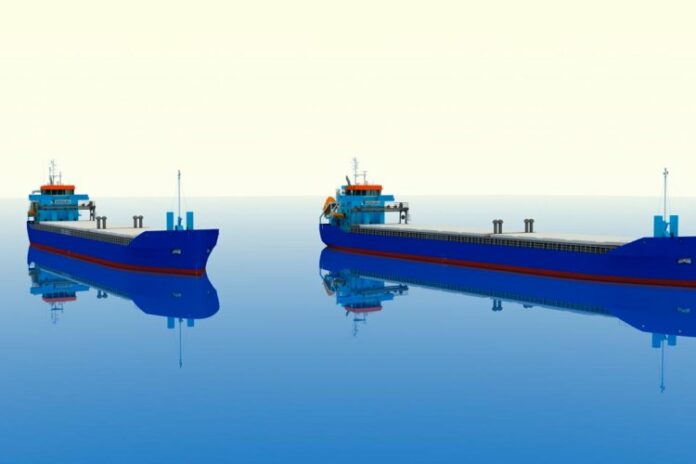
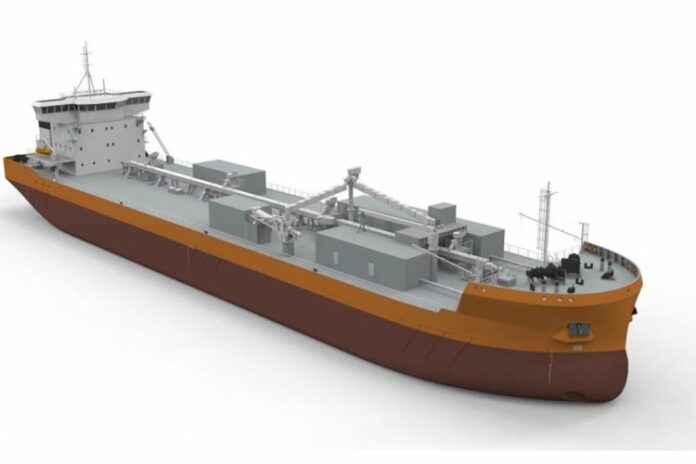
Eureka Shipping has announced the construction of a state-of-art mechanical/pneumatic cement ship destined for operation in the Great Lakes. 

“Building a ship aligned with eco-friendly principles is a top priority for both Eureka Shipping and our customer,” said Kai Grotterud, Managing Director of Eureka Shipping. “Our new cement carrier is expected to contribute significantly to decarbonization by drastically reducing the emissions per metric tonne of cargo carried

From its propulsion system to its onboard amenities, every aspect of the new vessel’s design reflects a dedication to safety, environmental stewardship and operational efficiency. 

Key features include:

  • a diesel-electric propulsion system consisting of four generator sets, providing redundancy for both navigation and cargo operation;
  • modern, fuel-efficient engines capable of operating on HVO biofuel, to enhance performance and reduce emissions;
  • two rudder propellers with 360 degree thrust, plus a powerful bow-thruster, for superior maneuverability and optimized navigation safety;
  • energy-saving measures to minimize power consumption, including LED lighting throughout;
  • state-of-the-art cargo handling equipment to reduce power usage during loading and unloading operations;
  • extensive noise insulations and silencers on machinery and cargo handling equipment;
  • prepared for operation on shore power when such power becomes available;
  • high-quality accommodations for officers and crew, prioritizing comfort and well-being.

The new vessel, currently under construction by the Holland Shipyard Group in the Netherlands, is scheduled for delivery in 2025 and will commence operations in the Great Lakes region.

In the interim, prior to the new vessel’s arrival in Canada, MV Sunnanvik, a 8,600 DWT mechanical/pneumatic cement carrier previously operating in Europe, will service its trade routes starting in early April 2024. Equipped with modified discharge equipment tailored to the customer’s receiving terminals, the vessel will discharge cargo at rates of up to 1,000 tonnes per hour.

As part of Eureka’s commitment to decarbonization, MV Sunnanvik was fitted with two flexible, vertical “Ventofoil” “wing” sails from Econowind in 2023. These innovative sails harness wind energy to provide additional thrust, contributing to lower emissions. Conditions permitting, they will be tested on the Great Lakes, enhancing the vessel’s speed in favorable wind conditions.

MV Sunnanvik holds the distinction of being the first sail-equipped vessel to operate in the Great Lakes.
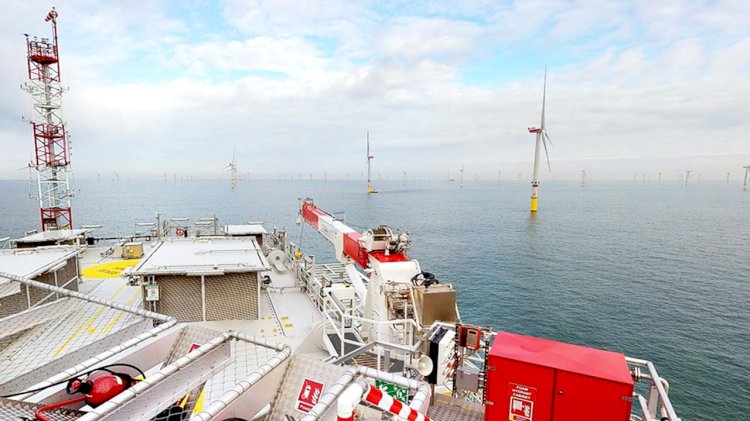
UK offshore wind industry unveils Industrial Growth Plan to triple supply chain manufacturing

0

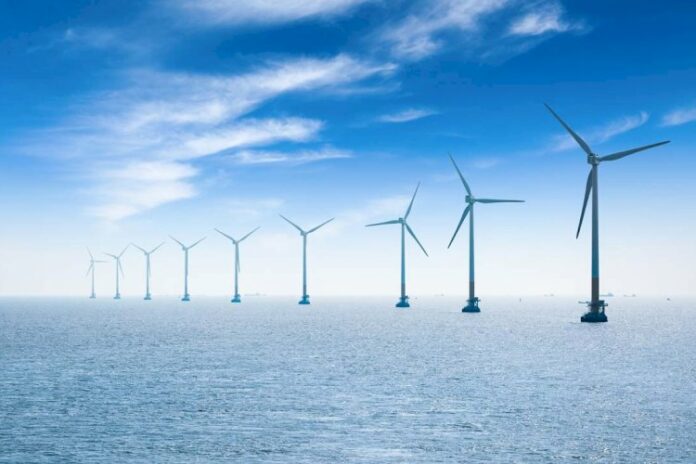
The UK offshore wind industry already employs 32,000 people and each new large offshore wind farm adds £2-3bn to the economy. Employment is set to rise to over 100,000 by 2030 and investment in new offshore wind projects will create an economic opportunity worth up to £92bn for the UK by 2040.

The measures set out in the Industrial Growth Plan (IGP) would create an additional 10,000 jobs a year and boost the UK’s economy by a further £25 billion between now and 2035, if we accelerate offshore wind deployment in line with our net zero targets to 5-6 gigawatts a year. The UK has the second largest global pipeline of offshore wind projects at all stages of development at nearly 100GW – more than six times our current capacity.

As the Growth Plan’s analysis shows, supply chain constraints in many of the key components needed in offshore wind farms are already starting to be felt in the global market. The IGP identifies strategic new factories and manufacturing capabilities which the UK should build up to protect against supply chain risks and boost economic growth.

The IGP identifies five key technology areas in which the UK should prioritise investment to secure value for UK industry. These include the design and manufacture of offshore wind blades and turbine towers, foundations, cables and other key components and services for projects here and abroad.

The Growth Plan also highlights the industry’s potential to drive technology innovation, accelerate deployment and cut environmental impacts even further by incorporating automation and AI technologies in new projects. It sets out plans to expand testing facilities for cutting-edge technology, such as new materials for blades and designs for floating offshore wind platforms, as part of a focus on Research and Development at a potential new Advanced Technology Institute and a new National Innovation Hub, working in harmony with UK’s world-class Catapult network.

The plan aims to provide a shared vision which enables industry, Governments across the UK and other funders to better align their investments to boost green jobs and manufacturing in the UK. The plan envisages mobilising nearly £3 billion of funding nationwide, with private finance doing the heavy lifting. This will bring a return to our economy of just under £9 for every £1 invested.

Industry will now take forward proposals to set up an IGP Delivery Body, in collaboration with key partners, which will set out the detail of how we govern and deliver the IGP in a way that ensures the best use is made of funding provided by the industry, the Government’s Green Industry Growth Accelerator (GIGA) fund, The Crown Estate’s Supply Chain Accelerator, Scottish Government funding and other sources. To meet the ambition of the Industrial Growth Plan, the Delivery Body should be established by the end of the year.

The Industrial Growth Plan is part of wider efforts to boost investment in the UK in the context of increasing global competition for clean energy technology. Many of the UK’s competitors have introduced new incentives to attract investment in offshore wind projects and domestic manufacturing, hoping to replicate Britain’s success in offshore wind. The plan sets out a targeted approach which builds on our existing national capabilities, growing our economy, generating employment and securing the UK’s leadership in international export markets.

RenewableUK’s Chief Executive Dan McGrail said:

“Our Industrial Growth Plan is the deepest dive ever into the offshore wind supply chain, identifying the highest-value components and services which the UK should focus on to get the biggest economic bang for our buck from future wind farm development. For example, it shows that the UK will need three hundred giant turbine towers every year for offshore wind projects between now and 2030 to deliver Government targets. The plan charts a clear course for us to ensure that we seize that massive economic opportunity and maximise our opportunities to manufacture those towers here, along with more blades, cables, foundations and a whole range of other products.

“By using this as a blueprint to work closely with all our partners in the sector, we can triple the size of that supply chain, ramp up our offshore wind capacity significantly and secure a huge increase in jobs, all within the next ten years.”

Energy Security Secretary Claire Coutinho said:

“Britain’s windswept shorelines give us a competitive advantage in the global race for energy. That’s why, since 2010, Britain has been second only to China in building new offshore wind farms. “The plans set out by industry today will work with our £1 billion Green Industries Growth Accelerator to make sure the UK can build the turbine blades and high-voltage cables that we will need to produce cheaper, cleaner, more secure energy.”

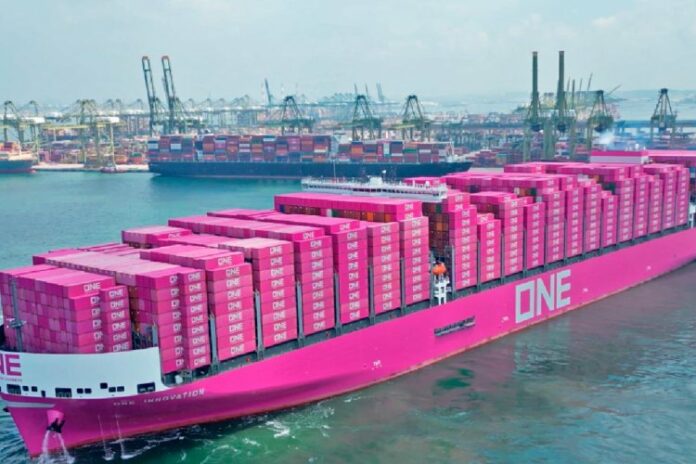
Ocean Network Express launches green shipping solution

0

ONE LEAF+ offers customers the opportunity to proactively manage their own emissions and minimise environmental impact across the value chain.

ONE LEAF+ offers customers a range of benefits, including:

  • Reduced Carbon Footprint: ONE will deploy regulation-compliant alternative fuels on designated vessels, allowing customers to reduce Scope 3 GHG emissions on their shipments with ONE.
  • Added Transparency: With ONE LEAF+, customers will receive certification indicating the CO2e savings verified by an independent third-party verifier for their shipments with ONE, empowering them to track their progress towards sustainability goals.

“At ONE, we are fully committed to our target in achieving net-zero GHG emissions by 2050.” said Gilberto Santos, Senior Vice President, Global Commercial Service Management at ONE. “The launch of ONE LEAF+ underscores our commitment to sustainability and provides our customers with the tools and transparency they need to make informed choices about their Scope 3 GHG emissions.”

Alternative Fuels and Carbon Management serve as the key initiatives for ONE in reaching its ambitious target of net-zero GHG emissions, including Scope 2 and Scope 3, by 2050.  

ONE LEAF+ factsheet:

  • ONE LEAF+ stands for Low Emission-Able Freight. The “+” symbolises the advancement that ONE anticipates from decarbonizing the supply chain.
  • To calculate the customer’s existing emissions, ONE employs the industry-standard Clean Cargo Working Group methodology managed by Smart Freight Centre.
  • ONE’s biofuel selection criteria is to use only regulation-compliant fuels. Concurrently, ONE employs Used Cooking Oil Methyl Ester (UCOME) feedstock, which generates about 84% less well-to-wake CO2e emissions considering B100 compared to Very Low Sulphur Fuel Oil (VLSFO).
  • UCOME is a second-generation biofuel made from used cooking oil which meets the EU RED definition of waste or residue. UCOME is a type of Fatty Acid Methyl Ester (FAME), which follows more stringent criteria.
  • The process and methodology are certified by a third-party verification body, ClassNK, a leading authority on the book-and-claim process for carbon emissions savings in the transportation sector (aviation and shipping).
  • Customers purchasing ONE LEAF+ will receive an annual certificate certifying the volume of their GHG savings (any additional requirements will be subject to negotiation).

New research vessel delivered to Thailand’s Department of Marine and Coastal Resources

0

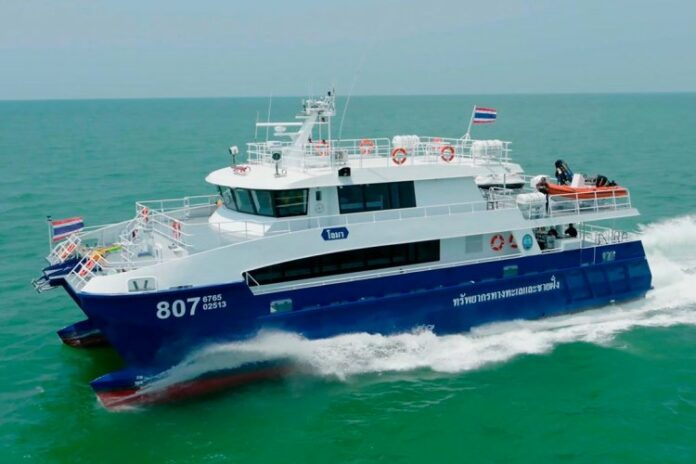
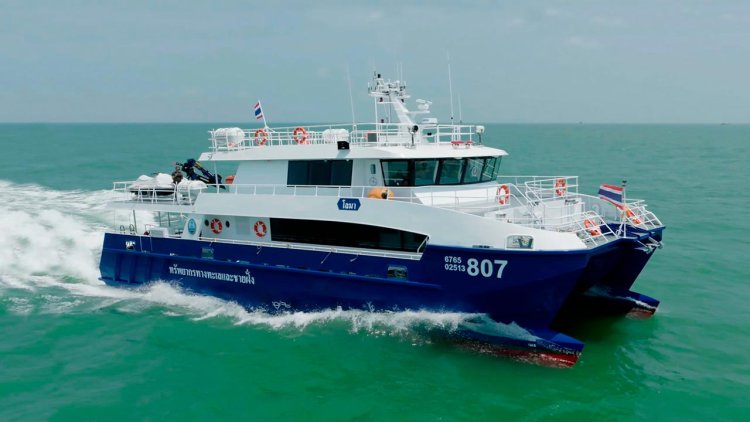
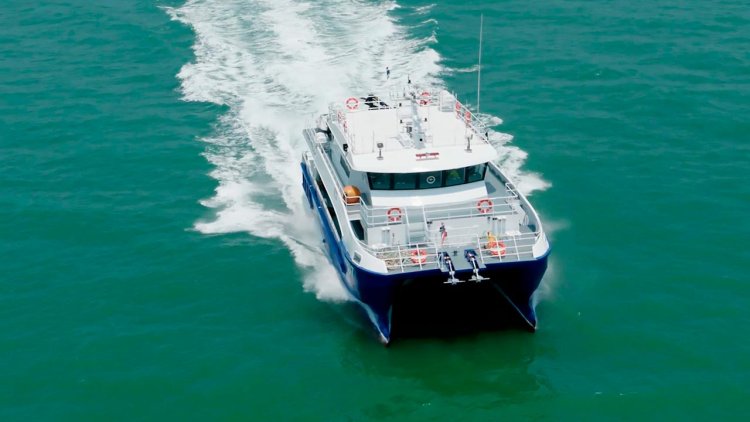
Thailand’s Department of Marine and Coastal Resources (DMCR) has taken delivery of a new state-of-the-art research vessel designed by leading digital shipbuilder Incat Crowther.

Based on a proven Incat Crowther design, the 25-metre catamaran has a range of innovative features and equipment to help its crew monitor and protect sensitive coastal areas while having minimal impact on the environment.

Designed to accommodate 12 crew and 16 passengers in six sleeping quarters, the main deck features three of the vessel’s sleeping quarters, five bathrooms, a large mess, an outdoor dining area, galley and a conveniently located storeroom.

The upper deck features an office and operations control room with a day head and an ensuite cabin for the captain. The large wheelhouse has been designed to optimise the captain’s line of sight, while the upper deck also provides storage for a tender and jet ski – both readily available for fast deployment via a strategically positioned crane. The hull deck features three crew cabins.

Tanapat Hemangkorn, Managing Director of Seacrest Marine, said the on-time delivery of the new research vessel to the DMCR is testament to the cooperative and collaborative approach employed by Incat Crowther, Seacrest Marine and the DMCR.

“Incat Crowther’s approach to digital shipbuilding helped support the success of this project from the bid stage all the way through to delivery. Seacrest Marine and Incat Crowther have a track record of successfully partnering on a range of projects, with the delivery of this vessel being the sixth Incat Crowther design, yet another example of our thriving partnership,” said Mr. Hemangkorn.

Incat Crowther’s Technical Manager Dan Mace said: “Using a tried and tested design as a foundation, this vessel has been customised to the DMCR’s unique coastal research and monitoring needs and integrates the latest technological advancements.”

“The market-leading hull design, refined through extensive model tank testing, sets new standards for performance. With a propulsion system enabling maximum speeds of over 30 knots and efficient fuel consumption, this design also maximises operational efficiency without compromising performance.”

AirX and BV sign agreement to advance wing-in-ground technology

0

The collaboration will support the development of innovative fuel-efficient technology through the classification and certification of the first AirFish WIG craft.

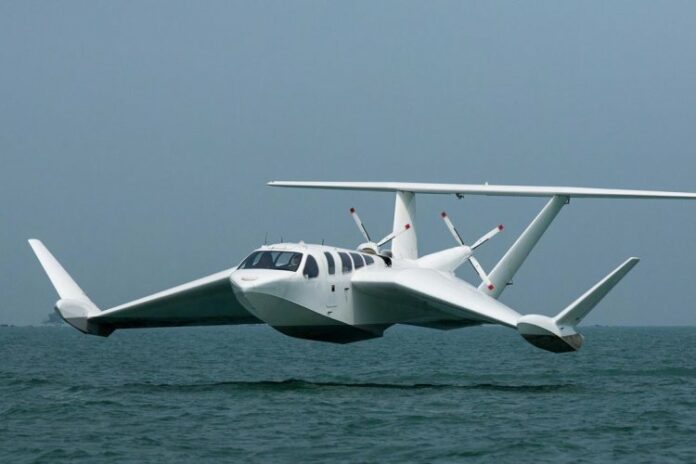
ST Engineering AirX (AirX), a joint venture between ST Engineering and Peluca (formerly known as Wigetworks), today announced a strategic partnership with Bureau Veritas (BV), a global leader in the Testing, Inspection and Certification industry, aimed at advancing Wing-in-Ground (WIG) technology. The collaboration will focus on the classification and certification of AirX’s AirFish WIG craft, which represents a vital step towards its entry into service.

The AirFish is a groundbreaking WIG marine craft that operates just above the water, utilising aerodynamic forces generated by ground effect to achieve a more fuel-efficient high speed of travel. Under the partnership, and a shared vision in driving innovation, AirX and BV will work together to classify and certify AirFish 8, a 10-seater WIG craft, under BV’s NI525 process for the risk-based qualification of new technology, and liaise with flag states to register the marine platform in respective countries. AirX and BV will also pool their expertise and resources to establish a robust framework for the classification and certification of AirX’s future WIG platforms, and lay the groundwork for the serial production of the AirFish WIG craft.

AirX will contribute its design and development specialisms as the original equipment manufacturer of the WIG craft, and leverage ST Engineering’s expertise in aircraft certification and qualification with civil aviation authorities. BV will provide advisory services on the design and development of the AirFish WIG craft from a regulatory and classification perspective, as well as technology qualification assessments based on BV’s NI525, classification and equipment certification services, whilst also providing risk and safety assessments associated with the development and operations of AirFish WIG craft.

Jeffrey Lam, President of Commercial Aerospace at ST Engineering, said,

“In our pioneering journey to commercialise the world’s first WIG craft, we have chosen to partner with Bureau Veritas to classify and certify our AirFish Wing-in-Ground solution. This is a significant milestone in realising the huge potential of Wing-in-Ground technology in areas such as maritime transportation, and the delivery of para-public and logistics services. We look forward to working with Bureau Veritas to establish new standards in innovation and safety, with a technology that is set to revolutionise maritime transportation.”

David Barrow, Vice-President, South Asia and Pacific Zone at Bureau Veritas Marine & Offshore, commented,

“We are delighted to support the development and deployment of the innovative AirFish Wing-in-Ground technology. Leveraging our extensive industry and regulatory experience, alongside our technological expertise, we will collaborate closely with ST Engineering AirX to navigate the complexities of introducing this groundbreaking solution to the market, with the common goal of driving growth and efficiency for the maritime industry.”

New oil discovery in the North Sea

0

The latest Ringhorne North exploration well in production license (PL 956) was successful with estimated recoverable resources of between 13 and 23 million barrels of oil.   

Operator Vår Energi considers the discovery a potential commercial candidate to be tied into nearby existing infrastructure in the Balder area. 

Vår Energi COO Torger Rød says:  

“The discovery proves that there are still opportunities in the mature areas on the Norwegian Continental Shelf, and I’m glad to see that our near-field exploration strategy is paying off. We believe there is more value to be unlocked in the Balder area, and we are intensifying exploration activities to maximise value creation from the existing infrastructure.”

The Ringhorne North discovery adds to an already impressive exploration track record. Over the past five years, Vår Energi has had a discovery rate of over 50 percent, with costs of less than USD 1 per barrel post tax.  

Vår Energi EVP Exploration & Production, Rune Oldervoll says:

“Our exploration portfolio is the basis to unlock and create future value. We are among the largest license holders on the NCS with roughly 200 licenses. Our commitment to explore for further resources remains firm. We have a highly experienced team, and we are also leveraging the expertise of Eni, our major shareholder, one of the most successful explorers globally.”

The discovery supports the plans for continuous development of the Balder area as a long-term production hub in the North Sea. In addition to unlocking new resources and proving the northern extension of the Ringhorne field, the Ringhorne North discovery also de-risks more drillable prospects in the area and opens up potential development synergies with other nearby Vår Energi operated discoveries such as King-Prince and Evra-Iving.  

Oldervoll adds.:

“The reserves and resource base in the Balder area has been steadily growing for decades and we are convinced it will continue to do so in decades to come. We are positioned to produce high value, low emission barrels for a long time – and the latest Ringhorne North discovery is underpinning our long-term production targets.”

The Ringhorne North exploration well and two additional side-track/appraisal wells were drilled by the semi-submersible rig Deepsea Yantai in the Central North Sea, eight kilometers north of the Vår Energi operated Ringhorne field, about 200 kilometers northwest of Stavanger.  The licence partners are Vår Energi ASA (operator) 50%, Aker BP ASA 20%, Harbour Energy Norge AS 15% and Sval Energi AS 15%. 

Ocean currents threaten to collapse Antarctic ice shelves, study finds

0

A new study published in Nature Communications has revealed that the interplay between meandering ocean currents and the ocean floor induces upwelling velocity, transporting warm water to shallower depths. This mechanism contributes substantially to the melting of ice shelves in the Amundsen Sea of West Antarctica. These ice shelves are destabilizing rapidly and contributing to sea level rise.

Led by Taewook Park and Yoshihiro Nakayama, an international team of researchers from the Korea Polar Research Institute, Hokkaido University, and Seoul National University employed advanced ocean modeling techniques to investigate the underlying forces behind the rapid melting ice shelves.

In a departure from prior assumptions linking ice shelf melting primarily to winds over the Southern Ocean, this study underscores the significant role played by the interactions between meandering ocean currents and the ocean floor in driving the melting process.

The Pine Island and Thwaites ice shelves are among the fastest-changing in Antarctica and are of particular interest due to their vulnerability to warming ocean waters. They act as massive barriers restraining the glaciers behind them from flowing into the ocean.

However, their rapid melting and potential collapse pose a significant threat to coastal communities worldwide because of the resulting rise in global sea levels.

The study focused on the role of a layer of warm water beneath the frigid surface waters, known as the “modified Circumpolar Deep Water,” in melting these ice shelves from below. “The intensity and trajectory of ocean currents encircling the ice shelves directly govern the influx of warm water, thereby intricately shaping their rate of melting,” explains Taewook. This shows the importance of the ocean in understanding and addressing the impacts of climate change.

The researchers paid attention to the “thermocline depth,” which is the depth of the interface between warmer deep waters and cooler surface waters. Variations in thermocline depth significantly affect the influx of warm water toward the ice shelves.

Until now, it has been believed that intensified westerly winds north of the Amundsen Sea propelled ocean currents along the shelf break, carrying warmer water toward ice shelf cavities. This phenomenon is particularly pronounced during El Niño events.

“Our findings challenge conventional wisdom,” Nakayama says. “Our study underscores that the interplay between meandering ocean currents and the ocean floor generates upwelling velocity, bringing warm water to shallower depths. Subsequently, this warm water reaches the ice-ocean interface, accelerating ice shelf melting

“This internal oceanic process driving ice shelf melting introduces a novel concept. With this in mind, we have to reevaluate winds driving Antarctic ice loss, which can significantly impact future projections.”

Meriaura orders two biofuel powered 6750 DWT cargo vessels

0

According to the contract, the ships will be built in Hoogezand in Holland and their delivery will take place in January and December 2026.

The ordered Ecotrader ships are 105 meters long, 1A ice classed 6750 DWT vessels. The ships are designed to achieve the lowest possible emission levels. Like the EcoCoaster vessels Eeva VG and Mirva VG delivered in 2016, the Ecotraders can be operated with biofuel made from recycled raw material produced by Meriaura’s subsidiary VG-Ecofuel. The Ecotrader vessels are approximately 30 percent larger than the EcoCoaster vessels. This is to meet the market and customer needs, and the larger vessel size also improves the economic efficiency and lightens the environmental burden of transport.

“This order is a continuum in our series of investments to energy-efficient tonnage that utilizes bio-oil. In the current geopolitical situation, we found it best to order the ships from an established shipyard operating in Western Europe, which is also in line with our ESG strategy. Security of delivery, quality and the yard’s ability to comply with safety and environmental regulations, and our good experience with the previous newbuildings were the most important factors in our decision to choose Royal Bodewes as our shipbuilder again,” says Beppe Rosin, CEO of Meriaura.

The international maritime organization IMO has set the goal for carbon-neutral shipping by or around 2050. Meriaura’s climate strategy aims for carbon neutrality already in the 2030s.

“The two ships ordered now will start our newbuilding program that targets to carbon neutrality remarkably faster than IMO’s target. Our purpose is to systematically renew our fleet with a series of newbuildings. The use of bio-oil combined with compensation enables us to reach this ambitious goal we have set,” says Meriaura’s founder and chairman Jussi Mälkiä.

The investment is financed by Oma Säästöpankki Turku, LähiTapiola Keskinäinen Vakuutusyhtiö and Climate Fund. We are grateful that Finnish financiers have come along to support the journey of a local shipping company towards carbon neutral shipping,” says Rosin.

DEME’s vessel completes the near 15 MW turbine foundation installation project

0

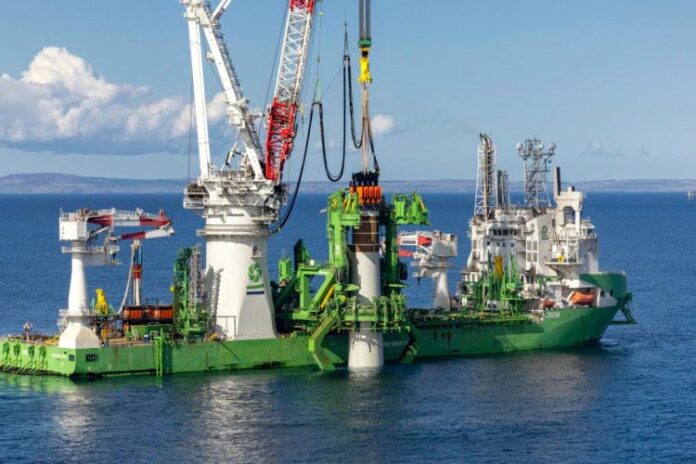
Despite harsh winter conditions, DEME swiftly installed 29 monopiles in approximately two months. Meanwhile, DEME’s DP2 jack-up vessel ‘Apollo’ is installing the transition pieces. 

The Moray West offshore wind farm, developed by Ocean Winds in Scotland’s Moray Firth, will generate 882 MW, powering over 1.3 million homes. A key industry milestone has been delivered by DEME installing the first complete foundations for near 15 MW turbines.  Dedicated novel tools were deployed such as a Quad Vibro Hammer and pioneering bolting equipment for M90 bolts.

‘Orion’ transported the 29 monopiles, which weigh up to 2000 tonnes each, from the port of Invergordon and installed them in full DP mode, without the use of anchors. Orion’s specially designed and high-tech motion compensated pile gripper, in combination with its 5,000-tonne crane and vessel ballasting techniques, enabled efficient operations despite the notorious Scottish winter weather conditions.

The Vibro Hammer was used to overcome the risks of pile-runs, due to the combination of soft and hard soil layers. Afterwards the piles were hammered to the target depth with a hydraulic Impact Hammer. DEME’s jack-up vessel ‘Apollo’ is performing the transition piece installation which is expected to be finalised in the coming months. This efficient way of working accelerated and de-risked the schedule of the project which has a very limited installation period.

DEME’s success at Moray West wouldn’t have been possible without its international team of specialist engineers and crew, including the American crew members who became an integral part of the team. This highly skilled group gained valuable additional experience, which will be instrumental for upcoming offshore wind projects in US waters. 

Ocean Winds Project Director Pete Geddes comments:

“I am absolutely delighted with DEME Offshore’s performance whilst working on the Moray West project. They have executed the monopile installation campaign efficiently, professionally, and safely. DEME has been solution-focussed, flexible and proactive during the offshore construction campaign, and continue to be so during the ongoing TP installation campaign – well done DEME!”

Lucien Romagnoli, Business Unit Director UK, Ireland & Belgium at DEME Offshore, comments:

“I am proud of our fantastic team and Orion’s impressive capabilities. With the deployment of the new installation technology, we were able to complete this part of the DEME scope smoothly and efficiently. It truly demonstrates Orion’s efficiency, particularly its double-stage motion-compensated gripper. We are eager to continue the momentum with ‘Apollo’ and seamlessly complete the transition piece installation, delivering another project to the full satisfaction of our client.”

Meanwhile ‘Orion’ has started its voyage across the Atlantic Ocean back to the United States, heading to its next project in Virginia.

Jan Klaassen, Business Unit Director Americas at DEME Offshore, adds:

“I am looking forward to welcoming ‘Orion’ back in the US, this time in the great Commonwealth of Virginia.  The ‘Orion’ is scheduled to arrive in the Port of Norfolk, Virginia in late April where she will prepare for the installation of 176 foundations on the Coastal Virginia Offshore Wind (CVOW) project for our client Dominion Energy. The combined technology of the Vibro Hammer and Impact Hammer will also be used on the CVOW project, in combination with state-of-the-art noise mitigation technologies to protect marine mammals.”

VIKING and HeliService USA sign PPE agreement to serve U.S. offshore wind safety needs

0

VIKING Life-Saving Equipment has signed a strategic agreement with HeliService USA, ensuring that the helicopter service provider has a single and continuous source of fully certified personal protective equipment to uphold offshore wind industry safety standards along the U.S. East Coast.

Rhode Island-based HeliService USA will hold a complete inventory of ETSO-approved VIKING PPE at Quonset Point, where it has invested in additional facilities to service regional offshore wind needs. Including everything from pilot and crew immersion suits and aviation lifejackets, to hoisting gear, the agreement also authorizes HeliService USA to take care of VIKING PPE service and maintenance, as certified under ETSO ‘Part 145’.

First evidence of the new agreement in action sees VIKING PPE being deployed to serve the needs of Vestas Wind Systems in the region. VIKING has a frame agreement to support air-borne personnel safety covering Vestas installations worldwide, with arrangements varying in different territories. HeliService USA will be the preferred supplier for Vestas in the US with VIKING and Vestas taking full responsibility for fulfilling the PPE needs of those on board.

“This is a key strategic partnership for VIKING, a significant win in a growing market, and a strong validation of the leading position our aviation and service technician PPE has established in the offshore wind industry worldwide,” said Bettina Kjærgaard, Global Sales Manager Offshore Wind, VIKING Life-Saving Equipment. “It provides a highly efficient and practical solution for Vestas as the end-client by ensuring best quality PPE is always available, while partnership with HeliService USA also provides a platform for growth with other clients and in other markets.”

“Working with VIKING means that our service clients can always be assured of the highest quality PPE, while we maximize the time the products supplied are in service,” commented Chris Campo, Director of Sales and Business Development, HeliService USA. “Reliable partners help turn market opportunities into successes. Recent investments mean the future is bright for offshore wind power in the US, and we’re also delighted to add local service jobs to industry.”

Holding the VIKING PPE inventory in Rhode Island would also avoid the greenhouse gas emissions involved in frequently sourcing specialized equipment from Europe, commented Kees-Jan van Engelenburg, Aviation Operations Manager NCE, Offshore Bid Management & Operations Logistics, Vestas Northern & Central Europe.