-9.3 C
New York
Home Blog Page 187

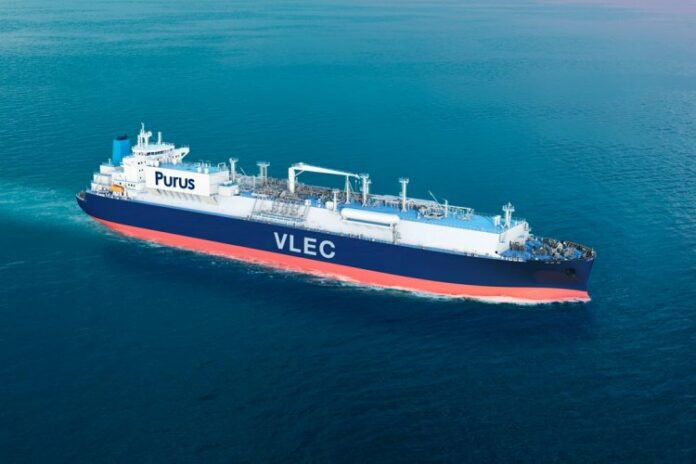
Wärtsilä solutions selected for three new Very Large Ethane Gas Carriers

0

The ships are being built at the HD Hyundai Heavy Industries (HHI) yard in Korea for owner Purus. The order, which was booked by Wärtsilä in Q1 2024, further strengthens Wärtsilä’s market-leading position in this sector.

In line with the Purus’ emphasis on achieving net zero carbon emissions for its fleet by 2030, the new vessels are designed to be as efficient as possible in all respects. The Wärtsilä cargo handling and fuel supply solutions were selected based on their proven efficiency and track record of successful installations.

“The efficiency and reliability of our cargo handling and fuel gas supply systems are the result of years of experience and in-house expertise. Wärtsilä is the market leader in this field, which is emphasised with this latest order,” commented Harald Øverland, Sales Manager, Wärtsilä Gas Solutions.

The Wärtsilä equipment is scheduled for delivery to the yard commencing in March 2025.

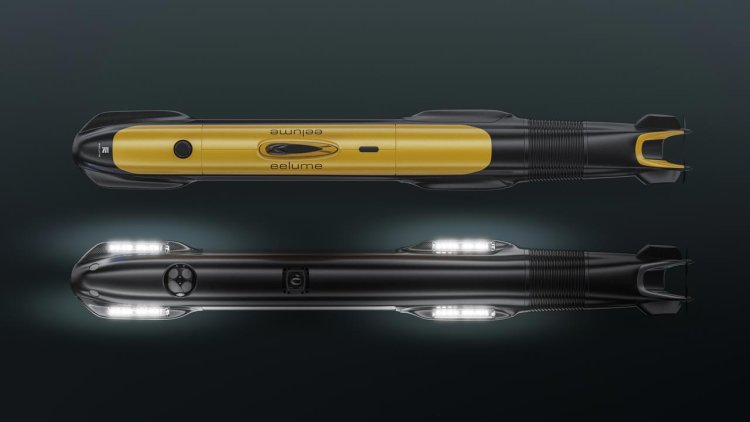
Eelume partners with Exail to equip all-terrain AUVs with advanced navigation systems

0

The Eelume S-Series is a new generation of all-terrain AUVs specifically designed for mapping and operating in challenging underwater terrains. Unlike traditional AUVs, they boast 360° of maneuverability in roll and pitch, offering versatility and sustainability in accessing previously unreachable environments.

Providing highly accurate and robust navigation data, the Phins Compact C3 INS will enhance Eelume AUVs’ capabilities for efficient exploration, inspection, and monitoring in complex environments such as hillsides, under-ice areas, vessels, and harbors. Its compact OEM form factor will ensure easy integration into the AUVs, facilitating swift deployment and streamlining operations.

“We required a compact navigation system aligned with our eco-friendly approach, delivering unparalleled navigational accuracy and agility to conduct missions in intricate underwater terrains efficiently. Exail’s Phins Compact C3 INS checks all the boxes,” said Thomas Nygaard, CEO of Eelume. “Thanks to this collaboration, our versatile AUVs paired with the Phins Compact C3 are set to totally change the game for underwater exploration.”

“We are grateful to Eelume for choosing our Phins Compact C3 INS for their latest AUV. It’s been rewarding to contribute to the development of such an innovative vehicle,” commented Quentin Chiche, Regional Sales Manager at Exail. “This partnership underscores Exail’s ability to deliver high-performance INS customized for next-generation AUVs. It also highlights our commitment to advancing underwater navigation technology by supporting our clients’ innovations and fostering a culture of technological progress and collaboration.”

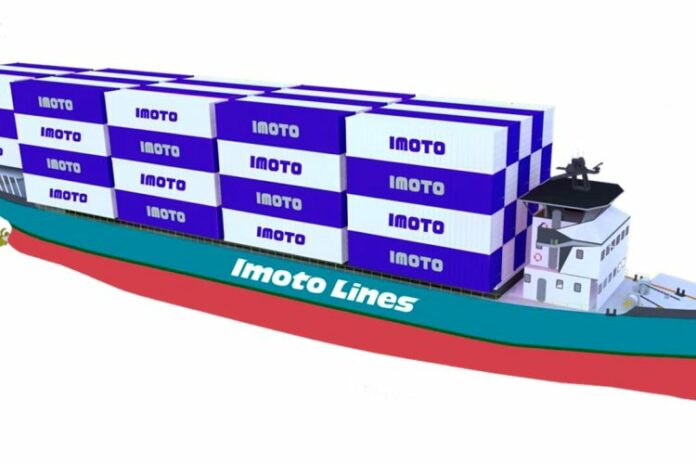
Imoto Lines and Marindows launch next-generation zero-emission container ship project

0

Imoto Lines and Marindows will build the next generation of zero-emission domestic container ships capable of hybrid operation using Japan’s first exchangeable container batteries, alongside onboard batteries, and generators, and conduct demonstration experiments on the Kobe ~ Hiroshima service.

This project is a challenge towards a sustainable future for domestic maritime shipping, aimed at fundamentally solving the three major challenges the industry faces: decarbonization, crew shortage, and safe navigation. The Ministry of the Environment, Government of Japan recognized its value and adopted it as a three-year project for the ‘FY2024 Carbon Neutral Technology Research and Development Program’.

Background & Objectives

1. Achieve ‘complete zero-emission’ CO2 output over the entire lifecycle from fuel mining and manufacturing to usage, not just during operation.

For shippers operating globally, reducing CO2 emissions in the supply chain is directly linked to international competitiveness, but the use of renewable energy in ships is just beginning to be developed.

This ship will achieve complete zero-emission from fuel mining and manufacturing to usage, by being propelled by renewable energy charged in container batteries.

2. Fundamental resolution to the industry’s biggest issue: crew shortage

The domestic shipping industry needs a fundamental solution to the dual shortage of crew numbers and skills.

This ship will achieve safe and efficient navigation with fewer people and less skill/experience required through electrification, thorough standardization and modularization, and land-based support assuming standardization.
 
3. Cost reduction and value enhancement of next-generation advanced vessels

Next-generation advanced vessels currently under development and introduction are not only expensive but also technologically nascent, carrying the risk of future technology obsolescence (devaluation of vessel value).

This ship will significantly reduce operating costs through thorough standardization, modularization, and mass production, aiming to achieve total operating costs, including construction, that are approximately 30% higher than existing ships, but comparable when overall costs are considered.

It also adopts a design that can be flexibly upgraded with the introduction of new technologies and systems, minimizing the risk of technology obsolescence = ship obsolescence.


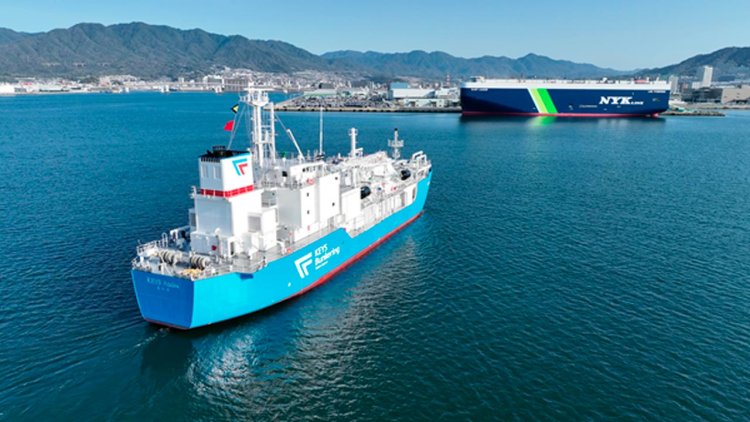
KEYS Azalea completes first ship-to-ship LNG bunkering in western Japan

0

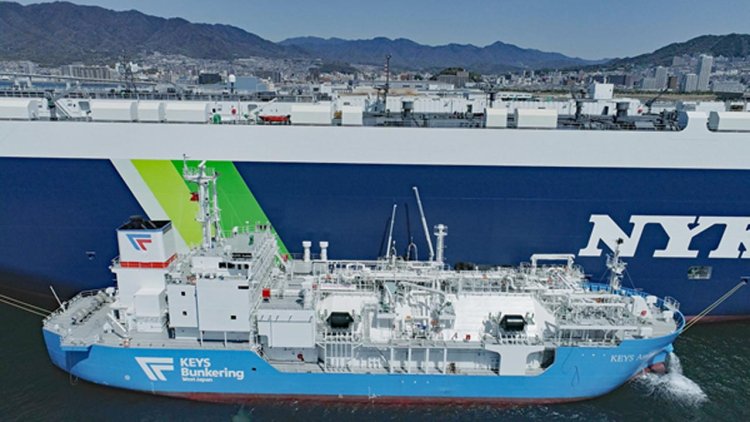
On April 10, KEYS Azalea bunkered LNG for the pure car and truck carrier Daisy Leader at the port of Hiroshima. 

KEYS Azalea is equipped with a dual-fuel engine that can operate on both LNG and fuel oil. The LNG fuel supplied to Daisy Leader was shipped from the Tobata LNG terminal of Kitakyushu LNG Co., Inc.

LNG fuel offers excellent environmental performance compared with traditional marine fuels. It is expected to be a bridge solution for decarbonization, virtually eliminating sulfur oxide (SOx) emissions and reducing approximately 80% of nitrogen oxide (NOx) emissions and 30% of carbon dioxide (CO2) emissions.

KEYS Azalea provides domestic coastal transport of LNG to consumers in the Kyushu and Setouchi areas and LNG bunkering for oceangoing ships calling ports in the region. For vessels in Japan, this is the first LNG bunkering service to cover such a wide area.

Australia unveils first Ghost Shark underwater drone

0

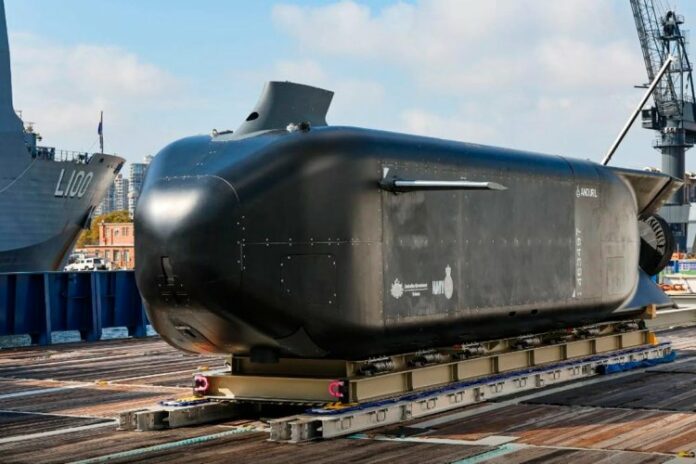
The Royal Australian Navy (RAN), in collaboration with Anduril Industries, the Advanced Strategic Capabilities Accelerator (ASCA), and the Defense Science and Technology Group (DSTG), introduced the first Ghost Shark prototype of a new underwater surveillance drone.

Ahead of schedule and within budget, the Ghost Shark program signifies a leap forward in Australia’s defense capabilities. With a $140M co-development contract, the initiative aims to design and construct three extra-large autonomous undersea vehicles (XL-AUVs) in just three years, heralding a new era of agile and responsive defense solutions.

Ghost Shark embodies a modular, multi-purpose design tailored to meet the diverse mission requirements of the Australian Defence Force (ADF).

David Goodrich OAM, Executive Chairman and CEO of Anduril Australia, expressed his enthusiasm for the program’s progress, highlighting the collaboration’s strategic leadership and innovation insights provided by key stakeholders.

Dr. Shane Arnott, Senior Vice President Engineering at Anduril Industries, emphasized the program’s rapid advancement, fueled by a high-powered engineering team comprising top talents from Australia’s tech, resources, and defense sectors.

Minister for Defence Industry, Pat Conroy, underscored Ghost Shark’s exemplar status in fostering collaboration between Defense and Australian industry, emphasizing its role in enhancing sovereign capabilities and generating job opportunities.

Vice Admiral Mark Hammond, Chief of Navy, lauded the collaboration’s synergy in developing tools like Ghost Shark to safeguard Australia’s maritime interests.

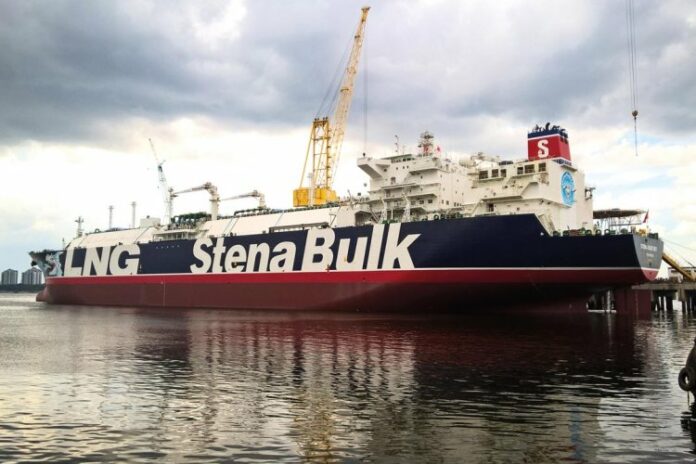
Stena Bulk completes sale of Stena Blue Sky

0

The sale of Stena Blue Sky follows the recent announcement that Stena Bulk had sold two LNG carriers to BW LNG. 

The successful transfer of Stena Blue Sky has already taken place. The vessel was delivered on April 18th in Singapore.

Originally built in 2006 by Daewoo Shipbuilding & Marine Engineering in South Korea, Stena Blue Sky has a carrying capacity 145,000cbm of LNG. 

Erik Hånell, President & CEO of Stena Bulk, said:

“We are pleased with the successful sale of Stena Blue Sky. This sale aligns with our strategic vision as we explore new avenues of growth within our fleet. 

“We look forward to new opportunities for the Stena Bulk fleet and for our company. As we navigate this transition, we remain steadfast in our commitment to optimising our fleet, while simultaneously driving innovation and expansion.”

In addition to the LNG vessels, Stena Bulk also owns Stena Power & LNG Solutions, a company that offers innovative and cost-effective jettyless solutions for LNG, ammonia, CO2, and gas to power. The team is currently working on developing regasification/import terminals for LNG, as well as import and export terminals for ammonia and gas to power solutions that involve onshore distribution of LNG. 

As part of an ongoing sales process, Stena Bulk and Stena Power & LNG Solutions are actively maintaining dialogues with several interested parties regarding a potential straight sale of the business unit, or co-investment in its future.

Singapore-US green corridor could create 700 jobs in green fuels, study finds

0

One year after the signing of the memorandum of understanding to establish a Green and Digital Shipping Corridor, the Maritime and Port Authority of Singapore (MPA), Port of Los Angeles and Port of Long Beach have completed a comprehensive baselining study. 

It forecasts more green jobs, health improvements for local communities and economic benefits for participating countries, emphasizing the future demand for zero- and near-zero emission fuels and the benefits from decarbonizing the shipping routes between the nations. 

The study, commissioned by C40 Cities and the ports, and conducted by the American Bureau of Shipping, analyzed maritime trade flows between Singapore, Los Angeles and Long Beach, and provided a baseline of activities and energy demand requirements for vessels operating on the corridor through to 2050. 

The study estimates the quantity of near-zero and zero-emission fuels required for this traffic by modelling the adoption of zero and near-zero carbon alternative fuels by vessels operating on the corridor through to 2050, considering various parameters such as fuel production costs and fuel availability, and in view of the targets in the 2023 International Maritime Organization’s Strategy on Reduction of Greenhouse Gas Emissions from Ships. The study can be found at c40.me/3xF60Yw.

“The Port of Long Beach and its partners have been very successful reducing emissions from cargo-handling equipment, trucks and other mobile sources moving cargo in our harbor,” said Port of Long Beach CEO Mario Cordero. “One of the most important parts of this partnership is it allows us to better understand and target a source of emissions that is hard for us to control as a local seaport authority – shipborne emissions.”

“This study provides a sense of scale and scope to inform our implementation of the Green and Digital Shipping Corridor,” said Port of Los Angeles Executive Director Gene Seroka. “Achieving the reductions of greenhouse gas emissions required will take coordination and commitment from public and private stakeholders across the maritime and goods movement industries.”

On a practical level, the study highlights the potential socioeconomic impact of transitioning to zero- and near-zero emission fuels and leveraging on digital solutions. Based on the study’s estimates, the corridor at full implementation could create over 700 new job opportunities in zero- and near-zero emission fuel production and improve local air quality. These estimates support findings by C40 and other organizations that activities undertaken through green shipping corridors can accelerate wider decarbonization across the maritime industry and unlock health benefits for local communities and green economy opportunities for participating countries. 

The corridor partners underscore their dedication to a data-driven decision-making approach through the study, utilizing its insights to guide their actions in pursuing the partnership’s decarbonization objectives and aligning with the related goals of the shipping sector. Key findings of the study include:

  • Vessels operating on the corridor represent 7% of the world’s container trade, which is about 1% of Singapore’s, 14.5% of Port of Long Beach’s, and 20% of Port of Los Angeles’ traffic.
  • The projected annual energy demand of vessels on the corridor is estimated to be approximately 60,000 terajoules, equivalent to approximately two months of Singapore’s national electricity generation. 
  • Shipping demand on the corridor is estimated to be around 850,000 tons of methanol and 160,000 tons of ammonia annually by 2030, displacing the equivalent greenhouse gas emissions from almost 320,000 cars annually.
  • The transition to zero- and near-zero emission fuels could potentially create approximately 700 jobs in the production and supply chain of such fuels by 2030.

RWE starts work on onshore cables as next step in construction of Thor Offshore Wind Farm

0

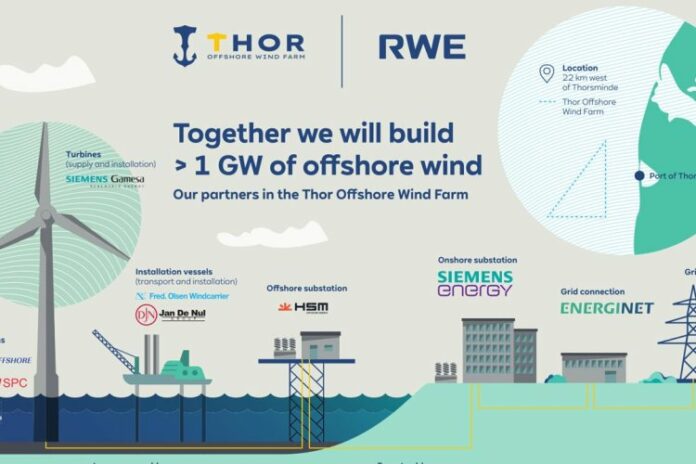
The ground was broken at Thor offshore wind farm’s onshore substation in May last year. The onshore construction work is progressing according to plan.

The first part of the cable work will take place from mid-April to the end of June where horizontal directional drilling works will be carried out under the dune and a field immediately south of Tuskær. The drilling works will take place at depths of more than 20 metres to protect and preserve the dunes. Further smaller horizontal directional drilling works will be carried out along the approximately 4 kilometres cable route between the onshore substation at Volder Mark and the beach to avoid road closures and impact on protected waterways. 

For safety reasons, a small construction area on the sourthern part of the beach will be cordoned off during the construction period. RWE therefore recommends that visitors use the northern part of the beach for bathing. There is a public entrance via Kjeldbjergvej, with parking available near the beach.

The landfall works are being carried out to enable two ducts to run under the dunes and the nearby field to prepare for cable pull-in next year. Each drill hole is approximately 425 metres long and the ducts will measure 71 centimetres in diameter. The duct sections will be welded together on the beach, from where they will be pulled through the drill holes.

East of Torsmindevej, the onshore cables will be divided into three phases each. They will be laid and buried during June and July and led to the onshore substation, where they will be connected. Joint bay, jointing and testing works will be carried out throughout July to October.

The subsea cables that will be led to the shore are export cables from the offshore substation, which will supply the substation on land. The subsea cables will be installed and connected to the onshore cables in 2025.

RWE is building Thor Offshore Wind Farm in the Danish part of the North Sea, approximately 22 kilometres off Thorsminde. With a planned capacity of more than 1,000 megawatts, Thor will be Denmark’s largest offshore wind farm to date. Once fully operational, which is planned no later than the end of 2027, Thor should be capable of producing enough green electricity to supply the equivalent of more than one million Danish households.

Eureka Shipping announces construction of new cutting-edge cement carrier for Great Lakes trade

0

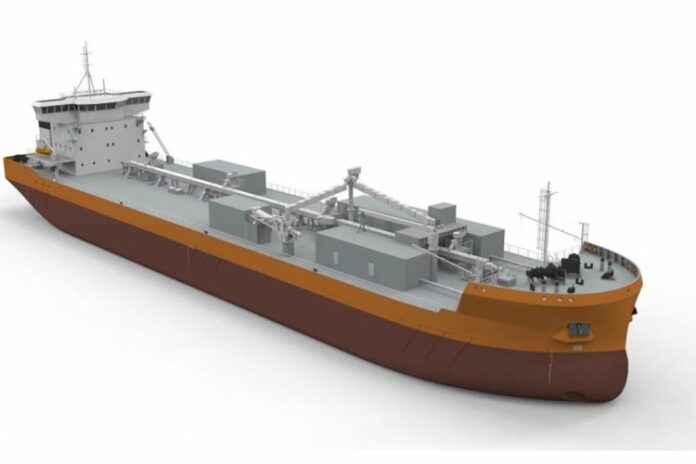
Eureka Shipping has announced the construction of a state-of-art mechanical/pneumatic cement ship destined for operation in the Great Lakes. 

“Building a ship aligned with eco-friendly principles is a top priority for both Eureka Shipping and our customer,” said Kai Grotterud, Managing Director of Eureka Shipping. “Our new cement carrier is expected to contribute significantly to decarbonization by drastically reducing the emissions per metric tonne of cargo carried

From its propulsion system to its onboard amenities, every aspect of the new vessel’s design reflects a dedication to safety, environmental stewardship and operational efficiency. 

Key features include:

  • a diesel-electric propulsion system consisting of four generator sets, providing redundancy for both navigation and cargo operation;
  • modern, fuel-efficient engines capable of operating on HVO biofuel, to enhance performance and reduce emissions;
  • two rudder propellers with 360 degree thrust, plus a powerful bow-thruster, for superior maneuverability and optimized navigation safety;
  • energy-saving measures to minimize power consumption, including LED lighting throughout;
  • state-of-the-art cargo handling equipment to reduce power usage during loading and unloading operations;
  • extensive noise insulations and silencers on machinery and cargo handling equipment;
  • prepared for operation on shore power when such power becomes available;
  • high-quality accommodations for officers and crew, prioritizing comfort and well-being.

The new vessel, currently under construction by the Holland Shipyard Group in the Netherlands, is scheduled for delivery in 2025 and will commence operations in the Great Lakes region.

In the interim, prior to the new vessel’s arrival in Canada, MV Sunnanvik, a 8,600 DWT mechanical/pneumatic cement carrier previously operating in Europe, will service its trade routes starting in early April 2024. Equipped with modified discharge equipment tailored to the customer’s receiving terminals, the vessel will discharge cargo at rates of up to 1,000 tonnes per hour.

As part of Eureka’s commitment to decarbonization, MV Sunnanvik was fitted with two flexible, vertical “Ventofoil” “wing” sails from Econowind in 2023. These innovative sails harness wind energy to provide additional thrust, contributing to lower emissions. Conditions permitting, they will be tested on the Great Lakes, enhancing the vessel’s speed in favorable wind conditions.

MV Sunnanvik holds the distinction of being the first sail-equipped vessel to operate in the Great Lakes.

UK offshore wind industry unveils Industrial Growth Plan to triple supply chain manufacturing

0

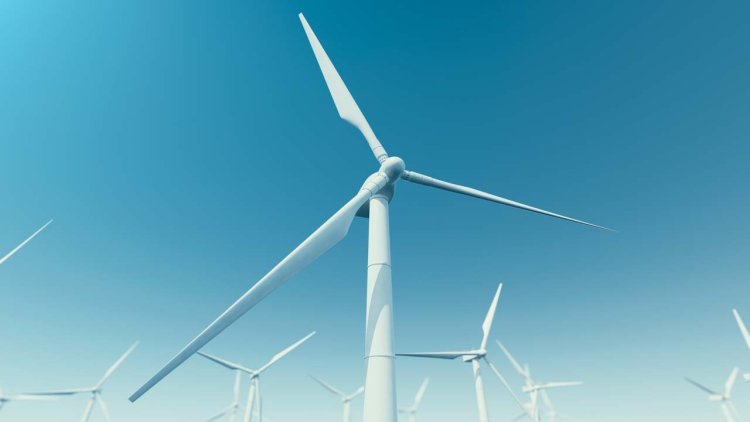
The UK offshore wind industry already employs 32,000 people and each new large offshore wind farm adds £2-3bn to the economy. Employment is set to rise to over 100,000 by 2030 and investment in new offshore wind projects will create an economic opportunity worth up to £92bn for the UK by 2040.

The measures set out in the Industrial Growth Plan (IGP) would create an additional 10,000 jobs a year and boost the UK’s economy by a further £25 billion between now and 2035, if we accelerate offshore wind deployment in line with our net zero targets to 5-6 gigawatts a year. The UK has the second largest global pipeline of offshore wind projects at all stages of development at nearly 100GW – more than six times our current capacity.

As the Growth Plan’s analysis shows, supply chain constraints in many of the key components needed in offshore wind farms are already starting to be felt in the global market. The IGP identifies strategic new factories and manufacturing capabilities which the UK should build up to protect against supply chain risks and boost economic growth.

The IGP identifies five key technology areas in which the UK should prioritise investment to secure value for UK industry. These include the design and manufacture of offshore wind blades and turbine towers, foundations, cables and other key components and services for projects here and abroad.
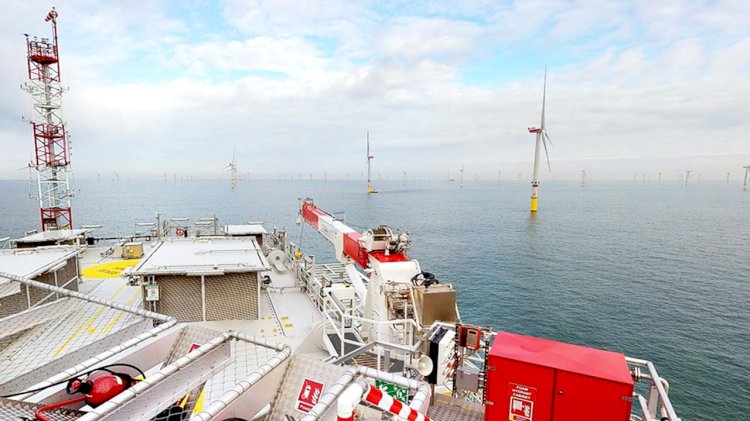
The Growth Plan also highlights the industry’s potential to drive technology innovation, accelerate deployment and cut environmental impacts even further by incorporating automation and AI technologies in new projects. It sets out plans to expand testing facilities for cutting-edge technology, such as new materials for blades and designs for floating offshore wind platforms, as part of a focus on Research and Development at a potential new Advanced Technology Institute and a new National Innovation Hub, working in harmony with UK’s world-class Catapult network.

The plan aims to provide a shared vision which enables industry, Governments across the UK and other funders to better align their investments to boost green jobs and manufacturing in the UK. The plan envisages mobilising nearly £3 billion of funding nationwide, with private finance doing the heavy lifting. This will bring a return to our economy of just under £9 for every £1 invested.

Industry will now take forward proposals to set up an IGP Delivery Body, in collaboration with key partners, which will set out the detail of how we govern and deliver the IGP in a way that ensures the best use is made of funding provided by the industry, the Government’s Green Industry Growth Accelerator (GIGA) fund, The Crown Estate’s Supply Chain Accelerator, Scottish Government funding and other sources. To meet the ambition of the Industrial Growth Plan, the Delivery Body should be established by the end of the year.

The Industrial Growth Plan is part of wider efforts to boost investment in the UK in the context of increasing global competition for clean energy technology. Many of the UK’s competitors have introduced new incentives to attract investment in offshore wind projects and domestic manufacturing, hoping to replicate Britain’s success in offshore wind. The plan sets out a targeted approach which builds on our existing national capabilities, growing our economy, generating employment and securing the UK’s leadership in international export markets.
RenewableUK’s Chief Executive Dan McGrail said:

“Our Industrial Growth Plan is the deepest dive ever into the offshore wind supply chain, identifying the highest-value components and services which the UK should focus on to get the biggest economic bang for our buck from future wind farm development. For example, it shows that the UK will need three hundred giant turbine towers every year for offshore wind projects between now and 2030 to deliver Government targets. The plan charts a clear course for us to ensure that we seize that massive economic opportunity and maximise our opportunities to manufacture those towers here, along with more blades, cables, foundations and a whole range of other products.

“By using this as a blueprint to work closely with all our partners in the sector, we can triple the size of that supply chain, ramp up our offshore wind capacity significantly and secure a huge increase in jobs, all within the next ten years.”

Energy Security Secretary Claire Coutinho said:

“Britain’s windswept shorelines give us a competitive advantage in the global race for energy. That’s why, since 2010, Britain has been second only to China in building new offshore wind farms. “The plans set out by industry today will work with our £1 billion Green Industries Growth Accelerator to make sure the UK can build the turbine blades and high-voltage cables that we will need to produce cheaper, cleaner, more secure energy.”