-8.6 C
New York
Home Blog Page 186

Norwegian Cruise Line and Fincantieri celebrate float out of all-new Norwegian Aqua

0

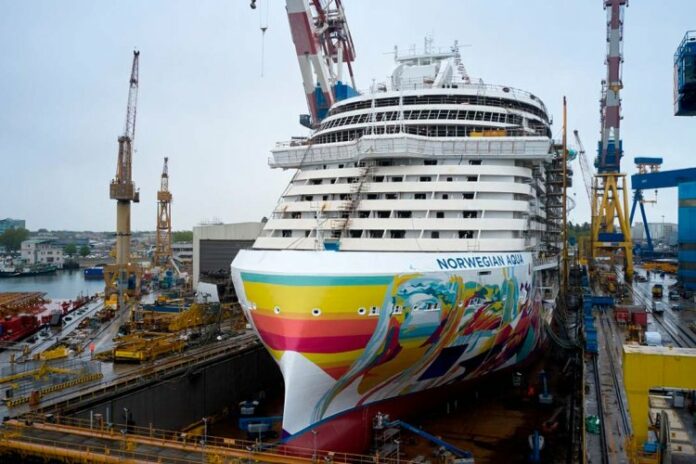
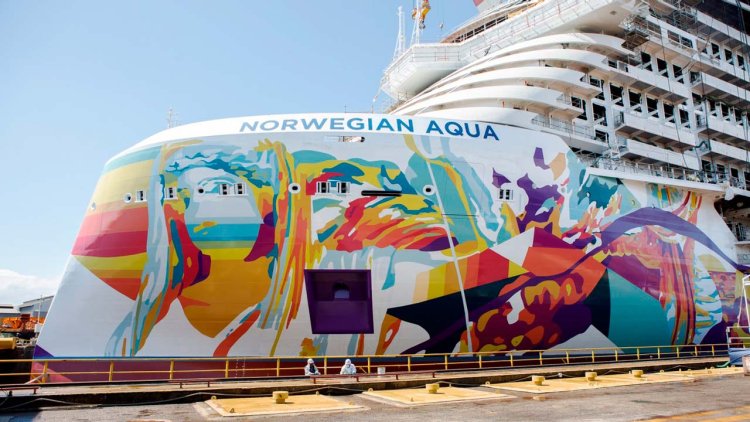
Norwegian Cruise Line (NCL), the innovator in global cruise travel, along with its partners at Fincantieri, the Italian shipbuilding company, today commemorated the float out of  Norwegian Aqua™, the first of the expanded Prima Plus Class, from its dry dock at the shipyard in Marghera (Venice), Italy, marking a major construction milestone and the first time the vessel made contact with the water.

To celebrate this milestone, two ceremonial coins were welded into Norwegian Aqua in maritime tradition, which historically symbolized an offering to ancient gods and goddesses of the sea in exchange for good luck and safe passage for the vessel.  The ceremony was followed by a blessing by a local chaplain and celebratory champagne breaking across the ship’s hull.

“We are excited to celebrate another milestone with our partners at Fincantieri, who are integral to the Prima Class journey and supporting us in evolving the amazing experience we design and deliver for our guests,” said David J. Herrera, president of Norwegian Cruise Line. “Building upon the guest-favorite features of the award-winning vessels of this class, the 10% increase in space provides us with more flexibility to deliver more offerings and more beautifully designed venues for our guests to relax and explore on board Norwegian Aqua.”    

At 156,300 gross tons and a length that spans 1,056 feet, Norwegian Aqua will be 10% larger than the first two Prima Class vessels, which also feature the craftmanship of Fincantieri, providing more space and more innovative offerings including the world’s first-ever hybrid rollercoaster and waterslide, the Aqua Slidecoaster; a new digital sports complex with an interactive LED floor, Glow Court; and NCL’s most expansive 360-degree outdoor promenade, Ocean Boulevard, to date. The ship will also boast luxurious accommodations in The Haven by Norwegian®, including NCL’s first-ever Three-Bedroom Duplex Haven Suites.  

“We are excited to mark this significant moment with Norwegian Cruise Line as we witness the float out of Norwegian Aqua, which represents a new chapter in our long-lasting partnership,” stated Luigi Matarazzo, general manager of the Fincantieri Merchant Ships Division. “We are proud to be part of this transformative journey in which innovation, a cornerstone of our industrial plan, is one of our key points, as we strive to push boundaries and elevate industry standards.”

Construction continues on Norwegian Aqua until its debut in April 2025, where the ship will sail seven-day Caribbean itineraries departing from Port Canaveral, Fla. With calls to the tropical island destinations of Puerto Plata, Dominican Republic; Tortola, British Virgin Islands; St. Thomas, U.S. Virgin Islands; and Great Stirrup Cay, NCL’s private island in the Bahamas. Following the ship’s Caribbean season, Norwegian Aqua will offer five and seven-day voyages to Bermuda from New York City from August 2025 through October 2025 and then cruise five and seven-day Eastern Caribbean itineraries from Miami, the “Cruise Capital of the World,” beginning October 2025 through April 2026. 
Steerprop to supply propulsion for Canadian Coast Guard

0

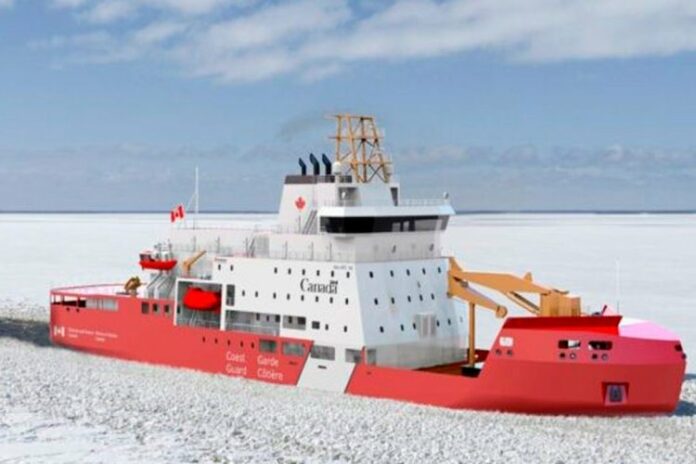
The contract entails the supply of propulsion packages for the initial six MPVs, integral to Canada’s National Shipbuilding Strategy (NSS). Steerprop’s solution comprises two tunnel thrusters for auxiliary propulsion and two Contra-Rotating Propulsors (CRP) for main propulsion, meticulously engineered to meet the stringent operational demands of the vessels in challenging Arctic waters.

Recognized for their expertise in ice-strengthened Arctic propulsion systems, Steerprop’s solution ensures exceptional operational reliability, maneuverability, and efficiency, essential for the diverse missions undertaken by the Canadian Coast Guard in the Eastern and Western Seaboards and the western and lower Arctic.

The CRP units not only serve propulsion needs but also facilitate efficient ice management, crucial for maintaining safe navigation channels and responding to emergencies in icy conditions. With a design that optimizes efficiency even at lower power levels, Steerprop’s solution minimizes energy consumption while maximizing operational versatility and reliability.

Juho Rekola, Director of Sales and Project Management at Steerprop, stated:

“Our commitment to delivering the best possible propulsion systems and engineering support for our customers is at the heart of everything we do at Steerprop. This project exemplifies our resolve to support our customer in enhancing vessel performance and environmental friendliness without compromising on stringent requirements for operational availability.”

“This contract not only guarantees significant growth and a stable workload for an extended period but also plays a vital role in shaping the future of Steerprop. Establishing a permanent presence in Canada, this project further strengthens our expansion efforts across North America.”

David Belton, Senior Program Director, Multi-Purpose Vessels at Seaspan Shipyards, said:

“Seaspan Shipyards is pleased to award this mission-critical propulsion system contract which will help enable the Canadian Coast Guard to safely and efficiently operate the MPVs across the wide range of environmental conditions encountered in Canadian waters.” 

£8m funding to boost AI in maritime industry

0

Maritime Minister Lord Davies is in Southampton has announced an £8 million funding boost to put the UK at the forefront of cutting-edge maritime technology. From self-driving boats to streamlined port operations, the use of artificial intelligence (AI) and other innovations will boost the economy and support coastal communities.

The Smart Shipping Acceleration Fund will kickstart feasibility studies to develop smart shipping technologies such as AI, robotics, and autonomous vessels. The winning projects will also require match funding – leveraging further investment from the private sector.

Successful ports will be able to use AI to detect safety hazards, optimise port activities and reduce their environmental footprint – making UK waters safer, operations smoother and air cleaner.

Maritime Minister, Lord Davies, said:

“Using AI and cutting-edge technology to make boats smarter and transform port operations is part of our plan to decarbonise shipping, enhance safety for our seafarers and help grow the economy.

AI has the potential to revolutionise the sector, create jobs and support the economy.”

AI innovations are already transforming how we tackle and diagnose diseases like cancer, improving our public services, and ramping up productivity. It is the defining technology of our generation. We have invested over £3.5 billion in the technology in the last 10 years and are currently more than doubling the ‘Incubator for AI’ team, recruiting the best of British talent to drive AI integration across the public sector.

This funding comes from the wider £206 million UK Shipping Office for Reducing Emissions (UK SHORE) programme, announced in March 2022.

The competition will be managed by the delivery partner Innovate UK.

Mike Biddle, Executive Director for Net Zero at Innovate UK, said:

“The UK is recognised as a global leader in digital technology and this new fund will enhance that reputation in the maritime sector too. Innovate UK are excited to see industry-led consortia pioneer smart shipping feasibility studies that will demonstrate a clear commercial pathway and positive environmental impact in the near future. This is the latest investment as part of our key partnership with DfT around the delivery of UK SHORE to boost innovation across the UK’s vibrant maritime sector.

Alongside this competition for business-led innovation funding, the complementary smart shipping community building programme led by Innovate UK Business Connect will provide a great opportunity for UK businesses to join a vibrant smart shipping network that’ll reach across the country.’

Peter Aylott, Director of Policy at UK Chamber of Shipping, said: 

“Artificial intelligence will deliver real change in shipping with an important role, alongside the sector’s workforce, in greater use of autonomous vessels, automation and data analysis. These technologies will help reduce greenhouse gas emissions, improve supply chains and generate jobs.”

Damen launches pilot project for circular shipbreaking

0

The project will serve as a trial, after which this approach of ‘green’ ship dismantling and recycling will be made available commercially, and also for larger vessels.

“This pilot project fits in perfectly with our ambitions to become the most sustainable shipbuilder in the world,” explains Arnout Damen, the CEO of Damen Shipyards Group. “The question is not just how we design, build, maintain and refit our ships, but also, and precisely, how we dismantle them at the end of their lifespan and, most importantly: recycling.”

The Jan, which was built in 1927, will be dismantled in line with the regulations set out in the Ship Recycling Facility Plan at Damen Shiprepair Rotterdam’s Botlek site. That is one of the few sites in the Netherlands on the EU list of certified Ship Recycling Facilities. So the safe and environmentally friendly dismantling of the 15.4-meter-long tug is guaranteed. 

Bottelier Slooptechniek is the partner in the alliance responsible for the dismantling and sorting work: the company is a fully certified specialist in circular demolition.

“We identify all the materials from the Jan and assess their potential for reuse,” says Nick van Egten, commercial director and co-owner of the Bottelier Group. In that way, the maximum environmental and economic return can be generated from the materials in their residual life.”

After the completion of the pilot project, there will be complete transparency about the amounts of dismantled materials and how they have been reused, recycled, or disposed of.

An approach has already been drafted with respect to the commercialisation and financing of circular ship dismantling projects in the future. Damen Financial Services is working in this area with Offshore Ship Recycling Rotterdam. 

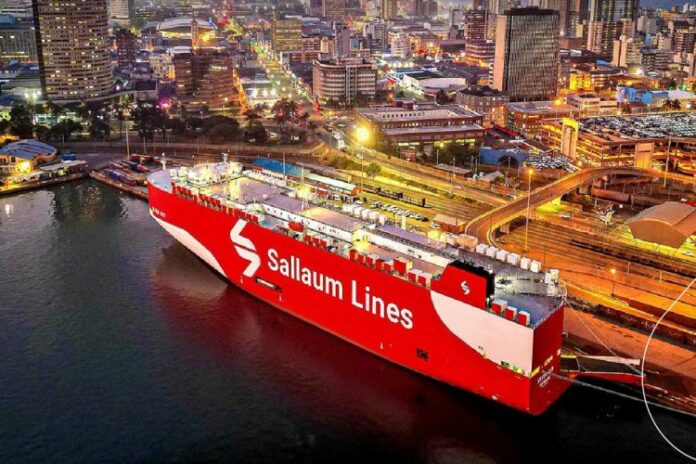
Six new Sallaum Lines vessels to drive sustainability with Wärtsilä solutions

0

The Wärtsilä solutions were selected following a very stringent evaluation process, with sustainability and minimal environmental impact being a prime consideration.

As a result, Wärtsilä, through its joint venture company, Wärtsilä Qiyao Diesel Company Ltd. (WQDC), was contracted to deliver three Wärtsilä 20DF dual-fuel auxiliary gen-sets, operating mainly on LNG fuel, for each of the six vessels. Wärtsilä was also contracted to deliver the transverse thrusters and the main engine control system for these vessels.

Then for four of the vessels, Wärtsilä will supply the shaft generator systems, which will reduce the auxiliary gen-sets’ running hours while at sea, thereby further reducing the ships’ emissions and lowering operating costs. The engines onboard each of the vessels will be supported via Wärtsilä’s Data Collection Unit (WDCU) with cloud based services and remote monitoring to optimise operability, fuel economy, and periodic maintenance.

“Sallaum Lines is committed to sustainability and to reducing our environmental impact through implementing eco-friendly practices and reducing emissions. We are moving forward to a sustainable future by working to achieve zero emissions by 2050. This is why we have selected Wärtsilä to partner with us for these six new ships,” says Mr. Puneet Arora, Technical Manager – Sallaum Lines.  

“We are working closely with Sallaum Lines in their efforts towards decarbonisation. In addition to this order, we recently signed a Decarbonisation Programme agreement with them for two existing PCTC vessels in their fleet. This cooperation has further strengthened the level of trust between our companies. Together, we are aligned in our determination to enable the cleanest possible shipping operations,” comments Rajan Khanna, Head of Sales, Middle East – Wärtsilä Marine.

The vessels are being built at Chinese shipyards, four at China Merchants Jinling Shipyard and two at Xiamen Shipbuilding Industry Co. Delivery of the Wärtsilä equipment will commence in 2024.

Part of the order was booked by Wärtsilä in 2023 and the remainder in Q1 2024.

Damen contracts Kongsberg Maritime to supply propeller systems for ASW-frigates

0

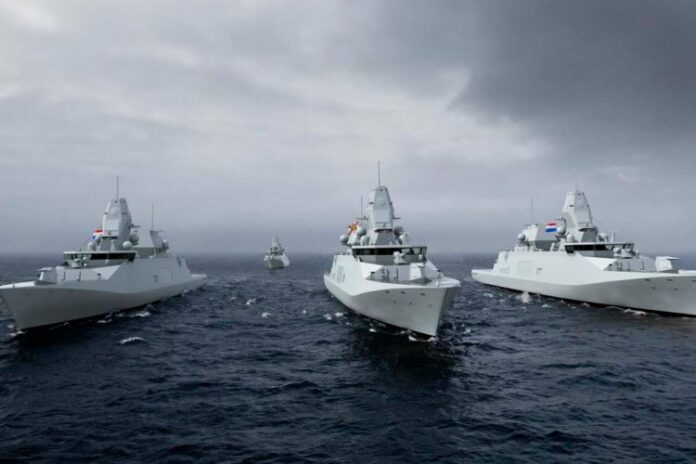
Damen Naval has selected Kongsberg Maritime Sweden to deliver controllable pitch propellers and shaft lines for the four Anti-Submarine Warfare (ASW) frigates for the Netherlands and Belgium. As part of this contract, Kongsberg will supply four shipsets of its controllable pitch propeller systems and associated equipment including blades, hubcaps, hubs, and shaft lines.

The four ASW frigates will replace the current Karel Doorman-class multi-purpose frigates. They will be deployed for a wide variety of tasks, with anti-submarine warfare as their main purpose. The ships will have hybrid diesel-electric propulsion and will be designed to operate as quietly as possible.

This is the second collaboration between Damen Naval and Kongsberg Maritime in the past 18 months. It follows a similar contract signed by the companies in September 2022 for the German navy’s F126 frigates.

“It is great news to have Kongsberg Maritime involved in the ASW- frigate project as well,” says Damen Naval Director Corporate Strategy and Innovation Richard Keulen. “We have a long-standing relationship with the company, and it is a good example of the excellent co-operation that exists between the Dutch and Swedish naval shipbuilding industries.”

Kongsberg Maritime’s Vice President – Naval Björn ten Eicken adds:

“Kongsberg Maritime is proud to have been selected as a partner for this significant Damen Naval frigate programme. The propulsion system for the new frigates has been optimised to match the customers’ strict mission requirements, particularly for noise signature, which is a crucial factor in anti-submarine warfare operations.”

The ASW-frigate project is being carried out in close cooperation with the Dutch Ministry of Defence, with some of the work to be carried out by the MoD itself. The hulls will be built in Romania and then come to Vlissingen for further completion. Damen Naval is expected to deliver the first ship in 2028.

Partners successfully trial remote-controlled scraping robot

0

This trial, which was conducted on April 5 at Nippon Paper Industries’ Iwakuni mill in Yamaguchi Prefecture, aims to address safety and the workforce shortage in wood-chip scraping operations.

Through the development of the scraping robot, the four companies will work to realize a safe and sustainable cargo-handling environment. In the future, the four companies aim to realize a cargo-handling environment where not only men but also women, elderly people, and people with disabilities can engage in cargo handling by operating robots from remote locations away from the cargo-handling site.

In this trial, a prototype scraping robot was operated on a wood-chip carrier engaged in a long-term transport contract with Nippon Paper Industries and NYK.

The four companies operated the robot remotely in the ship’s hold for about two hours during cargo unloading and achieved the goals, including confirming the scraping robot’s functionality.

Wood chips loaded into the hold of a wood-chip carrier are traditionally gathered by excavators and unloaded by cranes. The wood chips that have accumulated in the corners of the holds or adhered to the walls are collected and scraped off by workers using shovels, forks, and other tools because heavy machinery cannot reach those wood chips or may damage the hold walls when scraping.

There is room for improvement in the current work environment because the scraping process requires climbing up and down the 10-meter holds, the tendency for the holds to be cold or hot due to seasonal factors, and the risk of oxygen deprivation due to the wood chips absorbing oxygen. There are also concerns about future staff shortages due to the aging of the workforce.

A remote control moves the arm of the scraping robot’s hydraulic excavator and the attached scraper (spatula) and brush.

The robot can extend its arm up to three meters high to remove chips from walls, while wood chips that have accumulated in corners can be directly gathered by the lowered arm or pushed out by the brush. The scraping robot can also scrape wood chips trapped in tight spaces, such as structural gaps.

Octopus inspires new suction mechanism for robots

0

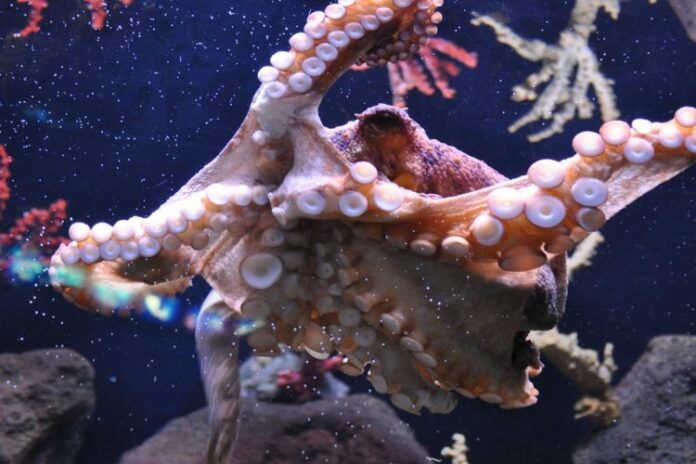
The team, based at Bristol Robotics Laboratory, studied the structures of octopus biological suckers,  which have superb adaptive suction abilities enabling them to anchor to rock.

In their findings, published in the journal PNAS today, the researchers show how they were able create a multi-layer soft structure and an artificial fluidic system to mimic the musculature and mucus structures of biological suckers.

Suction is a highly evolved biological adhesion strategy for soft-body organisms to achieve strong grasping on various objects. Biological suckers can adaptively attach to dry complex surfaces such as rocks and shells, which are extremely challenging for current artificial suction cups. Although the adaptive suction of biological suckers is believed to be the result of their soft body’s mechanical deformation, some studies imply that in-sucker mucus secretion may be another critical factor in helping attach to complex surfaces, thanks to its high viscosity.

Lead author Tianqi Yue explained:

“The most important development is that we successfully demonstrated the effectiveness of the combination of mechanical conformation – the use of soft materials to conform to surface shape, and liquid seal – the spread of water onto the contacting surface for improving the suction adaptability on complex surfaces. This may also be the secret behind biological organisms ability to achieve adaptive suction.”

Their multi-scale suction mechanism is an organic combination of mechanical conformation and regulated water seal. Multi-layer soft materials first generate a rough mechanical conformation to the substrate, reducing leaking apertures to just micrometres. The remaining micron-sized apertures are then sealed by regulated water secretion from an artificial fluidic system based on the physical model, thereby the suction cup achieves long suction longevity on diverse surfaces but with minimal overflow.

Tianqi added:

“We believe the presented multi-scale adaptive suction mechanism is a powerful new adaptive suction strategy which may be instrumental in the development of versatile soft adhesion.

”Current industrial solutions use always-on air pumps to actively generate the suction however, these are noisy and waste energy.

“With no need for a pump, it is well known that many natural organisms with suckers, including octopuses, some fishes such as suckerfish and remoras, leeches, gastropods and echinoderms, can maintain their superb adaptive suction on complex surfaces by exploiting their soft body structures.”

The findings have great potential for industrial applications, such as providing a next-generation robotic gripper for grasping a variety of irregular objects.

The team now plan to build a more intelligent suction cup, by embedding sensors into the suction cup to regulate suction cup’s behaviour.

Cunard officially welcomes new ship Queen Anne with ceremony at Fincantieri shipyard

0

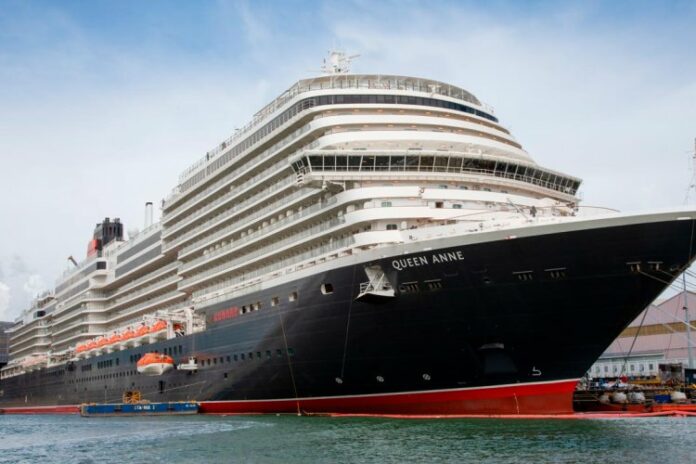
She’s the next in a fine line for Cunard and today (19 April), Queen Anne officially joined the luxury cruise line’s iconic fleet during an historic handover ceremony in Italy in the presence of Italian Minister of Enterprises and Made in Italy, Adolfo Urso, and Italian Minister for Relations with Parliament, Luca Ciriani.

Cunard took ownership of their 3,000-guest ship during a traditional handover ceremony at the Fincantieri Marghera shipyard in Venice – where master shipbuilders have been constructing the luxurious vessel.

The event was attended by Katie McAlister, President of Cunard; Pierroberto Folgiero, CEO and Managing Director of Fincantieri; and Luigi Matarazzo, General Manager of the Fincantieri Merchant Ships Division.

Queen Anne, the 249th ship to sail under the Cunard flag – and the third built by Fincantieri – will now set sail for Southampton ahead of her seven-night maiden voyage to Lisbon on 3 May. She will arrive in her homeport on 27 April.

Cunard has previously announced a series of partnerships for Queen Anne, including Le Gavroche at Sea residencies hosted by two Michelin-starred chef Michel Roux, wellness packages curated by Harper’s Bazaar UK’s beauty experts and exclusive British Film Institute screenings in The Pavilion.

She will also boast the widest selection of fitness, beauty, thermal and spa facilities so far seen on a Cunard ship, with her reimagined Mareel Wellness & Beauty proposition heralding a new era of wellbeing at sea.

Katie McAlister, President of Cunard, said:

“We are so excited to welcome Queen Anne to our fleet as she completes a remarkable quartet alongside Queen Mary 2, Queen Elizabeth, and Queen Victoria – marking the first time since 1999 that Cunard will have four ships in simultaneous service. We are now fully focused on readying her to welcome guests for her maiden voyage on 3 May before she embarks on an historic British Isles Festival Voyage, including a momentous Naming Ceremony in Cunard’s spiritual home of Liverpool on 3 June.”

Pierroberto Folgiero, CEO and Managing Director of Fincantieri, added:

“We are very pleased and eager to deliver Queen Anne to Cunard, a pioneering figure in luxury sea travel, renowned for setting new standards in oceanic voyages for over 180 years. This beautiful and iconic ship testifies the longstanding partnership between our two companies, underscoring our shared commitment to excellence and tradition in the maritime industry. Queen Anne, as Queen Victoria and Queen Elizabeth, the other two ships we built for Cunard, proudly bear Fincantieri’s signature, embodying our enduring expertise, reliability, and craftsmanship in shipbuilding. Constructing a liner for such a distinguished shipowner not only reconnects us to our origins but propels us towards the future with a determination to blend tradition and innovation. Fincantieri thus confirms its leadership in the cruise shipbuilding sector, a fundamental pillar of our Business Plan.”

Giant rogue waves: Southern Ocean expedition reveals wind as key cause

0

A University of Melbourne expedition to the southernmost waters encircling Antarctica has discovered that wind drives the formation of colossal rogue waves, and that these unpredictable waves occur more frequently than scientists had previously thought—providing critical information to inform future rogue wave prediction models.

A rogue wave is a single swell that is much higher than nearby waves, which can damage ships or coastal infrastructure. Ocean waves are among the most powerful natural forces on Earth, and as global trends suggest ocean winds will blow harder because of climate change, ocean waves could become more powerful.

In a study published in Physical Review Letters, the research team led by Professor Alessandro Toffoli found that rogue waves emerge from strong wind forces and unpredictable waveform patterns, confirming an idea previously only demonstrated in laboratory experiments.

Professor Toffoli said, “Rogue waves are colossal—twice as high as neighboring waves—that appear seemingly out of nowhere.”

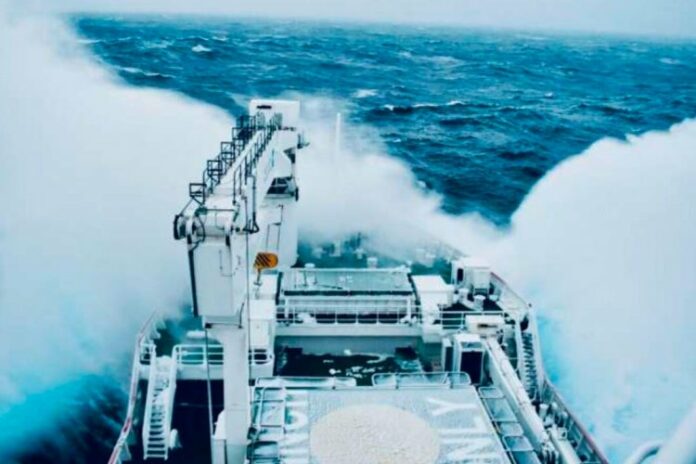
Using state-of-the-art technology and embarking on an expedition to one of Earth’s most volatile oceanic realms, the research team deployed a novel technique for three-dimensional imaging of ocean waves. Operating stereo cameras aboard the South African icebreaker SA Agulhas II during the Antarctic expedition in 2017, they captured rare insights into the behavior of waves in this remote region.

Their method, mimicking human vision through sequential imaging, allowed the team to reconstruct the wavy ocean surface in three dimensions, providing unprecedented clarity into the dynamics of ocean waves.

The first scientific measurement of a rogue wave was the 25.6 meter Draupner wave, recorded in the North Sea in 1995. 16 suspected rogue wave incidents have been reported in the 21st century.

“Antarctica’s choppy seas and wild winds can cause large waves to ‘self amplify,’ resulting in rogue wave frequency scientists had theorized for years, but could not yet verify in the ocean,” Professor Toffoli said.

Drawing upon numerical and laboratory studies, which had suggested the role of wind in the formation of rogue waves, the research team’s observations have provided validation of these theories in the actual oceanic environment.

“Our observations now show that unique sea conditions with rogue waves arise during the ‘young’ stage of waves—when they are most responsive to wind. This suggests wind parameters are the missing link,” Prof Toffoli said.

“The wind creates a chaotic situation where waves of different dimensions and directions coexist. Wind causes young waves to grow higher, longer and faster. During this self-amplification, a wave grows disproportionately at the expense of its neighbors.

“We show young waves display signs of self-amplifying and more likelihood of becoming rogue because of the wind. We recorded waves twice as high as their neighbors once every six hours,” Professor Toffoli said.

“This mirrors lab models: that sea conditions theoretically more prone to self-amplification produce more rogue waves. In contrast, we detected no rogue waves in mature seas, which are not affected by wind.”

Professor Toffoli emphasized the critical importance of integrating wind dynamics into predictive models for rogue wave forecasting.

“This shows that when developing tools for predicting rogue waves, scientists need to take wind into thorough consideration.”