-8.3 C
New York
Home Blog Page 184

DeepSea and G2 Ocean roll out groundbreaking AI voyage optimisation tool

0

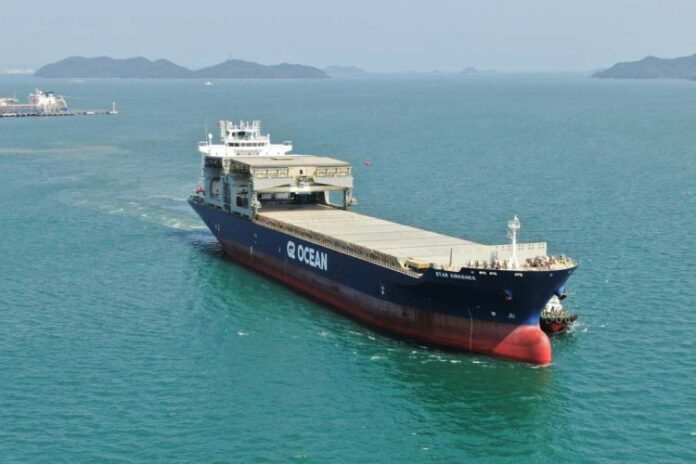
DeepSea Technologies has announced the completion of a project supported by the EEA Grants under the “Business Innovation Greece” Programme, to develop an accessible AI solution for vessel performance routing. Working with G2 Ocean and SINTEF, DeepSea has run trials to develop a novel artificial intelligence (AI) software solution which uses AIS and noon report data, together with high-frequency data from other vessels, to unlock voyage optimisation.  

Improvements in operational efficiency through optimised navigation help operators to reduce fuel consumption and lower emissions. However, few companies in the shipping industry have the data collection systems in place to support data driven improvements. Together with G2 Ocean and SINTEF, DeepSea has developed an AI-based solution that can use the data available to every ship owner: AIS data and noon reports, to unlock the real benefits of performance routing. This approach is called “transfer learning” and allows high-frequency data models from hundreds of vessels already in DeepSea’s databases, to be transferred over to low-frequency data vessels of the same type and further adapted to available data.  

The new software solution, ‘Pythia Augment’, has been applied to the bulker market for the duration of this project, however, has widespread applications for all types of vessels as well, and provides route and speed guidance for individual vessels based on AI-generated energy performance modelling. DeepSea and G2 Ocean applied the solution to 5 Grieg Star vessels within the Norwegian company’s fleet, to develop and pilot an AI model with the ability to produce accurate and optimised guidance that has been successfully applied to reduce fuel consumption and achieve the highest possible Time Charter Equivalent (TCE) for any given voyage. The ships used to test the solution provided an ideal training ground for developing the AI application, as the fleet features vessels operating noon reports as well as more modern live data acquisition systems. 
During the project, DeepSea and G2 Ocean collaborated with SINTEF, a leading independent research organisation based in Norway to understand barriers to end-user compliance. Breaking down barriers to the adoption of AI recommendations by the crew is essential. The value of AI-driven optimisation to sustainable shipping operations can only truly be realised if there is high compliance with the recommendations produced.

Dr. Konstantinos Kyriakopoulos, Co-Founder and CEO of DeepSea Technologies commented on the project:

“Ship owners need to be taking action now to deliver on the maritime industry’s long-term goal to decarbonise. A mature market for the low-carbon fuels that will drive large-scale decarbonisation of marine energy remains some way away. In the meantime, owners and operators should focus on reducing energy consumption through operational efficiencies. With the delivery of Pythia Augment using low-frequency data to optimise voyage planning, we are creating a new and innovative way for bulkers to effectively drive down carbon emissions in their operations.” 

Arthur English, CEO of G2 Ocean, further commented:

“The solution developed by DeepSea enables real time analysis of a range of commercial, technical, and environmental factors resulting in a reduction of emissions as well as optimised earnings. With the wide-scale adoption of green fuels still some way off, it is vital that we grasp the opportunities that are currently economically viable to reduce emissions.”

DeepSea has used two critical AI technologies to unlock voyage optimisation based on legacy data: Transfer Learning and Hybrid Modelling. Having access to a fleet with mixed data acquisition systems was paramount to the development of the AI tool. 
World’s 1st stealth submarine capable of 180-degree turn at full speed

0

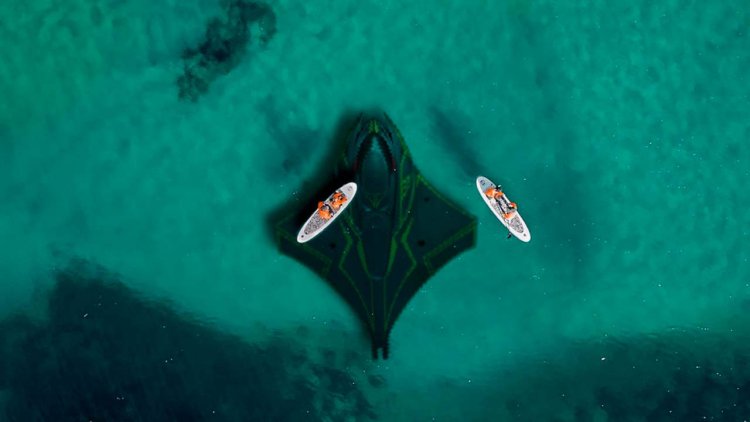
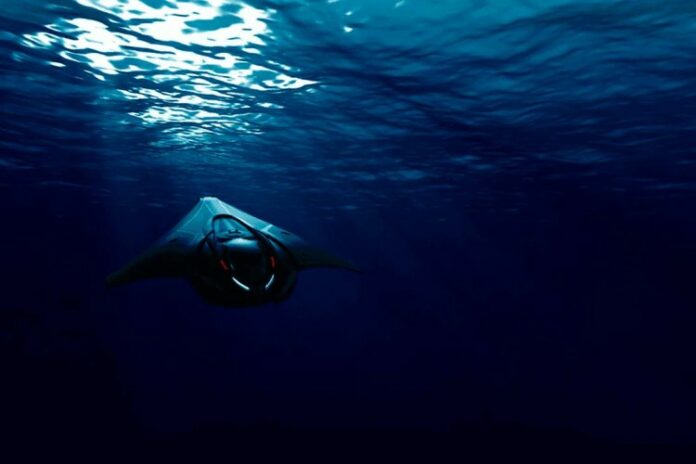
A Ukrainian company has claimed to have developed a stealth submarine, Kronos, that could change the game in the ongoing Russia-Ukraine war.

Highland Systems, the company based in the UAE, first presented the hydrodynamic hull submarine at the Naval Defense and Maritime Security Exhibition (NAVDEX) in 2023.

Alexander Kuznetsov, the founder of Highland Systems and its chief designer, said the submarine was first built for two main purposes – to carry workers for underwater repairs and to serve the super-rich’s luxury travel needs.

However, the Russian invasion of Ukraine forced Kuznetsov and his team to redesign the submarine for military operations.

As per the manufacturers, the submarine has a steel hull covered in composite material to give it a low signature.

Highland Systems says the submarine can comfortably accommodate 10 passengers and it is suited even for commercial and rescue operations.

It can carry up to 3000 kilograms on water and has a curb weight of around 10000 kilograms.

Kronos can achieve a maximum speed of 80 kilometers per hour on water and it can also operate under water at speeds of up to 50 kilometers per hour. Its working depth is up to 100 meters and it can achieve maximum critical depth of 250 meters.

The submarine can run on diesel or battery, once fully charged it can run for 18 hours on battery alone. The generator can make it run for 36 hours, giving it a total of 54 hours of operational time in hybrid mode.

It is also claimed to have an operational range of 1,000 kilometers and can be operated remotely.

However, the most important feature, as per Highland Systems, which they also claim is a first in the world, is its ability to make an instantaneous 180-degree turn at full speed.

Kronos’s manta ray shape results in a stealthier and much more agile vehicle than the classic cigar-shaped underwater submarines used around the world, as per the manufacturers.

The electric engine and sonar-absorbing coating makes it a dangerous stealth craft, as per Highland Systems.

Apart from launching torpedoes, it can also come close to slow-moving or moored enemy ships undetected to attach magnetic mines which can then be detonated from a safe distance.

Kronos can operate in waters as shallow as 50 feet (15 meters), and its top speed makes it a fearsome craft in today’s day and age.

It can also carry six Black Scorpion torpedoes, which are developed by weapons manufacturer Leonardo, as per a report by Fast Company.

However, it is the ability to turn rapidly and sink straight to the ocean bed that makes Kronos a force to reckon with. Also, its top speed makes it difficult for enemy vessels to chase and overpower it using its weaponry.

There have been a lot of aerial and ground drones being used by Ukraine in the ongoing war. Kronos, if inducted by the Ukrainian armed forces, could prove to be a nightmare for the Russian ships and submarines.

Source: Interesting Engineering

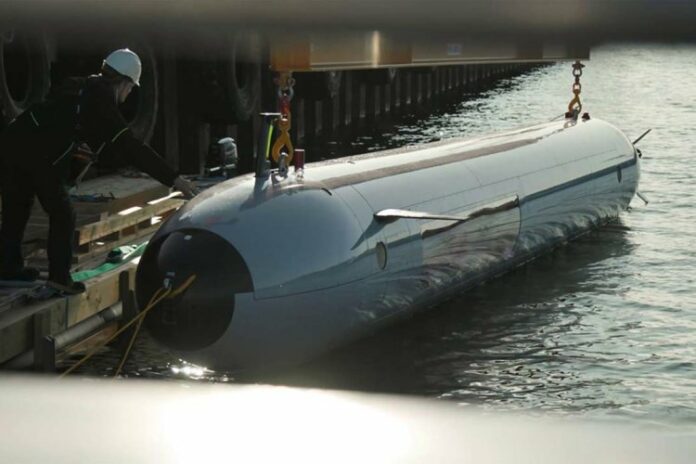
Kongsberg’s electric underwater drone with 15-day range nails final test

0

This concludes months of assessments to satisfy the drone’s factory acceptance, meaning it is now ready for customer delivery.

The drone’s sea trials were conducted in September of 2023, with the HUGIN Endurance team verifying and testing the AUV through other tests. These trials and tests concluded in March of this year.

Sea trials for the first production unit began in September 2023, and over the last months, the Kongsberg Discovery Uncrewed Platforms team has put HUGIN Endurance through its paces, verifying and refining all system capabilities. Sea trials culminated in March 2024 with a successful demonstration of the AUV capabilities to the customer. President Martin Wien Fjell is immensely proud of the great effort of the organization. 

“I am very proud of the team’s hard work, and we are achieving yet another significant milestone in the history of our company. The project has been delivered in record time, and a huge thank you to everybody who has contributed to this success. This is also an excellent way to celebrate our first anniversary as Kongsberg Discovery. The customer is also pleased and genuinely impressed by the work accomplished by Kongsberg Discovery,” he stated.

Fjell says that the HUGIN Endurance program has attracted significant interest both from the defence sector and commercial operators 

“Endurance can accommodate whatever kind of payload a customer wants, whether for seabed mapping or inspection, oceanography, continuous surveys of offshore wind parks, or as a surveillance tool for critical subsea infrastructure or changes in ecosystems. To achieve the first system delivery is a significant milestone, and we will continue to develop additional capabilities. HUGIN Endurance enters the market as a game-changer”, he says.

HUGIN Endurance, launched in 2021, is the largest member of Kongsberg Discovery’s HUGIN family of AUVs. The system can come equipped with a wide array of standard sensors.  This includes a wide-swath high-resolution synthetic aperture sonar (HISAS 1032 Dual RX), multibeam echo sounder (EM 2040 MkII), sub-bottom profiling system, colour camera, laser profiler, magnetometer and environmental sensors collecting data such as conductivity, temperature, sound speed, methane, and CO2 and O2 concentration.

In addition, the vehicle includes a large configurable volume that can be used to carry a mixture of batteries and custom payloads as needed.  The system is designed to allow autonomous operations directly from shore, and with a full complement of batteries, it can spend up to 15 days at sea, traveling up to 2200 km (1200 nm).

While the new AUV incorporates many of the industry-leading capabilities found in previous HUGIN vehicles, to enable long-term unsupported missions, new advancements had to be made, including greater redundancy, a new autonomous mission management system, greater situational awareness, and the ability to deal with a wide range of varying water density.

Alinta Energy and Parkwind confirm a site to co-develop the Spinifex Offshore Wind Farm

0

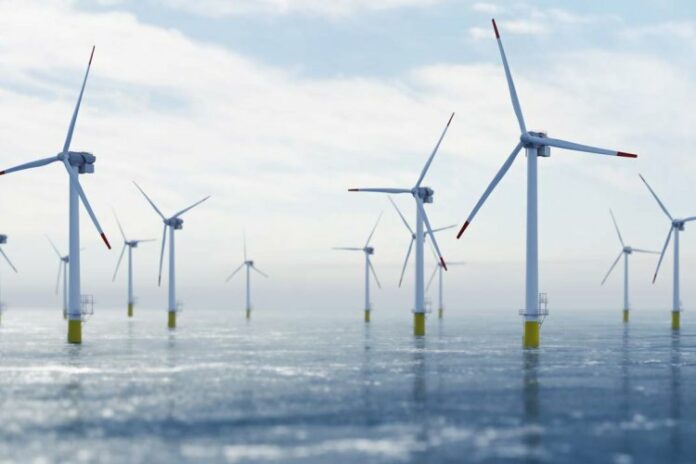
Under the agreement Alinta Energy and JERA Nex, the newly launched renewable energy company created by JERA combining the resilience of Japan’s largest utility company with the focus and agility of a dedicated renewables business, will apply their respective expertise and capabilities to jointly develop the Spinifex Project.

Alinta Energy MD & CEO Jeff Dimery said he was excited to work with the JERA Nex team who bring strong experience as developers and operators.

“JERA and Parkwind both have a great track-record in offshore wind and has pioneered some impressive engineering and construction techniques. We love that spirit and the launch of JERA Nex, bringing the two companies’ renewable expertise together, is exactly what we’ll need in Australia to build a new industry from the ground up.”

“The other thing that attracted us to JERA Nex was its vision for ensuring the project benefits communities in south west Victoria,” he said.

“There is huge potential for offshore wind in Australia and we’re confident that the combination of Alinta Energy’s local expertise and experience and our offshore credentials provide a strong foundation for this project,” said Francois Van Leeuw VP of Development & Construction Offshore, JERA Nex and co-CEO of Parkwind. “We’re looking forward to working closely with the local community to bring clean, sustainable energy to Australian homes and businesses.”

A local supply chain and industry development study completed by the project in 2023 estimated the project could contribute up to A$1.6 billion during the construction period and A$40 million per year in operation to the regional economy.

RBC Capital Markets and Rothschild & Co acted as joint financial advisors and Clayton Utz acted as legal advisor to Alinta Energy. Ashurst acted as legal advisor to Parkwind.

LR to class Torghatten Nord’s hydrogen-powered ferry duo for Arctic sailings

0

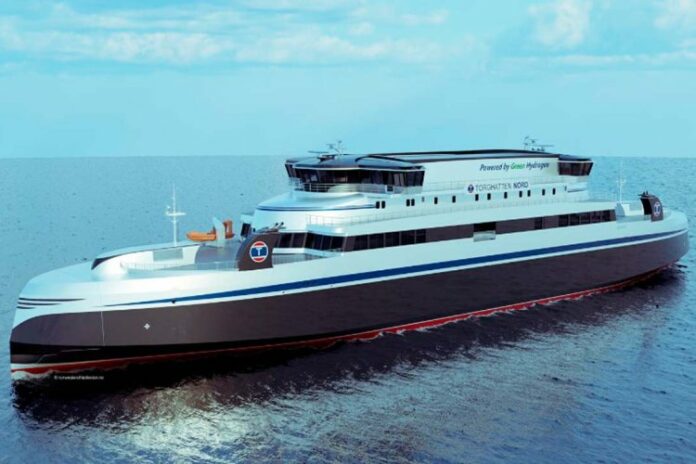
Two hydrogen-powered passenger ferries ordered by Norwegian transport company Torghatten Nord are set for Lloyd’s Register (LR) class following Approval in Principle (AiP) awarded in August 2022. Designed by The Norwegian Ship Design Company to operate in the challenging waters of the Vestfjordstrekninga fjord in the Arctic Circle, the two vessels will be built at Norwegian shipyard, Myklebust Verft.

At 117 metres long with a 120-car capacity, the duo will be the world’s largest hydrogen-powered ships, operating on green hydrogen at least 85% of the time. Operating at an average speed of 17 knots in often challenging conditions, the vessels will navigate the 278km-long Vestfjordstrekninga ferry route connecting Bodø, the islands of Røst and Værøy, and Moskenes.

A hydrogen storage unit onboard the vessel will feed gas to the fuel cells, creating electricity to propel the vessels and power their auxiliary systems, reducing CO2-emissions on the route by around 26,500 tons each year.

The alternative fuel newbuilds with biodiesel backup, bring together LR as the class society, owner Torghatten Nord, The Norwegian Ship Design Company, Myklebust Verft shipyard, systems integrator SEAM, and hydrogen supplier GreenH. The Norwegian Maritime Authority will flag the two vessels.

The H2-powered ferries join another set of LR-classed vessels currently being built in Norway; two construction support offshore vessels (CSOVs) are being built at Vard Langsten shipyard and will enter service late in 2025 or early 2026.

Nick Brown, CEO, LR, said:

“These flagship hydrogen-powered ferries represent a significant milestone for Norway as it furthers its continuing commitment to clean hydrogen infrastructure.  We see significant interest in green hydrogen as a maritime fuel especially for short-sea shipping and look forward to working with our Norwegian customers —Torghatten Nord, Myklebust Verft and The Norwegian Ship Design Company — to ensure this innovative project is progressed with safety, reliability and sustainability at its core.”

Marius Hansen, Managing director, Torghatten Nord, said:

“We are delighted to be working with Myklebust Verft on this project, as together with our partners we set the standard for a completely new class of ship that reduces emissions and supports sustainable operations. This project is a significant boost for the Norwegian technology and shipyard environment and we are proud to make it happen in Norway.”

Leiv Sindre Muren, CEO, Myklebust Verft, said,

“We are delighted that Myklebust Verft has been selected to build these innovative, large-scale hydrogen-powered ferries, showcasing Norway’s level of expertise and ambition and augmenting its maritime hydrogen power infrastructure. We look forward to developing our relationship with Lloyd’s Register as we partner on these complex newbuilds.”

Alf Tore Sørheim, Acting Director General of Shipping and Navigation, Norwegian Maritime Authority, said:

“Signing contracts for zero-emission vessels is a significant milestone. The Norwegian Maritime Authority is pleased to see Norwegian shipping companies taking responsibility and driving forward new technologies for reducing emissions, and that they have competent partners to assist them in this endeavour. We look forward to collaborating with LR, the shipping company, and suppliers towards the certification and commissioning of the vessels.”

Gjermund Johannessen, CEO, The Norwegian Ship Design Company, said:

“We are excited to finally start building the two hydrogen ferries for Torghatten Nord and look forward to continuing our good collaboration with Torghatten Nord and Myklebust Verft. These hydrogen ferries are unmatched by any other ferries in the world today, with the largest hydrogen installations in a ship ever by a substantial margin. We have developed a unique hydrogen concept using hydrogen’s physical properties for achieving optimal safety. We believe hydrogen will play an important role for zero-emission short-sea shipping. Through close and fruitful collaboration with Torghatten Nord and their technical team from tender and during all development stages, the project is now more than ready to welcome the well-respected shipyard Myklebust Verft onto the project.”

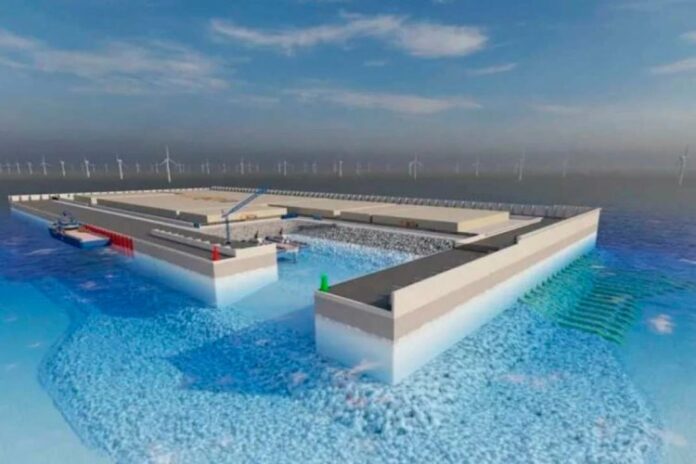
Belgium starts building World’s first artificial energy island

0

Since September 2023, a team of 300 staff is busy every day at a construction site in Flushing, the Netherlands.

The team is building caissons, or watertight structures, each of which takes three months to construct and is an important component for building Princess Elisabeth Island, the world’s first artificial energy island. 

With countries looking to phase out their dependence on fossil fuels, renewable energy solutions like wind and solar energy are seeing a major uptick. Countries in Europe with access to the North Sea are constructing larger wind farms in the cold waters to maximize the energy output from the strong sea winds. 

However, supporting infrastructure is also needed to direct the renewable energy produced into our homes as production capacity grows. Belgium plans to develop an artificial energy island closer to the wind farms. 

The Princess Elisabeth Island is part of the larger Princess Elisabeth Zone, an offshore renewable energy generation region in the North Sea.

The facility is 28 miles (45 km) from the Belgian coast. It is partly financed by the European Union’s COVID-19 recovery fund, which awarded it a 100 million euro grant. 

The facility will serve as an energy grid at sea and see high-voltage energy in direct current (HVDC) and alternating current (HVAC) delivered. The high-voltage infrastructure on the island will combine these inputs to deliver energy to the Princess Elisabeth Zone. 

The facility will also serve as the prototype for building hybrid interconnectors in the future, handling energy exchanges between countries and connecting to new and upcoming wind energy farms in the North Sea. 

To create the artificial energy islands, engineers will use an estimated 2.3 million cubic meters of sand, and the caissons being built will form the outer walls of the island. 

Made of concrete, each caisson is 187 feet (57 m) long, almost 100 feet (30 m) wide, and equally tall. Building one, however, takes three months, with the production process split into five stages, each taking 20 days to complete. 

The most impressive of these stages is the slip-forming process, which creates the caisson walls. The walls are raised nearly four inches (10 cm) per hour, and the process continues for ten days.

‘Runners’ move the caissons between different work sites, and the process takes about six hours. When ready, the watertight block weighs 22,000 tonnes. 

When a caisson is ready, a semi-submersible vessel will transport it to the harbor to be placed in the water as temporary storage. Later in the summer, the caisson will be moved to its installation site in the North Sea, where construction of the largest energy island is expected to be completed by 2026. Following this, installation of the electrical equipment can begin. 

The facility is expected to become operational by 2030. 

“The North Sea is set to become the powerhouse of our energy independence, and Princess Elisabeth Island will be a crucial part of this process,” said Alexander De Croo, the Prime Minister of Belgium, on a recent visit to the construction site. 

“Belgium has long been a pioneer in offshore wind, and by continuing to innovate, we are further consolidating our position for the future,” the Prime Minister added in the press release. 

“This gives our Belgian companies more opportunity to do groundbreaking work, both here and abroad, as well as guaranteeing sustainable, competitively priced energy for our citizens and businesses.”

Source: Interesting Engineering

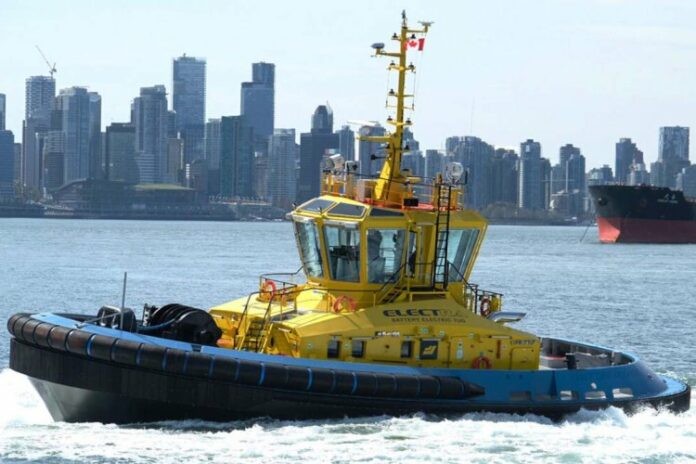
Vancouver welcomes its first resident battery electric tugs

0

Both tugs are owned and operated by SAAM Towage Canada and represent major milestones in the Port of Vancouver’s goal of becoming the world’s most sustainable, as well as SAAM Towage’s leadership in the drive to the decarbonization of harbour operations.

With compact 23 metre lengths and outstanding manoeuvrability, they are perfectly suited for operations between the tight “finger piers” where many ships are docked in Vancouver. They are also ideal for ship-berthing and unberthing work at Neptune terminals in Vancouver where their environmental credentials were instrumental in winning them a contract to provide towage services.

After surveying SAAM’s local Tug Masters, Robert Allan Ltd. embarked on a series of live trials to quantify handling characteristics that these captains identified as most favourable. Using a specialized sensor package, and by closely listening to what the Tug Masters said they could feel, it was possible to establish a quantified baseline for what the new design should ideally achieve.

Predictions of the performance of the new tugs were made using a proprietary CFD-based manoeuvring tool which was validated using the earlier trials. Using this tool, it was possible to establish that the new design, for which underwater features were customized to suit the desired performance, should indeed deliver the specific manoeuvring characteristics that SAAM’s crews had identified as being optimal. The tool was also used to check that directional stability would be on par with expectations. Part of the magic of these tugs is in how this is achieved while also yielding their tremendous manoeuvrability. Hull design is critical to the goal, and one of the other keys is a relatively minimalistic and strategically shaped single skeg that has low drag in all directions, and the benefit of reduced energy consumption in transit.

Sea trials proved that the efforts were a major success. Handling, performance, and manoeuvring characteristics were exactly what had been hoped for, and SAAM was delighted with the results. There is perhaps no greater endorsement of the how these tugs perform than SAAM’s decision very shortly thereafter to order a new ElectRA 2500-SX design (also from Sanmar Shipyards) to operate in Chile. The only caveat was that the existing 25 metre design be updated to have a geometrically similar underwater hull and appendages to the 23 metre tugs/ That work is underway, with delivery of the ElectRA 2500-SX expected in 2025.

The electrical system is powered by a battery installation, which itself sets a new standard for the total capacity that can be installed in a compact tug. Featuring 3,616 kWh of lithium-ion batteries, these tugs pack significant onboard energy storage. That capacity translates into the ability for these relatively high-usage harbour tugs to perform their missions on battery power alone. With charging from the local hydroelectric power grid in as little as one to two hours, these tugs can quickly get out to the next job and accommodate a busy schedule.

Exail enhances offshore operations with Octans AHRS advanced technology

0

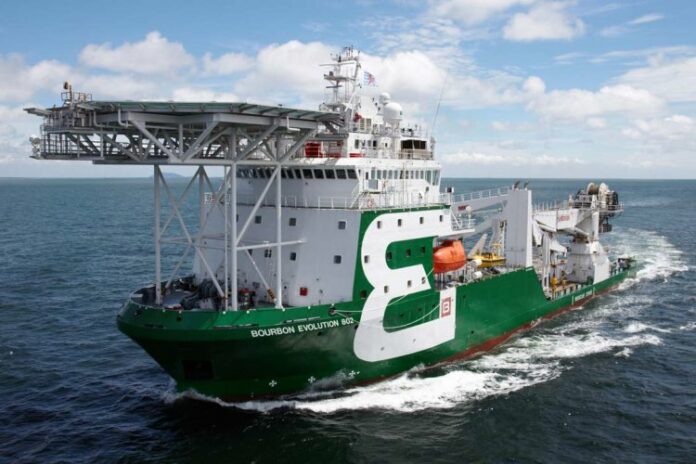
These units will be installed on multiple Bourbon Evolution 800 Series multi-purpose support vessels (MPSVs) dedicated to subsea operations at depths down to 3,000 meters.

IMO-HSC certified, the Octans AHRS will enhance Bourbon vessels’ efficiency in installation, maintenance, and repair tasks for the oil and gas, and offshore wind industries. Providing highly accurate measurements for roll, pitch, and heave, Octans will serve as a survey-grade surface gyrocompass and motion sensor, seamlessly integrated into the vessels’ Class 3 dynamic positioning (DP3) system. This integration will ensure precise positioning and stabilization over underwater structures, ensuring the safe deployment of cranes, Remotely Operated Vehicles (ROVs), and supporting efficient survey and saturation diving operations.

“With the deployment of ROVs and the execution of complex subsea operations, DP3-type dynamic positioning is essential on our vessels. Additionally, to support survey services such as positioning, inspection, and metrology, a high level of specification demands the best-in-class motion sensors for safe operations. That’s why we’ve selected Exail’s Octans, renowned for its globally recognized levels of performance, precision, and reliability.” said Stephan Midenet, CEO of Bourbon Subsea Services.

“We are thrilled to contribute to enhancing the efficiency and safety of Bourbon’s fleet operations and would like to thank them for their trust. We are confident that the Octans AHRS, built on Exail’s trusted Fiber-Optic Gyroscope (FOG) technology and already installed on thousands of surface platforms worldwide, will meet expectations and rise to the challenge of ambitious projects in the oil and gas and offshore wind industries” said Calixte Genin, Regional Sales Manager at Exail.

Wärtsilä to supply cargo handling system for a new bunkering vessel for Scale Gas

0

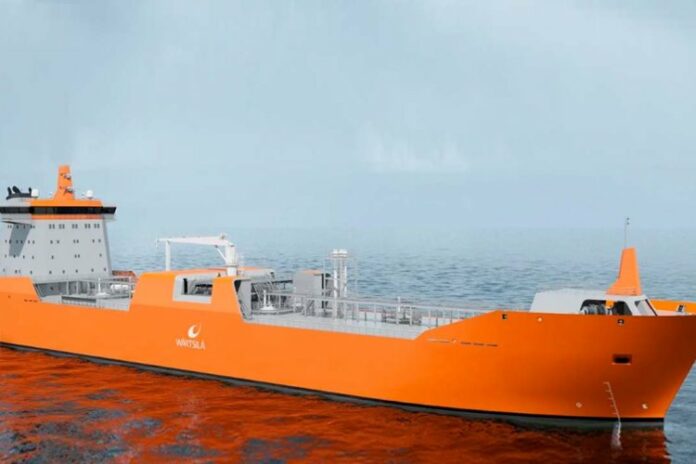
Wärtsilä Gas Solutions, part of technology group Wärtsilä, will supply the cargo handling system for a new 12,500 m3 LNG bunkering vessel being built for Spanish shipowner Scale Gas, a subsidiary of Enagás, the owner and operator of Spain’s gas grid. 

The vessel is co-financed from the Support for Sustainable and Digital Transport Programme, part of the Recovery, Transformation and Resilience Plan from the Spanish Ministry of Transport, Mobility and Urban Agenda. The order has been placed by the yard building the vessel, Nantong CIMC Sinopacific Offshore & Engineering, and was booked by Wärtsilä in Q1, 2024.

“The number of LNG-fuelled vessels continues to increase, which in turn means that more LNG bunkering ships are needed. We are the leader in this segment for both ship and tank building, Wärtsilä’s experience and track-record is recognized, so we select them for this project,” said David Wei, Director of Purchase Department, CIMC SOE.

“The trend towards LNG represents the industry’s transition to greater environmental sustainability, and we are extremely pleased to support this with modern and reliable systems that optimise overall cargo handling efficiency,” says Harald Øverland, Sales Manager, Wärtsilä Gas Solutions.

The Wärtsilä equipment is scheduled to be delivered to the yard during Q2, 2025.

Wärtsilä has a long-standing relationship with Nantong CIMC Sinopacific Offshore & Engineering, and has supplied cargo handling systems for a number of LNG, LPG, ethane/ethylene, and multi-gas carriers built by the yard.

Ørsted inaugurates the Asia-Pacific region’s largest offshore wind farms

0

Today’s inauguration is a major milestone, as the Greater Changhua 1 and 2a offshore wind farms have not only doubled Taiwan’s offshore wind capacity; they have also successfully catalysed Taiwan’s offshore wind ecosystem.

President Tsai Ing-wen thanked Ørsted for investing in Taiwan and bringing renewable technologies to Taiwan. She recalled that eight years ago, she went to see the first two demonstration wind turbines at Formosa 1, which is located off the coast of Miaoli County. Soon after that, Ørsted came to Taiwan and started further development of Formosa 1 and the 128 MW project, which was inaugurated in 2019 as Taiwan’s first commercial-scale offshore wind farm. 

Today, she congratulated Ørsted once again for completing the 900 MW Greater Changhua 1 and 2a offshore wind farms with the support of its investors, CDPQ and Cathay PE. This is currently the largest offshore wind project in the Asia-Pacific region.  

President Tsai Ing-wen says:

“It took us eight years to turn the words ‘energy transition’ in our policy papers into actual wind farms in operation. Taiwan now has Asia-Pacific’s largest offshore wind farm and our own offshore wind supply chain.” 

Mads Nipper, Group President and CEO of Ørsted, says:

“With today’s inauguration, we’re celebrating a landmark achievement for Ørsted and for Taiwan. Greater Changhua 1 and 2a are our first gigawatt-scale offshore wind farms outside of Europe. They’re also Taiwan’s first utility-scale far-shore wind farms and the largest of their kind in APAC, reaffirming Taiwan as the frontrunner in the region. In 2024, Ørsted has a record 7.6 GW of offshore wind projects under construction worldwide, including our next big project in Taiwan, the 920 MW Greater Changhua 2b and 4.”

Per Mejnert Kristensen, CEO of Region APAC at Ørsted, says:

“Greater Changhua 1 and 2a is a flagship project of historic significance. This project has spearheaded the establishment of the local offshore wind industry as well as contributed significantly to Taiwan’s energy transition and net-zero goals. I’d like to express gratitude to the relentless efforts of our team and to the support from the authorities and our partners, suppliers, and contractors. We’ve built a strong talent pool, including our industry-first operations and maintenance ‘Taiwan team’, dedicated to ensuring a stable energy output for decades to come. Together, we look forward to delivering more world-class wind farms in Taiwan.”

Ørsted began offshore construction in March 2021 and recently announced the successful installation of all 111 Siemens Gamesa SG 8.0-167 DD wind turbines, which are now supplying renewable energy to Taiwan’s electricity grid. The 605.2 MW offshore wind farm Greater Changhua 1 is co-owned by Ørsted (50%) and Mercury Taiwan Holdings, a consortium of CDPQ, a global investment group, and Cathay PE, with a combined ownership stake of 50%. The 294.8 MW Greater Changhua 2a is 100 % owned by Ørsted.

The 900 MW wind farms inaugurated today are part of Ørsted’s Greater Changhua offshore wind zone, which also comprises Greater Changhua 2b, Greater Changhua 3, and Greater Changhua 4. The zone has a combined capacity of approximately 2.4 GW. Greater Changhua 1 and 2a alone can produce enough renewable energy to power one million Taiwanese households a year, equivalent to 1.75 million tonnes of carbon dioxide reductions annually.
.