-7.5 C
New York
Home Blog Page 183

World’s most environmentally friendly tug fleet delivered to HaiSea Marine

0

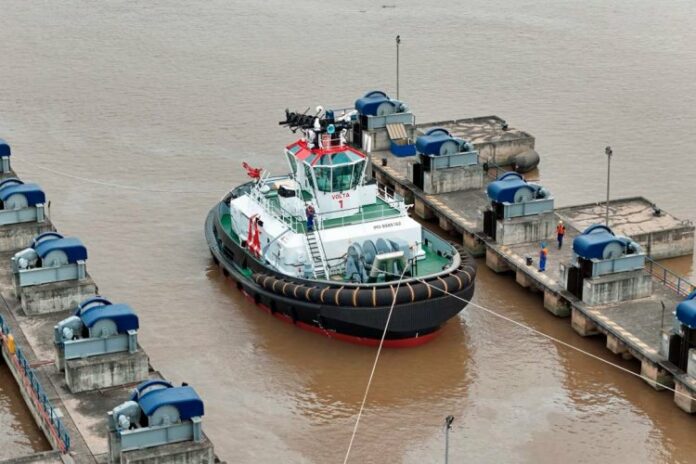
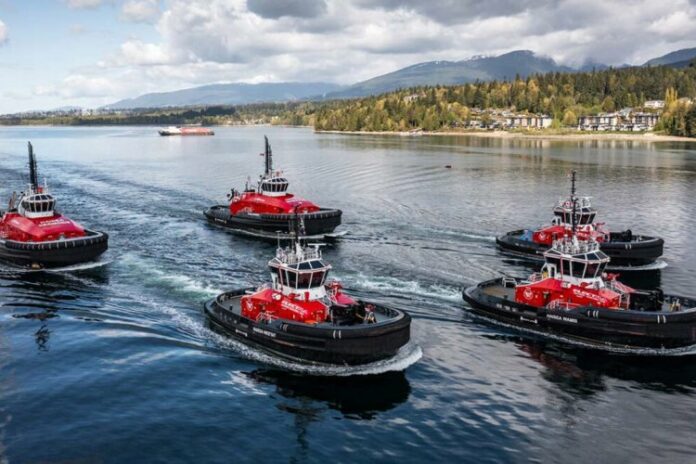
With the recent arrival in British Columbia of HaiSea Warrior, the full fleet of LNG powered escort tugs and battery electric harbour tugs for Canada’s HaiSea Marine have now completed their delivery voyages from Türkiye’s Sanmar Shipyards.

Sister tugs HaiSea Kermode and HaiSea Warrior are two extreme-performance RAstar 4000-DF LNG dual fuel escort tugs which will guide LNG carriers in and out from the soon-to-open LNG Canada terminal in Kitimat, BC. They will do so along a 159 nautical mile route between the terminal and the pilot boarding station near Triple Island, which represents the longest escort route in the world.

HaiSea Brave also recently arrived to complete the set of three ElectRA 2800 battery electric tugs, joining its sisters HaiSea Wee’git, and HaiSea Wamis – 2023’s Tug of the Year (as awarded at TugTechnology). These unique tugs will provide ship berthing and unberthing assistance to the LNG carriers in the immediate vicinity of the terminal.

The five tugs are the firsts to ever receive class society ABS’ ENVIRO+ notation, their highest standard available. HaiSea Wamis recently became the first tug to ever receive an underwater radiated noise notation (ABS UWN), with underwater noise levels in transit a mere 1/10th that of an equivalent diesel mechanical tug. Airborne emissions of both tug types are also mere fractions of traditional counterparts, with the battery electric tugs emitting zero CO2 or other greenhouse gases when operating on their large battery banks charged from the clean local hydroelectric power grid. Easily compliant with IMO Tier III emissions standards (the highest international standard) in any mode of operation, such standards are merely a baseline for what these tugs have achieved.
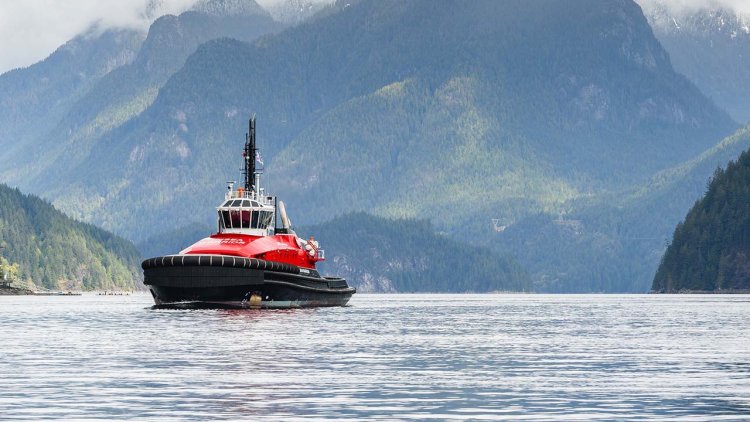
Measuring 40 metres in length, delivering 105 tonnes of bollard pull, and generating indirect escort steering forces exceeding 175 tonnes, these RAstar 4000-DF are amongst the most high-performing vessels of their type in the world and employ the highest quality escort towing equipment available. Also capable of emergency towing, pollution response, and off-ship fire-fighting, these super-tugs are easily the most formidable escort tugs in Canada.

The ElectRA 2800 battery electric tugs are exceptional performers themselves with incredible thrust responsiveness and overall handling response delivered by their electric propulsion system and large battery banks. Not only is their underwater noise signature exceptionally low, they are also remarkably quiet aboard which makes them very comfortable for their crews. Just like their larger escort tug cousins, they have deservedly been awarded habitability notations by ABS.

With an impressive list of world-firsts and performance achievements, this fleet of tugs exemplifies how environmental stewardship is a perfect match with the highest standards of performance.

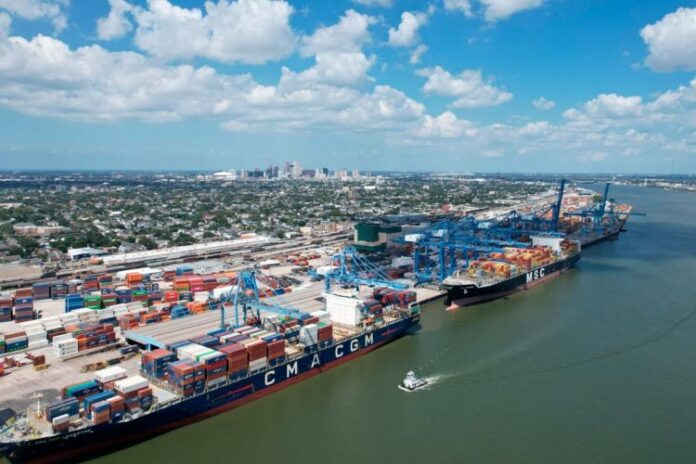
Port NOLA announces $7 million grant for sustainable infrastructure

0

The Port of New Orleans has been awarded $7,117,567 from the Federal Highway Administration’s Reducing Truck Emissions at Port Facilities (RTEPF) Grant program that is funded by the Infrastructure Investment and Jobs Act.

“Continually upgrading our ports is essential to attract new businesses and keep and create jobs,” said Senator Bill Cassidy, M.D. (R-LA). “This money improves infrastructure and workforce development. This is how to make the Port of New Orleans even more competitive.”

“This funding for the Port of New Orleans is a significant investment that will drive substantial reductions in truck emissions, benefiting the environment and public health,” said Rep. Troy Carter, Sr. (D-LA). “It showcases a bold approach to modernizing port facilities, aligning with the goals of the Infrastructure Investment and Jobs Act to promote sustainability and innovation in transportation infrastructure. By upgrading electrical infrastructure and incorporating all-electric trucks, the Port of New Orleans sets an example for ports nationwide while also fostering workforce development through strategic partnerships with educational institutions.”

Port NOLA along with its valued partners will use the federal funding for sustainable transportation and infrastructure to reduce truck congestion and emissions at Port terminals, Ports America Louisiana, and New Orleans Terminal, LLC. Additionally, the funding will provide $200,000 in sub-awards for Port NOLA’s partners at Nunez Community College and the Urban League of Louisiana for workforce development and educational opportunities for future technicians to work on the upcoming technologies.

“We would like to thank the Biden Administration and our federal delegation for helping the Port of New Orleans honor its commitment to sustainability, environmental justice, equity, and reducing our environmental footprint,” said Port NOLA President & CEO Brandy D. Christian. “We remain focused on prioritizing the utilization of green technologies and infrastructure, sustainable transportation, and helping underserved communities through workforce development initiatives. This funding helps us continue this transformative journey that is aligned with a broader global movement to slow climate change.”

The new quay in the port of Szczecin served the first ship

0

The Dąbrowieckie Quay with a dolphin marina with a total length of almost 289 meters was built as part of the investment “Improvement of access to the port of Szczecin in the Kashubian Basin area”, implemented by the Szczecin and Świnoujście Seaports Authority SA. 

They are equipped with the latest technologies for reloading liquid chemicals, including a comprehensive system of technical infrastructure protecting the environment. Currently, the quay is dedicated mainly to regular transhipment of sulfuric acid, but in the future it may be adapted to transhipment of other products. This is ensured by a new transhipment bridge, equipped with a gangway tower and sea loading arms, ensuring safe handling of this type of cargo. The quay is adapted to handle ships with a maximum length of 170 meters, a width of 27.9 meters and a draft of 9.7 meters.

In addition to the construction of the new Dąbrowiecki quay with a dolphin marina, the scope of works under the investment “Improvement of access to the port of Szczecin in the Kashubian Basin area” includes the reconstruction of the Chorzowskie, Katowickie, Chorzowskie-Uskok Quays with a ro-ro ramp and the Gliwice Uskok, as well as the landing of the Notecki Basin and construction of the Closing Quay. As part of the Project, the Kashubian Basin will be deepened to a depth of 12.5 m, along with the lining of the corners of the Ostrów Mieleński and Mieleńska Łąka Islands and the strengthening of the corner of the nab. Sosnowiecki.

The project implementation status is currently almost 90 percent. The contractor of the construction works is Korporacja Budowlana DORACO. The investment costs nearly PLN 223 million net and was co-financed by the EU from the Cohesion Fund under the Infrastructure and Environment Operational Program 2014-2020. 

China launches sea trials for next-generation aircraft carrier

0

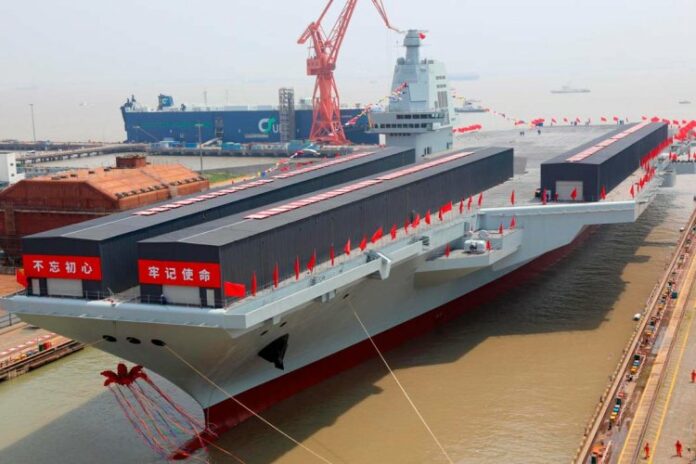
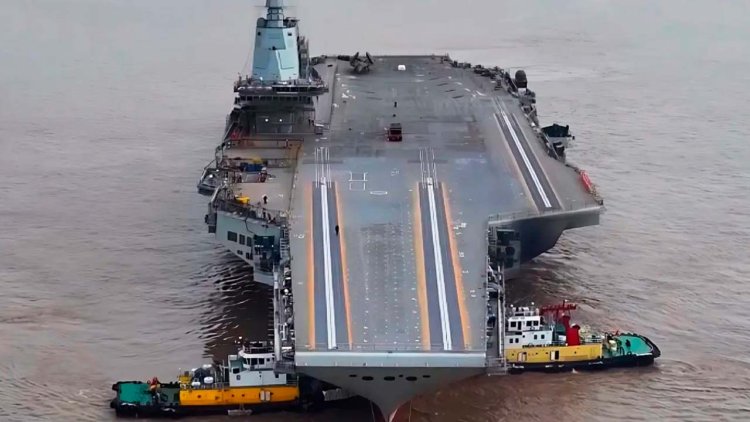
The start of tests by the Chinese navy came nearly two years after the aircraft carrier was first unveiled in June 2022.

The Fujian, entirely designed and built domestically, is larger and more advanced than the Shandong, commissioned in late 2019, and the Liaoning, which China bought second-hand from Ukraine in 1998.

The development of the Fujian is part of a build-up central to President Xi Jinping’s bid to make China the preeminent military power in the region, with a “blue-water” navy capable of projecting power far from China’s coast.

The Fujian, which features a full-length, flat flight deck with an advanced catapult-launch system for jets, takes its name from the Chinese province opposite democratically governed Taiwan.

It had been stationed at Shanghai’s Jiangnan Shipyard, where it was undergoing tests. CCTV reported the Fujian had set out to sea just after 8 a.m. (0000 GMT) on Wednesday.

The sea trials are a final step before the aircraft carrier is put into service by China’s navy. That process is expected to take up to a year. The Shandong conducted nine sea tests before it was commissioned.

The test comes at a time of escalating tensions in the South China Sea. The Philippines on Wednesday said China’s coast guard had fired water cannons at two ships on their the Scarborough Shoal.

That submerged reef is one of the flashpoints inside Manila’s 200-nautical-mile (370km) exclusive economic zone, which Beijing claims as sovereign territory along with 90% of the South China Sea. An international tribunal invalidated China’s claim in 2016, but Beijing does not recognise the ruling.

China Daily quoted China’s navy as saying the Fujian’s test run at sea was intended to assess the “reliability and stability of the carrier’s propulsion and electric power systems.”

It said the carrier was among “the most important military hardware” China is developing.

Only the United States, with 11 aircraft carriers and nine aircraft-carrying amphibious assault ships, has more of the vessels than China.

Source: Reuters

QatarEnergy signs LNG carrier time charter contracts with three Chinese shipping companies

0

QatarEnergy signed long-term time charter party (TCP) agreements with three ship owners for the operation of nine new, ultra-modern LNG vessels as part of the QC-Max part of its historic LNG fleet expansion program.

The long-term TCP agreements cater for the operation of the vessels by affiliates of China Merchants Group, Shandong Marine Group, and China LNG Shipping (Holdings) Limited. All nine vessels will have a capacity of 271,000 cubic meters each.

His Excellency Mr. Saad Sherida Al-Kaabi, the Minister of State for Energy Affairs, the President and CEO of QatarEnergy signed three separate sets of agreements agreements with: 
– Mr. Wang Yongxin, President of CMES, for the operation of four vessels, 
– Mr. Li Maozhong, Chairman of Shandong Marine Energy for the operation of three vessels, and 
– Mr. Cong Jian, General Manager of CLNG, for the operation of two vessels. 

The agreements were signed today in a special ceremony held in Beijing, and attended by senior executives from QatarEnergy, QatarEnergy LNG, and the three shipowner companies. The signing ceremony was attended by Mr. Mohamed Abdullah Al-Dehaimi, Qatar’s Ambassador in the People’s Republic of China.

Commenting on this occasion, H.E. Minister Al-Kaabi said:

“These nine vessels are part of QatarEnergy’s historic program to support our expanded LNG production capacity from the North Field, which will reach 142 million tons per annum by 2030, and which will also help meet our long-term fleet replacement requirements.”

H.E. Minister Al-Kaabi added:

“Our partnerships with China’s shipbuilding industry and the esteemed shipowners, will ensure the long-term operation, deployment, and management of these vessels in a manner that maximizes their potential over decades to come. As we build this partnership, I am reminded of the trust and collaboration that characterizes our relationship, which I believe will continue to grow and flourish as we place more building blocks along the way.”

H.E. Al-Kaabi expressed confidence in the shipowners’ unique capabilities, which will ensure the operation of these vessels to the highest and most advanced safety, technical and environmental standards.

The nine vessels are part of 18 QC-Max LNG carriers that will be built in Hudong-Zhonghua shipyards in China.

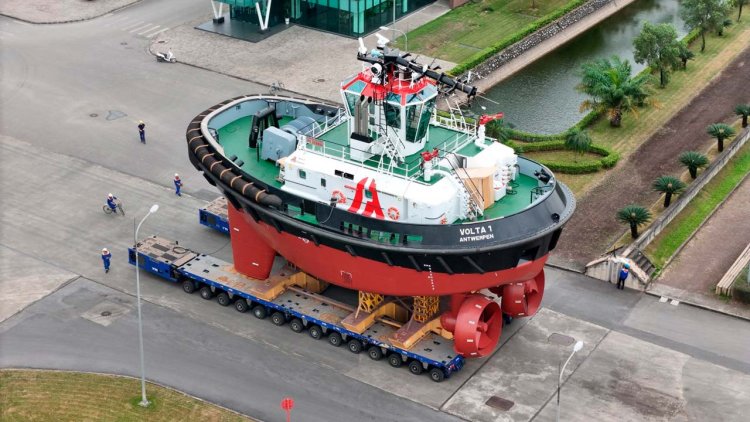
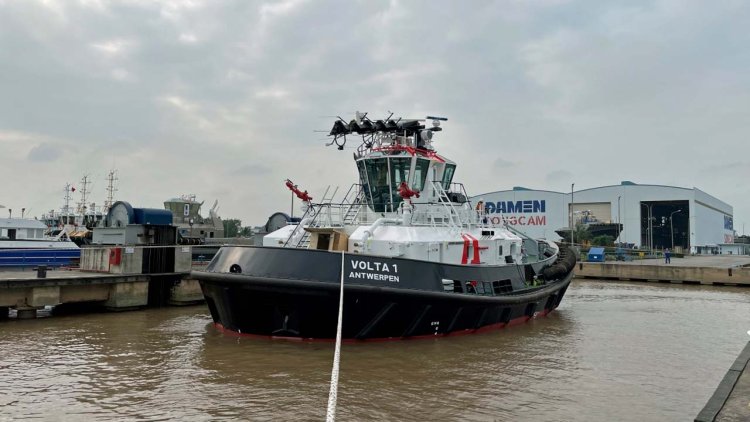
Damen launches fully electric RSD-E Tug 2513 for Port of Antwerp-Bruges

0

The tug is being built for the Port of Antwerp-Bruges, together with five conventional RSD Tugs 2513. When delivered later this year, it will be the first fully electric tug to operate in European waters.

The port was one of the first to operate a conventional RSD Tug 2513 following Damen’s release of the vessel onto the market in 2018. It was the success of this vessel that led to the Port of Antwerp-Bruges latest order with Damen, as it seeks to increase sustainability.

The Belgian port, one of the busiest in Europe, is committed to becoming carbon neutral by 2050. This six vessel order with Damen is representative of this commitment. Each of the vessels in the order is in full compliance with IMO Tier III regulations, with the RSD-E Tug 2513 able to operate with zero emissions.

It is the port’s intention to gradually move towards zero emission and takes a leading role as innovator and facilitator to reach this goal. The port currently operates a hydrogen powered tug and is soon to begin operations with a retrofitted methanol tug.

The RSD-E Tug 2513 is able to perform at least two towage operations on a single charge, and can be fully recharged in just two hours. The battery system is designed to withstand 30,000 cycles during its lifecycle, which is consistent with the lifetime of the vessel.

In addition to supplying the vessel, Damen is also providing the Port of Antwerp-Bruges with the charging equipment and onshore charging infrastructure required to operate the vessel.

W&O signs three-year supply agreement with VARD Group

0

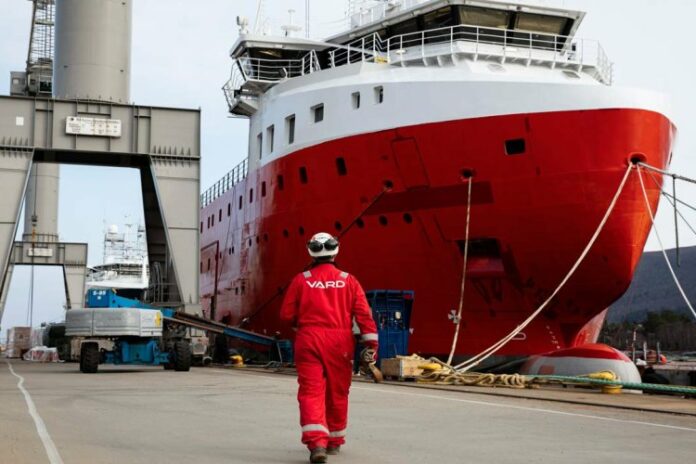
W&O has announced a three-year supply agreement with Norway-based designer and ship builder, VARD Group. Under the agreement, W&O will provide technical support to the design and engineering departments of VARD, covering all valve challenges on newly built vessels. This will include delivering valves, actuation and instrumentation packages to VARD in Norway, Romania, and Vietnam.

Vidar Hoel, Technical Project Manager for W&O, based in Alesund, Norway, will lead on technical support throughout the project. With more than 20 years of marine valve experience, Vidar will coordinate a W&O project team of specialists based in Netherlands, Romania and Singapore. W&O’s international network of offices and warehouses will support VARD with a trusted service that makes the supply chain of valves easy, quick and efficient.

As part of the agreement, VARD will be able to utilise W&O’s industry leading data management and Radio Frequency Identification (RFID) tagging systems. W&O creates an easily accessible history for each critical valve installed on a vessel. W&O’s application of digital technology in combination with the technical expertise of W&O will support VARD’s continued efforts to deliver state of the art vessels for their customers.

Kristof Adam, Managing Director, W&O Europe, commented: “VARD is well known in the industry for its progressive vessel designs and for embracing innovations. The combination of W&O’s digital valve and certification management, our international network of warehouses and valve technical experts, means we are ideally placed to support VARD across their new build vessels over the next years.

VARD Group, said: “Our new partnership with W&O will mean VARD and our customers are supported by a knowledgeable, technical valve supplier across our shipyards in Norway, Romania and Vietnam.
 

Eight companies have applied for CO2 storage acreage

0

The Norwegian Ministry of Energy has received applications from eight companies in connection with the announcement of two areas in the North Sea for potential storage of CO2 on the Norwegian shelf.

The Ministry is processing the applications received and plans to award exploration licences in the second half of 2024.

These areas, which are located in the North Sea, were announced on 6 March pursuant to the (Norwegian) CO2 Storage Regulations. When the deadline expired on 24 April, the following companies had submitted applications:

  • Aker BP ASA
  • Equinor Low Carbon Solutions AS
  • Lime Petroleum AS
  • Northern Lights JV DA
  • OMV (Norge) AS
  • PGNiG Upstream Norway AS
  • Vår Energi ASA
  • Wintershall Dea Norge AS

A licence in accordance with the CO2 storage regulations provides a licence for exploration and exploitation of a subsea reservoir for injection and storage of CO₂ on the Norwegian Shelf.

Wärtsilä to supply the engines for a new Canadian Coast Guard Polar Icebreaker

0

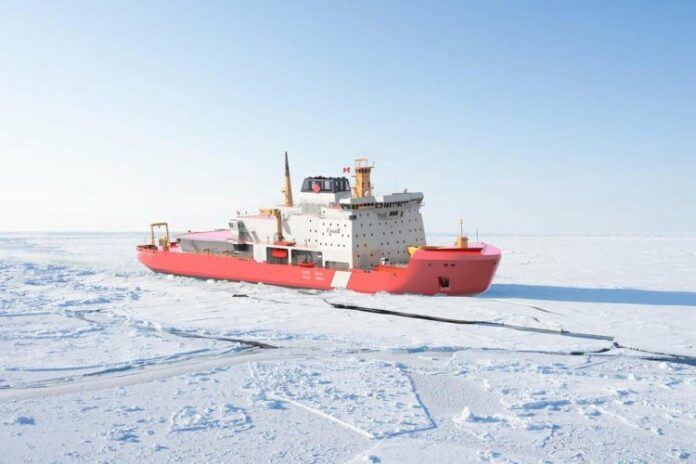
Because of the long operational range required for the vessel’s employment in arctic waters, fuel efficiency was a prime design consideration in the selection of the Wärtsilä 31 engine. The Wärtsilä 31 engine has been recognised by Guinness World Records as the world’s most efficient 4-stroke diesel engine and was therefore considered an obvious choice. The order was booked by Wärtsilä in Q3 2023.

The 158 metre-long multi-mission Polar Icebreaker will operate under PC2 conditions with four 16-cylinder and two 8-cylinder Wärtsilä 31 engines, delivering 47 MW of power. The engines will be fitted with Selective Catalytic Reduction (SCR) systems for IMO Tier III environmental compliance. Wärtsilä will also supply the centre shaft line with a stainless-steel ice-class propeller, as well as Wärtsilä’s NACOS Platinum navigation system.

“Wärtsilä has a fine track record and years of experience in delivering high-class marine technologies including recently delivering the propulsion equipment for the Offshore Fisheries Science Vessels (OFSV), plus the diesel generator sets for the Offshore Oceanographic Science Vessel (OOSV) built at Seaspan for the Canadian Coast Guard,” commented Leo Martin, Senior Vice President – Programs, Seaspan Shipyards.

“The fuel efficiency of the Wärtsilä 31 engine was a determining factor in the award of this prestigious contract. However, equally important was our project delivery experience and service support across Canada. Furthermore, our previous cooperation with both the Canadian Coast Guard and Seaspan has been very successful, and we are honoured to be again working with them,” said Simon Riddle, General Manager, Naval Sales – Wärtsilä.

The Wärtsilä equipment is scheduled to be delivered to the yard in 2025. When built, the new vessel will be the Canadian Coast Guard’s largest icebreaker and will replace ‘CCGS Louis S. St-Laurent’, which is due to retire at the end of the decade after 60 years of service. Seaspan Shipyards is known as a world class builder of high technology ice class vessels.

Related Articles:

Corvus Energy to supply ESS for the first Net Zero Subsea Construction Vessel

0

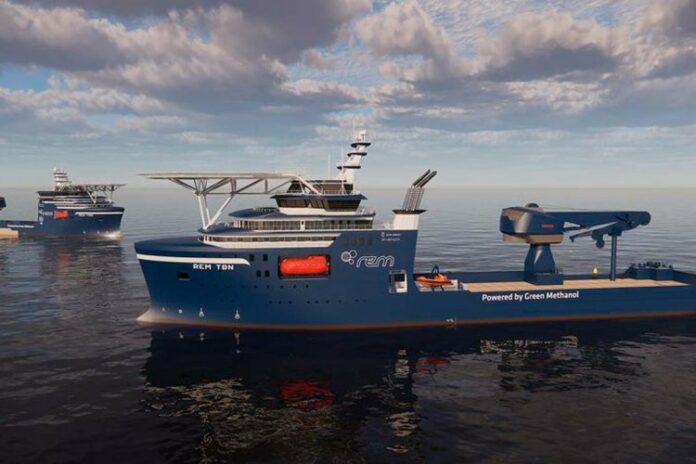
The new ESCV is of ST-245 design and will be the first vessel to perform heavy construction work in both offshore wind and subsea with net zero emissions. The vessel will be equipped with dual-fuel methanol engines and a 1.7 MW battery system. The batteries will be used for spinning reserve and peak shaving as well as to regenerate power from the operation of offshore lifting equipment onboard the vessel.

The vessel will be built at Myklebust Verft in Gursken. 

Ronny Pål Kvalsvik, Chief Commercial Officer, Rem Offshore, says:

“This project showcases that we are ready to take zero-emission offshore operations one step further. The vessel will not only be methanol ready – it will run on green fuels. The way it is designed, and its innovative technology will provide us with flexibility and efficiency as well as high redundancy. We anticipate significant improvements in energy consumption as well as a reduction in operational costs, while also contributing to a greener future for the maritime sector. Increased battery capacity is needed to optimize the system. When using an alternative fuel such as methanol, batteries play an even more important role as the response time for dual-fuel engines is slow. Increased energy storage capacity will allow us to more fully leverage the energy efficiency benefits of battery power, including the ability to regenerate energy from mission equipment onboard.”

“Our selection of the integrator HPS along with Corvus batteries, reflects REM Offshore’s vision to use local suppliers for a more sustainable and efficient maritime industry.”

Pål Ove Husøy, VP of Sales at Corvus Energy states:

“This project proves the value of collaboration. The innovative vessel will set a new standard for offshore vessels due to its groundbreaking energy system design. Up until now, battery packs have often been sized to a minimum to enable spinning reserve for 10 minutes. Adding more battery capacity unlocks the potential to gain increased value from the battery system.

By adding additional battery capacity, you can increase the value of the batteries by utilizing them in all operational modes as well as improve the balancing of the entire power management system to reduce fuel as much as possible. In this case, when the vessel will be running on Methanol, the more you can utilize the batteries, the more cost-efficient it gets.”

The Corvus Energy supplied energy storage system is scheduled for delivery during the first half of 2026 and the vessel will go in into operation in the second half of the same year.

The contract also includes an option for equipment deliveries for a second vessel.