-5.8 C
New York
Home Blog Page 181

Tidal energy is coming to Alaska. But how much?

0

Much of Alaska is empty—of humans, at least. Vast tundra and forest separate cities and villages, dividing the state into more than 150 isolated power grids. The largest of these grids, known as the Railbelt, carries 70% of the state’s electrical energy to about three-quarters of its population. Today, that grid runs mostly on natural gas.

But Alaska’s Governor, Mike Dunleavy, wants to change that.

“Despite Alaska’s position as a leading producer of energy, the cost of energy in Alaska, especially in our rural communities, is extremely high,” he said in a 2023 press release.

Dunleavy wants 80% of the Railbelt’s electricity to come from renewable energy sources by 2040—not just to achieve the state’s clean energy goals but also to lower its higher-than-average energy costs. Switching to renewables, including hydroelectric, wind, solar, geothermal, and tidal power, could reduce how much the state spends on electricity generation by about $100 million per year (starting around 2030).

Cumulatively, those savings could total $1.3 billion, according to a new National Renewable Energy Laboratory (NREL) study.

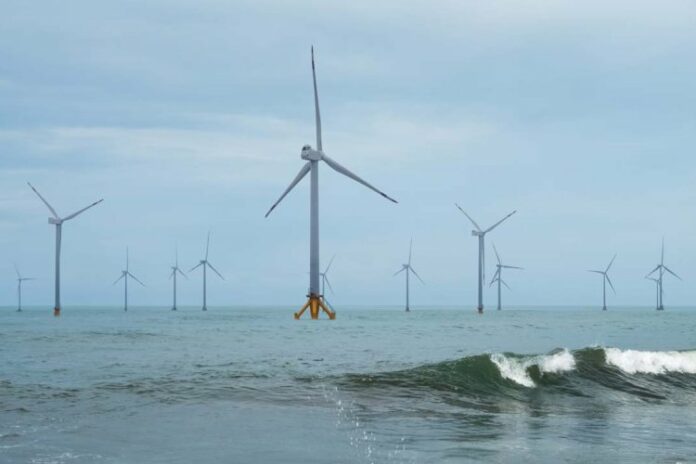
The new NREL report examines just how much value the new but fast-growing tidal energy industry could bring to the Railbelt grid. The state’s Cook Inlet, which flows right up to the center of the Railbelt in Anchorage, contains some of the largest tidal energy resources of any region on Earth (including about one-third of the United States’ total tidal power). But because tidal energy is still relatively new, its potential value is not always fully understood.

Working closely with Homer Electric Association, the utility serving the portion of the Railbelt grid that borders the Cook Inlet, the NREL team developed a grid operations model. With that model, they discovered that not only could tidal energy play a valuable role in decarbonizing Alaska’s biggest grid, but it could also boost the state’s economy.

“The existing Railbelt grid can support 200 megawatts (MW) of tidal energy, and with planned grid upgrades, it could support up to 300 MW,” said Marty Schwarz, a power systems modeler at NREL and an author on the study. Those 200 MW could power about half the homes in Anchorage, Alaska’s largest city; 300 MW could power almost all 118,000 homes.

But that is not all. “There’s also potential to generate green fuels, like hydrogen, to export to other states or overseas,” Schwarz said.

Cook Inlet’s tides carry far more than 300 MW of energy. But even if the Railbelt’s current transmission system can only support a portion of that power, that does not mean all that energy has to go to waste. The excess could power the production of clean fuel sources like hydrogen or ammonia.

“Tidal energy could help make Alaska a leading exporter of renewable energy,” Schwarz said.

Of course, some of that tidal energy could stay within the state, helping decarbonize the Railbelt power system. Because tidal energy is so consistent and predictable, it makes a reliable complement to variable renewable energy sources like solar and wind energy. Because of that, tidal energy could provide a stable foundation for the Railbelt’s transition and could, the team found, help reduce the grid’s carbon emissions by up to 37%.

To get to their estimates, the team designed the grid operations model to combine theoretical and real-world data—including, for example, the amount of tidal energy theoretically available in each hour of the year 2035, as well as how much of that energy the Railbelt grid could handle.

“Our models are aligned with what the grid operators are seeing. They’re as real as they can get,” said Ben McGilton, a research engineer at NREL and another author on the study.

Of course, the team’s calculations assume tidal energy technologies will achieve commercial success by 2035, which is possible but not guaranteed. They also do not include the technical costs of developing these technologies. Nor do they consider regulatory and other challenges that arise when working with multiple utilities to coordinate large-scale renewable energy projects.

If, however, tidal energy technologies do make it to market, tidal energy could meet about 14% of the total Railbelt electrical demand in 2035, McGilton said. That percentage could increase to 20% if Alaska upgrades its transmission system. The existing Kenai Intertie, the only transmission line that connects the Kenai Peninsula and Homer to the rest of the Railbelt system, can only transfer about 75 MW of electricity as of today.

The Alaskan government is already discussing how to make these transmission upgrades. In the meantime, the NREL team will continue to examine the value of other marine energy resources—like ocean current energy in Florida and wave energy in Hawaii. All this data will help researchers, as well as local governments and utilities, quantify how this budding renewable resource could support their clean energy transitions.

“There’s a lot to learn about marine energy technologies over the coming decades,” said Levi Kilcher, a senior energy advisor for DOE’s Arctic Energy Office and another author on the study. “But if we can figure out how to create these technologies at low cost, it could really be a huge benefit to communities throughout Alaska and other parts of the world as well.”
Taylor Smith Shipyard announces cooperation agreement with Nouum Engineering

0

South African Nouum Engineering, a leading provider of diesel engine services for marine, power, locomotive and generators globally and Mauritius-based ship repair and conversion yard Taylor Smith Shipyard have signed a cooperation agreement, expanding both companies’ commercial and operational scopes.

Willy van Niekerk, General Manager of TSS is much pleased:

“This cooperation provides Taylor Smith Shipyard with the opportunity to accept more and significantly larger engine overhaul jobs and other types of engineering work in the region, and even globally. With Nouum we have found a strong and highly experienced partner to attain the growth that we envision in the coming years.” 

As a part of the agreement, Nouum Engineering will be focusing on the repair and maintenance of marine engines and related equipment, such as turbochargers and automation systems, a growth market for Taylor Smith Shipyards. Nouum will provide qualified personnel (incl. all appropriate certifications) and has significant experience in their field. In addition, the company will assist TSS with their engineering scope.

Tom Martin, CEO at Nouum, says:

“We’ve already worked with Taylor Smith Shipyard for a long time. It’s great to be able to take this next step together. Through this partnership service more clients faster and better. Our main focus is the Sub-Saharan African market and the Indian Ocean, but we’ll also cooperate globally.” 

Researchers can help shipowners achieve ambitious climate targets

0

Shipowners around the world are in a very difficult position, because they are having to order new ships now that will run on fuel and technologies that are not yet fully developed.

A new study suggests that ammonia could be a smart and energy-efficient fuel in the race to achieve net zero in shipping. Researchers at the Department of Industrial Economics and Technology Management (IØT) and the Department of Marine Technology (IMT) at NTNU and SINTEF Ocean are behind the study.

Help making choices in uncertain times

The researchers have developed a new model that can help shipowners and ship designers make good decisions in a time of great uncertainty. The study was recently published in Maritime Transport Research.

Postdoctoral fellow Benjamin Lagemann at the Department of Marine Technology describes the challenges the industry is facing:

“They need to choose a machinery system and make plans for the future. At the same time, there is considerable uncertainty related to fuel prices, carbon pricing, fuel bunkering availability and safety,” he says.

Anyone investing in new ships or upgrading their fleet must make decisions now, or have plans for how they intend to meet the climate requirements.

Must be equipped for unknown requirements

The ships that are now being ordered will likely be part of the international fleet in 2050.

They need to be equipped such that the enormous machinery can be converted to run on new types of fuel in the future. In shipping terminology, this is called retrofitting.

“A lot is still under development, but the decisions made today will affect the possibilities for retrofitting and fuel choices in the future. This means that the shipowners have to commit to a decision to a certain extent, and thereby run the risk of not meeting future standards and expectations related to the environment,” says Lagemann.

Supramax ships as an example

The study is based on a fleet of Supramax ships. The model incorporates factors such as emission figures from production to end use using a variety of different fuels, prices and other assumptions.

The ambition of the International Maritime Organization (IMO) is for shipping to be climate neutral by 2050. In addition, the industry must achieve major emission cuts by 2030 and 2040.

The NTNU researchers’ model shows that IMO’s ambitions have a strong impact on shipowners and ship designers’ choice of propulsion systems.

“Anyone investing in new ships or upgrading their fleet must make decisions now, or have plans for how they intend to meet the climate requirements,” says Professor Kjetil Fagerholt from the Department of Industrial Economics and Technology Management.

Shipowners need to act quickly

A lot is at stake, and shipowners need to act quickly. A standard Supramax cargo ship costs approximately NOK 300 million to build, and specialized ships can cost a lot more. The service life of these vessels is typically 20–30 years.

There is still a lot we don’t know about the new low and zero-emission fuels, and how they will affect technology, machinery and propulsion systems. This year, a carbon quota system for shipping will be introduced in the EU, but no one knows what the carbon prices will be in the future.

“All this makes future prices for the different fuels very uncertain,” says Fagerholt.

Decisions must be sustainable

The researchers have fed all the variables into the models, and developed a probability distribution for how conditions might develop in the future.

“We create many different scenarios of what might happen, but don’t draw any final conclusions on any of the outcomes,” says Fagerholt.

Benjamin Lagemann says the model highlights many of the issues related to the choice of fuels, but not all of them.  It requires few input parameters, and is therefore relatively easy to reuse. The intention is to give an indication of which solutions will work best over time.

Ammonia for the most ambitious

More than 80 per cent of the goods in global trade are transported refrigerated. The Supramax ships on which NTNU researchers’ models are based are around 200 metres long, transport dry loads and weigh between 58,000 and 65,000 deadweight tonnes. There are currently almost 3000 ships of this type in operation, and they account for almost 10 per cent of global transport operations measured in tonne-miles.

It is not yet known what the requirements for emission cuts are going to be, so the researchers have studied two scenarios. One of them assumes a 90 per cent cut in emissions by 2045. The conclusion is that the fleet should be designed for ammonia-based propulsion systems. If the ambitions are lowered to a 50 per cent cut in emissions, the model recommends liquefied natural gas, i.e. methane-based propulsion systems.

Many factors point towards ammonia

In recent years, many reports have indicated that ammonia could lead the fleet into an emission-free future. The acrid smell of this chemical that is used in detergents and agricultural fertilisers is something we all recognise. When properly produced and used, ammonia can be an energy-efficient fuel to replace today’s polluting fossil fuels. Ammonia does not emit any CO2, sulphur oxides or particles.

Decisions must be sustainable

The researchers have fed all the variables into the models, and developed a probability distribution for how conditions might develop in the future.

“We create many different scenarios of what might happen, but don’t draw any final conclusions on any of the outcomes,” says Fagerholt.

Benjamin Lagemann says the model highlights many of the issues related to the choice of fuels, but not all of them.  It requires few input parameters, and is therefore relatively easy to reuse. The intention is to give an indication of which solutions will work best over time.

Ammonia for the most ambitious

More than 80 per cent of the goods in global trade are transported refrigerated. The Supramax ships on which NTNU researchers’ models are based are around 200 metres long, transport dry loads and weigh between 58,000 and 65,000 deadweight tonnes. There are currently almost 3000 ships of this type in operation, and they account for almost 10 per cent of global transport operations measured in tonne-miles.

It is not yet known what the requirements for emission cuts are going to be, so the researchers have studied two scenarios. One of them assumes a 90 per cent cut in emissions by 2045. The conclusion is that the fleet should be designed for ammonia-based propulsion systems. If the ambitions are lowered to a 50 per cent cut in emissions, the model recommends liquefied natural gas, i.e. methane-based propulsion systems.

Many factors point towards ammonia

In recent years, many reports have indicated that ammonia could lead the fleet into an emission-free future. The acrid smell of this chemical that is used in detergents and agricultural fertilisers is something we all recognise. When properly produced and used, ammonia can be an energy-efficient fuel to replace today’s polluting fossil fuels. Ammonia does not emit any CO2, sulphur oxides or particles.

Incat Crowther commissioned to design new fast supply vessel for African offshore energy sector

0

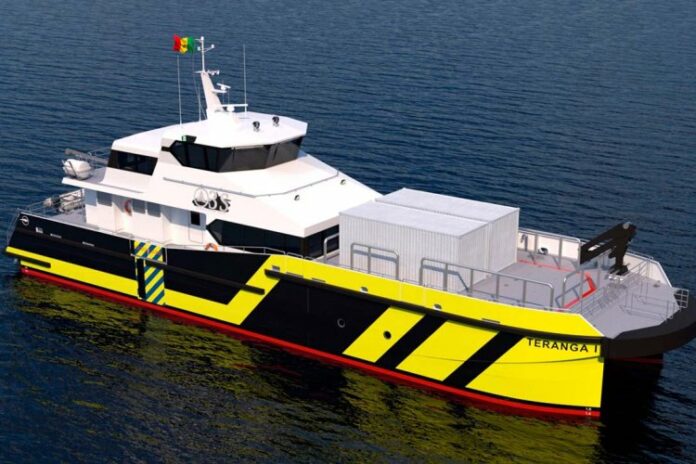
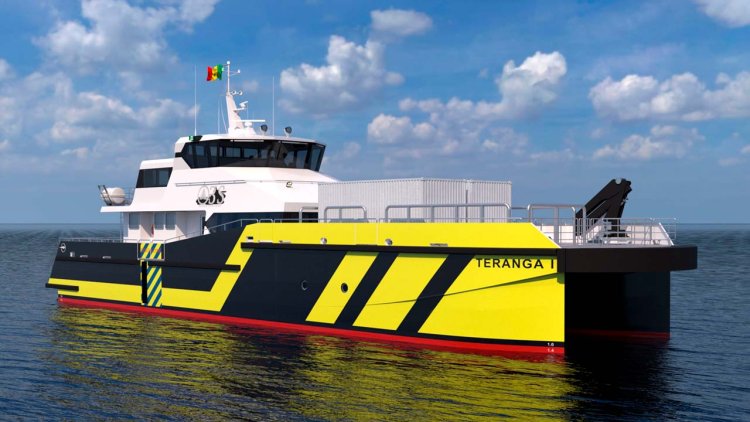
Incat Crowther and Penguin International have been commissioned to design and construct a new 36-metre fast supply vessel (FSV) for O3S – Oil Senegal Support Services, a homegrown Senegalese operator servicing the country’s fledgling offshore energy sector.

The new, state-of-the-art vessel will be capable of transporting 28 service personnel as well as 20 tonnes of cargo at speeds of up to 33.5 knots. The vessel design represents a unique blend of features from the offshore wind and offshore oil and gas sectors. The underlying catamaran hull form is derived from Penguin’s proven WindFlex-32 Crew Transfer Vessel (CTV), which was co-developed with Incat Crowther.

The vessel’s air-conditioned cabin on the main deck will feature spacious and comfortable seating as well as a medical suite, two toilets and dedicated luggage holds. The main cabin will also contain a refreshment kiosk and large TVs for safety briefings. Each demi hull features two berths for the vessel’s crew in addition to bathrooms complete with shower facilities.

The large 62m2 foredeck optimises operational flexibility with a dedicated, enclosed cargo area and a FROG crew transfer crane that enables the safe transfer of personnel from the vessel to offshore infrastructure. The vessel has also been fitted with an ultra-high performance bow fender to optimise safety when transferring personnel to the platform in open ocean conditions.

The vessel’s elevated wheelhouse provides an excellent line of sight for the captain, while the upper deck also features a spacious, dedicated mess area and toilet for service personnel and the vessel’s four crew.

Designed with operational efficiency in mind, the new vessel will also be fitted with the latest emissions reduction technology to ensure it is IMO Tier III compliant – offering emissions compliance significantly beyond other vessels operating in the region.

Commenting on the project, Incat Crowther’s Technical Manager Sam Mackay said:

“We’re excited to be working with our partners at Penguin International on this project.”

“Incat Crowther and Penguin International have a track record of delivering for offshore energy operators seeking bespoke, operationally efficient state-of-the-art vessels. This project will add to the growing number of work boats and CTVs servicing the global offshore energy sector that have been designed and delivered by Incat Crowther and Penguin International,” said Mr Mackay.

Construction on the new FSV is expected to start later this year, with delivery of the new vessel expected to take place in 2025.

U.S. Navy awards BAE Systems $87 million contract to upgrade USS Carter Hall

0

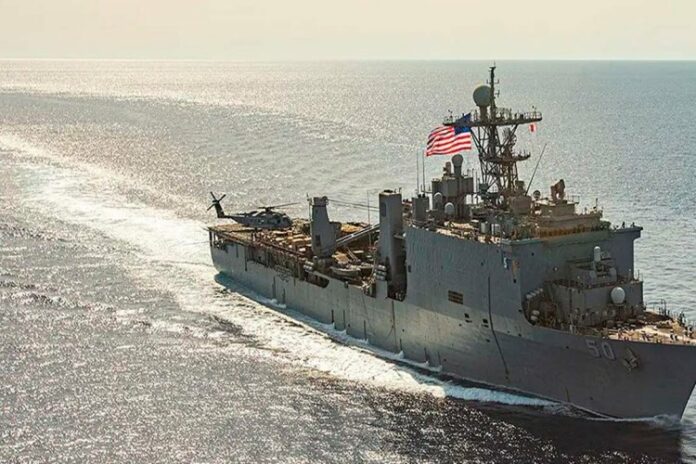
BAE Systems has received a $87.2 million contract from the U.S. Navy for repair work aboard the dock landing ship USS Carter Hall (LSD 50).

The contract includes options that, if exercised, would bring the cumulative value to $92.2 million.

Under the competitively-awarded contract, the USS Carter Hall will undergo a year of restorative work at the company’s shipyard in Norfolk, Virginia, which is also the ship’s homeport. BAE Systems will begin working aboard the 610-foot-long ship in July 2024, performing a combination of maintenance and preservation work on the ship’s hull, its internal fuel and ballast tanks, and the engineering plant.

“Our team looks forward to working with the Navy to perform the substantial sustainment work necessary to ensure the Carter Hall remains a highly capable amphibious combatant ship,” said David M. Thomas, Jr., vice president and general manager of BAE Systems Norfolk Ship Repair.

USS Carter Hall recently returned to its homeport following an eight-month overseas deployment. It was commissioned in September 1995, and is currently the second U.S. Navy ship to bear the name. The ship is designed to carry 420 sailors and up to 500 Marines.

The company’s Norfolk shipyard employs about 1,000 people and has dozens of subcontractor partners to assist in ship repair work.
  

Star Bulk advances secure digitalization with CyberOwl

0

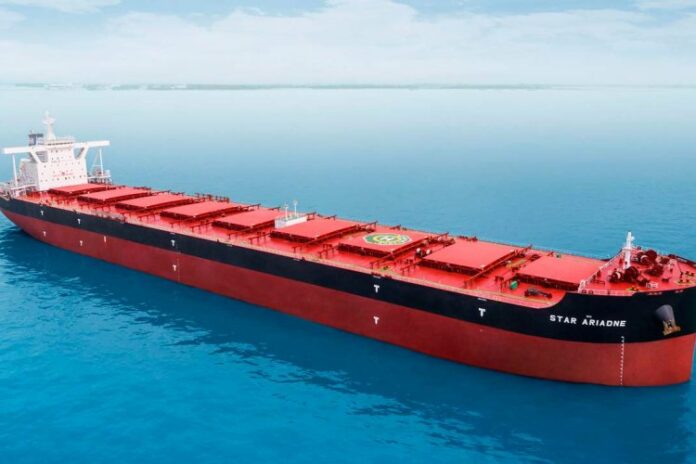
CyberOwl has started to work with Star Bulk as they continue their journey towards secure, sustainable digitalization of vessel systems and fleet wide operations.

Protecting vessel systems present unique challenges compared with cyber-securing enterprise IT. The onboard environment involves legacy systems that are difficult to upgrade and requirements for operational flexibility limit the ability to deploy technical controls that are well-established in enterprise IT. This environment demands a different type of cyber security operations centre.

The compliance module of CyberOwl’s Medulla allows shipping operators to evaluate cyber risks and human error resulting in onboard vulnerabilities. By continuously verifying the cybersecurity controls of onboard systems, it allows shipping operators to swiftly assess key vulnerabilities, shut down those that are practically possible to eliminate or design workarounds to mitigate the risks. Medulla also simplifies internal and external cyber compliance reporting requirements.

Daniel Ng, CyberOwl’s CEO commented:

“The peculiarities of vessel systems and operations give rise to the need for a different type of data collection, a different type of analysis, specialist technical knowledge of marine environments and understanding of the constraints onboard. It is a pleasure working with the Star Bulk team who recognise these challenges and seek to manage it effectively.” 

Stratos Pentafronimos, Star Bulk’s IT Director commented:

“CyberOwl’s approach to maritime cybersecurity aligns with our operational needs. By going beyond mere protection and focusing on detection, response, and continuous verification, we are better equipped to safeguard our critical systems.”

Kongsberg to supply hybrid electrical systems for Matson’s New Box Ships

0

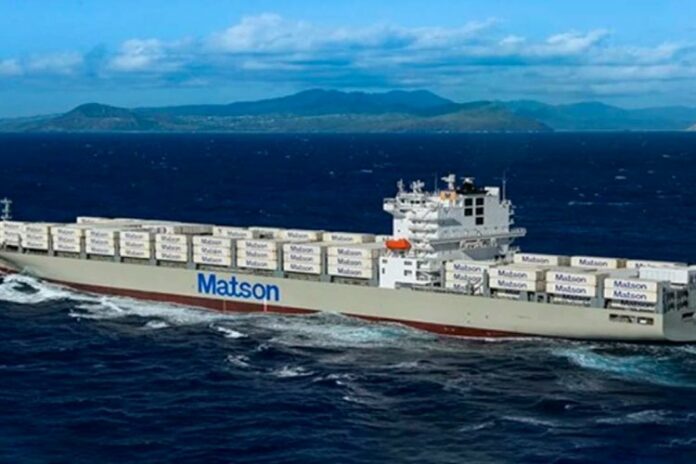
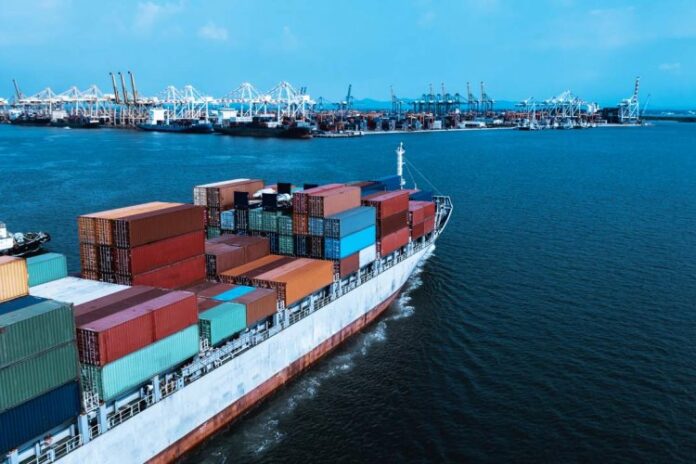
Kongsberg Maritime will supply a comprehensive range of integrated technologies to optimise energy use and reduce emissions for three new 3600 TEU LNG-powered container ships being built at Philly Shipyard for Matson Navigation Company. They are the largest Jones Act containerships ever built, at 260 metres long, and represent a new era in container shipping.

To support Matson’s drive to decarbonise its operations, Kongsberg Maritime will supply hybrid electrical systems, controlled and operated by the company’s Energy Management System.

The new ships are being built to operate Matson’s China-Long Beach Express (CLX) service. The Aloha Class vessels are the largest containerships ever built in the U.S. and are designed to operate at speeds in excess of 23 knots in support of Matson’s service hallmark – timely delivery of goods.

Capt. Jack Sullivan, SVP, Vessel Operations & Engineering, Matson Navigation Company: 

“The integrated systems from Kongsberg Maritime will enable us to make the most efficient use of energy on board, including power generated from the main shaft and the battery system, which provide additional emission-free energy in peak load conditions”

The Kongsberg Maritime scope of supply includes a Shaft Generator System, and a Battery Energy Saving System combined with a complete power management system. The hybrid electrical systems will provide electrical power to the vessel’s main switchboard through the Kongsberg converters.

Lasse Brynsrud, Kongsberg Maritime, Senior Sales Manager Marine Transportation, said:

“Through their investment in three new LNG-powered container ships, Matson Navigation Company is making a clear commitment to decarbonise its operations. Kongsberg Maritime is delighted to be supporting their environmental goals through the supply of a wide range of green ship technologies, including our hybrid electrical system, which together will optimise energy usage and reduce emissions.”

“Our existing Aloha Class ships are among the fastest, most efficient vessels in the Matson fleet,” said Capt. Jack Sullivan, Matson’s senior vice president, Vessel Operations & Engineering. “We expect these new Jones Act compliant vessels to help Matson achieve its 2030 greenhouse gas emissions reduction goal while also providing additional capacity and speed benefitting our Hawaii service as well as our China-Long Beach Express service. The integrated systems from Kongsberg Maritime will enable us to make the most efficient use of energy on board, including power generated from the main shaft and the battery system, which provide additional emission-free energy in peak load conditions.”

“We are thrilled to collaborate with Kongsberg and Matson to implement green ship technologies today that will help the industry move toward a more sustainable maritime future,” said Steinar Nerbovik, Philly Shipyard President and CEO. “As the shipbuilder, we are always prepared to build ships that support the goals of our customers and will partner with the right suppliers to unite sustainability efforts.”

Kongsberg Maritime will also supply rotary vane steering gear and control systems, together with a full package of monitoring, automation and control systems for the LNG fuel gas supply control and safety systems, tank gauging and instrumentation.

All systems on this extensive package, including the vessels’ propulsion control and power management, will all be linked to the K-Chief Integrated Automation System from Kongsberg.

Allseas T&I contract for Gennaker offshore wind farm

0

Allseas has been contracted for the transport and installation (T&I) of two major substations (so called OSS) for the Gennaker offshore wind farm in the German Baltic Sea, developed by transmission operator 50Hertz.

Located 15 kilometres off the German coast near the Darß peninsula, and with a production capacity of 900 MW, Gennaker will be the largest and most powerful offshore wind farm in the Baltic Sea to date.

Awarded by the Dutch-Belgian HSI consortium – HSM Offshore Energy, Smulders and Iv – the contract is for the Gennaker West (OSS-DarB) and East(OSS-Zingst) converter platforms, including supporting suction buckets jackets. The HSI Joint Venture is responsible for delivering the two platforms.

Allseas will deploy its heavy lift vessel Pioneering Spirit for the project, utilising the vessel’s unique transport and lift capability to install the suction buckets jackets and the 61-metre-long, 34-metre-wide topsides in one offshore campaign. This reduces operations offshore, making the installations safer and faster.

This latest award further enhances Allseas’ offshore wind installation credentials, and the key role Pioneering Spirit is set to play delivering critical assets for offshore energy and wind developments across Europe.

Brunvoll propulsion picked for ‘world’s largest’ sailing ships

0

The order is for two vessels, with two additional as an option.

The delivery from Brunvoll is a propulsion system consisting of a twin-screw configuration with a controllable pitch propeller with a diameter of 3.9 meters. The propellers are designed to be fully feathering to limit drag while sailing. The propellers will have direct electrical drive, where Brunvoll will supply their Thrust-OD Box, which works as a thrust bearing with a hydraulic system for the controllable pitch propellers.

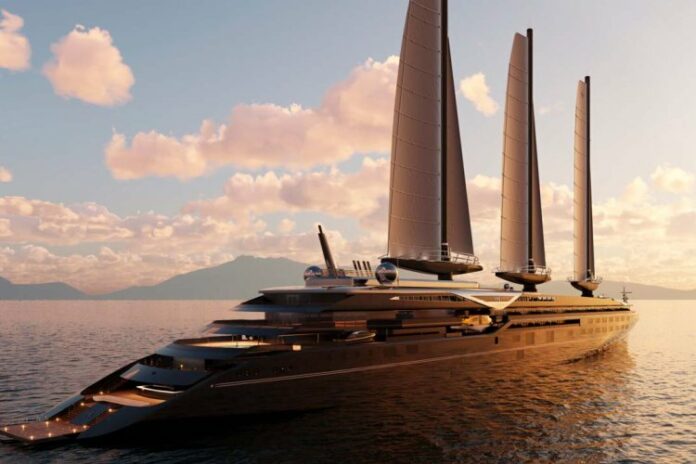
Orient Express is known as a pioneer within luxury train travel but has now setout to conquer the seven seas with the Silenseas. The sailing cruise ships will have some impressive main particulars; a length of 220 meters, three sail masts with height above 100 meters and surface area of 1.500 square meters each, and 54 cabins with an average size of 70 square meters.

“This Project confirms Brunvoll being one of the front runners concerning Propulsion design and Main Propulsion efficiency where our skilled hydrodynamicists have been working closely together with Chantiers del’ Atlantique on the development and assessment of different propulsion solutions for these spectacular vessels.

A huge thanks from us at Brunvoll to Chantiers de l’Atlantique and the Oriente Express for the good cooporation and team effort put into this project. We hope to see them sailing in the Norwegian Fjords sometime!”, says Arnfinn Brautaset, Sales Manager at Brunvoll AS.”

Ørsted secures licences to develop large-scale offshore wind projects in Australia

0

With the licences, Ørsted aims to develop large-scale offshore wind farms off the coast of Gippsland, Victoria, to be operational in the early 2030s.

The licences provide Ørsted with site exclusivity to develop the two offshore wind sites. Ørsted’s successful feasibility licence applications were assessed through a competitive process.

Ørsted’s far-shore project sites are located 56-100 km off the coast of Gippsland, Victoria. They are situated beyond the visible eyeline from the shore and benefit from excellent wind conditions. 

The next steps for the projects include site investigations, environmental assessments, and supply chain development. Ørsted will progress the projects with a view to bid in future auctions run by the Victorian Government, supporting the state’s target of 9 GW offshore wind by 2040. The first auction is expected to start in late 2025.

Subject to the above steps and a final investment decision, the projects are expected to be completed in phases from the early 2030s, with the aim to maximise dual site synergies through shared resources and economies of scale. 

Ørsted estimates the cluster has the potential to generate a combined 4.8 GW of renewable energy, which can eventually power the equivalent of four million Australian homes.

Per Mejnert Kristensen, Senior Vice President and CEO of Region APAC at Ørsted, said:

“With more than 30 years’ experience and unparalleled expertise in large-scale offshore wind projects, Ørsted is pleased to be awarded licences to help launch Australia’s new industry and accelerate the nation’s renewable energy transition.

“We believe that we’ve secured the best possible sites, and that our proposed projects in Victoria will deliver reliable, cost-effective renewable energy. We look forward to delivering long-term benefits for communities, the economy, and the environment in Gippsland and beyond. 

“We’re confident that Australia has all the ingredients to become a thriving and highly investable offshore wind market. We’ll continue to work closely with the Commonwealth government, the Victorian State government, and all stakeholders to ensure the projects create sufficient value for all.”

The project is set to create thousands of jobs and will support local talent in joining the industry through technical knowledge and skills transfer programmes. Ørsted is committed to upholding the highest standards of environmental stewardship and community engagement, including with Traditional Owners, throughout the development process.