-6.2 C
New York
Home Blog Page 176

Ukraine has world’s first navy drone armed with anti-aircraft missiles

0

Ukraine’s uncrewed surface vessels (USVs) are dominating naval combat in the Black Sea. Yet they have, until now, been particularly vulnerable to aircraft. So Russian defenses have emphasized using helicopters and fighter jets to stop them. Now a version armed with two repurposed air-air missiles could change the tide again.

The war in Ukraine has removed any remaining doubts that drones are transforming warfare. In the naval arena, Ukraine’s maritime drones are leading the world in terms of combat application. These explosive-laden craft first challenged, and then changed, many preconceptions. Now Ukraine has deployed an entirely new category of maritime drone, one armed with air defense missiles.

Until now Ukraine’s maritime drones (USVs) have been most vulnerable to aircraft. They are essentially defenseless against a helicopter armed with a machinegun. Now, with some USVs armed with potent air-defense missiles, Russian pilots may think twice about approaching them.

In practice this is the first such air-defense USV in the world. Other country’s manufacturers have explored giving USVs some form of air defense. But this system is the first fielded operationally, and indeed, the first in combat.

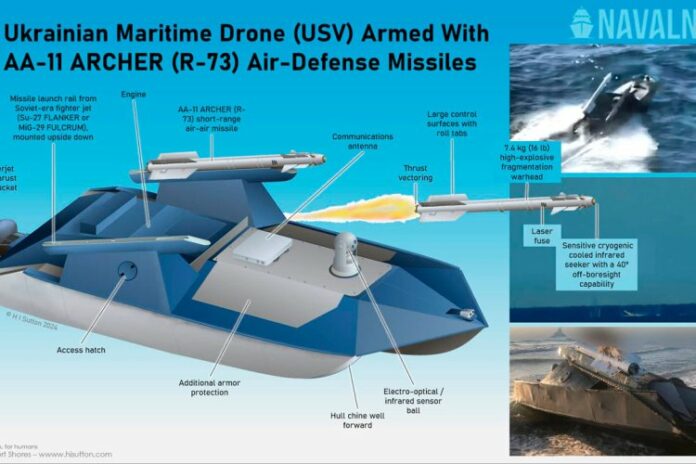
The drone is armed with two missiles

The new USV (uncrewed surface vessel) is distinct from previously observed types, featuring a new wider hull. This allows two missiles to be carried side-by-side.

It is armed with two R-73 air-air missiles. This parallels a trend on land with Ukraine increasingly leveraging missiles designed for one system on another. At least one vintage Osa air-defense system has also been equipped with R-73s, and British supplied ASRAAMs have also been used as ground-based systems. These mix-match systems are informally termed ‘FrankenSAMs’ after Frankenstein’s monster. All the same these missiles now allow the vessel to pose a real threat to aircraft.

The R-73 missile, known by the NATO reporting name AA-11 Archer, is a Soviet-era short-range air-air missile. Carried by fighters like the MiG-29 Fulcrum and Su-27 Flanker, the missile was arguably the best dogfighting missile in service. It was highly agile and had an impressive seeker with 40 degrees off-boresight capability. This meant that it could be launched against a target with was not directly in front of the plane. And to air targeting, the seeker was slaved to a helmet mounted sight.

In the 1980s this was more advanced than the equivalent NATO. Today the latest versions of the Sidewinder, or the ASRAAM, IRIS-T, are arguably more potent. But the R-73 remains a potent system.

The trade-off for surface launch will be range. Even if the vessel can detect the aircraft at range, the missile itself will have around half the range compared to if it was air launched. For the R-73 this means a range of around 15 km (9 miles). In practice, the detection range of the vessels’ electro-optical devices is likely to be the main limitation.

Potential Roles and Impact

The missiles provide the drone with a degree of self-protection. The craft is now better defend itself against Russian helicopters and fast jets. One or two of the FrankenSAM USVs mixed in with a larger force of regular USVs may be enough to inhibit Russian attempts to interdict them.

The system also opens the possibility of using them to ambush Russian aircraft as they take-off or land on Crimean air bases. The USVs can sit off the Crimean coast and pick off the aircraft as they approach unawares. There is at least circumstantial evidence to suggest that this may have already been done.

Many USVs manufacturers around the world are already emulating Ukrainian advances. And there have been several proposals for air defense equipped types even before the Russo-Ukraine War. But the emergence of this type, and its apparent utility, is likely to make those proposals be taken more seriously.

Source: Naval News
Saipem awarded three new contracts by TotalEnergies EP Angola Block 20

0

Saipem has been awarded three new contracts by TotalEnergies EP Angola Block 20, a subsidiary of TotalEnergies, for the Kaminho project relating to the development of Cameia and Golfinho oil fields, located approximately 100 km off the coast of Angola. The overall amount of the contracts is 3.7 billion USD.

The first contract refers to the Engineering, Procurement, Construction, Transportation and Commissioning of the Kaminho Floating Production Storage and Offloading (FPSO) vessel.

The second contract entails the Operation and Maintenance (O&M) of the same vessel FPSO for a firm period of 12 years with a potential 8-year extension, leveraging on the expertise acquired from three other FPSOs currently operating in Angola.

The third contract involves the Engineering, Procurement, Supply, Construction, Installation, Pre-Commissioning and Assistance for the commissioning and start-up of a Subsea, Umbilicals, Risers and Flowlines (SURF) package which includes approximately 30 km of 8” and 10″ subsea flowlines and risers, and umbilicals. The associated structures will be fabricated in Saipem’s local yard in Ambriz.

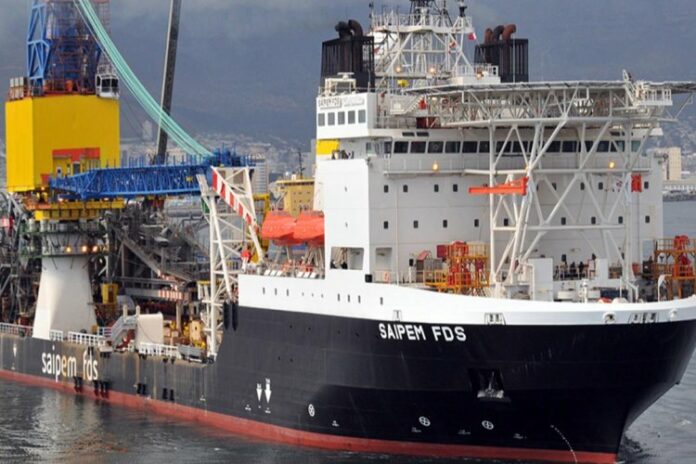
For the offshore campaign, and specifically for the J-lay vessel, Saipem will deploy its FDS and will widely involve the local supply chain for logistics and fabrication activities.

First vessel in new fleet of next generation Parramatta River ferries enters service

0

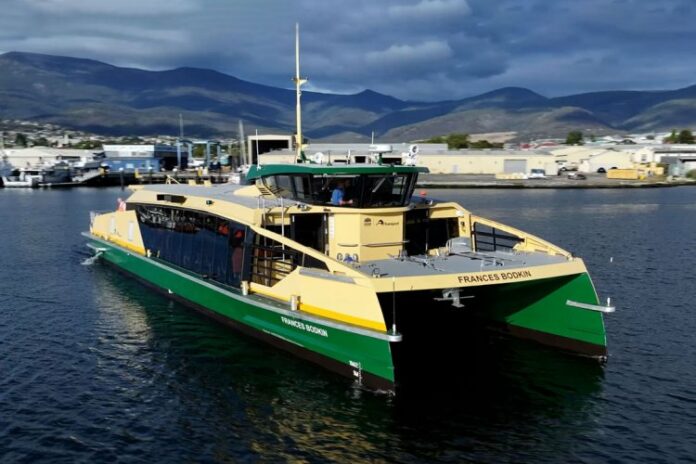
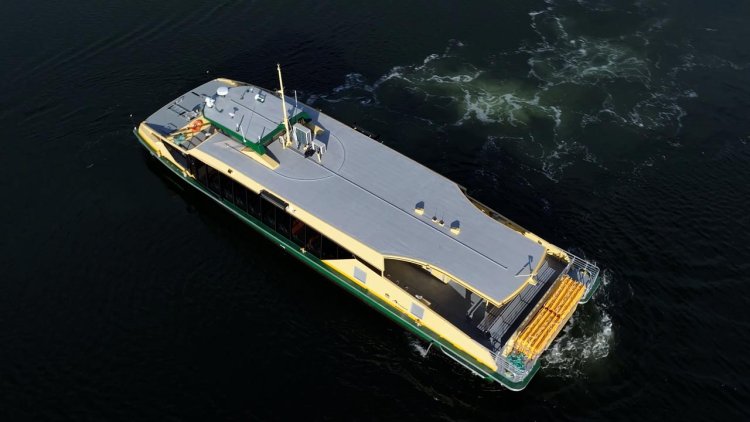
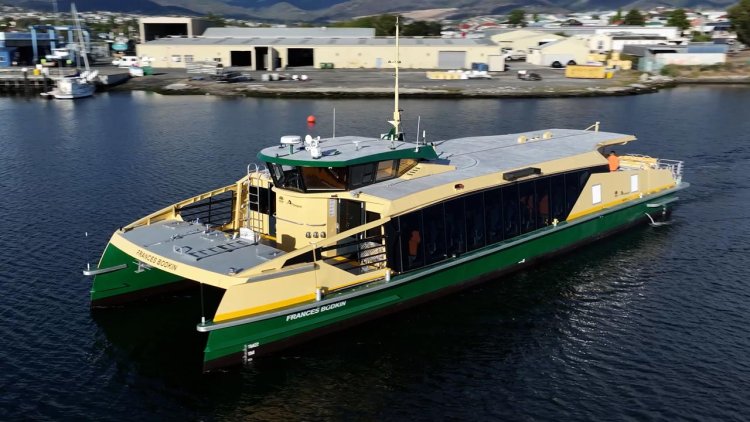
The fleet of cutting-edge new ferries, which will service the busy Parramatta River commuter route, are being constructed in Tasmania, Australia by Richardson Devine Marine.

A second vessel has begun sea trials and three more are already under construction, with the full fleet expected to enter passenger service over the next 18 months.

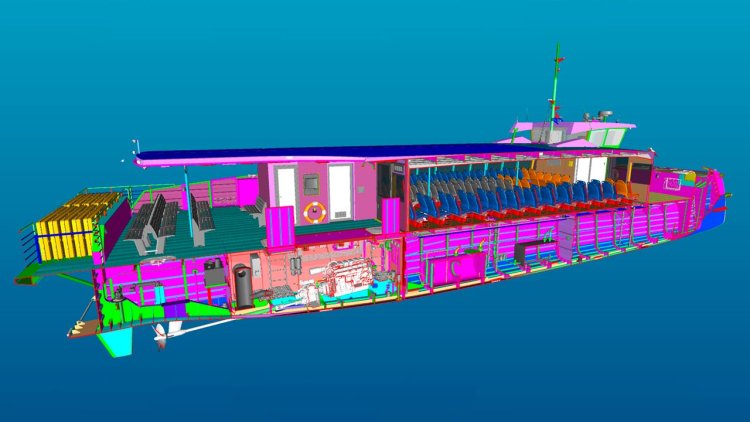
Incat Crowther worked closely with Transport for NSW and operator Transdev on the digital design of the new commuter ferries, including utilising augmented reality headset technology to enable stakeholders to engage with the digital model of the ship throughout the process.

While aesthetically similar to the previous River Class vessels, the new Parramatta Class vessels are fully air-conditioned with no upper deck seating and feature floor to ceiling views, providing commuters with a smooth and enjoyable ride. The vessels have a 200-person capacity, and will predominantly run on the busy Parramatta to Circular Quay route. They have been future-proofed for conversion to electric propulsion when network infrastructure is ready. The innovative, future-focused design means the new ferries are expected to have a 25-30 year working life.

CEO of Incat Crowther Brett Crowther said the digital shipbuilder’s innovative approach and expertise in city networks have been central the project: “Incat Crowther is an expert in designing solutions for city networks and has a proven track record of partnering with governments to deliver tailored passenger ferries for mass transit systems across the globe.”

“We design safe, efficient and future-focused passenger ferries that are tailored to the needs of passengers, governments and their operators. This includes thirty-eight vessels for New York City Ferry, twelve for Italian operator Liberty Lines as well as bespoke passenger ferries for operators throughout Asia, North America, Europe, the Middle East, Africa, Australia and New Zealand,” said Mr Crowther.

“Our digital ship has been the heart of this project for Transport for NSW and Transdev, allowing us to keep a multitude of stakeholders closely involved, and creating trust and confidence before construction commenced. We’re also pleased to be working closely again with Richardson Devine Marine. This has included one of our naval architects being stationed on site, providing assurance and construction oversight support throughout the process, and spearheading the use of augmented reality technology which allows stakeholders to engage with the digital model of the ship.”

“We are thrilled with the results and are proud to see the first vessel in this innovative fleet of next generation ferries in Sydney ready for service,” said Mr Crowther.

The seven new vessels in the fleet have all been named in honour of Australians who have made significant achievements in science, environment and innovation. The first vessel, Frances Bodkin, is named after a D’harawal Elder who has dedicated her life to cataloguing plants native to western Sydney.

Houthis hit a tanker with Russian oil

0

The press service of the U.S. Central Command reported on this.

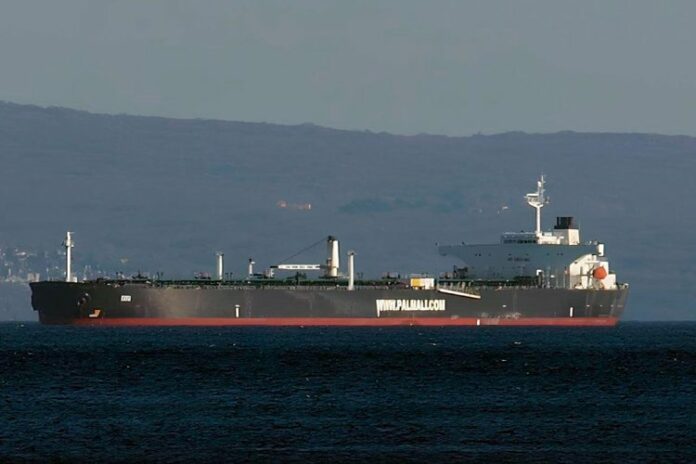
At approximately 1 a.m. (Sanaa time) May 18, Iranian-backed Houthis launched one anti-ship ballistic missile into the Red Sea and struck M/T Wind, a Panamanian-flagged, Greek owned and operated oil tanker. 

The impact of the ASBM caused flooding which resulted in the loss of propulsion and steering. There were no casualties as a result of the incident.

British security firm Ambrey said the attack had occurred about 10 nautical miles southwest of Yemen’s Red Sea port city of Mokha, and that the missile had caused a fire in the steering gear compartment.

A US-led coalition vessel immediately responded to the distress call by M/T Wind. The crew of M/T Wind was able to restore propulsion and steering. M/T Wind resumed its course under its own power.

Russian oil

According to Reuters, the Panamanian-flagged ship was in the Black Sea before the incident. Arriving in Novorossiysk, it was loaded with Russian oil at the Sheskharis terminal.

After loading, the M/T Wind headed across the Red Sea to deliver Russian raw materials to China, but was ambushed by the Houthis.

As noted in the publication, sabotage and attacks by Houthis on transit routes in the Red Sea have led to disruptions in global shipping. This forced transportation companies to return to longer and more expensive routes around South Africa.

The complication of logistics and its rise in price will obviously force up global oil prices and, consequently, fuel prices.

Source: https://mil.in.ua

EDGE Group and Fincantieri announce 400 million euro order for 10 naval vessels

0

EDGE and Fincantieri have signed an agreement today formalising the launch of MAESTRAL an Abu Dhabi-based shipbuilding Joint Venture (JV) between both companies. 

The JV, which was first announced in February of this year, will capitalise on global opportunities for the design and manufacture of advanced naval vessels. EDGE holds a 51% stake in the venture, which will be awarded prime rights to non-NATO orders, and a number of strategic orders placed by selected NATO member countries, with a commercial pipeline of orders valued at approximately 30 billion euro.

The signing of the agreement was immediately followed by the announcement of a large order by UAE Coast Guard Forces for 10 technologically advanced 51m Offshore Patrol Vessels (OPVs), valued at 400 million euro.

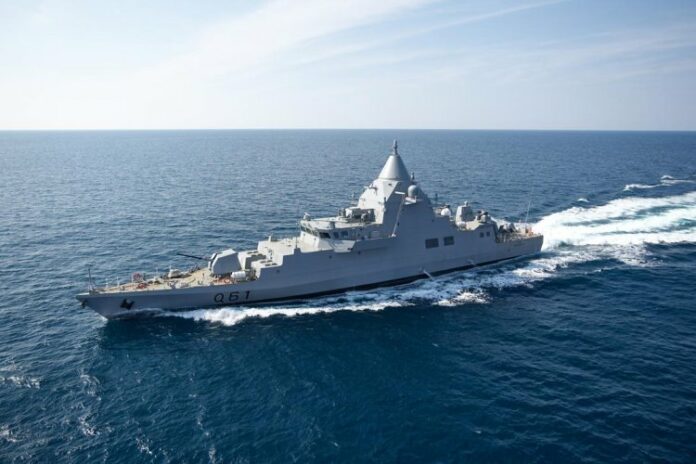
The P51MR Class 51m OPVs, based on the mission-proven Saettia Class, are state-of-the-art vessels characterised by their high modularity, stability in rough sea conditions, low radar signal signature, and high operational flexibility.

His Excellency Faisal Al Bannai, Chairman of EDGE Group, said:

“In just three months since first announcing the creation of this unique venture with Fincantieri, we are now announcing a significant national order for these sophisticated OPVs, to be built both here at our shipyards in Abu Dhabi, and in Italy. Not only does this demonstrate the speed with which EDGE and its partners can operate, and the resources we can mobilise, but fully underscores our strategy of international export growth through mutually beneficial partnerships, the exchange of knowledge and expertise, and the continued pursuit of technological excellence through innovation. It also opens up opportunities for MAESTRAL to promote an extensive portfolio of diverse maritime solutions, including a complete series of technologically advanced vessels, to navies and coast guards around the world.” 

Pierroberto Folgiero, Fincantieri CEO and Managing Director, said:

“We are proud to announce the creation of MAESTRAL and a first major order since the start of our collaboration with EDGE Group. Today’s signing represents concrete evidence of how this Joint Venture is an industrial platform of great value, which will allow us not only to seize the opportunities arising in a strategic market such as the UAE, but also to further develop our commercial capabilities, thus creating new and important opportunities for growth and expansion in the international defence sector in connection with Abu Dhabi export platform.”

MAESTRAL will concentrate on sales, commercial operations, and engineering for design and service, while providing valuable employment opportunities for highly skilled local and international talent. 

Inmarsat launches new network service for maritime communications

0

Inmarsat Maritime, a Viasat company, has launched NexusWave, a fully managed connectivity service underpinned by a ‘bonded’ multi-dimensional network, offering high-speed connectivity, unlimited data, global coverage, and ‘secure by design’ infrastructure.

Delivered by a single provider, NexusWave is a fully managed service that seamlessly integrates multiple high-speed networks in real time – Global Xpress (GX) Ka-band, low-Earth orbit (LEO) services, and as-available coastal LTE service – with an additional layer of L-band for resiliency – for fast, always-on connectivity. The solution also offers enterprise grade firewall security trusted by global enterprises and governments.  

The future-proof NexusWave will also integrate the next-generation ultra-high capacity high-speed ViaSat-3 Ka-band service, following expected entry into service in 2025. As a unified solution, NexusWave ensures managed performance levels regardless of the vessel’s location or requirements, while providing complete transparency on total cost of ownership – with no unexpected charges.

Designed to provide an unparalleled experience in line with evolving customer needs, the new service supports digitalisation and crew welfare initiatives by transforming ships into floating offices and homes.

Ben Palmer OBE, President, Inmarsat Maritime, said:

“Maritime operators face ever-growing demand for data consumption and speeds on board their vessels, coupled with the operational challenges of connecting worldwide while ensuring the security and efficiency of their communications. Meeting all these requirements typically relies on multiple, disjointed solutions, resulting in a complex patchwork of data caps, speeds, and coverage, in addition to unverifiable cyber security.

“At a time when reliable communications are a competitive advantage, maritime operators are seeking a value proposition tailored to their needs and rooted in high performance, certainty, and targeted outcomes. This is where NexusWave fulfils all of those demands, and more. Truly a game-changer in maritime communications, the new solution gives our customers the confidence to operate on their own terms, anywhere in the world, with complete peace of mind.”

Supported globally and fully managed by Inmarsat, NexusWave comes with top-tier technical assistance and guidance derived from decades of experience. The solution will be continuously enhanced over time, in line with Inmarsat’s commitment to delivering excellence.  

“Our combination with Viasat last year brought together the extraordinary people, innovation capabilities, and network assets of both businesses, creating a synergy that has been integral to the development of NexusWave – through which we will ensure unmatched connected confidence for our customers well into the future,” concluded Ben Palmer. 

BayWa r.e. and Elicio, winners of the French floating wind auction

0

This award is a significant milestone for European offshore wind energy, as until now only pilot and demonstration projects had been developed. 

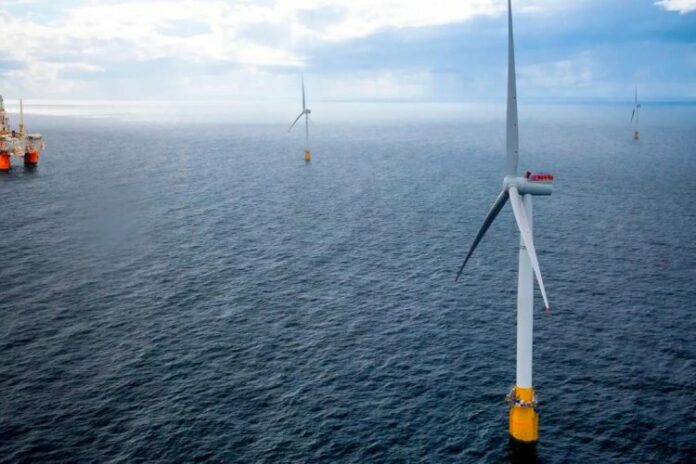
In a landmark milestone for the global energy transition, the consortium between Elicio and BayWa r.e. has been announced as winner of the AO5 tender in France to develop the world’s first commercial floating offshore wind farm, by Bruno le Maire, Minister of Economy, Finance, and Industrial and Digital Sovereignty, and Roland Lescure, Minister Delegate for Industry and Energy.

The award is the outcome of a competitive tender process initiated in 2021 for an offshore floating wind project with a capacity between 230 and 270 MW, located in the south of Brittany off the coast of Lorient.

The ‘Pennavel’ floating offshore wind project is set to become a cornerstone of the region’s energy landscape. The wind farm is expected to generate approximately 30% of Brittany’s current renewable energy production and power over 450,000 inhabitants annually, making a significant contribution to the region’s sustainable growth.

Pennavel will be the first commercial floating wind farm in the world to be awarded a long-term Contract for Difference (CfD). The project benefits from a secured grid connection with RTE, the French transmission system operator, who is responsible for the transmission assets including offshore substation and export cables. 

Feadship launches world’s first hydrogen fuel-cell superyacht

0

Hydrogen is often viewed as a key player in the realm of alternative energy. However, real-world applications are necessary to demonstrate both its strengths and shortcomings that must be addressed for widespread use, let alone to form the basis of an entire economy. 

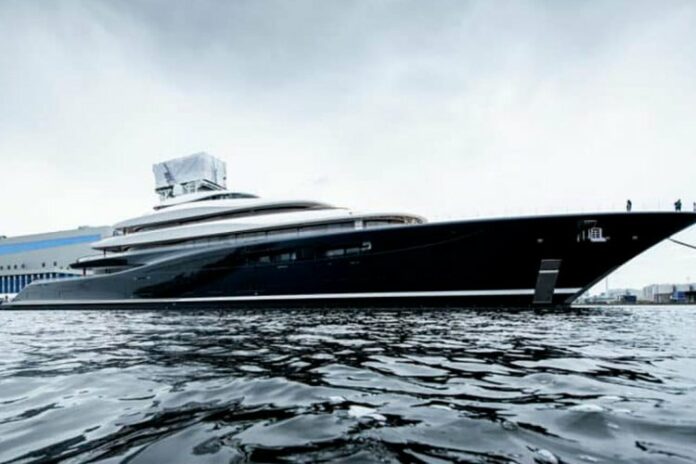
Project 821, launched on May 4, 2024, aims to push hydrogen technology to its limits in the context of superyachts. This is crucial due to the absence of regulations for storing hydrogen or for fuel cell systems at class, flag-state, or even IMO levels. 

Feadship collaborated with superyacht brokers Edmiston and Lloyd’s Register to develop not only scaled technology for ships over 100 m (328 ft) in length but also prospective protocols and regulations.

Hydrogen fuel cells have been utilized since the Apollo Moon missions, but their potential in the maritime sector remains largely untapped. Project 821 highlights the challenges of using hydrogen as an energy source for large ships. 

Project 821 stores a mere 543 kW hours of energy – compared to Feadship’s first diesel-electric hybrid. Its fuel cell technology can provide an entire week’s worth of silent operation at anchor or navigating emission-free at 10 knots while leaving harbors or cruising in protected marine zones. 

From the beginning, one of the biggest hurdles would be developing a reasonable way to store compressed liquid hydrogen below deck at -253 °C (-423 °F) aboard a luxury yacht.

Despite its high energy efficiency, hydrogen’s low density and storage requirements pose significant obstacles. The ship needs to carry over four tonnes of hydrogen to power 16 fuel cells and address issues such as hydrogen embrittlement and venting water vapor. Furthermore, the ship must also accommodate methanol to fuel the cells when hydrogen is unavailable.

Under current conditions, hydrogen alone cannot fulfill the ship’s power requirements. It is only suitable for short trips at low speeds, such as maneuvering in harbors or navigating through environmentally delicate areas. However, hydrogen is primarily utilized for “hotel load,” encompassing all non-propulsion power needs such as heating and air conditioning.

Feadship claims that hydrogen can address up to 78% of this demand, enabling up to a week of quiet, environmentally friendly operation while anchored.

“The aim has been to develop a new, clean technology not just for this project, but for the world,” said Jan-Bart Verkuyl, Feadship Director / CEO of Royal Van Lent Shipyard.

US DOE selects FloatHOME to advance plans floating wind design

0

The award consists of a $450,000 cash prize and $100,000 in technical assistance from the DOE National Labs. Prize money is being used to advance WindFloat® manufacturing, supply chain, and deployment plans in the US market.

Seth Price — Vice President of Technology & Innovation for Principle Power, said: 

“We are honored to be selected for the FLOWIN Phase 2 award. We were able to extract highly valuable feedback from the supply chain to better enable project successes on the first wave of U.S. West Coast projects. We are building a new industry – not just a singular project.

Previously in Phase 2, we combined our insights from 75MW project in operation using WindFloat® and feedback from domestic supply chain partners. The work has allowed the consortium to plan for maximized automation, streamlined project execution plans, and optimization of final assembly processes for serial manufacturing of low-risk solutions.

We look forward to further engage with the US floating wind communities in Phase 3 as we optimize our design and delivery solutions for the unique challenges of the U.S. floating wind market.”

Christoffer Valstad — Senior Vice President, Renewables US at Aker Solutions, said:

“At Aker Solutions, we have decades of fabrication and execution expertise having delivered large and complex structures to the offshore industry since the 1980s. Utilizing our own yards, supply chain network and international footprint, we have the skills, know-how and infrastructure needed to optimize the design, engineering, and construction of floating offshore wind projects globally. 

The FLOWIN prize has provided us with a unique opportunity to explore ways to serialize fabrication, drive further innovation and reduce costs for floating offshore wind.”

FloatHOME consortium has engaged both large-scale fabricators and smaller supply chain partners to assess their existing capacities and specific manufacturing requirements. This collaborative approach has enabled the consortium to build and evaluate various scenarios for serial production and assembly of WindFloat® foundations to support the vision of using purpose-built facilities to produce subcomponent modules and efficient assembly within American ports.

The Biden-Harris administration wants to deploy ambitious 30 gigawatts (GW) of offshore wind by 2030, and 15 GW of floating offshore wind by 2035. To achieve these targets, it is vital to engage the entire value chain in building capacity to deliver these ambitious volumes. By advancing to the next phase of the FLOWIN Prize, the FloatHOME consortium is set to play a pivotal role to ensure the industry meets these objectives on time and on budget, while maximizing benefits to local communities and minimizing the carbon footprint throughout the supply chain.

Fincantieri: “Atlante” launched at Castellammare di Stabia

0

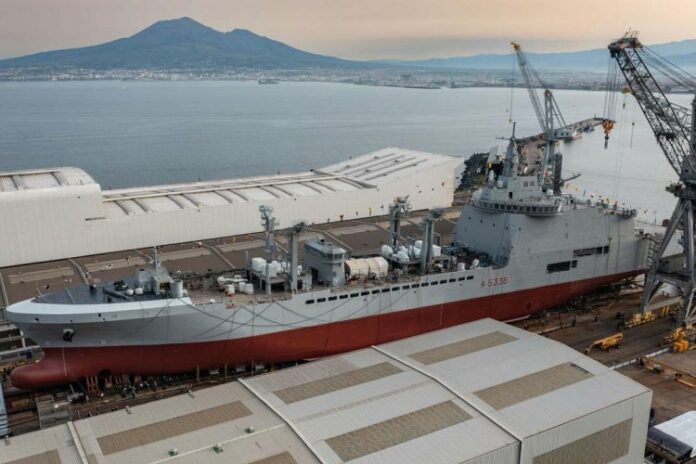
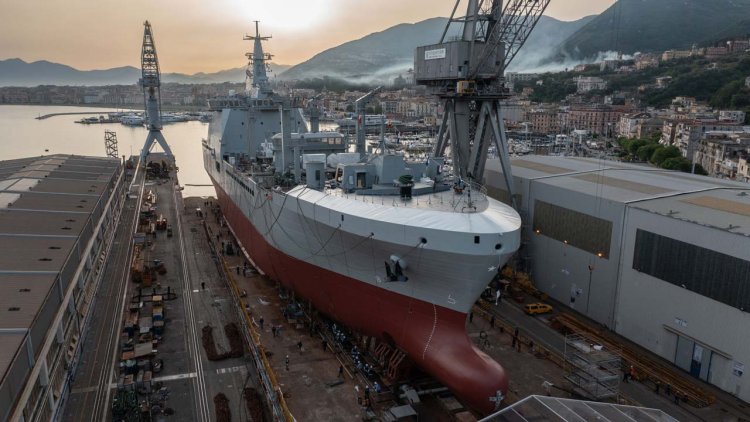
Today at the Castellammare di Stabia Fincantieri shipyard there was the launching ceremony for the LSS (Logistic Support Ship) ‘Atlante’, as part of the Italian Navy’s fleet renewal plan.

The ceremony was held in the presence of the Navy’s Chief of Staff, Rear Admiral Enrico Credendino, who was welcomed by Fincantieri’s President, General Claudio Graziano, and the CEO and General Manager, Pierroberto Folgiero, and the General Manager of Fincantieri’s Military Ships Division, Dario Deste. Joachim Sucker, Director of the Organization for Joint Armament Cooperation (OCCAR), and the Director of the Naval Armaments Directorate – NAVARM, Admiral Chief Inspector Giuseppe Abbamonte, also took part.

Mrs. Federica Gargano, niece of Admiral Romeo Oliva, former Commander of the Naval Forces, decorated with two Silver Medals for Military Valor, was Godmother of the new unit.

“Atlante”, which will be delivered in 2025, is the second unit of this type built for the Navy, with the first one, “Vulcano”, delivered by Fincantieri in 2021. It will provide logistical support to the national naval component, possessing operational capabilities in a variety of areas: defense of vital national interests, defense of the Euro-Atlantic space, contribution to the realization of international peace and security, competitions and specific tasks including assistance in the event of public calamity.

The logistic support units are part of the Navy’s fleet renewal plan, commissioned from the Temporary Grouping of Companies (RTI) formed by Fincantieri and Leonardo, and are distinguished by their very high level of innovation, which makes them extremely flexible and efficient in their various use profiles. In particular, these units can also be used in a complementary manner in non-military activities such as Civil Protection support for humanitarian and rescue aid operations. They also have a low environmental impact thanks to the adoption of advanced low-pollution generation and propulsion systems (generators and electric propulsion motors) and biological effluent control.  

The ship combines the capacity to transport and transfer liquid (diesel oil, aviation fuel, fresh water) and solid (respect parts, food and ammunition) cargo to other naval units and to carry out repair and maintenance operations at sea for other units. Defense systems include command and control capability in tactical scenarios, communications and non-lethal deterrent defense systems. The unit is also capable of embarking on more complex defense systems and supporting intelligence and electronic warfare equipment.