-6.5 C
New York
Home Blog Page 175

Corvus Energy to supply battery systems for 10 new hybrid tugboats servicing the Panama Canal

0

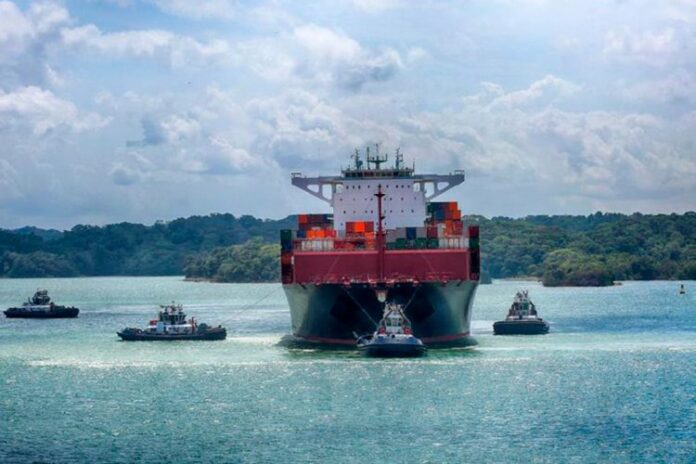
The Panama Canal Authority / Astilleros Armón contract signed in October 2023 was valued at US$150M total for the first ten vessels, each 30-meter tugboats with 70-tonnes bollard pull. 

The tugboats will be equipped with hybrid-electric propulsion systems to reduce emissions during ship towage through the Panama Canal and while docking in Panamanian ports. Corvus Energy will provide battery energy storage systems, 450 kWh of Corvus Orca ESS, for each vessel.

“Corvus Energy is pleased to have been selected to supply the battery systems for this landmark project for the Panama Canal Authority and Astilleros Armón,” says Corvus Energy CEO, Fredrik Witte. “The Panama Canal is a world-renowned, high-traffic waterway, and battery systems in hybrid-electric tugs have been proven to significantly decrease vessel emissions. The new fleet represents an important step in supporting the Panama Canal Authority’s sustainability strategy and ambition to reach net-zero GHG emissions by or around 2050.”

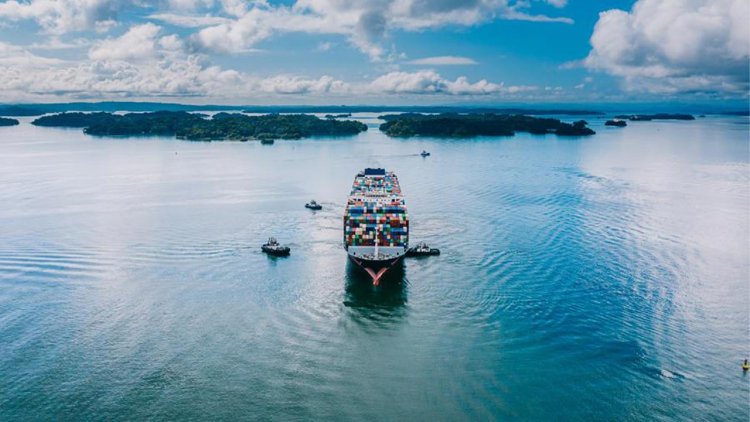
The Panama Canal expansion has resulted in larger container ships, LNG carriers, cruise ships, tankers and dry bulk carriers using the shipping shortcut between the Pacific and Caribbean – requiring the services of more powerful tugboats and pilot vessels. With the acquisition of these new vessels, the Panama Canal Authority is seeking to enhance its shiphandling capabilities, modernise its fleet and replace tugs it charters from other owners.

Worldwide, tugboats were among the first maritime vessels to adopt battery technology due to their near shore operations and ability to recharge regularly, with the first hybrid tugboats entering operation as early as 2009 followed by fully electric, zero emission tugboats in 2019. 

In North America, the first all-electric tugboats are entering the market now. In Western Canada, both HaiSea Marine and SAAM Towage recently launched their respective fleets of all-electric tugboats.  In the United States, the first fully electric tugboat, the Crowley eWolf, will soon begin operations in the Port of San Diego, and several other U.S. ports are applying for federal funding under the “Green Ports Program” to invest in electric tugboats and onshore charging infrastructure. 

The HaiSea Marine, SAAM Towage and Crowley eWolf electric tugs are all equipped with a Corvus Energy system, as are more than fifty percent of hybrid-electric and fully electric tugboats worldwide. As the maritime sector increasingly pursues carbon reduction initiatives, the number of hybrid-electric and fully electric tugboats worldwide is projected to grow exponentially.

Equinor, Centrica, SSE partner to develop Humber hydrogen projects

0

Leading energy companies Equinor, Centrica and SSE Thermal have launched plans for a collaboration of multiple low carbon hydrogen projects on the north bank of the Humber estuary in the UK’s North East.

The plans, which include the transformation of the Easington gas terminal, were launched in the Houses of Parliament to an audience of MPs, civil servants, industry bodies and regional stakeholders. 

H2H Easington includes proposals by Equinor and Centrica to deliver a multi-stage green and blue hydrogen production facility which will scale up over time as a hydrogen economy develops. Since a co-operation agreement was signed between the two companies in 2022, detailed engineering studies have assessed projects which could produce up to 1.2GW of blue hydrogen production and up to 1GW of green hydrogen at Easington with initial projects commissioned by the end of the decade then expansion through the 2030s.

To unlock these ambitions, proposals for a green hydrogen electrolyser have been submitted to Government as part of the second Hydrogen Allocation Round process. If successful, this initial electrolytic hydrogen system would be operational by early 2029 and would fuel switch off-takers within the Easington terminal, displacing current natural gas demand and significantly reducing the site’s CO2 footprint by 100,000 tonnes per year. An immediate next step would include hydrogen for Sustainable Aviation Fuel (SAF), which is key to facilitating the energy transition in the aviation sector.

Such a transition would also safeguard many existing jobs within the historic gas terminal whilst creating new jobs and supply chain opportunities for the future. It is estimated that the 35-year economic impact of the green hydrogen proposals at Easington, including construction, operation and decommissioning of the facility, will be in the region of £1.5bn of gross value added, supporting thousands of jobs in the region.

In addition to the above, the partnership will also explore a dedicated hydrogen pipeline that would link H2H Easington to Equinor’s proposed H2H Saltend hydrogen production facility at Saltend Chemicals Park, and to Equinor and SSE Thermal’s proposed hydrogen storage facility at Aldbrough on the East Yorkshire Coast. Collectively, these projects form the Humber Hydrogen Hub.

Equinor and SSE Thermal are currently consulting on the proposals for hydrogen storage at the existing gas storage site near Aldbrough. The use of the geologically unique underground salt caverns for storage helps to balance the fluctuating supply and demand of a future hydrogen economy whilst improving energy security.

The 45km hydrogen pipeline proposals also include a crossing of the River Humber to provide connectivity between north and south banks, whilst there is also potential for connection to the ‘Project Union’ gas network to expand across the wider Humber region.

Graham Stuart MP, Member of Parliament for Beverley and Holderness said:

“This is an exciting collection of projects which can help to deliver on the UK’s net zero goals and hydrogen targets whilst also supporting the Government’s levelling up agenda.”  

Dan Sadler, Director for Hydrogen at Equinor’s UK Low Carbon Solutions, said:

“This is a unique opportunity to link these key sites in the Humber, pairing hydrogen production with users and storage sites to create the foundational requirements for an expanding hydrogen economy throughout the 2030s and 40s. It will help to reduce emissions whilst also stimulating economic growth.”

Martin Scargill, Managing Director of Centrica Energy Storage, said:

“These projects will bring huge benefits to the Humber as we move forward to net zero. Working together, Centrica, Equinor and SSE Thermal will deliver this innovative, world leading, regional hydrogen system, that in time could see Rough connected to provide the UK with large scale, clean energy storage. We know that the UK will need to explore all possible options to meet its net zero target and these projects will support the country’s decarbonisation plans while creating jobs and certainty for the region’s industry in the future.” 

John Johnson, Director of Development at SSE Thermal, said:

“Hydrogen projects like the ones we’re bringing forward at Aldbrough can help to deliver a low-carbon future for the Humber. We know that all roads to net zero lead through the region and this collaboration aims to accelerate the deployment of hydrogen by linking multiple key sites and projects in support of the UK’s decarbonisation efforts. Ultimately, the Humber Hydrogen Hub can be a key enabler of a thriving hydrogen economy.”


RWE tests artificial reefs at offshore wind farm in the Baltic Sea

0

In partnership with Linnaeus University and cable service provider Baltic Offshore Kalmar AB, RWE is conducting a pilot study in the Swedish Baltic Sea. 

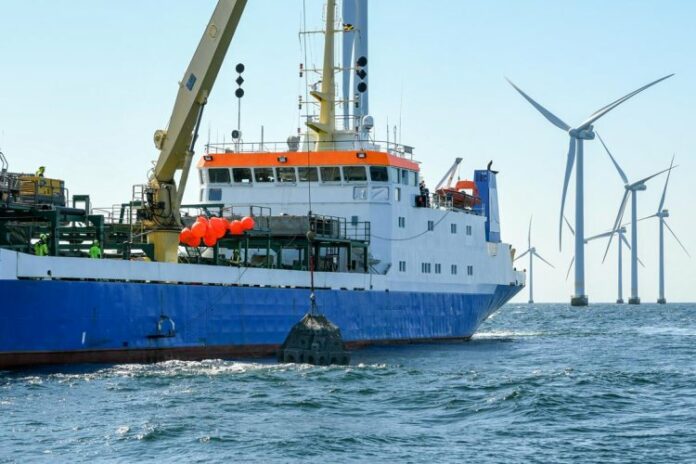
After month of preparation, collection of water samples and seabed assessments, the study has entered its practical phase with the installation of artificial reefs at RWE’s Kårehamn wind farm (48 MW, 16 turbines) 7 km off the Swedish coast. 180 carbon neutral, plastic-free reef cubes® have been deployed on the seabed to assess how marine life is settling here. The research is planned to continue until 2026. The reef cubes were designed and manufactured by ARC Marine, a leading supplier of nature inclusive solutions, who also won RWE’s “Innovation Ecology Award” in 2022.

Sven Utermöhlen, CEO RWE Offshore Wind:

“As a global leading offshore player, we are responsible for operating wind farms in harmony with nature. To deliver green electricity, we invest billions of euros annually in wind power. We are committed to expanding our portfolio in an environmentally friendly way. With this in mind, we have set ourselves ambitious sustainability targets. This study is a significant step forward. Assessing how our activities may help to promote biodiversity will enable us to take the long-term sustainability of offshore wind farms to the next level.”

Catherine Legrand, Professor in Marine Ecology at Linnaeus University:

“Research on the ecological impact of offshore wind farms is continuously increasing, however few studies include multiple interactions between the wind farm activities and the ecosystem. The study at the Kårehamn wind farm is unique in many aspects. As a shared marine space, an offshore wind farm offers excellent potential to produce green electricity, as well as providing habitat provision for marine life with no conflict. It is both exciting and challenging to follow the biodiversity of marine life almost in real time at the wind farm site.”

The objective of the study is to assess how artificial structures at offshore wind farms can promote biodiversity and support ecosystem services, such as habitat provision, nutrient cycling and water quality, hence contributing to the restoration and preservation of the Baltic Sea.

The study started in 2023 with the collection of information for the baseline scenario. This included a survey of the underwater area including sampling from the seabed and eDNA sampling to assess the ecosystem and to identify the species in the region, such as mussels, vegetation and fish. By understanding the biodiversity, the team could predict the possible impacts of the subsequent project phases more effectively and plan accordingly. 

During the installation, 180 reef cube® structures have been submerged on the seabed at Kårehamn wind farm using different sizes, which vary from 15×15 cm to 75×75 cm. The rationale for selecting this location is the previously observed development of species on the foundations of the wind turbines. The intention is to create artificial reefs for habitats and species to grow and hide in, with a special focus on macroalgae, blue mussels and various species of fish.

In the colonisation phase from 2024 to 2026 the submerged cubes and the surrounding ecosystem will be examined. This will provide valuable data and learnings for the sustainable design of future offshore wind projects.

Sea Harvest trawler sinks near Cape Town, 11 crew presumed dead

0

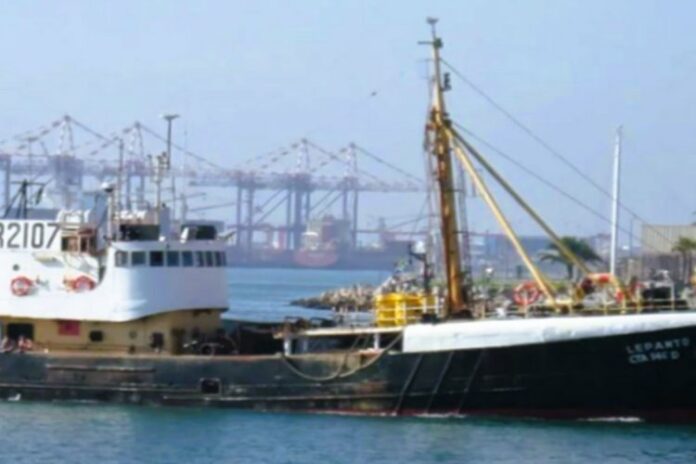
The search for the missing crew began on 17 May following a distress call stating a trawler vessel, FV Lepanto, had been taking water rapidly and sinking fast, around 35 miles out from South Africa’s Hout Bay.

The call was received by the Maritime Rescue Coordinating Centre (MRCC), based at the SAMSA Centre for Sea Watch and Response in Cape Town, South Africa. The center confirmed to the company the search and rescue mission was called off on 18 May “in view of the significant time elapsed since the accident.”

“Following the sinking of the Lepanto during the late afternoon of 17 May 2024 approximately 34 nautical miles west from Slangkop Point Light in Cape Town, rescue efforts continued for the 11 missing persons. The commendable efforts of [nearby] fishing vessels in the vicinity of the incident location, resulted in both a life raft recovered – one containing nine survivors; and the other being empty. Unfortunately, even with the large number of vessels on-scene, none of the missing persons were found nor any undone life jackets,” SAMSA said in a statement. “The loss of the 11 persons from the Lepanto is most regrettable. MRCC Cape Town expresses its sincere condolences to the family members, friends, and colleagues of those lost to the sea.”

Sea Harvest CEO Felix Ratheb said the nine crew that were saved were provided with a physical evaluation by a doctor and as well as trauma counselling, and have since been reunited with their families.

“Tragically, the missing crewmen are now presumed drowned,” he said. “Keeping our staff safe at sea is our key priority. As a company, we are devastated by this tragedy. We have been in ongoing contact with the families, with a senior team and a counselor visiting each family of the missing men today. We will continue to support them, as well as the rescued men and their families. We are also providing updates and counseling for our broader employee base, as this has been extremely upsetting and sad for all of us. We are working closely with the relevant authorities, primarily the South African Maritime Safety Authority, to establish the cause of the accident as soon as possible. We wish to thank our employees and the rescue organizations for their active search and rescue operations since Friday.”

South African Maritime Safety Authority (SAMSA) has commenced an investigation to establish the cause of the accident “with the support of the company,” Ratheb confirmed.

The South African Federation of Trade Unions (SAFTU) said in a statement it is “deeply concerned about the safety of workers at sea and calls for a thorough investigation by the South African Maritime Safety Authority (SAMSA) to determine the cause of this tragic incident.”
“We urge that measures must be taken before boarding of ships to prevent such tragedies from happening again,” it said. “This should involve tighter regulations for safety purpose, but not to exclude small-scale fishermen from conducting fishing as a subsistence activity. In fact, the government must support those small fishermen to meet all the regulatory measures for safety purposes.”

Sea Harvest Spokesperson Anthea Abraham said mandatory servicing had been completed on the vessel in the week prior to its disappearance.

“She had an excellent safety track record with zero reportable safety incidents in the last five years,” Abraham told IOL.

Source: Seafoodsource

Shipping losses hit all-time low despite increasing risks for the whole sector

0

Given as much as 90% of international trade is transported across oceans, maritime safety is critical. Thirty years ago, the global shipping fleet lost around 200 large vessels a year.

This total fell to a record low of 26 in 2023, a decline of more than one third year-on-year and by 70% over the past decade. However, the fact that shipping is increasingly subject to growing volatility and uncertainties from war and geopolitical events, the consequences of climate change, as well as ongoing risks resulting from the trend for larger vessels means the sector will have its work cut out to maintain this status quo in future, according to marine insurer Allianz Commercial’s Safety and Shipping Review 2024.

“The speed and extent of the way the industry’s risk profile is changing is unprecedented in modern times. Conflicts such as in Gaza and Ukraine are reshaping global shipping, impacting crew and vessel safety, supply chains and infrastructure, and even the environment. Piracy is on the rise, with a worrying re-emergence off the Horn of Africa. The ongoing disruption caused by drought in the Panama Canal shows how the changing climate is affecting shipping, all at a time when it is having to undertake its most significant challenge, decarbonization,” says Captain Rahul Khanna, Global Head of Marine Risk Consulting, Allianz Commercial.

Southeast Asia emerges as maritime region with highest total losses

During 2023, 26 total losses were reported globally compared with 41 a year earlier. There have been more than 700 total losses reported over the past decade (729). The South China, Indochina, Indonesia and the Philippines maritime region is the global loss hotspot, both over the past year and decade (184). It accounted for almost a third of vessels lost last year (8). The East Mediterranean and Black Sea ranks second (6) with activity up year-on-year.  Cargo ships accounted for over 60% of vessels lost globally in 2023. Foundered (sunk) was the main cause of all total losses, accounting for 50%. Extreme weather was reported as being a factor in at least 8 vessel losses around the world in 2023, with the final total likely higher.

The number of shipping incidents reported globally declined slightly last year (2,951 compared to 3,036), with the British Isles seeing the highest number (695). Fires onboard vessels – a perennial concern – also declined. However, there have still been 55 total losses in the past five years, and over 200 fire incidents reported during 2023 alone (205) – the second highest total for a decade after 2022. Fires remain a key safety issue on larger vessels given the potential threat to life, scale of the damage, and the fact associated costs can be severe, a factor contributing to the long-term increase in the cost of large marine insurance claims.
Consequences of wars

Recent incidents, such as in the wake of the conflict in Gaza, have demonstrated the increasing vulnerability of global shipping to proxy wars, disputes and geopolitical events, with more than 100 ships targeted in the Red Sea alone by Houthi militants in response to the conflict. Disruption to shipping in and around the region has persisted and is likely to remain for the foreseeable future. The re-emergence of Somali pirates, following their first successful hijacking since 2017, is an additional cause for concern.

“Both the war in Ukraine and the Red Sea attacks have also revealed the increasing threat to commercial shipping posed by new technology, such as drones, which are relatively cheap and easy to make, and difficult to defend against without a large naval presence,” says Khanna. “Looking to the future, more techologically driven attacks against shipping and ports are also a distinct possibility. Reports of vessels experiencing GPS interference are increasing, particularly in the Strait of Hormuz, the Mediterranean, and the Black Sea.”

The report also notes that in the three years since Russia invaded Ukraine the gradual tightening of international sanctions on Russian oil and gas exports has contributed to the growth of a sizeable ‘shadow fleet’ of tankers, somewhere between 600 [1] to 1,400 [2] vessels. “These are mostly older, often poorly maintained vessels that operate outside international regulation, often without proper insurance. This situation presents serious  enviromental and safety risks,” says Justus Heinrich, Global Product Leader, Marine Hull, Allianz Commercial. Vessels have been involved in at least 50 incidents to date, including fires, engine failures, collisions, loss of steerage, and oil spills. “The cost of dealing with these incidents often falls on governments or other vessels’ if one is involved in an incident.”
Rerouting brings risks and environmental challenges

Attacks against shipping in Middle East waters have also severely impacted Suez Canal transits – down by more than 40% [3]at the beginning of 2024 – and trade. Coming so soon after the ongoing disruption caused by drought in the Panama Canal, this amounts to a double strike on shipping, causing yet more issues for global supply chains. Whichever alternative routes vessels take, they face lengthy diversions and increased costs, also impacting their customers. Avoiding the Suez Canal adds at least 3,000 nautical miles (over 5,500km) and 10 days sailing time, rerouting via the Cape of Good Hope. [4]

Rerouting also impacts the risk landscape and the environment. Storms and rough seas can be more challenging for smaller vessels used to sailing coastal waters, while infrastructure to support an incident involving the largest vessels, such as a suitable port of refuge or a sophisticated salvage operation may not be available. Environmental gains may be lost as rerouted vessels increase speeds to cover longer distances. Red Sea diversions are already cited as being a primary contributor to a 14% surge in emissions [5] in the EU shipping sector this year.

Green shipping challenges

Shipping contributes around 3% of global emissions [6] caused by human activities and the industry is committed to tough targets to cut these. Reaching these targets will require a mix of strategies, including measures to improve energy efficiency, the adoption of alternative fuels, innovative ship design and methods of propulsion.

Decarbonization presents various challenges for an industry juggling new technologies alongside existing ways of working. For example, the industry will need to develop infrastructure to support vessels using alternative fuels, such as bunkering and maintenance, while at the same time phasing out fossil fuels. There are also potential safety issues with terminal operators and vessels’ crew handling alternative fuels that can be toxic or highly explosive.

EST-Floattech supplies Octopus battery systems to Wight Shipyard for river Thames

0

Wight Shipyard has selected EST-Floattech’s Octopus Series for its exceptional energy efficiency and reliability. The decision underscores Wight Shipyards’ commitment to sustainable technology for the maritime sector.

Wight Shipyard specializes in high speed ferries, retrofits, and planned maintenance of vessels and is located on the Isle of Wight. The ferries will become part of the fleet for Thames Clippers. 

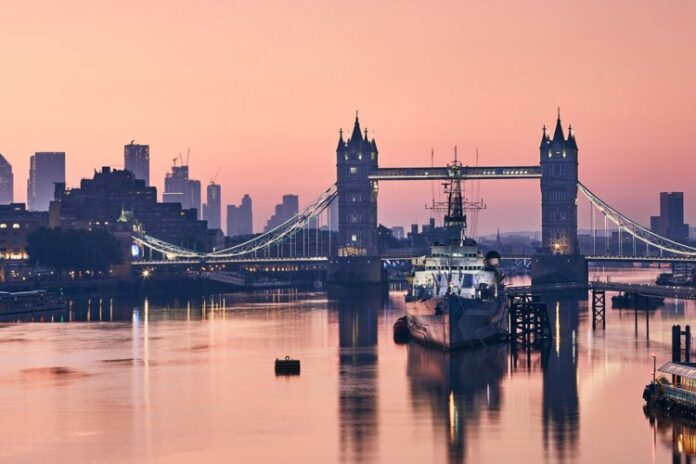
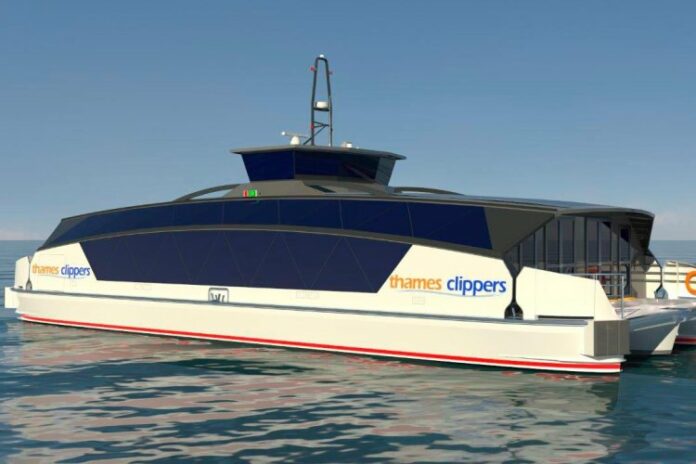
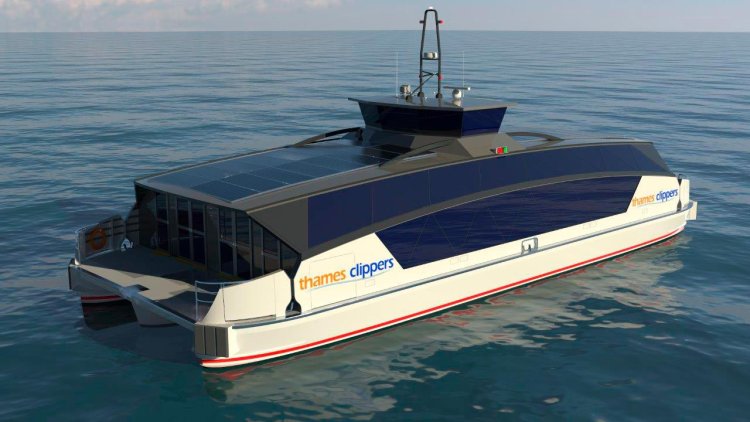
The “Mars Clipper” is a high-speed passenger catamaran ferry. This ferry, part of Uber Boat by Thames Clippers, will have 480 kWh of High Energy batteries on board. The vessel has a hybrid design, which allows the “Mars Clipper” to operate solely on batteries on the Thames, in the most central zone of the city. This is between the Tower Bridge and the Battersea Power Station piers. The technology is not reliant on shore-based charging, with the new boats using excess power from the bio-fuel engines to re-charge their batteries for the Central London stretch.

The Cross River Ferry, will be supplied with 960 kWh of the Octopus Series battery system.

Thames Clippers have been operating a cross river ferry service for over 20 years.  The current infrastructure is reaching end of life and creates an opportunity to develop and operate an enhanced all electric, zero emission, roll-on/roll-off ferry replacement. This will allow automated docking to reduce journey times and an increased capacity on the craft for foot and cycle passengers. Thanks to the Octopus Series battery system, the vessel will sail quietly over the Thames and will be some of the most quiet vessels ever seen in the passenger boat industry. 

Both energy storage solutions from EST-Floattech will not only limit emissions but also limit exhaust fumes during the routes of these commuter services in London. 

Ørsted enters into new major agreement on carbon removal with Microsoft

0

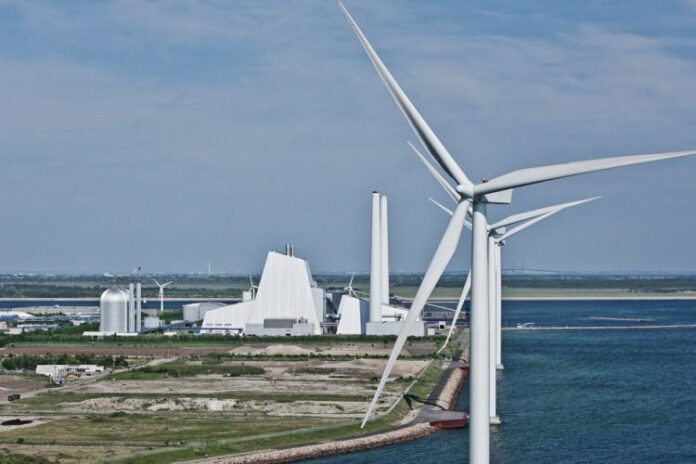
In a landmark deal, Ørsted will sell a further one million tonnes of carbon removal over a ten-year period to Microsoft from Avedøre Power Station, which is part of the bioenergy carbon capture and storage (BECCS) project ‘Ørsted Kalundborg CO2 Hub’. 

This new agreement builds on an existing commitment by Microsoft to buy 2.67 million tonnes from Asnæs Power Station, bringing the total purchase under contract to 3.67 million tonnes of CO2.

As part of the ‘Ørsted Kalundborg CO2 Hub’, Ørsted will establish carbon capture at its wood chip-fired Asnæs Power Station in Kalundborg in western Zealand and at the Avedøre Power Station’s straw-fired boiler in the Greater Copenhagen area. The 430,000 tonnes per year of biogenic CO2  from the combined heat and power plants will be shipped to a storage reservoir in the Norwegian part of the North Sea and stored permanently. The ‘Ørsted Kalundborg CO2 Hub’ is set to become operational by the beginning of 2026.  

The new agreement between Ørsted and Microsoft entails that Microsoft will take one million tonnes of carbon removal from the straw-fired unit at Avedøre Power Station starting from 2026. The combined heat and power plant converts locally sourced straw, which is a by-product of agriculture, into electricity and district heating. By capturing the biogenic carbon from biomass-fired combined heat and power plants and storing it underground, it is possible to not only reduce, but also remove CO2 from the atmosphere, as biogenic carbon from sustainable biomass is part of a natural biogenic carbon cycle. Thereby, you create negative emissions.

The collaboration between Ørsted and Microsoft will play a vital role in developing the ‘Ørsted Kalundborg CO2 Hub’, as bioenergy-based carbon capture and storage is still in its early stages. Even though the project was awarded a subsidy from the Danish Energy Agency, the revenue from the sale of carbon removal certificates was included before investment decision and then in the offer submitted through the Danish subsidy scheme, which put great emphasis on competitive offers with the lowest amount of subsidy per tonne.

According to the UN’s Intergovernmental Panel on Climate Change’s (IPCC) latest report, carbon removal technologies such as BECCS are crucial for limiting global warming. This underscores the importance of projects such as the ‘Ørsted Kalundborg CO2 Hub’, which can support companies like Microsoft in achieving its sustainability goals and contribute to achieving the global climate targets.

Ole Thomsen, Senior Vice President and Head of Ørsted’s Bioenergy business, says:

“This expanded collaboration with Microsoft is a testament to our shared vision for a sustainable future. By combining Ørsted’s expertise in bioenergy carbon capture and storage with Microsoft’s commitment to reducing its carbon footprint, we’re showcasing how strategic relations can accelerate the transition to a greener economy.”  

Brian Marrs, Senior Director of Energy & Carbon Removals at Microsoft, says:

“The urgency around climate goals means translating great planning into rapid action – and Ørsted remains a valuable collaborator in bringing big ideas to life. Today’s announcement is yet another tangible step towards building the technologies and commercial capabilities towards becoming carbon-negative by 2030.”

Another offshore wind project in the Baltic Sea awarded to Van Oord

0

Yet another addition to Van Oord’s portfolio of offshore wind projects in the Baltic Sea, highlighting its experience in the area and leading position in the energy transition. 

Van Oord’s scope includes the transport and installation of 21 XL monopiles and transition pieces and the design, supply and installation of the inter-array cable grid. Windanker will have an installed capacity of 300 MW. The development of the wind farm is in line with Germany’s plans to develop 30 GW of offshore wind capacity by 2030.

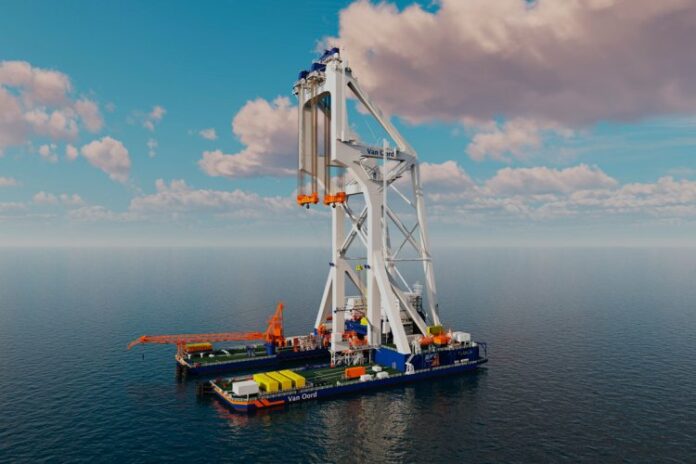
For the installation of the monopiles Van Oord will deploy its heavy-lift installation vessel Svanen. By then the vessel will have undergone a major upgrade, making it ready to handle the next generation of monopile foundations for offshore wind projects. The vessel is tailored to navigate the Baltic Sea’s tough conditions. Its track record on projects such as Baltic 2, Arkona, Danish Kriegers Flak and Baltic Eagle demonstrates its expertise in this challenging offshore area.
 
Van Oord will deploy its dedicated cable-laying vessel Nexus for the installation of the inter-array cables, with a total length of 29 kilometres. Trencher Dig-It will bury the cables to the required depth. The wind farm is expected to be commissioned in 2026.

First monopile foundation in place at Sofia Offshore Wind Farm

0

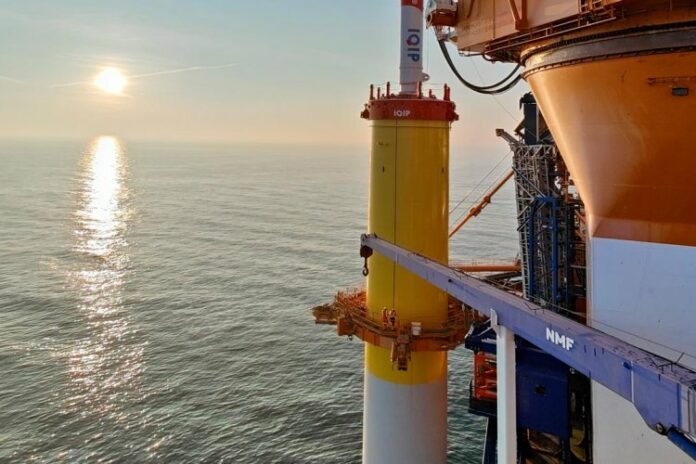
Van Oord’s offshore installation vessel Aeolus has installed the first monopile foundation at the RWE Sofia Offshore Wind Farm. 

The 1.4 GW Sofia Offshore Wind Farm, one of the largest offshore wind projects in the world, will have enough capacity to power 1.2 million average UK homes. 

The Sofia wind farm is located on Dogger Bank in the central North Sea, 195 kilometres from the North East coast of the UK. RWE contracted Van Oord for the design, engineering, procurement, construction and installation (EPCI) of the monopile foundations and array cables for this project. Project execution is being managed by Van Oord Offshore Wind UK from their MPI Offshore office in Stokesley, Teesside. 

Van Oord deployed its flexible fallpipe vessels Bravenes and Nordnes to install scour protection at the locations where the monopiles are now being installed. The monopiles have a diameter of up to 8.8 metres, a length of up to 92 metres and a weight of up to 1,530 tonnes. They have been manufactured by EEW in Rostock, Germany and are transported by barges to the Port of Tyne. This port serves as the storage and marshalling base for the WTG foundations and is located near Newcastle on the River Tyne in North East England.  

Roeland Ris, Project Director at Van Oord, said:

‘We’re very pleased to announce reaching this significant milestone. Following thorough preparations, offshore construction is now in full swing, driven by a high performing project team and great cooperation with all partners involved.’

For this project, so-called extended monopiles are used, eliminating the need for a transition piece. To complete the WTG foundations, the monopiles will be equipped with secondary steel components consisting of main access platforms, internal platforms, boat landings and upper ladders. The secondary steel components have been manufactured by various suppliers in the Netherlands and Poland and are also transported to the Port of Tyne. Later this year, Van Oord’s cable-laying vessel Calypso and trencher Dig-it will be deployed to install the 360 kilometres of array cables. The cables have been manufactured in Greece and are stored in the Port of Blyth, which is located just north of Newcastle. 

Damen Shipyards and SAFEEN Group to bring the first electric tug to the Middle East

0

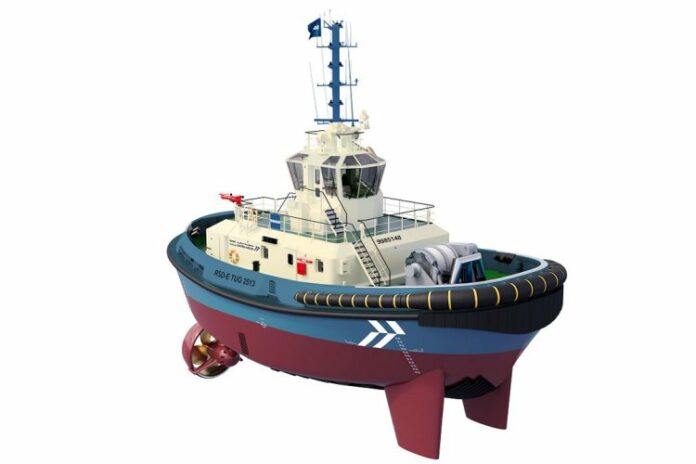
Damen Shipyards and SAFEEN Group, part of AD Ports Group, have signed an agreement for the lease and purchase of an all-electric Damen RSD-E Tug 2513.

The powerful yet compact new tug, which is just 25 metres in length but has a bollard pull of 70 tonnes, is capable of manoeuvring even the largest vessels and can undertake two or more assignments before being recharged, which takes just two hours.

Following the successful launch of the class in August 2022 in the Port of Auckland, New Zealand, Damen Shipyards began series production on speculation with an initial run of six vessels. The first to be completed has now departed Damen Song Cam Shipyard in Vietnam and is en-route for Khalifa Port in Abu Dhabi. There it will join the tug fleet operated by SAFEEN Group, the region’s leading maritime services provider.

Damen’s Financial Services (DFS), a subsidiary of Damen Shipyards, is providing a leasing package to support the purchase. DFS offers this service as it enables clients to finance their transition to a more sustainable future. DFS has recently acquired a second RSD-E Tug 2513 which is available on a lease-to-own basis.

The contract was signed on the second of May in Abu Dhabi by Capt. Adil Banihammad and Mr. Kommer Damen. The vessel will be unveiled to the international towage community at the 27th International Tug & Salvage Convention, Exhibition & Awards taking place from 21 to 23 May in Dubai. Following that it will enter service in Khalifa Port handling container ships, car carriers and other traffic. With shore-based charging facilities yet to be introduced, it will operate initially in hybrid mode with the Tier III compliant generators being used to charge the batteries.

“We are delighted to be working with SAFEEN Group as they once again lead the way in setting new standards in sustainability in the Middle Eastern maritime community,” says Pascal Slingerland, Damen Shipyards Regional Sales Director, Middle East.