-6.5 C
New York
Home Blog Page 174

DEAS and Fincantieri united to strengthen cyber resilience of military and commercial fleets

0

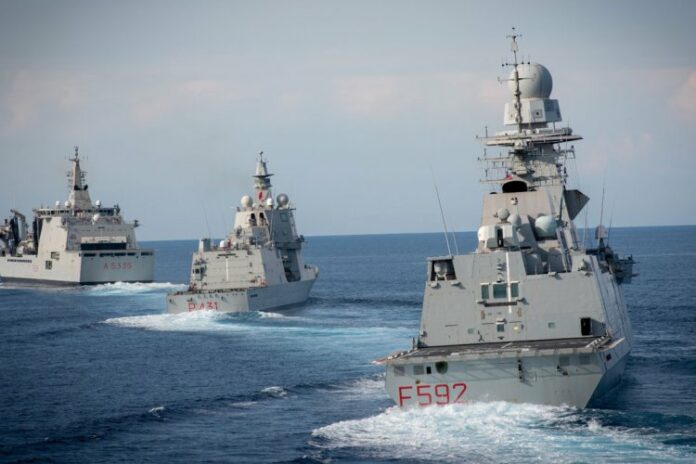
An exercise aimed at testing the cyber resilience of platform system networks took place in the Tyrrhenian Sea aboard the Italian Navy’s aircraft carrier Cavour. 

Specifically, crews from the Italian and French navies were able to estimate how much a cyberattack could affect the operation of naval platforms, civilian and military, and mission accomplishment.

The test, which took place as part of the Mare Aperto 24/Polaris exercise, is the result of a partnership that DEAS Spa – a key player in the development of the armed forces’ offensive capabilities in cyberspace – has forged with the Fincantieri Group, leader in the manufacture of naval, cruise and offshore vessels and supplier of advanced, cyber-resilient technologies in the military and civilian sectors. During the exercise, the crews of the Italian and French navies, in addition to having to compete in the traditional domains (sea, land and sky), got to share the experience of managing military operations, between strategies and technology, in the new futuristic battlefield immersed in the challenging cyber dimension.

Simulated cyber scenarios led to the development of “Archimedes,” a product capable of generating cyber-attacks designed to maximize kinetic effects on navigational parameters and assess the responsiveness of crews. “Archimedes” is named after the famous buoyancy, the founding principle of buoyancy. The test, developed in real time, coordinated with cyber-attacks impacting simulated physical processes, allowed crews to assess how defenses can be penetrated and what are the best response strategies in an integrated conflict context. The findings of the maneuvers will have a strong value not only in the military, but also in the civilian sphere, which is increasingly the protagonist of physical and cyber-attacks, as confirmed by the latest events in the Red Sea and the Gulf of Aden.

These exercises allow a qualitative leap in the preparedness of the Armed Forces, representing an effective laboratory to test “live” some emerging technological solutions and the resulting innovative doctrines in the new context of hybrid conflicts. They offer a glimpse into the future not only of maritime warfare, but also of civil and commercial naval sector protection.

In this context, the cooperation between DEAS and the Navy, expanded through the partnership with Fincantieri, represents an important step forward for the research and implementation of next-generation technological systems, capable of facing the most modern security challenges in the cyber domain, innovating and significantly increasing the resilience of our country,” said Stefania Ranzato, Sole Director of DEAS.

Pierroberto Folgiero, Chief Executive Officer and General Manager of Fincantieri commented,

“In its new industrial plan, Fincantieri intends to broaden its integrator competencies from the physical domain to the logical domain of the ship, which now increasingly represents a “system of systems” and a digital asset. Cyber security is, therefore, an extremely obvious example of how the levels of automation and digitization of new ships require a strong focus on cyber threats to the ship’s intrinsic security. Collaboration with the Navy, partnerships with industry leaders and exercises such as today’s will enable the consolidation of a series of products and solutions that, once implemented in naval defense, can be successfully extended to the civilian sector, with a dual perspective typical of Fincantieri’s DNA.”
Dredging of Suape’s outer channel successfully completed by Van Oord

0

The dredging of the channel up to 20 metres enables the port to handle larger, more efficient, container and (liquid) bulk vessels. This is a key part of the port’s growth plans and government strategy to boost the economic development of the region.

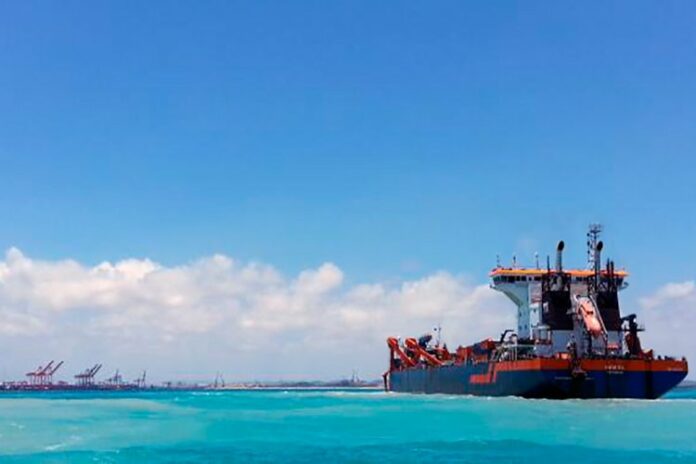
Van Oord has deepened the access channel to the Port of Suape from 15 to 20 metres. To execute the project, Van Oord deployed various dredgers to meet the challenges of the project. It is a major milestone for Van Oord and for the Port of Suape that the project has now successfully been completed. 

Director Dredging at Van Oord said:

‘Tim Helbo, Director Dredging at Van Oord: ‘We are proud that we have successfully completed this project. The work started in 2011 and was interrupted several times. Thanks to the dedication and resilience of our people, and close cooperation with partners, the dredging works in the Port of Suape have now finally been completed.’

Van Oord has been active in Brazil for over 45 years and has executed more than 100 dredging and marine construction projects along the Brazilian coast. 

Wärtsilä to convert two Scandlines ferries to plug-in hybrid operation

0

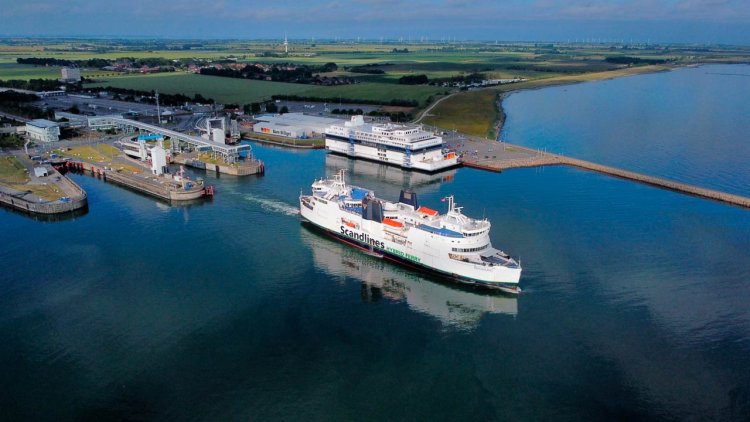
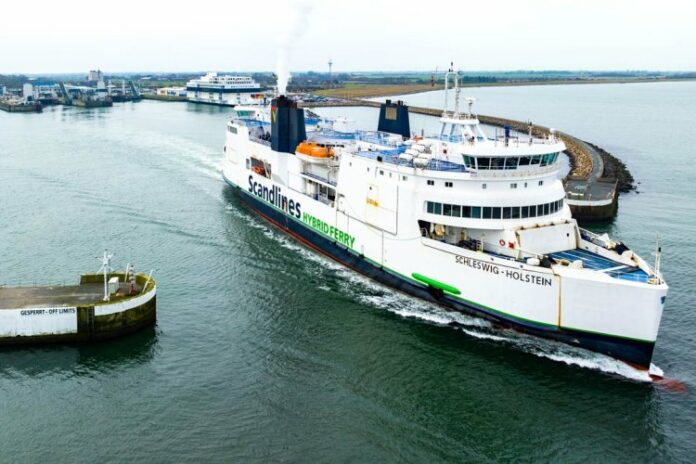
Technology group Wärtsilä will supply the electrical systems needed to convert two Scandlines ferries to a plug-in hybrid solution. The ferries operate on the Puttgarden, Germany – Rödby, Denmark route, and the conversion represents a key element in Scandlines’ target to achieve emission-free operations on the route by 2030. The company’s overall vision is to realise zero emissions on all operations by 2040. The order with Wärtsilä will be booked in Q2 2024.

The project involves replacing an engine and existing systems with a new shore-charged electrical system, including a large energy storage system. This will allow electricity to contribute approximately 80 percent of the energy needed for each crossing.

“We are so pleased to have the most important supplier in place, and we are very much looking forward to working with Wärtsilä and getting started with the conversion. With the plug-in hybrid ferries, we can get even closer to our goal of operating the Puttgarden-Rødby route emission-free by 2030,” says Scandlines’ CEO Michael Guldmann Petersen.

Wärtsilä will engineer and deliver the hybrid converters, the energy storage system (ESS) and the energy management system (EMS), as well as the switchgears, transformers, the onboard port charger, and replacement components in the existing switchboard equipment. In addition, Wärtsilä will supervise the installations, carry out the commissioning, and provide preventive maintenance support services. The equipment is scheduled for delivery in summer 2025.

“We are excited to support Scandlines with their vision towards delivering environmentally sustainable transport options for the region. Ship electrification is one of the solutions for marine decarbonisation and as the world’s biggest conversion project of its kind, we can help Scandlines move closer to meeting their goal of making the route emission-free by 2030,” comments Roger Holm, President of Wärtsilä Marine and Executive Vice President at Wärtsilä Corporation.  

The two Scandlines Ro-Ro ferries selected for conversion to plug-in hybrid operation are the 142 metres-long ‘Deutschland’ and ‘Schleswig-Holstein’.

Bord Gáis Energy and Corio Generation to explore Ireland offshore wind opportunities

0

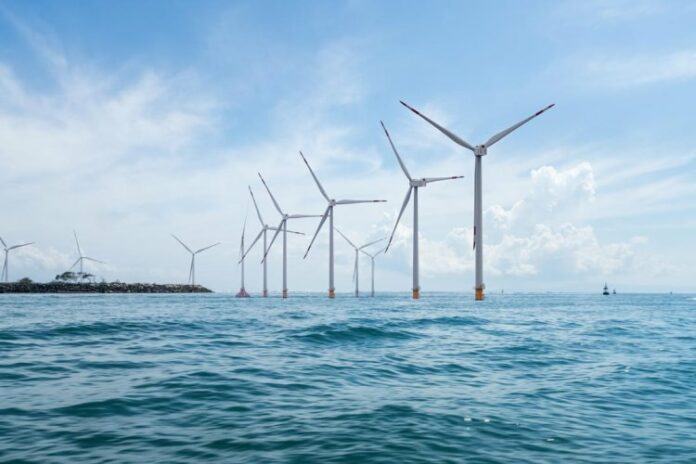
The agreement represents Bord Gáis Energy’s entry into the offshore wind arena and will play an important role in its ongoing commitment to expand its renewable energy portfolio. Corio is currently developing the 450 MW Sceirde Rocks wind farm off the west coast of Ireland.

The Bord Gáis Energy/Corio partnership aligns with the government’s strategy to develop Ireland’s significant offshore wind resource, which will contribute to Ireland’s climate action targets and maximise the economic impact of future renewable energy use, while also contributing to security of supply and delivering balanced regional economic development.

Speaking ahead of the Energy Ireland Conference, which takes place in Croke Park this week, Dave Kirwan, managing director, Bord Gáis Energy said:

“At Bord Gáis Energy, we believe all energy can be green energy and that this can also improve Ireland’s energy security. This significant partnership with Corio will combine our power generation and route to market expertise, the financial backing of Centrica, and Corio Generation’s global experience in the development of offshore wind projects.

“For Bord Gáis Energy, today’s announcement is part of our wider strategic objective to energise a greener, fairer future in Ireland, offering end-to-end green energy solutions required for the transition to net zero.”

Jonathan Cole, CEO of Corio Generation, said:

“With its extensive coastline, abundant natural resources, and a clear and ambitious government strategy, Ireland is exceptionally well-placed to expand its offshore wind capabilities and enjoy the many benefits this could bring, from greener and more reliable energy to widespread economic investment and community gain.

“By combining Corio’s significant development expertise and Bord Gais’ outstanding track record as a market leader in Ireland’s energy sector, we have established a partnership that is ready to play a major role in Ireland’s energy transition. I am delighted to announce this partnership and look forward to the challenges, opportunities and many successes that lie ahead.”

The Irish government has set a goal of generating 80% of electricity through renewables by 2030, including 5 GW from offshore wind.

In March 2024, the Department of Energy, Climate and Communications published Ireland’s first ever industrial strategy for offshore wind, with the aim of building a strong and resilient offshore wind supply chain to support the development of offshore wind projects in Ireland and abroad.

This was followed in May 2024 with two further announcements: a future framework document that outlined Ireland’s long-term approach to the growth of offshore wind generation, and a publication on potential areas of development (DMAPS) off the south coast of Ireland ahead of a planned auction round in late 2024.

Bord Gáis Energy and Corio will continue to assess the emerging opportunities in the offshore wind sector in Ireland. Any specific activities would be undertaken through a newly-registered Irish company, Fuinneamh Óg Teoranta, in order to support the growth of the Irish Offshore wind industry recently identified in the government publication Powering Prosperity – Ireland’s Offshore Wind Industrial Strategy.

Dave Kirwan, Managing Director, Bord Gáis Energy, said:

 “For Bord Gáis Energy, today’s announcement is part of our wider strategic objective to energise a greener, fairer future in Ireland, offering end-to-end green energy solutions required for the transition to net zero.”

Google builds first subsea cable connecting Africa to Australia

0

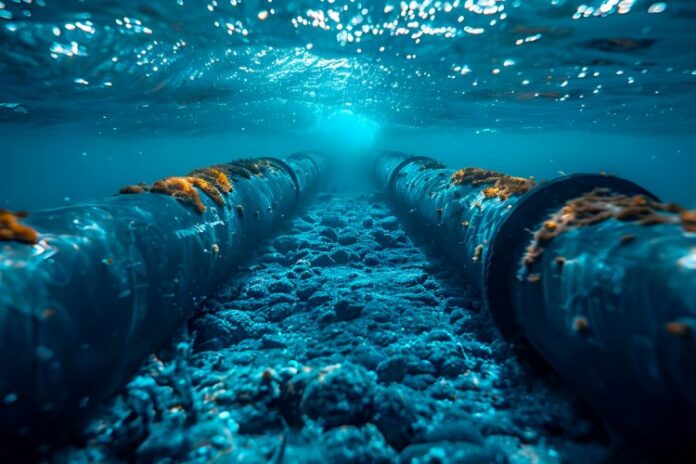
Alphabet Inc.’s Google is building out the first undersea fiber optic cable that will directly connect Africa with Australia, helping to shore up internet access in one of the least-connected parts of the world.

The cable, called Umoja, follows the construction of Google’s Equiano cable that connects Africa with Europe. The new line will start in Kenya and travel over land through Uganda, Rwanda, Congo, Zambia, Zimbabwe and South Africa before crossing the ocean to Australia, the company said in a blog post on Thursday.

The new infrastructure will improve coverage on the continent, which has suffered this year from damaged cables. There are relatively few subsea connections to Africa and limited terrestrial infrastructure, making it more difficult to reroute traffic.

US President Joe Biden and Kenyan President William Ruto are meeting in Washington this week on a state visit aimed at deepening US ties with Africa. The continent is emerging as a new arena of global competition for influence when it comes to technology and connectivity. Microsoft Corp. also said this week that it plans to build a $1 billion geothermal-powered data center in Kenya, part of a multi-year plan to dramatically increase cloud-computing capacity in East Africa.

“Access to the latest technology, supported by reliable and resilient digital infrastructure, is critical to growing economic opportunity,” said Meg Whitman, US ambassador to Kenya, and a former e-Bay Inc. chief executive officer. “This is a meaningful moment for Kenya’s digital transformation journey.”

Umoja’s terrestrial path was built in collaboration with Liquid Technologies to form a highly scalable route through Africa, including access points that will allow other countries to take advantage of the network, said Google.

Source: Bloomberg

Fincantieri awarded contract by U.S. Navy

0

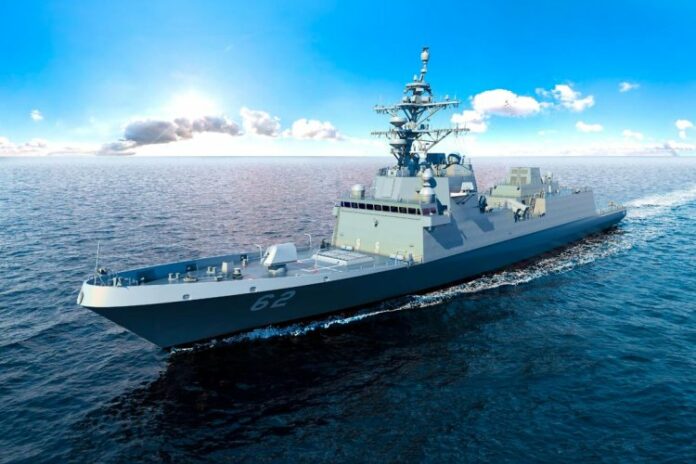
The Department of Defense announces that Fincantieri’s US subsidiary, Fincantieri Marinette Marine (FMM), has been awarded a contract worth over 1 billion US dollars to build the fifth and sixth Constellation-class frigates for the US Navy.

The contract for the lead frigate and 9 options, signed in 2020, has a cumulative value of 5.5 billion US dollars, including post-delivery availability support and crew training.

Fincantieri secured this high-profile tender, distinguishing itself among several major U.S. shipyards thanks to a project considered as the most innovative and cutting-edge. The Group’s proposal is based on the FREMM frigate platform, globally recognized as the most technologically advanced, and the backbone of a 10-unit program for the Italian Navy which Fincantieri is completing at present at its Italian shipyards.

Construction on the first frigate, the future USS Constellation, is currently ongoing at the newly revamped Wisconsin shipyard in Marinette.

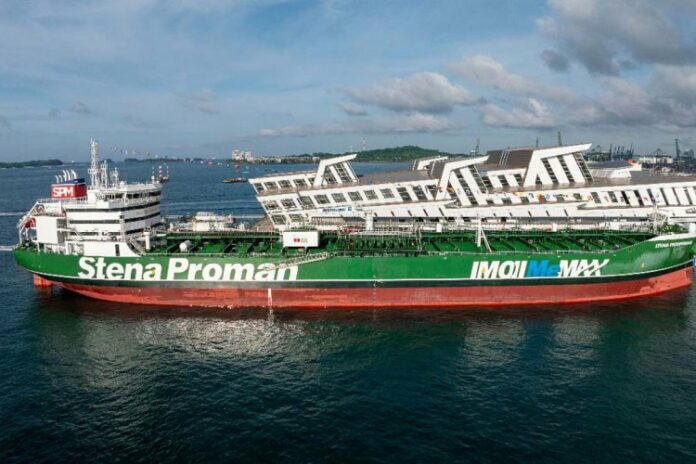
Proman Stena Bulk formally names methanol tanker Stena Prosperous in Singapore

0

After the ceremony, the 49,900 DWT IMOIIMeMAX vessel will be bunkered with a 20/80 green/conventional methanol blend, which delivers CO2e savings of 31% compared to the same voyage operated on Very Low Sulphur Fuel Oil (VLSFO), while making additional particulate matter (PM), sulphur oxides (SOx), and nitrogen oxides (NOx) savings.

The blend delivers greenhouse gas emissions reductions below the 2025 target required by Fuel EU Maritime, further underlining methanol’s viability as a pathway fuel.

Stena Prosperous is the last of six vessels in Proman Stena Bulk’s joint venture fleet to be formally named, following the order for the six methanol-fuelled tankers being placed in 2019, and the first vessel being delivered in June 2022. 

The naming ceremony was attended by representatives from Proman, Stena Bulk and guests and dignitaries from the wider shipping community. It concluded with the traditional christening and blessing, conducted by Mrs Krisztina Grütter, the vessel’s godmother.

Using methanol instead of conventional marine fuels virtually eliminates particulate matter and SOx, and cuts NOx by up to 80% during combustion. Technologies such as carbon capture, storage and utilisation used in the production process cut emissions further, and green methanol produced from biogas can bring more than 90% GHG emissions savings. By increasing the amount of green methanol in the mix as its production ramps up, ship owners can deliver on the pathway for emissions reductions set by the IMO and the EU. The viability of this is demonstrated by the 20/80 blend used this week by Stena Prosperous.

Today, all six vessels are in commercial operation, running on methanol. Two of the vessels are long-term time-chartered to provide the market with opportunities to gain wider operational experience of methanol as a marine fuel. 

Stena Prosperous has benefited from the $300m already invested by the Low Emission Methanol Shipping Company – the LEMSCO Fund – an industry-first investment fund targeting sustainable investments under Article 9 of the EU’s Sustainable Finance Disclosure Regulation. 

With four of the vessels in operation for the whole of 2023, Proman Stena Bulk has been able to track and assess the emissions performance of its fleet. This analysis shows that when the four vessels operate on methanol instead of VLSFO, the GHG emissions savings for a full year are around 5,500 tonnes.

In addition, the ships have demonstrated market-leading operational efficiency performance, as measured by the IMO’s Energy Efficiency Design Index (EEDI) methodology. For example, Stena Pro Patria has demonstrated operating performance 11% beyond the IMO’s 2025 target, setting a new efficiency benchmark for methanol-fuelled tankers.

The six-ship fleet is currently crewed and operated by Stena Sphere company Northern Marine Group, who have highlighted the technical similarities of the tankers to conventionally fuelled vessels, meaning that they do not require a completely new set of operating procedures. 

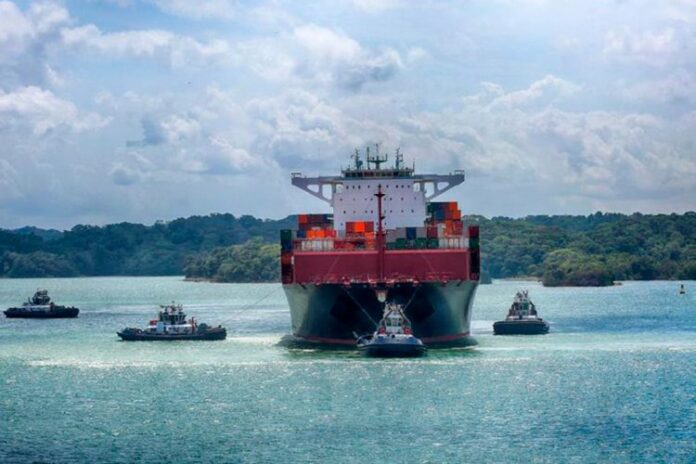
Corvus Energy to supply battery systems for 10 new hybrid tugboats servicing the Panama Canal

0

The Panama Canal Authority / Astilleros Armón contract signed in October 2023 was valued at US$150M total for the first ten vessels, each 30-meter tugboats with 70-tonnes bollard pull. 

The tugboats will be equipped with hybrid-electric propulsion systems to reduce emissions during ship towage through the Panama Canal and while docking in Panamanian ports. Corvus Energy will provide battery energy storage systems, 450 kWh of Corvus Orca ESS, for each vessel.

“Corvus Energy is pleased to have been selected to supply the battery systems for this landmark project for the Panama Canal Authority and Astilleros Armón,” says Corvus Energy CEO, Fredrik Witte. “The Panama Canal is a world-renowned, high-traffic waterway, and battery systems in hybrid-electric tugs have been proven to significantly decrease vessel emissions. The new fleet represents an important step in supporting the Panama Canal Authority’s sustainability strategy and ambition to reach net-zero GHG emissions by or around 2050.”

The Panama Canal expansion has resulted in larger container ships, LNG carriers, cruise ships, tankers and dry bulk carriers using the shipping shortcut between the Pacific and Caribbean – requiring the services of more powerful tugboats and pilot vessels. With the acquisition of these new vessels, the Panama Canal Authority is seeking to enhance its shiphandling capabilities, modernise its fleet and replace tugs it charters from other owners.

Worldwide, tugboats were among the first maritime vessels to adopt battery technology due to their near shore operations and ability to recharge regularly, with the first hybrid tugboats entering operation as early as 2009 followed by fully electric, zero emission tugboats in 2019. 

In North America, the first all-electric tugboats are entering the market now. In Western Canada, both HaiSea Marine and SAAM Towage recently launched their respective fleets of all-electric tugboats.  In the United States, the first fully electric tugboat, the Crowley eWolf, will soon begin operations in the Port of San Diego, and several other U.S. ports are applying for federal funding under the “Green Ports Program” to invest in electric tugboats and onshore charging infrastructure. 

The HaiSea Marine, SAAM Towage and Crowley eWolf electric tugs are all equipped with a Corvus Energy system, as are more than fifty percent of hybrid-electric and fully electric tugboats worldwide. As the maritime sector increasingly pursues carbon reduction initiatives, the number of hybrid-electric and fully electric tugboats worldwide is projected to grow exponentially.

Equinor, Centrica, SSE partner to develop Humber hydrogen projects

0

Leading energy companies Equinor, Centrica and SSE Thermal have launched plans for a collaboration of multiple low carbon hydrogen projects on the north bank of the Humber estuary in the UK’s North East.

The plans, which include the transformation of the Easington gas terminal, were launched in the Houses of Parliament to an audience of MPs, civil servants, industry bodies and regional stakeholders. 

H2H Easington includes proposals by Equinor and Centrica to deliver a multi-stage green and blue hydrogen production facility which will scale up over time as a hydrogen economy develops. Since a co-operation agreement was signed between the two companies in 2022, detailed engineering studies have assessed projects which could produce up to 1.2GW of blue hydrogen production and up to 1GW of green hydrogen at Easington with initial projects commissioned by the end of the decade then expansion through the 2030s.

To unlock these ambitions, proposals for a green hydrogen electrolyser have been submitted to Government as part of the second Hydrogen Allocation Round process. If successful, this initial electrolytic hydrogen system would be operational by early 2029 and would fuel switch off-takers within the Easington terminal, displacing current natural gas demand and significantly reducing the site’s CO2 footprint by 100,000 tonnes per year. An immediate next step would include hydrogen for Sustainable Aviation Fuel (SAF), which is key to facilitating the energy transition in the aviation sector.

Such a transition would also safeguard many existing jobs within the historic gas terminal whilst creating new jobs and supply chain opportunities for the future. It is estimated that the 35-year economic impact of the green hydrogen proposals at Easington, including construction, operation and decommissioning of the facility, will be in the region of £1.5bn of gross value added, supporting thousands of jobs in the region.

In addition to the above, the partnership will also explore a dedicated hydrogen pipeline that would link H2H Easington to Equinor’s proposed H2H Saltend hydrogen production facility at Saltend Chemicals Park, and to Equinor and SSE Thermal’s proposed hydrogen storage facility at Aldbrough on the East Yorkshire Coast. Collectively, these projects form the Humber Hydrogen Hub.

Equinor and SSE Thermal are currently consulting on the proposals for hydrogen storage at the existing gas storage site near Aldbrough. The use of the geologically unique underground salt caverns for storage helps to balance the fluctuating supply and demand of a future hydrogen economy whilst improving energy security.

The 45km hydrogen pipeline proposals also include a crossing of the River Humber to provide connectivity between north and south banks, whilst there is also potential for connection to the ‘Project Union’ gas network to expand across the wider Humber region.

Graham Stuart MP, Member of Parliament for Beverley and Holderness said:

“This is an exciting collection of projects which can help to deliver on the UK’s net zero goals and hydrogen targets whilst also supporting the Government’s levelling up agenda.”  

Dan Sadler, Director for Hydrogen at Equinor’s UK Low Carbon Solutions, said:

“This is a unique opportunity to link these key sites in the Humber, pairing hydrogen production with users and storage sites to create the foundational requirements for an expanding hydrogen economy throughout the 2030s and 40s. It will help to reduce emissions whilst also stimulating economic growth.”

Martin Scargill, Managing Director of Centrica Energy Storage, said:

“These projects will bring huge benefits to the Humber as we move forward to net zero. Working together, Centrica, Equinor and SSE Thermal will deliver this innovative, world leading, regional hydrogen system, that in time could see Rough connected to provide the UK with large scale, clean energy storage. We know that the UK will need to explore all possible options to meet its net zero target and these projects will support the country’s decarbonisation plans while creating jobs and certainty for the region’s industry in the future.” 

John Johnson, Director of Development at SSE Thermal, said:

“Hydrogen projects like the ones we’re bringing forward at Aldbrough can help to deliver a low-carbon future for the Humber. We know that all roads to net zero lead through the region and this collaboration aims to accelerate the deployment of hydrogen by linking multiple key sites and projects in support of the UK’s decarbonisation efforts. Ultimately, the Humber Hydrogen Hub can be a key enabler of a thriving hydrogen economy.”


RWE tests artificial reefs at offshore wind farm in the Baltic Sea

0

In partnership with Linnaeus University and cable service provider Baltic Offshore Kalmar AB, RWE is conducting a pilot study in the Swedish Baltic Sea. 

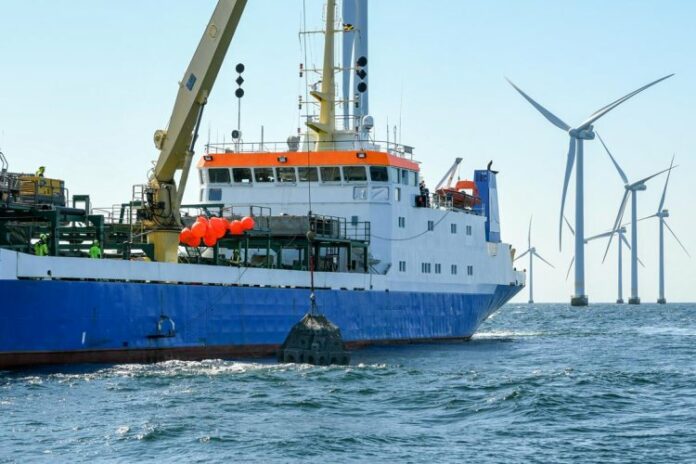
After month of preparation, collection of water samples and seabed assessments, the study has entered its practical phase with the installation of artificial reefs at RWE’s Kårehamn wind farm (48 MW, 16 turbines) 7 km off the Swedish coast. 180 carbon neutral, plastic-free reef cubes® have been deployed on the seabed to assess how marine life is settling here. The research is planned to continue until 2026. The reef cubes were designed and manufactured by ARC Marine, a leading supplier of nature inclusive solutions, who also won RWE’s “Innovation Ecology Award” in 2022.

Sven Utermöhlen, CEO RWE Offshore Wind:

“As a global leading offshore player, we are responsible for operating wind farms in harmony with nature. To deliver green electricity, we invest billions of euros annually in wind power. We are committed to expanding our portfolio in an environmentally friendly way. With this in mind, we have set ourselves ambitious sustainability targets. This study is a significant step forward. Assessing how our activities may help to promote biodiversity will enable us to take the long-term sustainability of offshore wind farms to the next level.”

Catherine Legrand, Professor in Marine Ecology at Linnaeus University:

“Research on the ecological impact of offshore wind farms is continuously increasing, however few studies include multiple interactions between the wind farm activities and the ecosystem. The study at the Kårehamn wind farm is unique in many aspects. As a shared marine space, an offshore wind farm offers excellent potential to produce green electricity, as well as providing habitat provision for marine life with no conflict. It is both exciting and challenging to follow the biodiversity of marine life almost in real time at the wind farm site.”

The objective of the study is to assess how artificial structures at offshore wind farms can promote biodiversity and support ecosystem services, such as habitat provision, nutrient cycling and water quality, hence contributing to the restoration and preservation of the Baltic Sea.

The study started in 2023 with the collection of information for the baseline scenario. This included a survey of the underwater area including sampling from the seabed and eDNA sampling to assess the ecosystem and to identify the species in the region, such as mussels, vegetation and fish. By understanding the biodiversity, the team could predict the possible impacts of the subsequent project phases more effectively and plan accordingly. 

During the installation, 180 reef cube® structures have been submerged on the seabed at Kårehamn wind farm using different sizes, which vary from 15×15 cm to 75×75 cm. The rationale for selecting this location is the previously observed development of species on the foundations of the wind turbines. The intention is to create artificial reefs for habitats and species to grow and hide in, with a special focus on macroalgae, blue mussels and various species of fish.

In the colonisation phase from 2024 to 2026 the submerged cubes and the surrounding ecosystem will be examined. This will provide valuable data and learnings for the sustainable design of future offshore wind projects.