-6.3 C
New York
Home Blog Page 173

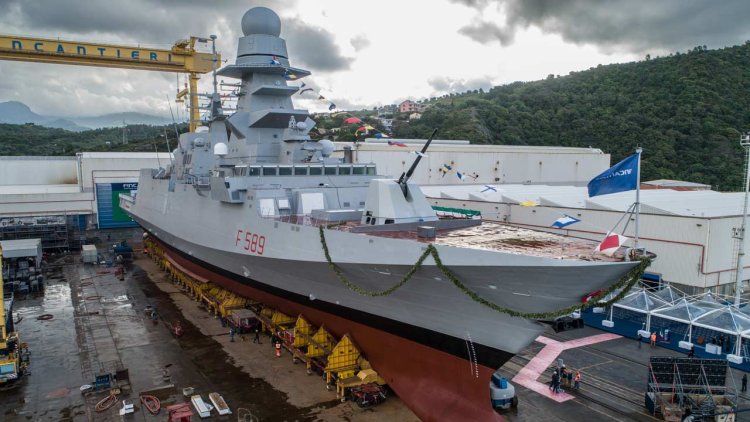
Fincantieri: FREMM frigate “Emilio Bianchi” launched

0

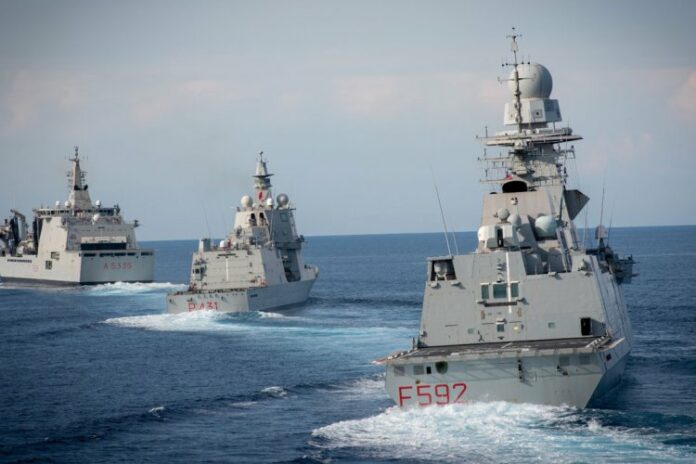
The launching ceremony of the frigate “Emilio Bianchi,” the last in a series of 10 FREMM – European Multi Mission Frigates – units commissioned from Fincantieri by the Italian Navy under the Italian-French international cooperation agreement, under the coordination of OCCAR, the joint organization for European cooperation in armaments, was held today at the Riva Trigoso integrated shipyard.

Godmother of the launch was Mrs. Maria Elisabetta Bianchi, daughter of Gold Medalist for Military Valor Emilio Bianchi.

The ceremony was held in the presence of the Navy’s Chief of Staff, Admiral Enrico Credendino, who was welcomed by the President of Fincantieri, General Claudio Graziano, and the General Manager of Fincantieri’s Military Ships Division, Dario Deste. Among others, the President of the Regional Council, Gianmarco Medusei, the Director of the Organisation for Joint Armament Cooperation (OCCAR), Joachim Sucker, and civil and military authorities also attended.
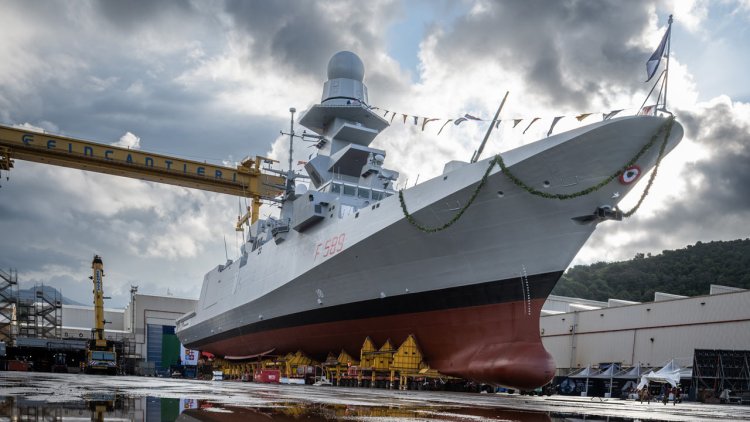
Following the launch, the unit will continue outfitting activities at the Muggiano shipyard in La Spezia and will be delivered in 2025. “Emilio Bianchi” will be characterized, like the other FREMMs, by high deployment flexibility and will have the ability to operate in all tactical situations. It has a length of 144 meters, a width of 19.7 meters and a full load displacement of about 6,700 tons and will be able to reach a speed of more than 27 knots with a maximum capacity of about 200 embarked personnel.

In the naval defense sector, FREMM – European Multi Mission Frigate is the most important joint initiative developed among European industries. The FREMM program, which represents the state of the art in Italian and European defense, stems from the need to renew the line of Navy units, including the “Lupo” and “Maestrale” classes, built by Fincantieri in the 1970s and 1980s.

Carlo Bergamini was delivered in 2012, Virginio Fasan in 2013, Carlo Margottini in 2014, Carabiniere in 2015, Alpino in 2016, Luigi Rizzo in 2017, Federico Martinengo in 2018, Antonio Marceglia in 2019, and Spartaco Schergat currently under construction at the Muggiano factory and whose delivery is scheduled for April 2025.
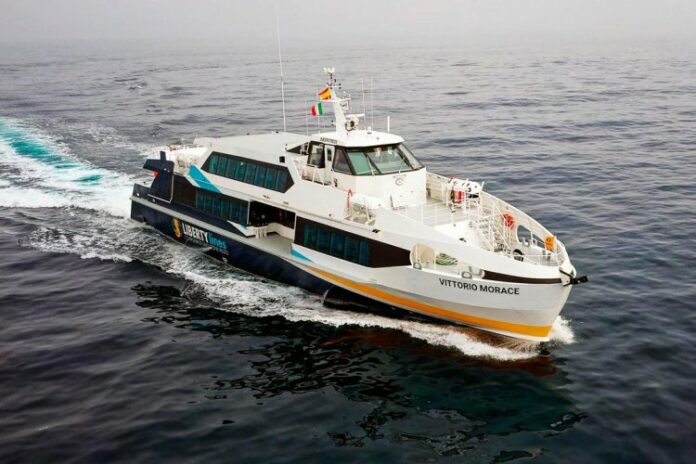
First high-speed hybrid monohull ferries in new fleet of twelve launched

0

Named Vittorio Morace and HSC Cristina M, the new 38-metre hybrid propulsion vessels have proven their ability to operate at speeds of up to 30 knots when carrying a full load, with a sprint speed of 33 knots.

The successful launches of Vittorio Morace and HSC Cristina M come after the Sicily-based operator and the shipyard Astilleros Armon worked closely with global digital shipbuilder Incat Crowther to design a state-of-the-art, high-speed, low-emissions and customised hybrid propulsion fleet.

Each vessel in the new fleet, being built by Spanish shipyard Astilleros Armon, is equipped with an integrated hybrid propulsion system that includes MTU 16V4000M65L engines providing both conventional and electric propulsion. In addition, each vessel features two e-motors, two variable-speed gensets, a battery system, electrical power management system and an MTU hybrid automation system.

This integrated system allows the fleet to enter and exit port in a zero-emissions mode at speeds of up to eight knots, with the ability to recharge each vessel via shoreside infrastructure during longer stops. The vessels can also operate in a hybrid propulsion mode, reaching high speeds while recharging their batteries via the two main engines. In a further future-focused design element, the vessels are also ready for conversion to hydrogen consumption in the future.

The new vessels are designed to transport up to 251 passengers in safety and comfort, with the main deck featuring seating for 166 passengers, five bathrooms and a kiosk/bar amidship. The upper deck seats a further 85 passengers with an additional two toilets. Large luggage racks are available in both passenger cabins, in addition to overhead luggage bins.

Commenting on the new fleet, Chief Executive Officer at Liberty Lines Gennaro Carlo Cotella, said: “With this project, we are making a sustainable investment in the renewal of our fleet, with the purpose to continue to offer high-quality services to our stakeholders and minimise environmental impact in order to achieve an emission-free future.”

Incat Crowther C.E.O. Brett Crowther said, “The launches ofVittorio Morace and HSC Cristina M provide a glimpse into the future of low emission public transport. These vessels are a smart, long-term investment by Liberty Lines as not only do they help the company sustainably expand its fleet today, but they are also future-proofed for an operationally efficient, zero-emissions future as alternative fuels become more economically viable for operators,” said Mr Crowther.

The ten remaining vessels in the fleet are expected to follow Vittorio Morace and HSC Cristina M into service between 2024 and 2029.

NYK begins first long-term biofuel test run on large crude oil tanker

0

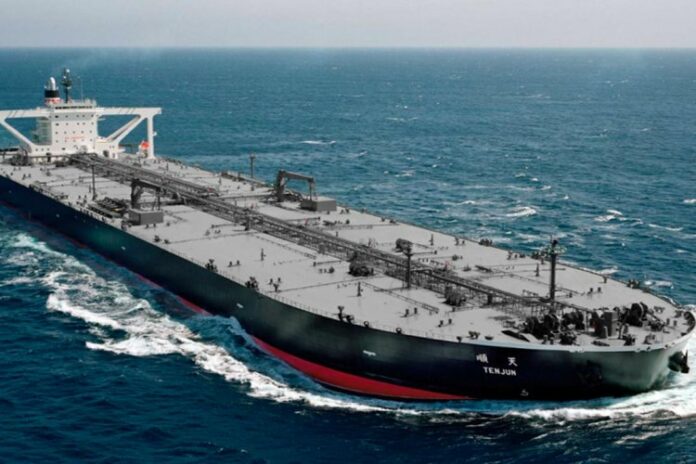
On May 2, Nippon Yusen Kabushiki Kaisha (NYK) began a long-term biofuel test run on its very large crude oil tanker (VLCC) Tenjun. The vessel received an initial supply of biofuel in Singapore and will continue to use biofuel for approximately three months to comprehensively verify the safe and stable procurement of biofuel for long-term use.

NYK has conducted many short- and long-term safety trials of biofuel use on bulk carriers, car carriers, and liquefied petroleum gas (LPG) carriers, but this is the first time an NYK-operated VLCC has engaged in a long-term biofuel trial.

Biofuels are made from organic resources (biomass) of biological origin, such as agricultural residues and waste cooking oil, and are considered to have virtually zero carbon dioxide (CO₂) emissions when combusted. Since they can be used in heavy-oil-powered ship engines, which are common on large merchant ships, biofuels are considered a key means of reducing greenhouse gas (GHG) emissions in the transition period from heavy oil to zero-emission fuels.

Vessel Particulars

  • Length : 330.00 meters
  • Width : 60.00 meters
  • Gross tonnage: 159,927 tons
  • Deadweight tonnage: 302,108 tons
  • Year built: 2008
  • Shipbuilder: IHI Marine United Shipbuilding Corporation (Kure City, Hiroshima Prefecture)

Investing to maintain high gas production at Troll

0

This will accelerate production from the reservoir and thus maintain the current high gas export levels from the Troll and Kollsnes value chain leading up to 2030.

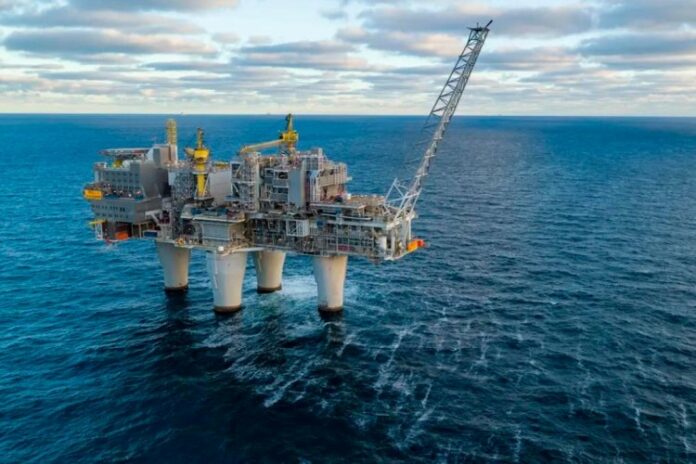
Stage 2 of the Troll Phase 3 project includes eight new wells from two new templates with subsea controls extended from existing templates. A new gas flowline will be laid as a tie-back to the Troll A platform, and the project will also perform modification work on Troll A.The first wells are scheduled to come on stream at the end of 2026.

“This is a highly profitable project that will secure high gas production from the Troll field. The partnership’s decision is important in order for us to fully utilise the capacity of existing infrastructure. We’ve chosen to use solid, familiar suppliers, most of which already have framework agreements with us,” says Geir Tungesvik, Equinor’s executive vice president, Projects, Drilling & Procurement (PDP).

“It’s a clear advantage that several of them have experience from the previous stage of the Troll Phase 3 development. We will build on this to achieve safe and efficient deliveries and implementation,” Tungesvik says.

The new infrastructure will accelerate production from the reservoir equivalent to about 55 billion standard cubic metres of gas. At its peak, the annual contribution from the new development will amount to around 7 billion standard cubic metres of gas.

“We have been working alongside our partners, Gassco and the Norwegian authorities to maximise energy deliveries from the Norwegian continental shelf (NCS) since 2022. This project will allow Troll and Kollsnes to continue their substantial contributions to the role of the NCS in guaranteeing European energy security in challenging times. The gas from Troll alone meets around 10 % of Europe’s demands,” says Kjetil Hove, executive vice president for Exploration and Production Norway.

The first stage of gas production from the Troll West gas province started in 2021 and included eight wells and a new pipeline to the Troll A platform, as well as a new inlet module. This part of the project helped extend plateau production by 5-7 years. Stage 2 will further extend plateau production by around four years and reduce the production decline over the next 10-12 years.

Plateau production of Troll gas has increased as a result of recent upgrades at the Kollsnes processing plant. Maximum production from Troll used to be 121 million standard cubic metres of gas per day. This has now been increased to 129 million. Production from the new Troll wells will amount to about 20 million standard cubic metres of gas per day.

In accordance with the Petroleum Act, the partnership will now send an announcement to the Ministry of Energy concerning the development.

Unique coral found in deep Arctic Ocean is “almost certainly a new species”

0

When you think about corals, you might imagine tropical temperatures, crystal-clear waters, and clownfish. However, corals are incredibly diverse and inhabit many different ecosystems across the planet, from the idyllic atolls of the Pacific to the darkest depths of the ocean. There’s even an abundance of Arctic corals located along the edge of the continental shelf where water temperatures are just above zero degrees Celsius (32°F).

The latest discovery was made by a team of researchers from the The Nippon Foundation-Nekton Ocean Census that’s currently on a mission to document the depths of the Arctic Ocean. They set off from Tromsø in northern Norway on May 3 aboard the ship RV Kronprins Haakon and will be wrapping up their expedition this week.

The potentially new species of coral were found living on the stalk of a crinoid, also known as sea lilies. Ocean Census released a video of their experts discussing the discovery – and, as you can see, they’re pretty excited about it.

“We’ve seen very, very few corals since we’ve been here in the Arctic. On the dive today, we saw lots of these crinoids growing, and what we found on this crinoid is a coral living on the crinoid stalk. It’s almost certainly a new species,” Professor Alex Rogers, Principal Investigator at Ocean Census, explains in the video.

“It really demonstrates coevolution in the deep sea but also how effective the remotely operated vehicle [ROV] is. We get the specimens in such good condition that those sorts of relationships are actually preserved,” Rogers added.

The curious coral is just one of the expedition’s finds over the past few weeks. They previously explored the Svyatogor Ridge, a site at a depth of around 3,700 meters (12,140 feet) within the Arctic mid-ocean ridge system that’s loaded with hydrothermal vents. In this strange environment, rich in methane and sulfur, their ROV snooped around the array of chemosynthetic communities that live here, including tube worms and shelled bivalve mollusks.

The expedition is especially significant because this environment is facing several existential threats. Along with being impacted by climate change, some of these unique habitats are being eyed-up for deep-sea mining. This would essentially involve dredging the seafloor looking for nuggets of rare metals, like lithium and cobalt, potentially causing irrevocable damage to the fragile ecosystems that dwell here.

“Understanding every aspect of our ecosystem holds immense significance. Today, we possess new tools, empowering us to uncover discoveries previously beyond our reach. Innovations such as eDNA analysis, advancements in taxonomy, and machine learning represent sophisticated means of gathering essential information,” Jan-Gunnar Winther, Pro-rector for Research and Development at UiT The Arctic University of Norway and Specialist Director at the Norwegian Polar Institute located in Tromsø, said in a statement.

“With our current capabilities to amass vast amounts of data and consolidate it effectively, there lies tremendous potential. If this data is made accessible and shared widely, not just by those who collected it, it could have a profound impact on scientific understanding,” Winther added.

First Prototype Trials of the Blue Visby solution demonstrate significant savings of CO2 emissions

0

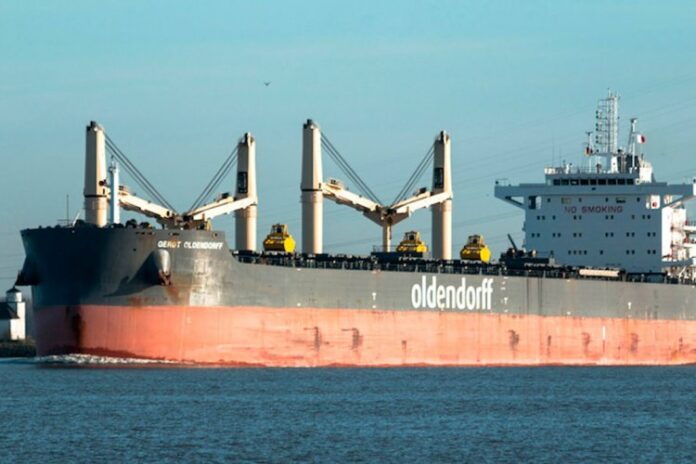
The Prototype Trials resulted in CO2 savings of 28.2% for M/V Gerdt Oldendorff and 12.9% on M/V Begonia meaning on average 17.3%, measured against the Vessels’ respective service speeds of 14 knots.

In the case of the M/V Gerdt Oldendorff, the Prototype Trial resulted in CO2 savings of 7.9% measured against the vessels intended voyage speed of 12knots. If the vessel was required to speed up to 14 knots for example to meet a laycan then the potential CO2 savings would have been 28.2%. A number of alternative benchmarks were tested in this regard involving speed, RPM, laycan dates and “Business As Usual” assumptions. The parties also had a choice as to whether to calculate the financial value of fuel savings and of the prolongation of the ocean passage by using contract rates or market rates provided by the Baltic Exchanges (also a Blue Visby Consortium member). The parties reached commercial agreement as to the applicable benchmark for the purposes of the benefit-sharing mechanism.

The level of CO2 savings in the CBH Prototype Trials was consistent with studies that had been conducted previously: 

  • (a) during the Pilot Program in 2023, during which ten voyages produced an average of potential CO2 savings of 18.9%; and
  • (b) in a series of hindcast simulations of 284 voyages in November 2021-August 2023, which had produced potential CO2 savings of 25.6% on average.

In the course of these Prototype Trials, all components of the Blue Visby Solution were deployed and subjected to rigorous testing: software, technical and operational system, as well as the benefit-sharing mechanism (“Blue GA”).

It was also demonstrated that the Blue Visby Solution does not interfere with weather routing, voyage planning or the timing of berthing – all of which were left in the hands of the participants. Indeed, the robustness of the operational side of the Blue Visby Solution prevented disruption of the Prototype Trial during a time when one of the vessels needed to deviate.

From a wider perspective, the data collected during the CBH Pilot Program in 2023 and the CBH Prototype Trials in 2024  are consistent with earlier studies and hindcast simulations of 20,580 voyages worldwide of 3,651 Panamax vessels in 2022, which showed potential CO2 savings by applying the Blue Visby Solution in the order of 23.2% (median).

The accumulating evidence demonstrates that the systemic optimisation of the ocean passage can deliver substantial reductions in emissions, in a way that is compatible with the commercial and contractual structure of bulk maritime trade, and without causing disruption, as the Blue Visby Solution does not interfere with voyage planning or with cargo operations. The Blue Visby Solution requires no CAPEX, is compatible with any other measure for reducing emissions, while its unique benefit sharing mechanism removes the obstacle of split incentives and can create financial benefits for all participants.

The CBH Prototype Trials are part of a wider program across many geographical areas and market segments, involving more members of the Blue Visby Consortium: Marubeni, Port of Newcastle and Port Authority of New South Wales. Prototype Trials with a wider group of participants will be conducted in the coming months, as the R&D phase of the Blue Visby is completed and commercial deployment begins.

CMB.TECH and Damen ink agreement for four hydrogen-powered tugs

0

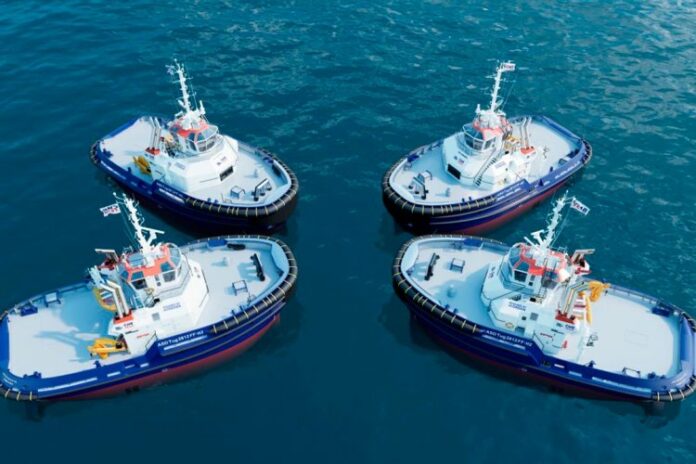
CMB.TECH and Damen has announced their collaboration on hydrogen-powered ASD Tugs. Built by Damen, these vessels use CMB.TECH’s innovative dual fuel hydrogen technology that will significantly reduce emissions.

The collaboration for the first four vessels was signed on 23 May at Albwardy Damen in Sharjah. The signing took place during the 27th International Tug & Salvage (ITS) Convention in Dubai.

Earlier that day, classification society Lloyd’s Register presented CMB.TECH and Damen with an approval in principle (AiP) for the hydrogen solution that will be installed in the tugs. 

Damen Area Sales Manager Benelux Vincent Maes said:

“We are delighted once again to be working with CMB.TECH. Our two family-owned companies share the same long-term view and commitment to the maritime energy transition. We’re looking forward to continuing our collaboration and developing the next steps to make our ports – and our world – a greener place.”

CEO of CMB.TECH, Alexander Saverys, said:

“This contract marks another very important step in the development of our hydrogen-powered vessel portfolio. Tugboats are ideal assets to start the decarbonisation of port operations. With our hydrogen tugs, every port in the world will now be able to lower its carbon emissions and create demand for green hydrogen production.”

Lloyd’s Register Chief Commercial Officer, Andy McKeran said:

“The AiP for CMB.TECH’s hydrogen dual fuel technology represents a cost-effective decarbonisation solution for tugs and will provide Damen’s new ASD tugs with dual fuel hydrogen propulsion to greatly reduce the vessels’ emissions profile. Lloyd’s Register congratulates Damen and CMB.TECH for the successful realisation of this innovative design and will continue to provide classification and advisory services that help to drive forward the maritime energy transition.”

Damen and CMB.TECH have previously cooperated on the development of a series Commissioning Service Operations Vessels (CSOV) – which are powered by hydrogen dual fuel generator sets – the so-called Elevation Series, that Damen is building for CMB.TECH’s subsidiary Windcat. 

The hydrogen dual fuel ASD Tugs 2812 FF-H2, with 80-tonnes bollard pull, that meets the most stringent IMO Tier III and EU Stage V standards, are a new step in the parties’ cooperation. The vessels will feature four highspeed hydrogen dual fuel engines, designed to minimise NOx and CO2 emissions. They will also have modular storage systems for compressed hydrogen, ensuring safe storage below deck. Each tug can carry up to 16 hydrogen bottles, storing a total of 736kg of pressurized hydrogen at 350 bar.

While these tugs will primarily run on hydrogen, they’re equipped to switch to traditional fuel if hydrogen isn’t available and can operate on 100% traditional fuel if needed. The tugs feature a total of 160m3 fuel holds.

First LNG tugboat with hybrid system goes into operation in Singapore with mtu gas engines from Rolls-Royce

0

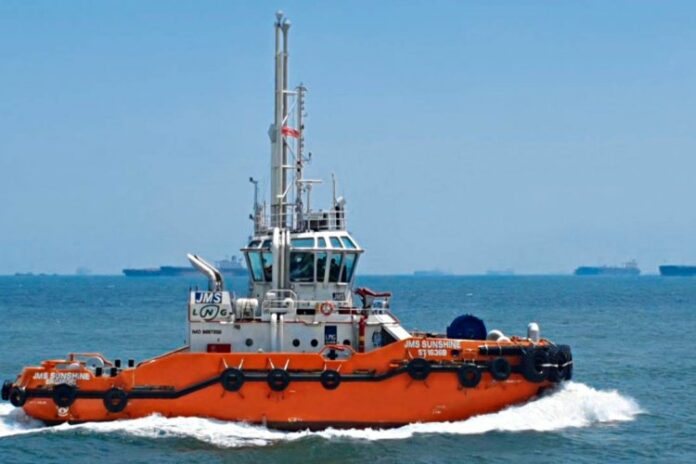
A new technological highlight has been in regular operation in the port of Singapore since mid-May 2024: JMS Sunshine, the world’s first LNG tug powered by a hybrid system with mtu gas engines from Rolls-Royce. 

Seatrium Limited, a leading engineering solutions provider to the global offshore and marine industry is the designer, builder and operator of the new 29-metre, 65-tonne bollard pull tug. The Port of Singapore has committed to the Maritime R&D Roadmap 2030 with the aim of making it environmentally friendly and reducing energy consumption.

Rolls-Royce has supplied two 16-cylinder mtu Series 4000M55RN gas engines and the gas regulating unit (GRU) for the harbour tug. Chiam Toon Chong, Technical Superintendent, Seatrium Marine Services, acknowledged:

“The handling of mtu engines is straight-forward, and user-friendly. Additionally, spare part availability and service support is excellent for the operation of tugs.”

“We are proud that we were able to contribute to Seatrium’s innovative project with our gas engines. The workboat market is one of our strategic business areas. The mtu engines were selected because they meet the demanding requirements of harbour tug operations – in terms of reliability, ease of operation, dynamic engine behaviour and low emissions,” said Chew Xiang Yu, Head of Rolls-Royce Power Systems’ civil marine business in Asia.

The mtu gas engines are already well below the limit values of current emission guidelines (such as IMO III) without exhaust gas aftertreatment. The particulate mass is below the detection limit and they emit only small quantities of nitrogen oxides.

The hybrid system is particularly suitable for the load profile of the harbour tug: it enables very precise manoeuvring and a strong bollard pull when the full power is used. To achieve maximum thrust, the total power of the two azimuth stern thrusters is 4000 kilowatts. This is achieved by adding to the 1492 kilowatts each supplied by the mtu gas engines and 500 kilowatts of electric motor power on each shaft. The tug is equipped with a battery capacity of 904 kilowatt hours. The battery power is used to absorb peak loads, for example during acceleration, to manoeuvre purely electrically in port and to supply the ship on board with electricity.

KBR, Frazer-Nash and V.Group combine expertise to strengthen UK naval capability

0

KBR, Frazer-Nash Consultancy and V.Group have announced the formation of Team Calibre to collectively position its capabilities to support the future Type 31 Through Life Support programme.

Together, Team Calibre combines the strength of V.Group’s technical capabilities from commercial shipping with the extensive complex programme delivery and technical expertise of KBR and Frazer-Nash. This encapsulates the essence of strategic collaboration that aims to ensure the Type 31 frigates are equipped for today’s challenges, and adaptable to tomorrow’s opportunities. This alliance ensures a seamless, efficient, and effective operational platform that is globally available and capable. 

Team Calibre’s experience spans the maritime and defence domain, through both ship and complex programme management. With over 100 years combined experience supporting the Royal Navy, the team has ongoing projects across key strategic locations including Portsmouth, the Clyde, Barrow, Derby, Plymouth and globally wherever the UK MoD operates. By leveraging this expertise, the Team will work in partnership with the Royal Navy to deliver world leading support, transforming the way technical ship management is delivered to UK Defence. 

Sarah Wilkes, Managing Director, Frazer-Nash, commented:

“Frazer-Nash brings deep understanding of the Type 31 platform, wider MOD asset operations and extensive pedigree of supporting UK government and the Royal Navy to accelerate technology adoption and increase operational advantage to Team Calibre. Our technical and programmatic expertise combined with the unique propositions of KBR and V.Group in the maritime domain provide a highly strategic, collaborative engagement across the enterprise to maximise the potential benefits of adopting a proven commercial model. We are excited to launch Team Calibre.”

René Kofod-Olsen, CEO of V.Group, commented:

“Managing complex vessels is at the heart of what we do; ensuring their availability 24/7 wherever they are around the world. V.Group’s commercial approach, where we always operate in collaboration with our partners and customers, will bring new levels of learning to the naval environment, delivering a Type 31 fleet that is fully available where and when required.  

“The partnership of KBR, Frazer Nash and V.Group as Team Calibre brings together the expertise and capabilities required to deliver a transformational solution for the Royal Navy, embracing new and different technologies, and delivering better outcomes for the vessels and their crew.”

Max Baldwin, Vice President Government Solutions International, KBR, commented:

“As a Strategic Supplier to the UK Government, KBR provides wide ranging support to complex international defence programmes, supporting with resilience and reliability. The strength of our combined capabilities as Team Calibre can position the MOD to continue delivering world class services that overcome the challenges of tomorrow for the safety of our nation.”

DEAS and Fincantieri united to strengthen cyber resilience of military and commercial fleets

0

An exercise aimed at testing the cyber resilience of platform system networks took place in the Tyrrhenian Sea aboard the Italian Navy’s aircraft carrier Cavour. 

Specifically, crews from the Italian and French navies were able to estimate how much a cyberattack could affect the operation of naval platforms, civilian and military, and mission accomplishment.

The test, which took place as part of the Mare Aperto 24/Polaris exercise, is the result of a partnership that DEAS Spa – a key player in the development of the armed forces’ offensive capabilities in cyberspace – has forged with the Fincantieri Group, leader in the manufacture of naval, cruise and offshore vessels and supplier of advanced, cyber-resilient technologies in the military and civilian sectors. During the exercise, the crews of the Italian and French navies, in addition to having to compete in the traditional domains (sea, land and sky), got to share the experience of managing military operations, between strategies and technology, in the new futuristic battlefield immersed in the challenging cyber dimension.

Simulated cyber scenarios led to the development of “Archimedes,” a product capable of generating cyber-attacks designed to maximize kinetic effects on navigational parameters and assess the responsiveness of crews. “Archimedes” is named after the famous buoyancy, the founding principle of buoyancy. The test, developed in real time, coordinated with cyber-attacks impacting simulated physical processes, allowed crews to assess how defenses can be penetrated and what are the best response strategies in an integrated conflict context. The findings of the maneuvers will have a strong value not only in the military, but also in the civilian sphere, which is increasingly the protagonist of physical and cyber-attacks, as confirmed by the latest events in the Red Sea and the Gulf of Aden.

These exercises allow a qualitative leap in the preparedness of the Armed Forces, representing an effective laboratory to test “live” some emerging technological solutions and the resulting innovative doctrines in the new context of hybrid conflicts. They offer a glimpse into the future not only of maritime warfare, but also of civil and commercial naval sector protection.

In this context, the cooperation between DEAS and the Navy, expanded through the partnership with Fincantieri, represents an important step forward for the research and implementation of next-generation technological systems, capable of facing the most modern security challenges in the cyber domain, innovating and significantly increasing the resilience of our country,” said Stefania Ranzato, Sole Director of DEAS.

Pierroberto Folgiero, Chief Executive Officer and General Manager of Fincantieri commented,

“In its new industrial plan, Fincantieri intends to broaden its integrator competencies from the physical domain to the logical domain of the ship, which now increasingly represents a “system of systems” and a digital asset. Cyber security is, therefore, an extremely obvious example of how the levels of automation and digitization of new ships require a strong focus on cyber threats to the ship’s intrinsic security. Collaboration with the Navy, partnerships with industry leaders and exercises such as today’s will enable the consolidation of a series of products and solutions that, once implemented in naval defense, can be successfully extended to the civilian sector, with a dual perspective typical of Fincantieri’s DNA.”