-5.8 C
New York
Home Blog Page 171

NKT names new market leading cable laying vessel able to run on methanol

0

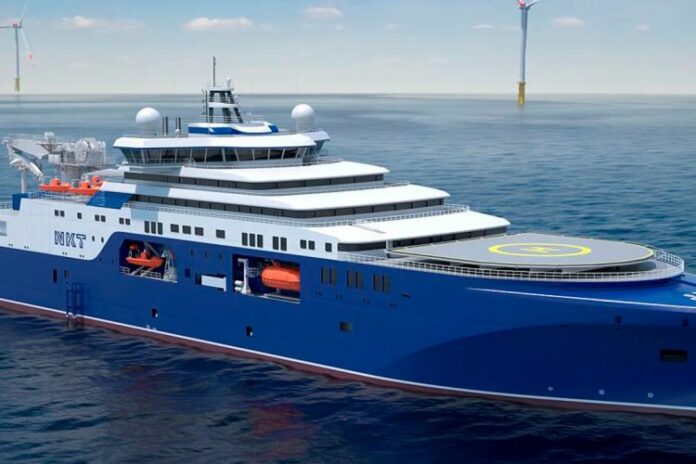
NKT has named its second cable laying vessel NKT Eleonora meaning shining light. She will boost the company’s offshore cable laying capacity, flexibility and be amongst the world’s first cable laying vessels designed to run on methanol reducing the carbon footprint of her operations.

The high-voltage power cable market has grown significantly in recent years and the outlook remains positive driven by the transition to renewable energy and electrification of societies. Transmission lines are becoming larger, longer and with an increasing focus on lower power losses which is setting new standards for cable production and installation.

In May 2023, on the back of a record order backlog and the strong market outlook, NKT announced investments in a new high-voltage factory on the existing site in Karlskrona and a new market leading vessel. The design of the vessel has now been done by Salt Ship Design and the construction is underway in collaboration with the Norwegian shipyard VARD.

Darren Fennell, Executive Vice President and Head of HV Solutions Karlskrona in NKT, says:

“We are very pleased to welcome NKT Eleonora to our fleet. She is an important strategic asset which enhances our installation capacity and capabilities to ensure efficient project execution and meet the evolving demands of our clients. The decision to build a vessel designed to run on methanol is driven by our strong commitment to sustainability and connecting a greener world through our power cable solutions.”

Building upon the operational experience and cutting-edge technology featured on NKT Victoria, the NKT Eleonora will represent the next generation in terms of design and capabilities. Equipped with three turntables, she will offer a power cable-laying capacity of 23,000 tonnes and host a large range of subsea tooling for precise installation and service of offshore cables.

The vessel will be constructed in parallel with NKT expanding its site in Karlskrona with a new high-voltage offshore cable factory. Both assets are expected operational from 2027.

NKT Eleonora key facts:

  • Cable laying capacity: 23,000 tonnes on 3 turntables
  • Dimensions: Length 176 meters, breadth 32 meters
  • Schedule: Vessel is expected operational from 2027
  • Fuel: Dual fuel. Methanol and HVO/marine diesel oil
  • Engines: Wärtsilä 32 Methanol Engines 
  • Shipyard: VARD, a Norwegian designer and builder of specialized vessels
  • Design: Salt Ship Design
  • Main suppliers: ABB (Onboard DC Grid power system and aft Azipod electrical propulsion), Wärtsilä (engine maker, front tunnel and azimuth thruster), NOV REMACUT (cable lay system, cranes and mission equipment)
  • Name: NKT Eleonora means shining light and is a reference to NKT’s central position in transmitting power through its cable solutions and to the bright future ahead of the company driven by the growth journey. Further, Ulrika Eleonora was a Danish princess with a German mother who became the queen of Sweden and her strong Nordic roots represents NKT’s Nordic heritage and strong presence across the Northern European countries.

AIMS helps marinise helicopter heavy cargo transport system

0

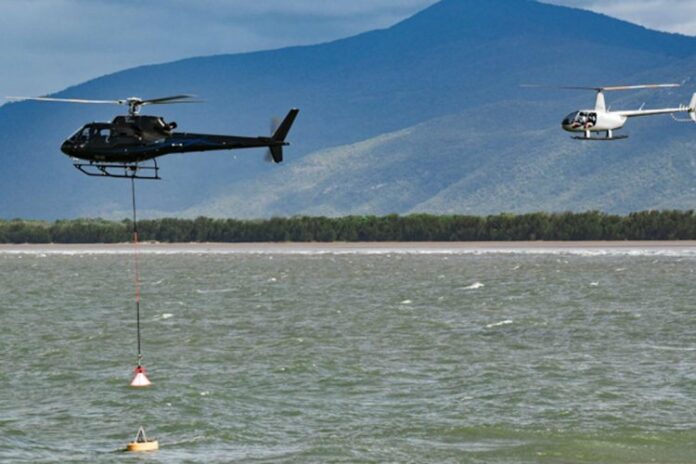
Townsville Helicopters trialled the modified Talon Auto-Loc Cargo Hook System at our Queensland Government supported tropical marine technology test range ReefWorks twice in May.  

Previously, this system was only used on land. 

The helicopter quickly deployed, and then retrieved the modified 375kg AIMS mooring (buoy, chain and anchor) from the waters of the ReefWorks Inshore Test Range and deposited it onto the wharf. 

This was achieved without the assistance of land or sea-based personnel, during adverse weather conditions of wind and rough seas. 

Townsville Helicopters Chief Pilot Tim Tanner said retrieval of the AIMS buoy was initially trialled on land. 

“Phase two consisted of still water testing on a dam,” he said.  

“The buoy was equipped with an anchor and a 9m chain to secure the buoy when released. 

“It was successfully retrieved four times. However, after that, the Talon probe shifted and the Talon Auto Lock was unable to attach to the probe.” 

AIMS senior mechanical engineer Chris Allen said following the still water trial, he modified the buoy to incorporate a rigid probe system to ensure consistent auto lock attachment to the probe. 

Industry representatives were invited to the demonstration at ReefWorks last week. 

ReefWorks Project Director Melanie Olsen said it was an exciting new capability that could provide marine organisations such as AIMS with alternative, safe methods to deploy and recover moorings and autonomous systems without needing at-sea support crew, especially in adverse weather conditions.  

“It enables buoy recovery when time is of the essence, such as in preparation for incoming cyclones,” she said. 

Multraship names ASD tug during fleet modernisation

0

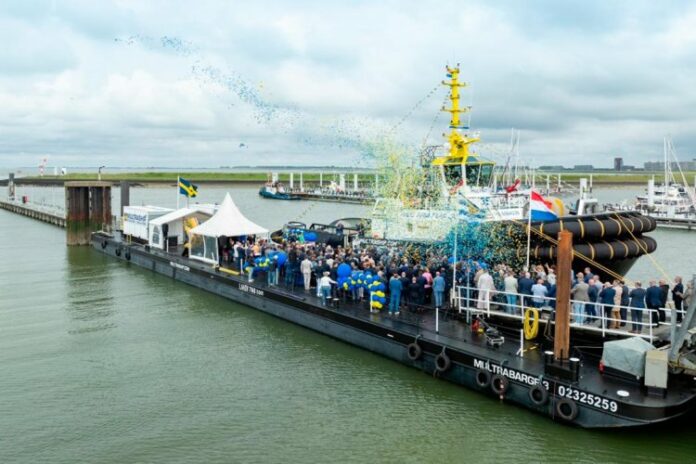
The vessel is a Damen ASD Tug 3212. Multraship’s HR Manager, Mrs Chrétienne Huisman did the honours and wished the tug and her crews fair winds and following seas.

Damen and Multraship signed the contract for the vessel – together with a second, identical ASD Tug 3212 – in June last year. Prior to the contract, Damen had already commenced construction on the tugs as part of its practice of building standard vessels for stock, ensuring its clients a fast delivery of a reliable product.

Multraship’s Managing Director, Captain Leendert Muller, said:

“Our business has grown to meet additional customer and project requirements, and as such, we invested in additional vessels and have grown our team both at sea and onshore.”

“Together with Multratug 35, we ordered three ASD tugs from Damen, which have been built in Vietnam. Multratug 34, an ASD Tug 2813, has already been delivered and is in service in Oman. The third, Multratug 36, has been delivered in April and is now sailing to The Netherlands on her own keel. She is expected to arrive early July after an approximate 13,500 miles journey. Multratug 35 and 36 are 32-m tugs to ASD Tug 3212 design for deepsea and coastal towage, salvage and other operations,” Muller added.

Both Multratug 35 and its forthcoming sister are 32m tugs with a bollard pull of 88 tons. Though built to Damen’s proven design, they have been substantially upgraded to Multraship’s high standards and requirements with a series of options. These include compliance with IMO Tier III requirements. This is achieved with the installation of Damen’s in-house developed Marine NOX Reduction system. 

This modular, selective catalytic reduction (SCR) system reduces NOX emissions by 80% compared with IMO Tier II requirements. Additionally, Damen has installed the tug with FiFi 1 firefighting systems and it has been upgraded for anchor handling and related offshore operations. Crew accommodation space has been enhanced with additional insulation and rubberised to provide greater comfort.

Damen Sales Director Benelux, Mijndert Wiesenekker, said,

“On behalf of Damen, we congratulate Multraship on their new vessel and thank them for once again placing their trust in Damen. We are confident that Multratug 35 will make a positive addition to the Multraship fleet, contributing to the company’s towage and dedicated project operations. We are looking forward to seeing the vessel in operation and to the arrival of her sister vessel in the coming weeks.”

Muller commented that the demand for Multraship’s services has been mainly driven by project requirements. However, it also reflects Multraship’s ongoing efforts to uphold a high-quality and diverse fleet, which enables them to handle both complex and routine harbour and sea towage requirements as well as salvage and emergency response incidents.

“With these new additions to our fleet, we remain committed to providing services of the highest standard. Part of this is ensuring our fleet is equipped to provide rapid, reliable, and safe operations at all times. We know we can rely on Damen to meet our specifications and deliver high-spec vessels, and we are very pleased to formally welcome Multratug 35 to our fleet,” Muller added.

Autonomous ships are on the horizon: Is AI ready to take command?

0

In Norway, technological developments are paving the way for shifting more cargo transportation from the road to the sea via small, autonomous, electrically driven ships. AI will undoubtedly play a crucial role in rendering autonomous ships a viable prospect, also in response to the shortage of skilled seafarers and the ever-increasing complexity of maritime operations.

AI is already aboard ships, but the tasks we entrust such systems to are, as of now, quite limited. To transition towards use of AI in safety-critical applications, we need to be able to provide the reasoning behind an AI’s decision-making, as well as the degree of certainty or uncertainty associated with those decisions.

To be effective, AI must be integrated into autonomous ships in a safe manner. We have investigated which tasks  that can safely be handed over to AI systems today. 

Currently, the technology is not at a developmental stage at which AI systems can fully assume the role of the ship master. This is due to the lack of methods that provide sufficient trust that AI will make correct decisions in all possible situations it may encounter. 

We need to know more about why a decision is made, as well as how certain AI is in its own decision. 

Strict qualification requirements

The performance of an AI model relies on the dataset it is trained upon. To draw an analogy with road biking: If you’ve only biked on country roads, biking in urban traffic might be a challenge.

The novel experience of biking in the city gives the opportunity to train “on the job”, and you will probably learn from this experience quite quickly. Unfortunately, the only way to check if you have learned enough is through testing. 

This is also the case in the shipping sector, which operates with a strict regime for the qualification and approval of the technologies installed on ships. 

Any AI tool, as for other technologies, must demonstrate that it is fully capable of carrying out the tasks to which it is assigned. This means that an AI-based system must be capable of handling any possible situation it may encounter. This may not be possible, as the dataset it will be trained on is finite.

As of now, we are beginning to understand what may be needed to effectively train AI. Nevertheless, the specific criteria that need to be established before AI can be entrusted with the command of a ship remain unknown.

Two potential applications

AI refers to a wide variety of technologies including “machine learning” and “deep learning”. When referring to AI in connection with the shipping sector, we usually consider the application of one or both of these categories to one of the following purposes:

* AI systems used in conjunction with sensors such as cameras or radars designed to observe what is happening around a ship and to generate an understanding of the situation in which it finds itself. This is often referred to as situation awareness or electronic lookout. 

* AI systems that make decisions as to what action a ship should take based on the situation awareness it has developed. For instance, such a decision may enable the ship to implement an action that changes its course or speed to avoid colliding with other ships.

AI uncertainty

Both applications are possible, but we must exercise caution. There is a significant difference between using AI to facilitate situation awareness and using AI to make decisions. 

AI systems are particularly well suited to assist us in observing what is going on around a ship at sea. They are useful for processing data we collect from various sensors to generate situation awareness. They can identify objects and inform us what the objects are. Which ship am I looking at? What is the wave height? Are there any buoys in the area? What is the distance to land?

The problem arises when an AI tool encounters a situation that it has not been exposed to before. In these cases, the model will need to extrapolate based on available data, and in some cases “guess” the answer as best it can. 

For instance, when several ships meet in close proximity, the AI system will need to determine the correct decision to make based on “good seamanship”. It will most likely have never experienced the situation before and end up “guessing” what is best to do. 

Remote operation centres can assist

Most users of ChatGPT have experienced strange answers to many of their questions. This is due to the performance of the technology being limited by the dataset it has been trained on. If it has not encountered a given situation as part of its training, it will need to extrapolate, and in some cases “guess”.

As we currently do not have systems in place to evaluate how certain or uncertain an AI system is in its decision, we cannot safely allow AI to take control of a ship. Humans must still be involved to ensure safe ship operation. 

This does not mean that autonomous ships are out of reach. Remote operation centres can be used to monitor the operations of an autonomous ship. Operators in the centre may also take control when necessary. Examples of such situations include complex navigation, or instances of high AI model uncertainty. Such a handover must, however, take place in a safe and timely manner.

This is an operational solution that may become a part of the qualification of AI technologies for ships. Nonetheless, it does not solve the underlying challenges associated with utilizing such AI-based systems. 

Making AI aware of its own uncertainty

We cannot expect that AI systems will be permitted to make safety-critical decisions on ships in the immediate future. 

To use AI safely, an initial task will be to develop methods that render AI aware of its own uncertainty. In other words, we must provide methods to notify users of situations in which the AI is unsure of its answer – instead of simply guessing. 

The next step will be to understand why an AI system makes the choices it does, thereby building trust in the system. Nonetheless, thorough testing will in both be essential to verify the robustness of AI models before they can assume command of a ship. 

Begin by automating certain tasks

In the short term, decision support systems for situation awareness may be a natural first step towards AI-based navigation. An electronic lookout can automate critical navigation tasks and significantly reduce the cognitive load on crew members, thereby enabling safer operations with fewer crew members. 

By stepwise acceptance of such systems, we can increase the deployment of decision support systems, which, in turn, can build the necessary expertise and understanding around such systems. Hence, decision support systems will serve as a fundamental building block for autonomous navigation. 

Looking ahead, we will undoubtedly see increased integration of AI-based functions on ships. However, only time will tell if AI will ever be ready to fully take command.

Source: SINTEF

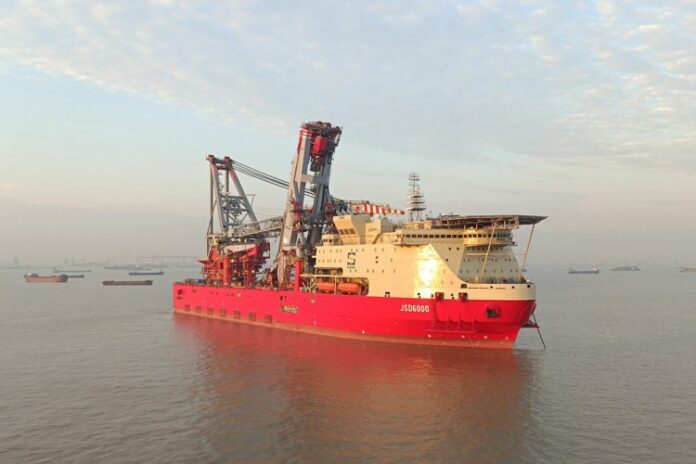
Saipem strengthens its E&C fleet with bareboat charter of latest generation ship JSD6000

0

The completion ceremony of the JSD6000, a latest generation ship for offshore heavy lifting, construction and pipelaying, took place at ZPMC’s base in Changxing.

Saipem has signed a long-term charter contract for the JSD6000 with ZPMC, a Chinese state-owned port and naval machinery manufacturer. The signed contract provides for the bareboat charter of the ship for a five-year duration, plus two extension options of one year each.

The vessel will be delivered to Saipem in June 2024 and will thus become part of the company’s fleet.

The charter of the JSD6000 is in line with Saipem’s capital-light strategy defined in the Strategic Plan and allows the company to expand its offer with an additional vessel which meets the highest standards of safety and environmental protection. It also consolidates Saipem’s positioning in the deepwater subsea installation services market, a sector experiencing an increasing demand cycle.

Equipped with a DP3 dynamic positioning system and a heavy-lift capacity of up to 5,200 tonnes, the JSD6000 is able to lay pipelines up to 36″ diameter in J-Lay mode and pipelines up to 60″ in S-Lay mode, at water depths up to 3,000 metres.

EPS partners with DeepSea Technologies for full fleet roll-out of AI performance solution

0

Eastern Pacific Shipping (EPS) has entered into an agreement with DeepSea Technologies to implement a comprehensive, fleet-wide deployment of DeepSea’s pioneering Cassandra Performance Monitoring platform. 

This strategic partnership will deepen EPS’ existing commitment to exploring digital solutions, and comes after an extensive trial process on the accuracy of DeepSea’s high-frequency AI performance models.  

By leveraging DeepSea’s Cassandra system, EPS will monitor its diverse and extensive fleet in real-time, through accurate AI-generated digital twins of vessel machinery. The fleet spans across multiple segments, including bulk, tanker, gas, container, and PCTC vessels. The implementation of this advanced technology will enable EPS to harness high-frequency data across all segments.  

EPS is recognised as an industry leader in the adoption of innovative technology in its fleet. Notably, the company is distinguished by its modern and diverse fleet composition equipped with high-frequency sensors. These sensors facilitate the collection of granular data, providing unparalleled insights into fleet performance. 

DeepSea Technologies, a trailblazer in the high-frequency data revolution within the shipping industry, brings a wealth of expertise in AI modelling and data aggregation. Since its inception, DeepSea has been dedicated to advancing high-frequency data solutions in maritime operations.

The collaboration between EPS and DeepSea Technologies will equip EPS with precise and detailed modelling and analytics. The Cassandra solution will deliver the most advanced and current understanding of the entire fleet’s performance, enabling EPS to make well-informed and dynamic decisions in real-time. This enhanced decision-making capability will allow EPS to minimise fuel consumption, reduce GHG emissions, and support its decarbonisation goals.

EPS’ Fleet Performance Manager Pavlos Karagiannidis explains:

“As we embark on this journey of digital transformation, harnessing the power of DeepSea’s Cassandra platform, we’re not just optimising performance. We are charting a course towards a more sustainable and efficient future for maritime operations.”

DeepSea are very pleased to be working with such an esteemed partner. As outlined by CEO Konstantinos Kyriakopoulos,

“We are very excited to start rolling out our solution across EPS’ diverse fleet and look forward to continuing to improve our offerings through the feedback of such a leading player in the industry.”

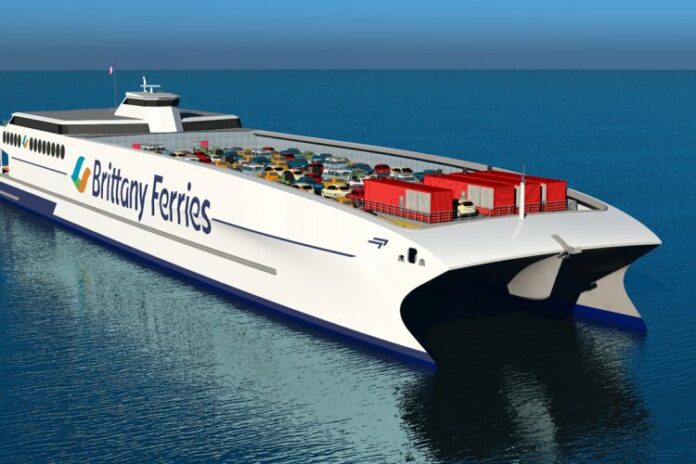
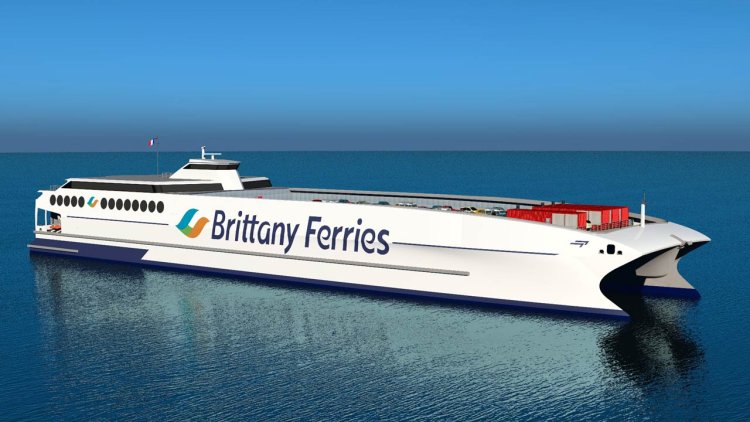
Brittany Ferries, Wärtsilä and Incat partner on zero-emissions ferry project

0

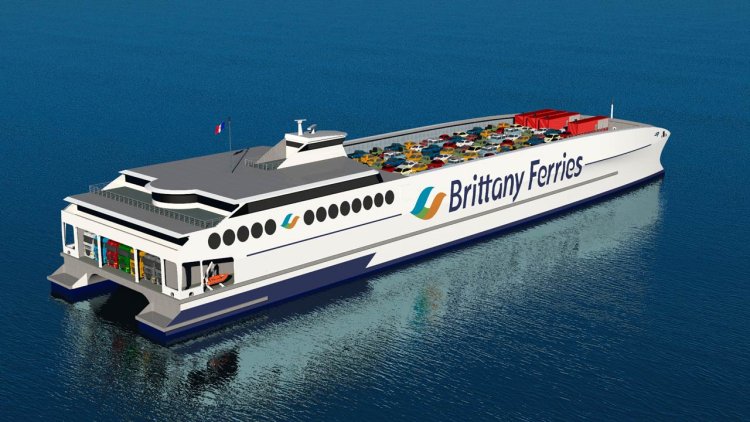
The project comes as Brittany Ferries nears completion of the biggest fleet renewal programme in its history. Five new vessels will have joined the fleet between 2020 and 2025, including two LNG-powered ships (currently in service) and two shore-power-ready LNG-electric hybrids.

The tripartite deal brings together heavyweight marine partners with complementary strengths. Expertise includes design and construction of fast craft, all aspects of engineering and technical needs, and experience in operating a large and diverse fleet.

Wärtsilä is a supplier to all five new ships in Brittany Ferries’ on-going fleet renewal project. This includes LNG engines that power Salamanca, which joined the fleet in 2022, and Santoña in 2023. In addition, Wärtsilä is installing LNG-hybrid drivetrains for hybrid vessels, currently under construction and set to sail for Europe by the end of this year.

Brittany Ferries took delivery of an Incat fast-ferry in 2005. Under the name Normandie Express, she sped from Tasmania to France and served the company until 2021. She is currently under charter from Brittany Ferries to Condor Ferries operating with the name Condor Voyager. She operates St Malo – Channel Islands routes.

Brittany Ferries is a minority shareholder of Condor Ferries and chief executive Christophe Mathieu is also Condor’s CEO.

“This is an important project as we look at different ways to reach net zero by 2050,” said Christophe Mathieu. “All-electric power is a potential solution, best suited to shorter ferry routes. At this stage we don’t know what is feasible, and upon which route, but what we can say is that trusted partners will help us scope it out. Upon completion of the project we can move quickly. Brittany Ferries has a track record of walking the talk when it comes to leading the industry on sustainable ferry travel, as our investment in LNG and hybrid ships shows.”

“Ferries play a vital role in meeting the growing demand for environmentally sustainable transport options, and the investment Wärtsilä makes in R&D to develop technologies and integrated solutions are key in enabling this development,” added Roger Holm, President of Wärtsilä Marine and Executive Vice President at Wärtsilä Corporation. “This is why we are proud to have been selected to support Brittany Ferries in their goal of bringing cleaner vessels to the regions in which they operate. As a leader in shaping the decarbonisation of the marine industry, we value our long-term relationship with both Brittany Ferries and Incat, sharing a joint commitment to accelerate the industry towards net-zero emissions shipping,”

“Incat has long standing and successful relationships with Brittany Ferries and Wärtsilä, built upon shared values and a vision for innovation and environmental sustainability,” added Stephen Casey, Chief Executive Officer Incat  “We know that battery electric propulsion coupled with lightweight aluminium vessels is the ideal choice to eliminate emissions, and we are thrilled to be continuing our relationship with both Brittany Ferries and Wärtsilä as we collectively lead the next evolution of sustainable maritime transport throughout Europe.”

Damen delivers third FCS 2710 Hybrid vessel to Purus

0

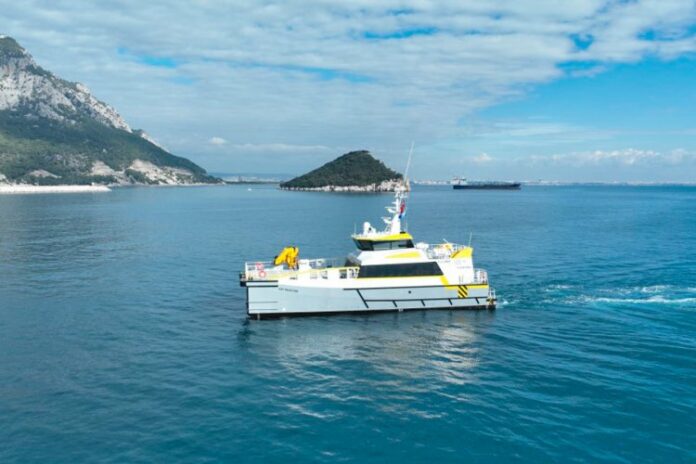
Damen Shipyards Group has delivered the third in an order of three Fast Crew Suppliers (FCS) 2710 Hybrids to Purus.

Purus has the ambition to operate the most environmentally conscious fleet, including crew transfer vessels – a goal aligned with Damen’s aim to become the most sustainable maritime solutions provider. The vessels are fitted with 190 kW battery arrays that enable them to sail zero emissions while in harbour and when loitering at offshore wind farms.

In addition to their hybrid capabilities, the FCS 2710 Hybrids are IMO Tier III compliant, with significantly reduced NOX and SOX emissions. With this performance, Purus aims to directly provide its clients with the benefits of reduced emissions and fuel consumption.

The contract for the three vessels was signed in October 2022 during the Damen Maritime Festival, an annual event the shipbuilder holds at its HQ in the Netherlands to showcase the latest maritime solutions.

The latest delivery, Lowestoft, joins recently delivered sister vessels Tenby and Padstow – all named in honour of British ports – in the company’s growing fleet. Purus currently has a further eight vessels on order with Damen – a 90-metre Commissioning Service Operations Vessel, three FCS 3210 vessels, and four additional FCS 2710 Hybrids – each of which is developed to offer low emission performance.

Damen Sales Manager UK and Ireland Frederik van der Linde says,

“We are very pleased to have delivered these three vessels to Purus and by initial reports of their strong performance. It’s a pleasure to see the close partnership between our two companies continuing to develop. We both have a firm commitment to increase maritime sustainability and I’m very much looking forward to our continued collaboration towards these goals in the future.”

Following the delivery of the Padstow and Tenby, the vessels went straight on to charter where they are performing well. Purus is proud to have extended its fleet with the first FCS 2710 Hybrids. The company is looking forward to the delivery of the additional vessels that will enhance its operational capabilities and strengthen its long-standing partnership with Damen.

Damen will support the FCS 2710 Hybrids deliveries via their Service Hub in Southampton, UK. Purus will have access to local support, both scheduled and unscheduled, as well as to spare parts and components to help them ensure maximal uptime.

Research project evaluates the impacts of the fuels offered to solve decarbonization dilemma

0

A research project which brings together The Cambridge Centre for Advanced Research and Education in Singapore (CARES), Laskaridis Shipping Co. Ltd and Metis will evaluate the real impacts of the fuels offered to solve shipping’s decarbonization dilemma. 

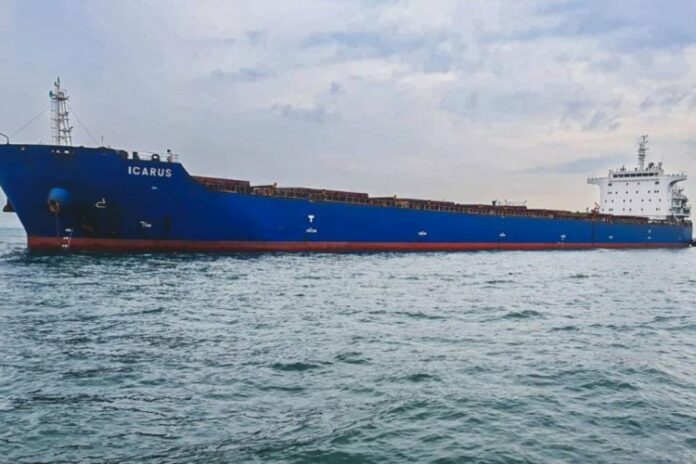
The three-way collaboration will make high frequency data captured by analytics and performance evaluation specialist Metis from the Laskaridis Shipping Co. LTD in-service bulk carrier ICARUS available to CARES. 

With funding from Singapore’s National Research Foundation, data scientists at CARES have developed tools to model ship lifecycle pathways towards decarbonization. These include the lowcarbonship.com online calculator, which helps users to compare vessel performance across a range of fuel and decarbonisation options, including Heavy Fuel Oil, on-board carbon capture and others.

Professor Nondas Mastorakos from CARES said:

“We are fortunate to collaborate with Metis and Laskaridis Shipping Co. LTD. who have kindly agreed to give us fuel consumption, weather and routing information. This will allow us to apply our modelling tools and provide “what if?” answers based on realistic data. In this way, effective decarbonization strategies can be developed quickly.”

Integrating individual vessel characteristics such as weight, volume and cargo displacement into the modelling, as well as energy consumption and emissions data, generates realistic inputs to develop an accurate picture of a ship’s future performance across a range of fuel options. The collaboration will create an invaluable database for projecting ship CO2 reductions, based on a granular analysis that goes far beyond estimates based on average fuel consumption and routing.

“The maritime sector is considering many decarbonisation options to reduce its environmental footprint,” said Panos Theodossopoulos, Chief Executive Officer, Metis. “However, no single option is emerging as a clear winner. Consensus suggests that shipping’s carbon neutral future will rely on a range of alternative fuels, supply chains and technologies. 

“This research provides key examples of the way digitalization and advanced analytics will help ship owners develop successful pathways towards decarbonization which balance their commercial and sustainability imperatives.” 

Laskaridis Shipping Co. LTD. has prioritized investing in digitalization and data analytics in order to achieve greater ship efficiency and measurable progress towards decarbonization across its fleet.

Nikolaos Tsoulakos, Innovation & Technology Manager of Laskaridis Shipping Co. LTD, emphasized:

“The high-frequency data collection systems installed on our vessels serve as the foundation for harnessing the potential of AI. Through collaboration with CARES and Metis on this initiative, our aim is to contribute to the scientific community by sharing data and providing valuable insights to the maritime sector through data analysis and performance analytics. Our objective is to achieve operational excellence, reduce the carbon footprint, and advocate for the widespread adoption of digitalization among maritime enterprises.”

Last year, Metis and Laskaridis Shipping Co. LTD. collaborated to secure the first Bureau Veritas (BV) DATAINFRA notation, recognizing the bulk carrier LETO’s data infrastructure for reliable collection, transmission, storage and sharing data. LETO also received BV’s SMART (EnE1-W, -S, -Em) notation for the smart functionality on board covering energy efficiency, speed optimisation, weather routing and emissions monitoring. 

Ukraine destroys two Russian boats in Crimea

0

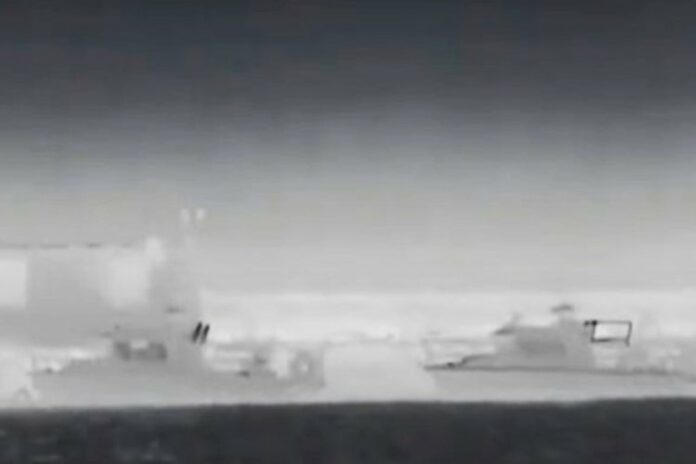
On May 30, 2024, a special unit of the Defence Intelligence of Ukraine Group 13, using Magura V5 strike marine drones, effectively attacked the Russian ship and boat fleet in temporarily occupied Crimea.

Through dense fire, Ukrainian drones broke through to the Vuzka Bay and hit two high-speed transport and amphibious boats, which were standing on the dock.

According to the intelligence officers, during the operation, the Russian invaders scrambled Su-27, Su-30, Su-35, and MiG-29 fighter jets, as well as Be-12 and An-26 aircraft, 32 times to intercept the drones.

It is reported that Ka-27/29 and Mi-8 helicopters were also involved in the interception. They tried to hit the drones with on-board weapons and with volleys of unguided aircraft missiles.

The video shows the explosions of airborne missiles and the attack of a Russian Mi-24/Mi-35 attack helicopter, which tried to hit a maritime drone with a nose gun.

In an attempt to neutralize the drones, the Russian military also randomly used small arms and 30mm guns.

The intelligence agency emphasized that a successful operation was made possible due to the support of the global United24 platform. The attack drones were presumably purchased with the funds of this Foundation.

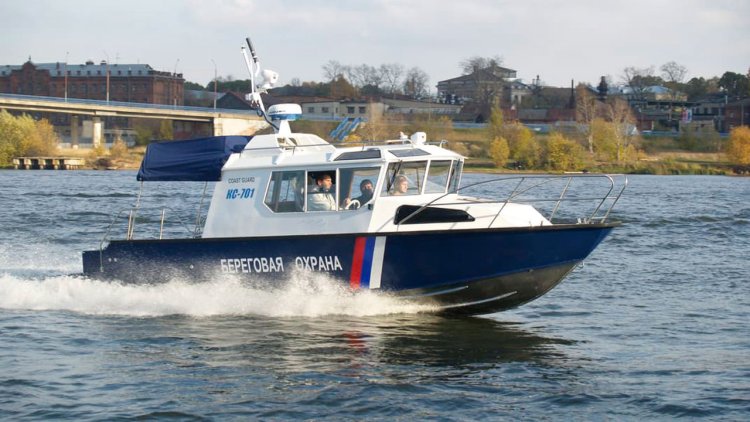
KS-701 Tunets

The KS-701 is an 8.8-meter aluminum boat with a diesel power plant manufactured by the Kostroma Ship Mechanical Plant.

The vessel is designed, among other things, to perform special tasks and patrol operations and is used by the Coast Guard units of the FSS Border Service.

A boat of the same type was destroyed last year by the naval aviation of the Ukrainian Navy in the northwestern part of the Black Sea during an attempt to land enemy personnel.

Source: Militarnyi