-5.3 C
New York
Home Blog Page 170

Tototheo Global-Neuron partner to bring AI optimised satellite connectivity to maritime industry

0

Tototheo Global and Neuron have announced an agreement to deploy Neuron’s AI-powered quality of experience (QoE) management platform to vessels contracted to Tototheo. 

Through this partnership, Tototheo Global and Neuron will address a growing need for ships as they increasingly engage with multiple satellite providers and networks – the need for increased transparency and technologies to help vessels switch seamlessly between different service deliveries.

The agreement follows proof of concept tests verifying that Neuron’s QoE analytics solution, Neuron 360, enhances connectivity robustness with deep insights that can be used to improve onboard connectivity operations and performance.  With this partnership Tototheo Global and Neuron will work with customers to integrate real-time connectivity data from the antennas, routers and third-party systems on their ship’s end-to-end network, providing a holistic view of their connectivity and QoE on one vendor-neutral platform.

“Multi-network services are becoming widespread in commercial shipping, which makes it critical that there is transparency for the end user on the performance management of connectivity as a whole,” said Despina Panayiotou Theodosiou, co-CEO Tototheo Global. “Neuron 360 will ensure more uptime by bringing the visibility that makes it easier, quicker and less costly to resolve shipboard communication issues.” Neuron 360 will be offered as an additional reporting tool for Tototheo Global customers. 

Ms. Panayiotou Theodosiou added that Tototheo is part-way through a proof of concept with Neuron Grid, an AI-powered network management solution that enables intelligent network orchestration across multiple providers, orbits and networks. Neuron Grid integrates connectivity services offered via LEO, MEO, GEO, 4G, 5G and/or Wi-Fi and consolidates them into a single channel. It then intelligently routes traffic across all available services and providers to ensure reliable coverage in any location at the most optimal QoE, while also managing bandwidth and cost constraints. 

“We see Neuron Grid as an added value solution which will help clients reduce their costs in network management, freeing up resources, while ensuring a high-quality experience and delivering even more robust network connectivity,” said Ms. Panayiotou Theodosiou. “In partnership with Neuron, Tototheo will deliver a market leading AI-driven solution for network management.”
 
“In the era of multi-network satellite service provision for ships, the speed, accuracy and constant availability of AI to optimise routing selection will drive better connectivity performance while also eliminating the operating time and money lost to manual interventions,” she said.
 
“Intelligent multi-provider, multi-orbit orchestration will unlock a number of new use cases for shipping companies, with the ability to quickly scale from a few megabits to hundreds as needed, while keeping QoE high and total cost of ownership low,” said Benny Retnamony, founder and CEO of Neuron. “Through our partnership with Tototheo, we look forward to bringing the Neuron platform to more companies to help accelerate the future of smart shipping.”
WinGD, Alfa Laval, ABS and K Shipbuilding join forces for ammonia-fuelled tanker design

0

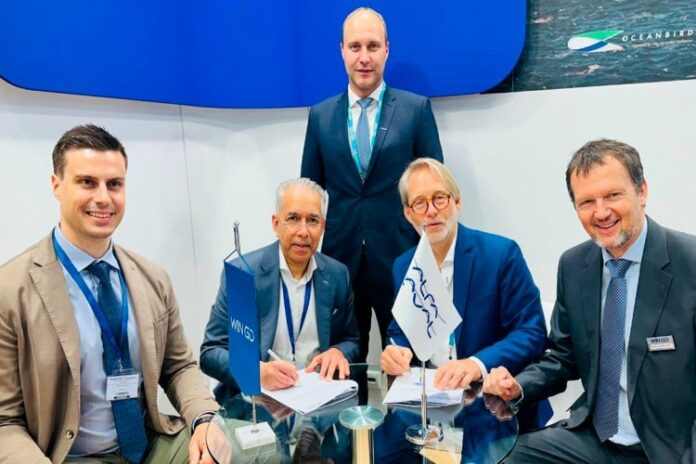
Swiss marine power company WinGD, Swedish marine technology leader Alfa Laval and the American Bureau of Shipping (ABS) will work with Korean shipbuilder K Shipbuilding (KSB) on the development of an ammonia-fuelled MR tanker design, under a memorandum of understanding signed in April. The design will feature a 6X52DF-A engine from WinGD.

WinGD will work with KSB to deliver fuel gas system specifications suitable for the vessel application and the selected engine, while Alfa Laval will deliver the detailed documentation for the final fuel gas system design. The design will be reviewed by ABS, with the aim of issuing an approval in principle.

WinGD Vice President R&D, Sebastian Hensel said:

“After early orders for bulk carriers and ammonia carriers, it is encouraging to see that ammonia-fuelled tanker projects are picking up momentum. And even more encouraging that our X‑DF‑A engines are at the heart of many of these projects. Developing full vessel designs that shipowners can adopt easily will only accelerate the transition and we are pleased to be part of the collaboration with KSB in delivering this design.”

Head of Marine Separation & Fuel Supply Systems, Viktor Friberg, Alfa Laval said:

“This MOU signifies a powerful step forward to make ammonia a viable marine fuel. Our proven expertise in handling diverse fuel types, especially methanol and LPG, will be instrumental in designing the new fuel supply system for ammonia. We believe that partnerships are key for the maritime industry to achieve the ambitious decarbonization targets and support the fuel transition. By working alongside WinGD, ABS and K Shipbuilding, we accelerate this transition and make it safer.”

Rolls-Royce supplies mtu propulsion for three new Polish Navy frigates

0

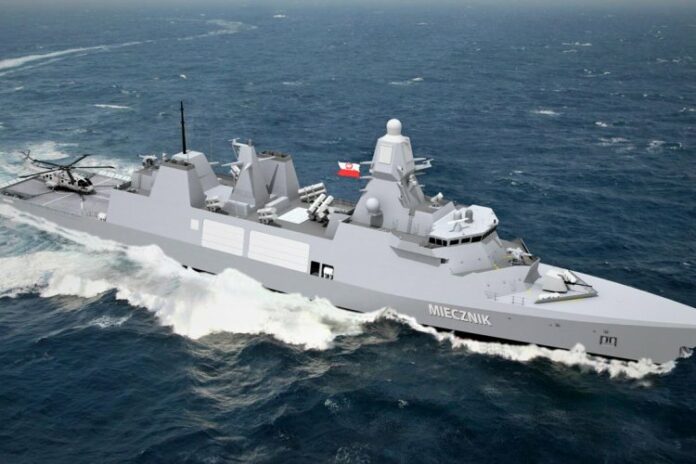
The mtu propulsion engines and four marine gensets for the propulsion and power supply of the first of three new Miecznik multipurpose frigates for the Polish Navy are currently being built at Rolls-Royce in Friedrichshafen, Germany. 

Four mtu 20V8000 main propulsion engines with 8,200 kW each and four mtu 12V4000 on-board generators with 1650 kW mechanical power each will be installed on each ship.

The four main propulsion engines of the CODAD propulsion system, two per propeller, can be used flexibly in different combinations – from single engine operation for slow patrols to high-speed operation at over 20 knots (37 km/h) with all four engines. At a cruising speed of 12 knots (approx. 22 km/h), the Miecznik-class ships have a range of around 8,000 nautical miles (almost 15,000 kilometers).

The four mtu on-board power generators feed the electrical power grid for ship and mission operations independently of the propulsion engines. The frigates are equipped with weapon and mission systems to monitor and control sea areas, protect naval bases and attack surface, underwater, land and air targets.

The first ship of the Miecznik (swordfish) class, which is based on the British Arrowhead 140 concept, is currently being built at the state-owned PGZ shipyard in Gdynia. The first ship is scheduled to be launched in 2026 and commissioned in 2030, with the other two ships to be handed over to the Polish Navy by 2031.

Paul Röck, Defence Sales Director for EMEA and Latin America at Rolls-Royce Power Systems, says:

“This order as part of our strategic initiative in the government business not only further consolidates our strong position in the market for propulsion systems for very fast ships. With these state-of-the-art systems, we are also supporting our NATO partner Poland, with whom we have a long-standing partnership.”

ABB launches new software to help vessels enhance fuel efficiency and reduce emissions

0

As the first solution in the market equipped to optimize track and operating speeds simultaneously against anticipated weather, the feature is included in the ABB Ability™ Routeguard onshore routing service – in a first upgrade since ABB acquired the shipping business of DTN Europe BV and DTN Philippines Inc. earlier this year.

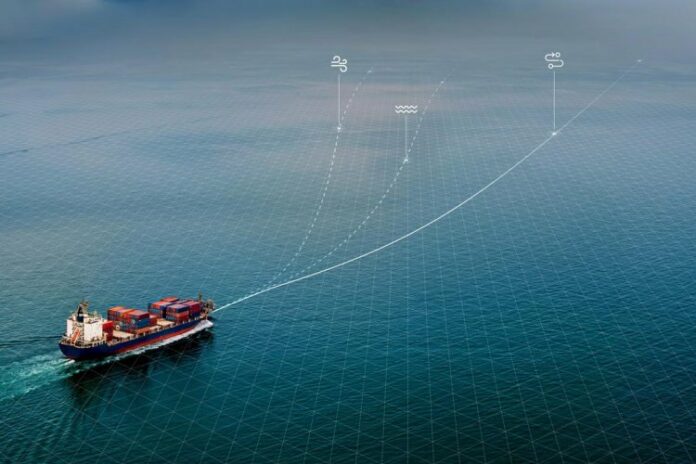
Optimal Speed Routing offers first-of-its-kind capability to advise operators of any changes they should make to the vessel track or speed to avoid heavy weather as part of overall calculations made within Routeguard covering route optimization. It uses latest available meteorological information and real-time inputs like vessel daily hire costs, fuel costs and user defined vessel performance models to recommend slowing down to let rougher conditions pass or speeding up to stay ahead of them, thereby minimizing fuel consumption on calculated routes to cut costs and reduce emissions as a result.

“Optimal Speed Routing is an exciting addition to our digital offering, and we are grateful to our esteemed new colleagues who joined us recently and brought with them the Routing Services portfolio,” said Osku Kälkäjä, Head of Digital Business, ABB Marine & Ports.

“Adding our Routing Services portfolio to ABB’s existing digital services is a major milestone and we look forward to further opportunities to complement the offering and keep supporting our customers,” said Jarco van den Brink, Product Manager, Routing Services, ABB Marine & Ports.

Exail demonstrates its new transoceanic Uncrewed Surface Vessel DriX O-16

0

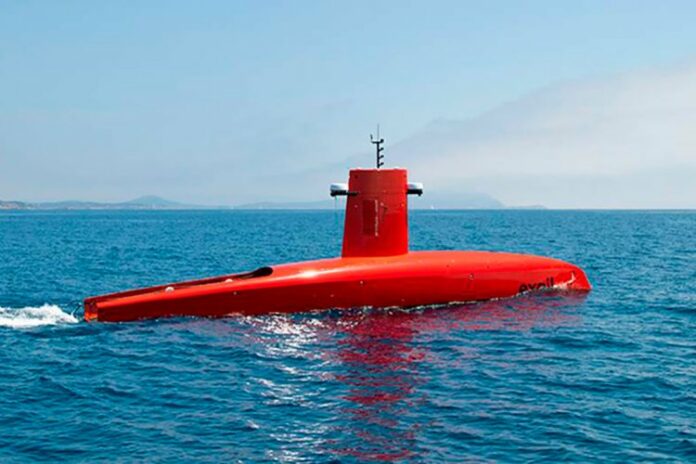
Unveiled last March at Oceanology International in London, the DriX O-16 was first put to sea on Wednesday, May 29th in its home port of La Ciotat (South of France).  After undergoing a first series of sea trials within the next couple of days, it was showcased in action to selected partners and customers on Wednesday, June 5th.

Twice the length and five times the displacement of the legacy DriX H-8, the latest addition to Exail’s USV product line, DriX O-16, is designed for long-duration operations of up to 30 days. It benefits from an autonomy of 3,500 nm and can deploy multiple payloads and subsea assets. Its larger size allows for a wide range of payloads, including Multibeam Echosounders (MBES), Sub-Bottom Profilers (SBP), and acoustic subsea positioning and communication systems (USBL). 

Additionally, the USV features a launch and recovery system to deploy Remotely Operated Towed Vehicles (ROTVs), inspection-class Remotely Operated Vehicles (ROVs), and Autonomous Underwater Vehicles (AUVs).  The new transoceanic USV is particularly suited for full ocean depth scientific and hydrographic surveys, geophysical and UXO surveys, and subsea infrastructure inspections, which may require the deployment of multiple robots.

“We are very proud to have demonstrated to our clients, in such a short time, our capacity to deliver a new fully functional USV that meets the demand for larger capacity, endurance, and multi-mission capabilities, while maintaining high reliability and efficiency at sea,” says Sébastien Grall, Director, Maritime Autonomy Solutions at Exail. “We are convinced that platforms such as DriX O-16 will support the marine industry’s transition to more reliable and efficient autonomous operations”.

Partners collaborate on Carbon-Fit CCS system for the world’s largest LCO2 carriers

0

Due for delivery by South Korean shipbuilder Hyundai Mipo Dockyard in 2026, the 22,000 cbm LCO2 carriers will join the Capital Gas managed fleet as the largest of their kind ever built.

The ERMA FIRST CARBON FIT system holds Approval in Principle (AiP) from both Lloyd’s Register and DNV. It uses amine absorption technology based on a proprietary amine solvent to absorb CO2 from flue gases. The resultant mix is then heated to produce a chemical reaction that reverses the absorption, separating the CO2 from the solvent. Subsequently, the released CO2 is liquefied using Babcock LGE’s ecoCO2® system and stored on board the ship in pressurised low-temperature storage for subsequent offloading. Since the regenerated solvent can be re-used, the process creates a highly efficient regenerative loop for CCS.

Miltos Zisis, Managing Director, Capital Gas Ship Management Corp., said:

“As part of our ongoing efforts to minimize our impact on the environment, but also to actively contribute to a cleaner and more sustainable future, Capital Gas proudly became the world’s first ship manager to supervise the construction of LCO2 carriers. Now, we are taking a step further. Alongside our partners, we are developing advanced carbon capture technology to enhance the environmental sustainability of these ships.”

Neale Campbell, Managing Director, Babcock LGE, said:

“The addition of onboard carbon capture to these first-of-a-kind vessels, in conjunction with our industry-defining ecoCO2® system, is a significant step towards achieving the shipping industry’s emissions reduction targets. The ecoCO2® design concept for handling both CO2 and LPG cargoes provides a flexible solution that can easily be upgraded to incorporate carbon capture and storage requirements.”

Konstantinos Stampedakis, Co-Founder & Managing Director, ERMA FIRST Group, said:

“This project is a major breakthrough not only for ERMA FIRST and our CCS technology but also for shipping’s journey towards low-carbon operations. Under normal conditions, CCS systems are expected to cut vessel CO2 emissions by 15% to 30%. At this specific project the CO2 capture rate will exceed 70%. This will play a significant role in helping Capital Gas to achieve its decarbonisation objectives but also to have the first almost carbon neutral vessels”.

“Indeed, for owners and operators worldwide, the ERMA FIRST CARBON FIT represents a smart investment in decarbonising technology, supporting compliance with the IMO’s strengthened emissions-reduction targets while contributing to a greener, more sustainable future for the industry as a whole.”

Power routing will reduce fuel costs by 6-8% for Corsica Linea

0

The order includes power routing with EcoPilot and retrofit of governors, actuators and the pitch control system.

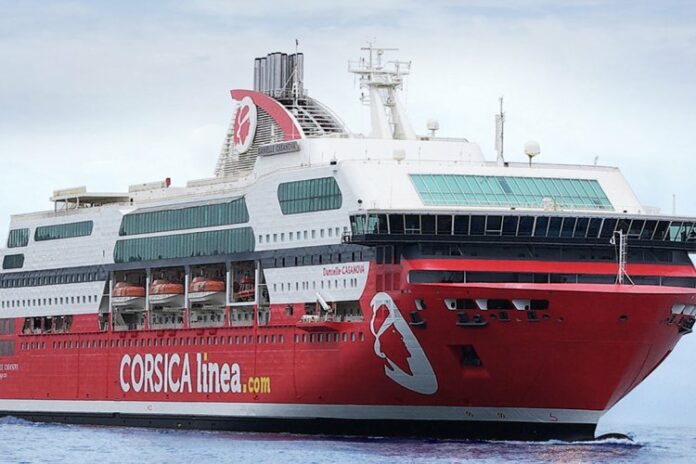
Danielle Casanova is the largest of Corsica Linea’s nine cruise ships that serves routes between the French continent, Corsica, Algeria and Tunisia. The vessel is currently at port in Marseille for maintenance and technical upgrades.

On Daneille Casanova, Corsica Linea has decided to install EcoPilot, a fully automated eco-driving system that uses weather forecasts and ship data to calculate the best power plan for a route and a set arrival time. It also implements continuous adjustments to maintain an even engine load and propeller pitch optimization for maximal fuel savings.

This type of automated eco-driving does not require the captain to manually change either speed or pitch. Instead, the active power routing provides the captain with full control over the arrival time and mitigates the human tendency to set a higher speed than necessary at the start of a voyage.

EcoPilot controls the ship’s propulsion system with instructions to the engine governor and the pitch control. Danielle Casanova will be equipped with new DEGO IV engine governors, new ASAC actuators and a new pitch control system. These will replace outdated technology and enable digital ship propulsion control and active power routing with EcoPilot.

The EcoPilot power routing system comes with a 3% fuel consumption reduction guarantee, but the expected savings for Daneille Casanova is in the interval of 6-8%, based on a somewhat conservative calculation based on installations on similar vessels.

The actual fuel reduction will be determined by a 4–5-week test period after commissioning. The fuel consumption during this period will be compared to a baseline from a reference period where the ship operates without EcoPilot. The comparison will be confirmed by a statistical analysis to compensate for any influence from varying environmental, load and speed conditions.

“EcoPilot achieves fuel savings through three main methods: firstly, it automatically executes optimized power plans, keeping the load on the engine constant. Secondly, it prevents instances of ‘hurry up and wait’ and thirdly by adapting quickly to changing conditions, ensuring vessels arrive just in time, thus avoiding unnecessary fuel consumption. According to Per Österberg, CCO at Qtagg, the impact of these methods on fuel savings varies depending on the length and frequency of voyages. For long ocean crossings, such as those undertaken by large tankers, optimized power plan execution has a significant impact. However, for shorter voyages, like the trip between Dover and Calais lasting 90 minutes, we’ve observed savings of up to 20%, equating to over 500,000 Euros per year for our customers. There’s a notable market interest in integrating EcoPilot into large retrofit projects for propulsion control systems. Additionally, there’s a growing trend in installing EcoPilot directly onto the bridge without the need for retrofitting, achieving a remarkable return on investment in just 3-4 months, as noted by Per Österberg. “Control over arrival times with predictable fuel savings is getting more and more important in the industry”, ends Per Österberg.

EcoPilot provides the captain with exact control over the arrival time, while saving fuel in a predictable manner. The expected fuel consumption for a voyage is automatically calculated beforehand, based on the desired arrival time, selected route and current weather forecast. In the voyage planning process, the captain will know how much fuel will be consumed to bring the ship to its destination.

“For us, this is not only about saving on fuel expenses. Installing EcoPilot will also help us achieve a reduction on CO2 emissions”, says Julien Colin, Superintendent at Corsica Linea SAS Division Technique. “As a company we have an ambitious plan to reduce our total CO2 emissions by 40% until 2030 and continue to move towards sustainable maritime transport in the Mediterranean It will be interesting to see how much a system such as EcoPilot can contribute towards our goals”.

Equinor solidifies New York offtake contract for Empire Wind 1

0

This agreement follows NYSERDA’s February announcement that Equinor had been selected as a conditional winner in New York’s fourth offshore wind solicitation.

“We thank NYSERDA and the state of New York for their steadfast commitment to the offshore wind industry and to achieving the state’s broader renewable energy targets,” said Molly Morris, president of Equinor Renewables Americas.

“Empire Wind 1 is a defining project for Equinor and the PSA agreement is an important milestone in de-risking and ensuring a robust path forward as we work toward delivering first power.”

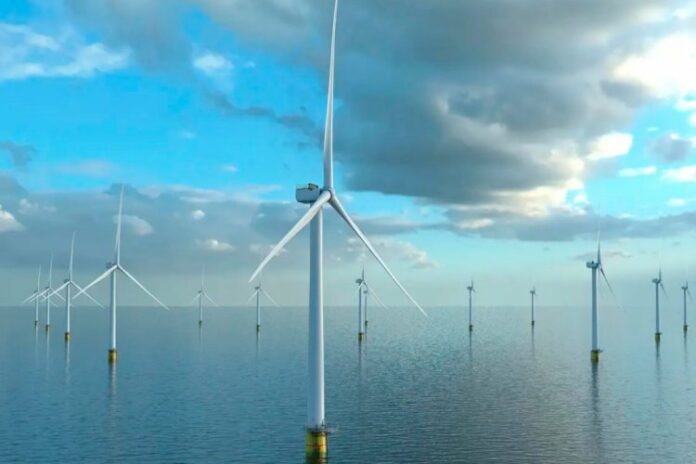
Onshore construction activity is under way at the South Brooklyn Marine Terminal. Empire Wind 1 will be America’s first offshore wind project to plug directly into the New York City grid with a target to deliver first power in late 2026.

At a strike price of $155.00 per MW/h Empire Wind 1 is expected to deliver forward looking real base project returns within the guided range for renewable projects. Following a final investment decision, Equinor plans to use project financing, with financial close anticipated by end of 2024. Equinor intends to bring in a partner to reduce financial exposure.

The signing of the offtake agreement further solidifies the considerable progress made by the 810 MW Empire Wind 1 project toward powering 500,000 New York homes with reliable, renewable energy. Empire Wind 1 will generate more than 1,000 union jobs during the construction phase, help build out a domestic supply chain, and provide an economic boost to communities while advancing the offshore wind industry in New York and on the East Coast.

An important feature of Empire Wind 1 is the transformation of the venerable South Brooklyn Marine Terminal (SBMT) in Sunset Park, Brooklyn. SBMT will be rebuilt using union labor and serve as the primary staging and assembly area for Empire Wind 1. Going forward, the port will be positioned as a central hub for future offshore wind projects as the industry grows along the Northeast seaboard in the coming decades.

New York State Energy Research and Development Authority President and CEO Doreen M. Harris said,

“Major renewable energy infrastructure projects such as Empire Wind 1 are a crucial component in reaching toward New York’s climate goals. NYSERDA applauds Equinor for its ongoing commitment to investing in New York’s green economy, including the redevelopment of South Brooklyn Marine Terminal, and helping to stand-up New York’s offshore wind industry one significant milestone at a time.”

As part of this agreement, the project is set to provide a range of economic benefits that will support economic development in New York City and across the state, including increased funding for workforce and community development, with significant local investments already made in the Offshore Wind Learning Center, the Offshore Wind Innovation Hub and the Offshore Wind Ecosystem Fund. Further, Empire Wind 1 has made a strong commitment to support businesses owned by minorities, women (MWBEs) and service-disabled veterans (SDVOBs), mostly focused on onshore development at South Brooklyn Marine Terminal.

Equinor divests interests in the Gina Krog area

0

Equinor is selling 19.5% interests in production licenses PL 048E, which is the Eirin field, and PL 1201 to PGNiG Upstream Norway AS (PGNiG). 

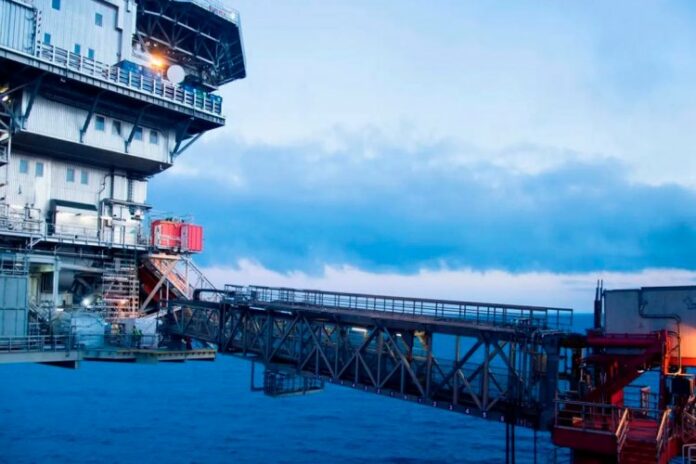
The plan for development and operation (PDO) for Eirin was approved in January 2024, and the field will be developed as a subsea facility tied back to the Gina Krog platform. The subsea template is under construction in Egersund and is scheduled for installation in the summer of 2024.

“Balanced partnerships will make it easier to coordinate decisions in the licences to optimise production and enhance value creation from the area. Together with the electrification of the platform, the Eirin development will extend the lifetime of the Gina Krog field, which supplies gas to Europe with low emissions from production and transport,” says Camilla Salthe, Equinor’s senior vice president for late-life fields.

Production licence PL 1201 was awarded in this year’s Awards in Predefined Areas (APA). Any discoveries in this licence could make use of Eirin’s infrastructure and be tied back to the Gina Krog platform. The economic effective date for the transfers is 1 January 2024. Closing of the transaction is conditional upon ministry approval.

VARD secures contract for one stern trawler for Havbryn AS

0

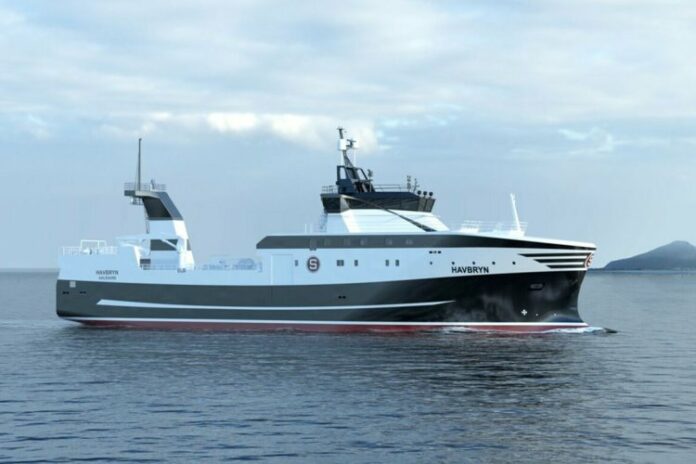
The VARD 8 02 trawler design is a well-proven design that VARD is continuously developing to create an advanced trawler with all latest available technology on board. 

The vessel has excellent fuel economy and is outfitted for semi-pelagic and bottom-trawling operations with gentle handling to meet the latest demands for fish health management, efficiency, and environmentally friendly operations. With a high focus on quality of catch, safety of crew, and sustainable operations, the vessel has the most efficient technology to bring the catch ashore with minimum environmental footprint.

“The newbuild will replace the current Havbryn, which was built at Tersan Shipyard in Turkey in 2013. This vessel is 69.9 meters long and 15,4 meters wide and produces cut gutted fish and has a fish meal and oil factory. Havbryn AS is part of Strand Rederiet, which is one of Norway’s largest family-owned fishing boat companies. We are pleased to have signed a contract with a local company, which also creates ripple effects for local maritime suppliers”, says CEO of Havbryn, Astrid L. Strand.

The new vessel will have a length of 80,4 meters and a beam of 16,7 meters. The hull is ice strengthened according to Ice-1A. The vessel with its propulsion system is compliant with the stringent DNV Silent F notation. The stern trawler is featuring an advanced H/G processing factory. The spacious cargo space holds both refrigerated and frozen products, plus ensilage tanks for processing of biomass ashore, further maximizing resource utilization and profit.

Modern living quarters have been developed with a high focus on crew welfare with architect-designed public spaces, day and mess rooms, a gymnasium and cabins with low noise and an appealing interior.

“We are very happy to have yet again contracted a fishing vessel and especially it being of our proven VARD 8 02 design. This design is functional and efficient and has been very well received in the market. Through this contract we will continue to develop the design to the best of our customers. VARD are delighted to welcome Havbryn AS back as a customer. Many years ago, Brattvaag yard built the vessel Havstrand and we are particularly pleased when a local owner returns to sign a new contract and also decides to make use of many local suppliers in building the new vessel”, says Roy Arne Stavik Senior Vice President Sales & Marketing in VARD.

The stern trawler is outfitted with Vard Electro’s SeaQ Energy Storage System. The innovative SeaQ Microgrid is the heart of the Energy Management System that enable power to be recovered from permanent magnet electric motors on the trawl winches while shooting mode and contribute with power in heaving mode on trawl winches. All operating in harmony with the SeaQ Power Management System for seamless integration with the hybrid diesel-electric propulsion system, which in turn minimizes fuel consumption and greenhouse gas emissions. An innovative heat-recovery system increases overall efficiency even further.

The new vessel will have the SeaQ Bridge system installed. This provides a bridge solution with an intuitive user interface designed for a safer and more efficient operation with the operator in focus while maintaining full flexibility in equipment maker selection. The SeaQ Bridge is a digital enabler and serve as the interface to all the operational data.

SEAONICS will deliver a premium winch and crane package especially designed for safe and efficient deck handling in harsh conditions. The electric trawl winches have high dynamic performance enabling optimum performance for the trawl in all conditions. During shooting or paying out wire all winches regenerate power back to the SeaQ Energy Storage System, hence will reduce the power consumption in operation.

Vard Interiors will deliver a comprehensive interior package, offering turnkey solutions with modern Interior, and green HVAC R and Piping systems, with a focus on quality and efficiency, aiming to create a good living, and working environment onboard the vessel.

The stern trawler of VARD 8 02 design is developed by Vard Design in Ålesund, Norway.

Delivery of the vessel is scheduled to Q3 2026. The hull will be built at one of VARD’s yards in Romania and the vessel will be outfitted, commissioned, and delivered from one of VARD’s yards in Norway.