-5.3 C
New York
Home Blog Page 169

In a world first, China installs an 18 MW offshore wind turbine

0

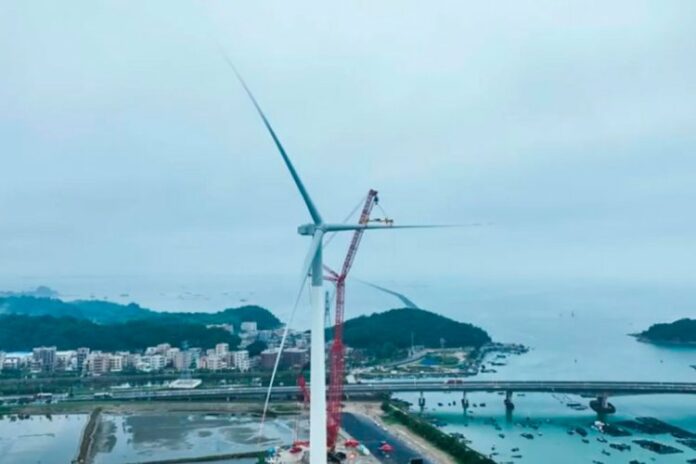
China’s 18-MW offshore wind turbine has a 260-meter (853-foot) rotor diameter and a swept area of 53,000 square meters (570,487 square feet) – equivalent to 7.4 standard football fields.

This colossus is expected to generate 72 GWh of clean electricity annually – enough to power around 36,000 households.

In December, Mingyang unveiled a wind turbine design that offers flexible power ratings ranging from 18.X to 20 MW and rotor diameters from 260-292 meters (853-958 feet). It can cover a maximum swept area equivalent to nine soccer fields.

Chinese manufacturers are pushing the boundaries of wind turbine technology. They’re introducing larger and more efficient turbines, such as the world’s first 16 MW offshore wind turbine by China Three Gorges Corporation that came online in July 2023.

China’s eastern and coastal regions consume a lot of electricity, but most of the country’s energy resources are in the western and northern areas. Offshore wind farms help balance this distribution, enhancing energy self-sufficiency in high-demand regions.

Fortescue and Jan De Nul to lay sub-sea cables from North Africa to Europe

0

An agreement which establishes the collaboration between Fortescue and Jan De Nul to provide the shipping and sub-sea cable laying capability of green electrons was signed in Rabat, Morocco by Fortescue Chairman, Dr Andrew Forrest, and Jan De Nul Executive Chairman, ir. Jan Pieter De Nul.

Fortescue founder and Executive Chairman, Dr Andrew Forrest AO, said: “There is a massive opportunity to send renewable electrons from Morocco and North Africa to Europe to industries and consumers who deserve a better choice than the only one they currently have available – carbon emitting, global warming causing fossil fuels.

“Europe, under EU rules, will impose carbon taxes globally through its Carbon Border Adjustment Mechanism on industries that fail to convert energy supplies to renewable energy.

“Fortescue believes a lack of cable laying capability is creating a bottleneck in connecting Morocco to Europe, making this pursuit with Jan De Nul one of the most outstanding opportunities we have across the world. It will bring substantial benefits to both North Africa and Europe in terms of employment, economic growth and providing citizens with a choice to use fuels made using green energy.”

Jan De Nul Group Executive Chairman, ir. Jan Pieter De Nul, said: “It is clear that the electrification transition is happening worldwide. Direct transport and consumption of green electrons is one of the most efficient ways to help reduce the total energy needs of the world. With our know-how, highly skilled and motivated staff and crew, and our versatile fleet of construction vessels including five of the world’s cutting edge subsea cable laying vessels we are ready to construct the energy transition.”

Fortescue and Jan De Nul have had a relationship dating back more than 20 years, working together to create the world’s most efficient port by loading rate in Port Hedland, Western Australia.
 

Deltamarin receives AiP from LR for next-generation very large gas carrier designs

0

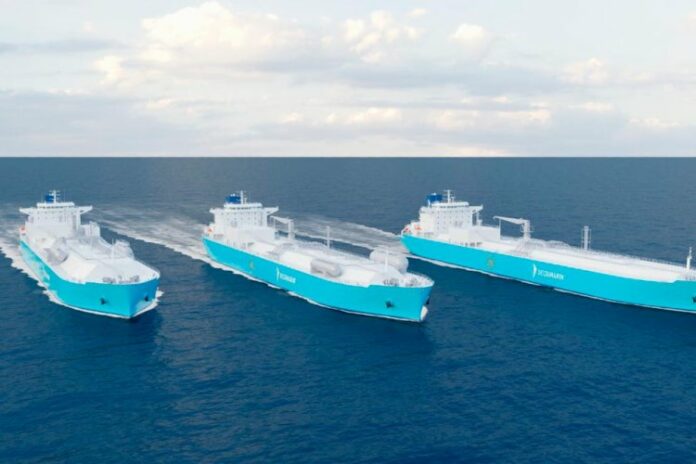
On June 6, 2024 at Posidonia, five new designs of very large gas carriers developed by Deltamarin and China Merchants Heavy Industry (Jiangsu) have received Approval in Principle (AiP) from the classification society Lloyd’s Register.

The AiP handover for the gas carrier designs was witnessed by Mr. Andy McKeran, the Chief Commercial Officer of Lloyd’s Register, Mr. Wang Yangzhi, the General Manager Assistance of China Merchants Industry Group and Mr. Huang Jin, the Marketing Director of China Merchants Industry Group.

The AiP certificate is issued for next-generation concept designs of 99,000cbm ethane fuelled very large ethane carrier (VLEC), 88,000cbm and 93,000cbm LPG fuelled very large LPG carriers (VLGC), and 88,000cbm and 93,000cbm ammonia fuelled very large ammonia carriers (VLAC).

Over multiple studies, a set of innovative main dimensions has been defined for these five new designs. The slightly smaller vessels can easily access the old Panama lock, while the larger ones are given the possibility to enjoy the priority privilege during Panama transit. The VLEC will use ethane as fuel and be equipped with CMHI’s self-developed independent type B tanks.

The optimized fuel storage and propulsion configuration provide clients with higher energy efficiency and greater economic flexibility. The VLGCs and VLACs will be fitted with independent type A tanks and will use LPG and ammonia as fuel, respectively. The state-of-the-art fuel systems in all designs will enhance the operational efficiency and safety while, also contributing to a cleaner shipping industry.

Woodside achieves first oil at Sangomar in Senegal

0

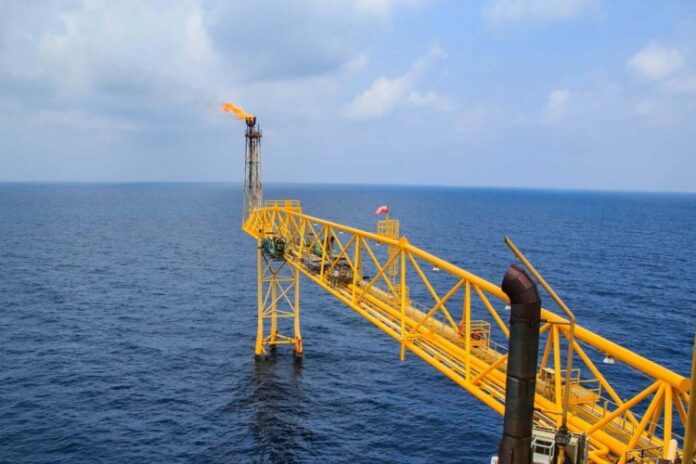
The Sangomar Field Development Phase 1 is a deepwater project including a stand-alone floating production storage and offloading (FPSO) facility with a nameplate capacity of 100,000 barrels/day, and subsea infrastructure that is designed to allow subsequent development phases.

“This is an historic day for Senegal and for Woodside,” said Woodside CEO Meg O’Neill. “First oil from the Sangomar field is a key milestone and reflects delivery against our strategy. The Sangomar project is expected to generate shareholder value within the terms of the production sharing contract.

“Delivering Senegal’s first offshore oil project safely, through a period of unprecedented global challenge, demonstrates Woodside’s world-class project execution capability. We are proud of the relationships we have formed with PETROSEN, the Government of Senegal and our key international and local contractors to develop this nationally significant resource.”

General Manager of PETROSEN E&P Thierno Ly said he was pleased to reach this milestone.

“First oil from the Sangomar field marks a new era not only for our country’s industry and economy, but most importantly for our people.

“This achievement is the result of the unwavering commitment of our teams, who have worked diligently to overcome challenges and meet our strategic objectives in a complex and demanding environment. We have never been so well positioned for opportunities for growth, innovation, and success in the economic and social development of our nation.

Damen introduces fully electric FCS 3210

0

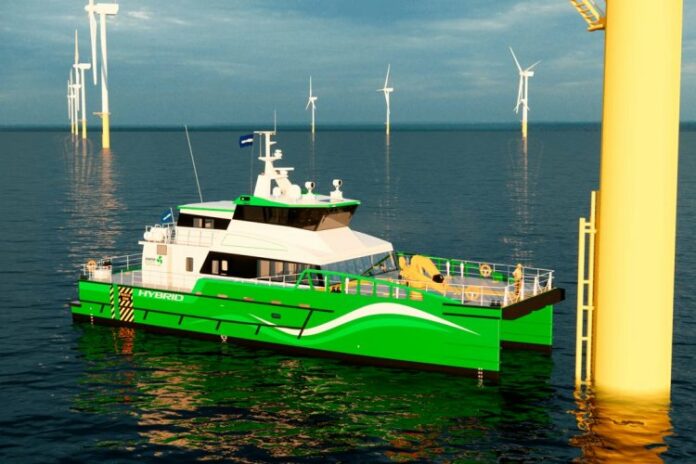
The FCS 3210 features the same combination of Damen’s Axe Bow hull shape with a rounded tunnel. The result of this is optimal comfort, reduced wet deck slamming and minimal resistance in the water. 

With the increased length of the FCS 3210, this effect is even further pronounced ensuring increased uptime. Aft, the FCS 3210 offers increased space for a larger deckhouse and more deck capacity.

Shortly after the introduction of the FCS 3210, Damen received an order for three diesel-electric versions from Purus. Following this, Damen has taken the next step forward with the development of a fully electric, zero emissions version. 

The vessel features a full electrical Volvo IPS system, enabling it to sail exclusively on battery power. With this, the FCS 3210 E is able to sail at high speeds to offshore wind farms up to 25 nautical miles from shore. On arrival, it will recharge at a charging system integrated to a turbine, substation or SOV before returning to shore.

Damen Product Manager High Speed Craft Wim Boerma says,

“Our crew transfer portfolio has been continually evolving since its introduction. Now, with increasing focus on sustainability, we have developed a fully electric version to enable zero emissions operations. The FCS 3210 E draws on the proven performance of its predecessors and applies the lessons learned in our development of a number of fully electric vessels. 

“The challenge of preparing vessels for alternative propulsion often lies in knowing what fuels will be available and affordable in the future. For a vessel such as this, operating a predictable route to a location with an abundance of clean energy, the solution is clear. With the FCS 3210 E, operators can access the crew transfer vessel of the future today. The technology is fully developed and we are ready to build. All we need now is an order.”

To provide operators with the flexibility to operate the FCS 3210 at locations farther from shore, Damen has also developed a full methanol propulsion version. At the present time, the engine technology enabling a vessel in this power range to sail on methanol has not reached maturity. When it does, however, the FCS 3210 Hybrid is prepared for a fast, cost-efficient conversion. 

Auramarine wins methanol fuel supply system order for pioneering Mein Schiff 7 cruise vessel

0

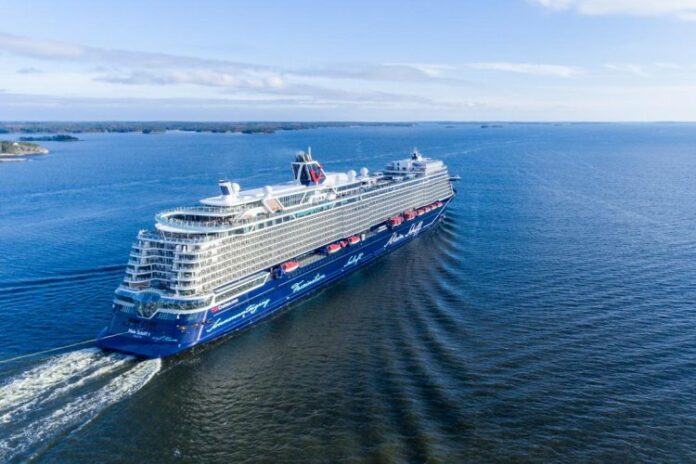
Auramarine Ltd, the leading fuel supply systems pioneer for the marine, process and power industries, has announced that it has won an order from Meyer Turku shipyard for a methanol fuel supply system and associated equipment for the luxury Mein Schiff 7 cruise vessel owned by TUI Cruises. 

Auramarine’s equipment deliveries began in 2023 and continued over the spring of 2024.  Sea trials were conducted in May 2024, and the vessel is scheduled for delivery over the summer this year. The newbuild is the first of its kind in the maritime industry and aligns with TUI Cruises’ sustainability strategy of offering the first climate-neutral cruises by 2030. In conjunction with this, TUI Cruises’ fleet is reducing CO2 emissions by 27.5 per cent in absolute terms by 2030.

Mein Schiff 7 is a state-of-the-art vessel that prioritises sustainability and efficiency. With a length of 316 meters and a width of 35.8 meters, it can accommodate nearly 2,900 passengers and 1,000 crew members. The cruise ship’s operations will be powered by low-emission marine diesel oil, with a sulphur content of 0.1 per cent, and a shore power connection for almost zero-emission operation in port (which accounts for 40 per cent of its operating time).

Tapani Pulli, Deputy CEO at Meyer Turku, said:

“With the building of Mein Schiff 7, TUI Cruises is setting new standards for driving sustainability and emissions reduction within the cruise market. As the first methanol-ready cruise vessel, having the right technology and infrastructure to successfully and safely deliver the new fuel is central to efficient and sustainable operations. Auramarine is pioneering the development of systems that meet the shipping industry’s requirements within the energy transition, and we are delighted to have them onboard supporting Meyer Turku and our customers.”

Auramarine’s methanol fuel supply system ensures the safe delivery of methanol from the service tank to the master fuel valve, regulating the flow, pressure and temperature of the methanol to meet the specific requirements of the engine. The system actively maintains the supply pressure within the specified tolerances during load changes and filters the fuel to prevent any impurities from entering the engine. As part of the order, Auramarine will supply the methanol bunker and transfer systems including the vital automation and safety systems that ensure safe and reliable operations. A gas detection system and a methanol bilge system are also included.

“We have worked very closely with Meyer Turku throughout the development and design of this methanol fuel supply system for this project,” said John Bergman, CEO at Auramarine.

“We have spent a significant amount of time, using our 50 years of experience, to bring to market new supply solutions that empower our customers to deliver on their sustainability strategies while meeting shipping’s decarbonisation targets. We are honoured that Meyer Turku and TUI Cruises have selected and entrusted us to deliver our methanol supply system and to play a part in the development of this pioneering cruise vessel.”

Wärtsilä solutions to minimise emissions of two new CMA CGM ferries

0

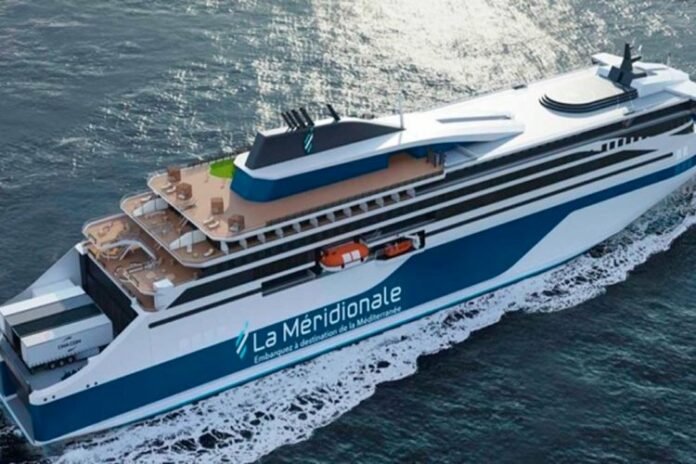
Technology group Wärtsilä will supply the engines, fuel gas supply system and thrusters for two new Ropax ferries being built for French operator La Méridionale, a subsidiary of CMA CGM. The vessels, which have been specifically designed to minimise emissions, are to be built at the China Merchants Jinling Shipyard (Weihai) Co., Ltd., and will operate between Marseille and Corsica. The order with Wärtsilä was booked in April 2024.

Ferries are on the front line of the energy transition and are among the first sectors to target net zero-carbon operations. However, ferry operators face increasing pressure from customers who continue to expect a fast and cost-efficient service, which runs to a timetable, and is increasingly sustainable. Ferry operators, such as La Méridionale, are looking to leverage technologies which offer minimal service disruption and to maximise return on investment, all while reducing carbon footprint.

“The design of these two Ropax vessels reflects our commitment to reducing the carbon footprint within our own fleet. These will be among the most energy-efficient, low-emission ships in operation globally, and we value the support from Wärtsilä, whose technology and solutions help make this ambition possible,” says Xavier Leclercq, Vice-President, CMA Ships, CMA CGM.

The company will continue its efforts to reduce the environmental impact by adopting LNG as the primary fuel for the new ships as well as preparing them to operate on alternative fuels such as biogas and synthetic methane, as these become available at scale.

For each ship, Wärtsilä will supply two 12-cylinder, one 10-cylinder and one 8-cylinder Wärtsilä 31DF engines. The two ferries will benefit from Wärtsilä’s groundbreaking NextDF technology, which will be implemented in the Wärtsilä 31DF engines. Whilst operating on LNG, the NextDF version of the Wärtsilä 31DF further reduces methane emissions and nitrogen oxide (NOx) significantly (compared to the already emission-efficient standard Wärtsilä 31DF). The scope of Wärtsilä’s supply for this contract also includes the Wärtsilä LNGPac, a fuel gas supply system for LNG-fuelled ships, as well as Wärtsilä’s thrusters.

“The drive towards net zero emissions is one of the most important challenges facing the industry today,” comments Stefan Nysjö, Vice President of Power Supply, Wärtsilä Marine. “That’s why we are pleased to support our long-standing partners, CMA CGM and China Merchants Jinling Shipyard (Weihai) Co., Ltd., with our integrated solutions – ensuring these ferries are able to benefit from outstanding fuel efficiency, operational reliability and a significant reduction in GHG emissions.”

The 180-metre-long ships will be able to accommodate 1,000 passengers as well as cargo freight. The Wärtsilä equipment for these ferries is scheduled to be delivered in mid- 2025, with the ferries expected to enter service during the first half of 2027, operating between Marseille and Corsica.

Aquaculture overtakes wild fisheries for first time: UN repo

0

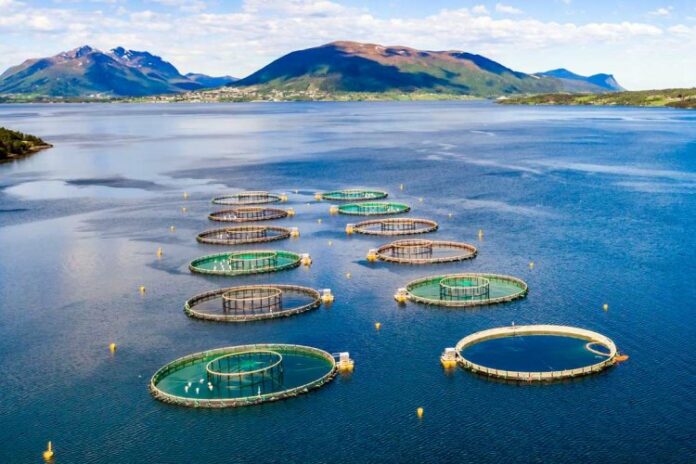
With global demand for aquatic foods expected to keep growing, an increase in sustainable production is vital to ensure healthy diets, the United Nations’s Food and Agriculture Organization said.

In 2022, aquaculture yielded 94.4 million tonnes of aquatic animal production — 51 percent of the total, and 57 percent of the production destined for human consumption, it said.

“Aquatic systems are increasingly recognized as vital for food and nutrition security,” according to the report, released as experts gathered in Costa Rica for talks on ocean conservation.

“Because of their great diversity and capacity to supply ecosystem services and sustain healthy diets, aquatic food systems represent a viable and effective solution that offers greater opportunities to improve global food security and nutrition,” it added.

While wild fisheries production has stayed largely unchanged for decades, aquaculture has increased by 6.6 percent since 2020, the report noted.

The sustainability of wild fishery resources remained a cause for concern, it added.

The proportion of marine stocks fished within biologically sustainable levels decreased to 62.3 percent in 2021, 2.3 percent lower than in 2019, the report said.

“Urgent action is needed to accelerate fishery stock conservation and rebuilding.”

With the world’s population projected to reach 8.5 billion by 2030, “providing sufficient food, nutrition and livelihoods for this growing population demands significant investments,” it added.

“Aquaculture has a major role to play, particularly in Africa where its great potential is not yet realized,” the report said, noting that more than 40 percent of the world’s population cannot afford a healthy diet.

Aquatic products remain one of the most traded food commodities, generating a record $195 billion in 2022 — a 19 percent increase from pre-pandemic levels, it said.

“Despite these significant achievements, the sector still faces major challenges from climate change and disasters, water scarcity, pollution, biodiversity loss” and other man-made impacts, it added.

The report was released to coincide with a meeting in San Jose of country representatives, scientists and international experts to prepare for the third UN Ocean Conference, to be held in France in 2025.

United Nations Under-Secretary-General for Social Affairs Li Junhua said at the start of the talks that protecting the ocean was “not an option but an imperative.”

Costa Rica’s President Rodrigo Chaves, host of the two-day meeting, said that if the world does not act, “we as a generation would be taking away the future of humanity.”

Participants will debate issues including the capacity of the ocean to absorb carbon dioxide, the need for sustainable fishing and tackling marine pollution.

Palfinger Marrine to supply equipment package for third Prysmian cable laying vessel

0

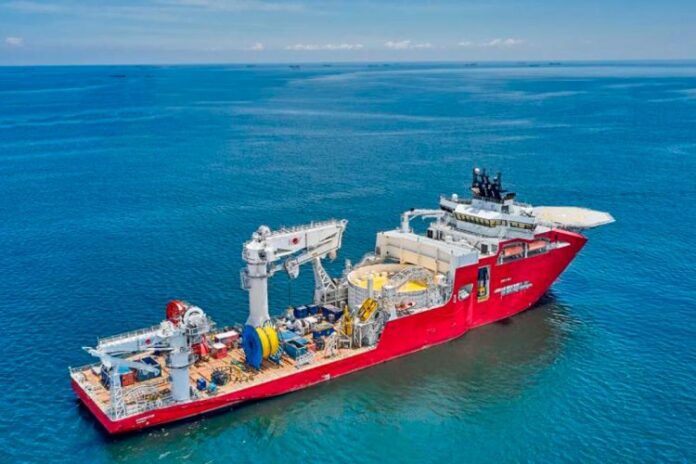
Palfinger Marrine to supply equipment package for a new cable laying vessel designed and under construction at VARD for Prysmian.

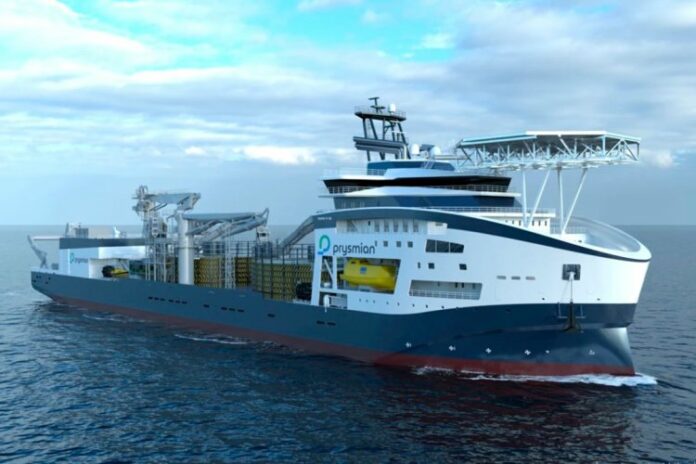
Palfinger Marrine has been contracted to supply a major equipment package for a new cable laying vessel designed and under construction at VARD for Prysmian. It is the third cable layer for Prysmian to be equipped with a complete package of Palfinger Marrine solutions.

Following the previous orders to equip the state-of-the-art cable laying vessels Leonardo da Vinci and Monna Lisa, Palfinger Marrine will provide deck equipment and lifesaving appliances (LSA) for another upcoming cable laying vessel built by VARD for Prysmian. Because the vessel is the evolution of Prysmian’s previous cable layers, the package from Palfinger for the new vessel consists of a large A-frame for plough operations, an active heave-compensated lifting/towing winch, one towing winch, one quadrant/auxiliary winch, two auxiliary winches, and one towing roller. 

Additionally, the vessel will be fitted with access equipment including one tension elevator with hatch cover, two mooring platforms, two provision platforms, and two ROV doors with L-hatches. Finally, Palfinger will supply an LSA package encompassing two lifeboats, two fast rescue boats with davits, two life raft davits and six fenders. 

The new vessel of VARD 9 18 design – an evolutionary vessel design based on experience from the two previous vessels for Prysmian – has a length of 191 meters and breadth of 34 meters and will incorporate advanced cable installation solutions. For instance, the cutting-edge cable laying vessel will be equipped with three carousels with a total capacity above 19,000 tons, making it one of the highest cable loading capacity vessels in the industry. Additionally, it will feature state-of-the-art DP3 positioning and seakeeping systems.

“We are honored to be selected once again and to continue serving as a major supplier for the third cable laying vessel for Prysmian. This demonstrates our position as a reliable and leading supplier of mission-critical equipment for large and advanced vessels of this kind”, says Klaus Schreiber, VP Sales & Service Marine and Special Solutions at Palfinger. The vessel is scheduled to enter commercial operation in early 2027. 

Tankerska makes digital leap forward through Metis and Kongsberg Digital collaboration

0

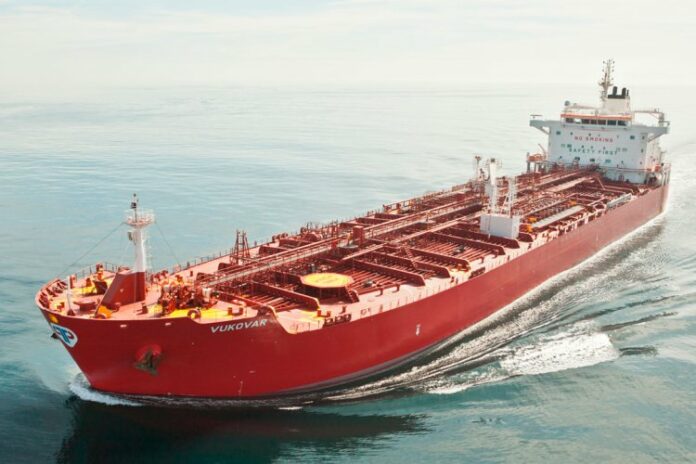
The solution imports data acquired through Vessel Insight, Kongsberg Digital’s vessel-to-cloud infrastructure, into the advanced vessel and fleet performance analytics platform developed by Metis.

Vessel Insight captures data from shipboard control systems and sensors, translating it into clear, usable sets. With an edge computer on the ship, data is aggregated, compressed and cached, then uploaded to a secure location in the cloud. Once accessed by the Metis platform, it can be analysed for machinery and hull performance, ship emissions, or any other parameter set by the owner. Information is presented to the user via live dashboards and performance updates.

For Vukovar, the Metis platform offers real-time monitoring of the ship’s machinery and operational status, with analytics covering fuel oil consumption, main engine and diesel generators, operational profile and performance, and electrical power utilization.

“The collaborative nature of the project is reflected in the owner’s requirements for scheduled technical and noon reports, while the IMO’s Carbon Intensity Indicator (CII) scheme is also included in the analytics,” said Panos Theodossopoulos, CEO Metis. “This project also brought an opportunity for Metis to offer enhanced voyage planning, with accurate weather predictions used to optimize fuel oil consumption, ETA and carbon intensity expectations.”

“This collaboration enhances Tankerska plovidba’s digital fleet management capabilities and sets a standard for utilising real-time data to support sustainable operations. Leveraging data from the vessel’s sensors and systems is important in running their operations efficiently and effectively. We are very pleased to see Tankerska take a major leap in their digitalisation journey through the Metis-Kongsberg Digital joint solution,” says Kim Evanger, Director of Ecosystem P&A at Kongsberg Digital.

“This installation is part of Tankerska’s commitment to be in the vanguard of the digital transformation that is helping shipping achieve its goals for greater efficiency and lower carbon operations,” said Mario Pavić, CEO Tankerska. “The integrated solution is both state-of-the-art and straightforward to apply, while the Metis-Kongsberg combination of expertise and experience has met our support needs at every step of the project.”