-6.8 C
New York
Home Blog Page 168

Netherlands gave the go-ahead to acquire four new submarines

0

Previously, Naval Group held only a preliminary contract with the Dutch government. However, this tie was strengthened as the Dutch House of Representatives endorsed the Naval Group’s proposal for the Dutch submarine replacement program. 

In a debate held on June 11, a motion by the Reformed Political Party (Staatkundig Gereformeerde Partij: SGP) to defer the final decision on the acquisition to the next Dutch government was turned down.

Naval Group and Royal IHC

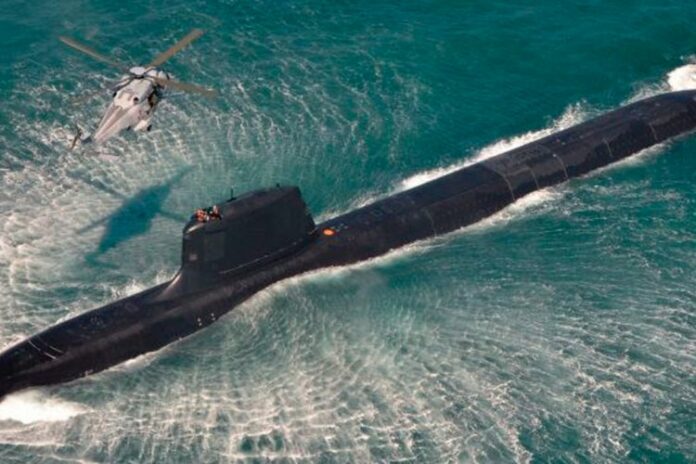
In March, the French Naval Group and its Dutch partner, Royal IHC, were chosen by the outgoing Dutch government to construct four Barracuda-class diesel-electric submarines. These new submarines will replace the Royal Navy’s three aging Walrus-class boats, as confirmed by the Naval Group and both the Dutch and French governments. 

While the exact cost for the four submarines — named Orka, Zwaardvis (Swordfish), Barracuda, and Tijgerhaai (Tiger Shark) — hasn’t been disclosed, the Ministry of Defense informed Parliament that the “investment budget” for construction and related expenses until 2039 is 5.6 billion euros ($6.1 billion). These submarines will be built in Cherbourg, France. 

According to Dutch State Secretary of Defense Christoph van der Maat, the first two submarines are expected to enter service between 2034 and 2037. Their inclusion of Tomahawk missiles will provide a “niche capability within NATO and the EU,” as he noted in mid-2023.

Despite gaining political backing, the initial ruling is still contested through a lawsuit from ThyssenKrupp Marine Systems (tkMS), a prominent German shipbuilder. 

In March, the company took their case to the Dutch courts in The Hague. They confirmed to Reuters, stating, “This step is a standard business practice in large projects involving public tenders, especially given the unresolved questions concerning specific assessment criteria.” 

Naval Group was vying for the project against the Dutch-Swedish consortium Damen-Saab and Germany’s ThyssenKrupp Marine Systems, all of whom responded to the Dutch government’s 2017 tender invitation. At that time, the estimated investment was 2.5 billion euros ($2.73 billion), as reported by Dutch daily De Telegraaf.

The Barracuda class

The Barracuda-class submarines, also known as the Suffren class, are a series of nuclear attack submarines developed by France. In terms of dimensions, the Barracuda-class submarines measure approximately 99.5 meters in length, with a beam of 8.8 meters. These dimensions allow for a streamlined and efficient design, optimizing both speed and stealth. 

The displacement of the Barracuda-class submarines is around 5,300 tons when surfaced and appr. 5,300 tons when submerged. This significant displacement supports a variety of advanced systems and weaponry, enabling the submarines to perform a wide range of missions. 

Propulsion for the Barracuda class is provided by a nuclear reactor, specifically the K15 pressurized water reactor. This reactor allows the submarines to operate at high speeds and remain submerged for extended periods without the need to surface for air, providing a strategic advantage in stealth and endurance. 

A range of advanced systems

The crew complement for the Barracuda-class submarines is typically around 65 personnel. This includes officers, enlisted sailors, and specialists who operate the various systems and weapons onboard, ensuring the submarine can perform its missions effectively. 

The Barracuda class is equipped with a range of advanced systems, including sonar arrays, electronic warfare systems, and communication equipment. These systems enhance the submarine’s ability to detect and track targets, as well as communicate securely with other naval assets. 

In terms of weaponry, the Barracuda-class submarines are armed with torpedoes, anti-ship missiles, and land-attack cruise missiles. This diverse arsenal allows them to engage a variety of targets, from enemy submarines and surface ships to land-based installations.
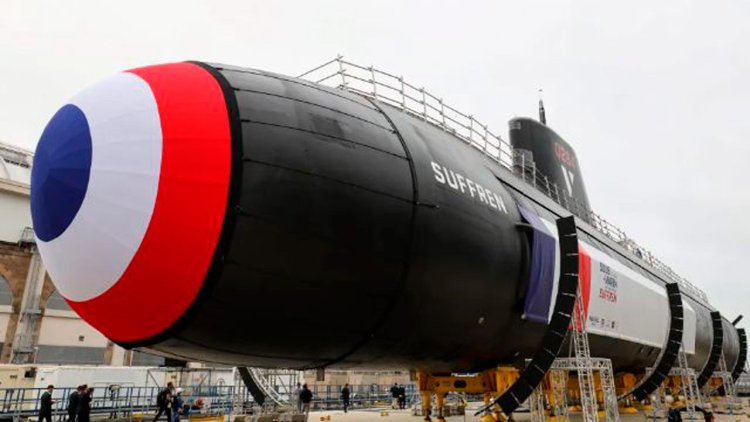
350 meters underwater

The maximum depth of immersion for the Barracuda-class submarines is estimated to be around 350 meters. This depth capability allows them to operate effectively in deep ocean environments, evading detection and engaging targets from a position of relative safety. 

The maximum stay underwater for the Barracuda-class submarines is primarily limited by crew endurance and food supplies, thanks to their nuclear propulsion. They can remain submerged for several months if necessary, providing a persistent and stealthy presence in contested waters. 

Source: Bulgarian Military
Sweden-Belgium Green Shipping Corridor welcomes new partner and expands green ambitions

0

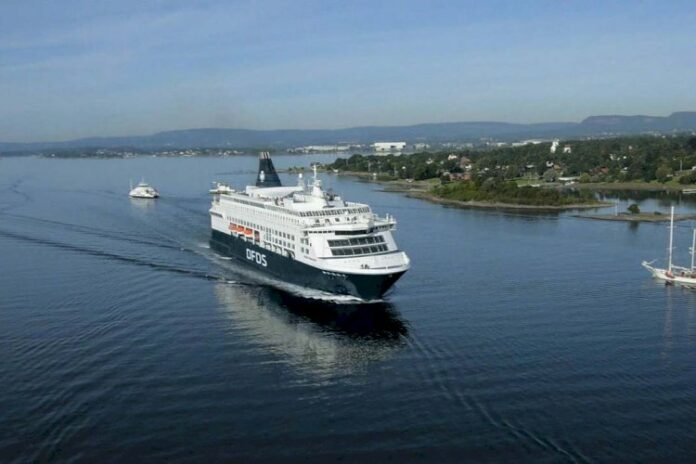
Port of Gothenburg, North Sea Port, and DFDS welcome Port of Antwerp-Bruges to the Green Shipping Corridor and bolsters the green ambitions of the project. By 2030, two ammonia-fuelled ro-ro vessels are expected to operate on the routes between Sweden and Belgium, and the ports will step up efforts on electrification and ammonia bunkering, potentially making it the world’s first green ammonia shipping corridor for freight vessels. ​

2,500 kilometres. That is the distance from the northernmost to the southernmost point of the Green Shipping Corridor between Sweden and Belgium that Port of Gothenburg, North Sea Port, DFDS and Port of Antwerp-Bruges want to establish to promote near zero emission transport.

The corridor potentially connects 11 European countries through sea, land, and rail routes from Norway in Northern Europe to Spain in the South. In this corridor, the ports of Gothenburg, North Sea Port and Antwerp-Bruges work as transportation hubs as well as important origin and destination zones of industrial activity.

The aim is to have at least two DFDS ammonia-fuelled vessels in operation on the Corridor from 2030, a part of DFDS’s ambition to have six low- and near-zero-emission vessels in operation by 2030.

The ammonia-vessels will be complemented by electric trucks and rail transport on land, as well as onshore power supply for the vessels. Therefore, efforts are being intensified by the ports to facilitate electric terminal operations and enable safe ammonia bunkering.

Furthermore, the partners are planning to start producing significant amounts of renewable electricity.

The three original partners signed an MoU in 2022 to work together to decarbonise the shipping corridor between Sweden and Belgium and to create a scalable solution. The addition of the Port of Antwerp-Bruges to this coalition strengthens this commitment.

DFDS has applied for funding for a total of four ammonia-fuelled vessels and, if the funding is granted, the project including electrification in the ports is expected to reduce 328,000 t CO2e emissions per year corresponding to around 11% of DFDS’s scope 1 GHG emissions compared to 2023.

Port of Antwerp-Bruges, Luc Arnouts, VP International networks:

“Port of Antwerp Bruges fully endorses the efforts of its customers and partners in prioritizing the greening of operations both at sea and on land. DFDS, an important operator with a daily roll-on/roll-off freight service to Gothenburg, will contribute to our ambition towards climate-neutral transport in, to and through the port. As one of the largest bunker hubs worldwide, Port of Antwerp-Bruges is committed to offering climate-neutral marine fuels and embraces DFDS’s innovative approach of utilizing ammonia-powered ro-ro vessels on the corridor.”

Port of Gothenburg, Patrik Benrick, Head of Strategic Development & Innovation:

“The Port of Gothenburg is already in the early stages of developing operating regulations for a safe and efficient handling and bunkering of ammonia propelled vessels. We are also working on establishing an ammonia value chain, with the purpose of being able to facilitate everything needed for ammonia propelled vessels calling and bunkering in the port on a regular basis in 2030 and beyond.” ​

DFDS, Jacob Andersen, Vice President, North Sea:

“This is a testament to our ambitions and commitment to play an active role in the green transition. We expect this to be the world’s first green corridor for Ro-Ro cargo vessels running on near-zero emission ammonia fuel. This transition will not be possible without collaboration. We are working together with more than 50 partners to realise this project which will contribute to a more sustainable future for European shipping, and the ports are a key part of this.”

North Sea Port, Daan Schalck, CEO:

“I’m very happy to see our original initiative develop into a wider network and I am committed to build further on our collaborative experience. The Belgian Swedish Green Corridor is an important milestone towards decarbonizing the logistics sector and delivering on European resilience. It goes beyond the typical high-level language and includes concrete pledges on which we as a port together with our clients and stakeholders want to deliver.”

Tärntank orders tenth hybrid chemical tanker

0

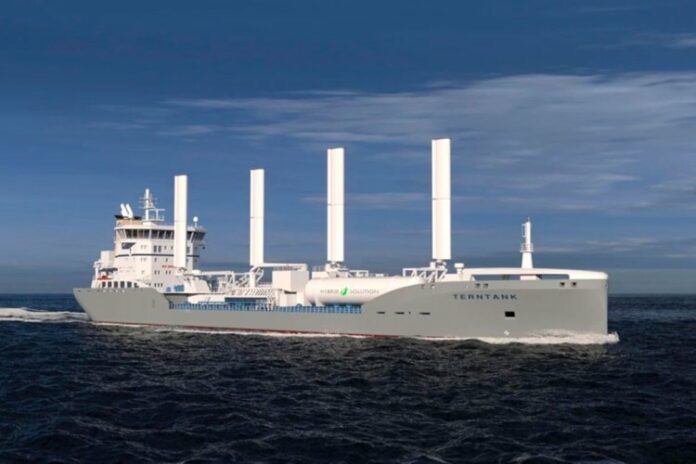
Kongsberg Maritime has secured a contract to design and a equip a tenth hybrid chemical tanker for Danish operator Tärntank.

The new Tärntank vessels will reduce carbon emissions using a combination of clean technologies. The wind-assist technology will be installed on the latest four vessels ordered, and this feature alone is expected to reduce emissions by up to 19%. The new vessels will have an Energy Efficiency Design Index close to 40% below the 2025 Phase 3 requirements.

Claes Möller, Chief Executive Officer, Tärntank, said: 

“This combination of a good design and innovative systems installed to a newbuild vessel will reduce the carbon footprint of maritime operations beyond the regulatory requirements. This is a result of good cooperation between Kongsberg Maritime, China Merchants Jinling Shipyard (Yangzhou) and Tärntank.”

The 15,000dwt hybrid tankers can operate on diesel, biofuel or methanol, and feature wind-assist technology plus Tärntank’s own battery-powered Hybrid Solution®. This latest order follows previous contracts for the Kongsberg Maritime design. All feature a range of innovative Kongsberg Maritime technologies to save energy and reduce emissions.

The vessels will be propelled by the efficient Promas propulsion system, with flap rudder, delivering fuel consumption savings of more than 6% compared to alternative systems. The equipment package also comprises a tunnel thruster with M-con thruster control system, K-Chief integrated automation systems, AutoChief propulsion control system and deck machinery. The vessels will have a state-of-the-art hull design – the NVC 615 CT – characterised by Ice Class 1A efficiency, and a wave-piercing bow.

Claes Möller, Chief Executive Officer, Tärntank, said:

“This combination of a good design and innovative systems installed to a newbuild vessel will reduce the carbon footprint of maritime operations beyond the regulatory requirements. This is a result of good cooperation between Kongsberg Maritime, China Merchants Jinling Shipyard (Yangzhou) and Tärntank.

Rune Ekornesvåg, Sales Director – Ship Design, Kongsberg Maritime, said: 

“Tärntank’s customers NEOT/ST1, NESTE, ESSO/EXXON and PREEM, which all have a target to reduce their carbon footprint of the supply chain, play an important role in making this possible”.

“Ordering ten vessels, which will all have an Energy Efficiency Design Index above 40% below the 2025 Phase 3 requirements, is a clear, forward-looking commitment from Tärntank”

Rune Ekornesvåg, Kongsberg Maritime’s Sales Director – Ship Design, said:

“This innovative tanker design embraces the fuel transition and fits perfectly with Tärntank’s desire to adopt sustainable technologies. Ordering ten vessels, which will all have an Energy Efficiency Design Index above 40% below the 2025 Phase 3 requirements, is a clear, forward-looking commitment from Tärntank and shows they are a progressive ship owner that’s serious about operating a fleet of vessels that use the latest technologies to drive down fuel costs and emissions.”

This latest order brings the total ships ordered in this design series to 12, following a contract for two very similar vessels, without suction sails, for Swedish operator Sirius Redri AB. All 12 vessels will be built at China Merchants Jinling Shipyard, Yangzhou and the first vessel with wind-assist technology will be delivered in 2025.

Damen Shipyards signs contract with Portland for the supply of one of its latest tugs

0

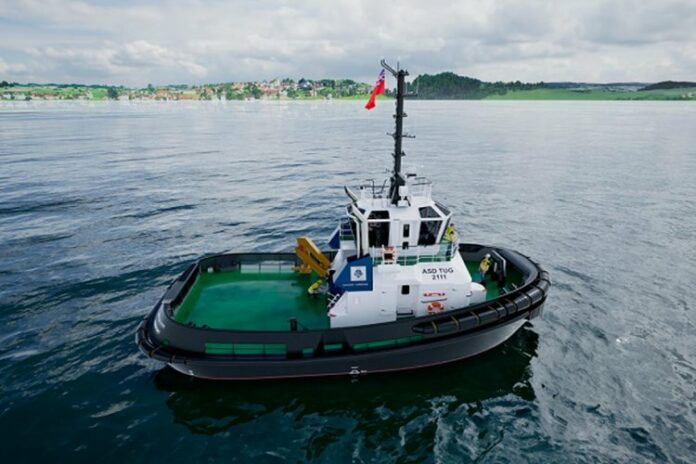
On 11 June 2024, Frederik van der Linde from Damen Shipyards Group and Mike Shipley from the UK’s Portland Harbour Authority (PHA) signed a contract for the delivery of one of Damen’s latest tugs, the Damen ASD Tug 2111. The ASD Tug 2111 is just 21-metres in length but delivers 50 tonnes of bollard pull and is highly manoeuvrable. 

Other innovative features include the location of the winch in the deck house, which allows fore and aft towing operations to be conducted with a single winch, and a full vision bridge with an uncluttered 360-degree view. This along with a range of other features allows the vessel to be operated with just two crew. PHA’s new vessel will also be fitted with Damen’s SCR (selective catalytic reduction) system which will make it IMO Tier III compliant from the outset.

The vessel will be delivered later this year. 

Mike Shipley, General Manager (Marine) and Harbour Master at PHA, said:

“Portland Port has the second largest man-made harbour in the world and we welcome a diverse range of vessels, including cruise ships. Our new Damen ASD Tug 2111 will be a valuable asset in managing the ships that use our facilities. As a government authority we are also pleased to be setting an example by using the latest clean technology to minimise emissions, particularly important given the sensitive countryside that surrounds us. Being able to take delivery so quickly is also an added benefit.” The Damen ASD Tug 2111 is also particularly well suited to the UK towage sector as it rates just below the MCA’s 200 GT threshold.

“We are delighted to welcome the Portland Harbour Authority to the Damen family,” said Frederik van der Linde, Damen Sales Manager United Kingdom and Ireland. “The ASD Tug 2111 has met with a strong reception since we introduced the class in 2023 due to it packing a great deal of capability into a compact hull.”

Partners receive ENOVA grant to retrofit Samskip LNG Vessel with fuel cells and hydrogen fuel

0

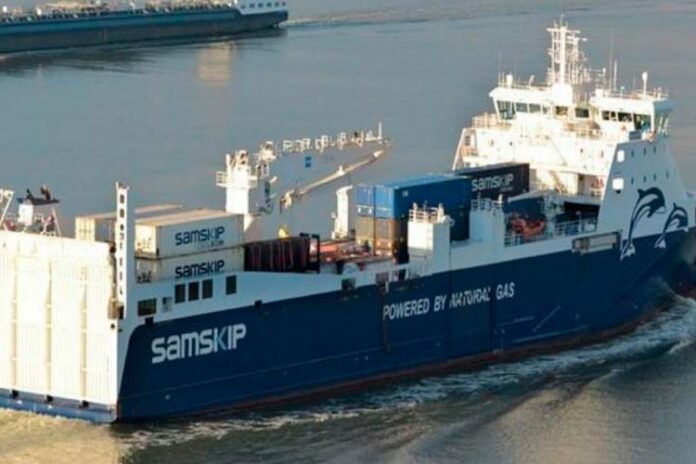
This innovative project aims to significantly reduce emissions from this LNG-fueled vessel, which currently operates on a weekly multipurpose service from Rotterdam, The Netherlands and along most of the Norwegian coastline to Hammerfest. By switching to zero-emission hydrogen technology, these partners join in their goal of reducing greenhouse gas emissions.

The goal of the project is to prepare for an investment decision to retrofit Kvitnos. The project also aims to facilitate long-term hydrogen fuel supply contracts due to the vessel’s fixed route.

Blom Maritime will support naval architects, piping engineers and structural engineers to produce the documentation needed to obtain preliminary approval of the fuel cell and hydrogen solution. Blom Maritime has its main expertise in engineering for retrofitting solutions, a great strength for this project.

Samskip is a multimodal logistics company, offering transport services by land, sea, rail and air around the world. The group has an annual turnover of EUR 900 million, and currently has offices in 24 countries and a network covering 35 countries. Samskip has already one hydrogen powered container vessel under construction in the SeaShuttle project. This new retrofit project with Kvitnos may become Samskip’s second hydrogen project.

Sustainability lies at the center of Samskip as a company. Samskip is committed to seize every opportunity to become Net-Zero by 2040. This project represents an opportunity to greatly reduce, or even eliminate, all emissions from one of our existing vessels.

Samskip Regional Director Norway and Sweden – Are Grathen: “With the delivery of our LNG propelled multipurpose vessels back in 2015, Samskip already offered one of the world’s most environmentally friendly cargo ships, which eliminated SOx emissions while drastically reducing NOx and CO2 emissions. With this grant from Enova, and in close cooperation with fuel cell provider TECO 2030.

We will continue our endeavor to enable full zero emission propulsion which in turn will further pave the way for our H2-propelled new-builds coming out next year and bring us closer to our net-zero targets for 2040.”  

Samskip Head of Fleet Management – Erik Hofmeester: “Samskip embraces every opportunity to reduce CO2 emissions either through using biofuels, CO2 capture-systems, shore-power, innovative newbuilding vessels , and now also into retro-fits solutions.

Using the power take in device (PTI) driving the propellor with green energy, allowing our existing vessels to sail and maneuver emission-free in the Norwegian Fjords and other coastal areas.”

“This grant shows our capability to help our clients secure public funding for smaller pre-studies, this means they can focus on progress towards their ultimate goals of zero emission shipping. Our fuel cell technology is a great match for retrofitting the existing fleet to operate with environment friendly propulsion along the coast,” says Tore Enger, Group CEO, TECO 2030.

DeepSea Technologies wins DNV Type Approval for autonomous solution for speed control

0

DeepSea Technologies has received Type Approval from leading classification society DNV for their latest product. DeepSea HyperPilot automatically and precisely controls the change of speeds across a voyage to achieve fuel savings and empower captains and crews.

An easily retrofittable control device, HyperPilot streamlines adherence to officers’ voyage-level route and speed plans by dynamically retrieving the speed command corresponding to the vessel’s current location and automatically feeding it to the propulsion control system. It eliminates the manual process of dynamically adjusting the RPM of the main engine, while enabling speeds to be planned more precisely for optimal operational efficiency. Use of HyperPilot increases the value vessels can draw from route and speed optimisation solutions, such as DeepSea’s flagship Pythia product, by enabling officers to more closely maintain optimised speeds. Fuel and emissions savings will be boosted, while the user experience will be simplified through automation.

The Type Approval certificate verifies that the HyperPilot solution successfully meets the requirements of the relevant international standards and DNV’s rules for the classification of ships. This achievement affirms DeepSea’s commitment to driving the development and adoption of AI-powered optimisation solutions in the maritime industry.

Full-scale trials of the product are expected to commence in Q3 2024, with plans to go to market later in the year.

Dr. Konstantinos Kyriakopoulos, Co-Founder and CEO of DeepSea Technologies said:

“The success of speed optimisation for fuel efficiency depends on the precision with which optimal speeds can be followed. With the implementation of HyperPilot, officers will have more precise and convenient control of their vessels’ routes and speeds, achieving greater efficiency for their owners and charterers. Receiving Type Approval from DNV prepares the way for our ongoing development of innovative solutions to deliver efficient and sustainable autonomous vessels.”

Jarle Blomhoff, Head of the Digital Ship Systems section at DNV said:

“We are very pleased to have worked with DeepSea on this new system and congratulate them for their commitment to demonstrating that their systems rest on a sound technical foundation. Boosting energy efficiency is an essential part of the maritime transition to a more sustainable future and leveraging the potential of autonomous systems to assist the crew onboard is an exciting development for the industry. The complexity introduced by autonomous systems makes it vital to have a framework that can assess the safety performance of these systems – which is why at DNV we are constantly developing rules and guidelines like the Class guideline for autonomous ships that enable our customers to innovate on a basis of well-established trust.”

MacGregor secures crane order for MMA Offshore

0

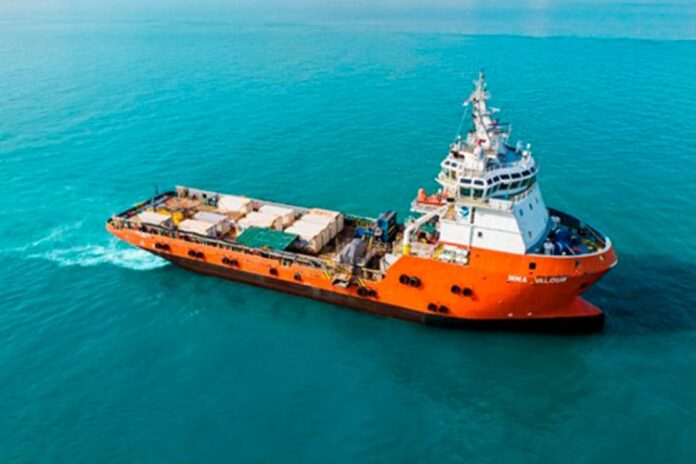
The contract has been booked into Cargotec’s second quarter 2024 order intake, with crane supply scheduled for the third quarter of 2025.

MacGregor’s range of well proven AHC cranes, including its subsea cranes, offer precise lifting capabilities in all conditions, including extreme environments and across temperatures of between plus to minus 40°C.

This contract follows successful deliveries of AHC cranes by MacGregor to MMA Offshore for two of its flagship vessels the MMA Pinnacle and MMA Prestige.

MMA Offshore Managing Director, David Ross said,

“We are looking forward to fitting the MMA Valour with a MacGregor active heave compensated crane which will enhance the vessel’s capability to provide a broader range of marine and subsea services to our clients. The conversion of the Valour to a multi-purpose support vessel will enable the vessel to provide light construction, ROV, survey and geotechnical support in addition to traditional supply services. We are excited to partner with MacGregor for this important conversion.”

Senior Vice President, Offshore Solutions, MacGregor, Pasi Lehtonen said,

“Our AHC cranes have a proven record for reliability, and we have extensive experience in supporting their operation with more than 250 units in service. MMA Offshore is a long-standing MacGregor customer, and we are delighted to add AHC lift capabilities as part of the Valour upgrade.”

Damen announces new offshore charging solution for fully electric CTVs

0

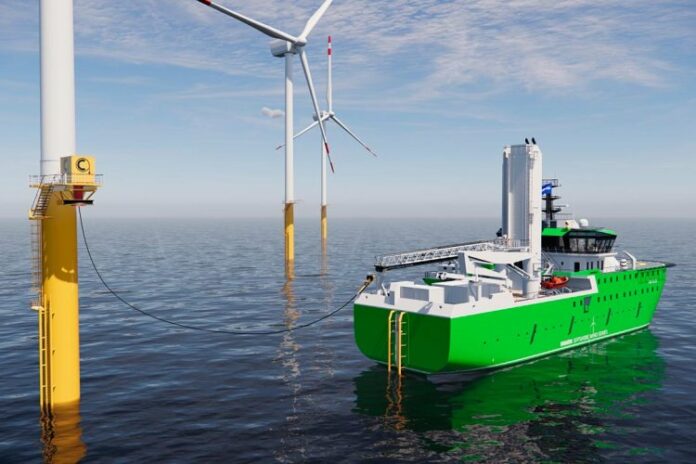
The system envisages a fully electric crew transfer vessel (CTV) which can charge at either a turbine or one of Damen’s Commissioning Service Operations Vessels outfitted with a charger.

With the infrastructure for turbine mounted chargers not yet widely available, vessel-to-vessel charging offers CTV owners and operators an opportunity to invest in the sustainable technology of the future, at the present time, as Mark Couwenberg Product Manager Service Operations Vessels at Damen explains.

“Offshore charging is an essential feature for a fully electric CTV operation. Typically, this would be dependent on charging infrastructure being present at an offshore wind farm. Our unique position as builders of both CTVs and CSOVs led us to the idea of placing the charging scope within our assets. This can be done with both a conventional, diesel-powered CSOV, or with a fully electric version. Of course, from an emissions reduction perspective, the latter is the more preferable option. However, such a solution makes it possible for CTV operators to invest today, in preparation for the wider distribution of full electric CSOVs tomorrow. We believe this could give a considerable boost to the maritime energy transition.”

Installing a large battery system on board a CTV is a challenge, given the weight and space restrictions. Installing the system to the much larger, less space sensitive CSOV gives the smaller vessel access to the energy it requires without compromising on capabilities. 

Using the CSOV as a charger host offers further advantages. For one thing, the stern of the vessel is lower than a turbine, which provides the vessel with easier access to the charger. Additionally, unlike the turbine, the CSOV is able to change its position, enabling the CTV to charge in the most sheltered position with regards to wave conditions.

The charging system that Damen has applied to its concept is developed by UK-based MJR, a specialist in offshore charging systems. The CTV would connect via a bell mouth that catches the charger that is lowered from a reel on the aft deck of the CSOV.

Following personnel disembarkation, the vessel could connect using a highly automated, safe process. It is expected that charging could take place in 2-3 hours, depending on the operational profile. 

Houlder showcases innovative methanol bunkering vessel design in SPINE project

0

The SPINE project, supported by MarRI-UK under the Smart Maritime Land Operations Call, brings together a consortium of organisations, led by MSE International, focusing on energy and autonomy in the maritime industry. 

The project aims to establish an interface between ships, remote control centres, port operating systems, and national energy infrastructure to address challenges in maritime decarbonisation and autonomy. By integrating key elements of UK government policy, SPINE contributes to the realisation of Maritime 2050 objectives.

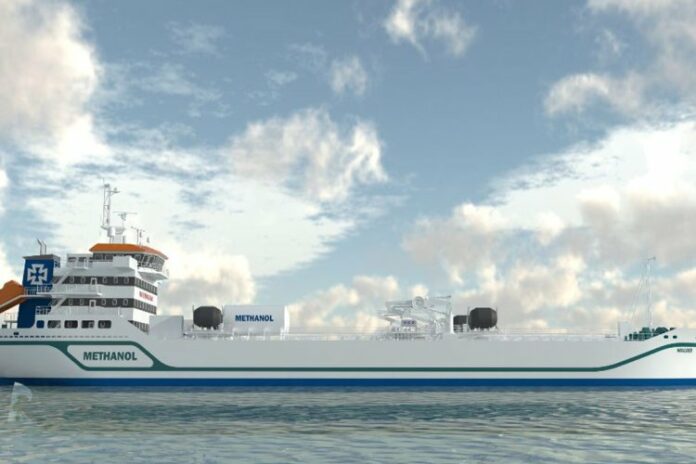
The methanol bunkering vessel design includes semi-automated crane systems for supplying methanol to other ships of a wide size range, including cruise and large container vessels. This design represents a key milestone in the development of methanol infrastructure and a strategic step towards wider alternative fuel bunkering in maritime decarbonisation.  

“Entering the SPINE project, Houlder aimed to expand its influence in the research and development activities around alternative fuels,” said Arun Pillai, Project Director at Houlder. “Completion of this design project involved detailed analyses to ensure compliance with stringent regulations governing methanol as both fuel and cargo, reaffirming Houlder’s expertise in this area.”

In addressing the challenges around space during the vessel design process, Houlder navigated complex constraints to optimise the vessel’s layout for maximum efficiency and compliance. The use of methanol as both cargo and fuel presented unique spatial considerations, given its lower density compared to conventional fuels, the different regulatory requirements concerning storage and use as cargo or fuel, and associated handling spaces. Houlder’s design team explored allocated space within the hull to balance these requirements within a vessel that is of comparable size to existing small tankers, while adhering to strict safety regulations. 

The placement options for propulsion fuel tanks and other critical spaces were thoroughly reviewed to ensure operational effectiveness without compromising safety, performance and vessel size. Electric powertrain architecture was also incorporated, allowing for future upgrades to fuel cell technology, and providing environmental benefits with respect to reduced noise. This meticulous approach underscores Houlder’s commitment to overcoming spatial challenges inherent in adopting alternative fuels within the maritime industry, while retaining ready flexibility for evolution that provides an owner with reassurance against the perceived and actual uncertainty of some alternative fuel technology development.

To optimise vessel efficiency, the Houlder team utilised the latest digital twin technology to create a virtual world. This can be leveraged to analyse adjustments to existing ship operations, to design brand new vessels, or to outline various ways to save fuel and cut associated GHG emissions on specific voyages or across all operations. Innovative Computational Fluid Dynamics (CFD) were deployed within this process to consider various solutions such as twin propeller configurations and bulbous bow designs. The impact of a minimal ballast philosophy on the design was also assessed – the propeller size and subsequent propulsive power requirements, for example. These tools allowed Houlder to analyse the trade-off between propeller size and number against fuel efficiency in both full load and ballast conditions across a range of different operating profiles. As a result, numerous design variants exist, ready to be optimally balanced for OPEX and CAPEX for particular operating routes, and taking owner preferences into account.  

The project’s success positions Houlder as a technology-agnostic consultancy capable of overcoming design challenges posed by emerging alternative fuels. Houlder’s extensive expertise in maritime engineering and its commitment to sustainability underscore its readiness to lead in the development of next-generation vessels. 

“We are pleased with the outcome of this concept design project, and Houlder looks forward to engaging with additional stakeholders interested in advancing methanol bunkering and exploring further opportunities in alternative fuel and efficient vessel design,” Arun concluded. 

Berg secures Louis Dreyfus Armateurs propulsion package for wind-assisted airbus ro-ro vessels

0

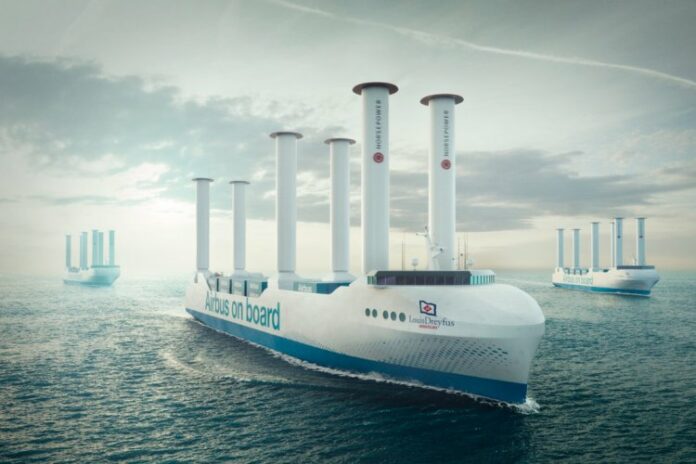
Following delivery by China’s Wuchang Shipbuilding from 2026 onwards, the innovative vessels will carry Airbus A320 Family jetliner subassemblies from France (Saint-Nazaire) to the final assembly line in the United States (Mobile, Alabama). 

The ships have been designed by Deltamarin with the aim of halving fuel burn and CO2 emissions in transatlantic operations by 2030 compared to a 2023 baseline.

Wind power drawn from six Flettner rotor-sails on each ship’s deck will make a strong contribution to reduced emissions, with weather routing optimization software also in place to maximize wind-assisted time and minimize drag. In conventional mode, the ships will run on dual fuel methanol engines.

Optimizing propulsion performance at all times will rely on integrated power management and propulsion systems from BERG. LDA has specified the supplier’s extensive engine-agnostic propulsion package for newbuild ships. As well as the complete propulsion train to work with each ship’s main engines, BERG is supplying state-of-the-art controllable pitch propellers with feathering capability.

Amrita Singh, Account Manager, BERG Propulsion, explained that the BERG hybrid solution allows main engines and electric motors to drive propulsion either independently or simultaneously so that the most efficient power option is used as a vessel’s operational needs change.

“The system works with alternative power sources, including wind,” said Singh. “It’s key when integrating sails that they work seamlessly with propulsion controls so that adjustments can be made to thrust in any given weather and sea condition. In BERG’s solution, Dynamic Drive is integrated into the MPC800 control system, which delivers this capability without the operational complexity of additional hardware.”

“The propulsion package includes a range of ‘modes’, whose selection optimizes performance across the ship’s various operational requirements,” explained Mattias Dombrowe, Business Manager – Electrical System Integration, BERG Propulsion. “As well as mechanical with PTO or electric modes, propellers also operate in boost mode to achieve full speed when required. When the rotor sails are in service, one or both of the propellers can be feathered to optimize wind-assisted operations.”

Crew continuously optimize efficiency using the flexibility available to the  propulsion control unit, rather than being limited by the predetermined relationships between engine load and specific fuel oil consumption, said Dombrowe.

When upgraded to include Dynamic Drive, the Berg Propulsion’s MPC800M system is enabled to set upper limits for vessel speed or fuel consumption by optimizing the pitch and rpm of the control pitch propeller. If the speed limit is exceeded, Dynamic Drive automatically reduces thrust until the limit is met. If fuel is the priority, the algorithm selects the rpm/pitch to optimize engine performance.

“Data from the initial trials showed MPC 800 control system achieving around 10% fuel reductions, and our expectation is that there is more to come as the system beds into operations,” said Ersen Uçakhan, Technical Manager, Chemfleet. “We will upgrade YM Neptune, YM Pluto and YM Uranus later this year, continuing our successful collaboration with Berg Propulsion on this exciting project.” 

The opportunity to replace the existing controls system from another supplier with Berg’s MPC800 system on YM Miranda was accomplished in three days. Özgür Bartınlı, Service Manager, Berg Propulsion, explained that the system offers the open architecture for software upgrades as required.