-10.7 C
New York
Home Blog Page 164

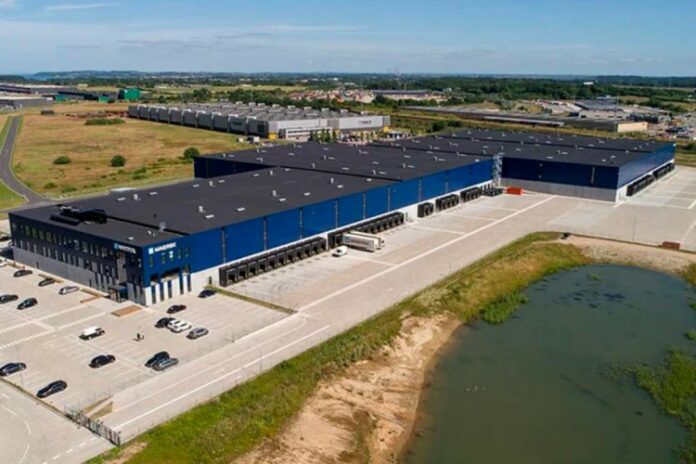
Maersk opens its first low GHG emissions warehouse in Denmark

0

On 24th June 2024, the facility was officially launched, brining together customers, local authorities and partners for a symbolic ribbon-cutting ceremony and the tour of the new site.

This facility is Maersk’s first low-emission warehouse and sets new international standards for the development of low-emission warehouses and logistics facilities, in line with the company’s ambition to achieve net-zero CO2 emission by 2040 throughout its operations. It will also play a key role in Maersk’s logistics footprint in the Nordics, significantly improving the handling of cargoes that arrive to the region by Road, sea and Air.

Birna Ödefors, Managing Director Nordics at Maersk, said:

“We are bringing to life a true logistics hub located right in the centre of the Danish Triangle Region. This will be a new centre of gravity, with easy access to the main infrastructure elements – ports, rail and road, but also our air hub in Billund – making it a perfect and tangible example of integrated logistics solutions that are at the heart of Maersk’s strategy. But more importantly, this facility also directly responds to the needs of our customers, many of whom are operating their own distribution centres and production facilities in the area.”

The project is a joint enterprise between Maersk and Taulov Dry Port, owner of the land. The warehouse was built according to BREEAM Excellent standards with zero direct emissions from operations.

Rune D. Rasmussen, CEO of ADP A/S, operator of the Port of Fredericia and Taulov Dry Port (in JV partnership with PFA Pension), said:

“It is a great honour to hold the inauguration of Maersk’s new warehouse in Taulov Dry Port. Maersk has seen the value in locating their storage facility here, at Denmark’s multimodal transportation hub. Our good collaboration has now entered a new phase, and we look forward to its continuation.”

The new facility complies with high environmental standards. All indoor and outdoor equipment in the warehouse is electrified, with solar panels installed on the entire roof and excess renewable energy produced being fed to the grid. Battery driven trucks will be used for all shunting operations and hydrogen stations are planned within 150 metres from site.

North Sea Port joins Portbase: enhancing the digital port community in the Netherlands

0

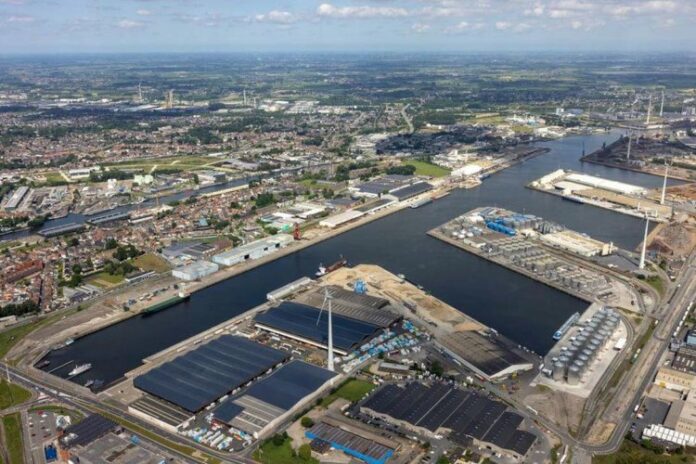
North Sea Port has announced its integration with Portbase, facilitating data reuse across all Dutch seaports. This collaboration includes the ports of Vlissingen and Terneuzen, streamlining logistics processes for customers and becoming part of the Dutch digital port community.

North Sea Port has long maintained close ties with Portbase, and this new digital strategy marks a significant step forward. By connecting the Zeeland ports of Vlissingen and Terneuzen with Portbase, logistics chain data from these ports can now be accessed and reused throughout the Netherlands via the Port Community System (PCS). This integration simplifies the reporting process for customers and accelerates the logistics chain, preparing the ports for future European regulations like the European Maritime Single Window (EMSWe).

Peter Van Parys, COO of North Sea Port, highlighted the benefits of this partnership:

“By joining Portbase’s Port Community System, North Sea Port becomes part of the digital community for all Dutch ports. This aligns with our ambition to expand our digital services. Moreover, this collaboration offers significant advantages for our customers, shipping companies, and ship agents, providing a streamlined ‘one-stop shop’ experience.”

This integration has been well-received by customers, who now have a unified platform for all Dutch ports. While the Zeeland port community already utilized Portbase’s PCS for customs declarations, the new integration extends to harbor master notifications. A successful trial for the “Vessel Notification” service demonstrated that ships can now efficiently register via Portbase before entering the port.

Iwan van der Wolf, CEO of Portbase, expressed pride in the collaboration:

“We are delighted that North Sea Port, with Vlissingen and Terneuzen, is part of our community. This partnership strengthens the Netherlands’ position as a central logistics hub for Northwest Europe. Together, we are building the smartest port communities.”

The next phase will expand to other harbor master services, making registration for agents, forwarders, and shipping companies consistent across the Netherlands. The reuse of data and integration with customs processes further enhances efficiency.

Beyond harbor master services, Portbase will also tackle other relevant projects for Vlissingen and Terneuzen. For instance, the Zeeland port community will receive updates on significant projects like the Import Control System 2 (ICS2), the new EU cargo information system aimed at optimizing customs security processes and facilitating trade flow.

The partnership agreement was officially signed on June 25, 2024.

First tunnel element was inaugurated with the visit of H.M. King Frederik X

0

Monday 17 June was a historic day for the construction of the Fehmarnbelt tunnel. On this day His Majesty King Frederik X of Denmark officially inaugurated the first tunnel element in what will be the world’s longest immersed tunnel.

Construction of the Fehmarnbelt tunnel formally began at the beginning of 2021 east of Rødbyhavn. Just over three years later, the world’s largest and most advanced production facility for concrete elements has been built, where the 217-metre-long and 73,500-tonne elements for the tunnel will be produced.

Mikkel Hemmingsen, CEO of Sund & Bælt, which is the Danish stateowned enterprise tasked with building the Fehmarnbelt tunnel, highlighted the importance of the Fehmarnbelt project for Danish know-how in engineering and megaprojects.

“Today is visible proof of how far we have come. Just as this project builds on the experience from the Great Belt and Øresund, the Fehmarnbelt tunnel will show the way for many other major projects in Denmark and in the rest of the world,” said Mikkel Hemmingsen.

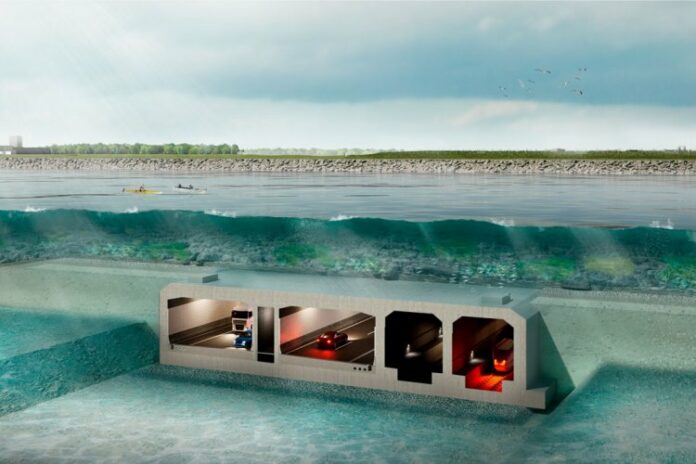
The Fehmarnbelt tunnel (aka Fehmarn Belt fixed link) is being created by Femern A/S, Rambøll, Arup and TEC, and is described by the team as the world’s longest immersed tunnel (i.e. a tunnel built elsewhere and then sunk into place) and the world’s deepest immersed tunnel with road and rail traffic. The immersed part is important as there are longer undersea tunnels, such as the Channel Tunnel, for example, but it’s still an extraordinary undertaking.

Once complete, it will connect Rødbyhavn in Denmark with Fehmarn in Germany, and will be the shortest route between Scandinavia and the rest of Europe. Travelers will either take a seven-minute train journey or a 10-minute car drive to cross the Fehmarn Belt, replacing a trip that would otherwise have taken 45 minutes by ferry.

To put its size into perspective, the construction of the tunnel will require 360,000 tonnes (396,832 short tons) of rebar, which is the equivalent of almost 50 times the weight of the Eiffel Tower’s metal structure. The build site at the Danish side is the size of 373 soccer pitches. Up to 70 vessels were involved in the dredging of the tunnel trench, which is also 18 km (11.2 miles). In total, around 12 million cubic meters (almost 424 million cubic ft) of soil has been dredged from the seabed.

The immersed tunnel itself consists of 79 standard and 10 special sections. Each of the standard sections weighs around 73,000 tonnes (80,468 short tons) and has a length of 217 m (711 ft), with a width of 42 m (138 ft) and a height of 10 m (33 ft). The smaller special sections are under half the length but are a little wider and higher. The tunnel sections are being cast on land and then floated into position using a barge, before finally being submerged and sealed on the sea bed at a depth of up to 40 m (131 ft).

The Fehmarnbelt tunnel’s budget so far is around DKK8.4 billion (roughly US$1.2 billion). Denmark’s King Frederik X recently inaugurated the first section of the tunnel during a special ceremony and it will be sunk in the coming weeks.

The Fehmarnbelt tunnel is expected to be completed in 2029 and to be in operation for a minimum of 120 years. Check out this video explainer for more information.

Sources: New Atlas, Femern

Autonomous vessels need to be more afraid of dying

0

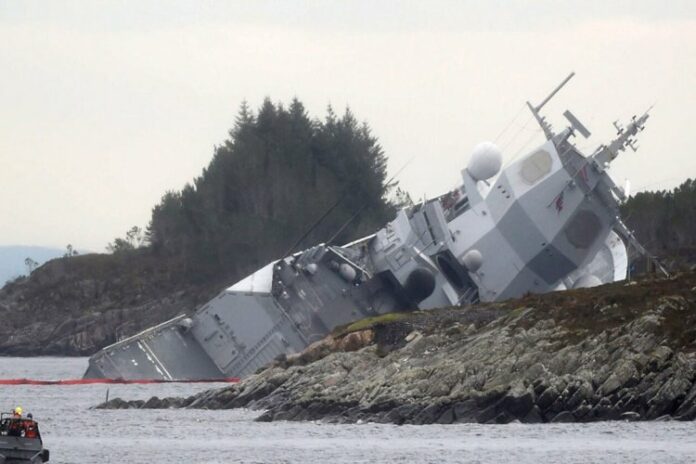
8 November 2018 at 0400 hours: The frigate KNM Helge Ingstad is heading south in the clear winter darkness in Hjelteforden northwest of Bergen.

It is heading towards Scotland after a major NATO exercise in Trøndelag County. The warship, with 137 people on board, does not emit AIS signals (automatic identification system), but other ships in the fjord can see it on their radar.

At 0401 hours, the 133-metre-long frigate crashes with the 250-metre-long tanker TS Sola. The tanker is heading towards England loaded with crude oil.

The collision tears open an almost 50-metre-long hole along the starboard side of Helge Ingstad.

Manually controlled by humans

Sleeping sailors are abruptly woken in their cabins where ice-cold seawater starts to pour in and electric wires and other cables stick out everywhere. Luckily, everyone is evacuated, no lives are lost, and only seven people on board are injured.

The tanker has only received a few scratches, and an environmental disaster has been avoided.

The morning news that day played the audio log from the incident. How was it possible not to spot a 250-metre-long tanker on a collision course?

There are many complex reasons why the accident occurred, but would the same have happened if Helge Ingstad had been equipped with higher levels of autonomy and artificial intelligence (AI)?

Opinions vary.

AI can reduce possible accidents

Ingrid Bouwer Utne is professor of Marine Safety and Risk at NTNU’s Department of Marine Technology. She conducts research on the development of safer and more intelligent autonomous systems – for shipping, underwater robotics and flying drones. Utne’s research is organized under the Fjord Laboratory section of the Norwegian Ocean Technology Centre.

Utne believes that more AI in the maritime sector could have contributed to a better understanding of the maritime accident, both on the bridge of Helge Ingstad and at the Fedje Vessel Traffic Service Centre, which monitors and regulates vessel traffic in the area.

“Neither the outgoing nor the incoming officer of the watch on board Helge Ingstad understood that TS Sola was a tanker. And the operator at Fedje forgot to plot the course of Helge Ingstad when the ship arrived at what is called the precautionary area,” says Utne.
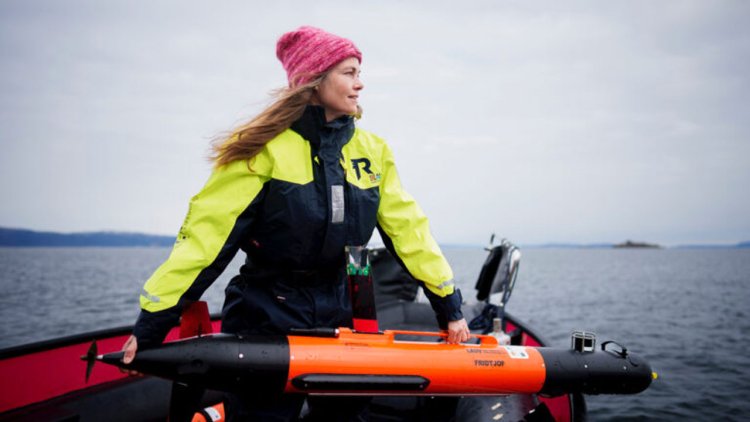
She thinks that these are examples of where better decision support could have reduced the likelihood of these kinds of misunderstandings and oversights, even if AI and autonomous systems alone are not adequate risk mitigation measures.

Utne is a former operations officer on frigates in the Royal Norwegian Navy. She has been a member of a committee working on an Official Norwegian Report (NOU) looking into cruise traffic in Norwegian waters after Viking Sky almost ran aground during a storm in Hustadvika in 2019 with almost 1400 people on board.

In two of the research projects she has worked on in recent years, the aim is to incorporate risk understanding into the ‘thinking’ of autonomous systems.

AI must be able to reason more like human beings

The research conducted in the ORCAS project is about further developing autonomous ships. Kongsberg Maritime and Det Norske Veritas (DNV) are partners in this project. In the UNLOCK project, autonomy research is focused on flying drones and underwater robots.

Among other things, the aim is to get drones and robots to carry out inspections in hard-to-reach areas, such as in closed tanks and under sheets of ice.

“The projects are about connecting the way robots sense risk with control so that risk assessment becomes a more integrated part of the decision-making process for robots,” explains Utne.

With more autonomous systems operating independently of a human operator, good risk assessments must be made.

“If robots are to be made more intelligent, it is natural to think that they need to be able to reason more like human beings. They must be able to assess risk.”

“A lot of good research takes place at the intersection of different disciplines, and it requires creative and open-minded people,” says Utne.

Just prior to the Helge Ingstad accident, the sailors on board the frigate were undergoing optical navigation training.

“When the tanker TS Sola called the officer of the watch on Helge Ingstad over the radio to request a change of course, the officer of the watch did not understand that the tanker was moving and that there was a risk of collision.

In addition, the Norwegian Safety Investigation Authority’s first report after the accident states that Fedje Vessel Traffic Service Centre’s automatic plotting, warning and alarm functions were not good enough.

“AI can provide more information about the surroundings and therefore better understanding of the situation, assuming that the systems are actually used and are user-friendly. However, striking a good balance between the manual control performed by a human operator and autonomous control is demanding,” says Utne.

Low level

Utne is of the opinion that autonomy development is still at a relatively low level of maturity, despite the recent acceleration in the use of artificial intelligence.

“It is not uncommon for the people designing and programming the systems to spend a long time working on control systems and algorithms, only for risk analyses to be introduced late in the development process,” says Utne.

What is unique about the ORCAS and UNLOCK research projects is that advanced risk analyses and models form the basis for developing algorithms in the early programming phase of the control system. As a result, the risk analyses become more integrated into the system because functions are actually created that enable robots to make safer decisions.

“I am not aware of any others who are working in this way, even though many people are talking about AI, autonomy and risk. There has been no systematic or professional basis for understanding what a risk analyst should contribute to the programming of autonomous systems. It seems there is a bit of a silo mentality,” says Utne.

Important to involve risk analysts

As a researcher at NTNU AMOS, the Centre for Autonomous Marine Operations and Systems, she found that researchers were able to collaborate across disciplines. This was very important for the development of her research.

“Cyberneticists and AI experts may struggle a little to understand what risk analysts can contribute, but AMOS was quick to understand the importance of risk management expertise and working in an interdisciplinary manner,” she said.

The Helge Ingstad accident showed us just how complex causal relationships and risk factors can be.”

Although the development of a robot’s understanding of risk is primarily for application in marine areas, the methods and results can also be used on land and in the air.

“A lot of good research takes place at the intersection of different disciplines, and it requires creative and open-minded people,” she said.

Risk is about more than just distance

Risk models have been created in the ORCAS and UNLOCK projects. The models represent risks associated with various operations and systems, and these are then linked to ways in which vessels are controlled.

“We have conducted simulations with real vessels, and carried out experiments on Grethe – an unmanned surface vessel owned by NTNU’s Department of Marine Technology.”

The next step is to further develop and test the models and algorithms more thoroughly in field studies and simultaneously with several other vessels. There is also a need to improve the situational awareness of the human operators. Utne has recently received an ERC grant of NOK 29 million to conduct research on this.

“Including risk management experts when creating decision systems for robots is something new. One typical risk factor already being used by many people working with control and artificial intelligence is the distance between vessels, but risk is about much more than just that,” says Utne.

For example, Utne mentions the risks of running aground, fire, capsizing, and sinking. Therefore, if these types of incidents are to be prevented from happening, measuring the distance between ships is simply not enough.

“The Helge Ingstad accident showed us just how complex causal relationships and risk factors can be,” she said.

Utne believes there is a need for a much more systematic approach to identifying, analysing and modelling risk factors.

“That is what makes systems smarter. Risk models provide a more holistic picture and can contribute to better situational awareness, rather than creating algorithms that focus on minimum distances for example,” she said. “Why not vary things and use different risk models that determine whether a vessel should speed up or slow down, and that take multiple factors into account – such as the weather forecast?”

The next generation of frigates must also be able to navigate optically in manual mode, but hopefully will also have more intelligent systems that can provide better warnings if the people on board do not realise they are on a collision course with another ship.

“More intelligent systems will better understand possible risk factors way before they might actually occur – where death is the ultimate risk factor,” Utne said.

Source: NTNU
By Live Oftedahl

NYK, PIS sign MoU for cooperation in liquefied CO2, LNG transportation

0

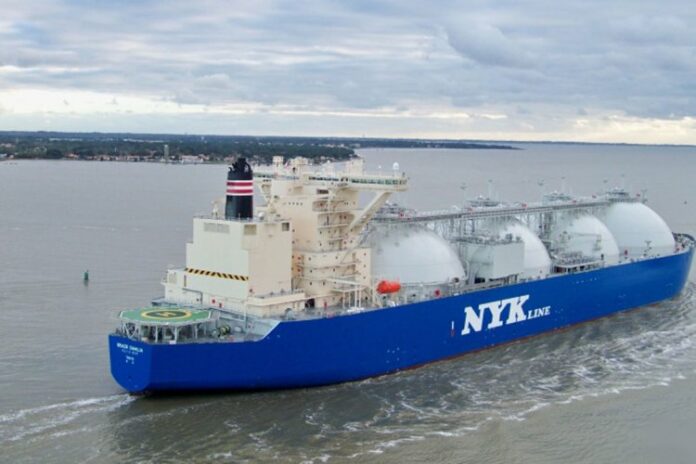
As informed, NYK aims to develop a strong cooperative relationship with PIS in the field of LCO2 and LNG transportation. According to the partners, this is a priority for the Indonesian government and is expected to grow in the future towards a low-carbon and decarbonized society.

By jointly establishing a ship-management company, NYK plans to contribute to stable ocean transportation and create opportunities for training and employment for seafarers in the country.

Based on the strategic partnership agreements signed in 2022, NYK and PIS have agreed to collaborate in obtaining business opportunities through assessments and feasibility studies for the transboundary transportation of LCO2 to and from Indonesia.

The two companies aim to offer LCO2 transportation services for storage operators and CO2 emitters like Pertamina.

Furthermore, NYK and PIS agreed to begin full-scale discussions on joint ownership of LNG carriers.

“Based on NYK’s more than 40 years of experience in owning and operating LNG carriers, we will work with PIS to meet the demand for LNG transport in Indonesia, where further expansion of LNG production and consumption is expected,” NYK noted.

By establishing a joint ship management company, the partners aim to build a stronger relationship and provide advanced ship-management services to meet the expected increase in demand for ships in the country.

BATSO Project launched to optimise heavy maintenance of floating offshore wind turbines

0

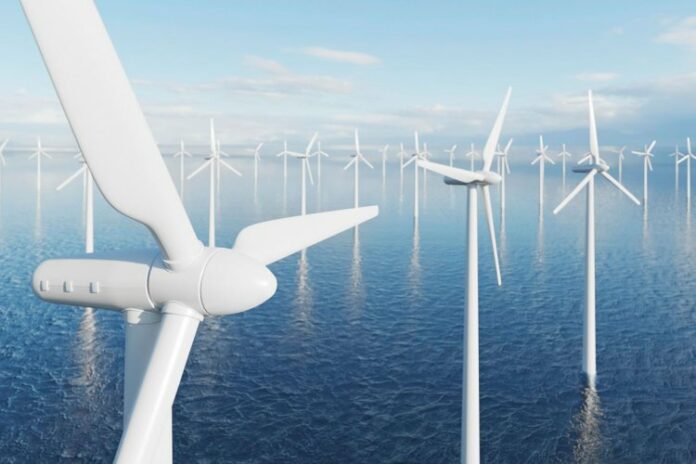
Funded with €2.9 million by ADEME as part of France 2030 (a French State Investment Plan) and in response to the DEMO Tase call for projects, the BATSO project aims to define and validate tools and methods for the replacement of major components in offshore wind turbines. These methods are intended to be less costly and more environmentally sustainable.

Currently, the replacement of major components in floating wind turbines (Major Components Replacement – MCR) is a complex operation that requires heavy lifting equipment and towing the turbines to port. The existing solutions are very expensive, both financially and environmentally.

The objective of this research project is to reduce the costs associated with the maintenance of floating wind turbines by performing these operations directly at sea. This will make floating wind energy more competitive in terms of Levelized Cost of Energy (LCOE). To achieve this, the BATSO project looks towards a technology already used in onshore wind energy, namely lifting from a crane mounted on the nacelle and developing guiding solutions along the tower.

These offshore operations will help reduce the environmental impact of floating wind turbines. The carbon footprint savings and reduction in electricity costs compared to maintenance solutions requiring towing to port will be measured and quantified.

Finally, this project will showcase France’s technological leadership in the field of floating wind energy. Demonstrating the feasibility of MCR operations at sea as quickly as possible will strengthen the position of French stakeholders in the floating wind turbine heavy maintenance market.

Planned for three years, this research and development project brings together several industrial and academic players:

  • BW Ideol, as the designer and builder of the Damping Pool® floating technology and maintenance provider.
  • Centrale Nantes, for basin testing and designing cable robot system models.
  • EDF Renewables, as a project developer, offshore wind farm operator, and maintenance provider.
  • The OPEN-C Foundation, leader in offshore testing and operator of the proposed test site.

Paul de la Guérivière, co-founder and CEO of BW Ideol, commented:

“We are delighted to receive support from ADEME for the BATSO project. Addressing the challenges of heavy maintenance for offshore wind turbines is crucial for establishing a robust floating wind sector in France. These new maintenance products and services, which are less costly and more environmentally friendly, can be deployed in the floating wind market at pilot and pre-commercial farms by 2027, and at commercial farms by 2030. We will make our Floatgen turbine, whose lifespan has been extended by an additional five years, available to accommodate such Research & Development projects.”

Jean-Baptiste Avrillier, Director of Centrale Nantes, expressed his enthusiasm:

“Centrale Nantes is very excited to participate in the BATSO project, which brings together the expertise of two laboratories, LS2N and LHEEA, on the theme of offshore wind turbine maintenance. Our expertise will enable the design and development of a lifting system adapted to marine constraints, as well as the numerical and experimental modeling of lifting operations on floating platforms, ultimately benefiting the environmental impact of floating wind energy.”

Aymeric Ducrocq, Director of Marine Renewable Energies at EDF Renewables, added:

“The selection of the BATSO project by ADEME is excellent news; conducting heavy maintenance operations at sea is a key challenge for the competitiveness of floating wind energy. This project will contribute to enhancing the reliability of operations that have not yet been performed at sea, leveraging the expertise of EDF Renewables for its success. It also highlights the importance of having demonstrators for future industries in France. The availability of Floatgen is crucial for demonstrating these complex operations under real conditions.”

ZeroNorth and Hapag-Lloyd collaborate on bunker procurement

0

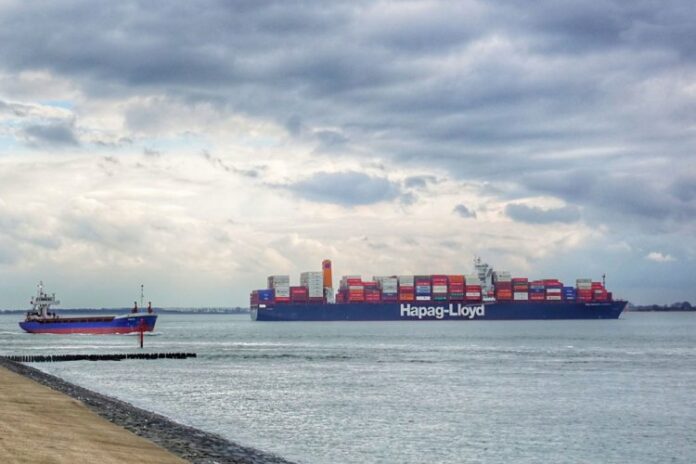
The partnership between the two companies will set out to create a new digital solution that enables Hapag-Lloyd to effectively navigate the energy transition, reduce their fuel spend, and cut their cost to serve.

The solution aims to set the new industry standard for digitalising the end-to-end bunker planning and procurement process. It will offer a brand new and enhanced user experience and new features such as streamlined contract and port planning, contract tender capabilities, a true price algorithm and more. For customers, this solution is available and is ready to be rolled out immediately.

Fuel is a key change factor in shipping’s energy transition, and working with ZeroNorth to develop an industry-leading solution on fuel procurement and planning will enable Hapag-Lloyd to execute on its strategic direction and ambition to invest in maritime decarbonisation.

The partnership comes amidst the continued digitalisation of the bunker market, with advances in technology and increasing amounts of data enabling a new era of transparent and accountable bunker procurement decision-making.
 
Kenneth Juhls, Managing Director ZeroNorth Bunker, said:

“We are excited about this impactful partnership with Hapag-Lloyd, which will see us leverage the extensive knowledge and ambition between our two organisations with the aim of transforming the way companies approach bunker planning and procurement during the energy transition.

“At ZeroNorth, we believe that the challenges that the industry faces are too large to tackle alone. Partnerships are necessary to succeed, and working with Hapag-Lloyd will see us closely collaborate with another top industry player to help them decarbonise and digitalise.”

Jan Christensen, Senior Director Global Fuel Purchasing, Hapag-Lloyd, added:

“We have a clear strategic direction to advance decarbonisation across our fleet and across our business. To do this, we need to find the right partners – and we believe that ZeroNorth is perfectly placed to enable us to digitalise our bunker procurement and planning activity.

“ZeroNorth has strong domain expertise, a proven track record of success in developing and operating industry-leading solutions, and a credible vision for the future of the bunkering industry. Together, we believe that we’ll be able to meaningfully impact how we plan and buy our bunker fuel – by far the single largest lever that we can pull in service of our decarbonisation ambitions.”
 

Lloyd’s Register grants AiP to HD KSOE for novel ammonia fuel supply system

0

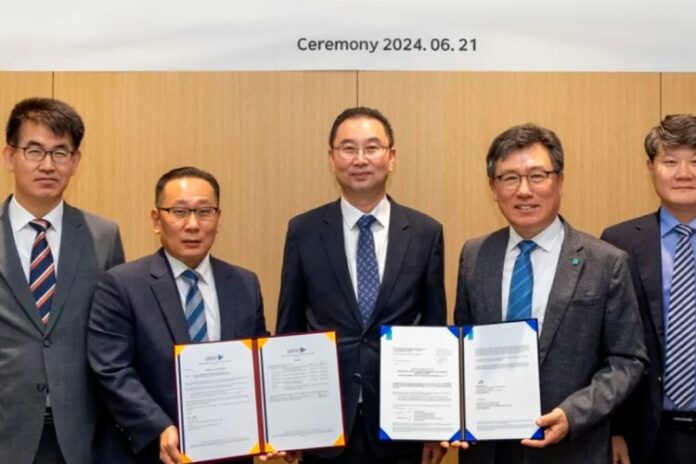
Lloyd’s Register (LR) has granted Approval in Principle (AiP) to HD Korea Shipbuilding & Offshore Engineering (HD KSOE) for their ammonia fuel supply system, which will be used on ammonia new constructions.

The newly developed ammonia fuel supply system shows complete compatibility with high-efficiency cargo handling systems and ammonia engines.

The approval certifies the fuel supply system against LR’s rigorous risk-based certification (RBC-1) process and marks the successful conclusion of a Joint Development Project (JDP) between LR and HD KSOE, which began in April 2024.

The primary objective of the JDP was to develop and refine the design concept of an ammonia fuel supply system for ammonia-fuelled vessels. The AiP represents the substantial step that LR and HD KSOE have taken towards pioneering innovative solutions for emission reduction in the maritime industry.

Ammonia, with its capacity to meet the rising demand for emission reduction solutions, represents a promising alternative fuel for the maritime industry. This fuel supply system addresses the pressing need for sustainable fuel solutions, significantly contributing to efforts aimed at reducing greenhouse gas emissions from the global fleet.  

Young-Doo Kim, Global Technical Support Office Representative for Korea, Lloyd’s Register said:

“This approval in principle represents another significant step for developing the technology required for shipowners and operators’ adoption of ammonia, one of the primary candidate fuels for the maritime energy transition. We are pleased to continue our strong working relationship with HD KSOE through this joint project that will provide a valuable solution for ammonia propelled ships.”

Young-jun Nam, Vice Present & COO of HD KSOE said:

“Ammonia is a zero-carbon fuel that is attracting great attention in terms of economics and supply stability. HD Korea Shipbuilding & Offshore Engineering will lead the field of eco-friendly equipment and materials to take the lead in commercializing ammonia in 2025.”

Equinor’s investigation report following the helicopter accident in Øygarden is ready

0

Equinor has conducted an internal investigation of the SAR helicopter accident on 28 February. The investigation aims to ensure that lessons are learned from the accident, and to identify actions and measures aimed at improving the company’s SAR service and accident preparedness.

The Norwegian Safety Investigation Authority (NSIA) is responsible for mapping the course of events and the actual cause of the accident. In March, Equinor decided to conduct an internal investigation to capture its own lessons to be learned.

The investigation has been performed by an independent investigation group led by Equinor Corporate Audit & Investigation.

“It’s important that we examine this in depth to make sure we learn from this serious accident. The investigation has uncovered findings and points to specific improvement items that we will follow up to further strengthen Equinor’s SAR service and accident preparedness,” says CEO Anders Opedal.

The investigation report recommends measures within training and drills, protective equipment and coordinated action within the organisation as regards Equinor’s SAR service and accident preparedness. An additional recommendation is to conduct a new assessment of whether the measures implemented after the Turøy accident have had the expected long-term effect.

The investigation group makes it clear that the recommended actions do not provide a basis for drawing conclusions as to whether these factors have had an impact on the cause or the outcome of the incident.

Vattenfall and BASF partner with Vestas for low-emission steel wind turbines in Germany

0

Vattenfall and BASF have signed supply and service contracts with Vestas for 15 MW offshore wind turbines in the Nordlicht offshore wind park in Germany.

As Vattenfall is accelerating the green transition considerable steps are being taken in reducing CO2 emissions throughout the entire supply chain. 56 out of the 112 turbines will partly be fabricated with low-emission steel, which significantly reduces the carbon footprint of the towers.

“I am excited to start the journey to introduce low-emission steel into our projects. Low carbon steel is the major element in Offshore Wind to reach our Vattenfall SCORE target to reduce our supplier greenhouse gas emissions by 50 per cent by 2030, and the walk has now begun,” says Eva Julius-Philipp, Head of Environment & Sustainability within Vattenfall’s Business Area Wind.

The low-emission steel is based on 100 per cent steel scrap processed in an electric furnace, which in turn is powered by 100 per cent renewable energy. This reduces the carbon footprint by 66 per cent compared to heavy steel plates made via a conventional steelmaking route.

“Steel manufacturing results in around 8 per cent of total global emissions and it is therefore important to secure decarbonization of this sector fast. With this project Vattenfall together with our partners sends a clear signal that low emission steel is needed to secure an energy transition in line with the 1,5 degree Celsius trajectory in the Paris Agreement,” says Helle Herk-Hansen, Vice President Environment.

An important element on Vattenfall’s road to decarbonisation is to have the full value chain perspective. Therefore Vattenfall started SCORE, a supplier CO2 reduction project in 2021. This project helps Vattenfall actively work towards minimizing the carbon footprints in our supply chain. As a result of this work Vattenfall was earlier this year awarded with the Supplier Engagement Leader Award, for a second year straight. The Nordlicht projects are good examples of how this important work continues.

The Nordlicht wind farm area is located 85 kilometres north of the island of Borkum in the German North Sea and consists of two separate locations: Nordlicht 1 with a capacity of around 980 megawatts and Nordlicht 2 with around 630 megawatts. Once fully operational, electricity production is expected to total around 6 terawatt hours (TWh) per year.