-10.3 C
New York
Home Blog Page 163

ORLEN Group acquires stake in Atlantis field on Norwegian Continental Shelf

0

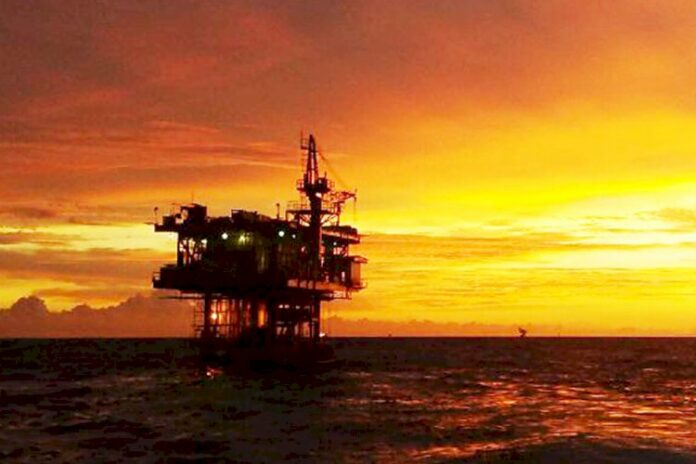
As a result of a sales and purchase agreement signed with Source Energy, PGNiG Upstream Norway will obtain 20% stake in the Atlantis field in the North Sea. By acquiring the equity in Atlantis ORLEN Group is looking to maintain long term stability and high volumes of its gas production in Norway, which will be delivered to Poland via the Baltic Pipe. 

The acquisition of a stake in the Atlantis field will provide PGNiG Upstream Norway of the ORLEN Group with 13 million barrels of oil equivalent, including 1.5 bn cubic meters of natural gas – according to the data published by the Norwegian Ministry of Energy. The license partners plan to develop Atlantis over the next few years.

“ORLEN Group’s investment in the Atlantis field represents our consistent strategic effort to secure natural gas supplies to the Polish gas system. This is a project with above-average economic efficiency. Further diversification of our project portfolio in Norway provides a strong and stable basis for ORLEN’s upstream business,” said Ireneusz Fąfara, CEO of ORLEN.

The Atlantis field was discovered in 2020. Its total recoverable reserves are estimated at 65 million barrels of oil equivalent, with upside potential. This puts Atlantis among the largest discoveries made on the Norwegian Continental Shelf in the last decade.

The purchase of interests in Atlantis is subject to an approval of the Norwegian Ministry of Energy. Once the transaction is completed, PGNiG Upstream Norway will have 20% stake of the field, with the remainder being held by Equinor, which is also the license operator.

The license partners consider several options to develop Atlantis, including a subsea tieback to the platform at the Kvitebjørn field (in which PGNiG Upstream Norway holds 6.45 percent stake and Equinor is the operator) or to the Oseberg field platform (which is also operated by Equinor). Developing Atlantis with existing infrastructure will limit the costs of production launch and reduce the CO2 intensity of its operation.

The area around Atlantis is currently under active exploration. If further discoveries are made, they might be incorporated into Atlantis development concept, hence improving operational and financial efficiency of the asset.

ABP and Britcon breaking ground at the Port of King’s Lynn

0

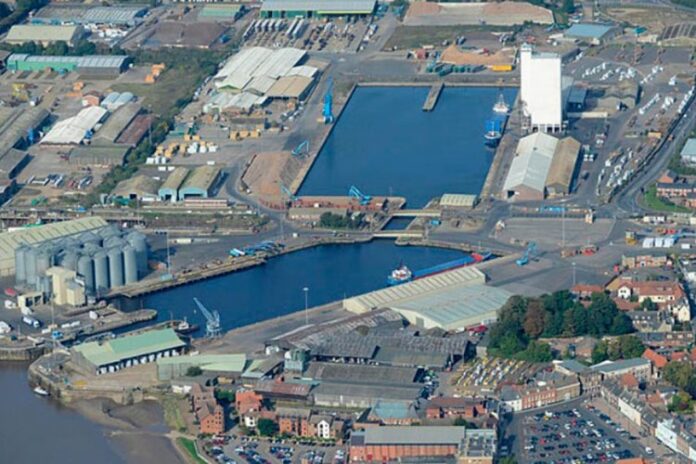
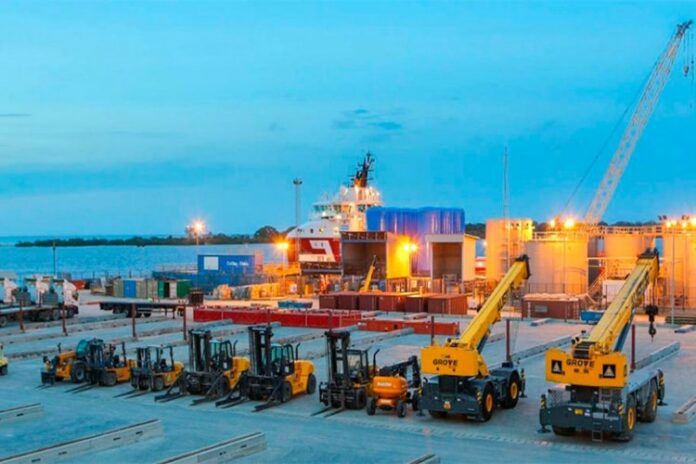
This marks the largest investment ABP has made in King’s Lynn to date, highlighting the company’s commitment to enhancing infrastructure and supporting the growth of the regional economy.

At 106m long, 44m wide and 10m high, the new bulk storage facility will be designed to accommodate both loose salt and bagged products, and will be situated at the junction of Edward Benefer Way and Estuary Road. External works also include 5000m2 of heavy-duty concrete paving. The design and construction of this new facility will be carried out by Britcon, a multi-award-winning, carbon-neutral construction company with regional offices across the UK.

Notably, this will be the first bulk storage warehouse in East Anglia to be constructed under the new industrial frameworks contract, which sets a new standard for future developments the region.

Following the completion of the new bulk store, which is scheduled for May 2025, Azelis will install a cutting-edge bagging plant and relocate to the site, which they will lease. This move will optimise Azelis’ operations and support their asset-light model through extending the current relationship with ABP.

Paul Ager, Divisional Port Manager (East Anglia) at ABP said:

“ABP is delighted to be making its largest investment in the Port of King’s Lynn to date, with the construction of this new store and for a new customer at the port. King’s Lynn is the preferred Norfolk port for forest products, agribulk, manufacturing and recyclables, and is already well-equipped to handle agribulks and aggregates.

“With this new business we should see the movement of more trade through the port, which will benefit the wider economy.”

Nick Shepherd, Managing Director at Britcon said:

“We’re pleased to be working again at the Port of King’s Lynn, and continuing our long-standing collaborative relationship with ABP. We have developed a methodology to minimise our impact and maintain critical port operations. Our design and construction solution includes LED lighting, the reuse of 3,000 tonnes of recycled aggregates and a sustainable surface water drainage system to reduce carbon and improve environmental outcomes.”

Liberty Lines commissions first high-speed ferry with mtu hybrid system from Rolls-Royce

0

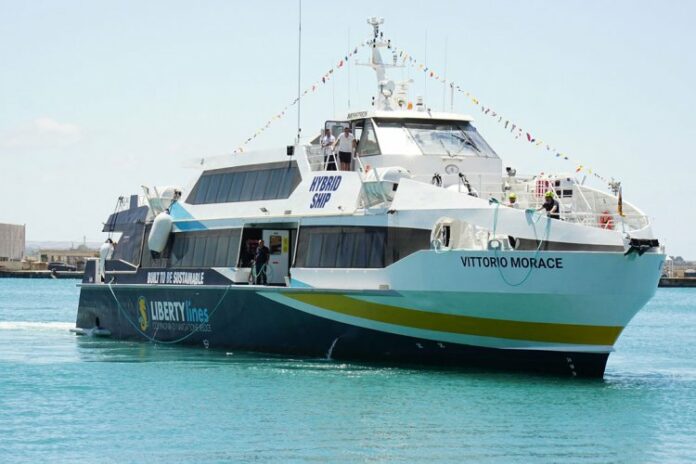
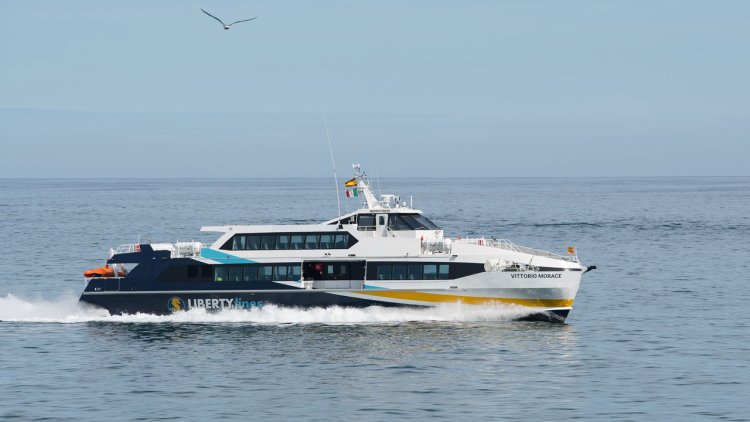
On 27 June 2024, the Italian shipping company Liberty Lines ceremonially launched the world’s first hybrid fast ferry of this category and size in Trapani, Sicily, powered by an mtu hybrid propulsion system from Rolls-Royce.

The 39.5 meter long ship has a capacity of 251 passengers, reaches a speed of over 30 knots and will significantly reduce the impact of ship operations on the environment. The “Vittorio Morace”, built by the Spanish shipyard Astilleros Armon and designed by Incat Crowther, is the world’s first IMO HSC (High-Speed Craft) hybrid fast ferry of this size and has been classified as a “Green Plus” ship by the Italian classification society RINA.

The new member of the fleet, named after the founder of the shipping company, is the first of nine ferries that will operate between Sicily and the neighbouring Aeolian and Egadi islands as well as between the Italian mainland, Croatia and Slovenia.

The battery-electric part of the drive is used for locally emission-free driving in the harbour area and as a booster. CO2 emissions are reduced by the particularly efficient mtu Series 4000 diesel engines which can also run on the renewable diesel (HVO, hydrotreated vegetable oil). Its use can lower the CO2 footprint by up to 90 per cent. Furthermore, the comparatively low overall weight of both the engines and the hybrid drive system contributes to high vessel propulsion efficiency, thereby reducing fuel consumption and emissions.

Gennaro Carlo Cotella, CEO of Liberty Lines, says:

“We chose mtu hybrid systems because we want to minimise the environmental impact of our new fleet while not compromising on the high speed and range of our vessels. As we have trusted mtu products for decades, we have also opted for this partnership for our major fleet renewal.”

The 31 ferries in the Liberty Lines fleet operate all year round, transporting more than three and a half million passengers on routes of up to 100 nautical miles. They not only serve as tourist excursion ships but are above all an important lifeline for many residents of the islands who have to commute regularly. The best known are the Aeolian Islands of Panarea, Stromboli, Vulcano, Alicudi, Filicudi, Lipari and Salina, which are UNESCO World Heritage Sites.

Denise Kurtulus, Vice President Global Marine at Rolls-Royce Power Systems says:

“Liberty Lines is the ideal partner to demonstrate the progress that can be made towards environmentally and climate-friendly ship operation: We have used all possibilities and combined highly efficient combustion engines with exhaust gas aftertreatment, batteries and electric motors with an intelligent electronic control system to create an emission-optimised system. Together with Liberty Lines, Armon and Incat Crowther, we have developed a passenger ferry that will set new standards in this category of shipbuilding. We are proud of this. Our goal is to help this technology achieve a breakthrough.” 

ClassNK grants its first software security certifications for Solverminds’ solutions

0

ClassNK has granted its first software security certifications to ship management solution ‘MACK’
 
ClassNK has summarized its basic approach to ensuring onboard cyber security for ships in the ‘ClassNK Cyber Security Approach’. 

Furthermore, to support the ‘5. Development of shipboard products with reduced cyber risks’ referred to in this approach, ClassNK has issued the ‘Guidelines for Software Security.’ 

The guidelines were developed in collaboration with ClassNK’s partner TÜV Rheinland and outline the recommended security measures to take throughout the development, integration, and operation stages of the software for shipboard, ClassNK conducts the third-party certification based on the guidelines.

‘MACK’ is a comprehensive digital ship management solution that support a data-driven decision-making system. ClassNK has verified the development process and function of ‘MACK Web Application’, ‘MACK Audit Mobile Application’, and ‘MACK Notification Mobile Application’ based on the guidelines. Upon confirming they comply with the prescribed requirements, ClassNK issued certificates for these three applications.
 
Ritesh Sood, Managing Director & Co-Founder of Solverminds said,

“Cyber threats and vulnerabilities need to be tackled with a high degree of diligence by all stakeholders in the maritime industry. In today’s digital landscape, Ship Management companies increasingly expect support from software providers to prioritize cyber risk management to support in safe and secure ship management. MACK’s assessment and certification by ClassNK for Software Security onboard ships, demonstrates Solverminds’ commitment in meeting these expectations, enhancing our collective security posture and providing a secure product for Ship Management Companies.”

Yasushi Seto, Regional Manager of Southeast Asia and Oceania, ClassNK said,

“Cyber security is currently drawing significant attention in the industry, and we are truly honored to be involved in such cutting-edge efforts as a certification body. We believe in reducing security risk for ship management company and ship under management, by proving the reduction of software security risk. This marks our very first software security certification, and it undoubtedly stands as a significant milestone for us. ClassNK will continue to provide cyber security services to further ensure the safety of ships.”

Ramesh Nadarajah, Managing Director of TÜV Rheinland Singapore & Vice President Industrial Service Asia Pacific said,

“The Maritime Industry is going through a Paradigm Shift. Ships are becoming more connected with a variety of Applications being implemented within the ships. In this situation, together with ClassNK, TÜV Rheinland developed ‘The Guidelines for Software Security’ and joined the assessment of this project from an expert’s perspective. TÜV Rheinland would like to thank ClassNK and Solverminds for allowing us to be a part of such a prestigious project which marks a significant milestone for the services that we provide. TÜV Rheinland will continue to provide our Cybersecurity services to further ensure Maritime Security.”

OOCL names its latest 24,188 TEU eco-friendly vessel “OOCL Denmark”

0

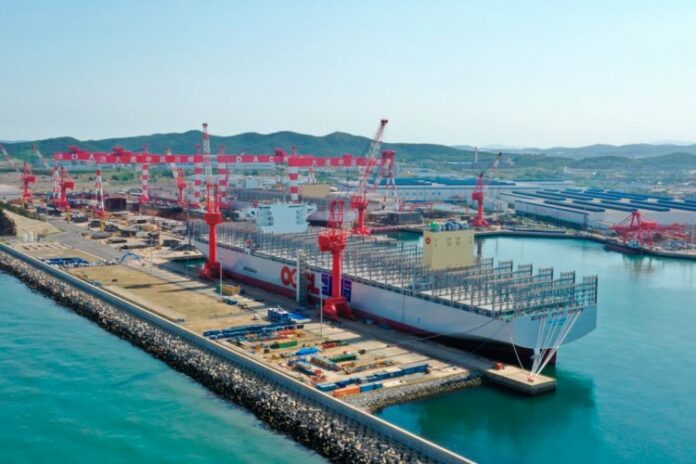
This is the company’s sixth vessel, the last in the same series, built by Dalian COSCO KHI Ship Engineering (DACKS).

Dr. Rulin Fuong Tung, wife of the non-executive director of Orient Overseas (International) Limited and managing partner of QBN Capital, Andy Tung, was invited as the vessel sponsor to name the new vessel.

Andy Tung was present during the ceremony as the guest of honor and Frank Tong, managing partner of QBN Capital as the honorable guest of the naming ceremony.

Peter Pan, director and member of executive committee of OOCL, said at the ceremony that “OOCL Denmark” will join her sister vessels of the same series in serving OOCL’s Asia to Europe route.

In June the company celebrated the maiden voyage of its latest two 24,188 teu mega vessels, “OOCL Finland” and “OOCL Sweden”.

With the introduction of these two new vessels, OOCL has taken delivery of ten mega containerships of the same model.

“OOCL Finland” and “OOCL Sweden” were constructed by Dalian COSCO KHI Ship Engineering (DACKS) and Nantong COSCO KHI Ship Engineering (NACKS).

The two boxships are serving OOCL’s Asia-Europe service LL1.

MOL to take equity stake in Alistair Group, a logistics company in Sub-Saharan Africa

0

Alistair Group has offices in eight countries in Southeast Africa. Its business centers on cross-border logistics services for truck transport of copper, cobalt, and other critical mineral resources produced in the Democratic Republic of Congo and Zambia in inland Africa to coastal export ports. It is also engaged in customs clearance, warehouse operations, cargo handling at ports, and logistics DX (digital transformation) services and has a fleet of about 450 trucks and about 1,000 employees.

MOL was the first Japanese shipping company to establish a shipping route between Japan and the east coast of Africa in 1926 and has been offering marine transport service to and from Africa for nearly 100 years. With offices in South Africa, Mozambique, Kenya, and Mauritius, MOL is proactively developing various businesses on a group-wide scale, including not only ocean freight forwarding but also air freight forwarding, land transport, warehousing, and the export of used Japanese agricultural machinery.

MOL has positioned portfolio and regional strategies as core strategies of the MOL Group’s “BLUE ACTION 2035” management plan and is pursuing the development and expansion of new non-shipping businesses as well, such as logistics, in emerging regions. Through this capital participation, MOL and Alistair will merge the MOL Group’s global network and expertise in shipping and logistics with Alistair’s expertise in cross-border logistics in Southeast Africa. This will enable both groups to offer a wider range of high-quality logistics services to customers in Africa, a region where MOL anticipates significant growth and new business opportunities due to increasing population and abundant resources, including renewal energy potential.

MOL Senior Managing Executive Officer Toshinobu Shinoda, who is responsible for Europe and Africa, commented,

“Since its founding in 2008, Alistair has repeatedly made creative efforts to thoroughly meet customer needs, through streamlined operation routes, highly IT-enabled information and payment systems, equipment and machinery quality management, and business operations run by an outstanding management staff. As a result, Alistair has grown into a leading regional mining and infrastructure logistics company. We at MOL look forward to increasing our presence in Africa, which offers tremendous potential, and we are extremely proud to have Alistair as a robust partner with whom we can share values.”

Alistair Group CEO, Alistair James, commented:

“We’ve set an ambitious vision and are taking decisive steps to solidify our position as the leading logistics provider across the African continent. We look forward to continuing to fund the growth of our core business while also investing further in our cutting-edge technology and regional infrastructure developments. Alistair Group is thrilled to be partnering with MOL for the benefit of both businesses. The investment offers us a significant competitive edge and presents an opportunity to seamlessly integrate ocean and cross-border shipping, meeting the exacting demands of our customers. In essence, this partnership is set to propel our growth to new heights.”

Fincantieri signs agreement with Crystal for two new high-end cruise ships

0

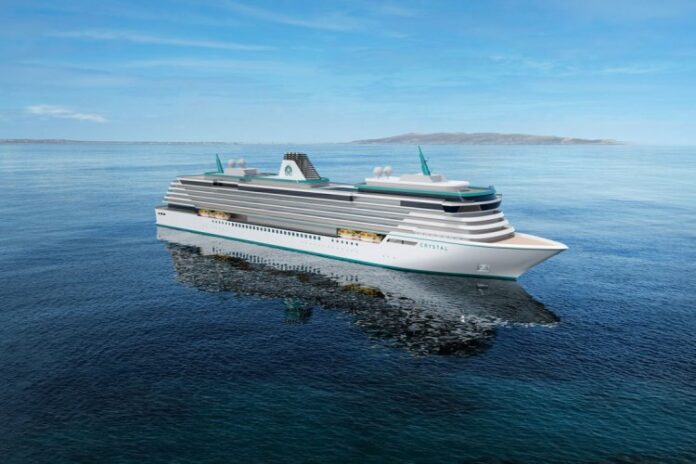
Fincantieri and Crystal have announced the signing of a Memorandum of Agreement (MoA) for the construction of two state-of-the-art high-end cruise ships, plus an option for a third unit. The value of this agreement, subject to financing and other terms and conditions, is considered as important.

The new units will boast a gross tonnage of 61,800 tons and accommodate approximately 690 passengers. Developed by renowned international architectural firms, their interior designs will use the finest materials and the best craftsmanship. They will feature all-suite accommodations, with private verandas including a popular single occupancy category designed for single travelers. This commitment to comfort is complemented by one of the highest crew-to-passenger ratios in this segment, ensuring personalized service and attention to detail.

Pierroberto Folgiero, CEO and Managing Director of Fincantieri, commented:

“This order not only highlights the robust recovery of the cruise sector, in line with our Industrial Plan, but also reaffirms Fincantieri’s leadership, thanks to the operational excellence of our shipyards and the execution quality of our world-class supply chain. We are thrilled to partner with Crystal in our pursuit of innovation and excellence, under the guidance of a shipowner who has always been close to our Group, like Manfredi Lefebvre d’Ovidio.”

Manfredi Lefebvre d’Ovidio, Executive Chairman of A&K Travel Group said:

“This order is another milestone in the 40 years of productive collaboration between Fincantieri and my family that started with Sitmar Cruises, continued with Silversea and now is flourishing again with Crystal. Our aim is to continue setting a new standard in cruising, offering our guests an unmatched level of service and sophistication.”

Cristina Levis, CEO of A&K Travel Group, added:

“Our aim is to continue setting a new standard in cruising, offering our guests an unmatched level of service and sophistication.”

New build vessel Acta Pegasus to be delivered under French flag

0

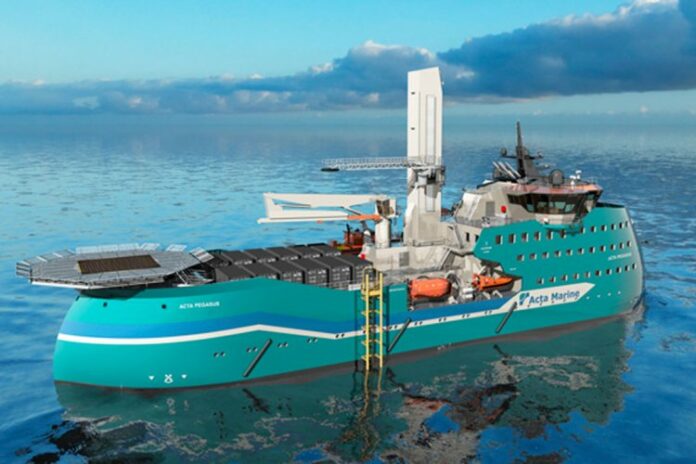
Dutch offshore vessel owner Acta Marine has announced the expansion into French maritime and offshore energy market with the newbuild construction service operations vessel (CSOV) named Acta Pegasus.

The fourth vessel in Acta Marine’s fleet, currently under construction in Turkey, will fly the French flag, showcasing the company’s commitment to the French maritime industry and the intention to further strengthen its foothold in France.

The CSOV, named Acta Pegasus, is of Ulstein SX216 design, and features an optimized hull and ability to use (e- )methanol as main fuel According to Acta Marine, the vessel is capable to deliver a dramatic reduction in greenhouse gas emissions from her operations.

“Given our growing position and operations in the French market, we will invest in recruiting and training a team of highly skilled French maritime professionals to operate this state-of-the-art vessel.

“By employing local talent, we aim to support the French workforce, foster local expertise, and ensure the highest standards of safety, hospitality, and efficiency in our operations,” Acta Marine said in a statement.

HMM, CargoX collaborate to launch eBL platform

0

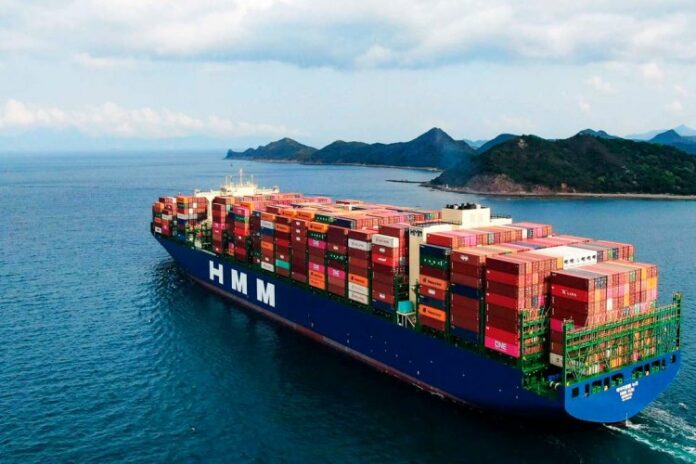
Through this partnership, HMM customers will benefit from the advanced functionalities of the CargoX Platform, which will be integrated into HMM’s digital services. This integration aims to modernise and streamline eBL workflows, enhancing the efficiency and security of global trade documentation.

“We are delighted to announce the launch of our electronic bill of lading service in partnership with CargoX, a leading provider of electronic document solutions. This new eBL capability will enable us to deliver an enhanced service to our customers and spearhead the digitalisation of the shipping industry,” said Kurt (Wonjun) Jang, SVP of HMM Container Operation Office.

“We are thrilled to partner with HMM, a global shipping leader. This collaboration advances global trade by implementing efficient, fast, and secure electronic bills of lading. As the logistics industry digitises, we are proud to support HMM in leading this transformation,” said Bojan Čekrlić, CEO of CargoX.

Customers using HMM services can now generate eBLs within the HMM digital service system and seamlessly transfer them through the global CargoX Platform.

The eBL document lifecycle includes features such as transfer, surrender, and document acceptance, ensuring comprehensive support for all equivalent paper-based functions. Each eBL is recorded on the public ledger, guaranteeing secure and immutable documentation, with audit logs accessible at all times.

Initially, the service supports electronic bills of lading in PDF format, with structured data eBLs based on the forthcoming DCSA eBL standard to be available soon.

The HMM digital services platform and CargoX Platform integration will be available to all HMM customers globally starting on 8 July 2024.

Negative bidding continues to burden offshore wind development

0

This puts unnecessary additional pressure on offshore wind developers – with adverse consequences for the wider wind energy supply chain and Europe’s electricity consumers.

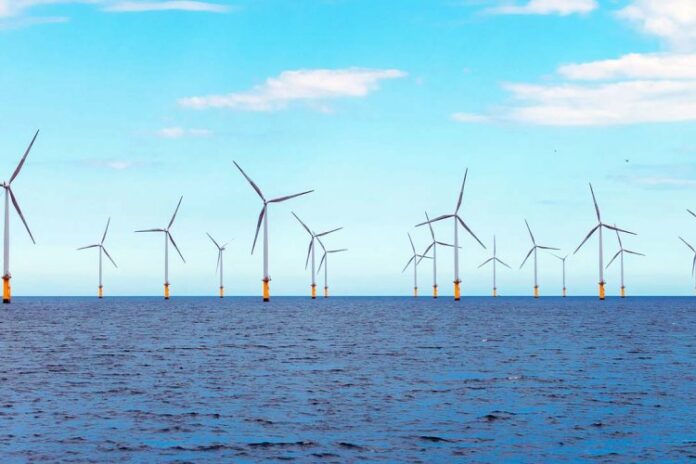
Germany and the Netherlands have recently awarded 6.5 GW of new offshore wind projects. Germany awarded 2.5 GW and the Netherlands 4 GW. To put this in context the EU has 19 GW of offshore wind in operation today.

The auctions in both countries used negative bidding, where wind farm developers bid the amount of money they’re ready to pay for the right to build a wind farm – and the higher the price you bid the more likely you are to win. Most other countries in Europe use Contract for Difference (CfD) auctions where developers bid the amount of revenue they think they need, and the lowest bid wins.

If you win a negative bidding auction your revenue will be whatever is the wholesale market price of electricity. If you win a CfD auction your revenue will be whatever you bid in the auction, and if the market prices are higher than the agreed strike price, you pay the difference to the Government.

The negative bidding amounts are a straight add-on to the costs of developing an offshore wind farm. It’s extra money the developer has to pay which they don’t pay in a CfD auction. Project developers have to pass on these costs. Either to the wind energy supply chain which is still recovering from supply disruptions and cost increases. And/or to electricity consumers in the form of higher electricity prices.

The results of the latest German auction were:

  • TotalEnergies will pay €1.958bn to develop the N-11.2 site which has a capacity of around 1.5 GW. So they’re paying €1.3m per MW.
  • EnBW will pay €1.065bn to develop the roughly 1 GW N12.3 site. That’s €1.1m per MW.

The results of the latest Dutch auction were:

  • UK-based SSE Renewables and the Dutch state pension fund APG and ABP will pay €40mn to develop the 2GW IJmuiden Ver Alpha site. That’s €20,000 per MW.
  • Vattenfall and Copenhagen Infrastructure Partners will pay €800mn to develop the 2GW IJmuiden Ver Beta site. That’s €400,000 per MW.

Germany and the Netherlands both used negative bidding in their previous offshore wind auctions already. The Netherlands previously applied a cap on the bids which equated to €70,000 per MW – their cap is higher now. Germany doesn’t apply a cap. The winners of their previous auction, BP and Total Energies, are paying €12.6bn for the right to develop 7 GW – which equates to €1.8m per MW.

Negative bidding also means higher financing costs than you get with wind farms that are awarded in a CfD auction. The latter have fixed revenue, so banks feel much more comfortable offering more debt finance. But projects awarded in a negative bidding auction have variable revenue – the market price of electricity. So they need to rely more on (more expensive) equity finance – though they can mitigate this by signing PPAs with offtakers.

“Negative bidding increases the costs of offshore wind. Costs that have to be passed on to consumers and the wind energy supply chain. It may be a short-term gain for finance ministries. But it’s a long-term cost for society”, says WindEurope CEO Giles Dickson.

Non-price criteria

The Dutch auction made extensive use of non-price criteria. For the Alpha site these were about biodiversity protection. For the Beta site it was system integration. The winning bidders made significant commitments to invest in these respective areas. Vattenfall and CIP have among other things committed to build a 1 GW electrolyser facility in Rotterdam which will run on renewable electricity from the Beta site. And the Alpha wind farm is designed as a “living laboratory” – more than 75% of the wind turbines in the wind farm will have artificial reefs for muscles and other maritime animals.

“The Dutch auction shows the European wind industry has a great offering on ecology and system integration. We are building new wind farms and creating lasting value for Europe’s environment and energy system”, says Giles Dickson.

The German auction used price criteria only.

In Germany 90% of the money raised from negative bidding will be used to reduce the grid levies. The other 10% are used to support maritime biodiversity and sustainable fishing practices. OK. But building these wind farms requires a strengthening of Germany’s offshore wind supply chain and an expansion of port capacity. The German Government should consider putting some of the money into that as well.

Source: EvWind