-10.3 C
New York
Home Blog Page 162

Svitzer invests in three new tugboats in Brazil to Support Growth

0

Svitzer has announced the signing of a contract with Shipyard Rio Maguari for the construction of three new tugboats.  

Brazil plays an essential role in the global economy, particularly in the trade of grains, oil and metals. The nation’s vast agricultural output makes it a critical supplier of grains, ensuring food security for countries reliant on imports. Additionally, Brazil’s significant oil production and refining capacity contribute to global energy security. Its abundant metal reserves are essential for industrial development and manufacturing worldwide. 

These exports collectively foster economic growth and development within Brazil, further solidifying its position as a key player in international trade. As enablers of trade, Svitzer is committed to supporting this growth by investing in additional tugboats for its Brazilian fleet 

The three vessels currently under construction are part of the 2300 Rampart Series and boast a top speed of 13 knots, an overall length of 23.2 meters and a bollard pull of >70 tonnes. The vessels will be equipped with Fifi-1 firefighting capabilities. These advanced features will enhance Svitzer’s ability to support the growing capacity of various Brazilian ports, ensuring safe, reliable and efficient customer services. 

Arjen van Dijk, Managing Director for Svitzer Americas, emphasised the strategic importance of this investment:

“Svitzer’s new build program in Brazil is a testament to our continuous commitment to meet the evolving needs of our customers in this important market. These tugboats are designed to handle the increasing complexity and volume of Brazil’s maritime operations and will enhance our operational capacity across various Brazilian ports. It not only strengthens our service offerings but also aligns with our broader goal of supporting Brazil’s economic growth and infrastructure development.” 

Daniel Reedtz Cohen, Managing Director of Svitzer Brazil, highlighted the continuous growth opportunities in the region:

“Brazil’s economy has seen significant growth in the green energy and agricultural export sectors and has a key position in the global energy and food supply. Furthermore, the country’s growing export market for commodities, such as metals and oil, demonstrates its economic potential. With the number of ports increasing, and new terminals under construction, the expansion of our fleet with these tugboats reflects our dedication to supporting the evolving needs of Brazilian ports. We see continuous growth opportunities in the country, and this investment positions us to continue meeting new demands effectively.” 
MODEC innovates offshore inspections with Drone Tech

0

MODEC and Terra Drone Corporation have entered into a joint research and development agreement to enhance inspection drones for Floating Production, Storage and Offloading system (FPSO). This agreement follows the Memorandum of Understanding signed by both companies on November 7, 2023.

Since November 2023, MODEC has continuously utilized Terra Drone’s drone technology to measure the hull thickness of crude oil storage tanks of FPSOs operating in Brazil. This implementation has yielded a safer inspection process by reducing the need for working at height. However, further optimization of drone inspection technology is essential to overcome the harsh working environments on offshore platforms. Due to issues with the current execution and efficiency of hull thickness measurements, the inspection tasks conducted by crew members have not yet been fully replaced by drones.

In order to enable FPSOs and other offshore platforms to operate safely for more than 20 years, maintaining asset integrity is crucial. While periodic structure inspections are indispensable, there is a constraint that the inspection work must be performed in parallel with production operations by a limited number of crew members. Consequently, reducing manpower has become a shared challenge across the industry.

MODEC and Terra Drone have engaged in extensive technical discussions, identifying improvement areas based on field feedback, and agreed to pioneer in developing drone inspection technology tailored to the harsh environments of offshore platforms. The goal is to fully replace manual inspections of crude oil storage tanks with drones in the near future. 

By innovating drone inspection techniques, MODEC and Terra Drone aim, in the short term, to triple inspection efficiency and reduce inspection costs. Through these initiatives, we hope to deploy this drone inspection technology not only on MODEC-operated FPSOs but also widely throughout the industry, addressing shared industry challenges related to occupational safety and manpower reduction in offshore platform operations.

Damen Shipyards and Muller Dordrecht christen new tug

0

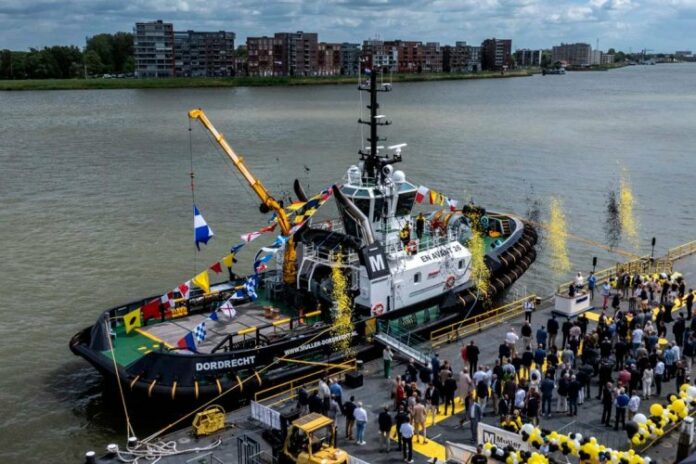
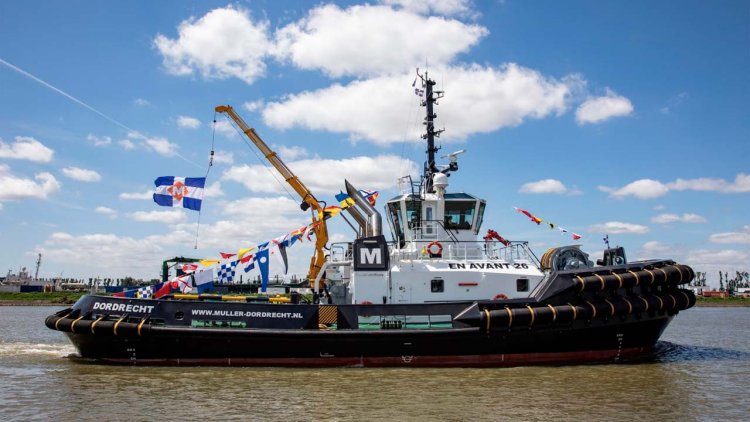
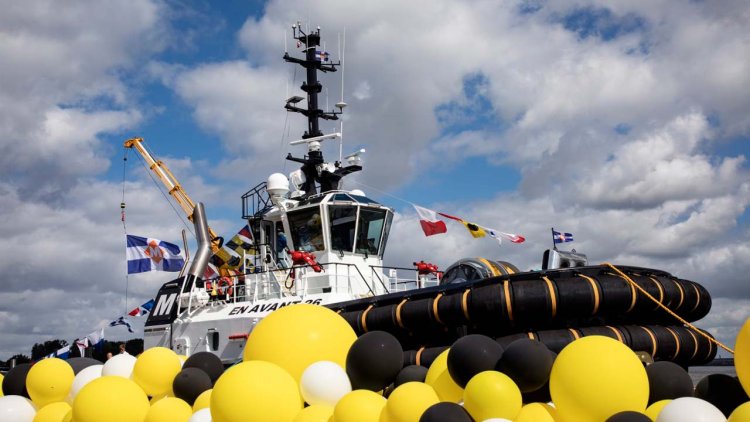
On the 28th of June, a christening ceremony took place in Dordrecht, the Netherlands, marking the delivery of a new Damen ASD Tug 3212 by Damen Shipyards to leading Dutch towage company Muller Dordrecht. 

Named En Avant 26, the vessel was the third to be delivered by Damen to Muller Dordrecht in the past three years, the others being another Damen ASD Tug 3212 En Avant 25 and a Z-drive Pushboat built by Concordia Damen. 

The En Avant 26 was built at Damen’s specialist tug yard Damen Song Cam Shipyard in Haiphong, Vietnam, and delivered to the Netherlands in May along with another ten Damen tugs on board the BigLift heavy lift vessel Happy Star.  

The Damen ASD Tug 3212 is the flagship of Damen’s ASD (Azimuth Stern Drive) range. Powerful and highly manoeuvrable, the 32-metre vessel delivers well over 80 tonnes of bollard pull, making them capable of handling even the largest container vessels in harbour as well as offshore towage. Like its predecessor En Avant 26 is comprehensively equipped. IMO Tier III certified, it features a large aft deck winch together with an open stern, hydraulic towline guide pins, a deck crane and a support boat.

The winterisation package for operations in high latitudes has also been specified, which includes additional insulation, heated windows and a special heating system where engine heat is used to heat the accommodation. This will enable it to operate in the Baltic Sea all year round if needed, as well as the waters of western and southern Europe.

Headquartered in Dordrecht in the Netherlands, Muller Dordrecht has a history of providing towage, emergency response and salvage, heavy transport and other services going back for over a century. The company and Damen have been working together for over 50 years and they share similar values of sustainability, stewardship and fellowship. Today, Muller Dordrecht has six Damen vessels in its fifteen-strong tug fleet, including two Stan Tugs and a Pushy Cat. A seventh, an ASD Tug 2811, is also under construction at Damen Song Cam Shipyard.

Bram Muller, CEO at Muller Dordrecht, said:

“While we do not aspire to being the biggest tug operator in Europe, we do aim to be the best. Our Damen tugs enable us to deliver additional added value to our customers thanks to their quality and Damen’s excellent after-sales support.”

Damen’s Joost van der Weiden, Sales Manager Benelux, said:

“It is clear that Muller Dordrecht has a good and strong wind in her sails. With their two new ASD Tugs 3212 in the fleet and one ASD Tug 2811 under construction in Vietnam, Muller Dordrecht is enhancing its capabilities and getting greener. It is a tremendous pleasure working with them with our shared values and much else in common. A recent highlight was the welcome we gave the Happy Star when it arrived in Rotterdam.”

Exail, RTsys and ABYSSA join forces for ocean floor mapping with AUVs

0

Exail, RTsys, and ABYSSA, announce their strategic partnership in the CARMA (Mineral resources mapping by AUVs swarms) project. 

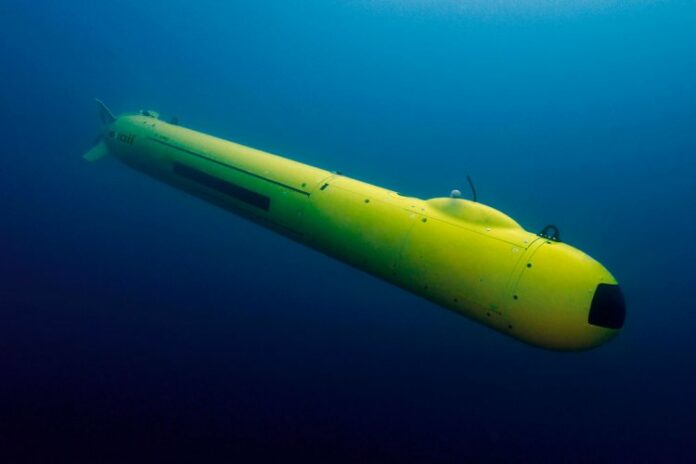
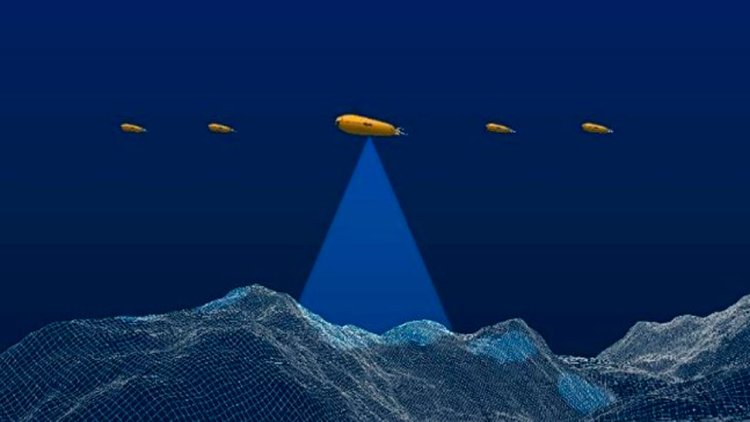
Co-funded by Bpifrance under the #France2030 initiative and designed to advance knowledge of great depths, the CARMA project focuses on developing swarms of Autonomous Underwater Vehicles (AUVs) for efficient ocean floor mapping.

This project aims to develop an innovative solution for precise seabed surveying at great depths. The ongoing development involves creating a solution in which a multi-sensor underwater drone capable of diving to 3,000 meters will coordinate multiple AUVs to increase the surface of the exploration area. The research program also includes the development of advanced collaborative navigation, acoustic communications, positioning, and innovative mapping capabilities. CARMA supports the French authorities’ strategy to develop extensive deep-sea exploration capacities.

As part of this strategy, Exail will improve the capabilities of its deep-water AUV A18-D to serve as the leading AUV to guide the swarm. Improvements will enable navigation down to 3,000 meters, at close altitude from the seabed over sloped terrains, and to accurately geolocate swarm’s acquired data. RTsys will extend the capabilities of its newly developed AUV COMET-3000 to dive up to 3,000 meters. Multiple units will be provided to act as followers, along with the development of an innovative launch and recovery system for the AUV swarm. ABYSSA will focus on developing exploration strategies for deep-water swarms of AUVS. Additionally, ABYSSA will process the magnetic data collected to map the magnetic anomalies on the seabed.

VOS Gorgeous completes first Sulmara project

0

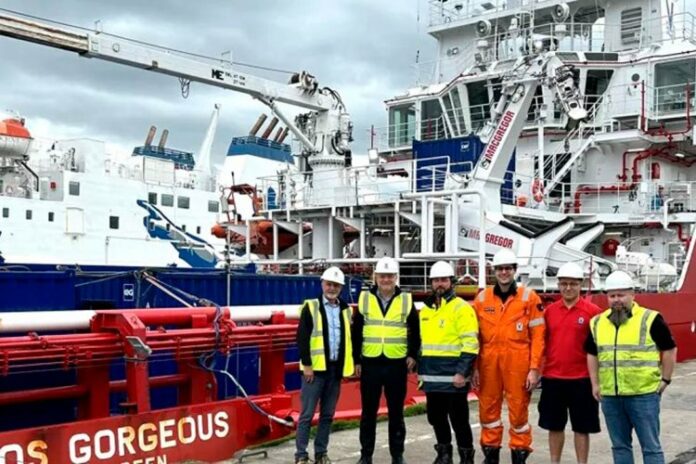
The vessel was used to conduct site-characterisation work at a Scottish floating offshore windfarm, operating in water depths of up to 100 m.

Chris Young, Offshore Manager at Sulmara, says:

“We have completed a difficult project for a high-value client and the Vroon personnel on board were instrumental in making sure that the vessel side of things ran smoothly. Considering that this was the first time many of the personnel on board had performed survey operations, their control of the vessel was excellent, and they were able to adapt quickly to the survey requirements.”

VOS Gorgeous is currently back in her home port of Aberdeen, mobilising for her next survey contract with Sulmara. 

The Stromar floating offshore windfarm is being developed approximately 50 km off Caithness in northern Scotland. When complete, it will be one of the world’s largest floating offshore windfarms, generating renewable electricity for homes in Scotland. Stromar is a joint venture of Ørsted, BlueFloat Energy and Renantis.

Built in 2015, VOS Gorgeous is a multi-purpose DP2 offshore vessel. She is the third in a series of four 60-metre vessels, purpose-built for Vroon and featuring a revolutionary, wave-piercing bow shape, DP2 and 300m2 cargo deck. 

NYK and Astomos Energy welcome “Gas Amethyst”

0

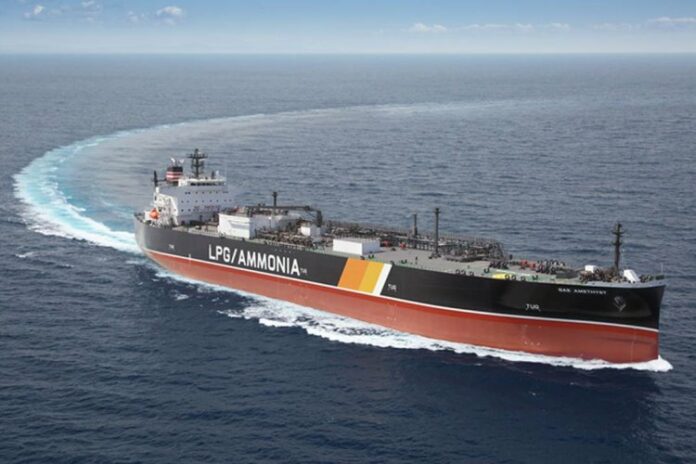
A naming ceremony was held on June 12 at the Sakaide Works of Kawasaki Heavy Industries Ltd. for Gas Amethyst, a large liquefied petroleum gas (LPG) carrier jointly owned by Nippon Yusen Kabushiki Kaisha (“NYK”) and Astomos Energy Corporation (“Astomos Energy”). 

Following Gas Garnet, which was delivered in March this year, Gas Amethyst is the second jointly owned LPG dual-fuel vessel to be delivered this year and the fourth LPG dual-fuel vessel for Astomos Energy.

Approximately 80 people attended the naming ceremony, including representatives from Astomos Energy, Idemitsu Kosan Co.,Ltd. (“Idemitsu Kosan”), and Mitsubishi Corporation. Kenya Maeda, Managing Executive Officer of Idemitsu Kosan, christened the vessel “Gas Amethyst,” and the vessel’s ceremonial rope was cut by his wife. NYK Managing Executive Officer Hironobu Watanabe and others attended the ceremony to welcome the vessel and pray for safe voyages.

This vessel is equipped with a dual-fuel engine that can use heavy oil and LPG as fuel. Furthermore, the vessel employs a shaft generator that produces electricity by rotating the shaft connecting the main engine to the propeller, enabling the vessel to stop operating the diesel generator during standard navigation and realize full LPG-fueled navigation. Compared to conventional heavy oil-fueled vessels, SOx (sulfur oxides) and CO2 (carbon dioxide) in the exhaust gas are reduced by more than 95% and 20%, respectively, when the ship is fueled by LPG.

In addition to LPG, the vessel will be able to transport ammonia as well if future demand increases. Ammonia is attracting attention as a means of realizing a decarbonized society.

Vessel Particulars

  • Length overall: 229.90 m
  • Breadth: 37.20 m
  • Depth: 21.90 m
  • Summer draft: 11.65 m
  • Tank capacity: 86,953 m3

Port-IT launches Naval Wolf Vulnerability Management

0

Port-IT has unveiled an addition to its cybersecurity portfolio: Naval Wolf Vulnerability Management. Tailored specifically for the maritime industry, this new service addresses the mandatory requirements set by the IACS E26 & E27 regulations for newly built vessels.

As maritime cybersecurity threats become increasingly complex, the demand for robust security solutions has never been higher. Traditional measures often fail to identify and mitigate vulnerabilities effectively. With software vulnerabilities being discovered at an alarming rate, early detection and remediation are critical to prevent potential exploitation.

What makes Port-IT’s Naval Wolf solution stand out is its intuitive data presentation and its capability to check for compliance with standards such as ISO, DIS, and GDPR. The service scans both IT and OT environments, identifying a wide range of vulnerabilities.

Naval Wolf employs various tools to thoroughly scan a vessel’s network. Managed through Port-IT’s web portal, customers can oversee all their cybersecurity services with a single login. The pricing model is based on a per-vessel cost, in contrast to other systems that charge per device, offering shipowners a clearer understanding of implementation expenses.

“Our team has put significant effort into ensuring this service is tested and ready for launch,” said a representative from Port-IT. “With Naval Wolf Vulnerability Management, customers gain valuable insights into potential network issues, enabling them to address vulnerabilities before they lead to cyber incidents.”

This new service empowers shipping companies to stay ahead of emerging risks, ensuring a proactive approach to cybersecurity that safeguards their onboard systems while complying with industry regulations.

First all-electric harbor tug in United States is powered by ABB propulsion

0

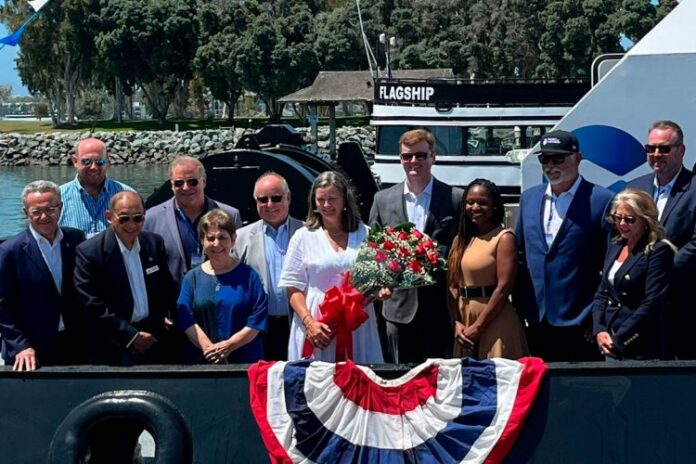
The ABB powered all-electric tug eWolf has been christened this week at the Port of San Diego, California, marking a new chapter in vessel electrification in the United States. 

Owned and operated by Crowley, eWolf features an end-to-end electric propulsion system from ABB including a 6.2-megawatt-hour energy storage system (ESS). This allows the vessel to achieve 70 short tons of bollard pull with zero emissions and complete a full day of work on a single charge. Given electricity is cheaper to produce on shore than onboard a vessel, the ESS also minimizes operating costs. The eWolf will significantly reduce greenhouse gas emissions in the port area of San Diego, replacing a tug that consumed over 30,000 gallons of diesel per year.

Crowley selected ABB as the full systems integrator for eWolf. The vessel was designed by Crowley’s engineering services group in collaboration with ABB and built by Alabama-based Master Boat Builders, Inc. It was delivered in January 2024.

The eWolf was developed through a partnership among the Port of San Diego, San Diego County Air Pollution Control District, the California Air Resources Board (CARB), the U.S. EPA and the U.S. Maritime Administration.

“The eWolf’s ground-breaking design and innovative technology is a milestone for the entire maritime industry, showing that high performance and zero-emissions can serve ship operators’ modern supply chain needs,” said Cole Van Gundy, Vice President, Crowley engineering services. “The first all-electric ship assist tug was achieved through collaboration that spanned across the industry and government sectors, showing the power of public-private partnerships to produce the advances that will lead the cleaner, more powerful future in maritime.”

“We’re thrilled to see the first all-electric tug in the U.S. enter into service in the Port of San Diego as it checks off a signature goal of our Maritime Clean Air Strategy,” said Chairman Frank Urtasun, Port of San Diego Board of Port Commissioners. “The eWolf adds to the work the Port and our partners are doing to significantly reduce emissions on and around San Diego Bay and demonstrates our commitment to clean, efficient maritime operations.”

In addition to the ESS, ABB supplied its award-winning Onboard DC Grid™ power distribution platform for optimized energy use, the ABB Ability™ Marine Diagnostic system for continuous preventive and predictive monitoring of equipment, and ABB Ability™ Marine Pilot products to enhance safety and reduce crew workload. Pilot Vision situational awareness provides 360-degree visibility from the pilot’s station, while Pilot Control enables maneuvering support. ABB’s scope of supply also covered transformers, propulsion motors, azimuthing thrusters, and low-voltage switchboards alongside design support, engineering, project management, and commissioning.

“At ABB, we are leading full systems integration and advancing the adoption of electric, digital, and connected technologies in the maritime industry,” said Bruce Strupp, Vice President Marine Systems US & Canada, ABB Marine & Ports. “We pioneered the first fully electric ferries built in the United States and have now successfully delivered the country’s first electric tug. We are thrilled to have collaborated with Crowley engineering services on the development of eWolf from concept to delivery. Crowley’s values are well in line with our own as we continue working towards maritime decarbonization while maintaining crew safety. The collaboration was therefore a great success.”

Fugro secures major contract for Japanese offshore wind farm

0

The offshore wind farm off the country’s west coast will be developed and realised by a consortium of RWE, Mitsui and Osaka Gas. Fugro’s Geo-data will contribute to the detailed design of future turbine foundations and cable routes.

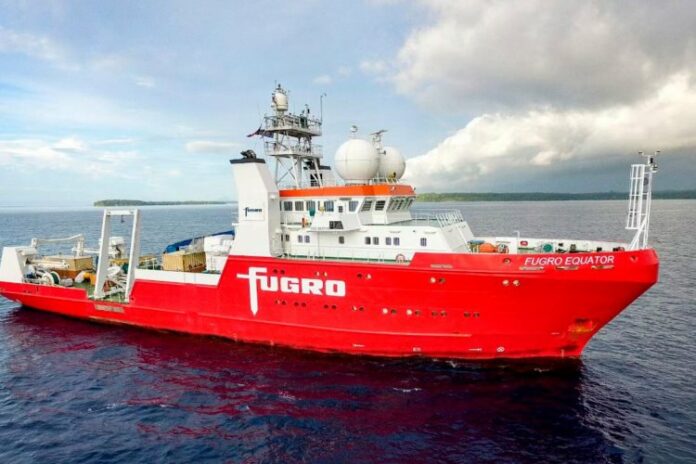
The fieldwork started in May 2024 and is being performed from Fugro jack-up platform, the Amberjack and two of Fugro’s vessels the Equator and the Mariner. All are equipped with Fugro-owned geophysical, geotechnical and positioning systems, which will acquire Geo-data to enable the detailed design of turbine foundations and cable routes.

Jerry Paisley, Fugro’s Regional Sales Director, said:

“Fugro has been established in Japan for more than 30 years, and RWE is a key global client of ours. So we’re pleased that RWE, Mitsui & Co., and Osaka Gas have chosen us to deliver this important Japanese wind farm project, which will contribute to the country’s commitment to expand offshore wind capacity as part of its goal to be carbon neutral by 2050.”

Aker BP and partners discover gas in the Barents Sea

0

This is the second well to be drilled in production licence 1170, which was awarded in APA 2021. Gas was also recently proven in the first well in the production licence, 7324/6-2. Both wells were drilled by the Scarabeo 8 rig.

Preliminary estimates indicate the size of the discovery at between 0.51 – 0.7 million standard cubic metres (Sm3) of oil equivalent (o.e.). This corresponds to 3.23 – 4.42 million bbls o.e.

The licensees will assess the discovery together with other discoveries and prospects in the area, with a view toward a potential development.

Wells 7324/6-2 and 7324/8-4 were drilled in the Hoop fault complex, in the same vicinity as the 7324/8-1 (Wisting) and 7324/7-2 (Hanssen) oil discoveries. Several wells have been drilled earlier in other production licences in the area, some of which resulted in discoveries (7325/4-1 (Gemini Nord), 7324/9 (Mercury), 7324/6-1 (Sputnik), 7324/3-1 (Intrepid Eagle) and 7325/1-1 (Atlantis)). A couple of dry wells have also been drilled.

The licensees in the production licences in this area are Equinor, Aker BP, Petoro and Inpex Idemitsu.

The objective of the well was to prove petroleum in Middle Jurassic to Upper Triassic reservoir rocks in the Stø and Fruholmen formations.

Well 7324/8-4 encountered a 30-metre reservoir zone in the Stø and Fruholmen formations, with an 11-metre gas column, a total of 8 metres of which in sandstone layers with very good reservoir quality.

The gas/water contact was encountered 686 metres below sea level.

The well was not formation-tested, but extensive data acquisition and sampling have been carried out.

Well 7324/8-4 was drilled to a vertical depth of 781 metres below sea level, and was terminated in the Snadd Formation in the Upper Triassic.

Water depth at the site is 401 metres. The well will be permanently plugged and abandoned.