-11.1 C
New York
Home Blog Page 161

UECC chooses Titan for major liquefied biomethane deliveries

0

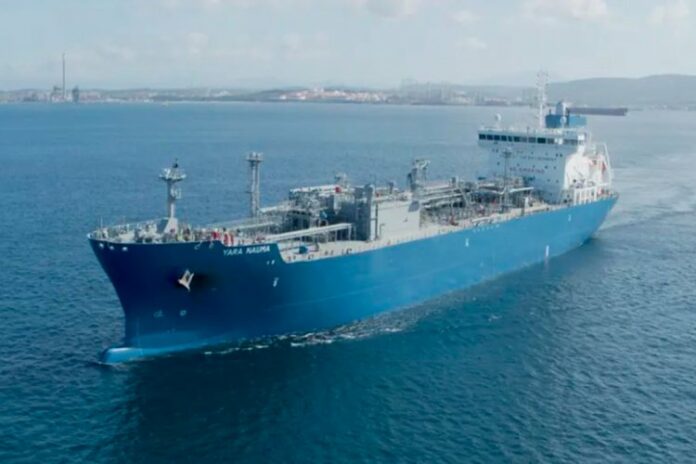
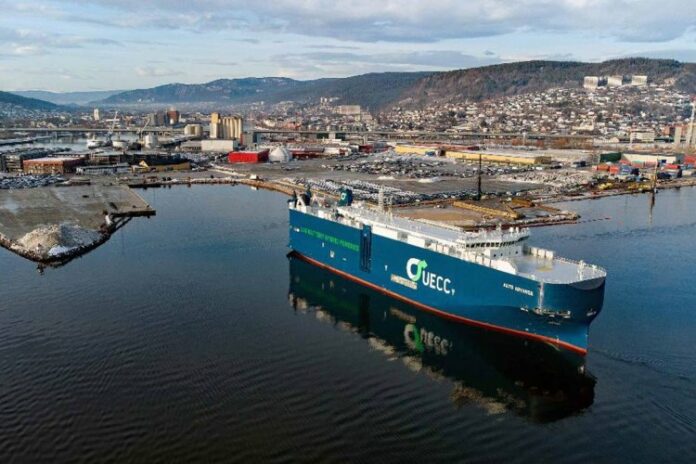
Titan will bunker ISCC-EU certified mass balanced major liquefied biomethane (LBM), also known as bio-LNG, to all of UECC’s LNG dual fuel car carriers this month.

These pure car and truck carriers (PCTCs) will use 100% LBM as part of UECC’s ‘Green Gas Month’, an initiative that supports its wider ‘Sail for Change’ sustainability programme. Three of the ships also feature battery hybrid technology, further enhancing their environmental performance.

Due to the biomethane waste feedstock, the greenhouse gas (GHG) emissions reduction potential from this clean fuel use is significant. In ‘Green Gas Month’ alone, UECC calculates the Well-to-Wake emissions reductions will exceed 8,000 metric tonnes of CO2e.

The GHG emissions reductions generated from these major LBM bunkering operations will be available to UECC customers through a CO2 registry that it opened in January 2024. This registry allows UECC to transfer the environmental benefits of clean fuel use to charterers in a transparent, traceable and independently verified manner across its entire supply chain.

Daniel Gent, Energy & Sustainability Manager at UECC, commented:

“Through the use of biomethane, ‘Green Gas Month’, and ‘Sail for Change’ more broadly, we are providing our customers with a great springboard to further their own decarbonisation strategies. With progressive automakers focusing on cleaner cars, we expect them to want to reduce their scope three emissions and ship those cars sustainably – which is what we can deliver in collaboration with Titan right now.

“Tightening environmental regulations and emissions levies like the EU Emissions Trading System are also increasingly boosting the commercial rationale for using clean shipping services. The use of LBM as a marine fuel reduces UECC’s, and our customer’s exposure to the costs of emitting within the EU ETS, which will continue to ramp up quickly over the coming years,” continued Gent.

Flip Dankelman, Trader at Titan, added: “We are pleased to be working with UECC on these major LBM bunkerings and hope these are the first of many more clean fuel operations with them. The mass balanced LBM via Fluxys’ LNG Terminal in Zeebrugge is a practical, realistic and cost-competitive way to use clean marine fuels today. And the UECC team has valued the flexibility that our fleet of strategically located LNG bunker vessels can offer.”

Another large and successful LBM transaction demonstrates that the LNG pathway to net-zero GHG emissions in shipping is unfolding as investors and supporters expected. With LNG, this pathway has a safe and cleaner starting point with mature infrastructure.

Unlike other fuel pathways, LBM is frequently being introduced at scale today. Depending on the feedstock, LBM can be net-zero GHG emissions or even net-negative if the avoided emissions of waste are taken into account. The next phase is the introduction of e-methane produced using renewable electricity and electrolysis. All of these molecules can be blended at any ratio and used in existing LNG infrastructure without adaptation.

This clean fuel supply agreement and milestone on the LNG pathway is timely as activation of the European Union’s FuelEU Maritime regulation is imminent. The regulation, which will especially incentivise the use of renewable fuels of non-biological origin such as e-methane, will come into force on January 1st, 2025. It will be applicable to vessels over 5000 GT, 100% of emissions will be considered within the EU and 50% of them if one port in the voyage is outside the EU.

ClassNK and partners team up on multi-fuel bunkering ships

0

Consort Bunkers Pte. Ltd., ClassNK, Yanmar Asia (Singapore) Corporation Pte Ltd, and Taiko Asia Pacific Pte. Ltd. have signed a Memorandum of Understanding (MOU) to accelerate towards introduction of more bunkering ships capable of handling alternative fuels.

Singapore-based Consort Bunkers placed an order with COSCO SHIPPING Heavy Industry (Guandong) Co.,Ltd. to construct four 7,999 DWT IMO Type 2 tankers, ready for biofuel and methanol bunkering. Incorporating their previous orders, a total of 13 biofuel/methanol bunkering tankers totaling over 90,000 DWT will join Consort’s fleet. ClassNK has been providing surveys and audits, Yanmar Asia has been providing main engines and generator engines, and Taiko Asia has been supplying cargo pumps package and various pumps package in engine room and pump room of the majority of Consort Bunkers’ fleet for more than a decade. Consort Bunkers has appointed them to take on the same role for this upcoming multi-fuel bunkering ships project.

The parties have signed an MOU for the cooperation and partnership regarding this upcoming project and also for the future projects including alternative fuels bunkering vessels. Under the MOU, all parties agreed to leverage their good relationship and respective expertise to complete Consort’s fleet renewal and expansion project, including new fuel bunkering vessels, and to contribute to regional and global implementation of alternative fuel use.

Speaking on the occasion, Mr. S. K. Yeo, Director/General Manager, Consort Bunkers said,

“Establishing infrastructure capable of refueling alternative fuels is essential for realizing decarbonization of ships. Our biofuel and methanol bunkering tankers reflect our commitment to respond to growing needs in this field quickly and sufficiently. Under the trusted partner ClassNK, Yanmar Asia, and Taiko Asia, we will continue increasing our engagement to offer any necessary bunkering options for the industry.”

Mr. Yasushi Seto, Regional Manager of Southeast Asia and Oceania, ClassNK said,

“We are honored to strengthen the good and long relationship among the parties, and we are excited to have the opportunity to be involved in the supply chain for advancing the decarbonization of maritime transportation.”

Wärtsilä will ensure optimal Exhaust Gas Cleaning System efficiency for two Nautica vessels

0

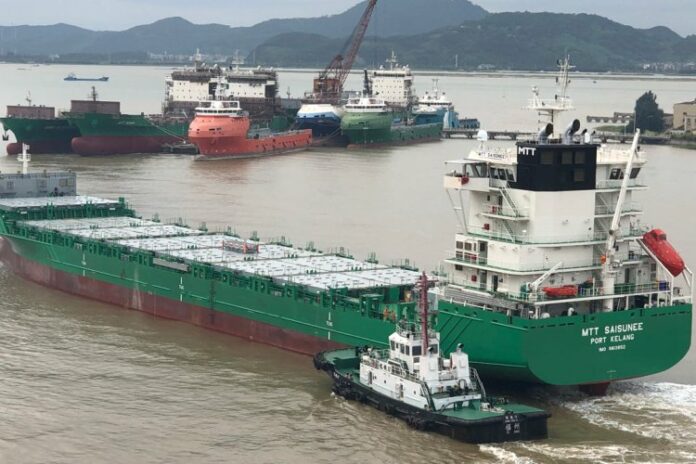
The agreement covers two vessels, the MTT Saisunee & MTT Senari, and is designed to ensure that the ships’ exhaust gas treatment systems operate at maximum efficiency. The vessels are feeder container vessels and are fitted with Wärtsilä hybrid scrubber systems. The order was booked by Wärtsilä in Q2 2024.

“It is central to our commitment to sustainable operations that the scrubber systems on these vessels are working with optimal efficiency. This enables the ships to comply with the relevant environmental regulations. We know Wärtsilä well, and our experience with their agreements on other vessels in our fleet has been excellent. It was natural, therefore, that we continue this relationship for these two vessels,” says Azreen Nor Bin Mohamad, Senior technical Superintendent of Nautica Ship Management.

The scope of the agreement includes remote access capabilities. This feature enables seamless monitoring and troubleshooting of the Exhaust Gas Cleaning (EGC) systems installed on the two vessels, ensuring prompt response and minimal downtime.

“We are pleased to recognise Nautica’s professional approach to maintaining and future-proofing their fleet and are proud to support them with this agreement. We constantly upgrade and improve our solutions in line with the latest and best available technology. Our 24/7 service, and especially the remote access feature, gives us the opportunity to provide immediate support and troubleshooting for these vessels, while delivering important cost savings,” comments David Xu, Wärtsilä Area Sales Manager in Singapore.

Wärtsilä’s range of Lifecycle Agreements provide long-term cost predictability and availability by using data-driven technical support and maintenance at every step, from planning to execution. Ship operators benefit from proactive support and recommendations by experts at Wärtsilä Expertise Centres, who help to optimise maintenance intervals according to actual needs while preventing unexpected downtime.

Nautica Ship Management had previously signed Lifecycle Agreements for two other vessels, the MTT Samalaju and MTT Semporna.

Wilson confirms eight more vessels and extends newbuilding programme to 14 vessels

0

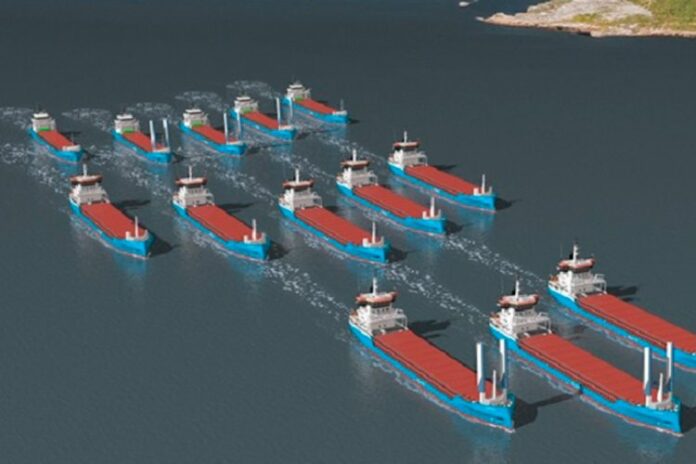
Wilson ASA has announced the signing of a significant contract for the construction of eight state-of-the-art 6,300 dwt future-proof newbuildings with a focus on environmental benefits, flexibility, and efficiency. 

The total of 14 newbuildings will be delivered from 1st half of 2025 until 2028, with the 6300 dwt vessels being delivered in direct continuation of the previously announced 3800 dwt vessels. These new, modern vessels will contribute to both growth and fleet renewal of the existing Wilson fleet.

This major investment marks another milestone in Wilson’s commitment to sustainable and efficient maritime transportation and ensures the company’s ability to deliver flexible and efficient services to our clients. The newbuildings will also contribute to enhanced operational excellence for the Wilson fleet.

ClassNK issues approval in principle for hydrogen-fueled engine compatible oil tanker

0

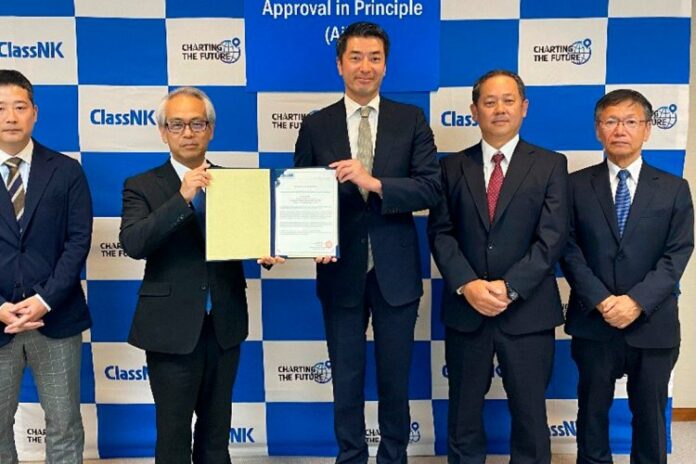
ClassNK has issued an Approval in Principle (AiP) for a design concept of the hydrogen-fueled engine compatible 5,000KL oil tanker with electric propulsion system developed by UYENO TRANSTECH LTD., YANMAR POWER TECHNOLOGY CO., LTD., and Mitsui E&S Shipbuilding Co., Ltd. This is the world’s first AiP certification for the design of an oil tanker using liquefied hydrogen as a fuel.

The ship was designed as part of the ‘Development of Large-scale Hydrogen-fueled Domestic Tanker and Demonstration of Zero-Emission Ships’ project by the Nippon Foundation.

ClassNK carried out a review of a design concept of the ship based on its rules including part GF of its ‘Rules and Guidance for the Survey and Construction of Steel Ships’ incorporating the IGF Code, Part D of ‘Guidelines for Ships Using Alternative Fuels; Guidelines for Ships Using Hydrogen as Fuel (Edition 3.0.0)’, and ‘Guidelines for Fuel Cell Power Systems On Board Ships (Second Edition)’. 

Upon confirming they comply with the prescribed requirements, ClassNK issued the AiP. This is the first AiP issued through the review based on Part D of ‘Guidelines for Ships Using Alternative Fuels’, released in May 2024.
 

HBC Group orders Saab’s Seaeye Cougar-XTi for enhanced offshore inspection capabilities

0

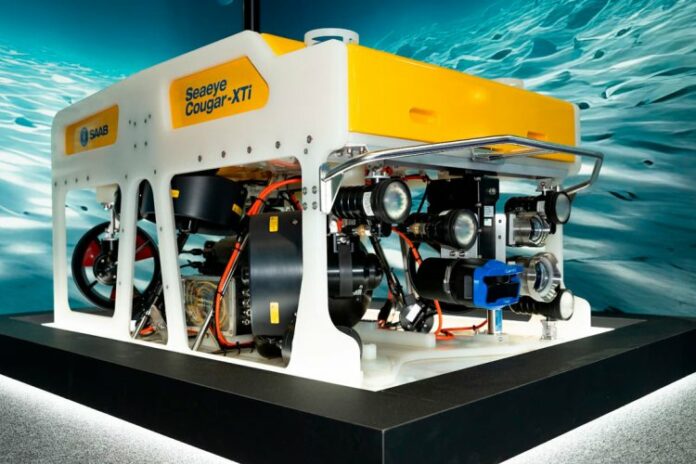
Saab’s Seaeye Cougar-XTi stood out due to its remarkable carrying capacity, a crucial factor for HBC Group’s operations. The Cougar-XTi is a highly flexible and extremely powerful electric ROV, depth rated to 2000m. The ROV is fitted with six 500 Volt, DC thrusters that provide exceptional thrust for stable vehicle operations in high current environments.

These features allow the transport of survey equipment that was previously too large for HBC Group’s existing ROVs, catering to the specific needs of clients, particularly those in offshore wind farms.

The versatility of the Cougar-XTi extends to carrying specialised tools for hydrographics and geophysical services. HBC Group utilises PMAC Group’s system for cathodic protection measurements, and the manipulator arms play a crucial role in non-destructive testing.

Christian Eilersen, CEO at HBC Group Said:

“We are thrilled to elevate our offshore inspection capabilities with the Seaeye Cougar-XTi. This advanced ROV enables us to meet the unique needs of our clients in offshore wind farms, and its addition to our fleet reflects our ongoing commitment to excellence and innovation in the field of offshore inspections.”

Looking ahead, HBC Group plans to deploy the Cougar-XTi for daily inspections, allowing them to bid on tenders that were previously inaccessible due to payload constraints. The order/capability is expected to open new avenues for the company in the offshore wind sector.

Jon Roberston, Managing Director at Saab Seaeye said:

“We’re thrilled to empower HBC Group with the advanced Seaeye Cougar-XTi. This sale underscores our commitment to delivering top-tier equipment, redefining standards for efficiency and reliability in offshore operations.”

In addition to the Cougar-XTi, HBC Group highlighted the success of its previous ROV purchase with Saab, the Seaeye Tiger. The company noted its reliability and higher uptime compared to previous ROVs. The Tiger has played a crucial role in recent inspections on offshore wind farms in Denmark, the UK, and Germany, particularly in waveform inspections.

Yara, Scatec, ECHEM and MOPCO sign Heads of Terms for renewable ammonia offtake agreement in Egypt

0

Scatec ASA, ECHEM and MOPCO, have agreed on Heads of Terms for renewable ammonia offtake from Egypt with Yara Clean Ammonia, the world’s largest trader- and distributor of ammonia.

Last year, Scatec, the Egyptian Petrochemicals Holding Company (ECHEM) and Misr Fertilizers Production Company (MOPCO) (the “Sponsors”) entered into a joint development agreement and a shareholder agreement for the production of renewable ammonia.

The Sponsors will develop and build up to 480 MW of renewable energy and an up to 240 MW electrolyzer facility for production of renewable hydrogen, which will be used as feedstock for production of renewable ammonia at MOPCO’s existing ammonia production facility at Damietta in Egypt. The targeted production capacity is up to 150,000 tonnes of renewable ammonia per annum.

Scatec also signed a letter of Intent with the European Investment Bank (“EIB”) for long-term financing for the project, showcasing EIB’s commitment to support renewable hydrogen and renewable ammonia projects in Egypt.

Scatec CEO Terje Pilskog says:

“We are very pleased to be signing this Heads of Terms with global industry leader Yara Clean Ammonia. This is a testament to Scatec’s position in Egypt and our strategy to focus on developing renewable hydrogen projects related to existing ammonia production capacity. Scatec will bring their expertise and experience gained from other projects. We are looking forward to our future collaboration.”

Yara Clean Ammonia CEO Hans Olav Raen says:

“Yara Clean Ammonia has a diversified portfolio of asset backed and offtake agreements for low-emission ammonia. This project will further strengthen our sourcing portfolio of renewable ammonia and is a testimony to Yara Clean Ammonia as the most preferred off-taker as the world’s largest trader and distributor of ammonia. Once the project has reached a final investment decision, the renewable ammonia from this project will help us reliably serve our customers across several market sectors.”

Egyptian Minister of Petroleum and Mineral Resources, H.E. Tarek El Molla, said:

“Today’s signature is a further step towards our efforts in working with our partners from the private sector to support translating Egypt’s national low carbon hydrogen strategy into action through specific projects. Such collaboration and partnerships will help secure renewable hydrogen investments, de-risk implementation of projects and facilitate realizing Egypt’s vision of becoming a regional and global green hydrogen hub.”

ECHEM President & Chairman Eng. Ibrahim Mekki, says:

“This agreement with Yara Clean Ammonia not only underscores our commitment to sustainable energy solutions but also marks a substantial step forward in our mission to innovate within the petrochemical industry. The development of renewable ammonia from this project aligns with our strategic goals and will contribute to a greener future for Egypt and beyond.”

MOPCO Chairman and Managing Director Eng. Ahmed Mahmoud El-Sayed, says:

“Misr Fertilizers Production Company “MOPCO”, one of the major ammonia and urea producers in MENA, is working together with their partners, ECHEM and Scatec ASA, to develop a major renewable ammonia production facility in Egypt through Damietta Green Ammonia Company, “DGA”, that was recently established by the three parties. The facility will produce approximately 150,000 metric tons of renewable ammonia for export in the international market through the well-known global off-taker, Yara Clean Ammonia. As one of DGA shareholders, MOPCO, is pleased to announce the signature of the Heads of Terms for this flagship ammonia offtake with Yara Clean Ammonia.” 

EIB Vice President Gelsomina Vigliotti says:

“Enabling industry to harness renewable energy is key for the green transition. Accelerating renewable hydrogen production in Egypt can strengthen business competitiveness and unlock opportunities to export renewable hydrogen. The European Investment Bank looks forward to working with Scatec and project partners to unlock large scale renewable hydrogen investment across Egypt.”

Wärtsilä to deliver ammonia fuel supply system for two more EXMAR vessels

0

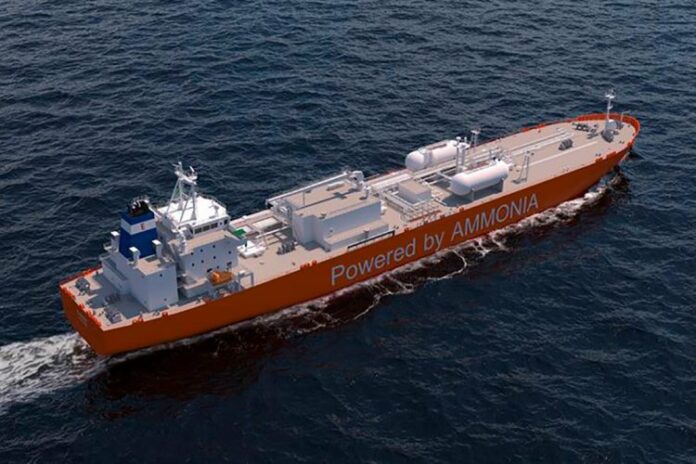
Wärtsilä Gas Solutions (WGS) will deliver the fuel supply and cargo handling systems for two new gas carriers that will operate with ammonia fuel. 

The ships are being built at the Hyundai Mipo Dockyards (HMD) in Korea for ship owner EXMAR LPG, a joint venture between EXMAR, a multi-disciplinary maritime and offshore solutions provider and Seapeak, one of the largest independent owner-operators of liquefied natural gas vessels. The order with Wärtsilä was booked in Q2, 2024.

“Ammonia utilisation is vital in our pursuit of decarbonised operations,” stated Carl-Antoine Saverys, CEO, EXMAR. “Achieving this requires fuel handling and supply systems tailored for ammonia, and Wärtsilä possesses the expertise and capabilities to provide these solutions. EXMAR, with over 40 years of experience in handling ammonia, has a proven track record in the safe and efficient transport of this fuel. This collaboration leverages EXMAR’s extensive knowledge and Wärtsilä’s advanced systems to pioneer ammonia as a marine fuel, contributing significantly to the reduction of greenhouse gas emissions.”

These are the last two vessels in a series of six newbuilds for EXMAR. With this latest contract, Wärtsilä will have supplied the cargo handling and fuel supply systems for all six vessels. These medium size gas carriers, MGCs, will be the first ever ocean-going vessels capable of operating with ammonia as fuel. Operating with ammonia has the potential to significantly reduce greenhouse gas emissions when compared to conventional marine diesel fuel, as ammonia doesn’t produce CO2, sulphur or particulate emissions when combusted.

“This latest contract win is a significant achievement for our company and demonstrates our expertise in providing innovative and sustainable solutions for the maritime industry. It is also fully in line with Wärtsilä’s strategy for enabling decarbonised shipping operations and reinforces our strong partnership with both EXMAR and Hyundai Mipo Dockyard,” commented Patrick Ha, Sales Manager, Wärtsilä Gas Solutions.

The full scope of Wärtsilä’s supply includes the Cargo Handling Package and the Liquid Ammonia Fuel Supply System (AFSS) along with process engineering and dynamic simulation. The ASS is skid mounted with low- and high-pressure fuel pumps, controls for fuel pressure and temperature, and heat exchangers. Delivery to the yard is scheduled for 2025.

Jan De Nul signs new cable contract to bring wind power ashore in Taiwan

0

Those cables will bring wind energy generated at the Fengmiao I wind farm ashore. Fengmiao I is the eighth wind farm in Taiwan where we are contributing to. Worldwide, Jan De Nul has participated in the construction of over 60 offshore wind farms.

Fengmiao I has a capacity of 500MW, providing power for about half a million households, and is part of the larger Fengmiao wind project. This is located 35km off the coast of Taichung and has a total capacity of 1,800MW. Jan De Nul Group will connect the offshore substation of Fengmiao I to the onshore grid of Taiwan via two AC high-voltage cables. 

“To do so, we will deploy our cable-laying vessel Willem de Vlamingh. We will be responsible for transport and installation of the cables, including the protection of crossings with other cables. The cables have a length of 45km and 44km respectively and weigh more than eight thousand tonnes altogether.”

Archer acquires Moreld Ocean Wind

0

Archer has entered into an agreement with Remold Invest AS to acquire 100 percent of the shares in the floating offshore wind solutions provider Moreld Ocean Wind AS (MOW), including a minority stake in US/French technology company Ocergy Inc (OCY).

With around 30 engineers based in Norway, MOW delivers project management and engineering for fabrication and assembly of floating substructures for wind turbines. The lightweight floating substructures, developed and designed by OCY, are suited for serial production, as the modules are prefabricated and assembled in ports or yards close to where the wind farm will be operating.

MOW is currently engaged with a number of studies, front-end projects, and engineering contracts on behalf of some of the world’s largest energy companies and has been down-selected as the preferred supplier by several wind farm developers for upcoming wind farm project bids.

“With this acquisition we both strengthen our energy services portfolio and support our energy customers’ ambitions in the energy transition. Several of our oil and gas customers have commitments and plans within floating offshore wind and it is natural for Archer to take a position in this segment to support our customers’ ambitions. MOW’s existing business and customer portfolio is attractive and provides growth opportunities going forward. MOW will also benefit from Archer’s offshore competence, around 300 engineers, and project execution capability.

The floating offshore wind market is still in its early days but is predicted to grow in the coming decades. This acquisition gives us an attractive entry point to capitalize on these market developments. We have a flexible approach as to how we best can structure and develop the company going forward,” said Dag Skindlo, CEO of Archer.