-11.1 C
New York
Home Blog Page 160

Technology innovators RINA and ROTOBOOST join SEA-LNG

0

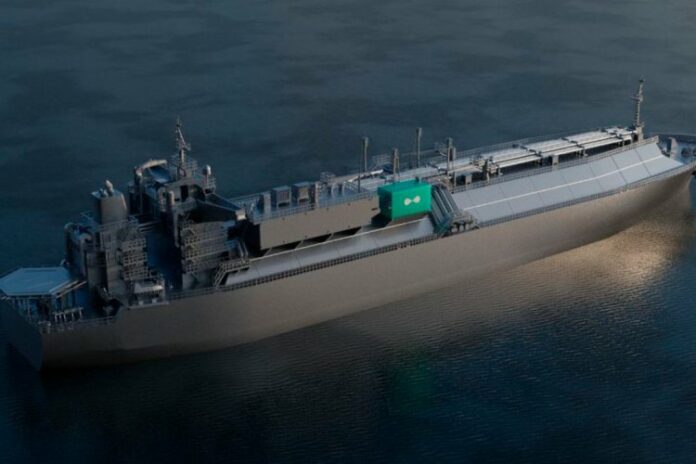
RINA plays a significant role in the LNG industry. Previously, it has carried out technology qualification, surveying during construction and classification of the first offshore Floating Storage Regasification Unit (FSRU). 

RINA has also classified the world’s first LNG-fuelled cruise ship and participated in various international research studies on using LNG as a marine fuel.

RINA recently announced a contract for the design, approval and construction supervision of the fourth and fifth Excel-class cruise ships for SEA-LNG member Carnival, with all vessels powered by LNG. In addition, a RINA-led study reveals that Well-to-Wake emissions in the Pilbara-to-Asia iron ore export trade route can be reduced by over 90% by 2050 through the use of LNG.

ROTOBOOST, a global hydrogen technology company, has developed a unique pre-combustion carbon removal system based on Thermo-Catalytic Decomposition (TCD). This enables decarbonisation by targeting carbon reduction at its source. The technology can be equipped onboard vessels and can contribute to direct methane and carbon dioxide abatement in scenarios such as converting boil-off gas to hydrogen and using it as drop-in fuel in engines to minimise methane slip on LNG-fuelled vessels. SEA-LNG’s latest fact sheet seeks to dispel the myths about methane slip.

Peter Keller, SEA-LNG chairman, commented:

“The shipping industry’s decarbonisation debate is moving from theoretical discussions about what might work in the long-term future to what is practical and realistic right now. RINA and ROTOBOOST provide expertise, experience, and technological solutions that further unlock the potential of LNG and its pathway as the leading alternative marine fuel for the shipping industry today.  Like other members, they are actively demonstrating how we can chart a pragmatic course to net-zero greenhouse gas emissions from marine fuels through developments in liquefied biomethane and e-methane.  These combined efforts are highlighted in our fact sheets, with the latest on methane slip published today.”

Antonios Trakakis, Greece Marine Technical Support Director, RINA, said:

“SEA-LNG is the logical next step for our determination to enable the sector to reach its decarbonisation goals. The need to transition away from fossil fuels is widely recognised. However, not all fuels are created equal. The combustion of LNG produces fewer air pollutants compared to liquid fuels and offers significant near-term emissions reductions. LNG can be gradually replaced by bio-LNG and eventually e-LNG or even be reformed to produce hydrogen onboard. The H2 produced can then be used directly as fuel, without the need to store, and its combustion with LNG can drastically reduce fugitive methane emission.”

Kaisa Nikulainen, CEO, ROTOBOOST, said:

“Technology will be critical in meeting the shipping industry’s decarbonisation challenge. In combination with LNG as a marine fuel, our solution can further boost the emissions reduction performance of the fuel with direct methane and carbon dioxide abatement by converting LNG or boil-off gas into hydrogen and solid carbon and using it as blend in fuel for downstream users such as engines or boilers. It’s clear that with SEA-LNG, we are joining a collective that spans the global LNG marine fuel value chain and actively enabling the transition to net-zero, starting right now.”
NAPA and UMMS enter agreement on Voyage Optimization and CII simulator deployment

0

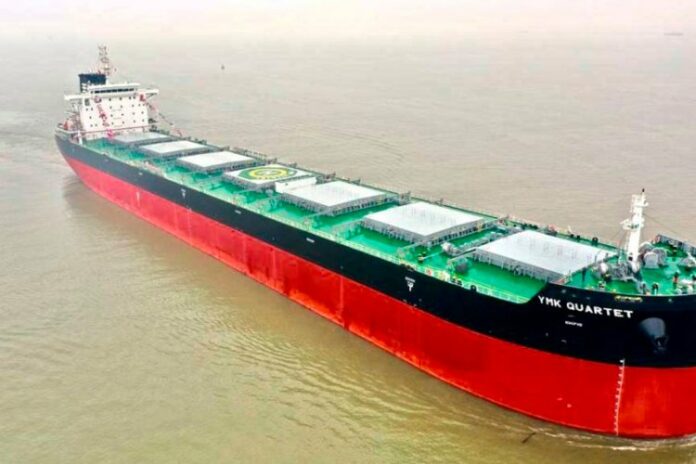
NAPA’s Voyage Optimization and CII Simulator digital systems will be deployed on an initial 55 bulk carriers in the fleet managed by Union Marine Management Services (UMMS), under a new agreement between the Finnish maritime software provider and the Singapore-based ship management company.  

The use of NAPA Voyage Optimization on board has the potential to reduce greenhouse gas (GHG) emissions by an estimated average of 5-10% for the fleet of bulk carriers, ranging between 25,000 and 180,000 deadweight tonnage (DWT) and operated globally.

Under the agreement, NAPA’s Voyage Optimization and CII Simulator systems were integrated into UMMS’s existing in-house ship management web portal, IntuitShip, and are now accessible for shipowners directly on the platform. Formal contracts have already been confirmed with individual shipowners for the two NAPA tools to be used on 55 vessels.  

This will enable around 20 shipowners whose fleets are managed by UMMS to use NAPA Voyage Optimization to reduce fuel consumption and associated GHG emissions from their vessels. Using real-time data on weather and sea conditions, the system proposes the best possible routes and speed profiles to minimize costs and the vessel’s environmental footprint, while ensuring safety. 

In addition, the NAPA CII Simulator will allow owners to predict the CII rating of each vessel for any sea passage, chartering period or at the end of the year, and model the impact of different measures on the vessel’s rating. This will enable these shipowners to proactively manage their ships’ CII and keep them within targets amid tightening regulation, as well as predict EU ETS cost. 

Vinay Gupta, Managing Director at Union Marine Management Services (UMMS), said:

“With the introduction of new regulations such as CII, EU ETS, and soon FuelEU Maritime, shipowners are increasingly interested in digital technologies that can reduce fuel consumption and greenhouse gas emissions immediately. This is why we are partnering with NAPA to integrate their ready, proven solutions into our existing platform and provide proactive support for our shipowner clients in their decarbonization journey. Operational improvements achieved through voyage optimization and simulation tools represent a low-hanging fruit yet are essential to future-proofing fleets, ensuring compliance and maintaining thriving businesses.” 

Pekka Pakkanen, Executive Vice President for Shipping Solutions at NAPA, said:

“Digitalization is critical to the success of decarbonization because it offers pragmatic, practical and immediate solutions to reduce greenhouse gas emissions from fleets. Taking this to the next level, there is a huge opportunity to collaborate with providers of digital solutions. This will enable us to enhance our wealth of insights and create truly integrated solutions that respond to the industry’s needs, from bridge to boardroom, and act as a catalyzer for decarbonization efforts within the maritime industry.”

Klaipėda Port strengthens its fleet with addition of two hybrid pilot boats

0

A contract is signed with “Baltic Workboats AS” of Estonia.

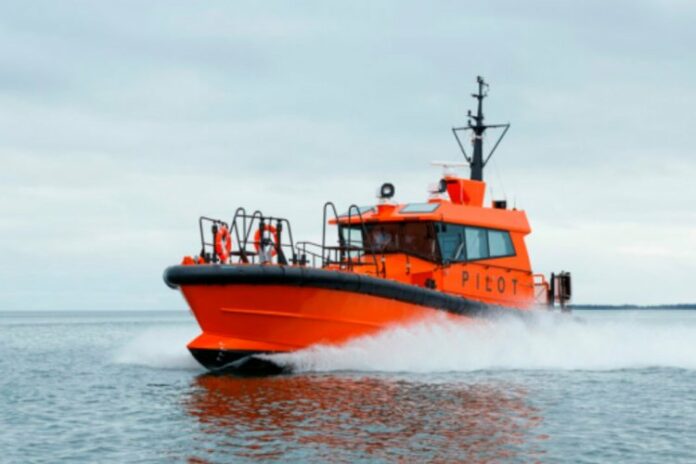
“At the end of next year, a hydrogen-powered waste collection vessel and two new-style hybrid pilot boats will be sailing in the Klaipėda Port Channel. Klaipėda Port is undergoing renewal and modernization while taking a comprehensive approach to environmental improvement within the port”, says Algis Latakas, Director General of the Klaipėda Port Authority.

The new boats will operate around the clock and will be able to operate in poor weather conditions, even when the wave height at sea reaches 5 metres and the waves are up to 30 m/s. The boats will also be equipped with search and rescue equipment for rescuing persons in the water: an on-board crane, a rescue platform, searchlights with integrated thermal cameras. They will be powered by diesel-electric drive.

“It is worth pointing out that pilot boats will use only electricity to move around the port. However, if more speed is needed, especially when sailing out to sea, beyond the port gates, the engines will switch to diesel. This will reduce emissions at Klaipeda Port,” says Gintaras Petreikis, Fleet Manager at Klaipeda State Sea Port Authority.

Electric charging stations for boats will be located at the Port Authority’s new fleet base and near the company’s planned new administration building.

The pilot boats will be built at the “Baltic Workboats AS” shipyard on the island of Saaremaa in Estonia. They should reach Klaipėda Port at the end of 2025.

One boat will cost the Port Authority EUR 3.242 million excluding VAT.

Red Funnel and Artemis Technologies team up on electric high-speed ferry

0

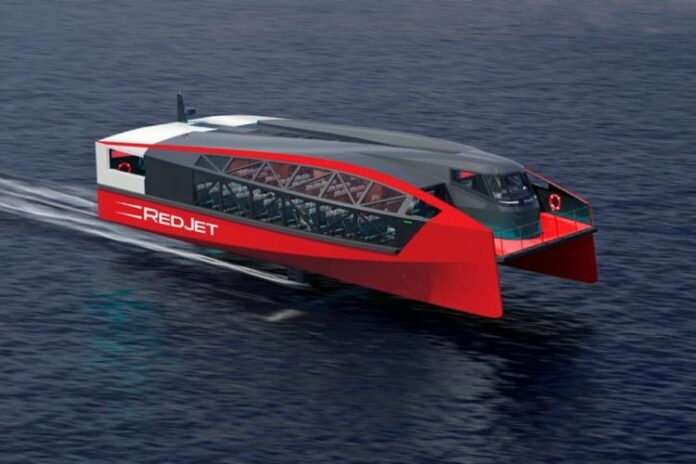
Operation of the Artemis EF-24 Passenger will save up to 3,700 tonnes of CO2e per year. Using electricity from renewable sources will increase annual emissions savings to approximately 4,150 tonnes of CO2e. In addition to reducing air pollution and noise, the fully accessible passenger ferry will use cutting-edge hydrofoil propulsion technology to fly over waves, lifting the vessel out of the water to reduce drag and provide a smoother, quieter and more comfortable experience for passengers.

The Artemis EF-24 Passenger is a groundbreaking next step in the decarbonisation of the industry and Red Funnel is joining two other ferry operators adopting the technology to decarbonise their operations. This addition to Red Funnel’s fleet will provide the first zero-emissions commercial service between the South Coast and the Isle of Wight.

Red Funnel CEO, Fran Collins, said:

“We have been working with Artemis Technologies for several months to develop this partnership, and we are delighted to reach this exciting milestone as part of our journey to decarbonise our fleet. Delivering first-class service to our customers is our priority and the Artemis EF-24 passenger ferry will provide speed, comfort and reliability as well as significantly reducing greenhouse gas emissions and air pollution.”

“This is an important step towards transitioning to a sustainable and environmentally friendly fleet that will continue to provide a lifeline service for the Isle of Wight community both now and for future generations. We will be working closely with ATL over the coming months for testing and sea trials, including bespoke training of our High-Speed team so that we’re ready to add Artemis EF-24 Passenger to our fleet next year. In the meantime, it is very much business as usual for our teams and customers as we work behind the scenes on this exciting phase of our journey.”

Dr Iain Percy OBE, double Olympic and multiple world champion sailor and Artemis Technologies CEO, added:

“We are incredibly excited to partner with Red Funnel and bring the Artemis EF-24 Passenger ferry to the vital Southampton – Isle of Wight route.

The Artemis EF-24 Passenger ferry represents a major leap forward in our mission to transform the maritime industry and future-proof our oceans and waterways.

Air pollution impacts our health, damages quality of life, and harms our environment and oceans. By introducing the Artemis EF-24 Passenger, Red Funnel is taking a significant step towards mitigating these issues. The electric propulsion of our ferry not only eliminates air and water pollution but also reduces noise and wake, providing a quieter, smoother ride for passengers and minimising impact on shorelines. 

This partnership with Red Funnel underscores our commitment to international maritime standards, and paves the way to a healthier planet for all. Together, we are leading the charge towards a more sustainable future.”

The Artemis EF-24 Passenger will be ready for passenger service in late 2025, when it will join the Red Funnel Fleet.

Damen and Maritime Craft Services sign contract for a new multi-purpose workboat

0

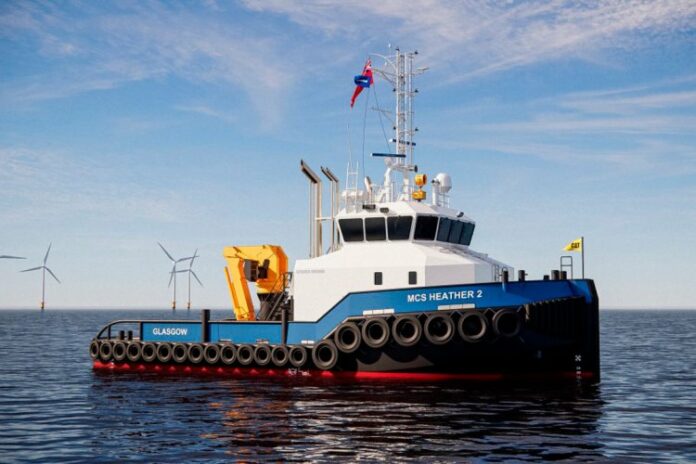
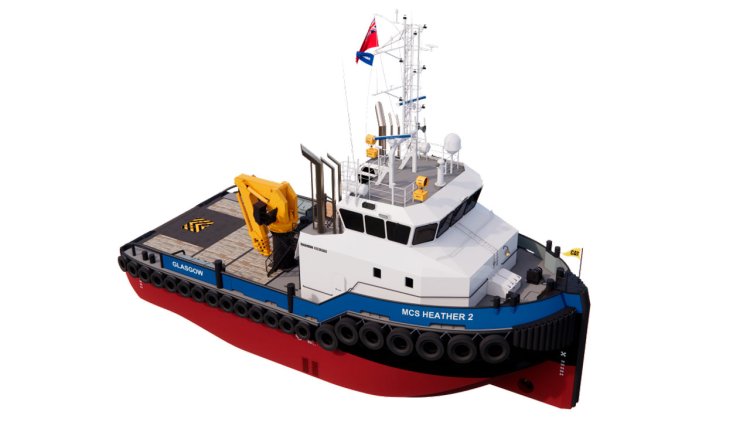
Damen Shipyards Group and Maritime Craft Services (Clyde) Ltd (MCS) have signed a contract for the supply by Damen of one of its popular Shoalbuster 2711 multi-purpose workboats. The contract was signed at the recent Seawork 2024 event in Southampton and the vessel will be delivered this summer.

MCS is based in Fairlie on the west coast of Scotland. Owned by the Kuyt family, it is managed by Nikki and Menno, children of the founder Dirk. The company owns what will be an eighteen-strong fleet of workboats once its latest addition is delivered, and operates worldwide with an emphasis on western Europe and the Middle East. The company is a long-standing customer of Damen Shipyards. The new vessel, to be named Heather 2, will be the company’s third Shoalbuster and will join eleven Fast Crew Suppliers and Multi Cats built by Damen.

The Shoalbuster 2711 is similar in size to the Damen Multi Cat 2712 that MCS acquired last November. However, the prominent bow makes it more suitable for offshore projects and so opens up other possibilities. As with all Shoalbusters, it designed for shallow waters (three metres maximum draft), making it ideal for assisting dredging and cable laying, as well as other wind farm support operations. Key features include 41 tonnes bollard pull and a top speed of 11 knots.

The optimised deck layout has low freeboard for easy access to the water and the Heather 2 will be fitted with an AKC 185 deck crane and a waterfall winch. The vessel will also be fitted with a Damen Marine NOx Reduction System to make her IMO Tier III certified.

“We are very pleased that MCS have returned to Damen once again for their latest acquisition, especially as we share core values that include sustainability and operational excellence,” said Mike Besijn, Sales Manager at Damen Shipyards. “We are confident that their new Shoalbuster will have a role to play in supporting the expansion of the offshore wind sector around the world as well as other near-shore activities, and will be a valuable asset for many years to come.”

Fincantieri: “Viking Vesta” floated out in Ancona

0

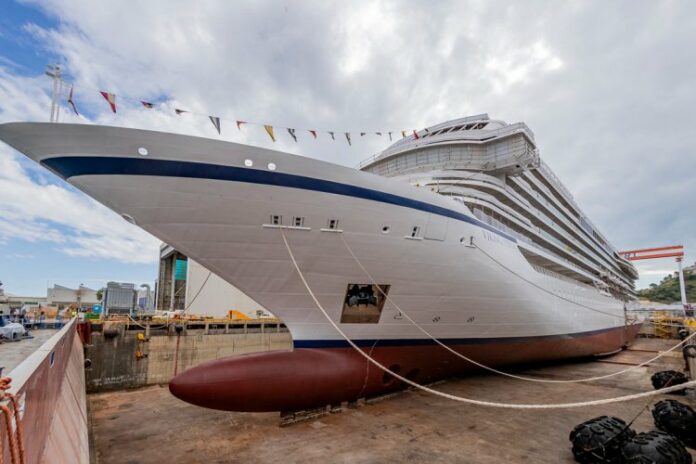
The float out ceremony was attended, among others, by Torstein Hagen, Chairman and CEO of Viking and by Gilberto Tobaldi, Ancona shipyard director of Fincantieri. 

This significant milestone in the construction of “Viking Vesta” marked the ship’s first touch with water, transitioning into the final outfitting phase. The vessel will enter service in the summer of 2025, offering itineraries in the Mediterranean and Northern Europe.

The vessel will be placed in the small cruise ship segment. She will have a gross tonnage of about 54,300 tons, will be equipped with 499 cabins, and accommodate 998 passengers. The new unit, along with its sister ship “Viking Vela,” set to leave the Ancona shipyard in autumn, will join the Viking’s ocean ships fleet, all built by Fincantieri over the past 12 years.

Fincantieri and Viking recently signed a contract for the construction of two additional new sister ships to Viking Vesta, demonstrating the solid partnership between the two companies, which as of today includes a total of 20 units.

The Viking ships are built according to the latest navigation and safety regulations. They are equipped with high-efficiency engines and systems that minimize exhaust gas pollution, meeting the strictest environmental standards.

Windfarm and seafood farming combined: First harvest at Kriegers Flak

0

With the increasing competition for space at sea, seaweed and mussel farming in the sea between the mighty offshore wind turbines will likely become reality in the future. 

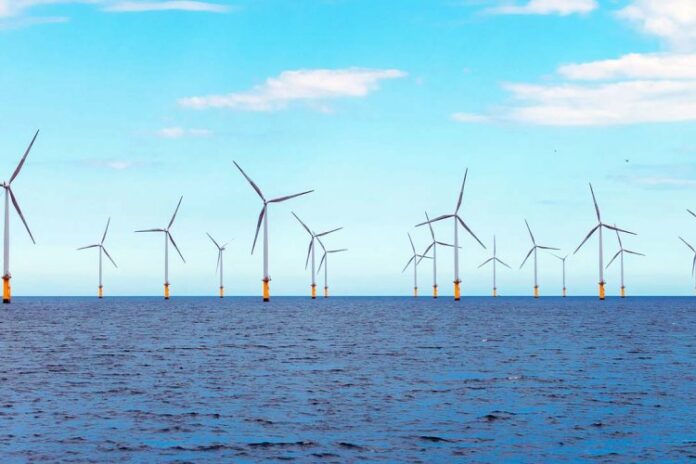
The WIN@sea research collaboration between Danish universities, mussel and seaweed producers, the Kattegatcentre and Vattenfall, successfully cultivates edible seaweed on lines inside the perimeter of Vattenfall’s offshore windfarm Danish Kriegers Flak, the largest one in Scandinavia to date, located south of Zealand.

 “We have just harvested the first seaweed. This is a big milestone. Cultivation of seaweed and mussels has the potential to take up nutrients from the marine environment and turn it into food. This gives us a unique possibility to improve the quality of the marine environment, while at the same time producing healthy seafood,” says WIN@sea Project leader & Senior Researcher, Annette Bruhn from the department of Ecoscience, Aarhus University. 

“At Vattenfall we work for fossil freedom, but never at the expense of the marine environment. That’s why we are working to find a way for our energy installations to be used for more than just production of energy. We are solving the challenges and identifying the synergies of producing fossil-free electricity and sustainable food from the sea in the same place at the same time,” says Tim Wilms, Bioscience expert from Vattenfall.

In addition to the cultivation of seaweed and mussels, the research collaboration is also integrating marine environmental monitoring of the sea surrounding the Danish Kriegers Flak windfarm. The purpose is to monitor the effects of the turbine foundations and surrounding artificial reefs on marine life in the area. 

The freshly harvested seaweed will be used to make seaweed pasta and seaweed tortillas at the WIN@sea Family Ocean Cooking school.

Louis Dreyfus Armateurs expands its CTV fleet

0

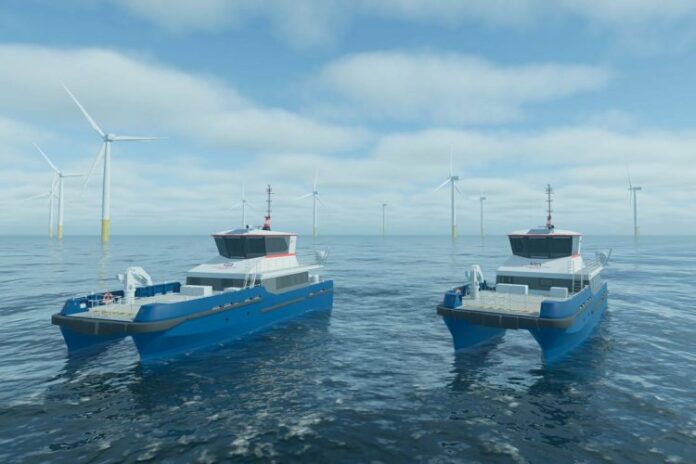
Louis Dreyfus Armateurs has recently placed an order for two new crew transfer vessels (CTVs) to expand its fleet from 5 to 7 ships. This expansion decision is in line with the company’s strategic vision to meet the growing demand of the offshore wind industry, particularly in France.

These two new CTVs will be built by Strategic Marine, a reputable shipyard based in Singapore with specialization in building vessels for supporting the offshore wind industry. These vessels will be sisterships to the Esti’Vent and Acti’Vent, both based on the StratCat 27 model, known for its high-specification design capable of accommodating 24 passengers. This design not only prioritizes safety but also offers a high level of performance and comfort on board, together with a very robust and reliable platform, making it an ideal choice for demanding offshore operations.

Currently, LD Tide, a joint venture between Louis Dreyfus Armateurs and Tidal Transit, is managing a fleet of five CTVs. Three of these vessels are dedicated to the St-Nazaire offshore wind farm, serving EDF EN and GE Vernova, while Acti’Vent is responsible for the safe transportation of maintenance technicians to and from the Fécamp offshore wind farm for Siemens Gamesa Renewable Energy. Esti’Vent is used on the growing spot market to support installation phase of offshore windfarms.

The decision to expand the CTV fleet comes at a time when numerous offshore wind farms are being developed in France, with more projects planned for the coming years. This expansion is primarily aimed at meeting the increasing demand for CTVs, especially during the construction and commissioning phases of these offshore wind projects.

Gaël Cailleaux, the Renewables Managing Director at Louis Dreyfus Armateurs, explained this decision, stating,

“These new orders are part of the strategy to expand our Offshore Renewables business in France and Europe. We are anticipating the future needs of the rapidly evolving French offshore wind industry.”

The two new CTVs are expected to be delivered early 2025.

Technical characteristics of the CTVs – StratCat 27 design:

  • Length: 27 m
  • Operability: min. 1.75 m Hs
  • 24 technicians
  • 3 crew members
  • Max speed: 26+ knots

Seaspan Energy launches third LNG bunkering vessel

0

This week, Seaspan Energy launched the third of its three 7600m3 LNG bunkering vessels, the Seaspan Baker, named after Mount Baker, also known as Koma Kulshan, in Washington State.

This series of vessels is named after iconic West Coast mountains and the first two vessels, the Seaspan Garibaldi (Nch’ḵay̓) and the Seaspan Lions (Ch’ich’iyúy Elxwíkn), will be delivered later this year, while Seaspan Baker will arrive in 2025.

The Seaspan Baker is currently targeted to service the Long Beach container ship market and will join the Seaspan Lions in providing Liquified Natural Gas (LNG) fueling services for vessels on the West Coast of North America. While the Seaspan Garibaldi is set to deliver low-carbon solutions to the global market and will be based in the Panama region.

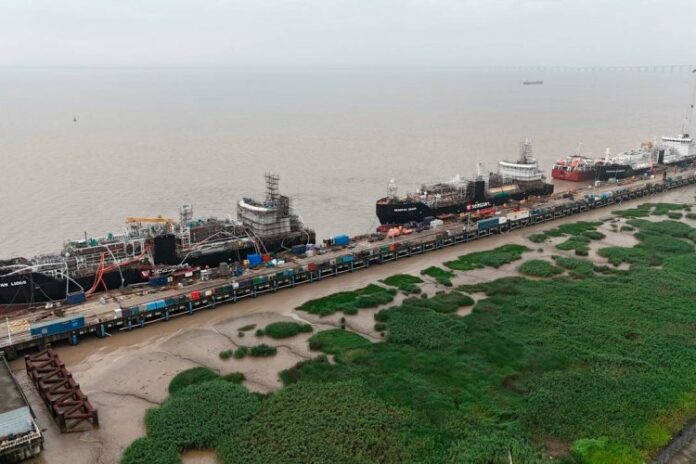
This series of vessels are each 112.8 meters in length, 18.6 meters in width, 5 meters in draft, with a design speed of 13 knots. The LNG bunkering vessels are being built by CIMC Sinopacific Offshore & Engineering (CIMC SOE), one of the most experienced small-scale gas carrier shipyards in the world, having delivered more than 30 LNG gas carriers.

For the design of the LNG Bunker Vessels, Seaspan worked closely with the Canadian-based team at VARD Marine Inc. to incorporate emerging technologies resulting in a decrease in emissions and underwater noise. The design is focused on safe, efficient, and economical refueling of multiple ship types with an ability to transfer to and from a wide range of terminals. The design will allow the vessel to engage in ship-to-ship LNG transfer along with coastal and short-sea shipping cargo operations.

Atlantic Shores receives Record of Decision for Atlantic Shores Project 1 and 2

0

Atlantic Shores Offshore Wind (Atlantic Shores) announced that the Bureau of Ocean Energy Management (BOEM) has issued its Record of Decision (RoD) for Atlantic Shores Project 1 and 2.  

Atlantic Shores Project 1 has an offtake agreement to generate 1,510 MW of offshore wind energy, enough to power over 700,000 homes. Combined with Project 2, the entire lease area will produce enough clean energy to power more than 1 million New Jersey homes.   

“Atlantic Shores is thrilled to receive Record of Decision from the Biden Administration. This milestone brings us one step closer to delivering New Jersey’s first offshore wind projects and for the state achieving its ambitious goal of 100% clean energy by 2035,” said Joris Veldhoven, Chief Executive Officer, Atlantic Shores Offshore Wind. “We are grateful to BOEM, Tribal Nations, and the consulting agencies for their rigorous evaluation in coordination with the extraordinary Atlantic Shores permitting team. We recognize the significance of this milestone and we’re excited to work with our supply chain partners to continue making near-term investments and creating great paying union jobs.”

“Today’s announcement is the direct result of more than 5 years of stakeholder engagement and more than 40 environmental studies to safely and responsibly progress Atlantic Shores Project 1 and 2,” said Jennifer Daniels, Development Director, Atlantic Shores Offshore Wind. “I am so proud of our team’s tireless efforts to secure these critical approvals and bring us one step closer to delivering clean energy to more than one million homes.”

Atlantic Shores is committed to helping New Jersey meet its renewable energy goals through the offshore wind projects while also driving New Jersey’s economy through job creation and workforce development. Atlantic Shores Project 1 alone will bring $848 million in guaranteed local economic benefits to the state and have an overall economic impact of $1.9 billion for New Jersey.