-10.2 C
New York
Home Blog Page 159

WinGD completes type approval testing for new short-stroke engine size

0

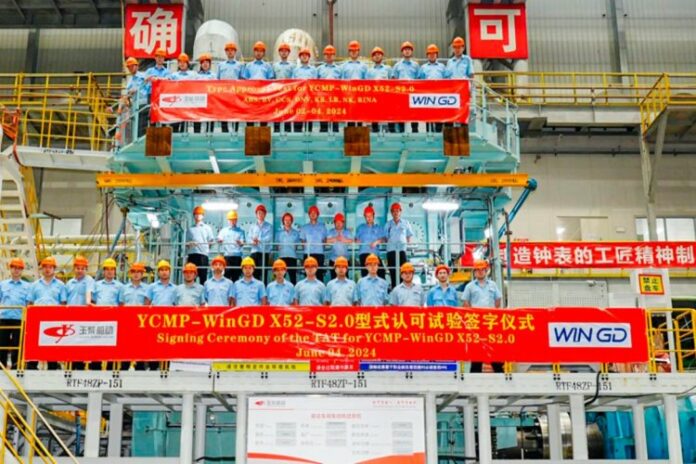
Swiss marine power company WinGD has successfully completed type approval and factory acceptance testing for its X52-S2.0 engine, bringing a new option to shipowners in need of compact, medium-bore two-stroke engines. 

The X‑S series succeeds the well-established RT‑flex50 and RT‑flex58 engines and is available in 52cm and 62cm bore sizes, with confirmed orders already for diesel, LNG and methanol configurations and an ammonia fuel option under development. The combination of small footprint and best‑in‑class fuel efficiency – around 10g/kWh lower than equivalent RT‑flex engines, a saving of around 4% depending on operating profile – make the new platform ideal for vessels requiring a compact, medium-bore solution.

WinGD Head of Global Testing & Validation, Sotiris Topaloglou said: 

“The recent test campaign of this newest X-S engine has confirmed that this series delivers exceptional fuel efficiency and emissions performance. We’re proud of the innovations that have enabled this performance. The footprint reduction will drive cost efficiencies while the new concept dramatically simplifies engine construction, installation, maintenance and service. Completing this prototyping and testing phase so efficiently was only possible thanks to our strong partnership with YCMP.”

The X-S series highlights WinGD’s unique approach to engine development, focused on close collaboration with engine builders like YCMP and with innovation rooted in proven technologies. The X-S, for example, uses key components with robust supply chains already well-established across WinGD’s engine portfolio, while drawing on modern engineering and design innovations to reduce the size and footprint while simplifying the maintenance of those components and the overall engine.

The type approval tests followed similar successful tests for the larger X62-S2.0 engine at Dalian Marine Diesel in April. The first order for the X52-S2.0 was received in February 2023 followed by a second order with iSCR, WinGD’s on-engine NOx abatement solution, in July that year.
MPA and NYK forge partnership to advance maritime sustainability and digitalisation

0

The Maritime and Port Authority of Singapore (MPA) and Nippon Yusen Kabushiki Kaisha (NYK) have signed a memorandum of understanding (MoU) to deepen their partnership and accelerate maritime decarbonisation, digitalisation, and manpower development efforts.

The MoU was signed by Mr Teo Eng Dih, Chief Executive, MPA, and Mr Takaya Soga, President and Group Chief Executive, NYK, on 2 July 2024.

In line with the International Maritime Organization’s revised Greenhouse Gas strategy 2023, the Paris Agreement, and international energy and climate targets, MPA and NYK will collaborate on various initiatives aimed at promoting a sustainable maritime industry. The partnership will include promoting the safe use of maritime fuels such as biofuels, methanol and low or zero-carbon ammonia through a phased approach.

Both parties will discuss maritime training programs for seafarers on ammonia-fuelled vessels and other sustainability-related skills and competencies to support the industry’s transition towards alternative low or zero- carbon fuels, including leadership programs for local professionals.

Mr Teo Eng Dih, Chief Executive of MPA said:

“This MoU marks a significant milestone in the longstanding partnership between MPA and NYK. As a major bunkering and a maritime hub port, Singapore is in a phase of introducing alternative fuels and enhancing manpower development. MPA looks forward to our partnership with NYK to unlock our collective potential and develop solutions that can be scaled up to benefit the global maritime community in the move towards smart and sustainable shipping.”

Mr Takaya Soga, President and Chief Executive Officer of NYK said:

“NYK has been proactively working on decarbonisation initiatives, digitalisation, and maritime human resource development to materialise a sustainable maritime industry. We have begun ammonia-fuel-related business development including bunkering projects, endorsing the Singaporean government’s initiative on fuel ammonia. Singapore plays a significant role in the maritime industry as the world’s largest hub port for trans-shipment and bunkering. We are delighted to conclude this MoU with MPA as we share the same goals. This MoU will accelerate cooperation between MPA and NYK and contribute to the sustainable development of maritime industry.”

Damen set to build sixth CSOV for Windcat

0

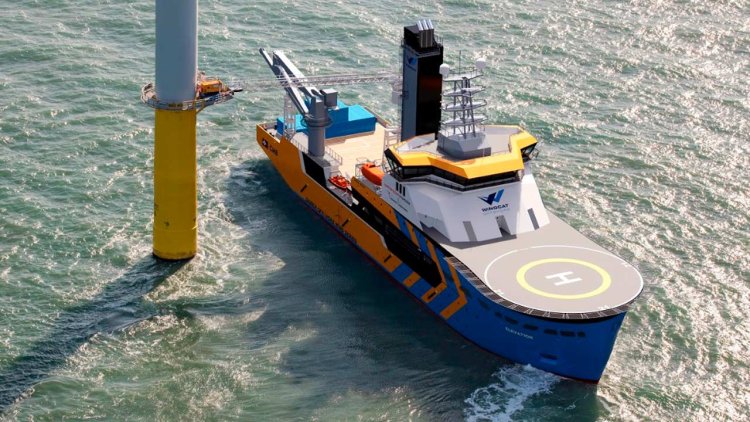
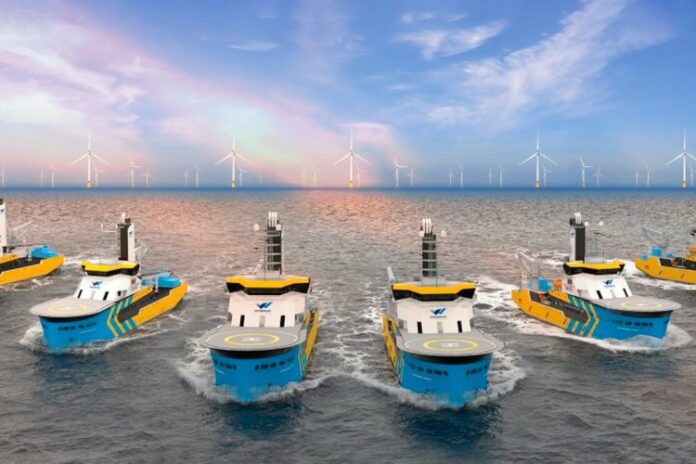
Damen Shipyards has secured the contract to build a sixth Commissioning Service Operation Vessel for offshore personnel transfer provider Windcat, thus completing the six-ship ‘Elevation Series’ of future-proof CSOVs. 

The contract marks the further strengthening of the working relationship between Damen, Windcat and CMB.TECH. Windcat will deploy the ‘Elevation Series’ to provide in-field technical and maintenance support to offshore wind farms for up to 30 days at a time.

Damen will build the sixth CSOV at Ha Long Shipyard in Vietnam, where construction of the first five vessels is currently proceeding at various stages. The first CSOV will be delivered early next year.

“Working together with Windcat and CMB.TECH over the last few years shows the power of collaboration,” adds Damen’s Sales Manager Benelux Joost van der Weiden. “Working closely with CMB.TECH to develop the hydrogen component of this vessel – turning a new technology into a proven technology – is a ground breaker for the industry. And, of course, we appreciate working with Windcat in making the entire series of six vessels effective – the fact that Windcat has ordered this sixth vessel demonstrates their clear vision.”

The ‘Elevation Series’ of CSOV is a result of the close cooperation between the three disciplines of offshore crew transfer services, future-proof fleet owner, and shipbuilding: with the three parties of Windcat, CMB.TECH and Damen bringing their respective expertise to the drawing board.

Specific attention has been paid to the internal design of all six vessels of the ‘Elevation Series’. “We are really excited to confirm the sixth vessel in this series of innovative, efficient and high performing vessels. Together with Damen, we have also spent a lot of time thinking about the onboard workflow of the offshore wind farm technicians; how they can move from point A to point B as efficiently as possible, both for operational efficiency and for safety,” says Windcat Managing Director Willem Van Der Wel.

The focus on internal design included creating a premium ‘look and feel’ of Windcat’s CSOV. Van Der Wel continues:

“The interior design is quite similar to a premium hotel because we really wanted to give the technicians a comfortable place to live while at work.”

The final design is for an 87-metre-long vessel that can accommodate 120 people on board. Drawing on input from CMB.TECH, as well as lessons learned from Windcat’s hydrogen-powered Crew Transfer Vessel, the CSOV will be equipped with dual fuel hydrogen technology. This will not only substantially reduce CO2 emissions but will also give Windcat a leading position in terms of using sustainable fuels.

Shell boosts LNG business with Manatee FID in Trinidad and Tobago

0

Shell Trinidad and Tobago Ltd., a subsidiary of Shell plc, has taken Final Investment Decision (FID) on the Manatee project, an undeveloped gas field in the East Coast Marine Area (ECMA) in Trinidad and Tobago.

Manatee will allow Shell to competitively grow its Integrated Gas business by building on development efforts in the ECMA, one of the country’s most prolific gas-producing areas. The ECMA is currently home to Shell’s largest gas-producing fields in the country including Dolphin, Starfish, Bounty and Endeavour.

The Manatee gas field will provide backfill for the country’s Atlantic LNG facility. Increasing utilization at existing LNG plants is an important lever to maximize potential from Shell’s existing assets.

“This project will help meet the increasing demand for natural gas globally while also addressing the energy needs of our customers domestically in Trinidad and Tobago,” said Zoë Yujnovich, Shell’s Integrated Gas and Upstream Director. “The investment bolsters our world-leading LNG portfolio in line with our commitment to invest in competitive projects that deliver more value with less emissions,” she added.

Shell plans to grow its LNG business by 20-30% by 2030, compared with 2022, and LNG liquefaction volumes are planned to grow by 25-30%, relative to 2022, as outlined at Shell’s Capital Markets Day in 2023.

Manatee is slated to start production in 2027. Once online, Manatee is expected to reach peak production of approximately 104,000 barrels of oil equivalent per day (boe/d) (604 MMscf/d).

Wärtsilä supplies its new dual-fuel engine simulator technology for WMI

0

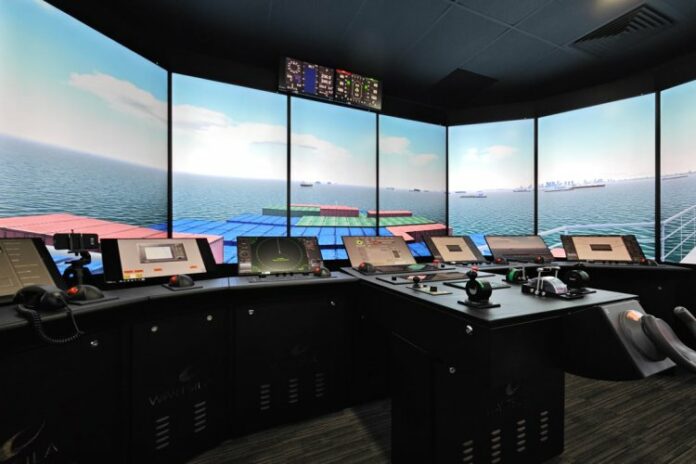
The navigational and technological simulators are a central feature of the simulation suite at WMI, which was recently inaugurated by H.E. Ms. Grace FU Hai Yien, Minister for Sustainability and the Environment and Minister-in-charge of Trade Relations of the Republic of Singapore.

Sustainable fuels will play an integral role in the maritime industry’s goal of achieving net zero in shipping by 2050. However, an important part of this transition requires crew to be upskilled to handle these new and alternative fuels. The state-of-the-art Wärtsilä simulator technology is specifically designed to train seafarers in the latest efficiency concepts and prepare them for operating with the next generation of marine fuels. The dual-fuel simulators include a virtual reality element to replicate realistic scenarios with different fuels and engine types. They also incorporate cloud-based simulation combined with Wavelink’s own learning management system to provide blended learning experiences.

“Seafarers today must continue to reskill and upskill, particularly in the areas of decarbonisation and new alternative fuels. Wärtsilä’s advanced simulator technology allows us to provide the highest quality maritime training, ensuring that our students are fully in step with the transition currently underway in the shipping industry,” says Mr Teo Keong Kok, Managing Director, Wavelink Maritime Institute.

The simulation suite also includes a full-mission bridge with 270-degree visualisation, and a part-task bridge with 120-degree visualisation for ultimate hands-on ship handling training in compliance with international standards. The technical simulators include full-mission and multi-functional network class-room set-ups for engine-room and liquid cargo handling training.  

“We are pleased to continue our strong relationship with WMI”, comments Kiran Kumar, Product Sales Manager at Wärtsilä Marine. “Climate regulation is pushing for constant improvement in fuel efficiency to drive down emissions meaning alternative and transition fuels will play a significant role in achieving these goals. The new simulation suite with Wärtsilä technology provides realistic training opportunities that will allow their graduates to safely operate technologically advanced vessels, whilst preparing them for shipping’s decarbonised future.”

Wärtsilä began its partnership with WMI in 2014 with the launch of a maritime simulation centre, including a class of 16 workstations. An integrated engine room and liquid cargo handling simulator class of 20 workstations was also delivered for the training of engineering watchkeeping personnel.

Value Maritime to decarbonise two ForestWave general cargo sister ships

0

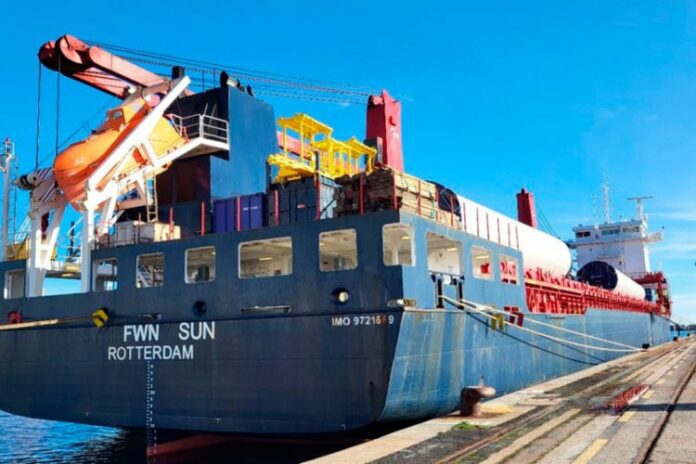
Value Maritime (VM) is collaborating with ForestWave, a prominent player active in the multipurpose shortsea segment, to retrofit two 10,600 DWT general cargo vessels with VM’s advanced emission reducing Filtree EGCS system and integrated Carbon Capture unit.

This marks the first contract between Value Maritime and ForestWave. 

The Filtree system with carbon capture and storage technology, capable of capturing up to 10% of CO2 emissions, will be installed on the FWN Sea and FWN Sun at the Value Maritime quay in Rotterdam, the Netherlands. The plug-and-play Filtree unit, which includes the carbon capture feature, is based on unique and patented technology. Its compact design differentiates it from other exhaust gas cleaning systems, allowing for easy installation on these types of vessels.

ForestWave has opted for a next generation 3MW Filtree with a 10% carbon capture rate and the option to upgrade toa 30% carbon capture rate. The CO2 will be collected in a dedicated tank onboard.

The installations are scheduled for late 2024, with close collaboration between the two companies ensuring a seamless process.

The Filtree system is based on innovative technology that filters sulphur, CO2 and 99% of ultra-fine particulate matter from the vessels’ exhaust streams. The CO2 capture and storage system will help to reduce emissions further. With this, CO2 is captured from the vessel’s exhaust and stored in tanks onboard. This is then discharged onshore where it can be used, for example, in the sustainable cultivation of greenhouse crops, in methanol plants, or stored underground.

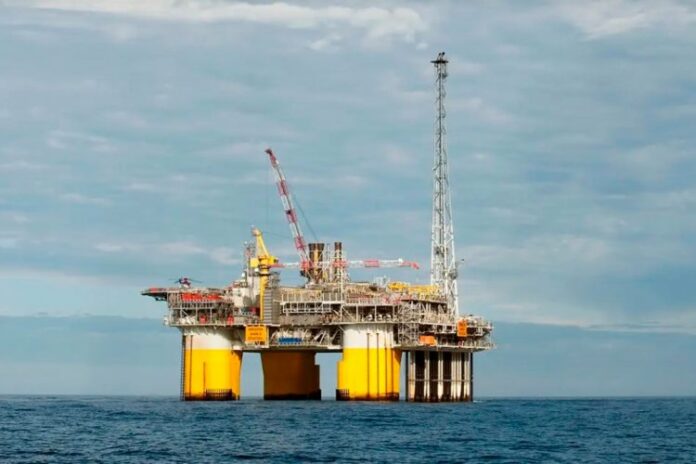
Equinor starts production from Kristin South

0

The partnership submitted the plan for development and operation (PDO) of the Lavrans and Kristin Q discoveries as satellites to the Kristin field in 2021. This is the first phase of the Kristin South project. The PDO was approved by the authorities in 2022.

“The Kristin South project demonstrates our strategy to create value by developing existing infrastructure on the Norwegian Continental Shelf. Together with our partners and suppliers, we have developed the project and started the production from Lavrans in a safe and good way,” says Trond Bokn, senior vice president for project development in Equinor.

A new subsea template has been installed and tied into the Kristin platform, now processing oil and gas from the first well at the Lavrans field. The gas will be exported through the pipeline system to the European market, while the oil will be transported to the market by ship via the Åsgard C storage vessel.

Four additional wells are planned as part of the first phase of the Kristin South project, three at the Lavrans field and one in the Q-segment at the Kristin field. The latter will be drilled from an existing subsea template that has been tied back to the Kristin SEMI.

The expected production in phase one of the Kristin South project is in the PDO estimated at 6.2 GSm3 of gas and 1.9 MSm3 of oil (a total of 58.2 million barrels of oil equivalent).

“This is a key milestone in our plan to continue to develop new resources in a mature area in the Norwegian Sea. Tying in additional resources to our producing hubs is a cost-efficient way to add production and extend the lifespan of our fields in operation. This approach contributes to energy security and job creation in Norway,” says Grete B. Haaland, senior vice president for Exploration & Production North.

The CO2 intensity for extraction and production of Kristin South phase 1 is very low – less than 1 kg of CO2 per barrel of oil equivalent. The emissions will mainly be generated from the project’s drilling activities.

Norwegian suppliers have been awarded over 60% of the contract values in the development phase creating ripple effects along the coast. The project is estimated to have created 4,000 person-years across Norway, with 800 in the Mid-Norway region, over the 2020-2025 period.

Lavrans was discovered in 1995, while the Kristin field was put on stream in 2005. The technical lifetime of the Kristin platform is currently estimated to be 2043 with potential for further extensions.

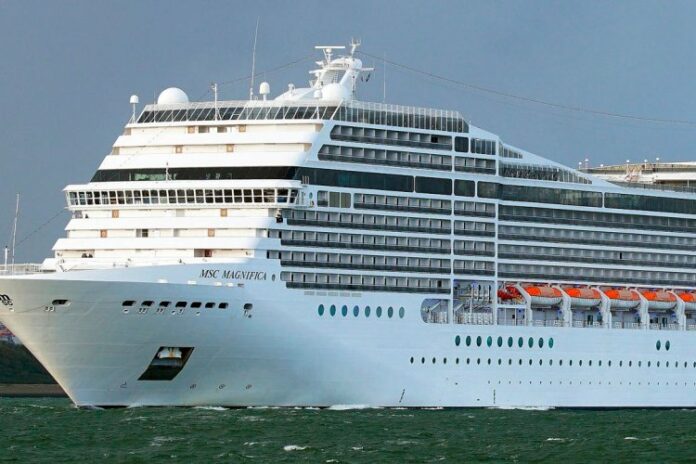
ABB–Arkitech collaboration delivers significant HVAC efficiency gains for MSC Magnifica

0

Using artificial intelligence and machine learning to analyze data from over 1,500 sensors on the MSC Cruises ship, this technology enables up to 12 percent increase in chiller efficiency to achieve monthly energy savings of 100 MW by the 15-year old ship while maintaining optimal air-handling unit performance.

The HVAC systems onboard cruise ships and ferries are often one of the largest energy consumer after propulsion, making energy efficiency a priority. The ABB solution based on ARK-M20 is designed to minimize the cost and environmental impact of this system. It works by continuously optimizing the HVAC system’s temperature set point in response to variable conditions including weather, seawater temperature, mobility, proportion of passenger capacity filled, time of day and position in port or at sea.

“Controlling the most energy-demanding processes onboard – propulsion, hotel operations and HVAC – is increasingly important,” said Ivana Melillo, Head of Energy Efficiency, MSC Cruise Management (UK) Limited. “Reducing energy needs can decrease fuel consumption and emissions. Thanks to the project, we expect to save 10-12 percent of HVAC energy consumption, equating to nearly 1 ton of fuel saved daily. The greatest emissions savings come from the fuel we don’t use.”

“As maritime organizations seek to enhance operational efficiency and reduce their carbon footprint, innovative technologies like ARK-M20 are well positioned to support this growing demand,” said Alessandro De Santis, Manager – Service Area South Europe, ABB Marine & Ports. “Our collaboration with Arkitech and MSC Cruises emphasizes our commitment to delivering measurable energy savings and operational improvements through technology. The project’s success is yet another testament to our leadership in advancing efficiency and sustainability in the maritime industry.”

Supplied in a modular plug-and-play configuration, the ARK-M20 system can be installed seamlessly during normal vessel operations to offer a platform to monitor vessel air quality. As well as providing a safe and comfortable environment for passengers and crew, optimizing HVAC performance contributes towards compliance with regulations such as the International Maritime Organization’s Carbon Intensity Indicator.

“The results achieved by our ARK-M20 system onboard MSC Magnifica exceeded our initial target, equating to energy savings of 100 MW per month and an anticipated 1,600–2,000 MW per year,” said Sander Huijer, Chief Executive Officer, Arkitech. “We are grateful to ABB for its support, in a project which demonstrates the efficiency gains, cost savings and emissions reduction, which can be achieved without compromising performance or guest and crew comfort.”

ADNOC awarded $733 million for three newbuild island rigs

0

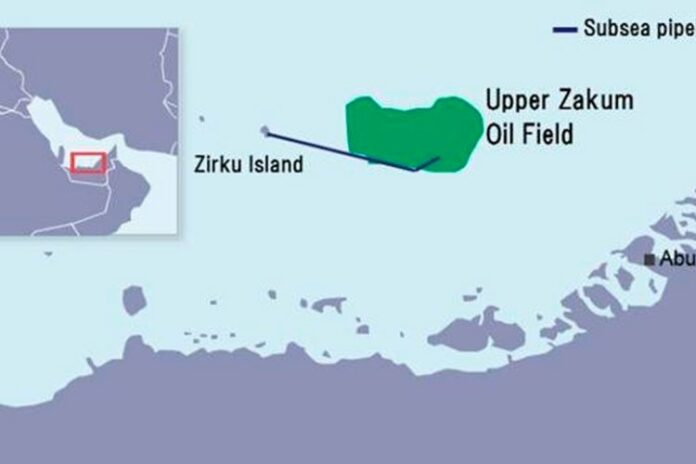
A contract valued at an estimated $733 million, has been awarded to ADNOC to assist the expanding activities at the offshore Zakum field with three new rigs that will operate on existing and newly constructed artificial islands.

The rigs will be designed and built as part of a partnership between ADNOC Drilling and Honghua Group (HH) and constructed by HH. Delivery of the rigs and commencement of operations is expected during 2026. ADNOC Drilling and HH will look to also collaborate with AIQ, an Abu Dhabi based artificial intelligence (AI) company. This partnership has been formed specifically to utilize AI, digitization, and advanced technology in the design and operation of the rigs. 

Additionally, drilling operations on ADNOC’s artificial islands create the ideal conditions for extended reach drilling (ERD) with the top five longest wells in the world being delivered from these islands off the coast of Abu Dhabi, the most recently delivered being over 52,000 feet. The rigs will be built to deliver ERD and eliminate the need for the rigs to be dismantled to be moved, dramatically improving efficiency and safety while reducing costs and emissions.

Yang Ming’s YM together bunkers B30 HSFO biofuel in South Korea

0

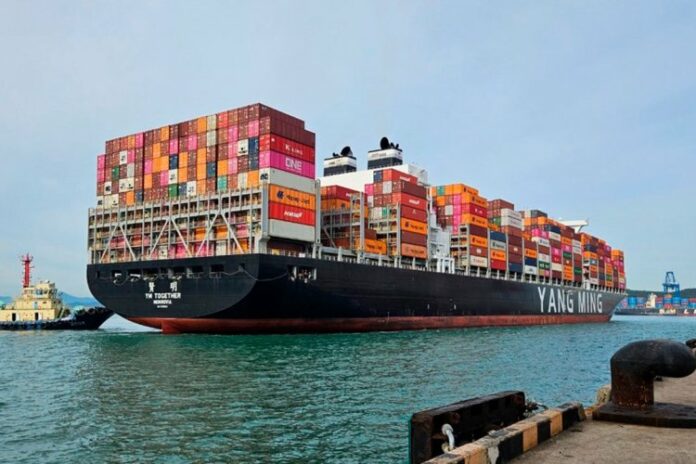
This initiative aims to implement the Company’s sustainable development strategy, achieve net-zero emissions by 2050, and provide low-carbon transportation services to customers. YM Together, the 11,000-TEU container ship, recently became the first foreign-flagged vessel in South Korea to bunker biofuel, marking the Company’s steady progress in sustainable development and energy transition.

In collaboration with KPI OceanConnect, a marine energy supplier, YM Together, currently serving the Trans-Pacific route PN3, bunkered the B30 HSFO biofuel at Pusan Port in South Korea on June 26. This type of biofuel is a blend comprising used cooking oil (UCO) made of native plants, which complies with ISO 8217 and meets International Sustainability & Carbon Certification (ISCC) standards. This biofuel also meets the green fuel standards of the FuelEU Maritime Initiative, reducing up to 25% of GHG emissions than do conventional marine fuels.

Apart from the biofuel, onboard facilities such as scrubbers and shore power systems (AMP) enable YM Together to effectively cut GHG emissions and offer customers with transport services that are sustainable and environmentally-friendly. The addition of Pusan port as a biofuel bunkering port in Asia increases flexibility in bunkering options for different routes, which in turn helps Yang Ming to expand the use of biofuel. In the meantime, the Company is providing biofuel usage data requested by a publicly-owned local research institute in South Korea, hoping to accelerate the sustainable goal of energy transition in the industry by sharing practical experiences and contributing to academic research. 

In response to the impact of global climate change, Yang Ming is carrying out various energy-saving measures in its operations to improve the fleet’s energy efficiency. These measures include retrofitting existing ships for energy efficiency, adopting smart technology to enhance onboard energy monitoring, using weather routing system to optimize routes and reduce fuel consumption, and fitting vessels with AMP systems for shore power. In 2023, Yang Ming’s fleet reduced carbon intensity by 61.86% compared to the baseline year of 2008, achieving the IMO’s goal of a 40% reduction by 2030 ahead of time. Looking forward, Yang Ming will continue using ISCC-certified biofuel to cap its total yearly GHG emissions, reduce the pressure of carbon emissions on customers and the entire supply chains, and sail towards the net-zero goal of maritime transport.