-10.2 C
New York
Home Blog Page 158

Dutch students complete North Sea crossing in self-built hydrogen boat

0

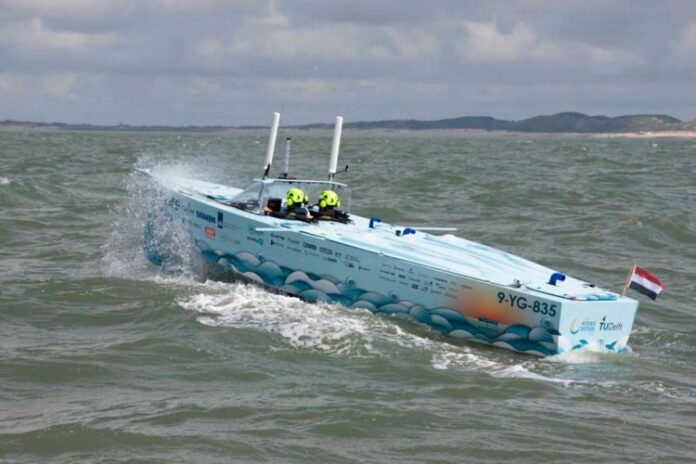
A team from TU Delft has embarked on the first hydrogen boat trip to England, a first for the North Sea. 

With their self-designed vessel, they are braving unpredictable waves, driven by the potential of clean fuel for shipping. After technical setbacks and changeable weather, the students are ready to cover the 160 kilometers in about eight hours. This crossing represents a milestone in maritime engineering and could accelerate a sustainable revolution in the industry.

Early Thursday morning began the historic journey of the hydrogen boat of TU Delft’s Hydro Motion Team. Started from Breskens, bound for Ramsgate, the voyage demonstrates the potential of hydrogen as a fuel at sea. The initial attempt was stranded earlier in the week due to technical problems and bad weather. But after a quick repair and a clear weather forecast for Thursday, the two students were still able to set sail.

The eight-metre boat, powered by a hydrogen fuel cell system, used just 12.9kg of the 25kg of hydrogen stored onboard for the crossing, with a cruising speed of 40km/h.

To achieve the speeds, the team developed strut and foil systems to lift the boat out of the water, to prevent the hull from having to push large volumes of water out of the way.

Nonetheless, the students had to modify a deep-V-shaped monohull to allow the boat to cut through the brutal North Sea waves.

The cross-border crossing also posed safety, logistics and regulatory challenges. TU Delft Hydro Motion formed a full-time internal team to organise the crossing, ensuring safety protocols were drawn up.

Developed after the team became World Champions at the Monaco Energy Boast Challenge in 2023, the students hope the vessels have demonstrated the potential of hydrogen in maritime.

“When we show what our boat can do, we prove the viability of hydrogen. By working together with the maritime industry itself we can initiate action,” the team said. “We are all part of a problem, which means we can all be part of the solution. Only by working together, we can turn the tide.”
Second new dual-fuel fast Ro-Pax ferry to enter service for Balearia after successful sea trials

0

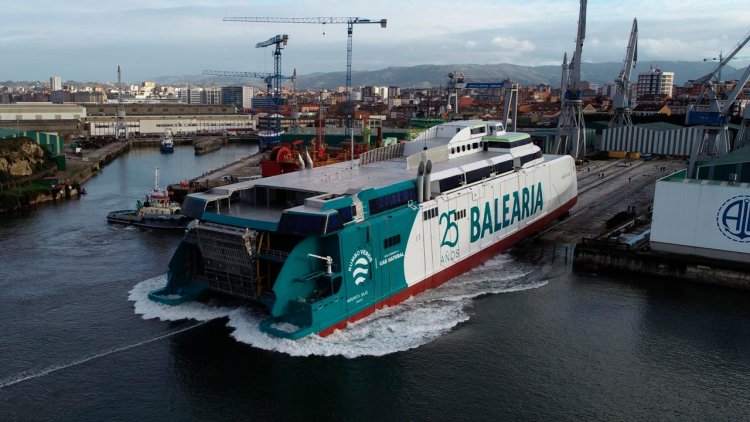
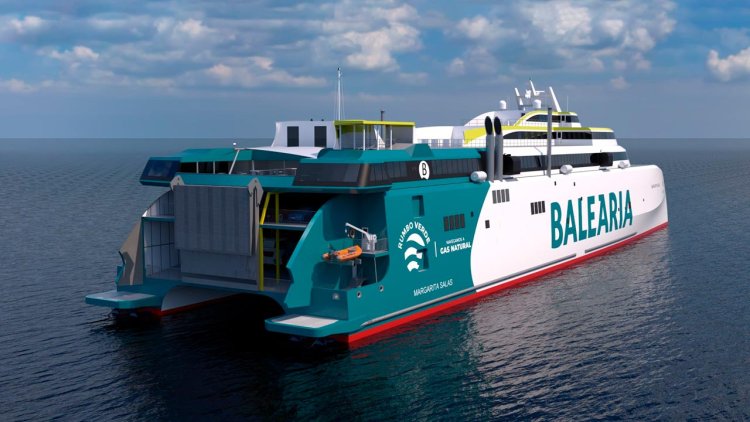
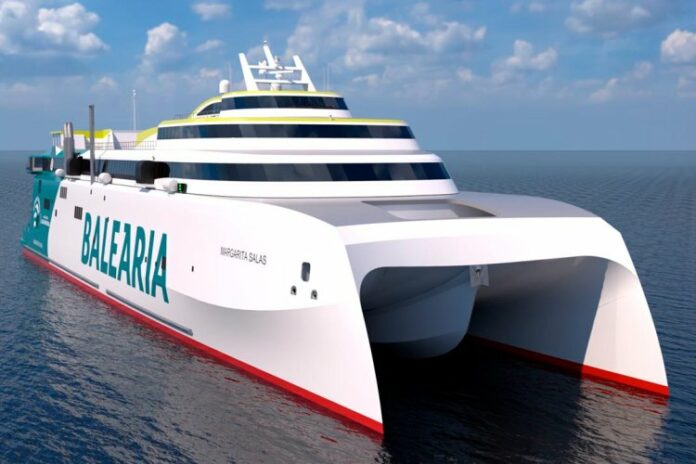
Margarita Salas, an innovative Ro-Pax fast ferry with dual-fuel LNG engines designed by Incat Crowther for Spanish operator Baleària, has successfully completed sea trials.

The new vessel has been delivered to Baleària and will enter service in late July and will provide a daily service between Barcelona and the Balearic Islands of Mallorca and Menorca, providing a vital link for passengers and vehicles.

Named after pioneering biochemist Margarita Salas, the vessel is the second fast ferry with dual-fuel gas engines designed by Incat Crowther and built by Astilleros Armon Gijon S.A. for Baleària. Margarita Salas builds on the innovation and sustainability of its counterpart Eleanor Roosevelt.

Like its predecessor which has been in operation since 2021, Margarita Salas is 123 metres long and 28 metres wide, with capacity for 1,200 passengers and 450 vehicles. However, the new vessel features an additional passenger deck with a spacious lounge area in the bow and an expanded aft terrace with an outdoor bar service, enhancing the onboard experience.

Margarita Salas has been designed to maximise sustainability and to deliver excellent onboard comfort and amenities. The design prioritises passenger comfort with spacious seating areas, a ride control system to minimise vessel motions, and careful design including a resilient mounted superstructure for low vibrations and noise. Passengers will also benefit from several innovative technologies including broadband internet and the ability to access their accommodation via a QR code. They will also have an on-demand digital entertainment platform, while those travelling with pets will be able to monitor them via a video surveillance system.

Powered by four 9,600 kW Wartsila dual-fuel LNG engines, Margarita Salas will cruise at a service speed of 35 knots at 85% MCR. Its propulsion system includes four waterjets and two azimuth bow thrusters, ensuring excellent manoeuvrability when berthing in port. The vessel’s dual-fuel LNG engines provide the ability to operate for approximately 470 miles (approximately 756 kilometres) on gas. It can also consume 100% biomethane and mixtures of up to 25% green hydrogen, making it a versatile and sustainable addition to Baleària’s fleet.

Brett Crowther, CEO of Incat Crowther said:

“The successful completion of sea trials means this state-of-the-art vessel can now join the Baleària fleet beside her sister ship Eleanor Roosevelt. This project has been a true collaboration between Incat Crowther, operator Baleària and shipbuilder Astilleros Armon and is the second very large aluminium Ro-pax built locally in Europe, close to its operating region.”

Ørsted pilots new technology that further optimises offshore wind monopile installation

0

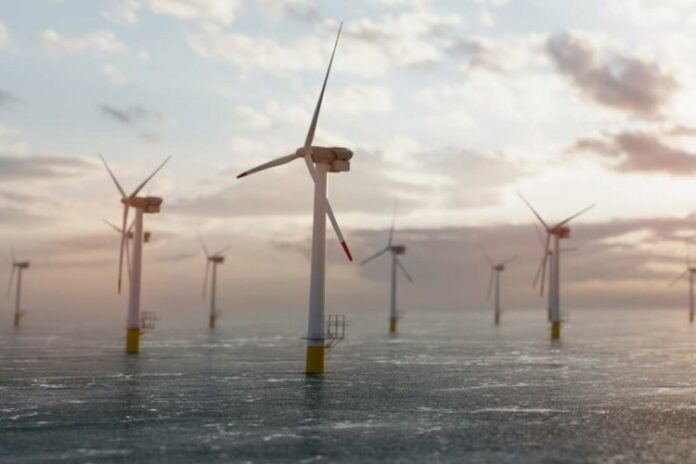
The groundbreaking new technology has been successfully tested in Germany, proving that this innovative approach can dramatically reduce noise levels during foundation installations, strengthening existing protections to marine life and potentially paving the way for the next generation of monopile foundations.

This leading-edge technology represents one of the greatest advancements yet in offshore wind foundation installation methodology. It is also the latest example of how Ørsted, the global offshore wind leader, continues to harness innovation that supports biodiversity, protects the environment, and creates the green energy systems of tomorrow. 

Ørsted is already implementing a range of effective protective measures during offshore wind farm construction, including limiting the duration, intensity, or extent of certain offshore construction activities. Examples of these mitigating measures include the deployment of bubble curtains or other noise barriers during traditional installation. The new installation method allows Ørsted to further reduce the potential impact from construction activities on the marine environment and build in a more cost-effective way.

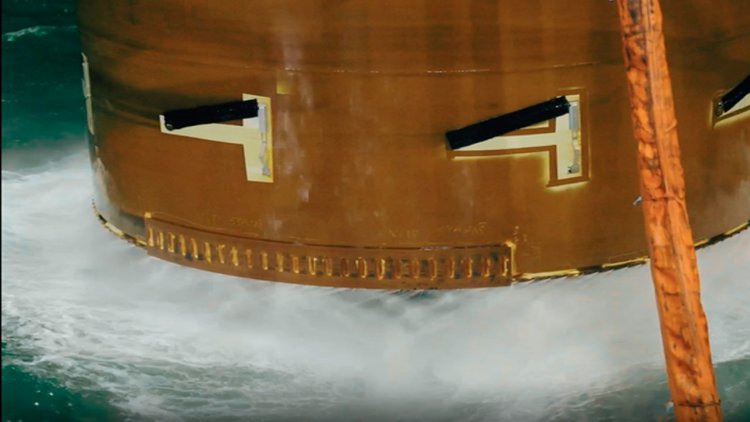
At the new German offshore wind farm Gode Wind 3, Ørsted has successfully tested an innovative installation method on three monopile foundations. The noise mitigation method involves a patented jetting technology attached to the monopile, which lowers the resistance of the surrounding sandy soil, effectively allowing the foundation to sink into the seabed – completely replacing conventional installation methods such as pile driving. The implementation of the new installation technology has resulted in a substantial decrease in underwater noise levels: With a reduction of 34 decibels relative to the most commonly used installation method, and without additional mitigation, noise levels were reduced by over 99 % to a level just marginally above the ambient noise found in the German Bight in the North Sea.  

Beyond the noise reduction, this new technology is a step change in offshore wind monopile installation that, once adopted at scale, can provide for more efficient and cost-effective installations of offshore wind foundations. 11 MW wind turbines have already been installed on top of the foundations, and Gode Wind 3 is expected to start commercial operation later this year. 

Patrick Harnett, Executive Vice President and Chief Operating Officer at Ørsted, said:

“Ørsted has been at the forefront of offshore wind innovation and marine protections for 30 years, and we continue to push the envelope on new innovative solutions. This new technology is a potential game changer for how we build offshore wind. Once industrialised, it could not only be cheaper, faster, and far quieter – without additional mitigation – than any other monopile installation technology, it also has the potential to make next-generation foundations lighter as they won’t need to be designed for conventional installation process.” 

This is the first time a jetting technology has been used to install full-size monopile foundations, making the tests a milestone for the entire industry. Ørsted carried out the installation together with Jan De Nul Group and their installation vessel Les Alizés as well as contractor Aarsleff. Ørsted has been developing the technology over the past years and is now looking into how to introduce the technology into the future pipeline, which includes assessing the feasibility of the method on more complex ground conditions than the pure sand conditions found at the Gode Wind 3 site. Further regulatory approvals will also be needed before the technology can be implemented in other markets globally.

Ørsted closes acquisition of Eversource’s share of Sunrise Wind

0

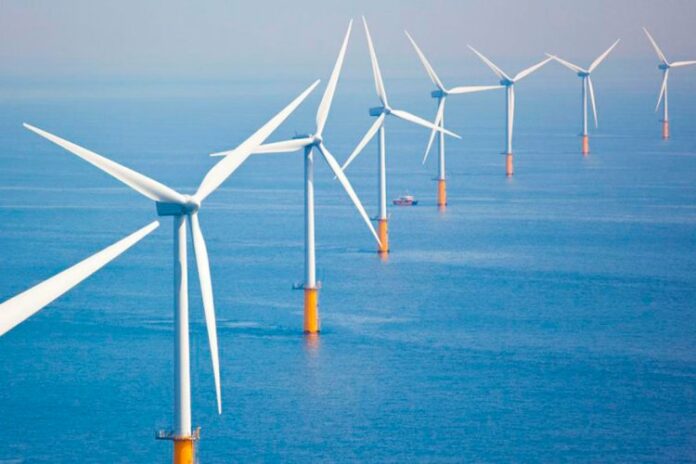
Ørsted has now completed the acquisition of Eversource’s 50 % share of Sunrise Wind, a 924 MW offshore wind farm located off the coast of New York.

The purchase price at closing to acquire Eversource’s share of Sunrise Wind is USD 152 million. At signing in January 2024, the transaction was valued at USD 230 million, and this revised closing figure reflects adjustments made due to lower actual versus forecast CAPEX spend between signing and closing.

With the closing of the transaction, Ørsted has assumed full ownership of the project, which has all federal permits in place and recently signed an OREC (offshore wind renewable energy certificates) contract with New York’s energy agency, NYSERDA at USD 146 per MWh for 25 years. The final investment decision for the project was taken in March this year.

David Hardy, Executive Vice President and CEO of Region Americas at Ørsted, said:

“Sunrise Wind has been significantly de-risked and achieved important milestones since we agreed with Eversource to buy their share. The transaction is a value-accretive opportunity for Ørsted as we continue to develop the project.”

“As a centrepiece of New York’s clean energy economy, Sunrise Wind builds on our momentum from South Fork Wind, further expanding the local offshore wind supply chain and workforce. We thank Eversource for their years of partnership and ongoing support.”

Integrated Wärtsilä propulsion package supports efficiency goals for James Fisher tankers

0

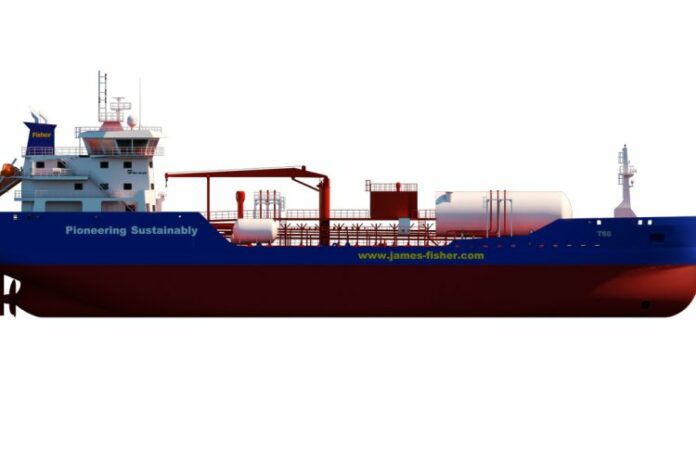
Technology group Wärtsilä will supply a fully integrated, mechanical drive, propulsion package for new 6000 dwt LNG-fuelled tankers being built for British fleet operator, James Fisher Everard Ltd., part of the James Fisher group of companies.

The ships are under construction by China Merchants Jinling Shipyard (Yangzhou) Dingheng Co. in cooperation with design consultant FKAB Marine Design. The integrated package includes the high-performance Wärtsilä 25DF dual-fuel main engine. The order was booked by Wärtsilä in Q2 2024.  

Under increasing pressure to reduce emissions, tanker owners are exploring solutions that will support the decarbonisation of their fleet and offer improved fuel economy, lower emissions, and flexibility in fuelling choices. Wärtsilä’s 25DF engine can support these ambitions, helping customers to deliver an efficient and low emissions fleet.

Krystyna Tsochlas, Head of Maritime Transport for James Fisher, says:

“We are committed to a new, more sustainable future for our shipping operations and Wärtsilä’s expertise in delivering innovative propulsion solutions has been demonstrated throughout the vessel design development process. The dual-fuel engine will help us to serve our customer needs in a more efficient and less carbon-intensive way.”

Tsochlas continues,

“The Wärtsilä 25DF engine offers a modular, upgradeable, and flexible design that will help to significantly reduce fuel consumption and emissions, improving the efficiency of the new tankers, and facilitating the adoption of sustainable fuels.”

In addition to the Wärtsilä 25DF engine, the company will supply an integrated selective catalytic reduction (SCR) system, a gas valve unit (GVU), gearbox and controllable pitch propeller (CPP), with seals and bearings. Included in the scope, Wärtsilä’s recently updated remote propulsion control system, featuring an enhanced ProTouch system, will improve ease of use and situational awareness for navigators and chiefs.

“Fleet future proofing is of utmost importance for operators today as the industry undergoes its transformation towards optimal efficiencies and decarbonised operations. The selection of our propulsion package, centered around the Wärtsilä 25DF engine, is a clear indication of how James Fisher is looking for suppliers with a strong focus on research and development, and which offer technological competence, systems integration capabilities, and in-service support for all elements of the package,” comments Stefan Nysjö, Vice President of Power Supply, Wärtsilä Marine.

Delivery of the Wärtsilä equipment is scheduled to take place during 2025.

Steerprop to equip largest cable-laying vessel with advanced propulsion systems

0

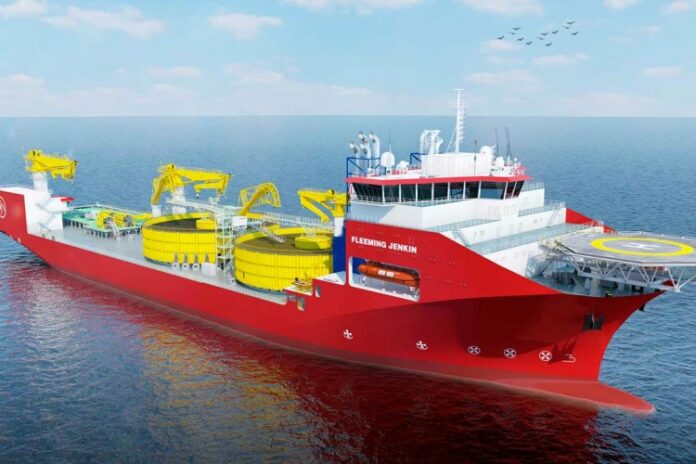
Set to be delivered in 2026, the Fleeming Jenkin will be the world’s largest Cable-Laying Vessel (CLV) to date. By optimizing the propulsion system to be in line with the ship’s operating profile, maritime environmental regulations, and customer requirements, Steerprop has done its part to ensure that the new CLV will also be the world’s cleanest.

The Fleeming Jenkin is being built by China Merchants Heavy Industry Haimen (CMHI) and will be owned by Jan De Nul Group. The main propulsion for the Fleeming Jenkin will come from four azimuth thrusters. Manoeuvrability will be enhanced by three tunnel thrusters and two retractable. An additional full main thruster and extensive spares package will also be supplied as part of the contract. In addition to the Fleeming Jenkin, Jan De Nul is also building a second identical vessel with three carousels and a cable-carrying capacity of 28,000 tonnes.

The move reflects a confidence in the technology and design competence of Steerprop, according to Juho Rekola, Director, Sales and Project Management, 

“This is a milestone project for us, and not just because of the technology; we showed that we were able to adapt to various end-customer requirements and be flexible in terms of CMHI’s needs in order to ensure that the building and commissioning phases occur seamlessly. It demonstrates our ability to address the requirements of even the most demanding of applications from within our extended product portfolio.”

Tao Chen, CMHI (Jiangsu) Deputy GM, says:

“This is our first time working with Steerprop. We hope that this cooperation will be smooth and demonstrate its expertise, and we are looking forward to doing more together in the future.”
 
Jan Van de Velde, Director of Newbuilds at Jan De Nul, says:

“Fleeming Jenkin bundles all the cable installation expertise we’ve gained over the past decade. This vessel and the technologies on board are designed by our in-house specialists. We are happy to add to that the expertise of Steerprop in delivering a comprehensive propulsion system for our cable-laying vessel under construction, resulting in high-maneuverable and performant vessels for challenging offshore conditions. We look forward to working together on this project.”

Juho Rekola adds that the Fleeming Jenkin demonstrates how Steerprop is committed to fully understanding customers’ needs, requirements and expectations.

“Ship-owners shouldn’t have to compromize because they’ve been forced to choose a solution straight from a manufacturer’s catalogue. Instead, they should set challenges and expect their suppliers to rise to them. The Fleeming Jenkin is a fine example of how this philosophy can help to shape reality.”

KT Marine welcomes Damen Fast Ferry 4212 to South Korea

0

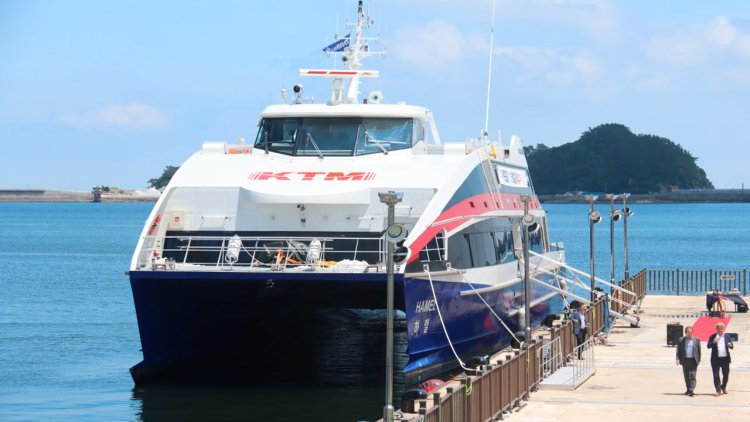
The company placed its order for the vessel earlier this year. The rapid delivery is the result of Damen’s serial construction of vessels for stock.

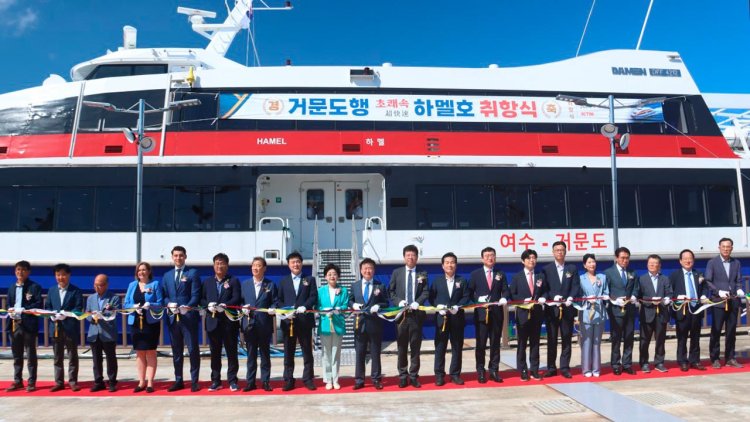
The ceremony, which took place at Yesou on the 5th July 2024, was attended by numerous guests including Mr Og Yeol BAG, CEO of KT Marine, the Chargé d’affaires of the Embassy of the Kingdom of the Netherlands in South Korea, Onny Jalink, Damen Regional Sales Director Asia-Pacific, Thomas Röwekamp, and various local stakeholders including Mr Jeong, Ki Myung, Mayor of Yeosu City, Ms Baek, In Sook, Chairwoman of Yeosu City Council, and well as various members of the National Assembly, of the Provincial Council, of the Yeosu City Council, of the Yeosu regional office of Ministry of Oceans and Fisheries, of the Korea Ocean Business Corporation, of the Korea Shipping Association, of the Korea Maritime Transportation Safety Authority, and of the Yeosu Gwangyang Port Authority.

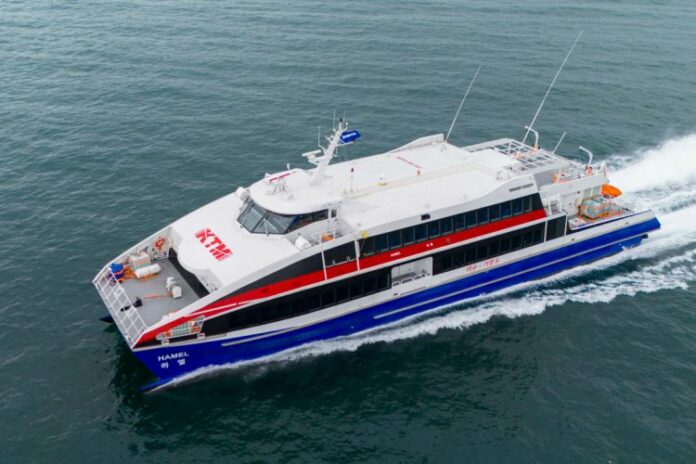
Hamel will transport up to 423 passengers at speeds of up to 40 knots. She will operate a route between Yeosu Harbour and Geomundo Island. Hamel is the seventh Damen Fast Ferry, and the fifth Fast Ferry 4212, to be delivered to South Korea in recent years.

The Fast Ferry 4212 is a catamaran design known for its high levels of passenger comfort, low fuel consumption and low maintenance costs. The vessel was built at Damen Song Cam Shipyard in Vietnam. The ferry departed the yard end of June 2024 sailing to Korea on her own keel, crewed by Damen’s delivery team.

Mr Bag, CEO of KT Marine Co., Ltd. says:

“We will greatly contribute to the development of a dynamic and comfortable daily economic life for local residents living in Yeosu-Geomundo area, and the revitalization of the tourism industry in Yeosu, through this introduction of newbuilt high-speed passenger vessel, Hamel, responding long-cherished dream of the residents of Yeosu.”

Thomas Röwekamp, Regional Sales Director Asia-Pacific at Damen says:

“Just six months ago, we were honored to welcome KT Marine into the Damen family with their new Fast Ferry 4212 Hamel. Today, we are here in Yeosu to celebrate her arrival and it is fantastic to see all the proud stakeholders who have worked very hard to make this new project a reality. Hamel signifies more than just a vessel, as she represents a lot of history and connection between Korea and the Netherlands. We wish KT Marine, Hamel and her crew safe sailings between the scenic route from Yeosu to Geomundo Island.”

Onny Jallink, Chargé d’affaires of the Embassy of the Kingdom of the Netherlands in South Korea, Onny Jalink, says:

“With a Dutch name and Dutch colours both inside and out, Hamel beautifully represents both the strength of the Netherlands – Korean relationship as well as Dutch values; in particular the Netherlands’ dedication to smart and sustainable mobility. It was a pleasure and honour to join this arrival ceremony!”

The ferry is named in honour of Hendrik Hamel, a Dutch sailor with the Vereenigde Oost-indische Compagnie (VOC) or Dutch East India Company. Born in Damen’s hometown of Gorinchem in 1630, Hamel sailed with the company to Indonesia in 1650. In 1653, while sailing to Japan, Hamel and his crew were shipwrecked on Jeju Island, Korea. 

Refused permission to leave the country due to is isolationist policy at the time, Hamel remained for thirteen years in Korea before escaping, in 1666, to the Dutch trading mission on Dejima Island, Japan. Here, he wrote Hendrik Hamel’s Journal of a Description of Kingdom of Korea, 1653-1666. Published in 1688 in the Netherlands, the journal was the earliest first-hand account of a westerner in Korea.

Fincantieri: keel laying ceremony of “Four Seasons I” in Ancona

0

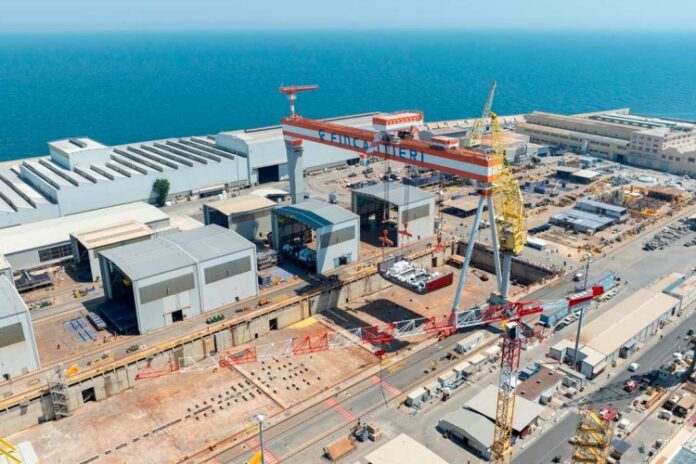
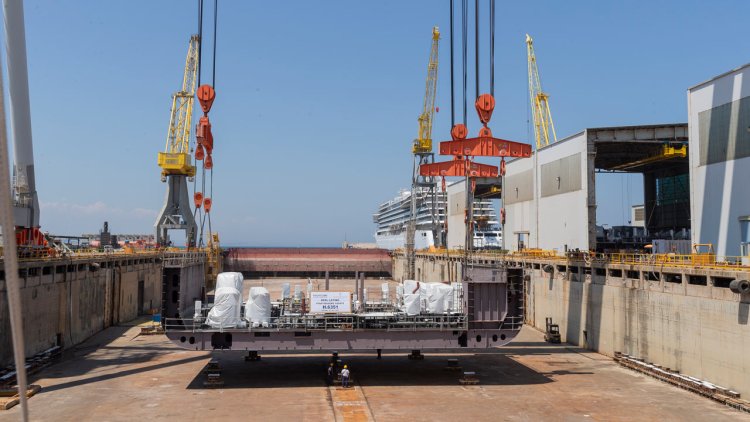
Fincantieri and Marc-Henry Cruise Holdings LTD, Joint Owner/Operator of Four Seasons Yachts, have celebrated at the shipyard in Ancona the keel laying of “Four Seasons I”, the first ultra-luxury vessel under construction for Four Seasons Yachts, which will be delivered at the end of 2025 and setting sail in January 2026.  

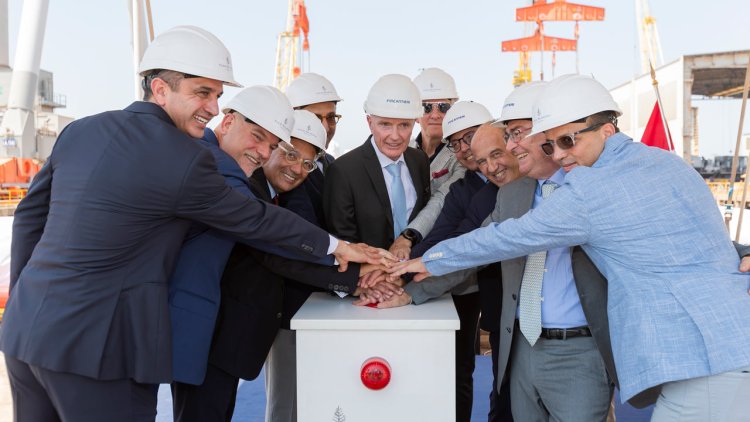
The keel laying ceremony, which is the formal recognition of the start of a ship’s construction in the dry dock, was attended, among others, by Nadim Ashi, Owner and Executive Chair of Marc-Henry Cruise Holdings LTD, Joint Owner/Operator of Four Seasons Yachts, and Founder and CEO of Fort Partners, Bart Carnahan, President, Global Business Development, Portfolio Management and Residential, Four Seasons, Luigi Matarazzo, General Manager Fincantieri Merchant Ships Division, and Gilberto Tobaldi, Director of the Ancona shipyard.

During the event, three specially chosen coins have also been welded onto the bottom of the ship as a symbol of good luck and to bless the vessel.

With an all-suite, residential style product, “Four Seasons I” will set a new standard for luxury at sea. The vessel, which will be using the very latest in environmental protection technologies, will be 34,000 gross tons, 207 meters long, and will have 95 exclusive suites with remarkable custom design, focused on removing barriers between guests, the sea, and their surroundings. Each suite features extensive terrace decks ranging from 6 to 13 square meters for the Seaview Suite, to nearly 457 square meters for the Funnel Suite, which will be the Yacht’s most exclusive accommodation.

Corvus Energy battery system powers the Crowley eWolf

0

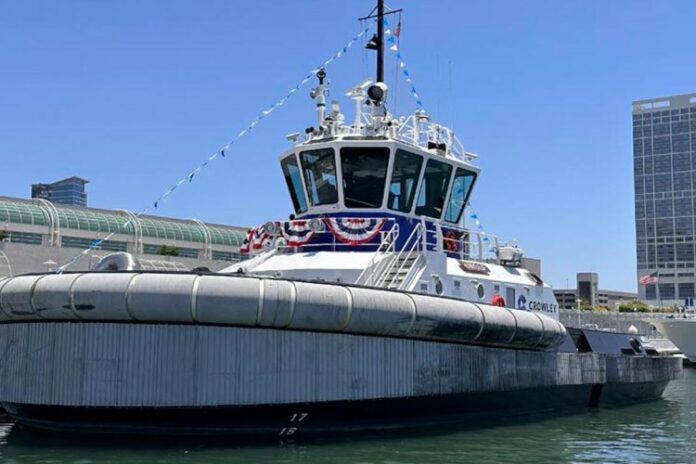
The groundbreaking eWolf tug, designed by Crowley and built by Master Boat Builders for operation in the Port of San Diego in California, is powered by an integrated electrical propulsion system from ABB that incorporates a Corvus battery system. 

Corvus Energy involvement, powering zero-emission operations

The eWolf is equipped with a Corvus Orca ESS, the most installed marine energy storage system worldwide, used onboard over 700 maritime vessels around the world. The eWolf is outfitted with a 6.2 MWh Corvus Orca system and is capable of operating daily at full capacity using battery power alone. Battery-powered operations require zero fuel and produce zero emissions, resulting in significant environmental and fuel-saving benefits.

Crowley anticipates the tug will “generate 178 tons less of nitrogen oxide (NOx), 2.5 tons less of diesel particulate matter and 3,100 metric tons less of carbon dioxide (CO2) over the first 10 years of its operations – the equivalent of removing 350,000 gallons of gas from use, according to EPA calculations.”

Corvus Energy SVP Americas, Tor-Gunnar Hovig, says:

“Corvus Energy is pleased to have contributed to this landmark project for Crowley and the Port of San Diego by supplying the battery system, part of the ABB integrated electric propulsion system onboard the eWolf.”

To optimize battery performance over the lifetime of the system, cloud-based technology is used to continuously monitor ESS function and provide critical performance insights through the Corvus Energy Vessel Information Portal. 

The online monitoring tool uses big data, machine learning and algorithms to support predictive maintenance, optimized system use and proactive troubleshooting. A secure digital solution, the Corvus Orca ESS used with the Corvus monitoring system was awarded Cyber Security Type Approval from leading maritime classification society, DNV.

Worldwide, tugboats were among the first maritime vessels to adopt battery technology due to their near shore operations and ability to recharge regularly.

In the United States, the Crowley eWolf and Port of San Diego are leading the way. In turn, several other ports are currently pursuing federal funding to invest in fully electric tugs under the “U.S. Green Ports Program.” With anticipated U.S. federal funding support and increasing focus on carbon reduction, the eWolf is anticipated to be the first of several electric tugboats operating in the United States within upcoming years.

At the forefront of marine battery technology development, over half of the hybrid electric and fully electric maritime vessels worldwide use a Corvus system. As more battery-powered vessels are planned in the United States, Hovig indicated that

“Corvus Energy is well positioned to support, by offering proven technology, operational expertise, and US-based manufacturing capacity. Corvus has a production facility in the United States, located in Bellingham, Washington, that produces the Corvus Orca ESS and is fully Buy America and BABA compliant, a key qualifier for U.S. federally funded initiatives.”

BHP, PPC and Norsepower deploy wind-assisted propulsion technology on maritime vessel

0

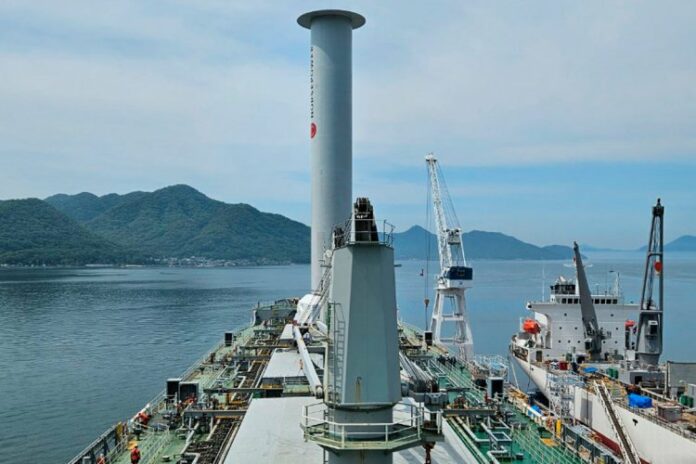
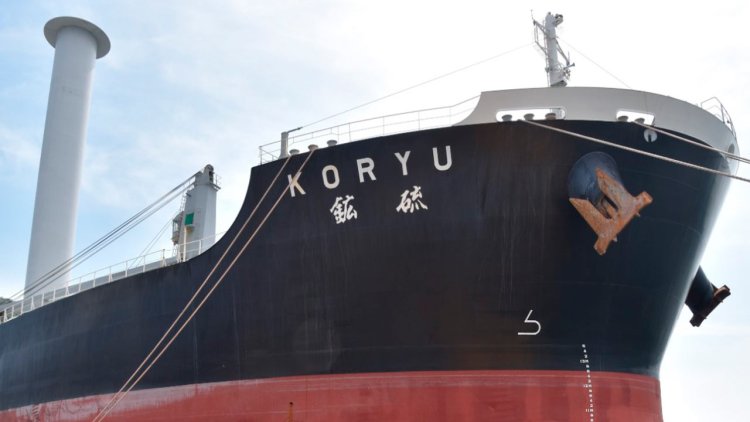
BHP, together with Pan Pacific Copper (PPC) and Norsepower, completed the retrofit installation of a Norsepower Rotor Sail™ (NPRS™) onboard the M/V Koryu, a combination carrier operated by Nippon Marine (member of the SENKO group and owned by SENKO (60%) and JX Advanced Metals (40%)) that will carry copper concentrates from Chile to Japan and sulphuric acid from Japan to Chile. The NPRS™ installation was carried out in June 2024, and the M/V Koryu is en route on her maiden voyage post NPRS™ installation from Japan to Chile.

The rotor sail, standing 35 metres tall with a diameter of 5 metres, has a tilting foundation that allows it to be lowered down to facilitate cargo loading and discharge operations at ports.

The Norsepower Rotor Sail™ is a modernised version of the Flettner rotor. The technology is based on the Magnus effect, that harnesses wind to improve ship fuel efficiency. When wind conditions are favorable, NPRS™ allows the vessel’s main engines to be throttled back, saving fuel and reducing greenhouse gas (GHG) emissions by reducing the power needed to maintain speed and voyage time.

The parties had previously announced the partnership to collaborate on the initiative with the aim of reducing GHG emissions from maritime transportation between Chile and Japan. 

Based on advanced simulations and Norsepower’s real-world performance data, the use of NPRS™ is estimated to provide a 5-6 percent fuel savings, on average, on the route between Chile and Japan and is expected to make M/V Koryu the best performing vessel in its category when measured for the vessel’s GHG emissions intensity.

BHP, PPC and Norsepower will be monitoring the NPRS™ performance onboard the M/V Koryu to determine the actual fuel savings and associated GHG emissions reduction.

BHP’s Vice President Maritime & Supply Chain Excellence, Rashpal Bhatti, said:

“There are multiple onboard innovations that have potential to achieve GHG emissions reduction in the maritime supply chain and we are pleased to have collaborated with PPC and Norsepower, our like-minded ecosystem partners, to retrofit the Norsepower Rotor Sail™ on M/V Koryu to reduce shipping GHG emissions intensity on our Chile-Japan trade route. This route has one of the most favorable wind conditions, which was an important factor that the parties considered. It is one of the longest routes globally with such conditions, allowing the vessel to benefit from the longest ton/mile wind propulsion.”

Tomonori Uemura, Executive Officer of PPC, said:

“PPC is delighted that we were able to complete the installation of the Norsepower Rotor Sail™ onboard M/V Koryu successfully. This project, which aims to reduce GHG emissions intensity in maritime transportation between Japan and Chile, is a symbol of our cooperation with our partners to progress towards a decarbonised society, and we look forward to seeing the rotor sail’s performance.”

Heikki Pöntynen, CEO of Norsepower, said:

“We are proud to collaborate with BHP and PPC on this project, which marks a significant step towards more sustainable shipping for the M/V Koryu. This partnership exemplifies how industry leaders can come together to drive positive environmental change. The successful retrofit of Norsepower Rotor Sail™ will reduce greenhouse gas emissions intensity by enhancing fuel efficiency in the ship. We look forward to tracking the measurable impact of this installation in real-world operations.”