-9.6 C
New York
Home Blog Page 157

Saipem awarded two offshore projects in Saudi Arabia

0

Specifically, Saipem’s scope of work under the first project involves the Engineering, Procurement, Construction and Installation (EPCI) of a crude trunkline of approximately 50 km with a diameter of 42” for the Abu Safa Field, while the activities related to the second project involve the production maintenance programs of the Berri and Manifa Fields.

Also, Saipem has announced the signing of a framework agreement between BP Exploration (Caspian Sea) Limited and a consortium composed of Saipem Contracting Netherlands B.V., BOS Shelf LLC and BOS Shelf International FZCO.

The framework agreement entails the execution of offshore activities in the Azerbaijani waters of the Caspian Sea operating the SCV Khankendi, a state-of-the-art vessel owned by the Shah Deniz consortium and specifically designed for subsea construction.

The overall value of the services that can be provided upon customer request, pursuant to the framework agreement, is estimated at approximately 300 million USD, of which 250 million USD relate to Saipem’s share.

Saipem will operate the vessel and will provide the crew to perform the marine activities for the Shah Deniz and Azeri-Chirag-Gunashli fields, located off the coast of Azerbaijan. The consortium’s responsibilities include engineering, procurement, construction and installation of subsea infrastructures and life-of-field services.

The agreement, having an initial duration of three years with the possibility of extension for two more, reinforces Saipem’s long-standing relationship with bp and consolidates its presence in an area where the company has been operating since the late 1990s. It also confirms Saipem’s role as an advanced and reliable partner for all kinds of offshore operations and services.

Notably, in 2016, Saipem was already assigned the operational management of the SCV Khankendi for the execution of offshore activities for the Shah Deniz field under a framework agreement signed with bp.

First of series Damen CSD600 at work in Indonesia

0

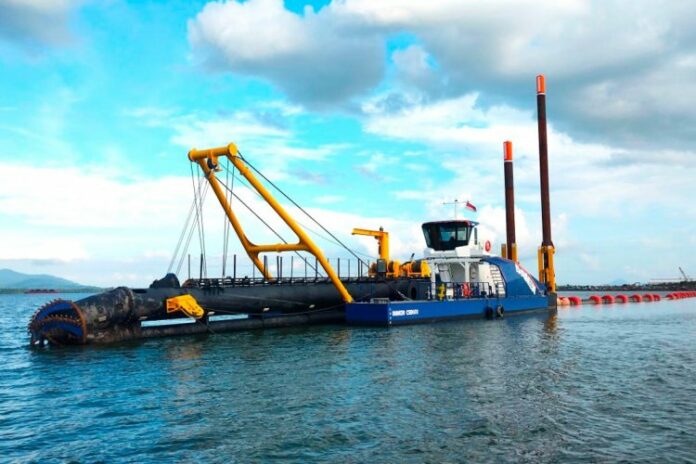
In Indonesia, the first of series Damen CSD600 has started operation. The distinctive Cutter Suction Dredger is the first of Damen’s comprehensive new dredger range to be delivered. It was transported from Rotterdam, the Netherlands to Indonesia as deck cargo on a heavy lift carrier. 

The dredging operation is located at the Port of Batulicin on the island of Kalimantan. The main activities of the port relate to its important coal terminal. The busy access channel is used by numerous coal barge transports. Due to continuous sedimentation of this channel, the CSD600 is required to maintain the navigational depth. The newly designed high efficiency dredge pump removes this sediment and pumps it to a spoil field some 500 metres away.

The powerful Cutter Suction Dredger was commissioned on site by Damen Field Service Engineers. During commissioning the crew familiarised themselves with the dredger’s features such as the 250 kilowatt cutter unit, the large swing width and the maximum dredging depth of -16m. A major topic was the state-of-the-art control system.

With no desk in the control cabin, the crew had to familiarise themselves with the controls integrated in the dredge master’s chair. Two screens connect with the easily recognisable buttons and levers in the chair. One touch screen is located within reach at the righthand arm rest. A larger screen is at the dredge master’s feet.

Ms Inge Hoogenboezem, Damen Sales Manager, explains

“Clear visuals inform the dredge master at one glance on the production of the dredge pump, the status of the drive etc. Trouble shooting is easy due to the evident schematic screen lay-out of the various systems on board. In the future the system can be expanded easily by adding modules such as cutter automation, dredge pump automation and so on. For now, the dredge master can, for instance, determine the swing width by entering a few digits and the dredger moves sideways automatically. This is a much praised improvement on the large dredge job at hand.”

The operator of the dredger, PT. Dua Samudera Perkasa, is a key player in the port industry on the island of Kalimantan. Mr Haji Samsudin Andi Arsyad, owner of PT. DSP, says,

“We are proud to deploy the first of series CSD600 here in Batulicin; it fits our operation perfectly. Our company wants to be at the forefront of technological developments. Our dredger Jhoni 58 is just that and performs well, with the Damen Field Service team ensuring a smooth start-up of our operations.” 

Eni drafts ABL for Congo Floating LNG transportation and installation verification

0

Energy and marine consultancy ABL has been appointed by Eni to provide marine warranty survey services (MWS) for the offshore transportation and installation (T&I) campaign for Phase 2 of the Marine XII Congo LNG development project.

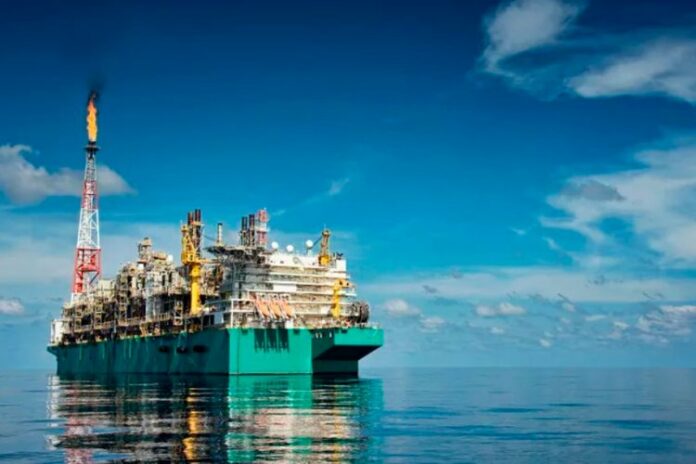
Phase 2 of the project envisages the fabrication, transportation and installation of a new floating LNG vessel (FLNG), a converted floating separation, storage and booster unit (FSU), wellhead platforms and associated tie-in pipelines and ancillaries offshore the Republic of Congo.

ABL’s scope of work includes the technical review of key project and procedural documentation, drawings and calculations, the suitability surveys of the proposed marine fleet for all T&I operations, and on-site attendance to review and approve attendances for warranted operations.

ABL’s involvement on the project is expected to run from 2024 until the completion of the offshore works. The company has also supported Phase 1 since February 2023.

Guillaume Henin, Operational Manager for ABL’s activities in Congo, said:

“Winning this latest project in the Congo is a testament to the successful work we have been doing in the country over many years, establishing ABL France as the leading technical consultant for the successful and safe delivery of energy infrastructure projects in Africa’s Francophone countries.”

CNH2 to operate hydrogen refuelling station in Spanish port

0

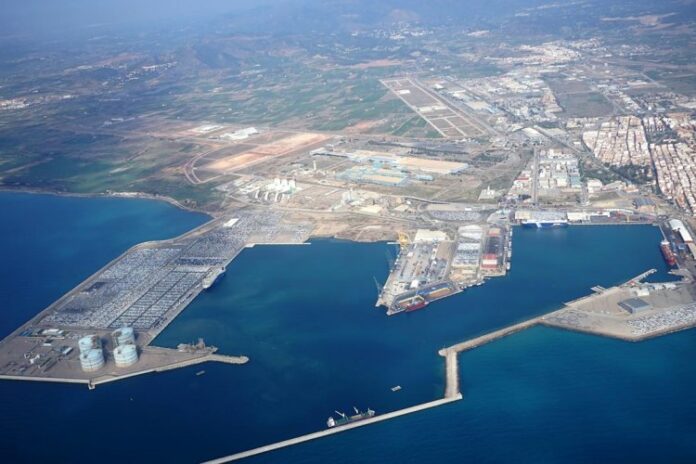
The hydrogen station is currently being used by two vehicles operated by Mediterranean Shipping Company Terminal Valencia (MSC) and Valencia Terminal Europa (VTE): the ReachStacker developed by Hyster, the 4×4 hydrogen tractor developed by Atena.

Located on the Xità quay in the north dock, the station is expected to fill these vehicles with hydrogen before the first shift in the morning.

The agreement with CNH2 represents part of the European H2PORTS project financed by the European Commission, specifically the Fuel Cells Hydrogen Joint Undertaking, which promotes hydrogen R&D.

A statement released by the PAV said

“It is necessary to locate the hydrogen facility within the port service area as it allows the refuelling action to take place in the shortest possible time and avoids delays at the port access control points.

“The success of this type of technology lies not only in environmental efficiency and zero emissions, but also in the correct adaptation to a world as competitive and strict in terms of operational efficiency as the port activity in port terminals where it is being tested.”

Hydrogen refuelling tests began last year, carried out by technicians from Valenciaport, the National Hydrogen Centre and Carburos Metálicos. Taking place throughout January, they evaluated the hydrogen generator in the Xità quay.

Monjasa targets West Africa’s offshore industry with specialised vessels

0

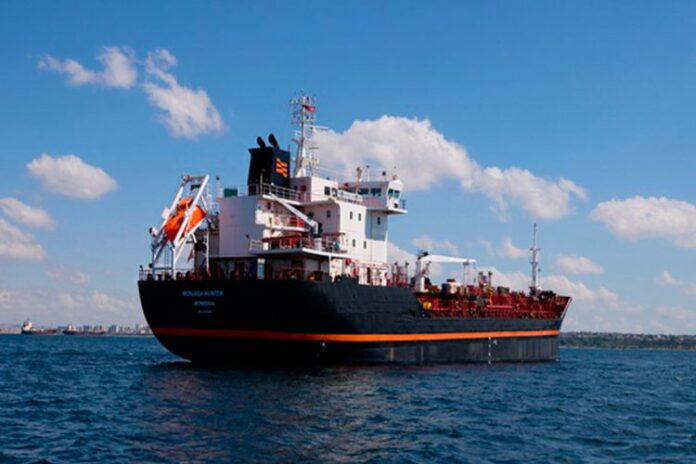
The latter joins as a unique fleet addition targeting length-restricted offshore oil and gas vessels in West Africa, including FPSOs.

These fleet additions come at a time where West Africa sees a higher marine fuels demand compared to 2023 levels due to the prolonged rerouting of cargo ships around Cape of Good Hope to avoid Houthi attacks in the Red Sea.

Following this double tanker acquisition, Monjasa now controls more owned than chartered tonnage for the fist time since its establishment in 2002. The Monjasa fleet now stands at 16 owned and 15 time charter vessels.

While Monjasa Rover replaces Monjasa Thunder (19,991 DWT), which was recently repositioned from West Africa to the Panama Canal, Monjasa Hunter brings new and specialised capabilities to the Monjasa fleet.

Monjasa now controls more owned than chartered tonnage for the fist time since our establishment in 2002.

Most importantly, her length, being less than 110m, allows her to go alongside oil rigs and platforms and thereby adding flexibility for the offshore oil and gas operators from the Gulf of Guinea down to Namibia.

Group Shipping Director, Torben Maigaard Nielsen:

“Unlike our other tankers in West Africa, which are too big in size for this purpose, Monjasa Hunter offers a distinct advantage for offshore operators in the region, Thanks to her length overall of 101m and her relatively large carrying capacity compared to her size, Monjasa Hunter can support niche length-restricted fuel operations, including FPSOs.”

Monjasa Hunter

  • Year built: 2009
  • Flag: Liberia
  • DWT: 7,858
  • LOA: 101m  
  • Beam: 19m
  • IMO: 9478286

Monjasa Rover

  • Year built: 2004
  • Flag: Liberia
  • DWT: 17.200 
  • LOA: 144m
  • Beam: 22m
  • IMO: 9271884

BMT and Ocius to revolutionise maritime data collection with autonomous “Satellites of the Sea”

0

BMT has announced a groundbreaking collaboration with Ocius to revolutionise maritime data collection and management. 

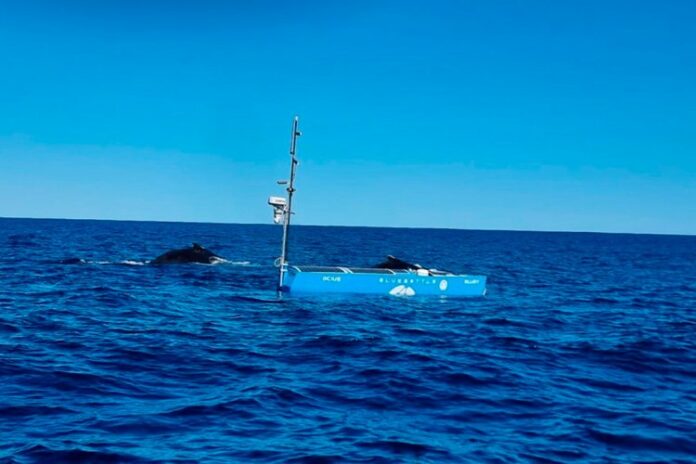
The teaming agreement between BMT and Ocius aims to develop and demonstrate the effectiveness of the “Bluebottle” uncrewed surface vessel (USV) for providing DaaS (data as a service). The Companies will focus on codeveloping a commercial data collection and management model, initially targeting environmental monitoring for offshore wind development projects. The Bluebottle USV is ideally suited for these projects, reducing the need for crewed data collection, and benefiting from the sustained and persistent operations that a Bluebottle can deliver. Further, the Bluebottle’s novel propulsion system, which leverages renewable energy sources, not only offers a clean solution, but also supports long-term operations without physical intervention.

The collaboration leverages BMT’s extensive maritime and consulting expertise in environmental data collection and analysis, supporting the development of a sensor package which will maximise the range of data collected and working with regulators to ensure data efficiency. Both parties will collaborate to establish a robust and scalable network of remote sensors for maritime applications.

Graeme Nayler, Regional Business Director, BMT in the Asia Pacific, highlighted the significance of this agreement,

“Our collaboration with Ocius marks a new era in maritime data collection and management. By integrating Ocius’ advanced, renewable powered, autonomous vessels with BMT’s extensive expertise with environmental data, we aim to create a cost-effective, pay-per-use model that offers unparalleled capabilities to a range of customers worldwide, both government and commercial.”

The initial focus will be on supporting offshore wind customers in Australia with necessary environmental analysis and planning, utilising the advanced capabilities of the Bluebottle vessels. These vessels will provide critical data for environmental monitoring, maritime security, asset monitoring, and marine life observation. By collecting comprehensive metocean data, imagery, and environmental metrics, the Bluebottle platform will support a range of applications, including:

  • Environmental Monitoring: Collecting data on sea life, water quality, and other environmental parameters.
  • Metocean Data Collection: Providing accurate meteorological and oceanographic data to support maritime operations.
  • Security and Surveillance: Providing real-time data on maritime activities.

This concept establishes a robust and scalable network of remote sensors that can operate continuously and provide real-time data to support various maritime activities. This innovative approach enhances the efficiency and effectiveness of maritime operations and offers significant cost savings compared to traditional monitoring methods.

Robert Dane, CEO of Ocius, shared his enthusiasm,

“This teaming agreement with BMT represents a leap forward in our mission to provide autonomous solutions for maritime challenges. Bluebottles, equipped with advanced sensors provided and operated by BMT, will help scientists, sailors and CEOs safeguard our oceans, monitor assets, and make informed decisions.”

As BMT and Ocius embark on this innovative venture, we seek partnerships with leading technology, communications, and information management companies, alongside strategic investors to support rapid scaling, to enhance this initiative. Additionally, we invite forward-leaning customers to help shape requirements and support growth. These collaborations will drive technological advancements, develop sophisticated communication networks, and accelerate the deployment of our global fleet of autonomous vessels, transforming maritime data collection worldwide.

The deployment of these autonomous vessels will begin immediately, with the aim of providing limited operational capability within the next two years within the Asia Pacific region. This strategic agreement underscores BMT’s commitment to pioneering innovative solutions that enhance global maritime security and environmental stewardship.

Offshore wind turbines offer path for clean hydrogen production

0

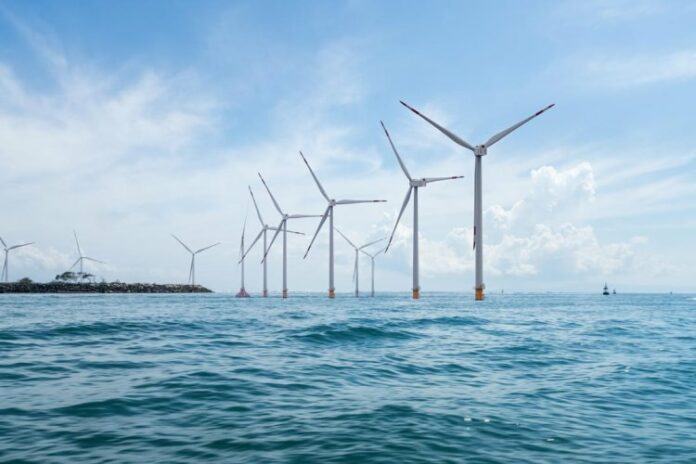
The economics work best in regions where the water is not as deep and the wind is strong, according to their findings in the recently published article, “Potential for large-scale deployment of offshore wind-to-hydrogen systems in the United States,” which appears in the Journal of Physics: Conference Series.

The ability to produce hydrogen at a cost that approaches the U.S. Department of Energy (DOE) goal for low-cost clean hydrogen depends significantly on both the technology used and the location of production. Projected policy incentives could also play a role. Hydrogen can be produced using an electrolyzer that splits water—made of two atoms of hydrogen and one of oxygen—into its component parts. An electrolyzer powered by a renewable energy source produces what is known as clean hydrogen. Through its Hydrogen Shot initiative, DOE is leading efforts to reduce the cost of clean hydrogen to $1 a kilogram by 2031. Achieving $2 per kilogram could make it cost-competitive in some applications compared with conventional carbon-intensive methods of producing hydrogen.

“Both offshore wind and clean hydrogen production are technologies that are rapidly evolving and when combined have the potential to generate and store a lot of renewable energy and decarbonize sectors that are hard to electrify,” said Kaitlin Brunik, a hybrid systems research engineer at NREL and lead author of the new paper. “Continued investment and research on system- and plant-level design and optimization could spur further technology progress and cost reductions for these systems.”

Her coauthors from NREL are Jared Thomas, Caitlyn Clark, Patrick Duffy, Matthew Kotarbinski, Jamie Kee, Elenya Grant, Genevieve Starke, Nick Riccobono, Masha Koleva, Evan Reznicek, and Jennifer King.

The paper describes the use of case study simulations to analyze the techno-economics of producing hydrogen from offshore wind energy in 2025, 2030, and 2035. NREL researchers evaluated two scenarios relying on electrolysis powered by offshore wind and identified four representative coastal areas for wind-to-hydrogen hybrid facilities. Depending upon how deep the water is at the locations studied, the researchers considered whether the turbines would be floating or fixed to the ocean floor. The research suggests that by 2030, a combination of factors including policy incentives and fixed-bottom offshore wind with onshore electrolysis may allow the production of hydrogen for less than $2 a kilogram. The analysis does not provide policy guidance but represents policy using preliminary assumptions made prior to the release of proposed regulations for the tax credit.

In the first scenario, an offshore wind plant generated electricity that was transmitted via high-voltage cables to an onshore site. There, an electrolyzer produced hydrogen from fresh water. This represented a conventional approach of pairing offshore wind with onshore electrolysis.

In the second scenario, the hydrogen was split from desalinated seawater at the offshore wind plant site, requiring more infrastructure in the ocean to accommodate the additional equipment. The hydrogen was then transported via pipelines to shore for storage. The researchers noted the technical feasibility of this scenario is less established.

“Moving an electrolyzer to an offshore platform for bulk energy production presents a novel challenge,” Brunik said. “To fully harness the electricity generated by offshore wind farms for hydrogen production, substantial electrolyzers are needed, along with ancillary equipment for water treatment, hydrogen storage, and transportation.” Offshore renewable hydrogen production remains uncharted territory, requiring innovative configurations to integrate all the necessary equipment with a wind farm for gigawatt-scale operations.

In addition to the technological design of these systems, the researchers considered where an offshore wind-to-hydrogen system would be best situated. They looked at shallower sites in the Gulf of Mexico and New York Bight where turbines could be fixed to the ocean floor, had abundant wind resources, and were in proximity to at least one of DOE’s Regional Clean Hydrogen Hubs that will connect hydrogen producers and consumers. They also examined sites with much deeper waters off the coast of northern California and in the Gulf of Maine where the turbines would have to be installed on floating platforms. The hydrogen would be stored on shore in underground pipes, rock caverns, or salt caverns.

Yanmar and Amogy explore Ammonia-to-Hydrogen integration for decarbonised marine power

0

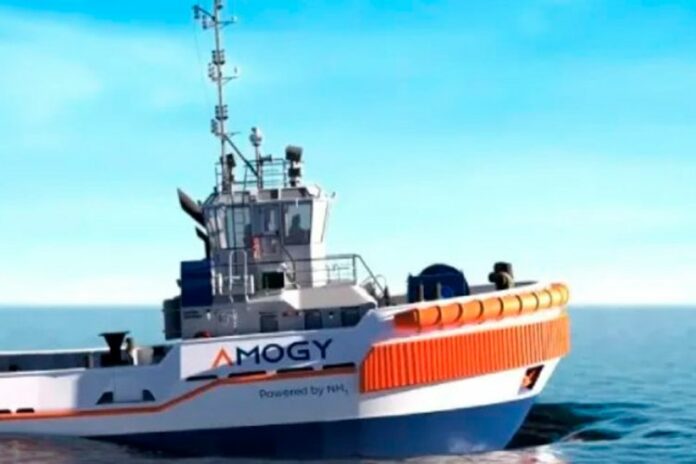
Yanmar Holdings and Amogy have entered into a Memorandum of Understanding (MOU) to integrate Amogy’s advanced ammonia-cracking technology into Yanmar’s hydrogen internal combustion engine (H2ICE). 

The partnership will focus on combining Amogy’s technology with Yanmar’s H2ICE to provide low-cost hydrogen fuel. Amogy’s ammonia-cracking technology uses state-of-the-art catalyst materials to break down ammonia into hydrogen and nitrogen at lower reaction temperatures with high durability, minimizing heating and maintenance requirements. This integration promises a comprehensive clean energy solution for decarbonizing marine power generation.

Furthermore, building on this joint research, both companies will explore the potential for collaboration in developing maritime hydrogen fuel cell systems.

“We are excited to work with Amogy on this innovative project,” said Ken Kawabe, Group Leader at Yanmar Research and Development Center. “Our commitment to a sustainable future aligns perfectly with this collaboration, and we believe that integrating Amogy’s ammonia-cracking technology with our H2ICE has immense potential for decarbonizing marine power.”

“As pioneers in sustainable energy solutions, we are thrilled to collaborate with Yanmar in exploring the integration of our cutting-edge ammonia-cracking technology with their hydrogen internal combustion engines,” said Seonghoon Woo, CEO at Amogy. “Collaboration is critical to advancing clean energy solutions and, together, we can overcome challenges and expedite sustainable progress in the marine sector.”

The collaboration between Amogy and Yanmar began in 2023 when Yanmar Ventures, Yanmar’s corporate venture capital arm, invested in Amogy. Since then, both companies have been exploring opportunities to integrate their technologies.

Germany awards €200m green hydrogen subsidy to UAE-linked firm

0

The German government’s €5 billion H2Global instrument was created in 2021 to facilitate the ramp-up of hydrogen markets worldwide. It purchases hydrogen, which it will then sell at a discount to industrial customers, such as the chemical, fertiliser, and copper sectors.

The announcement resulted from an auction focused on green ammonia, a derivative of hydrogen. The deal will be struck with nitrogen fertiliser exporter Fertiglobe, acquired by the Abu Dhabi National Oil Company (ADNOC) in 2023.

“The import of green hydrogen products is making a decisive contribution to the hydrogen market ramp-up in Germany,” said Economy Minister Robert Habeck in a statement.

The ministry added that 273 MW of renewables will be installed in Egypt to produce the green ammonia, which amounts to 10% of one year’s production in Germany. Shipments are to arrive between 2027 and 2033.

“German industry needs large quantities of green hydrogen and its derivatives for decarbonisation, which requires both imports from outside and within Europe as well as national production,” Habeck said.

The maths come out to €4.5 per kg of hydrogen, according to the Economy Ministry, cheaper than the projected costs of hydrogen produced within the EU.

The International Council on Clean Transportation recently estimated that by 2030, hydrogen can be made within Europe for $5.6 (€5.15) per kg.

Ammonia, best known for its key role in fertiliser production, was first shipped to Germany from the UAE in 2022. Then, it was a test shipment organised by Hamburg-based Aurubis, who hope to burn ammonia to decarbonise its copper furnaces.

Unlike hydrogen, which is considered more challenging to transport by ship, ammonia is expected to be shipped worldwide at scale, from regions with strong renewable energy resources to regions with large energy needs. 

A 2024 research paper published in Nature Energy finds fertiliser ingredient urea, which is based on ammonia, could be 25% cheaper if imported from regions with large renewable resources.

Source: Euractiv

DNV rules create in-operation class framework, enable hydrogen vessels

0

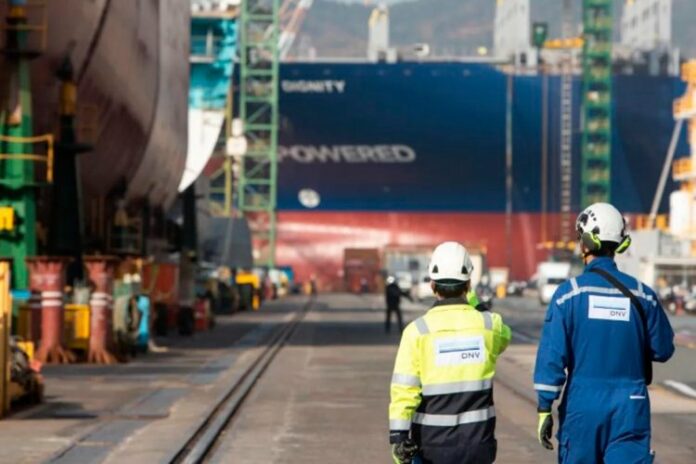
In addition to rules supporting the development and deployment of decarbonization technologies, the new in-operation class notations seek to bring clarity to the responsibilities of class customers for notations that have a mix of design and operational requirements.

“One of the most striking aspects of the maritime industry today, is the huge diversity of challenges and opportunities where our customers are looking for classification support,” said Geir Dugstad, DNV Maritime’s Global Technical Director. “It’s not just new fuels, but ways for owners and managers to demonstrate their own efficiencies, new vessel types to unlock new markets, through to advanced technologies like on-board carbon capture.”

With the in-operation notations, DNV has developed the first classification framework with dedicated Fleet in service notations that enables owners and operators to showcase how they are differentiating themselves in the market by deploying advanced procedures and reporting processes for greater safety and efficiency. The new notation clearly shows the split of responsibilities between the yards for the new building phase and the owners and operators in the operational phase of the vessel.

Designed to unlock innovation in the shipping industry while enhancing safety, the new rules also build on DNV’s leading expertise in maritime decarbonization with the introduction of two new class notations, Gas fuelled hydrogen and OCCS (for carbon capture and storage on board vessels).

While hydrogen is a potential zero-carbon fuel for shipping it is presently not covered by international regulations. The Gas fuelled Hydrogen notation, sets out the requirements for the ship’s fuel system, fuel bunkering connection, and consumers, providing owners a practical path to develop hydrogen fuelled newbuildings.

Onboard carbon capture and storage (OCCS) systems are currently being trialled and offer a way for vessels to reduce emissions and contribute to greater sustainability and regulatory compliance. The OCCS notation offers a framework and requirements for these new systems, including exhaust pre-treatment, absorption, after-treatment systems, liquefaction, CO2 storage, and transfer ashore.

Some of the additional highlights of the rules include:

  • The new BOG (boil-off gas) notation provides requirements for the design and installation of pressure and temperature control systems for liquefied gas tanks,
  • New notation for the transport of live fish creates a new vessel type for this growing industry,
  • New class notation for stability pontoons provides guidance and requirements for pontoons used in heavy lift operations to increase stability,
    Introduction of a new qualifier “NC” for the notation Hatchcoverless, enables vessels not intending to transport combustible materials to reduce investments in fire detection and fire-fighting equipment,
  • New service notation for Floating spaceports sets requirements for units and installations intended for launch and/or recovery of spacecraft,
  • New qualifier “EV” for the class notation Additional fire safety, specifically developed to target vessels transporting electrical vehicles,
  • Revised rules and standards for diving systems aligned with IMO 2023 diving code.

The publication of the new rules took place on July 1st and the new rules will enter into force on January 1st, 2025.