-9.1 C
New York
Home Blog Page 156

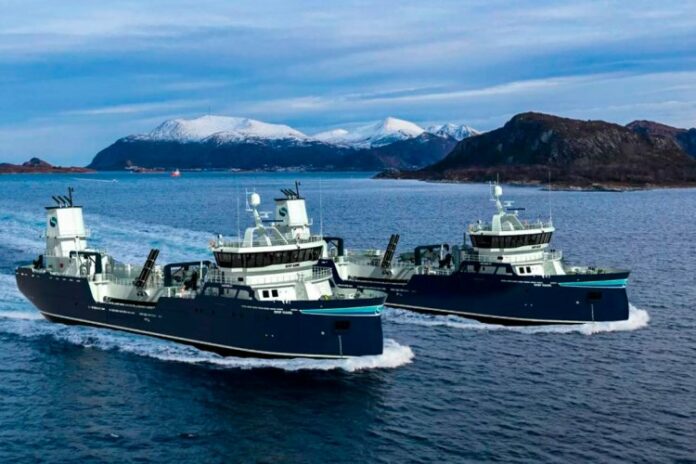
Sølvtrans orders battery-hybrid vessels from Aas Mekaniske

0

The world’s biggest wellboat operator, Sølvtrans, has ordered two battery-hybrid vessels from shipbuilder Aas Mekaniske in Vestnes, Norway. 

Both vessels are of Aas 3002 design and will each have a well capacity of 3,000m³. They will be specially equipped for the transfer of smolts.

Sølvtrans said the wellboats will have best equipment available on the market to ensure good fish welfare, avoid fish escapes and optimize biosecurity. Each vessel will be equipped to give smolts the best start at sea through the company’s self-developed, patented system for smolt loading to ensure efficient sorting and accurate counting.

“The vessel is also equipped with a large battery pack in combination with a specially designed engine pack to minimise environmental impact and emissions,” said Joakim Kjølleberg, head of energy at Sølvtrans.

“Based on our experience from the existing smolt fleet, we have been able to tailor the set-up to the operating profile the boats will have.”

The new vessels will take the number of specialised smolt transport wellboats in Sølvtrans’ fleet to six and the total crew complement for those vessels to approximately 90 sailors.

“We look forward to being able to expand our dedicated crew on board the well-known and modern Aas 3002 design and to using the fish handling equipment on board. Here, both seafarers and smolts will have a good time,” said Vik.

Norway-headquartered Sølvtrans said it has had a very good and close collaboration with Aas Mekaniske in Vestnes since the beginning of the 90s. The new smolt carriers will be the 40th and 41st vessels that Sølvtrans has built at Aas since its inception.

“Building locally is very important for local value creation in the region. Sølvtrans has always focused on close and good ties with local shipyards to ensure delivery of the best vessels. These two vessels constitute a milestone for the company as these will be vessels number 49 and 50 in what is the world’s most modern fleet,” said chief executive Robin Halsebakk.

EIB lends €90 million for sustainable expansion of the Port of Livorno

0

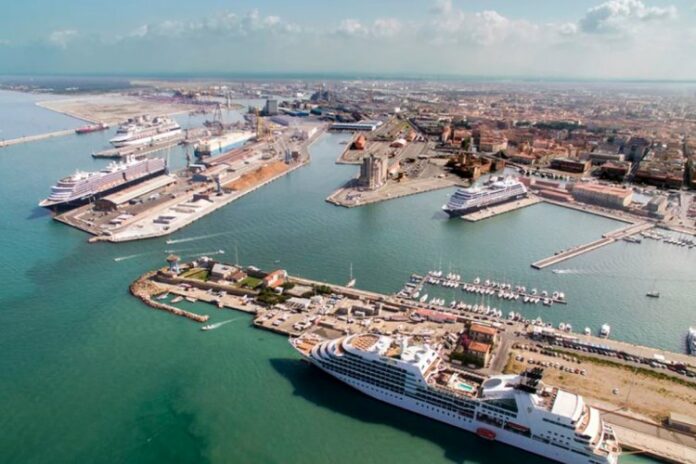
A €90 million financing agreement was signed in Livorno by European Investment Bank (EIB) Vice-President Gelsomina Vigliotti and President of Autorità di Sistema Portuale del Mar Tirreno Settentrionale Luciano Guerrieri, in the presence of the President of the Tuscany Region Eugenio Giani, the Mayor of Livorno Luca Salvetti, and Commander of port of Livorno Gaetano Angora. 

The goal is to support the modernisation and expansion of the Port of Livorno, helping to increase its productivity, safety, and environmental sustainability.

The funds made available by the EIB to expand the Port of Livorno, which forms part of the Scandinavian-Mediterranean corridor of the TEN-T network, will go towards the construction of the Darsena Europa container terminal, a strategic project to accommodate ships already operating in international traffic, to ensure the competitiveness of the Port of Livorno and safety of navigation there. In concrete terms, the main operations involve the construction of new breakwaters and related dredging activities, the definition of a containment area for sediment from dredging, and the construction of a new access channel to the port’s terminals.

These infrastructure operations will not only help improve the efficiency and safety of the port, but will also increase its resilience to potential future climate events, such as sea level rise. They will also help improve the stability of the coastline thanks to the construction of a sand pipeline, which will be used for future nourishment of the sandy coast located immediately north of the mouth of the Arno river’s floodway.

With this investment, total EIB support for Italian ports now exceeds €1.5 billion, reinforcing the EU bank’s role as the main financer of Italian port authorities, a vital sector for connectivity and national and European economic development.

“This agreement further strengthens the EIB’s commitment to supporting the expansion of Italian ports, which are key to fostering the country’s connectivity and competitiveness. The financing announced today will help make the Port of Livorno a leading-edge hub of reference in the Mediterranean, improving its infrastructure, increasing its operational capacity, and promoting technological innovation and environmental sustainability in the port sector,” said EIB Vice-President Gelsomina Vigliotti.

“We are very proud of today’s signature. This agreement not only demonstrates how involved the leading EU financial institution is in the development of the Tuscan port but also indicates the strategic value of the Darsena Europa project, which the government and the Tuscany Region have acknowledged by giving full political and financial support to its implementation,” said President of Autorità di Sistema Portuale del Mar Tirreno Settentrionale Luciano Guerrieri.

ABS AIP for new gangway design from Pengrui and COSCO

0

ABS has issued approval in principle (AIP) to Nantong Pengrui Offshore Technology Co., Ltd and COSCO Shipping Shipyard (Nantong) Co., Ltd. for its novel design of an offshore access gangway.

The motion compensated, active and passive, gangway design offers a solution for the growing demand for efficient access for service operation vessels (SOVs) supporting wind turbines and offshore platforms.

ABS completed design reviews based on class and statutory requirements.

“Transferring personnel to and from offshore facilities is one of the most hazardous operations in the business. This new design from Pengrui and COSCO promises an efficient gangway system to support the growing demand from alternative energy producers and traditional offshore platforms alike,” said Gareth Burton, ABS Senior Vice President, Global Engineering.

Later this year, the gangway will be permanently fixed on the BOE DEMPSEY, a platform support vessel currently converting into a construction service operation vessel that will support wind farms in the South China Sea.

Damen signs four vessel contract with Toyota Tsusho for Angolan port development project

0

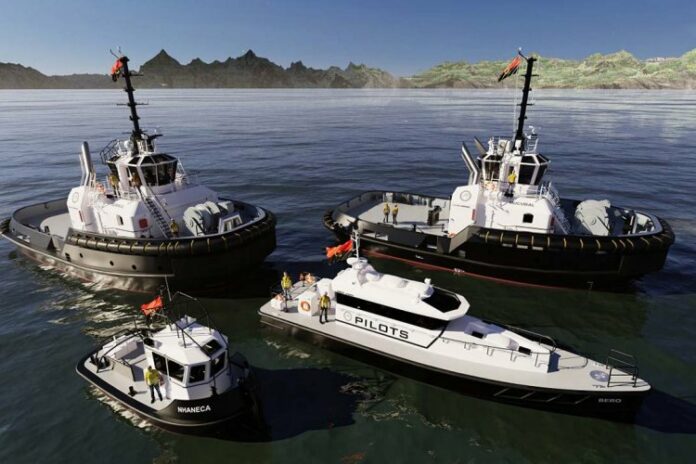
On 5 April, Damen Shipyards Group signed a contract with Toyota Tsusho for the delivery of four vessels. The order consists of two ASD Tugs 2813, a Pushy Cat 1004 and a Stan Pilot 1905.

Damen will deliver the vessels in Q1 2025. The relative speed of the delivery is facilitated by Damen’s practice of building its proven, standard vessels in series for stock. The shipbuilder had already commenced construction of the vessels at Damen Shipyards Gorinchem, the Netherlands (Pushy Cat 1004), Damen Shipyards Antalya, Turkey (Stan Pilot 1905) and Damen Song Cam Shipyard, Vietnam (ASD Tugs 2813), prior to receiving the order. 

Toyota Tsusho is a first time client for Damen. The large Japanese trading house has a global presence with a diverse portfolio. In addition to supporting the business activities of Toyota Motors, the company is also active in industrial, commercial and consumer sectors. Toyota Tsusho frequently collaborates with the Japanese Government on infrastructure projects around the world. 

“The port development project enables an increase in vessel traffic in Namibe,” said Hiroumi Ohara, General Manager Africa Power & Infrastructure Department of Toyota Tsusho. “To facilitate this, the port requires a number of new, high quality workboats. We approached Damen, being aware of the company’s reputation for the fast delivery of proven, high performing vessels. We are looking forward to cooperating with Damen during the construction of these new vessels, which will play an important role in giving a boost to the Angolan economy in the coming years.”

Thomas Röwekamp, Regional Sales Director Asia Pacific at Damen, said,

“Working with a new client for the first time is always a proud moment. Given the nature of this contract, which holds significant potential for Angola, we are particularly pleased to have been selected by Toyota Tsusho. We are looking forward to cooperating together on the delivery of these four vessels, and to building a close relationship for the long-term.”

The port development project is Toyota Tsusho’s first such project in the African nation and commenced in early 2019. The company has, however, a long history in Angola, having exported its cars to the country since 1966. 

The project includes, amongst other measures, the expansion of the Namibe container terminal and construction of a new terminal. This will allow larger vessels to call at the port, thereby diversifying the materials it is able to handle. As a result, the port development project is anticipated to provide wider employment opportunities in Angola, while also providing the country with full independence in import activities, reducing the costs of freight transportation and boosting the national economy. 

Maersk Introduces SH3 ocean service between China and Bangladesh

0

A.P. Moller-Maersk (Maersk) launched a new ocean shipping service between China and Bangladesh to meet the growing trade demand, especially in the retail industry. The new service, called SH3, commenced service on 7 July 2024 and adds more capacity to the ocean network between the two countries.

The SH3 rotation starts from Shanghai Port in China, with calls at Xiamen, Kaohsiung, Nansha and Tanjung Pelepas on the way to Chittagong, Bangladesh. On the return journey to Shanghai Port, SH3 will call Tanjung Palapas, where long-haul routes to Europe are connected.

The introduction of the SH3 service will complement the existing SH1, SH2 and IA7 services between China and Bangladesh. Adjustments have been made to SH1 and SH2 to optimise the offering further. The combination of these services expands coverage in China, providing multiple options for loading cargo throughout the week from Shanghai, Nansha, and Ningbo and more direct shipping choices to Bangladesh. The varied options in transit time and frequency for customers will allow them to have not only additional capacity but also flexibility and efficiency in their supply chains.

Wen Bing Lim, Regional Head of Intra-Asia Market at Maersk, said:

“In this time-sensitive industry, retailers demand timely delivery across the entire supply chain to meet their customers’ fast-changing expectations. The new network accelerates the supply chain and benefits Chinese textile raw materials exporters and garment manufacturers in Bangladesh.”

Nikhil D’Lima, Head of Maersk in Bangladesh, said: 

“The demand for textiles and garments from Bangladesh in the Western markets is constantly growing. Our customers have been demanding more capacity for raw materials coming into Bangladesh and readymade garments getting exported. The redesigned network allows textile manufacturers in Bangladesh to gain flexibility and speed for imports of raw material as well as exports of finished goods, supporting Bangladesh’s fast-developing Readymade Garment (RMG) industry.”

Textile exports account for a significant portion of China’s exports to Bangladesh. The Bangladesh RMG industry comprises over four thousand factories serving over 100 international clothing brands. Bangladesh exports to more than 150 countries a wide variety of knitwear and woven garments, such as shirts, trousers, T-shirts, denim, jackets, and sweaters.

Damen contracted to build second Damen CSOV for TSSM

0

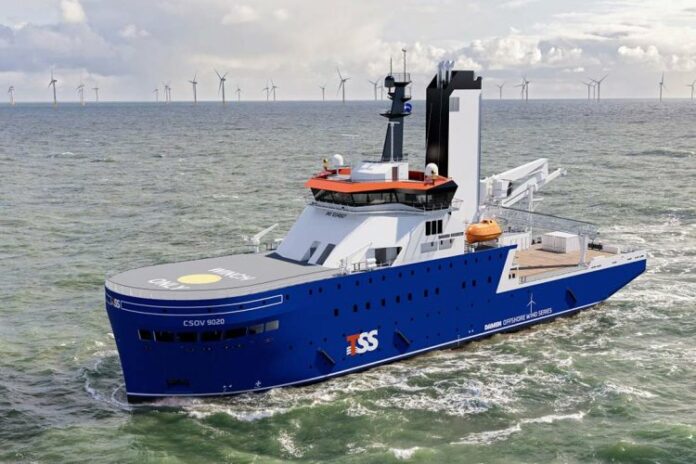
Ta San Shang Marine Co. Ltd. (TSSM), the joint venture between Mitsui O.S.K. Lines, Ltd. of Japan, and Ta Tong Marine Co., Ltd. of Taiwan, has ordered a second Damen CSOV (Commissioning Service Operation Vessel) 9020. With a delivery date planned for end 2026, TSSM will deploy the new vessel in Taiwanese offshore wind farms. 

When the new vessel is delivered, TSSM will have a fleet of three Service Operation Vessels. The first, the TSS Pioneer, was delivered in 2022. The second, the TSS Cruiser, is a Damen CSOV which was ordered in November 2023 and is scheduled for delivery at the end of 2025.

“We are pleased to have placed an order for TSSM’s third CSOV,” said MOL Executive Officer Masayuki Sugiyama. “We are confident that the SOV will not only make TSSM the dominant SOV player in Taiwan, but will also serve as a stepping stone for the development of MOL’s SOV business in Asia, including Japan.”

Just as with the sister vessel TSS Cruiser, Damen will build this second CSOV in Vietnam. The 90-metre-long vessel will provide high quality accommodation for up to 120 people on board working on the wind farms during their construction and operational phases. These personnel will reach their offshore workplace safely and effectively via a motion compensated gangway. The new vessel will be equipped with a diesel-battery hybrid power generation system and will be fully ‘methanol-ready’ like the TSS Cruiser.

TSSM Chairman Hrong-Nain Lin added,

“We are excited to further expand our fleet with the purchase of another Damen CSOV 9020. Through the expansion of our offshore fleet, we can offer an efficient tool in helping to accelerate wind farm construction. We eagerly anticipate to contribute more in the field of clean energy, to play our part in achieving the goal of Net Zero carbon emissions, ultimately to make the planet inhabitable for future generations.”

Talking after the contract signing, which took place at the end of June, Damen Shipyards Group CEO Arnout Damen said,

“We are grateful that TSSM has selected Damen once more as the builder of the newest CSOV in their fleet. Last year, we welcomed TSSM into the Damen-family with the CSOV 9020 TSS Cruiser and since then we have further strengthened and intensified our relationship. We look forward to a continued, fruitful, and long relationship with TSSM.”

The Asian offshore wind industry is experiencing rapid growth; numerous offshore wind farms in Japan, Taiwan and South Korea are scheduled to start operations towards the end of this decade. In response to this market development, Damen is fine-tuning the extensive knowledge that it has gained from serving the European offshore wind industry to meet the needs of Asian customers.

CIMC secures FPSO newbuild Hull EPC contracts P-84 and P-85 from Seatrium

0

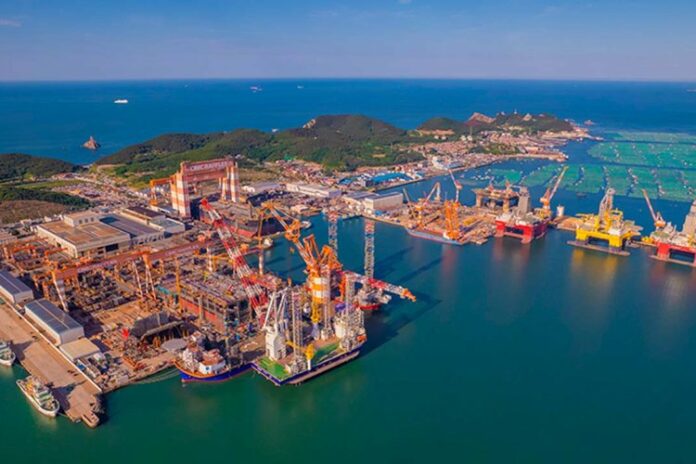
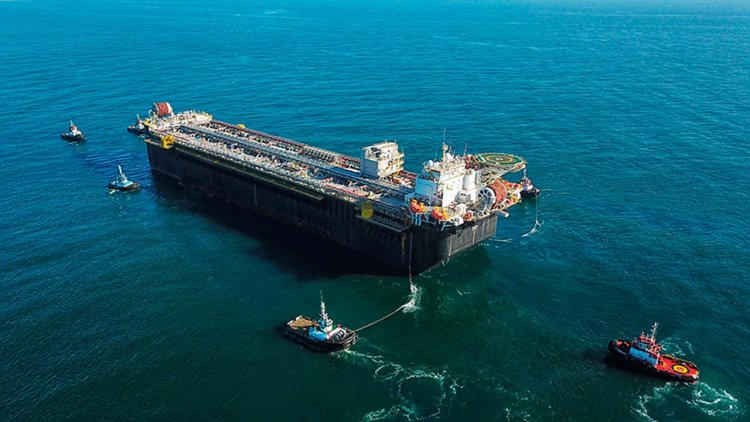
CIMC Raffles, a subsidiary of CIMC Group, is awarded by Seatrium, a global provider of engineering solutions to the offshore, marine, and energy industries based in Singapore, for EPC contracts to supply the hulls for  two FPSO (Floating Production Storage and Offloading) for Petrobras, Brazil’s national oil company. 

With this latest agreement, CIMC Raffles has previously delivered two and is currently constructing a total of four FPSO Hulls for Petrobras, further solidifying CIMC’s leading position in the global offshore engineering sector.

FPSOs, also referred to as “Floating Productions, Storage and Offloading” are extensively used by Petrobras, the largest FPSO user globally. The P-84 and P-85 platforms are part of Petrobras’ new generation of FPSO platforms, characterized by a high production capacity that prioritise sustainable practices with innovative technologies. The P-84 and P-85 FPSOs will each have a production capacity of 225,000 barrels of oil per day (bopd) and gas processing capacity of 10 million cubic meters per day (Sm3 /d). Both FPSOs will incorporate advanced technologies such as zero routine flaring and venting, variable speed drives and measures to control emissions and capture CO2, including an all-electric concept, which focuses on efficient power generation and increased energy efficiency to achieve a 30% reduction in greenhouse gas emissions intensity.

CIMC Raffles is responsible for the EPC (Engineering, Procurement, and Construction) of the hulls, living quarters, and M15B module for these two vessels. Upon completion, the vessels will be deployed in the Atapu and Sepia oil fields in the eastern Santos Basin of Brazil, located approximately 200 kilometers offshore from Rio de Janeiro.
In recent years, the global deepwater development has been steadily recovering, leading to a strong demand for FPSOs. CIMC Raffles has seized industry opportunities by making FPSOs a strategic focus. Through initiatives such as establishing a specialized oil & gas R&D center, expanding yard facilities and infrastructure, leveraging the resources of deep-water terminals, and innovating modular construction methods, CIMC Raffles aims to enhance FPSO production capacity and provide ample resource support to drive business development.

As of now, CIMC Raffles has delivered the hull of the P-71 FPSO, as well as various topside modules for multiple FPSO projects, and has undertaken the overall construction contracts for the P-80 and P-83 FPSO hulls.

With a lean project management system and stringent safety and quality standards, CIMC Raffles has been honored as Petrobras’ best offshore supplier for 2019 and is one of the first domestic enterprises to pass Petrobras’ FPSO overall contracting qualification review. Additionally, CIMC Raffles has made significant breakthroughs in oil production platform projects. 

Industry analysts are optimistic about the prospects of the shipbuilding and marine industry. Huatai Securities released a research report stating that large-scale offshore equipment manufacturing is an industry with high technical difficulty, high capital demand, and long cycles. It has requirements for multi-industry support, capital intensity, and labor intensity, and the value of existing production capacity in the upward cycle is becoming increasingly prominent. Under the trend of oil and gas development moving towards ultra deep water, it is optimistic on the certainty and sustainability of offshore oil and gas investment driving the overall recovery of the marine industry.

According to reports from “Zhitong Finance,” a research report by Changjiang Securities suggests that leading shipyards are expected to fully benefit from the new shipbuilding cycle. The team believes that the shipbuilding sector’s long-cycle prosperity is on the rise, gradually witnessing profit release; shipping is accelerating decarbonization, leading to sustained shipbuilding demand; and China’s shipbuilding industry is leading globally, moving towards high-value-added vessels, which will bring more development opportunities to the entire industry.

WindTwin, Iberdrola project pioneering a new era of optimization of offshore wind energy

0

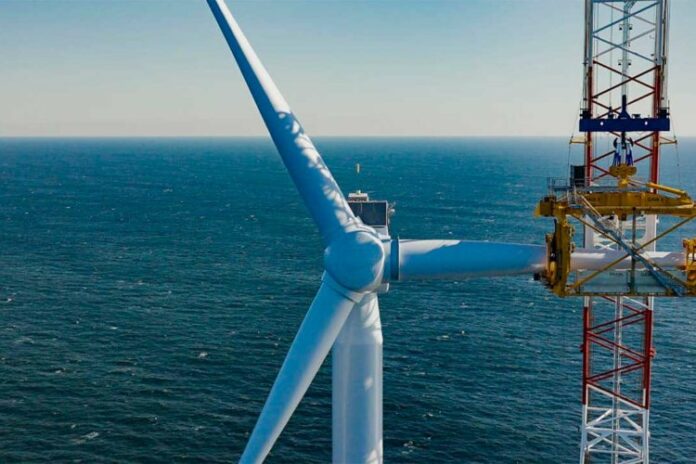
The offshore wind energy sector is poised for a significant transformation with the launch of WinDTwin, a groundbreaking European-funded project aimed at revolutionising wind power production forecasting and management. With a grant of €6 million, this three-year initiative unites a diverse consortium of 13 entities from 7 countries, unified by the goal of creating a highly accurate and dynamic digital twin (DT) for offshore wind farms.

As the global demand for renewable energy intensifies, expanding both onshore and offshore wind farms become crucial. Existing wind farms highlight the importance of strategic micrositing of turbines and their optimal interconnection. However, as we move towards integrating wind farms into larger clusters and virtual power plants, the potential for long-distance negative interactions emerges, which can detract from the efficiency gains that clusters aim to achieve.

To address these challenges, WinDTwin will develop a sophisticated digital twin platform. This platform aims to transform the industry by offering precise predictions of power production and energy demand. It will serve as a central hub for decision-makers, offering access to a suite of high-quality resources, models, scenarios, and visualisations, thus enabling more informed and strategic choices in the management of offshore wind energy.

The success of WinDTwin depends on the collaboration of its diverse and experienced consortium. With expertise in wind energy production, industrial codes, numerical methods, and algorithms, this collective effort is crucial for achieving the ambitious innovation-led research objectives set. The synergy among the participating entities ensures that the project harnesses a broad range of skills and perspectives, vital for driving forward its groundbreaking goals.

WinDTwin’s development will focus on several strategic objectives designed to enhance the capabilities and efficiency of offshore wind farms:

  • Accurate Forecasting: Improve wind and weather predictions with enhanced models.
  • Optimal Layout: Design precise spatial models to reduce inefficiencies.
  • Efficient Turbine Control: Maximise turbine output with advanced control systems.
  • Sustainable Energy: Explore hybrid and eco-friendly energy solutions.
  • Precise Yield Prediction: Use simulations for accurate energy forecasts.
  • Seamless Grid Integration: Ensure efficient connection with power grids.
  • Demand and Price Insights: Model electricity demand and price trends.
  • Proactive Maintenance: Monitor and maintain turbines with predictive analytics.
  • Customised User Experience: Tailor digital twin features to user needs.
  • Robust Data Systems: Implement efficient data management practices.
  • Open-Source Innovation: Foster industry collaboration with open-source tools.
  • Strategic Growth: Plan for the digital twin’s future development and commercial use.

“WinDTwin represents a significant leap forward in our ability to harness and manage offshore wind energy. By integrating advanced digital twin technology, we are setting a new benchmark for precision and efficiency in wind power forecasting and decision-making. Our collaborative approach, drawing on the expertise of our distinguished partners, positions us to drive impactful innovations that will benefit the entire renewable energy sector,” said Oriol Lehmkuhl, Group Leader of Barcelona Supercomputing Center, Coordinator of WinDTwin.

AAL Shipping unveils second Super B-Class methanol vessel

0

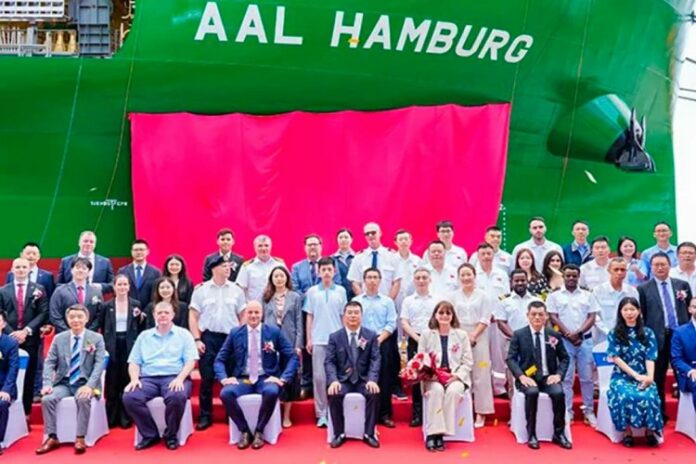
Premium project heavy lift carrier AAL Shipping (AAL) is about to take delivery of the second of eight vessels in its Super B-Class newbuilding series, ‘AAL Hamburg’, following the formal naming ceremony at the CSSC Huangpu-Wenchong Shipyard in Guangzhou, China. She will now set sail on her busy maiden voyage to Europe.

On Friday July 12th, 2024, AAL Hamburg was officially named after the historic German port city and strategic hub for AAL’s European operations. The ceremony took place in the presence of representatives from AAL Shipping, Columbia Shipmanagement, Schoeller Holdings and CSSC Huangpu-Wenchong Shipbuilding.

The 32,000 dwt, dual fuel multipurpose heavy lift vessel is equipped with three heavy lift port side cranes (350 tonnes capacity each and 700 tonnes maximum lift) as well as the latest innovation from the AAL Engineering Team, the ‘AAL ECO-DECK’. To be fitted on all Super B-Class vessels, the retractable weather-deck system increases the clear stowage space on deck to over 5,200 sq m. AAL Hamburg will soon join her sistership AAL Limassol – the first vessel in the series – trading on key routes from Asia to Europe, America and Australia. AAL Hamburg’s maiden voyage will see the vessel transport a mix of project cargo, including ducts and panels; boiler parts; transformers and accessories; as well as four barges weighing approximately 5,600 tonnes in total, for which the ECO-DECK will be deployed.

“The delivery of AAL Hamburg, as well as the success of AAL Limassol’s record-setting maiden voyage, is the realisation of a long-term strategy initiated several years ago to have a highly capable fleet suited to serve the variety of cargo types and industries that our customers represent,” said AAL Managing Director Christophe Grammare.

“With a long history of almost half a century in the shipping industry, our parent company Schoeller Holdings has been committed to investing in a modern fleet of vessels for AAL, and most importantly ensuring that our new vessels take us into the future in an environmentally friendly manner and in full compliance with all current and upcoming international regulations.”

The third-generation newbuildings from AAL will see a total of eight Super B-Class vessels join the fleet, following the order of two additional vessels in May. The latest two vessels on the order – AAL Newcastle and AAL Mumbai – will have an increased maximum heavy lift capability of 800 tonnes. The remaining vessels in the series will be delivered between now and 2026.

“We have seen from AAL Limassol’s voyage – with a hugely varied cargo load of nearly 90,000 freight tons including barges, modules, cranes and wind turbines – that the Super B-Class fleet is already realising a new level of capability for AAL. AAL Hamburg’s maiden voyage is further reinforcing that sentiment and we are looking forward to welcoming the remaining vessels in the series over the next two years.”

ABP submits plans for £2m investment in Ipswich Beacon Marina improvements

0

Associated British Ports (ABP), the owners and operators of the Port of Ipswich and the Ipswich Beacon Marina, has announced its plans to invest further in the Port of Ipswich, with a focus on enhancing the marina and port facilities.

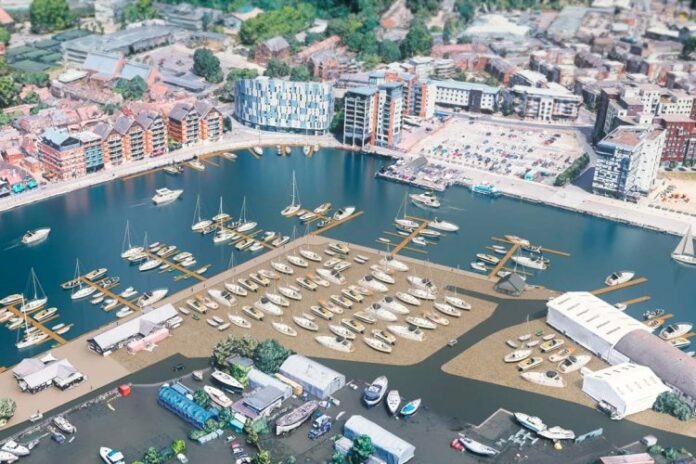
ABP has submitted plans to Ipswich Borough Council for £2million-worth of upgrades in the Wet Dock – known as Ipswich Beacon Marina (the Marina) – which represent a positive vision for Ipswich as a vibrant waterfront town. These proposed upgrades to the Marina, pending planning approval, are set to transform the marina’s facilities.

When ABP announced its original proposals in June 2023, it originally involved removing all berths at the old Neptune Marina and installing new pontoons with access from the island site instead, some boat owners were opposed to moving.

Following meetings with boat owners and other stakeholders, ABP has developed compromise proposals, which are the proposals that have been submitted for planning approval.

These new proposals include investment in two purpose-built welfare buildings exclusively for boat owners, one close to Neptune Quay and the other on the island. Each will include toilets and showers, laundry facilities and other services for mariners. There will also be a large space for a new Window Museum for Ipswich Maritime Trust to tell the story of the port and town.

ABP’s Regional Ports Manager, Paul Ager, said:

“We want the Beacon Marina to be welcoming for boat owners and visiting crews. We are making a major investment in Ipswich as a destination and want it to thrive. We have gone some way towards answering boat owners’ concerns. Waterfront visitors on the quayside will still be able to see a variety of craft moored here.”

Some of these changes would not have required planning approval. However, the port operator has applied to Ipswich Borough Council for the elements that need permission. That planning application can be found on the Ipswich Borough Council planning portal https://www.ipswich.gov.uk/content/view-and-comment-planning-applications. Ref: 24/00476/FUL (Wet Dock Neptune Quay Ipswich Suffolk).

Mr. Ager added:

“These proposals are a compromise, based on the comments we have received from owners and talking to other businesses who have invested in the successful Waterfront area. The Neptune pontoons needed significant investment. We will now place a section of the new pontoons in the corner, in front of Coprolite Street and the main university building. But they will not extend as far as the Salthouse Harbour Hotel and Isaacs. There will be a pontoon there available for visiting craft, including historic vessels, to tie up.”

ABP remains dedicated to seeing the Waterfront thrive and reinforcing Ipswich’s identity as a vibrant Waterfront town. ABP has proudly sponsored local events, such as the Twilight 5K and the Dragon Boat Race, which attract numerous visitors and showcase the marina’s potential.

“We are playing our part in helping make Ipswich an attractive place for owners to visit as tourists, or to keep their boats or to live on board in the marina, close to the heart of town. Ipswich remains a major commercial port and the number one export port for agricultural products in the UK. ABP’s commitment to Ipswich extends beyond the marina. With the support of our customers, we make a major contribution to the local economy, and ABP has invested more than £50 million in commercial port facilities in Ipswich since 2012. This should highlight ABP’s dedication to fostering economic growth and prosperity in the region,” Mr. Ager said.

It is important to note that this proposal is still subject to approval from the ABP board and Ipswich Borough Council. ABP will ensure that all stakeholders are updated on the progress and any forthcoming decisions.

Subject to planning approval, the earliest possible commencement date for these upgrades is the beginning of 2025.