-9.1 C
New York
Home Blog Page 155

Austal Australia delivers 20th Guardian-class patrol boat

0

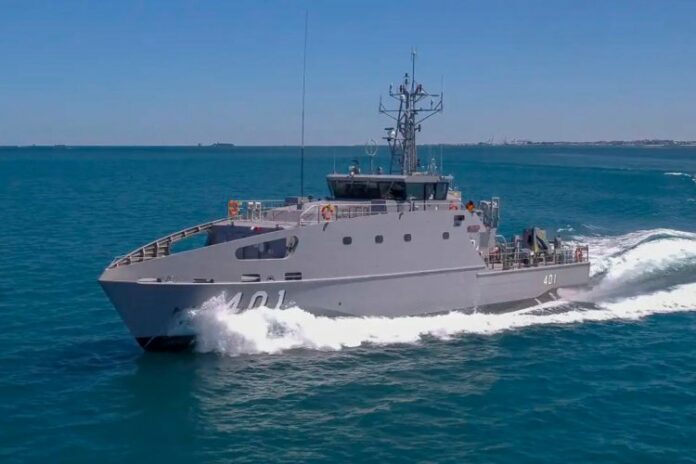
The vessel, Tobwaan Mainiku, for the Republic of Kiribati, was accepted by representatives of the Department of Defence at the Austal shipyard in Henderson, Western Australia on 12th July 2024.

Austal Limited Chief Executive Officer Paddy Gregg said the delivery of the 20th Guardian-class patrol boat highlighted the industry-leading productivity of the Pacific Patrol Boat Replacement Project, now comprising 24 vessels.

“The Austal Australia team, together with our valued supply chain and defence industry partners, including the Department of Defence and the Royal Australian Navy, have now delivered 20 Guardian-class patrol boats to the Australian Government since December 2018,” Mr Gregg said.

“Effectively, we’ve delivered one new Guardian-class Patrol Boat every four months (on average) over the past 5 years, highlighting Western Australia’s industry-leading naval shipbuilding capability and productivity. It’s even more impressive when you consider the Austal Australia team has also delivered two Cape-class Patrol Boats, six Evolved Cape-class Patrol Boats and three large high-speed ferries to commercial operators around the world, during the same period.

“We again extend our thanks to our supply chain and defence industry partners for their continued support and collaboration in delivering the Guardian-class Patrol Boats for the Australian Government and our Pacific Island neighbours,” Mr Gregg added.

The Pacific Patrol Boat Replacement Project was awarded to Austal Australia in May 2016, with subsequent, contract options awarded in April 2018, November 2022 and June 2024, taking the project to 24 vessels, valued at more than A$400 million, in total.

The Pacific Patrol Boat Replacement Project continues to support 200 direct jobs at Austal Australia and more than 200 indirect jobs nationally, through Australian businesses contracted by Austal. Through close collaboration with supply chain partners and the Department of Defence, Austal is achieving over 60% Australian Industry Content on the Guardian-class Patrol Boats and helping to build the National Naval Shipbuilding Enterprise and Australia’s sovereign capability.

The 39.5 metre steel monohull patrol boat – designed, constructed and sustained by Austal Australia – is based on a proven design platform that has included the 38 metre Bay-class, 56 metre Armidale-class and 58 metre Cape-class patrol boats that are in service with the Australian Border Force and Royal Australian Navy. Faster than the previous Pacific-class patrol boats, with improved seakeeping, better amenities, and an enhanced mission capability – including an integrated RHIB stern launch and recovery system – the Guardian-class Patrol Boat provides Kiribati with another effective naval asset to carry out border patrols, regional policing, search and rescue, and many other operations domestically and internationally.
Kraken Robotics completes high resolution route survey contract in Australia

0

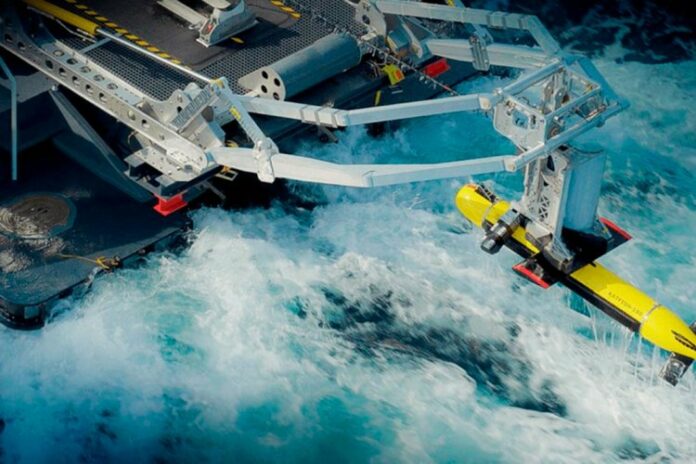
Kraken Robotics Inc. announces the successful completion of a contract to supply high-resolution seabed mapping sonar service to Precision Hydrographic Services (PHS), a customer supporting the Australian Department of Defence. 

The purpose of these surveys was to enable the collection of Maritime Geospatial Information (MGI) to support maritime domain awareness through the acquisition of high-resolution seabed foundation data and associated oceanographic data.

Managing Director of Precision Hydrographic Services Pty Ltd (PHS), Neil Hewitt stated:

“Our decision to partner with Kraken Robotics and the KATFISH synthetic aperture sonar (SAS) system for this important Defence project has proven to be highly successful. Over the course of five months our team travelled non-stop from port to port and surveyed several thousand line-miles of Australia’s most important ports and waterways for Defence. The Kraken KATFISH performed faultlessly with not one hour of downtime.”

Kraken President and CEO, Greg Reid commented:

“The Australian Defence Route Survey project has provided an excellent opportunity to test and demonstrate the performance of the Kraken KATFISH system.  This is the first time that a customer has undertaken a wide area, multi-port survey project of this scale with the KATFISH – anywhere in the world.  To do so in a safe and efficient manner with no downtime is a great credit to the vessel crew and the teamwork of the technical and survey personnel from PHS and Kraken Robotics.”

Under the scope of Kraken’s contract, a KATFISH™ high-speed survey/detection solution was used to acquire high-resolution route surveys of Australian ports. Under the contract, the survey campaign commenced in January 2024 and was fully complete in May 2024. This contract follows the results of a successful in-country demonstration of KATFISH™ for the RAN in Q1 of 2023 and the purchase of a KATFISH system by the RAN in Q2, 2023.

Fugro continues work with Community Offshore Wind on the US East Coast

0

Community Offshore Wind, a joint venture between RWE and National Grid Ventures, has selected Fugro to perform a geotechnical investigation of their lease area in the New York Bight. 

The geotechnical work follows a successful site characterisation programme completed by Fugro in  2023. Covering the entire 510 km² lease area and potential export cable corridors, the effort produced a preliminary earth model detailing geophysical and environmental conditions to support the wind farm’s concept design. The geotechnical investigation will refine the earth model through seabed sampling and ground condition testing to ensure safe and efficient engineering of the wind turbine foundations.

Work on the programme is underway and will continue through the summer using two vessels: one focused on seabed sampling and downhole in situ testing, and the other on advanced seabed cone penetration tests (CPTs). For the CPT scope, Fugro is employing their SEACALF® MkV Deep Drive® system, which delivers fast, high-quality data acquisition with improved safety and reduced emissions—up to 40% compared to traditional technology. Additionally, Fugro’s cloud-based Geo‑data engagement platform, VirGeo®, facilitates near real-time data analysis, enabling quick decision-making and optimised field operations.

“Our lease area in the New York Bight has the capacity to power more than one million US homes with renewable energy from offshore wind,” said Doug Perkins, President and Project Director, Community Offshore Wind. “This survey work is a vital step forward that will ensure our projects are developed sustainably and responsibly, while preparing us to bring new clean energy to communities across the region and help New York and New Jersey meet their nation-leading climate targets.”

Céline Gerson, Fugro’s President and Group Director in the Americas, added,

“Fugro is extremely proud that Community Offshore Wind has once again entrusted us to deliver the Geo-data and analysis needed to advance their offshore wind project in the New York Bight. Leveraging our extensive experience working on offshore renewable energy projects in the region and around the world, we’re fully committed to supporting the significant contributions this project will bring to the US energy transition.”

Saipem will ensure the subsea intervention services for the Libya – Italy pipeline

0

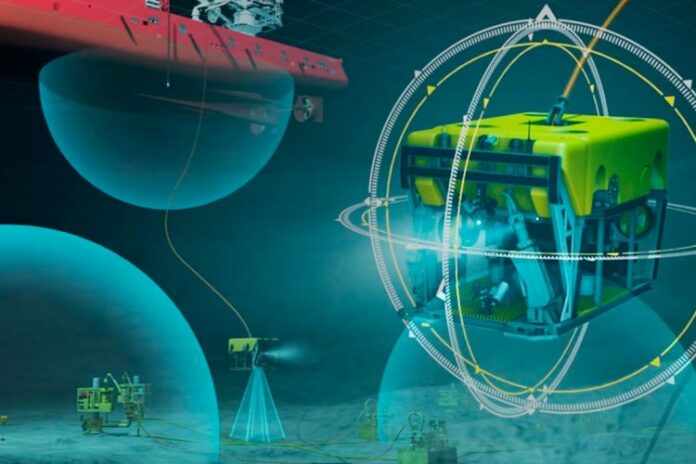
Saipem has been awarded a contract to ensure the supervision and the subsea intervention services of the GreenStream pipeline throughout the offshore and onshore sections at the Mellitah (Libya) and Gela (Sicily, Italy) terminals.

The new contract, awarded by GreenStream BV, one of the leading midstream players in the Mediterranean Sea, merges the activities that Saipem has been undertaking for GreenStream since 2008 as to asset integrity, inspection, maintenance and emergency pipeline services, and expands them to cover a wider range of scenarios and customer’s needs.

The activities will be managed by Sonsub, Saipem’s center of excellence for robotics, underwater technologies and services, and executed in coordination with the Saipem Engineering Hub located in Fano, Italy.

The scope of work streamlines the integrated management of survey data and critical spares, the provision of specialized engineering services related to asset integrity and readiness services for repair interventions in case of a wide range of damage scenarios. Specifically, repair interventions in case of damage will be performed via the SiRCoS technology, a remotely operated repair system industrialized by Sonsub and qualified to operate in water depths of up to 2,200 meters.

Damen cuts first steel on four full electric ferries for BC Ferries

0

Damen Shipyards Group has celebrated a milestone moment for maritime sustainability at its Romanian yard, Damen Shipyards Galati. On 16 July, the yard cut first steel on the first two of four, fully electric Island Class Ferries that it is building for Canada-based BC Ferries. The ferries will be the first fully electric vessels to operate in the company’s fleet.

Operating with battery packs with the capacity to supply the power train with 2,000 kilowatt-hour of electricity, the vessels will carry up to 47 vehicles and 390 passengers.

As a complete maritime solutions provider, Damen will also supply BC Ferries with the required charging towers. The ferries will recharge efficiently during (dis)embarkation of passengers, using renewable electricity.

The vessels are based on Damen’s double-ended RoRo 8113 E3 model. The design features Damen’s in-house quality label E3, standing for Environmentally Friendly, Efficient in Operation and Economically Viable.  

The commonality of the design offers BC Ferries a number of advantages. Amongst these is the increasing standardisation and interoperability of the fleet, which makes deployment and training of crew more efficient. The ferries will take the number of Damen vessels in the BC Ferries fleet to ten. 

Representing BC Ferries at the steel cutting ceremony were Project Program Manager David Tolman and Executive Director Shipbuilding Ed Hooper, who said,

“These vessels represent a significant advancement in our fleet renewal efforts, aligning with our strategic vision for operational excellence and sustainability. The start of construction brings us one step closer to realising the benefits these vessels will bring to our customers and the communities that rely on us to get them where they need to go.”

Mark Vermeulen, Damen’s Managing Director Offshore & Specialised Vessels, said,

“We are thankful for the trust that BC ferries has shown to Damen with this new contract for another four vessels. Damen has already built six vessels with hybrid propulsion for BC ferries. This project with full electric vessels is a step towards zero emissions ferries for the future – an achievement aligned with the sustainability goals of both BC Ferries and Damen.”

BC Ferries is committed to delivering a superior travel experience while upholding its responsibility to the environment. The organisation is supporting British Columbia’s CleanBC goals and aims to reduce emissions by 10,000 tons of CO2 equivalent by 2030. Damen has set itself the goal to become the most sustainable maritime solutions provider.  

Execution of MoU for joint study of ammonia fueled bulk carriers among 4 parties

0

Nihon Shipyard Co. together with ITOCHU Corporation, Maritime and Port Authority of Singapore, and Nippon Kaiji Kyokai have executed a Memorandum of Understanding (“MoU”) regarding a joint study for the design and safety specifications of ammonia-fueled ships which are under development by Nihon Shipyard and partners.

Ammonia is advancing as a viable marine fuel solution for the decarbonization of the maritime sector. The discussion for a specification of Ammonia-Fueled Ship with governmental body related to an operation of Ammonia-Fueled Ship is essential for a social implementation of Ammonia-Fueled Ship. As one of parties of the MoU, MPA, the government agency overseeing the world’s busiest bunkering hub, will review and provide their views to the designs of the Ammonia-Fueled Ships to ensure their safe operations.

This MoU is based on the premise that 200,000 deadweight ton class bulk carriers will be built by Nihon Shipyard with an ammonia dual-fueled engine by applying Alternative Design Approval process in accordance with the “Integrated project for development and social implementation of ammonia-fueled ships” which was adopted under the “Green Innovation Fund Project / Development Project for Next-Generation Ships / Development of Ammonia-Fueled Ship”, a project publicly offered by New Energy and Industrial Technology Development Organization (NEDO) in October 2021. The necessary clarifications of the specification for the Ammonia-Fueled Ship to carry out ammonia bunkering in Singapore will be conducted among parties of this MoU, for the commercialization of Ammonia-Fueled Ships.

ACP backs federal grant to boost offshore wind investment in coastal Maine and Massachusetts

0

The states’ joint application seeks nearly $200 million to bolster critical port infrastructure essential for unlocking the potential of offshore wind in northern New England and is the only CPRG proposal focused on offshore wind development in the nation. 

“This grant award would catalyze offshore wind energy projects across New England, positioning the region as an industry leader,” said Anne Reynolds, ACP Vice President for Offshore Wind. “The development of this offshore wind network would stimulate significant private investment—more than ten times the amount of the original grant awarded. We commend the collaborative efforts of Maine and Massachusetts in pursuing these federal funds to advance critical offshore wind industry infrastructure in the United States.” 

The joint effort from Maine and Massachusetts aims to set a standard for interstate collaboration on offshore wind infrastructure development. Key components include the development of a purpose-built facility in Searsport, Maine, designed for floating offshore wind alongside coordinated efforts for port infrastructure and vessels across state borders. 

The Maine-Massachusetts initiative underscores the urgent need for both fixed bottom and floating offshore wind technologies necessary for our clean energy future and to meet increasing electricity demands driven by widespread electrification and economic growth.

VIKAND partners with Mitsui Ocean Cruises

0

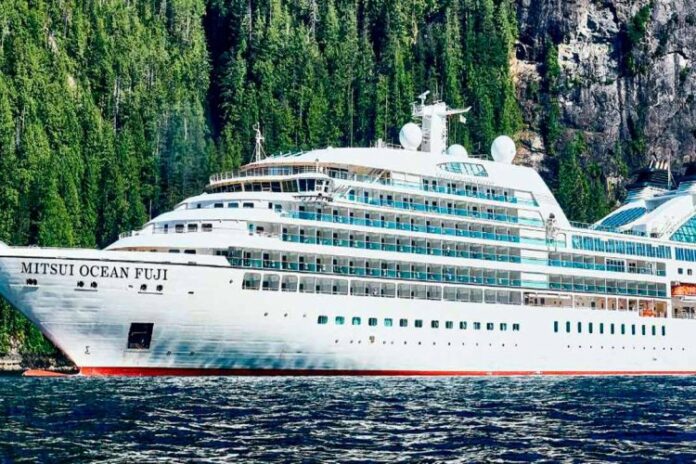
VIKAND will recruit, hire and manage a team of medical experts to cater for the needs of up to 458 guests and 330 crew on MITSUI OCEAN CRUISES’ newest luxury vessel called MITSUI OCEAN FUJI, formerly Seabourn Odyssey, which begins service in December this year.

VIKAND will run the onboard medical center, provide standard operating procedures and biomedical equipment support, as well as the supply of formulary to meet all flag state requirements. VIKAND will also provide Japanese speaking medical staff to ensure high quality, seamless service.

“We’re delighted to partner with VIKAND who matches our outstanding levels of customer service to a very discerning customer base.,” said Tsunemichi Mukai, President of MITSUI OCEAN CRUISES.

“We are delighted to secure our new partnership with MITSUI OCEAN CRUISES by showcasing our ability to meet the esteemed Japanese standards of excellence and consciousness. All our medical staff have had previous experience at sea so can empathize with crew and guests, affording them the best levels of care. We hope that our dedication to running an efficient medical service on MITSUI OCEAN FUJI will ensure the continued success of the MITSUI OCEAN CRUISES brand,” said Peter Hult, CEO, VIKAND.

Damen signs with Western Coast Port Services for six ASD Tugs

0

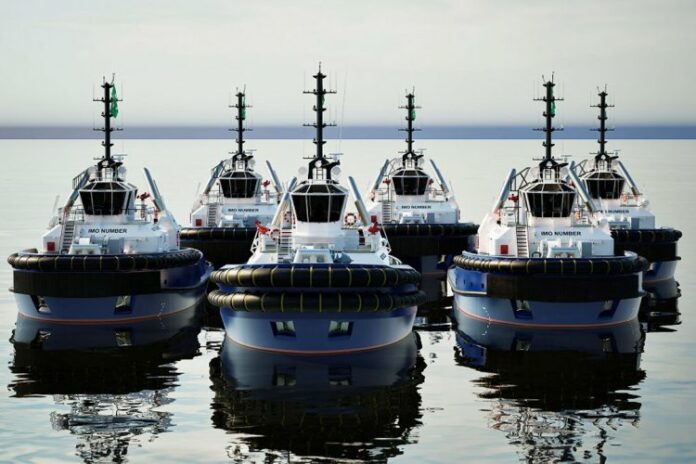
On June 25th, at a ceremony held at Albwardy Damen in the UAE, Damen Shipyards Group signed a landmark contract with Western Coast Port Services (WCPS) to construct six ASD Tugs. 

Damen’s ability to tailor its tugs to meet specific client needs provides another advantage. For this order, Damen is adapting the vessels to suit the Middle Eastern climate by incorporating additional air-conditioning and cooling equipment, ensuring optimal performance in the region’s challenging conditions.  

Karim Barakat, CEO of Western Coast Port Services said,

“With its fast delivery, customisation and lifecycle support, Damen demonstrates a very client-centric approach that ensures that the vessels it delivers are not just ships, but solutions tailored to our unique needs.” 

Damen Regional Sales Director Emre Turkoz said,

“The order for these six new tugs underscores WCPS’s unwavering dedication to enhancing their operational capabilities and maintaining high standards of service in port services. It is a testament to their commitment to continuous improvement and operational excellence in the maritime industry, ensuring the highest level of service for their clients and stakeholders. On behalf of Damen, I wish them every success with their new vessels and am looking forward to continuing to build our relationship in the future.” 

New project aims to make Atlantic Canada a green‑hydrogen research hub

0

Researchers from Dalhousie University are collaborating with the National Research Council of Canada (NRC) on a two-year, $500,000 project that could help make Atlantic Canada a hub for green hydrogen innovation.

Drs. Mita Dasog and Michael Freund of the Department of Chemistry are leading the project that aims to identify and test promising catalysts that could serve as alternatives to the costly precious metals used in the production of green hydrogen.

The bulk of the project’s funding comes from a $352,000 grant awarded through the NRC’s Materials for Clean Fuels Challenge program (MCF). The MCF program is for collaborative research and development and is funded through the NRC’s Collaborative Science, Technology and Innovation program. Remaining funding will come from Natural Sciences and Engineering Research Council of Canada and partners.

Shown right: Dr. Mita Dasog.

“Canada and the Province of Nova Scotia have identified green hydrogen to play a crucial role in meeting net zero goals,” says Dr. Dasog, an associate professor and Izaak Walton Killam Memorial Chair. “Hydrogen burns cleanly to produce thermal energy and/or electricity. It has the potential to decarbonize hard-to-abate sectors such as material and chemical manufacturing industries, heavy-duty transport, shipping, and aviation.”

Commercially, green hydrogen is produced using a process called water electrolysis, in which an electrolyzer — powered by a renewable energy source such as wind or solar — splits fresh water into hydrogen and oxygen. Unlike other methods of producing hydrogen, which can involve the use of natural gas, coal, or non-renewable energy, green hydrogen does not result in any greenhouse gas emissions. A hindrance to more widespread use is that commercial proton exchange membrane (PEM) electrolyzers require precious metals as catalyst materials on its anode (iridium) and cathode (platinum).

For green hydrogen production to ramp up, it’s necessary to replace precious metals with something cheaper and more readily available.

“If we replace the current metals with other high-performing elements that are also rare, like palladium or rhodium, it’s still the same problem,” says Dr. Dasog, the principal investigator on the project. “Our focus is to start replacing precious metals with more abundant elements, but they have to perform as well as current catalysts do.”
 
Dr. Dasog hopes that the project will result in advancement towards making next generation electrolyzers that are cheaper and water-quality resilient. “Given the local interest in green hydrogen, it is also important that we create a path to manufacture electrolyzers without significant backlogs,” she says. “Moving away from precious metals will help mitigate some of the challenges associated with their supply-chain.”    

“Everyone wants to produce green hydrogen cheaply,” she adds, and proving that it is possible to lower the cost of electrolyzers by lessening their dependence on rare materials should help increase the Atlantic region’s adoption of green hydrogen.

The NRC’s hydrogen research has primarily taken place in Ontario and British Columbia, so the project also provides a chance to train graduate students and other highly qualified personnel from the Atlantic provinces. This project will help strengthen the collaborations between Dalhousie and NRC labs and build a path toward future opportunities to advance green-hydrogen technologies.