-8.3 C
New York
Home Blog Page 153

Marlink upgrades Shelf Drilling’s offshore network with SD-WAN and Starlink Solutions

0

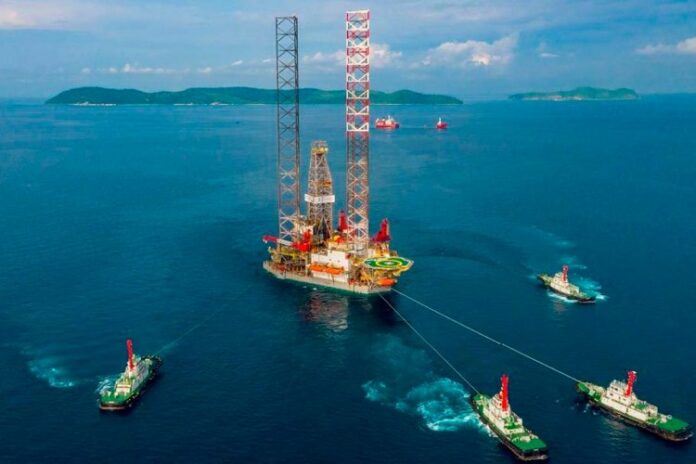
Marlink has announced two major upgrades for long-term customer Shelf Drilling. The first upgrade involves implementing a software-defined network management (SD-WAN) solution across Shelf Drilling’s fleet of 36 jack-up rigs. The second upgrade includes installing the high bandwidth, low latency Starlink solution on selected rigs currently operating in the Mediterranean and the North Sea.  

Over the past decade, Shelf Drilling has progressively enhanced its satellite network solutions. This latest initiative will see the addition of Low Earth Orbit (LEO) services, including Starlink, where regional regulations permit. The rigs selected for the Starlink upgrade will benefit from improved crew welfare and enhanced communications.

The SD-WAN solution provided by Marlink will be deployed across the entire Shelf Drilling fleet, optimizing and managing network traffic to ensure high throughput and low latency. This hybrid network will combine guaranteed bandwidth services with cutting-edge technology to bolster digitalization efforts and seamless offshore connectivity. 

The Starlink solution, serving as a secondary communications channel, will support client usage onboard and further improve welfare services for the crew. These upgrades are built on a long-term collaboration with Marlink, whose engineering and post-sales engagement teams have consistently supported Shelf Drilling’s technological advances.

ITC Global, now a Marlink company, was awarded the first contract for communications services by Shelf Drilling in 2014 with successful renewals in 2018 and 2021. The award of the new contract will extend the relationship by another three years.

Alexandre de Luca, President, Energy, Enterprise & Government, Marlink, said:

“Marlink’s upgraded technology enhances communication between our offshore and onshore teams, boosting crew welfare and operational efficiency. Our global operations rely on stable, predictable connectivity and this collaboration empowers us with advanced solutions, ensuring seamless interaction and robust networks.Bryan Teo, IT Director, Shelf Drilling. 

ClassNK releases “Guidelines for Cyber resilience of ships”

0

IACS has established UR E26 for ships and UR E27 for on-board systems and equipment as URs setting minimum requirements for cyber resilience, which is the capability to reduce the occurrence and mitigate the effects of cyber incidents due to cyber-attacks or other threats.

The URs have been applied to new ships contracted for construction on or after 1 July 2024.

While incorporating these requirements in Part X of its “Rules for the Survey and Construction of Steel Ships”, which is about computer-based systems, and “Guidance for the Approval and Type Approval of Materials and Equipment for Marine Use”, ClassNK has set up a portal site aggregating related information to support clients in smoothly responding to requirements relating to cyber resilience and has been providing information through it.

In the guidelines issued this time, guidance mainly for shipbuilders, shipowners, and ship management companies is described. It covers the application scope of the rules, approval process, required documents, and surveys. The guidelines are available to download on the portal site.

Port of Blyth becomes Tech Hub with Private 5G Network Innovation Lab

0

Boldyn Networks will create a dynamic environment for businesses of all sizes to develop and test 5G-based products, driving growth and innovation in the region’s key sectors, including the offshore renewable energy (ORE) sector.

Funded by over half a million pounds investment from the North East Combined Authority’s 5G Innovation Acceleration programme, Boldyn Networks will design and build a secure, high-bandwidth private 5G network. This network will serve as a testing ground for Industry 4.0 and businesses to test new ideas, learn about 5G and develop solutions before costly investment is needed.

The lab will foster a collaborative ecosystem, attracting investment and generating skilled jobs within the region. Businesses of all sizes will benefit from dedicated innovation facilities, co-working spaces, and specialised equipment, enabling them to test and demonstrate their technologies in real-world conditions with reliable, high-speed communications. Local organisations will also be engaged in the project to help businesses in the region scale up, innovate and access funding for 5G innovation.

Cllr Nick Kemp, portfolio holder for economy at the North East Combined Authority and leader of Newcastle City Council, said:

“This project will remove barriers to accessing, testing, and piloting 5G technology solutions for manufacturing and services companies within the Port of Blyth, regional ports and the wider North East region. It demonstrates the Combined Authority’s commitment to growing our region’s innovation potential – to create high-skilled jobs, grow our green economy and support offshore energy to get us to net zero. The project complements the work already being done by the ORE catapult in robotics, autonomous systems, big data, AI, and next-gen tech – and will reduce the likelihood that businesses based in the region fall behind the curve on 5G adoption.”

Alasdair Kerr, Commercial Director at Port of Blyth said:

“We are delighted to welcome the first ever 5G Innovation Lab to Blyth. At the Port of Blyth, we pride ourselves on offering turnkey solutions to our customers. The Innovation Lab will provide a unique digital offering, enabling the exploration of innovative 5G technology solutions for the offshore renewable energy sector from a state-of-the-art facility on site.”

Fionnuala Furmston, Head of UK Sales Private Networks at Boldyn Networks, said:

“Boldyn Networks is delighted to bring our private 5G networks expertise to create the Port of Blyth’s 5G Innovation Lab. The new hub will unleash the region’s potential paving the way for new digital solutions that support a smarter and greener future for the UK.”

NOAA to provide $54 million in new funding to address marine debris

0

Today, NOAA and the Commerce Department announced the availability of up to $54 million across two funding opportunities to address marine debris throughout the coastal and Great Lakes states, territories and Freely Associated States. These funding opportunities allow NOAA to support impactful, large-scale marine debris removal projects, as well as the installation, monitoring and maintenance of proven marine debris interception technologies. 

The opportunities are a part of NOAA’s Climate-Ready Coasts Initiative under the Biden-Harris Administration’s Bipartisan Infrastructure Law. The Climate-Ready Coasts Initiative is focused on creating climate solutions by storing carbon; building resilience to coastal hazards such as extreme weather events, pollution and marine debris; restoring coastal habitats; building the capacity of underserved communities; and supporting community-driven restoration.

“Marine debris threatens the health, productivity and overall economic viability of coastal communities throughout the nation,” said U.S. Secretary of Commerce Gina Raimondo. “These new funding opportunities, made possible thanks to President Biden’s Investing in America Agenda, will strengthen our coastal infrastructure, keep debris from entering our waterways, and help protect our public health and marine ecosystems.”

“Funding from the Bipartisan Infrastructure Law is creating opportunities for the coordinated removal of marine debris at an unprecedented scale, including the removal of legacy debris that has impacted the marine environment for decades,” said NOAA Marine Debris Program Director Nancy Wallace. “We are helping coastal communities build the future they want to see by investing in high-impact projects that increase resilience, restore habitat and prevent debris reaccumulation in the environment.”

The two funding opportunities include:

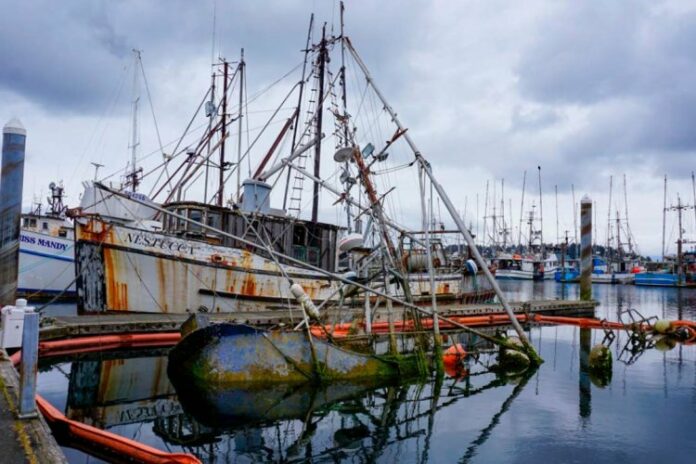
  • Marine Debris Removal, which prioritizes large-scale removal projects that focus on marine debris that is generally unable to be collected by hand, including abandoned and derelict vessels, derelict fishing gear and other large debris. Letters of Intent are required and are due on September 27, 2024.
  • Marine Debris Interception Technologies, which prioritizes the installation, monitoring and maintenance of proven interception technologies that capture marine debris at or close to known debris sources or pathways. Letters of Intent are required and are due on October 09, 2024. 

Each funding opportunity will be reviewed separately due to different application requirements. 

TotalEnergies and RWE join forces to implement OranjeWind offshore wind power

0

Each partner has 50% stake in OranjeWind offshore wind farm, for which final investment decision has been taken. Partners are committed to delivering their allocated part of flexible system integration solutions, including electrolysers, battery storage, e-boilers and smart charging solutions to perfectly match intermittent wind power generation with flexible demand.

RWE and TotalEnergies have entered into a partnership agreement to jointly deliver the OranjeWind offshore wind project in the Netherlands, with TotalEnergies will acquire a 50% equity stake in the offshore wind farm from RWE. The OranjeWind project will be the first system integration project in the Dutch market. It aims to perfectly match intermittent wind power generation with flexible energy demand and will thus contribute to grid stability. To this end, TotalEnergies and RWE are committed to implementing flexible demand solutions across different locations in the Netherlands.

RWE and TotalEnergies have also taken the investment decision to build the OranjeWind offshore wind farm, which will have an installed capacity of 795 megawatts (MW). Suppliers for the main components have already been selected. OranjeWind is located in the North Sea, approximately 53 kilometres from IJmuiden on the Dutch coast, in the province of Noord-Holland. RWE will lead the development, construction and operation of the wind farm on behalf of the joint venture. Offshore construction is scheduled to start in 2026, with full commissioning expected in early 2028. With an expected annual generation of around 3 terawatt hours OranjeWind will produce enough green electricity to supply the equivalent of more than one million Dutch households.

Sven Utermöhlen, CEO RWE Offshore Wind:

“The Netherlands is one of our strategic core markets to grow our green portfolio. In TotalEnergies I am delighted to have a strong partner at our side with whom we can realise our first offshore wind project in the Netherlands and at the same time unlock the full system integration of OranjeWind. Together, we will provide a blueprint for the Dutch energy system of the future, designed to tackle the challenges of intermittent wind generation and flexible energy demand. As key players in the Dutch energy market, we are both committed to helping the Netherlands meet its decarbonisation targets.”

Stéphane Michel, President Gas, Renewables & Power, and Bernard Pinatel, President Refining & Chemicals, TotalEnergies:

“We are looking forward to working with RWE, a major player in renewable, on a project that will enable us to develop production of green hydrogen, which we need to decarbonise our refineries in northern Europe. This integrated, innovative project perfectly illustrates our pioneering role in the energy transition in Europe, especially through the emergence of offshore wind power linked to green hydrogen electrolysers in the Netherlands.” 

In order to address the challenges presented by matching intermittent electricity production from renewables with flexible demand for energy, a key part of the OranjeWind project is its integration into the Dutch energy system. To this end, each partner will deliver their allocated part of system integration solutions, including electrolysers, smart charging solutions for electric vehicles, e-boilers for heating and battery storage. 

Part of the OranjeWind project is also to accelerate the commercial application of new offshore technologies by supporting a vast amount of innovators and start-ups in demonstrating their innovation in an operational environment. To allow more efficient use of ocean space, an offshore demonstration floating solar farm is currently being developed by RWE in collaboration with SolarDuck, a Dutch-Norwegian company that specialises in offshore floating solar solutions. Furthermore, the partners are looking at using scanning LiDAR (Light Detection and Ranging system), a technology that can accurately measure wind at long ranges. In addition, the OranjeWind project is also to demonstrate a seabed battery system developed in cooperation with Verlume and a pumped hydro-storage system in collaboration with Ocean Grazer.
 

FPSO Petrojarl Kong and FSO Yamoussoukro are ready to leave for Côte d’Ivoire

0

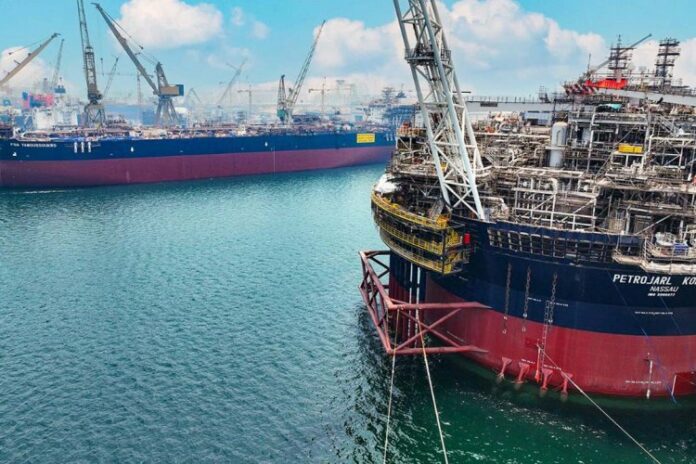
Altera Infrastructure’s FPSO Petrojarl Kong and FSO Yamoussoukro are ready to leave for Côte d’Ivoire for phase 2 of Eni’s Baleine development project

The vessels are now in their final stages of upgrading and conversion prior to their mobilisation to Côte d’Ivoire for Eni’s Baleine Phase 2 project. Together with Eni, Petroci, and Drydocks World, Altera Infrastructure held a naming ceremony to mark this key milestone in Dubai.

The ceremony was attended by Côte d’Ivoire’s Minister of Petroleum, Mines and Energy, Mamadou Sangafowa Coulibaly, Petroci’s CEO, Fatoumata Sanogo, Eni’s Chief Operating Officer Natural Resources, Guido Brusco, and Senior Vice President, EPC & Commercial at Drydocks World Janarthanan Lakshmi Kanthan, along with 200 other distinguished guests from our partners in this fast-track project.

The FPSO Petrojarl Kong previously operated under the name Voyageur Spirit on the Huntington field in the North Sea until 2020. The FSO Yamoussoukro, converted from the Altera shuttle tanker Nordic Brasilia, will provide additional storage capacity and oil export facilities at the field. Altera owns and will operate  both vessels, which are set for deployment on the Baleine field with a 15-year firm contract, and operations are scheduled to commence in December 2024.

Executive Vice President, Projects, Arne H. Tørnkvist, stated:

“This achievement is a testament to Altera’s capacity to develop and execute large and complex projects while maintaining focus on safety and quality. The FPSO and the FSO are being completed approximately 14 months after arriving at the yard – and the Altera FPSO and FSO Projects combined have so far involved more than 8 million manhours without Lost Time Injuries and over 10 million on the entire project. To deliver successfully on such a fast-track project, our partnership and collaboration with Drydocks World, Eni, and Petroci Holding has been an absolute key.”

This fast-track execution model has required parallel activities with regard to Engineering, Procurement, Construction, and Commissioning. The scope undertaken includes extensive demolition, Repair and Life Extension, and Conversion work for both vessels.

The Baleine field is Africa’s first net-zero emissions field development, and Altera is excited to join Eni in moving the industry forward by focusing on more sustainable developments.

This will also mark Altera’s first entry into West Africa, a region that continues to see high demand for FPSO developments. Our new  base in Abidjan, established in record time,  will be the operational centre for the FPSO and FSO.

Chris Brett, President Altera Infrastructure Production, said:

“Today’s naming ceremony of FPSO Petrojarl Kong and FSO Yamoussoukro for the Baleine field in Côte d’Ivoire marks a new milestone for Altera. It demonstrates that redeployments are some of the fastest, most cost-effective, and emissions-friendly ways for our customers to develop their projects in the current market. This is Altera’s 13th redeployment project. Altera is well established with a local organisation in Abidjan, Côte d’Ivoire, where we intend to be committed and engaged contributors to the development of a growing industry for many years to come.”

Wartsila to supply a hybrid-electric propulsion system for an 11,000 dwt Limestone Carrier

0

Technology group Wärtsilä will supply a hybrid-electric propulsion system for an 11,000 dwt Limestone Carrier. The vessel was contracted by Montreal-based CSL Group (“CSL”) with CCCC Shanghai Equipment Engineering and Jingjiang Nanyang Shipbuilding. The order with Wärtsilä was booked in Q1 2024.

The order reflects CSL’s focus on reducing its emissions profile via a comprehensive decarbonisation strategy. Wärtsilä has been closely involved in developing the concept for the hybrid-electric propulsion system selected to optimise the engine and battery loading for the ship’s operating conditions. The system will provide redundancy when operating in confined waters to improve safety, while at the same time improving efficiency and reducing fuel consumption.

“We require an electrically integrated hybrid-powered propulsion solution from a single-source supplier capable of providing lifecycle support. Wärtsilä was selected for our newbuild project because of their proven ability, experience and track record in delivering high-quality electrification and hybridisation systems,” says Frédéric Jauvin, CSL’s Vice-President, Global Technical Services.

The Limestone Carrier, when delivered in 2026, will be the world’s first fully electric battery-capable self-unloading vessel. It will initially run on a hybrid diesel and battery system, with 50% of total battery capacity installed replacing diesel with electric power. By 2031, the aim is to run the ship entirely on electric power, further reducing carbon emissions to less than 10%.

“Wärtsilä is committed to making decarbonised shipping possible, so we are delighted to be supporting CSL with solutions that enhance the sustainability of their fleet,” comments Torsten Büssow, Director, Electrical & Power Systems Business Wärtsilä Marine. “This is a short sea shipping vessel that will operate with a lot of manoeuvring and variable load profiles, and electrification and hybridisation systems are the most efficient for such vessels.”

For this vessel, Wärtsilä will supply the whole hybrid electric propulsion system, including generators, DC hub, Energy and Power Management System, main propulsion e-motors, bow thruster e-motors, and the battery solution. Delivery is scheduled for early 2025.

Glenfarne Energy Transition’s Texas LNG and EQT Execute Binding LNG Tolling Agreement

0

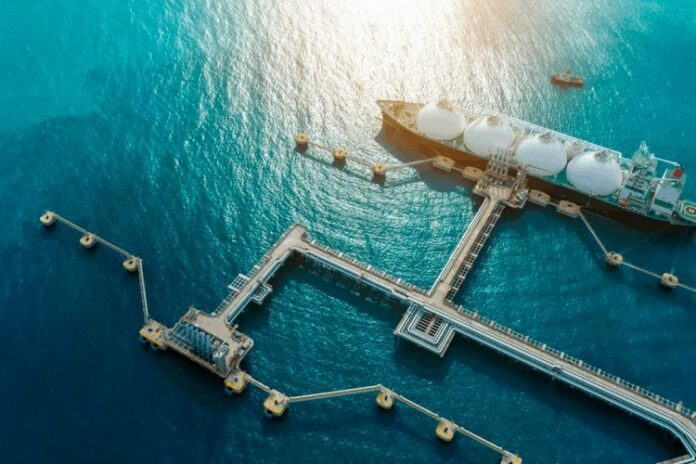
Texas LNG Brownsville LLC, a four million tonnes per annum liquefied natural gas export terminal to be constructed in the Port of Brownsville, Texas, and a subsidiary of Glenfarne Energy Transition, LLC, and EQT Corporation have executed a definitive 20-year tolling agreement for natural gas liquefaction services for 2 MTPA of LNG.

The agreement solidifies the two Heads of Agreement (“HOA”) signed by Texas LNG and EQT earlier this year.

“Glenfarne’s partnership with EQT will bring low-emission natural gas to transitioning and emerging markets, powering the globe’s phase out of legacy, carbon-intensive fuels,” said Brendan Duval, Glenfarne CEO and Founder and Co-President of Texas LNG. “Beyond this partnership with EQT, Texas LNG is actively converting its other HOAs into definitive agreements in preparation for a final investment decision.”

“Converting our HOA with Texas LNG to a definitive tolling agreement brings us one step closer to unleashing EQT’s reliable, low emissions natural gas on the global stage,” said Toby Z. Rice, President and CEO of EQT. “We stand ready to deliver supply to growing LNG markets, helping to strengthen energy security and reduce global emissions via foreign coal displacement.”

More broadly, Texas LNG has also announced offtake agreements for the majority of the project’s remaining offtake. This includes a signed agreement with a top-tier, credit-rated market participant for 0.5 MTPA announced earlier this month.

Glenfarne Energy Transition, a developer, owner, and operator of energy transition infrastructure, is the majority owner and managing member of Texas LNG. Texas LNG will begin construction in 2024 and commence commercial operations in 2028. The Glenfarne Energy Transition LNG portfolio also includes the 8.8 MTPA Magnolia LNG export facility under development in Lake Charles, Louisiana.

Rauma shipyard launches the second passenger-car ferry ordered for Tasmania

0

The Tasmanian Spirit of Tasmania (TT-Line Company PTY Ltd.) has ordered two car and passenger ferries from Rauma Marine Constructions (RMC) for a challenging open sea route between Victoria and Tasmania. At the same time, the shipyard is also building the first multi-role corvette for the Finnish Defence Forces.

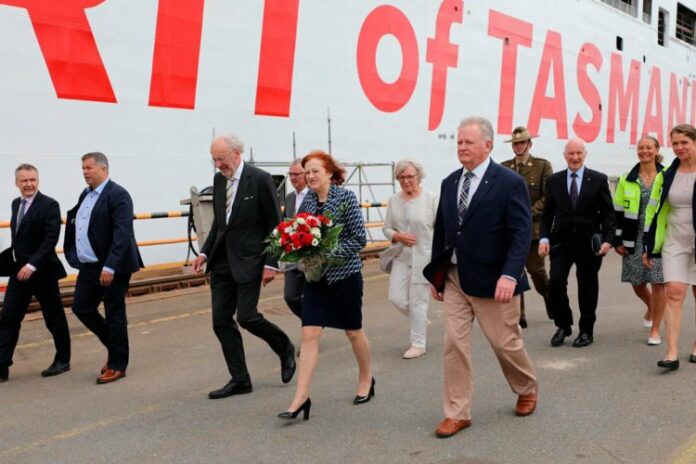
Rauma shipyard has celebrated the launch of the Spirit of Tasmania V with traditional ceremonies. The vessel’s godmother is Her Excellency the Horourable Barbara Baker, the 29th Governor of Tasmania. The vessel is the second of two car and passenger ferries ordered from the shipyard for Tasmania. The launch and christening ceremony of the first vessel, Spirit of Tasmania IV, was held last October. The vessels are being built for the Tasmanian TT-Line Company.

The car and passenger ferries built by RMC will operate between Geelong and Devonport on Australia’s Bass Strait, a route known for its challenging sea conditions. The vessels will replace their sister ships built in Finland in the 1990s. The passenger, vehicle, and cargo capacity of the new ships is significantly greater than that of their predecessors.

“The Spirit of Tasmania vessels are specifically designed for this route and its demanding sea conditions. Our shipyard is known for our ability and expertise to customize ships to meet the high standards and quality requirements of our clients. I am extremely proud of the progress in the construction of these vessels. The project we are delivering for TT-Line Company is also nationally significant, as it is one of the largest individual export deals between Australia and Finland,” says Mika Nieminen, CEO and President of RMC.

The first of TT-Line Company’s new vessels, Spirit of Tasmania IV, will be delivered to the client this August. The Spirit of Tasmania V, launched today, will be completed next spring.

There are currently three vessels being built simultaneously at the Rauma shipyard. Alongside the TT-Line vessels, construction on the first multi-role corvette for the Finnish Navy began last autumn in its dedicated multi-role hall. The combined employment impact of these projects is over 7,000 person-years.

Rauma shipyard is investing and renewing itself. RMC is building a new industrial way of operating, which will strengthen the company’s competitiveness and profitability. In addition to expertise, RMC, together with the strong support of the local community has invested in independent steel production, a new multi-role hall, and a heavy transfer ramp among other improvements at the shipyard.

The total value of the vessels in RMC’s current order book is EUR 1.4 billion and extends all the way to the year to 2028.

This year marks the tenth anniversary since the founding of RMC. During this time, three of the car and passenger ferries delivered by the fully Finnish-owned shipyard have been awarded internationally: Hammershus (Molslinjen) in 2018, Aurora Botnia (Wasaline) in 2021, and MyStar (Tallink) in 2022.

Spirit of Tasmania V in a nutshell:

  • Length: 212 m
  • Width: 31 m
  • Draught: 7 m
  • Gross tonnage: 48,000
  • Speed: 26 knots (48 km/h)
  • Lane metres: 3,700 m
  • Passengers: 1,800
  • Cabins: 301

Fincantieri signs order with Carnival Corporation for three mega-cruise ships

0

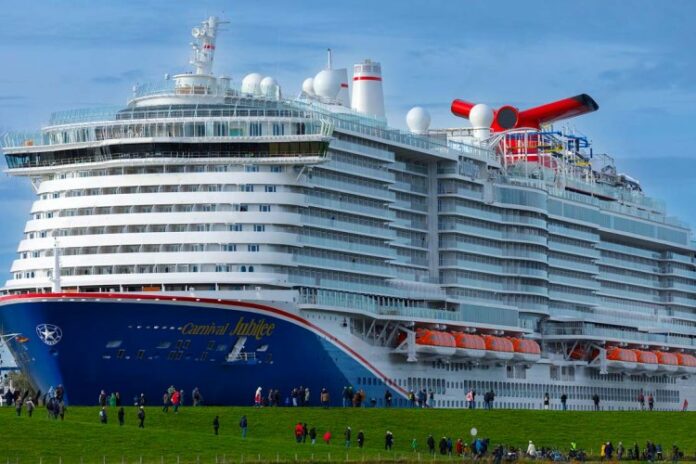
Fincantieri has signed an agreement with Carnival Corporation & plc for the design, engineering, and construction of three new cruise ships for the Carnival Cruise Line brand. The value of the agreement, subject to financing finalization and other typical terms and conditions to be completed later this year, is considered as very important.

The order is for a new class of liquefied natural gas (LNG)-powered vessels, which will be approximately 230,000 gross tonnes, the largest ships ever built by Fincantieri and an Italian shipyard, to be delivered in 2029, 2031 and 2033. With over 3,000 guest cabins, the new vessels will carry almost 8,000 passengers at full capacity.

These new ships will also feature advanced energy efficiency, waste management, and emission reduction technologies to further reduce the company’s environmental footprint. During its history, Fincantieri has, in total, delivered 75 ships to Carnival Corporation across its portfolio of brands, with a further vessel currently under construction at its yard in Monfalcone, and has delivered 15 cruises ships for the Carnival Cruise Line brand.

Pierroberto Folgiero, CEO and Managing Director of Fincantieri, said:

“We are very proud to announce that Fincantieri has signed a contract with Carnival Corporation for the construction of three next-generation cruise ships with a historical partner. This order is a significant leap forward in our innovation strategy, thus reaffirming our commitment to sustainability and energy efficiency. The partnership with Carnival Corporation marks another step confirming the leadership of Fincantieri in the global cruise sector as per our Industrial Plan, combining tradition, technological advancement and ‘Made in Italy’.”

“We are creating a platform with Fincantieri that will innovate across the board, offering an unparalleled guest experience and incorporating the latest technological advancements to minimize our environmental footprint,” said Josh Weinstein, CEO of Carnival Corporation & plc. “We look forward to unveiling a new class of extraordinary ships from the world’s leading cruise line.”