-8.1 C
New York
Home Blog Page 152

European Union and Cabo Verde renew their sustainable fisheries partnership

0

The EU and Cabo Verde have signed a new protocol for the implementation of the Fisheries Partnership Agreement (FPA) allowing access by EU vessels to Cabo Verdean waters for a period of 5 years, while preserving the development of the fisheries sector in Cabo Verde. The protocol will also strengthen fisheries governance and the protection of the marine environment, and support the creation of jobs and activities in the fisheries sector.  

The European fleet will consist of 24 tuna seiners, 10 pole-and-line tuna vessels and 22 surface longliners flying the flag of Spain, France or Portugal, fishing for tunas and associated species. The agreed annual reference is 7,000 tonnes of catches, which reflects the trend of catches in recent years by Union vessels in the Cabo Verde fishing zone. 

The EU contribution to this new protocol is estimated at €3.9 million over a period of 5 years, consisting of €780,000 per year, of which €430,000 will be dedicated to promoting Cabo Verde’s sustainable fisheries management, control and surveillance capacities, and supporting local fishing communities. In addition to the EU contribution, shipowners will pay fees to the Cabo Verde’s administration to be authorised to fish.  

This protocol will contribute to the sustainable management of maritime resources, to food and nutrition security and to the diversification of Cabo Verde’s economy, in line with Cabo Verde’s strategic objectives and the EU’s partnership policy.  

It responds to Cabo Verde’s desire to strengthen the industrialisation and competitiveness of the sector, given the strategic potential of Cabo Verde’s fishing zone in the tuna industry in the Atlantic Ocean.  

For Cabo Verde, the protocol should create added value and jobs by encouraging transhipments and landings of catches in the port of Mindelo, São Vicente, as well as the embarkation of local fishermen and observers on European vessels. One of the objectives is to ensure the best conditions to secure the supply of fishery products to local processing companies.

DFDS to leave Space Charter Agreement on Dover-Calais

0

With P&O Ferries’ recent agreement to enter into an additional and separate space charter agreement with the third ferry operator on Dover-Calais, Irish Ferries, the terms of a continuing space charter arrangement would change.

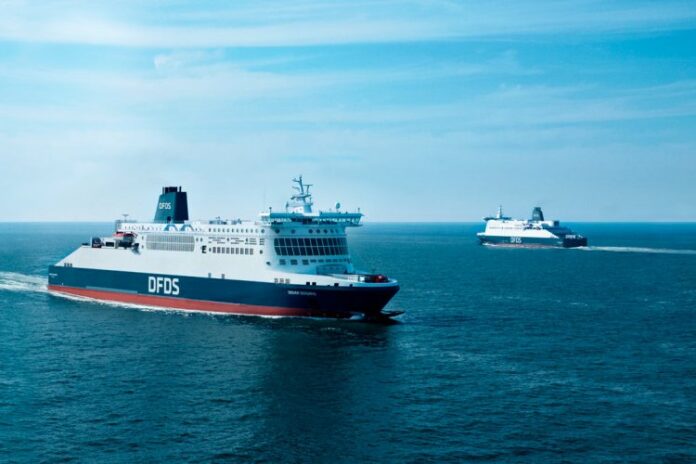
Ferry market leader on the Dover Strait DFDS has assessed that DFDS is in a better commercial position by operating outside a space charter agreement at this point in time:

“While we continue to welcome collaboration opportunities to further improve the efficiency of our ferry operations on the Dover Strait, we believe that we best service our customers and the market by leveraging our unique value proposition of operating two routes out of Dover – to Calais and to Dunkerque – outside a space charter structure”, says Filip Werne Hermann, VP and Head of BU Channel and Baltics and continues:

“DFDS will continue to deliver reliable and efficient ferry services and focus on providing premium ferry service offerings on the Dover Strait for both our freight and passenger customers by leveraging our company values and our fleet of six vessels. Furthermore, we are continuing our efforts to decarbonise our cross-Channel fleet which will further strengthen our offerings in the future”.

The space charter agreement was entered into in May 2021 and will end when the contractual notice period is complete at the end of August 2024.

Morocco begins the construction process of Africa’s first offshore wind power plant

0

The Moroccan Agency for Sustainable Energy (Masen) and the European Investment Bank (EIB) launched a tender for technical assistance for the study.

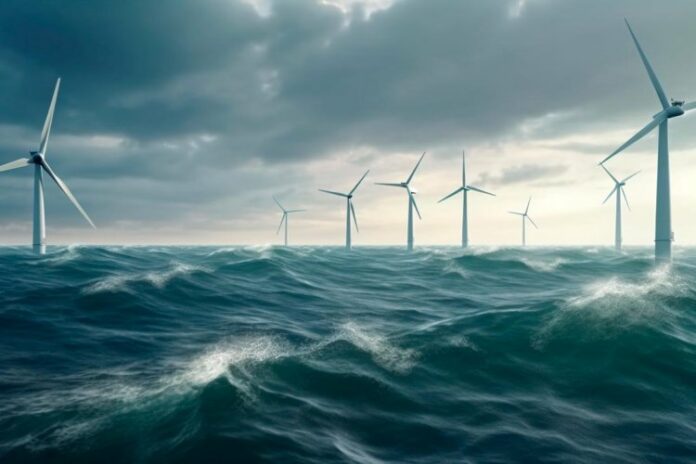
The preferred site is on the Atlantic Ocean off Essaouira, a resort popular with windsurfers due to the constant flow of air from the Atlantic into the low pressure zone of the Sahara.

The tender says the area’s strong winds and shallow waters give it “high potential” for wind energy.

Masen wants to install at least 6GW of wind generation capacity by 2030 as part of its plan to generate 52% of the country’s energy from renewable sources by then.

The tender follows the announcement in September 2022 that the EIB had authorized a €2 million grant to Masen to carry out a feasibility study before the construction of a small pilot project.

Lionel Rapaille, EIB operations director for Morocco, commented at the time: “Our technical assistance operation will contribute to Morocco’s ambitious climate goals and the development of a new cutting-edge sector across the continent.”

So far, no African country has developed an offshore wind project, although Egypt, Tanzania and Kenya have discussed the possibility.

Source: EvWind

Hrvatski Telekom equips Rijeka Gateway Terminal with a 5G network

0

HT has selected Rijeka Gateway, a port operating company founded by A.P. Moller – Maersk and ENNA Group, to develop and operate the terminal in Rijeka, which will start operating in 2025. APMT, as part of the Maersk Group, which oversees wireless connectivity in more than 70 ports around the world, will test this new managed service operating model in Rijeka and further migrate from the current architecture to “advanced 5G SA architecture”, allowing it to utilise dedicated network slicing for industrial applications.

In May the operator announced it was looking at plonking its tower infrastructure into a separate, owned subsidiary, along the lines of other Deutsche Telekom businesses in Europe. Last month it announced it had started looking into the possibility of merging with its network infrastructure subsidiary HT Servisi (HTS).

Hrvatski Telekom transferred its network infrastructure unit to ICT solutions provider Ericsson Nikola Tesla in September 2014. In June 2023, Hrvatski Telekom took it back in the fold and in November 2023, the subsidiary was renamed HTS from Ericsson Nikola Tesla Servisi (ENTS). The moves, if carried out, will help the operator better provide managed services like the pending Rijeka port deal.

“This project demonstrates Rijeka Gateway’s confidence in our ability to provide a high-availability service for seamless 24/7 port operations. It confirms our strategy in providing business-critical communication through our public mobile network,” said Hrvatski Telekom COO for business customers and board member Marijana Bačić (above).

“We are developing one of the most technologically modern terminals in Rijeka, and from the beginning of the design of the terminal, we have defined the goal of maximizing the impact of the terminal on the environment and the local community,” said Rijeka Gateway board president Peter Corfitsen. “The terminal in Rijeka will be the only terminal in this part of Europe with remotely controlled cranes, almost all equipment will be electric, and we are also installing very advanced systems for energy optimisation and overall terminal management.”

“A high-quality and reliable communication infrastructure is a prerequisite for such a way of working and we look forward to cooperation with Hrvatski Telekom.”

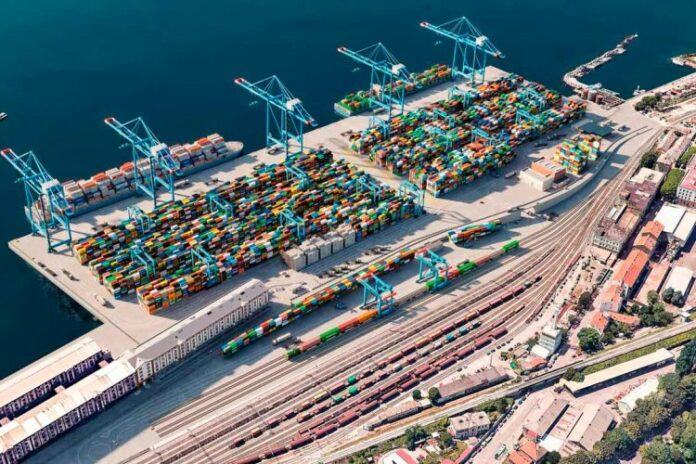
The Gateway River is one of the most extensive infrastructure projects since the establishment of the Republic of Croatia, which initiated a comprehensive revitalization of a part of Rijeka’s coastal area. According to the companies, the Gateway River will be the most modern, remotely controlled container terminal in this part of Europe.

With a concession for the next 50 years, it will serve as the main entry point for container traffic into the countries and markets of the European hinterland and will play a key role in the development of the local economy, given that most of the project contracts will be carried out by domestic companies. The value of the total investment is €380 million and the project itself has been declared a project of strategic importance for Croatia.

Southern Ocean absorbing more CO₂ than previously thought, study finds

0

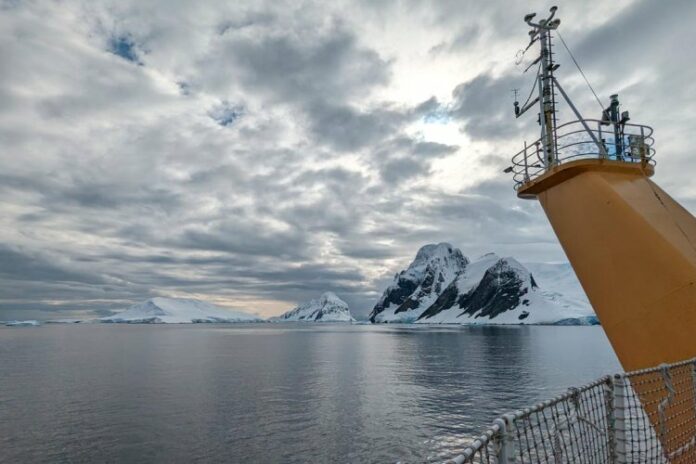
Using direct measurements of CO2 exchange, or fluxes, between the air and sea, the scientists found the ocean around Antarctica absorbs 25% more CO2 than previous indirect estimates based on shipboard data have suggested.

The Southern Ocean plays a major role in absorbing CO2 emitted by human activities, a process vital for controlling the Earth’s climate. However, there are big uncertainties in the magnitude and variability in this flux.

Until now, it has been estimated using shipboard measurements, such as those collected for the Surface Ocean CO2 Atlas (SOCAT) from research ships and sail drones, data from profiling floats deployed in the ocean, and global ocean biogeochemistry models. These different approaches have produced large variations in estimates.

This new study used a novel technique called eddy covariance—with flux systems mounted on ships’ foremasts—to directly measure air-sea CO2 fluxes during seven research cruises in the region.

The results, published in the journal Science Advances , show the summer Southern Ocean is likely to be a strong CO2 sink, challenging the much weaker estimates based on float data and model simulations, which the authors say “substantially underestimate” the observed CO2 uptake.

The authors argue this difference can be explained by considering temperature variations in the upper ocean and a limited resolution, for example averaging over a too-long time scale or sampling over a too-large interval, adding that current models and float data do not account for small, intense CO2 uptake events.

Lead author Dr. Yuanxu Dong, of UEA’s Center for Ocean and Atmospheric Sciences (COAS) and PML, is currently at the GEOMAR Helmholtz Center for Ocean Research Kiel. He said, “This is the first time a large number of direct air-sea CO2 flux observations have been used to assess existing flux products in the Southern Ocean. Our findings provide direct observational evidence that this ocean may take up more CO2 than previously recognized.

“Accurate quantification of the Southern Ocean CO2 sink is essential for the assessment of the Earth’s climate. However, it is the most uncertain region regarding the estimate of its CO2 sink capacity.

“Our study reduces this uncertainty and improves the understanding of Southern Ocean CO2 uptake, and we recommend that future estimates should include temperature adjustments and higher resolution reconstruction and modeling.”

The team, which also included scientists at the Alfred Wegener and Max Planck Institutes in Germany, the Flanders Marine Institute in Belgium and University of Hawai’i in the US, investigated inconsistencies in the existing CO2 flux estimates, then used the eddy covariance flux observations to assess the different data sets.

The cruise data covered approximately 3,300 hours—about 175 days—of measurements in the Antarctic summer of 2019 and 2020, defined as November to April in the study, over an area of highly dynamic frontal zones. Measurements were taken hourly compared, for example, to approximately every 10 days for those from floats.

Dr. Mingxi Yang, study co-author and Chemical Oceanographer at PML, said, “The Southern Ocean is a key sink of CO2, but the magnitudes and the locations of this ocean uptake are uncertain. PML’s autonomous and high frequency eddy covariance system has significantly increased the number of direct air-sea CO2 flux measurements in this region.

“This paper offers the first comparison between direct CO2 flux measurements and estimates from coarse data products and global models on a large spatial/temporal scale. It has helped validate these and shed light on ways to improve them.”

Lack of winter data is a general problem with ships because of the difficulty accessing the region at that time, which the floats partially address. Acknowledging that their cruise data only covers some parts of the Southern Ocean in summer, the authors say continued efforts towards high-quality observations are essential to improve estimates of air-sea CO2 fluxes.

This might include an expansion of measurements to more ships, and the further deployment of buoys and sail drones, particularly in the winter season. Additional observations in winter by unattended platforms could also help fill the seasonal data gap.

Prof Tom Bell, co-author and PML Ocean-Atmosphere Biogeochemist, added, “We have recently moved our flux system onto the new ice breaker, the RRS Sir David Attenborough, and collected the first set of flux measurements during a research cruise in the Weddell Sea earlier this year. We aim to continue this valuable work over the coming years, which is essential for monitoring the current climate and forecasting future changes.”

The researchers also warn that the amount of shipboard surface ocean CO2 measurements has drastically declined in recent years, partly due to the COVID pandemic, but also to less funding. The number of annual datasets in SOCAT, for example, decreased by 35% from 2017 to 2021—and 40% for the Southern Ocean.

Dr. Dorothee Bakker, of UEA’s COAS and chair of SOCAT, said, “There is a real need for sustained and expanded funding of surface ocean CO2 measurements and their SOCAT synthesis, in order to constrain Southern Ocean CO2 uptake, to support the World Meteorological Organization’s Global Greenhouse Gas Watch monitoring initiative and to inform climate policy.”

Cyan Renewables acquires Australian vessel operator MMA Offshore

0

MMA shareholders will receive A$2.70 (US$1.78) per share in cash, representing a 36% premium over the 90-day volume-weighted average share price, and EV/EBITDA ratio stands at 6.2x.

James Chern, Managing Partner and CIO of Seraya Partners, Cyan’s main investor, notes, “The new deal is transformative and reflects our ability to build and create platforms from scratch, spanning from Asia to Europe. With Cyan’s acquisition of Sentinel in the UK and now MMA in Australia, we are rapidly establishing world-class leaders in new, fast-growing sectors.”

The acquisition was supported by a group of co-investors, including the Alberta Investment Management Corporation (“AIMCo”). AIMCo, which opened its office in Singapore in September 2023, participated in the MMA acquisition through its investment in Cyan.

Ben Hawkins, AIMCo’s Executive Managing Director, Global Head of Infrastructure, Renewable Resources and Energy Transition, said,

“AIMCo is pleased to expand our partnership with Seraya to collaborate on this exciting opportunity to build next-generation infrastructure in Asia. As a clear market leader, Cyan is strategically positioned to benefit from the growing offshore wind and marine protection sectors, and this acquisition positions it as an important catalyst in the ‘blue-to-green’ transition of this space.”

Lee Keng Lin, CEO of Cyan Renewables, said,

“The acquisition of MMA is a significant milestone for our future as a leader in the renewable energy space. This move strengthens our position in the Asia-Pacific region and solidifies our leadership in the offshore wind industry and energy transition. This acquisition brings extensive maritime services expertise and a strong operational presence in key markets such as Australia and the broader APAC region.”

Cyan plans to retain MMA’s workforce, leveraging and expanding its expertise, assets, and operating model to further penetrate the offshore wind support services market globally and in Asia. In addition to supporting existing clients in the offshore energy and broader maritime industries with its marine and subsea services, Cyan will actively pursue growth opportunities through mergers and acquisitions and organic expansion.

MMA’s leadership in Australia, highlighted by its fleet of 20 offshore vessels and deep operations in Asia Pacific, will strengthen Cyan’s regional presence. In addition to MMA leveraging Cyan as a capital partner, MMA will benefit from Cyan’s extensive knowledge in offshore wind farms, such as installation and operations and maintenance (O&M) expertise and proven track record in Europe, to improve service offerings and operational efficiencies.

David Ross, Managing Director of MMA said,

“We are excited to be part of the Cyan Group to accelerate progress in achieving net zero goals in the maritime industry. Cyan’s expertise in offshore wind farms and investment capability, combined with our best-in-class maritime and offshore solutions, will foster innovation and operational excellence, accelerating the energy transition.”

The deal comes amid increasing demand to adopt renewable and clean energy. According to the International Energy Agency (IEA), global clean energy capacity must triple by 2030 to meet net zero emissions by 2050. The wind farm market is projected to grow at a CAGR of 21.4% from 2024 to 2034. At the same time, the global demand for vessels in the offshore wind sector is expected to outpace supply significantly, particularly as the average turbine size has increased, with some projects now planning to install turbines as large as 15MW.

Revolutionary grid-scale wave energy generator deployed in Hawaii

0

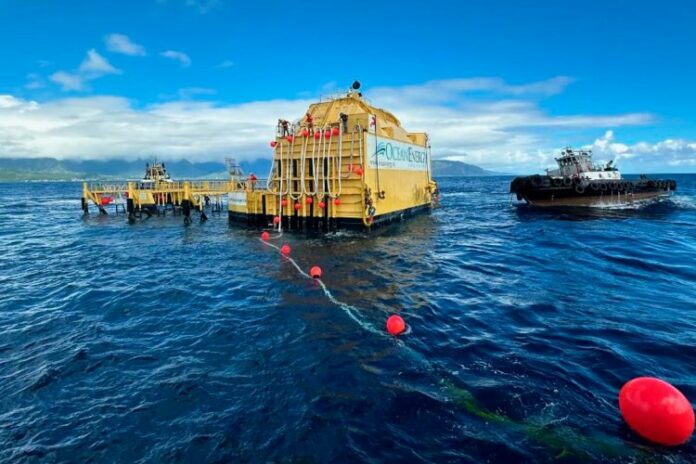
Measuring 125 x 59 ft (38 x 18 m) with a draft of 31 ft (9 m), the OE-35 was already a familiar sight in Kaneohe Bay on the Windward side of Oahu. Fixed just north of Mōkapu Peninsula.

The system has not only been tested in Hawaii, but also in Scotland as part of a US$12-million project funded by the US Department of Energy’s office of Energy Efficiency and Renewable Energy and the Sustainable Energy Authority of Ireland (SEAI). With a potential output of 1.25 MW, OE-35 harnesses energy from the waves using a remarkable double-flow air system.

Some wave power systems work by using passing waves to compress a column of air that drives a turbine as the wave passes and the air expands. However, these usually work like a piston engine, with a power stroke followed by a dead period while air is vented and the system resets itself in anticipation of the next wave.

OE-35 is different in that it uses a turbine that works on the principle of the Wells turbine that was invented by Alan Arthur Wells of Queen’s University Belfast in the late 1970s. This is a low-pressure air turbine that rotates continuously in one direction independent of the direction of the air flow. In other words, as the wave compresses the air in three chambers inside the buoy, the turbine spins. Then the air expands and the flow reverses but the turbine still spins in exactly the same direction. This eliminates the need for complex mechanisms and valves to deal with the bidirectional air flow.

It’s not the most efficient way of generating power because the turbine blades have a higher drag coefficient than conventional turbines and the system is prone to stall. However, it works well enough that the subsidiary of Ocean Energy Group Ireland expects to soon commission the OE-35 following final tests and the system will be connected by undersea cable to the state’s electricity grid.

At 1.25 MW, it isn’t much against a state that consumes many orders of magnitude more, but it could be a harbinger of things to come.

“Following over a decade and a half of design, trials, testing and building, we are excited finally to be able to take this major step towards commercialization with our world-class OE-35 device,” said Professor Tony Lewis, Ocean Energy’s Chief Technology Officer. “This internationally significant project couldn’t come online at a more critical time for the US and Ireland as the world needs to accelerate the pace of decarbonization with new and innovative technologies.”

Source: NewAtlas

Italy strengthens defense with five new minehunter warships

0

Italy is bolstering its coastal and naval defenses with an order for five new minesweeping warships. This significant development comes from local reports, highlighting statements from two leading Italian defense firms—Leonardo and Intermarine. The ships are set to be constructed at Intermarine’s facility in Sarzana, La Spezia, Italy. 

These vessels will be 63 meters in length, and the deal, worth €1.6 billion [approximately US$2.82 billion], has caused a notable surge in the stock prices of the involved companies. Intermarine’s shares soared by 16%, while Leonardo saw a 2.3% increase. Intermarine will handle 27% of the contract, focusing on building the minesweepers, while Leonardo will be responsible for the combat and communication systems. 

As of the latest available data, the Italian Navy has a total of 10 minehunters in active service. These vessels are part of the Gaeta and Lerici classes, which specialize in mine countermeasure operations. 

The Gaeta-class minehunters, named after Italian coastal cities, are equipped with advanced sonar systems and remotely operated vehicles [ROVs] to locate and dispose of mines. They are a crucial component of Italy’s naval mine warfare capabilities. 

The Lerici-class minehunters, also named after Italian coastal towns, share similar capabilities with the Gaeta class but feature different designs and technological specifications. Both classes are integral to the Navy’s efforts to maintain safe and secure maritime routes. 

These minehunters play a vital role in both national defense and international missions, often participating in NATO operations and joint exercises with allied navies to enhance mine countermeasure interoperability and effectiveness.

Mine hunters are specialized warships designed to detect, classify, and neutralize naval mines. These vessels play a critical role in ensuring the safety of naval and commercial shipping lanes, as well as protecting harbors and coastal areas from the threat of underwater mines. 

To fulfill their purpose, mine hunters are equipped with advanced sonar systems that can scan the seabed for the presence of mines. These sonar systems use sound waves to create detailed images of objects on the ocean floor, allowing the crew to identify potential mines. 

Once a mine is detected, mine hunters use remotely operated vehicles [ROVs] or autonomous underwater vehicles [AUVs] to investigate the object more closely. These vehicles are equipped with cameras and additional sensors to provide a clearer view and confirm whether the object is indeed a mine. 

After confirming the presence of a mine, mine hunters employ various methods to neutralize the threat. One common approach is to use the ROV or AUV to place a small explosive charge near the mine, which can then be detonated remotely to destroy the mine safely.

In addition to their detection and neutralization capabilities, minehunters are often constructed with materials and designs that minimize their own magnetic and acoustic signatures. This reduces the likelihood of triggering mines that are sensitive to such signatures, thereby enhancing the safety of the vessel and its crew. 

The effectiveness of minehunters is further augmented by their ability to operate in various environmental conditions, including shallow waters and areas with complex seabed topography. This versatility ensures that they can address mine threats in a wide range of operational scenarios. 

Overall, minehunters are a vital component of naval defense strategies, providing a crucial capability to safeguard maritime operations from the dangers posed by naval mines. Their advanced technology and specialized design enable them to detect, classify, and neutralize mines efficiently, ensuring the safety of both military and civilian maritime activities.

Source: bulgarianmilitary.com

An unknown naval drone was found off the coast of Turkey

0

It happened on Thursday, July 25, near Çatalca in the province of Istanbul.

The governor’s office reported on this, and a video of the drone was published in local media.

Local authorities said the drone had been spotted on the coast around 12:00 local time.

Coastguard and law enforcement teams immediately arrived at the scene.

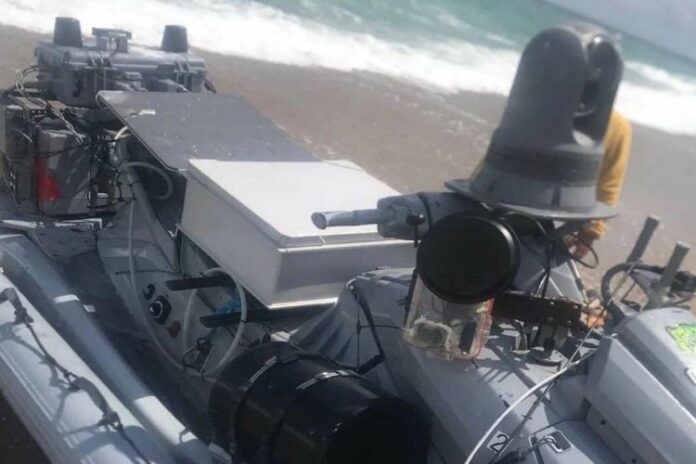
“A naval drone 3 meters long and 1 meter wide, believed to have come from the north of the Black Sea, was taken under guard by representatives of the S.A.S. (Su Altı Savunma – Turkish Underwater Defense – ed.) who arrived at the scene,” the statement said.

However, despite official statements, online video shows that local residents had access to the naval drone, at least until law enforcement arrived.

Subsequently, the scene of the incident was surrounded and fenced off, restricting access to unauthorized persons.

The footage shows that this unmanned surface vehicle was created on the basis of a jet ski. It also had cameras and other special equipment for remote control. The exact specifications of the drone are unknown.

According to the Milliyet media outlet, explosives were allegedly found on board.

However, local authorities have not yet officially confirmed the presence of explosives on the drone or the possibility of its combat use.

Turkey suggests that the drone may have belonged to the Ukrainian military. It could have drifted from the northern part of the Black Sea. After the discovery of the jet ski-based unmanned vehicle, the local prosecutor’s office launched an investigation.

Source: Militarnyi

Olympic Boreas CSOV delivered to Olympic Group by Ulstein Verft

0

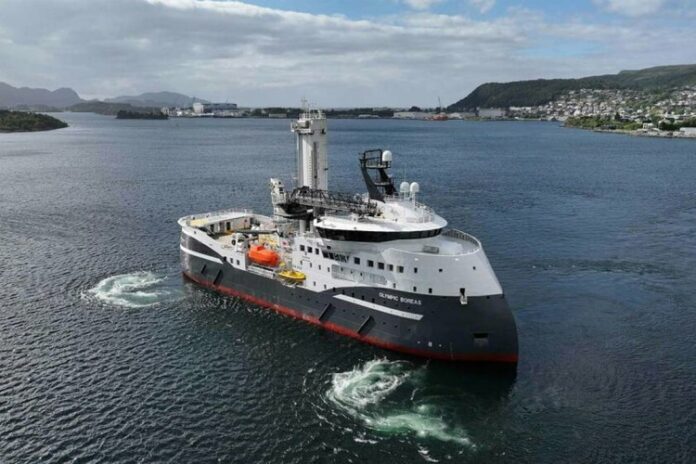
Olympic Boreas has been designed with the TWIN X-STERN solution and comes with a unique hybrid power integration. Further, she has a large gangway system installed, high-capacity, delicately furnished accommodation, including offices, lounges, day rooms, game rooms, and an exercise room to make the vessel a home away from home. The vessel is a nominee for the Ship of the Year Award.

Stig Remøy, CEO of Olympic Group, said: “We are proud to welcome Olympic Boreas, an innovative and pioneering vessel. This ship is a product of the excellent cooperation between Ulstein and Olympic and the strength of the maritime cluster in our region. It will play an essential role in our future operations within offshore energy. We look forward to using this high-quality vessel to promote sustainable, efficient, and safe operations in the industry.”

“In partnership with Olympic, we have developed and built an exceptional ship”, says CEO Gunvor Ulstein, Ulstein Group.

“We have collaborated with Olympic on numerous past projects and are gratified that they once again selected Ulstein for this innovative newbuild. I am proud to announce the delivery of this high-quality, next-generation offshore energy vessel that is set to benefit the shipowner for many years ahead.” 

Ulstein’s hull solutions have been developed for harsh sea states, with excellent seakeeping characteristics, to secure safe and comfortable journeys for the crew and passengers. The TWIN X-STERN solution includes four main thrusters: two aft and two in the foreship. With this innovative setup, the vessel is exceptionally swift and can perform walk-to-work operations in an efficient manner. This has a significant impact on fuel consumption in dynamic positioning operations.

Ulstein Power & Control’s hybrid power solution incorporates a substantial battery system and diesel generators that operate at variable speeds. This design ensures optimal fuel utilisation. The vessel is prepared for methanol fuel, paving the way for zero-emission operations. There is also reserved space for extra battery capacity, allowing full-electric operations once the necessary infrastructure becomes available. The focus is on energy efficiency, resulting in maximized energy-efficient operations, manoeuvrability, and functionality.