-8.5 C
New York
Home Blog Page 151

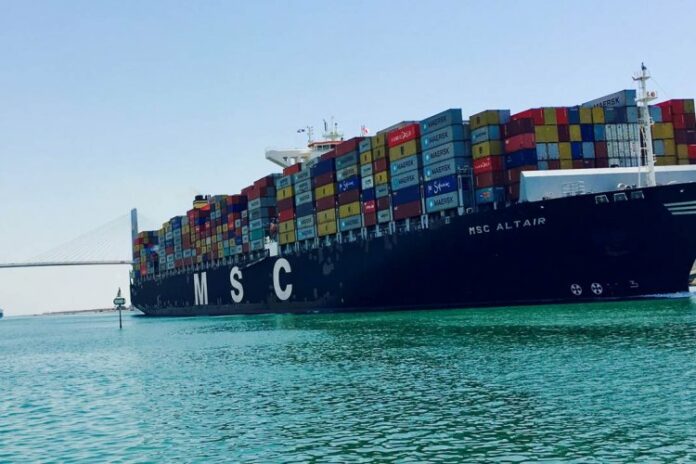
Wärtsilä to transfer its manufacturing site in Trieste, Italy to shipping company MSC

0

In July 2022, technology group Wärtsilä announced a plan to ramp down manufacturing in Trieste and to centralise its 4-stroke engine manufacturing in Europe to Vaasa, Finland. The production activities in Trieste have since been discontinued, with manufacturing volumes centralised in Vaasa.

Now, Wärtsilä and Mediterranean Shipping Company (MSC) have agreed on a transaction of the Trieste manufacturing site. Today, 255 employees and the production facility have been transferred to MSC, with the rest of the buildings and assets to be transferred later this autumn.

The full annual cost savings as well as the transformation costs are estimated to end in line with the plan announced in July 2022, with majority of the transformation costs taken as Items Affecting Comparability in 2022-2024 and the savings realised in 2024.

While production activities for Wärtsilä in Trieste have already been discontinued, Trieste will remain an important site for Wärtsilä with R&D, sales, project management, sourcing, service, and training activities.

“At the core of our strategy is to shape the decarbonisation of marine and energy industries, requiring continuous focus on competitiveness and operational efficiency. As planned, we now have a strong European industrial base in Vaasa and will continue to also support our customers with our expertise in Trieste as part of the global Wärtsilä team,” says Håkan Agnevall, President and CEO of Wärtsilä.

“With this transaction, we are now able to increase clarity to the transferring employees after a period of uncertainty. Wärtsilä in Italy will continue serving our customers through our expert teams in Trieste, Genoa, Naples and Taranto,” says Roger Holm, President of Wärtsilä’s Marine business.
SOHAR Port and Freezone joins the International Port Community Systems Association

0

SOHAR Port and Freezone, a 50-50 joint venture between Asyad Group and the Port of Rotterdam, one of the world’s fastest-growing port and freezone developments, has announced its membership of the International Port Community Systems Association (IPCSA).

Through this membership, SOHAR Port and Freezone will support the introduction of a new Port Community System (PCS) that will link the country’s main ports, including Sohar, Salalah, and Duqm, as well as major airports and special economic zones.

This global network unites logistics leaders committed to sharing best practices, advancing industry developments, and enhancing digital information systems for collective growth. Joining IPCSA marks a significant step towards strengthening SOHAR’s role in global trade flows and intensifying its contributions to national and regional digitizalization efforts. By integrating advanced logistics solutions, SOHAR aims to solidify its position as a pivotal hub in the international supply chain.

Emile Hoogsteden, Chief Executive Officer of SOHAR Port, stated,

“Implementing a national-level Port Community System will not only enhance SOHAR’s logistical capabilities, reduce costs, and boost competitiveness, but it will also significantly contribute to Oman’s Vision 2040. An interconnected port network, stimulated by IPCSA, will greatly support Oman’s national goals of achieving a diversified economy, expanding skill development opportunities, and fostering digital solutions that drive industry growth. We also look forward to contributing our expertise in port operations as an IPCSA member.”

IPCSA Chairman Javier Gallardo welcomed SOHAR, saying,

“We are delighted to share our insights on Port Community Systems with SOHAR, enabling them to establish a new era of electronic communications in Oman. These sophisticated PCS systems are essential for ports to operate efficiently at scale, a critical factor in keeping pace with the evolving demands of maritime logistics.”

Nico De Cauwer, Secretary General of IPCSA, added:

“Members of IPCSA are always pleased to share their experiences and expertise in order to promote and support the development of Port Community Systems and Single Window operations worldwide. Our aim is to eliminate bottlenecks and improve the speed and efficiency of cargo flows. We welcome SOHAR as a valued member of the IPCSA family.”

‘Windfall’ technology to power cargo ships

0

With their massive sails stretched over towering masts, merchant ships that plied the world’s oceans hundreds of years ago helped launch the era of commercial shipping, delivering goods of all kinds to different ports of call.

Those early cargo ships would eventually give way to diesel-powered vessels. But along with the change in thrust came greenhouse gas emissions harmful to the planet. 

Now, a University of Miami College of Engineering researcher wants to help today’s massive and modern cargo ships go green—and his strategy is to employ an age-old method of propulsion: wind. 

“What’s old is new again,” said GeCheng Zha, a professor of aerospace engineering and director of the Aerodynamics and Computational Fluid Dynamics Lab. “With the technological advancements of today, wind-assisted propulsion is an efficient alternative to diesel engines. And the major advantage is that it’s environmentally friendly—an effective way to decarbonize the shipping industry that’s responsible for about 3 percent of global greenhouse gas emissions.” 

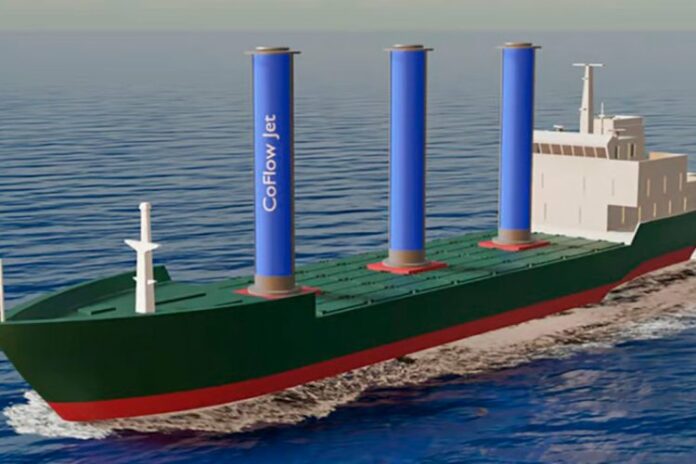
Zha is developing giant cylinders that would be mounted on the decks of cargo ships, generating thrust by sucking in, pressurizing, and ejecting air in a different direction. 

Several stories high, each cylinder could be lowered, allowing ships to pass beneath bridges and to navigate in and out of ports. 

On some shipping routes, the cylinders could cut fuel consumption by as much as 50 percent, according to Zha, who is still in the design and simulation phase for his wind-propulsion instruments. 

His research couldn’t be timelier. Last year, the International Maritime Organization, a United Nations specialized agency responsible for regulating maritime transport, announced a revised strategy that requires the international shipping industry to achieve net-zero greenhouse gas emissions “by or around” 2050. 

“The shipping industry has had a tendency to resist change because diesel engines are so powerful,” Zha said. “But now, with pressure mounting, either willingly or unwillingly, it will have to change.” 

His high-tech cylinders represent a growing movement in the shipping industry to develop and employ wind-assisted technologies to make cargo ships greener. From spinning rotors that use the so-called Magnus force to convert wind energy into propulsive force to nonrotating suction wings that use vents and internal fans to achieve propulsion, the technology to power cargo ships with an age-old concept is gaining steam. 

The technology is already in use on some vessels. About 30 cargo ships out of a global fleet of roughly 60,000 are currently using wind propulsion, deploying rigid sails made of aluminum, fiberglass, and carbon fiber that operate under minimum power from a ship’s engines. That number is expected to increase to nearly 11,000 by the end of this decade, according to the London-based International Windship Association. 

Zha’s nonrotating cylinders, developed with co-flow jet technology similar to what he employed for his ongoing research on new types of aircraft, would be “much more efficient” than wind-assisted propulsion units that are currently in use on the few cargo ships that have them, he said. “We would be capable of achieving greater thrust,” he explained. 

Now, the only challenge that remains for Zha is securing funding to develop a prototype. “We’ll get there,” he said. “With about 90 percent of the world’s trade traveling by ship, this technology is a ‘windfall’ of an idea.”

Vestas secures 795 MW order for the OranjeWind offshore wind farm in the Netherlands

0

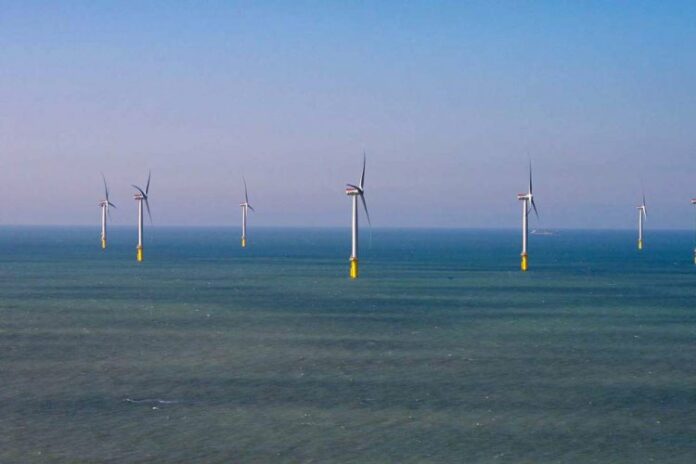
Vestas will be supplying 53 V236-15.0 MW wind turbines and is responsible for the supply, delivery, and commissioning of the turbines. Upon completion, Vestas will service the assets under a comprehensive 5-year service agreement followed by a long-term operational support agreement.

Nils de Baar, President of Vestas Northern and Central Europe, says

“OranjeWind sets a high bar for technological innovations and sustainability, and we are delighted to deliver our solutions, including our offshore flagship wind turbine, for this project in the Netherlands. Our entire team is looking forward to working together with the OranjeWind project team on this exciting and ambitious wind farm in the North Sea.”

RWE and TotalEnergies announced last week that they are entering a 50/50 partnership to deliver the OranjeWind offshore wind project. The project has an installed capacity of 795 MW; a grid connection capacity of 760 MW and an excess capacity of 35 MW to use the connection capacity as efficiently as possible, even when production is lower.

The project site is located around 53 km off the Dutch coast in the North Sea. Wind turbine installation is expected to start in 2027.

ABB modernizes MS Amera with DC technology and shore connection

0

ABB has also retrofitted the vessel with a shore connection system, which allows lowering emissions during port calls 

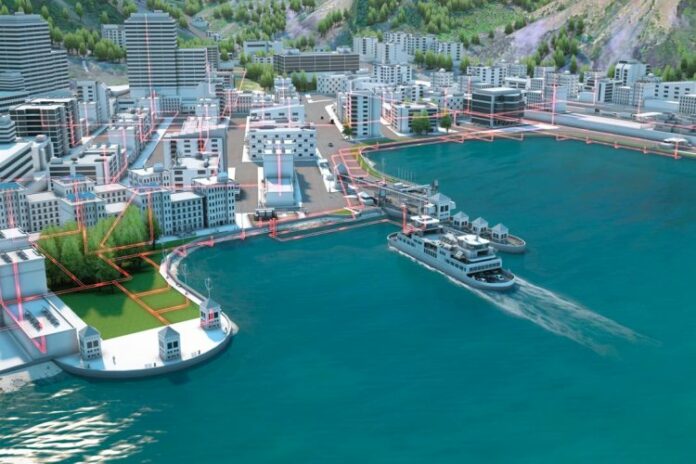
To further improve the efficiency and sustainability of its fleet, Germany-based cruise operator Phoenix Reisen has modernized its 205-meter, 835-passenger capacity ship MS Amera. The vessel is now equipped with ABB’s Onboard DC Grid™ power system platform and shore connection for improved efficiency and safety, as well as lower emissions. Following successful commissioning and sea trials, Amera has become the first cruise ship retrofitted with Onboard DC Grid™.

The turnkey project involved the replacement of the vessel’s AC system with modern DC technology. As a DC-based power distribution system, Onboard DC Grid™ allows the simple and cost-effective integration of energy sources and loads in a compact, lightweight and functional setup. The key benefits include safer and more efficient vessel operations thanks to the system’s high fault tolerance. In addition, the vessel is future-proofed as it can be equipped to allow efficient integration of new, low-carbon energy sources such as batteries and fuel cells. This will also support operations in emission control areas such as the Norwegian fjords.

“Our aim is to be a leader in sustainable cruising, providing unforgettable travel experiences in some of the world’s most beautiful locations while protecting fragile local ecosystems,” said Johannes Zurnieden, Founder and CEO, Phoenix Reisen. “We are working towards more efficient and environmentally friendly operations across our fleet and having completed the modernization of Amera together with ABB, we are confident we are on the right track to achieve this objective.”

ABB’s shore connection system will help Amera reduce emissions during port calls. Typically, shore connection can help to reduce daily emissions of cruise ships by 35 percent when they are docked eight hours per day. Meanwhile, the onboard power setup will be managed by ABB’s integrated PEMS™ power and energy management system, which will ensure optimal use of the vessel’s power resources.

“At ABB, we are fully committed to working with customers toward electrification. Modernization projects, in this case converting the complete power plant from AC to DC and integrating shore connection technology, play a significant part in those efforts,” said Tomas Arhippainen, Head of Marine Service and Digital, ABB Marine & Ports. “Amera is the first cruise ship to be retrofitted with Onboard DC Grid™, making this a milestone project for us, Phoenix Reisen and indeed the cruise industry as a whole. This project proves that the benefits of increased efficiency and safety are available not only for newbuild, but also for existing vessels.”

ABB’s full scope of supply comprises drives, motors and generators, transformer, PEMS™, automation technology and shore connection.
 

ClassNK issues world’s first AiP for bunkering boom for ammonia fuel

0

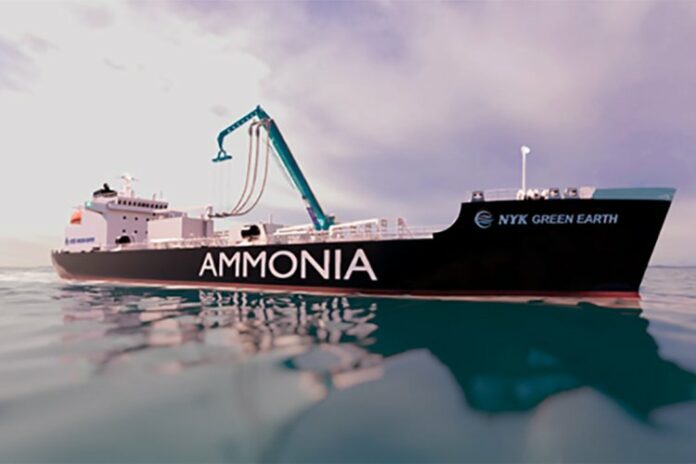
ClassNK has issued an Approval in Principle (AiP) for a design concept of the ammonia fuel bunkering boom, which is jointly developed by Nippon Yusen Kabushiki Kaisha (NYK Line) and TB Global Technologies Ltd. This is the world’s first AiP certification for the design of a bunkering boom for ammonia fuel.

As ammonia fuel utilization is expected in shipping for decarbonization, bunkering vessels that supply fuel to ships and related equipment will play an essential role in the supply chain. On the other hand, due to the novelty, it can be difficult to confirm the safety of some equipment by applying existing rules.

Targeting such new technologies, ClassNK has issued the ‘Guidelines for Technology Qualification’ that define a certification process to demonstrate that an acceptable level of safety, equivalent to that of technologies designed under existing rules and standards, has been verified. Through the guidelines, ClassNK is providing a risk-based approach to safety assessment for the implementation of new technology.

ClassNK carried out a drawing review of a basic design of the bunkering boom based on part N of its ‘Rules and Guidance for the Survey and Construction of Steel Ships’ for ships carrying liquefied gases in bulk, and conducted a review of documents required by the ‘Guidelines for Technology Qualification’. Upon confirming they comply with the prescribed requirements, ClassNK issued the AiP.

Kongsberg Maritime secures contract from Tärntank for its next wind-assisted chemical tanker

0

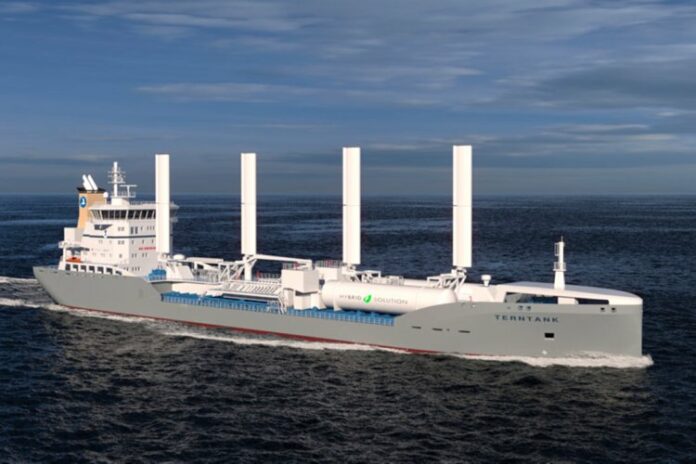
Kongsberg Maritime has been awarded a further contract from Danish operator Tärntank to design and equip its eleventh hybrid chemical tanker, which will be wind-assisted. 

The new 15,000 dwt vessels are equipped with a range of advanced Kongsberg Maritime technologies aimed at energy conservation and emission reduction. These hybrid tankers can operate on diesel, biofuel, or methanol and are equipped with wind-assist technology and Tärntank’s proprietary battery-powered Hybrid Solution®.

Rune Ekornesvåg, Kongsberg Maritime’s Sales Director – Ship Design, expressed his enthusiasm about the contract:

“This latest contract for our fuel-efficient and low-emission tanker design reaffirms the commitment of forward-thinking ship owners to integrating sustainable technologies into their fleets.

“The vessels will feature our Promas propulsion system, which delivers fuel savings of over 6% compared to other systems. Additionally, the ships will utilise battery-powered hybrid propulsion, enhancing operational flexibility and minimising environmental impact.”

Claes Möller, Chief Executive Officer at Tärntank, commented on the partnership’s significance and future outlook. He said: “This combination of a good design and innovative systems installed to a newbuild vessel will reduce the carbon footprint of maritime operations beyond the regulatory requirements. This is a result of good cooperation between Kongsberg Maritime, China Merchants Jinling Shipyard (Yangzhou) and Tärntank.

“Tärntank’s customers NEOT/ST1, NESTE, ESSO/EXXON and PREEM, which all have a target to reduce their carbon footprint of the supply chain, play an important role in making this possible”.

Kongsberg Maritime sees a growing demand for sustainable technologies in shipping so exploring future fuel types like methanol, ammonia and biofuels, with a specific focus on long-range vessels, is part of the company’s strategic approach to position itself as a front-runner in designing low-emission and sustainable solutions for the shipping industry.

This latest order brings the total number of ships in this design series to thirteen, 11 from Tärntank and a contract for two similar vessels (without suction sails) for Swedish operator Sirius Redri AB. The latest batch of tankers for Tärntank is currently under construction at the China Merchants Jingling Shipyard in Yangzhou, with the first delivery expected in 2025. The design concept, featuring wind-assist technology, won the prestigious Nor-Shipping Next Generation Ship Award in 2023.

Wärtsilä and Seapeak sign Lifecycle Agreement for ten LNG Carriers

0

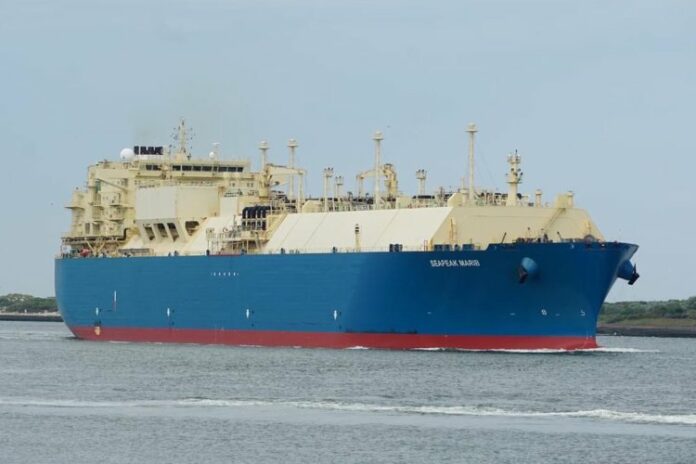
The contract covers ten LNG Carriers and is an extension of an earlier Wärtsilä Lifecycle Agreement for these vessels. The new order was booked by Wärtsilä in Q1 2024.

The global demand for LNG is rising, and is expected to continue to rise over the coming years, which is driving a need for fewer maintenance interventions in LNG Carriers in operation. This is especially key as the vessels under this service agreement operate in a highly dynamic and fast-moving market environment, with ongoing challenges around predicting vessel schedules and voyage times. The new agreement, which is based on 72,000 running hours, is designed to increase the engines’ time between overhauls to 30,000 operating hours. The enhanced maintenance performance enabled by this agreement will result in a new level of support for the operator.

“We are focused on improving performance and optimising our fleet’s maintenance concept. This is why we have entered into this new agreement with Wärtsilä, as a trusted support provider. This agreement goes beyond what we had before and will take us into a new era of maintenance efficiency,” says Michael McNaul, Fleet Manager – Seapeak.

The scope of the agreement includes remote 24/7 operational support from Wärtsilä experts, Dynamic Maintenance planning, Wärtsilä’s predictive maintenance service Expert Insight, scheduled spare parts, and field service for larger and more complex issues. Wärtsilä will also provide a full-time Contract Manager in Seapeak’s Glasgow office.

Wärtsilä’s Expert Insight is a predictive maintenance service that combines artificial intelligence techniques and advanced diagnostics with Wärtsilä’s OEM expertise to identify anomalous behaviour. It proactively identifies and highlights potential failures and early indications of equipment deterioration. Today there are hundreds of vessels all over the world benefiting from the added layer of protection of Wärtsilä’s service agreements, offering actionable advice to ship owners and operators looking to ensure optimal operation and reduce unplanned maintenance of their vessels.  

“Optimal maintenance procedures for the ship’s engines and equipment add considerable value through enhanced efficiency and reduced operating costs. Wärtsilä’s lifecycle support approach, as illustrated by our tailored maintenance agreements, is a central pillar in our efforts to increase efficiencies and add greater sustainability to our customers’ operations,” comments Andrea Morgante, Vice President, Performance Service at Wärtsilä Marine.

TFG Marine and Consort Bunkers ink charter agreement for methanol-carriage bunker tankers

0

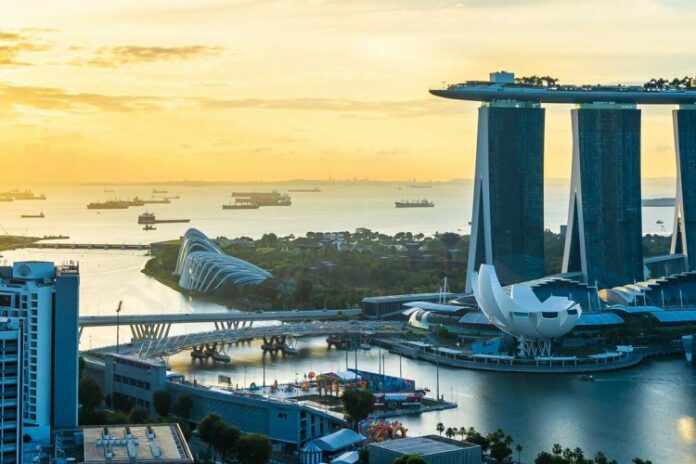
The 6,500-dwt IMO type 2 tankers are being constructed by Merchants Jinling shipyard in Nanjing, China and will be operated by Consort Bunkers for TFG Marine. Deliveries will commence in late 2024 and continue into 2025. The vessels will be capable of carrying TFG Marine’s current range of marine fuels, including HSFO, VLSFO, MGO and biofuels up to B100, as well as any grade of liquid methanol in the future. 

“This agreement is part of TFG Marine’s ongoing efforts to renew our fleet with modern, Mass Flow Meter-equipped bunker barges that are ready to carry the low-carbon fuels that will help shipping decarbonise,” TFG Marine’s Global Head of Bunkering. Kenneth Dam, said. “We see a multi-fuel future for our industry, with methanol, biofuels, ammonia and more all having a role to play alongside traditional marine fuels in meeting the goals of the Paris Agreement.” 

S.K. Yeo, Director and General Manager of Consort Bunkers, said the company was proud to work with TFG Marine to enable methanol bunkering in future within the Port of Singapore with these advanced tankers.

“With the Maritime and Port Authority of Singapore set to introduce a methanol bunkering licensing framework in the near future, we are supporting TFG Marine’s goal to take a leading role in providing low-carbon fuels to international shipping companies in this global bunkering hub,” he said.

The new tankers will be fitted with Mass Flow Meters, as required by the MPA. TFG Marine has long advocated for the global adoption of MFMs to increase transparency in the bunkering process. A recent whitepaper sponsored by TFG Marine proposed Singapore’s MFM-based licensing system as a model for other port regulators to follow. 

This newbuild order expands on TFG Marine’s initial investment in low-carbon fuel bunkering infrastructure. In January 2024, the company announced an agreement with Fratelli Cosulich Group for a methanol dual-fuel bunker barge to be delivered in late 2025 and deployed in the Port of Singapore. 

Saipem and Curtiss-Wright achieve new subsea processing milestone

0

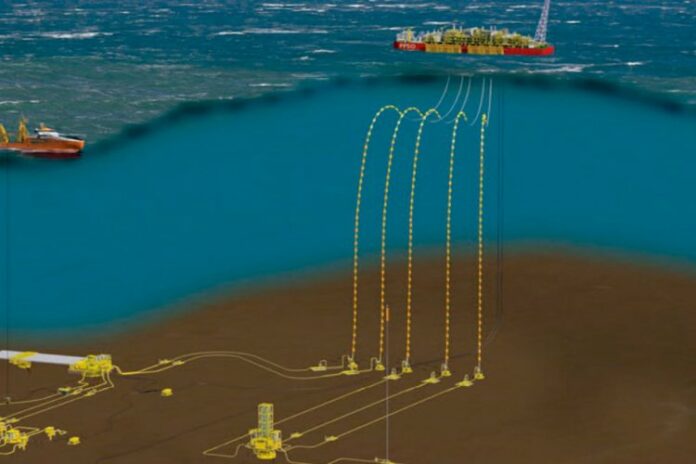
Developed based on proprietary solutions inherited from the nuclear sector, this unprecedented technology will enable the subsea injection of treated sea water into a reservoir, thus extending the lifecycle of subsea fields.

While the conventional pumping system features a barrier fluid which serves as coolant, lubricant and insulation, the technology developed by Saipem and Curtiss-Wright is based instead on an innovative design whereby the subsea pump is cooled and lubricated by the sea water itself, while the motor is protected by a canned casing suitable for deepwater applications. The absence of the barrier fluid avoids the need for its constant replenishment and the risk of sea water contamination. Furthermore, due to Saipem’s “all-electric” strategy, the technology allows the replacement of conventional hydraulic umbilicals with power/control cables, thus reducing costs. This pump is the first seal-less, barrier fluid-less subsea pump with such high power.

In 2018, Saipem and Curtiss-Wright signed an exclusive collaboration agreement to develop this new technology: a 3 MW full-scale prototype has been manufactured and tested in water through an extensive specific program, which eventually confirmed the expected performance, robustness, and reliability.

This new solution is certified for several Saipem-proprietary subsea treatment technologies, including SPRINGS®, the subsea desulfation technology owned by Saipem, TotalEnergies and Veolia.