-8.5 C
New York
Home Blog Page 150

Methane slip will not be an issue by end of this decade, says SEA-LNG

0

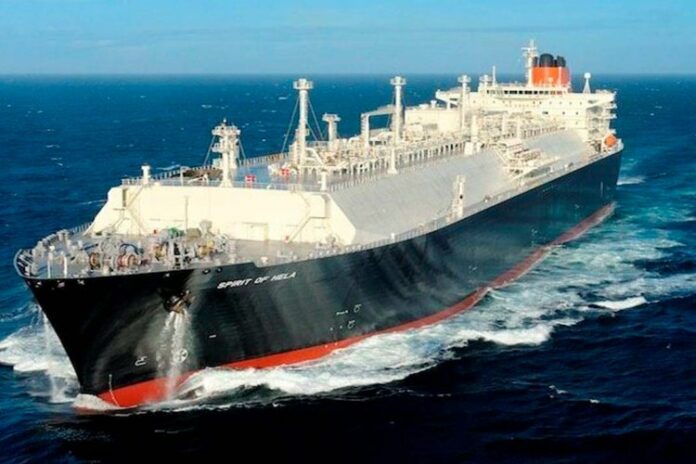
Industry coalition SEA-LNG has underlined the significant progress being made to eradicate methane slip as uptake of the LNG pathway accelerates. With continued collaborative efforts across the value chain, methane slip will be eliminated for all engine technologies within the decade.

Today, 2-stroke diesel cycle engines account for approximately 75% of the LNG-fuelled vessel order book. These engines have effectively eliminated slip already. For low-pressure engine technologies where methane slip remains an issue, manufacturers have already cut the levels of slip from low-pressure 4-stroke engines by more than 85% over the past 25 years. It is worth noting that methane slip has been eradicated for the similar LNG dual-fuel engine technologies used in the heavy-duty vehicle sector. The science is clear, the technologies exist, and engineering will soon solve the problem.

Peter Keller, Chairman of SEA-LNG, said:

“We congratulate the efforts and initiatives such as the Methane Abatement in Maritime Innovation Initiative (MAMII) and the GREEN RAY project. As LNG continues to gain widespread recognition as the current practical and realistic alternative fuel pathway, it is reassuring to see growing evidence that the challenge of methane slip will be eliminated within this decade.”

There is a growing momentum for LNG as a marine fuel. Clarksons’ data shows that 109 LNG dual fuel vessels have been ordered in 2024 up to June. There are now more than 550 LNG-fuelled vessels in operation, a number expected to double by 2027.

Keller concluded:

“There is universal agreement that the science is understood, and we have the necessary tools and technology to abate methane emissions, it is the final elements of the engineering that are being worked on. This, in combination with the option to transition to net zero emissions through bio-methane and e-methane, provides ship owners and operators with the confidence that vessels ordered today are future-proofed for the next 25 – 30 years. This cannot be said for any other alternative fuel right now.”

For more information on methane slip, see the methane slip fact sheet on SEA-LNG’s website.

Three generations of Haisla Mariners sail fully electric tugboat home to Kitimat

0

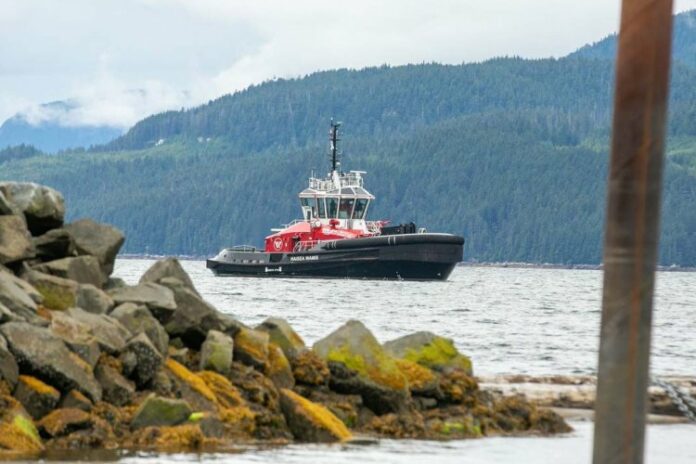
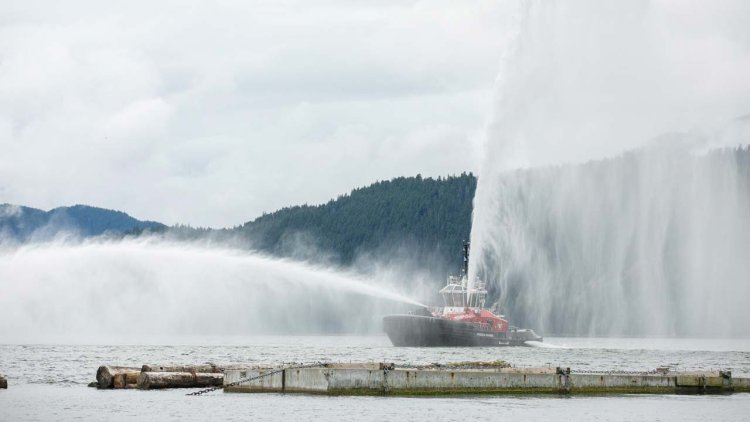
The HaiSea Wamis, a fully electric tugboat in one of the world’s greenest fleets, is the first of five HaiSea vessels to make the journey from North Vancouver to Kitimat, where HaiSea Marine’s operations will be based.

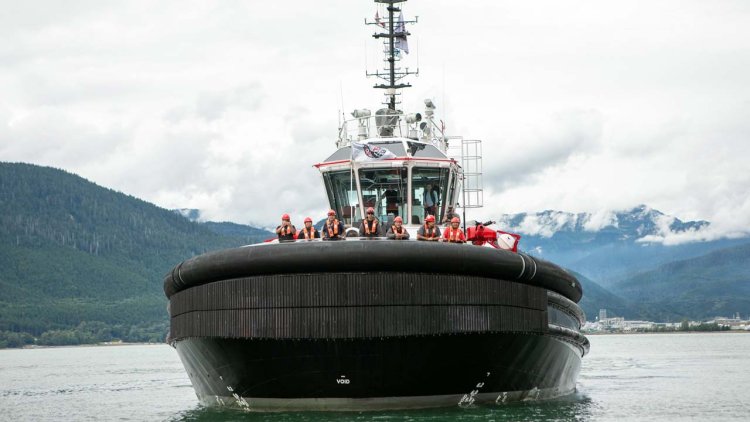
A crew of eight Haisla members sailed the HaiSea Wamis home, marking an important milestone for HaiSea Marine, a majority owned partnership between the Haisla Nation and Seaspan ULC. This historic moment was shared across three generations of the Ross family as they crewed the Wamis on its voyage home; Ed Ross is a deckhand with HaiSea Marine, his stepson, Craig Windsor, and two grandsons, Bradley Windsor, and Christian Cross, are all HaiSea deckhands.

“To bring the HaiSea Wamis up the Douglas Channel and into Kitamaat Village with my family and several other Haisla members was incredibly powerful. Up until now, careers with HaiSea felt like a distant opportunity but now the future is here and there are real careers for the next generation of Haisla mariners,” said Ed Ross, deckhand with HaiSea Marine and Haisla Nation member.

HaiSea will be fully operational in Kitimat by mid-August to support escort towing services to LNG carriers calling at LNG Canada’s new export facility in the traditional territory of the Haisla Nation.  

Jordan Pechie, Senior Vice President, Seaspan Marine Transportation, said:

 “When we were building HaiSea with the Haisla Nation, we had a major milestone for the project in mind: when the HaiSea Wamis set sail for Kitimat, crewed by Haisla members, coming back to work on their home waters just as their ancestors did for thousands of years. It was an honour to bring that milestone to life and celebrate with the community, and our partners. Together, we celebrated the homecoming and reaffirmed our commitment to HaiSea’s goals of Indigenous partnership, environmental stewardship, and fostering employment and training opportunities for Haisla members.”

New UK Government shows impressive determination on wind energy

0

The Government has raised the budget for the upcoming contract for difference auction round (AR6) to a record £1.56bn. The majority of that, £1.1bn, will be available for bottom-fixed offshore wind. But that’s not all. The Government has also lifted the de-facto ban on onshore wind in England and wants to advance seabed leases in a new collaboration between GB Energy and The Crown Estate.

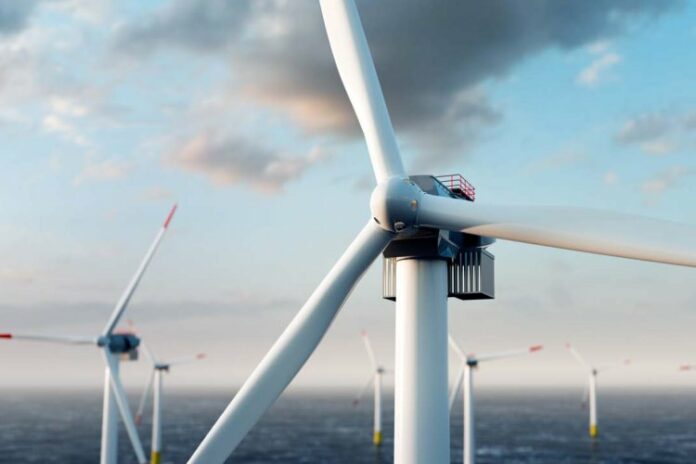
Wind energy is the cornerstone of the new UK Government’s goal to fully decarbonise UK electricity consumption by 2030, along with a commitment to double onshore wind and quadruple offshore wind capacity by 2030.

The next contract for difference auction round (AR6) is taking place this summer. Successful projects are expected to be announced in September.

Big push for bottom-fixed and floating offshore wind

The Government has announced an enhanced budget for AR6. They raised the total budget by £500mn to a record £1.56bn, of which £1.1bn will be allocated for bottom-fixed offshore wind. That’s 38% higher than the £800mn offshore wind budget proposed under the previous UK Government and is an important move that will allow for increased offshore wind deployment.

Inflation and higher input costs have increased the costs of developing new offshore wind farms. The UK Government has understood that. Increasing the overall budget for AR6 is the right thing to do. This in combination with the already agreed higher price cap for single bids of £73/MWh will lead to strong industry interest and healthy competition between project developers.

In the previous auction round in 2023 (AR5) the Government failed to account for these new price realities and maintained a strict price ceiling of £44/MWh. The result: not a single offshore wind project bid last year and so the UK lost a year of offshore wind development.

“This is a very positive development. The UK Government’s decision will strengthen its energy security and increase its economic competitiveness. It will also help to create tens of thousands of new jobs in wind energy and restore the UK as a global leader in renewables”, says Phil Cole, Director of Industrial Affairs at WindEurope.

The Government has also raised the budget available for “emerging technologies”, such as floating offshore wind by £165m to £270m – a 61% increase and a clear sign of confidence for the UK’s floating offshore wind industry.

The budget increase is welcome, but it will not unlock investments in all of the UK’s existing shovel-ready projects. The UK Government should maximise the amount of capacity it secures in every annual auction going forward to stay on track to meet its 2030 targets by setting budgets accordingly.

Positive signs for onshore wind

Already on their first full working day in power the Labour Government has started to lift the de facto ban on onshore wind in England. In the meantime they have announced that they will set up an onshore wind taskforce to unlock the barriers to deployment and restore a sizeable pipeline of new onshore wind projects in England. The taskforce will be chaired by UK Secretary of State for Energy Security and Net Zero, Ed Miliband, and the CEO of EDF Renewables UK, Matthieu Hue. Members of the taskforce will include various regulatory bodies as well as the UK’s renewable energy trade association, RenewableUK.

The Government further increased Pot 1 of the upcoming CfD auction round, where onshore wind and solar technologies will compete, by £65mn to £185mn.

GB Energy and The Crown Estate to collaborate on de-risking, seabed leases and supply chain

The Government is setting up Great British Energy (GB Energy), a state-owned energy generation company. GB Energy will invest in early-stage renewables projects, reduce private investors’ risk and facilitate private investment into clean power. With its budget of £8.3bn over five years, GB Energy aims to leverage up to £30-60bn of private investment into renewable energy projects.

GB Energy will collaborate with The Crown Estate, a public corporation that runs the British monarchy’s portfolio of land and property holdings, including the seabed around the UK. Between them GB Energy and The Crown Estate will cut the time it takes to build new wind farms with the goal of unlocking 20-30 GW of additional offshore wind seabed leases by 2030.

The Crown Estate can now borrow money, leveraging the seabed lease fees it charges developers to raise capital. This allows it to invest in the UK wind energy supply chain which will include much-needed port infrastructure and additional manufacturing capacity.

However, GB Energy must not disrupt the billions of pounds of private investment the UK needs. It should rather complement existing investments by focusing on less developed technologies such as floating offshore wind. GB Energy will also incentivise onshore wind community energy projects.

The UK Government has also unveiled plans to create a new National Wealth Fund. The fund would invest in clean energy and other infrastructure projects. Some £7.3bn of additional funding will be allocated through the UK Infrastructure Bank so that investments can start immediately. This aims to catalyse private investment at greater scale.

Forth Ports successfully trials new deep water berth

0

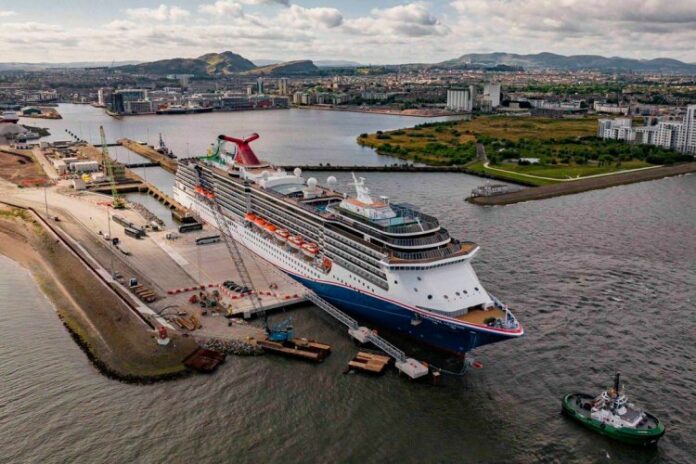
The berth will feature a heavy lift capability of up to 100 tonnes per square metre (t/m2), backed up by 175 acres of adjacent land for associated renewables logistics, marshalling and manufacturing.

Leith will deliver Scotland’s largest renewable energy hub on a 175-acre site – supporting Scotland’s energy transition plans, boosting local supply chains, creating new, high quality green jobs and making a significant contribution to the country achieving its net zero carbon emissions targets.

A regular visitor into the River Forth, the Carnival Legend is calling into the Port of Leith itself for the first time, with over 2,000 passengers and 930 crew on board. The ship is 293m long, which is the length of around 25 buses, or three full size football pitches, rising to 12 decks above the water with a tonnage of 88,500 making her over 15 times the size of the Royal Yacht Britannia berthed nearby in Leith. Her guests will disembark in Leith and take advantage of pre-planned day excursions or travel into the city centre to enjoy the many attractions of Scotland’s capital city.

Commenting on the trial of Leith’s new outer berth, Stuart Wallace, CEO of Forth Ports, said:

“Forth Ports is driving private investment into vital port infrastructure in our ports to ensure Scotland benefits from future low carbon industries, including offshore wind. Although designed and built for offshore renewables, this successful trial of the new deep water outer berth in Leith with the Carnival Legend is a true milestone for our business as we get Leith ready, ahead of the market, for future renewables projects.”

The Leith Renewables Hub will be part of the Forth Green Freeport’s strategically located tax sites, which aim to reindustrialise central Scotland, generating thousands of high-quality green jobs by increasing trade and supporting the growth of businesses across the Firth of Forth.

Crowley accepts delivery of largest U.S.-flagged bunker barge

0

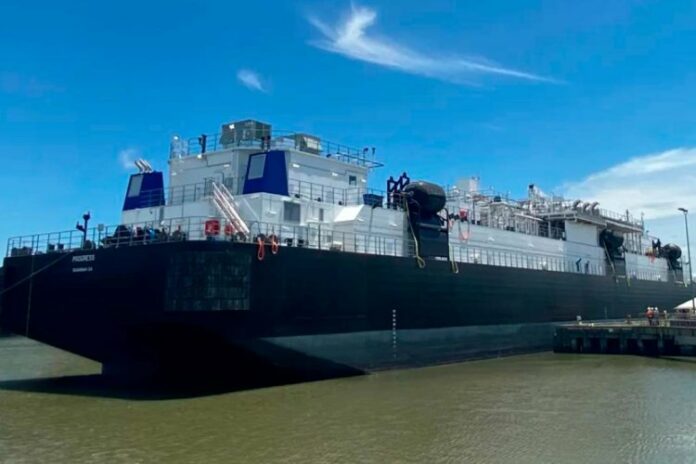
Crowley has accepted delivery of the LNG bunker barge Progress, the largest U.S. Jones Act-compliant vessel of its kind, after construction was completed at Fincantieri Bay Shipbuilding in Sturgeon Bay, Wisconsin.

The Progress will expand access to cleaner energy for ship operators at the Port of Savannah, Georgia, upon final commissioning there this month. Shell NA LNG, LLC, (Shell) signed a long-term agreement with Crowley to operate the barge, providing another fueling location to ships using liquefied natural gas.

“The Progress LNG bunker barge sets a new standard for quality and capability to serve the energy needs of the shipping industry,” said James C. Fowler, senior vice president and general manager, Crowley Shipping. “LNG offers a safe and reliable solution for ocean carriers that advances the transition to lower emissions. We congratulate the people whose dedication and hard work in designing and building this world-class vessel allowed us to reach this milestone for the U.S. industry and our customers.”

Designed by Crowley’s engineering services group, the 416-foot-long barge has a capacity of 12,000 m3 (3.17 million gallons) and features a transformative design, enabling efficient and dependable supply of LNG to fuel ships. Progress’ technologies include capability developed by Shell and Crowley’s engineering services group to flexibly deliver LNG to various types of LNG containment systems.

“Fincantieri Bay Shipbuilding continues to be an industry leader in building LNG bunkering barges. We take tremendous pride in seeing another FBS-built vessel leave Sturgeon Bay to its new operational home port. I am proud of the work of our entire Fincantieri Bay Shipbuilding team,” said Jan Allman, vice president and general manager of Fincantieri Bay Shipbuilding.

Port of Oakland receives $3 million grant to tackle sea level rise

0

The California Department of Transportation (Caltrans) awarded the Port of Oakland and the City of Oakland $3 million for a Sustainable Transportation Planning – Climate Adaptation Planning grant. The funds will address potential flooding due to sea level rise (SLR) and groundwater intrusion (GWI).

“Sea level rise and groundwater intrusion pose an existential threat to the Port and City,” said Director of Environmental Programs and Planning Colleen Liang. “We are thankful to Caltrans for the award. We’ll use the funding to provide adaptation strategies for the Port, and the City of Oakland’s vulnerable communities.”

The Port’s and City’s plan is called Rising Seas and Oakland’s Infrastructure and Frontline Communities: Climate Adaptation Planning for Neighborhood-led Resiliency Project. It entails conducting an asset inventory and vulnerability assessment. The project focuses on projected SLR and GWI for the Port and adjacent Oakland neighborhoods. The Port will contribute $1.5 million to help fund the $4.5 million project.

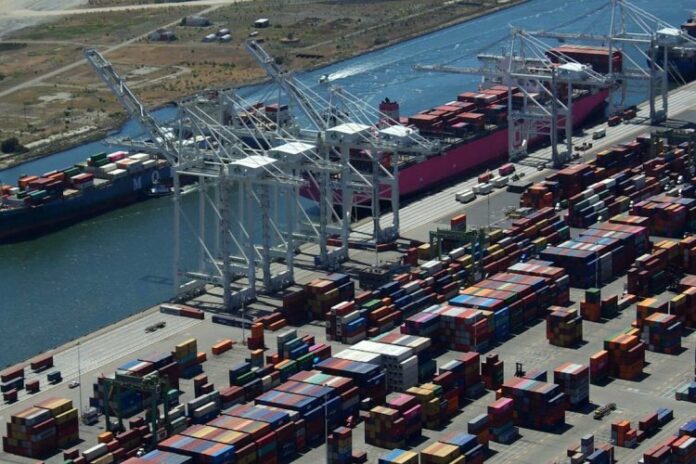
The nearly 20 miles of San Francisco Bay shoreline property that the Port of Oakland oversees is vulnerable to future extreme weather events. This includes critical transportation infrastructure, such as San Francisco Bay Oakland International Airport, the Oakland Seaport, and public transportation. It also includes critical roadway infrastructure that provides freight and passenger connectivity to vital State, regional, and local economies. Disadvantaged communities in Oakland are also vulnerable to SLR and GWI.

The Project will model projected impacts of near and long-term (2030, 2050, 2100) SLR, GWI, and liquefaction. It will also seek adaptation strategies to combat the identified vulnerabilities. The community is integral to guide and inform the project. The Port and City will use community engagement from the project’s start throughout implementation.

Hydrogen demand will require hundreds of additional ships, report says

0

The International Chamber of Shipping (ICS) presents a new report, written by the Professor of Energy Economics at Biberach University of Applied Sciences, Germany, identifying hydrogen demand sectors, demand locations and the demand-pull timeline at the Malaysia Maritime Week event.

The ground-breaking report titled “Turning hydrogen demand into reality: Which sectors come first?” focuses on the potential of clean hydrogen to function as an energy carrier and feedstock to decarbonise multiple sectors, especially hard to abate sectors. The report identifies that to meet future hydrogen demand, the scale of renewable electricity demand for green hydrogen production is unprecedented and leads to once-in-a-generation opportunities and challenges.

The report, produced in collaboration with Professor Stefan Ulreich, Professor of Energy Economics at Biberach University of Applied Sciences, and ICS, seeks to better assess the future supply and demand dynamics of the new zero emission fuels that industrial sectors, including shipping, will use in the coming decades.

Guy Platten, Secretary General of the International Chamber of Shipping states:

“For global hydrogen demand to keep the net-zero by 2050 scenario within reach, demand for hydrogen-based fuel sources would need to scale five times from current levels to reach approximately 500 million tonnes from 2030 to 2050. One of the main takeaways in this report is the high variability in potential demand. Industry will dominate the hydrogen demand. Shipping however can play a key role as an enabler to the hydrogen economy.”

The report highlights three economies as the main markets to initially drive hydrogen demand – South Korea, Japan and the EU. Europe has a target of 20 million tonnes of hydrogen per year by 2030, with half of that volume to come from imported sources. To meet this expected demand of the EU, the fleet will need to increase by up to 300 vessels for the EU2030 target.

According to the International Energy Agency (IEA) hydrogen use is expected to remain static and within current industrial use cases into 2030. However, to go beyond the current hydrogen demand by existing sectors, infrastructure, enabling regulation and power access barriers need to be addressed for new sectors to begin uptake of hydrogen the report finds.

Guy Platten added:

“Regulatory certainty is vital, and governments are the key to unlocking the opportunity for early adopters by prioritising demand incentives over supply support to catalyse offtake agreements. One thing is certain, readiness at ports and infrastructure development to remove barriers for maritime uptake will be crucial. This will allow for both the maritime and other sectors to move forward, adding energy-security and enhancing diversification. This is a once in a generation opportunity to transform the whole energy-maritime value chain.”

Stefan Ulreich, Professor of Energy Economics at Biberach University of Applied Sciences states:

“Key for the realisation of a future hydrogen economy is the infrastructure for production, but also transportation infrastructure. The maritime industry will play a key role by connecting the hydrogen surplus regions with the high consumption areas. However, this necessitates port infrastructure for loading/unloading and pipeline transport from the port to the consumers. A coordinated action would help most to deliver this.”

“What we are seeing is that the annual hydrogen demand would mean increasing the fleet to transport hydrogen by ship. To just meet a global increase if 30 million tonnes of hydrogen traded worldwide, we could need up to 411 new hydrogen vessels (for long distances) or up to 500 vessels if transported as ammonia.”


Valenciaport awards rail tender

0

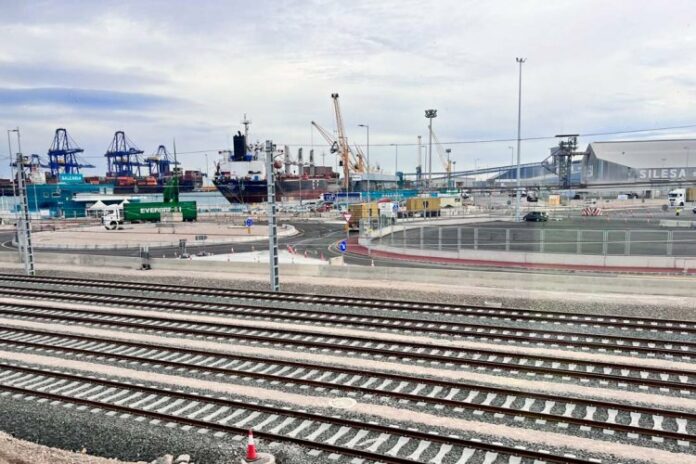
The Port Authority of Valencia (PAV) has awarded the works to double the track and implement the third rail line between the Poniente and Levante docks in the Port of València to the joint venture between the companies TECSA Empresa Constructora, S.A. and Dragados, S.A., for a total of 11,546,582.05 euros (VAT included), with a maximum completion period of 18 months.

Once this infrastructure is in operation, it will allow the access of freight trains of 750 metres to the Levante Railway Terminal on double mixed 1668/1435 mm and electrified track, which will mean an improvement in the railway operation of this section of the network. In addition, the single-track section that currently exists, which entails operational limitations that are not compatible with the planned traffic increases, will be eliminated.

The extension of tracks will improve APM’s accesses and will accommodate more trains inside the Port, facilitating the access of convoys to the rail motorway and to Valencia Terminal Europa (VTE).

This project is financed by funds derived from the Recovery, Transformation and Resilience Plan and its main objectives are:

  • To meet the levels of capacity, operability, connectivity and safety demanded by the expected increases in traffic
    Enable Iberian and international gauge rail operation
    Enable rail operation with electric traction
    Favour environmental sustainability

The adaptation of the PAV railway network is being carried out in sections, progressively advancing from the connection with the ADIF network. This will allow each section to be built independently, minimising the impact on railway operations.

The work is part of Valenciaport’s railway strategy, a plan that promotes the use of the railway and has led to an increase in train traffic in recent years, bringing together approximately 8% of the total amount of goods entering and leaving the Valencian docks. Likewise, the forthcoming entry into service of the international gauge in the Mediterranean corridor makes it necessary to extend and adapt the existing railway infrastructures in order to adapt them to the new potential demands.

Port of Auckland planning largest rooftop solar panel project in Auckland’s CBD

0

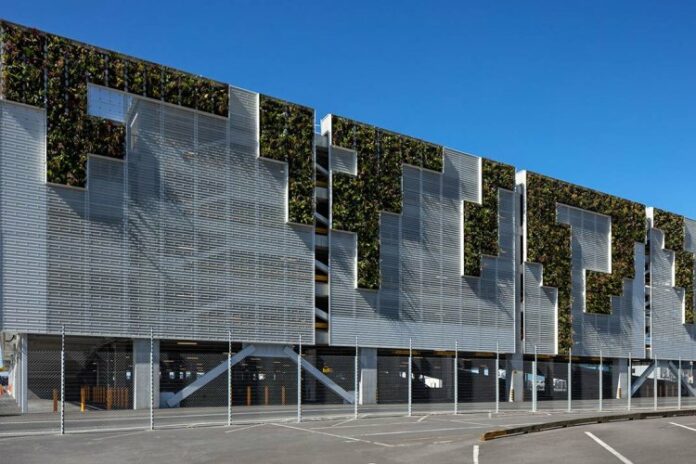
The port will install 1,300 solar panels on the roof of its multi-level vehicle handling facility located near Bledisloe Wharf. Historically, this was the site of a coal-fired power station that powered the CBD and port operations.  

An estimated 800MWh of renewable electricity will be generated annually, equivalent to the yearly consumption of approximately 100 homes or six percent of the energy the port gets from the grid. At this stage, it will be the largest solar panel installation in Auckland’s central business district.

“We are fortunate that the peak power demand on the port is during hot summer afternoons, and this will coincide with peak power generation from the solar array, so we will certainly be able to use all that we can generate on-site,” says Ryan McMahon, Port of Auckland electrical engineer. “The new solar energy infrastructure will also be used to charge Sparky, the port’s fully electric tugboat, electric light vehicles, and zero-emissions cargo handling equipment as they begin to be introduced into port operations.”    

The port is also assessing the possibility of generating 20-30 percent of its power from future solar installations to support the electrification of port operations and help reach its target of net-zero emissions by 2050. 

“Ports of the future need to become more sustainable and we must play our part in the transition to a decarbonised future.” says Rob Hopkins, the port’s Head of Infrastructure. “There is still work to do, but this project is a huge step for the port in establishing our own sustainable energy solutions to reduce emissions and improve the resilience of our power network.

“Our team is excited to see this project come to life and to continue to work on innovative ideas to make the port more sustainable while improving operational efficiency and reducing emissions.”