-10.9 C
New York
Home Blog Page 149

Vestdavit wins record multi-davit contract with Seaspan for Canadian Coast Guard vessels

0

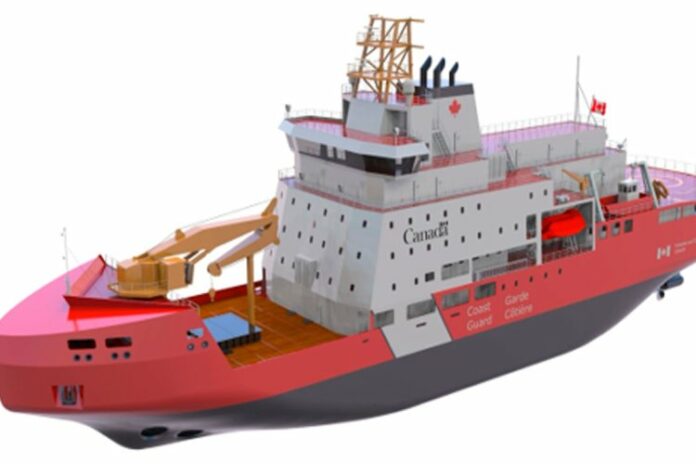
Vestdavit has landed its biggest-ever order with a major contract to deliver high-specification davits for six Multi-Purpose Vessels to be built for the Canadian Coast Guard at Seaspan Shipyards in Vancouver.

The leading Norwegian davit supplier will initially provide a total of six FF-15000 davit systems – one for each vessel – with options for a further 10 such units under its second contract secured with the Canadian shipbuilding group.

It comes on the heels of an order that Vestdavit won last year with Seaspan to supply RHIB davits for the Polar Icebreaker, also soon to be under construction for the Canadian Coast Guard.

“We are extremely honoured to have been awarded an additional contract with Seaspan and entrusted with such an extensive davit delivery, which we consider to be a strong vote of confidence from the shipbuilder in the proven reliability of our boat-handling systems,” says Magnus Oding, General Manager of US subsidiary Vestdavit Inc.

“This is also a confirmation of our efficient delivery model with easy access for the yard to digital drawings during the ship design phase, timely delivery, effective follow-up by Vestdavit during construction and ease of installation with our modular systems.”

The hydraulically operated FF-15000, which is an adaptation of a larger FF-type davit delivered for an earlier project, is based on the F-frame system that comprises a large frame with no structure behind or underneath the daughter craft. This allows for greater flexibility in the shape and volume of the boat being handled, with the main structure aft/forward of the boat.

The flexible, deck-mounted davit, with a 15000kg safe working load (SWL) capacity, can operate in both single and dual-point configuration for optimal performance with various sizes of craft.

It will be able to handle both a 9m self-propelled barge and 7.5m RHIB, as well as a 20-foot ISO container by incorporating into the system adjustable lifting points that allow for handling of boats and containers with different lifting points, size and weight.

The motion-compensated davit also incorporates advanced features such as shock absorbers, dual winches that each have independent constant tension and an anti-pendulation device with guide arms for maximum stability to safely launch and recover boats in rough sea conditions.

The Canadian Coast Guard’s operations are dependent on a high level of davit efficiency and availability, as well as redundancy, for frequent launch-and-recovery operations to perform a variety of essential tasks, such as rescue missions.

The new Multi-Purpose Vessels for the Canadian Coast Guard are intended to operate year-round on Canada’s eastern and western seaboards and will support critical services such as icebreaking in moderate conditions, maritime search and rescue, scientific research, environmental response, emergency towing, maintenance and deployment of buoys, as well as support for offshore fisheries patrols.

Vestdavit’s boat-handling systems have proven robustness through decades of real-life operation with navies and coastguards in different conditions around the world, ensuring mission-critical operations can be carried out effectively.

This is allied with innovative technology developed in collaboration with clients to provide solutions that are tailored to their specific requirements, with versatile functions to meet a range of operational needs.

“Solutions such as the FF-15000 provide the client with sophisticated features to meet high specifications for fail-safe davit operations. This important reference project builds on Vestdavit’s already strong reputation in our core navy and coastguard market with a solution for enhanced davit reliability,” Oding concludes.

Ørsted launches heavy-lift cargo drone operations at Borssele offshore wind farm

0

This pioneering move marks a significant leap forward in operational efficiency and safety in the offshore wind industry. The heavy lift cargo drone will transport cargo from a vessel to all 94 wind turbines of the Borssele offshore wind farm.

Building on previous trials and expertise using drones in other offshore wind farms, Ørsted is using the 70 kg drones – which have a wingspan of 2.6 metres – to transport cargo of up to 100kg, in an actual operations campaign, after the concept was tested last year at the Hornsea 1 Offshore Wind Farm in the UK.

For this specific campaign, Ørsted has decided to update some critical evacuation and safety equipment in each of the turbines. Normally, a vessel would sail from one wind turbine to the next, using a crane to lift each box containing the equipment onto the transition piece, after which the box would be lifted with the nacelle’s crane to reach the nacelle and then be moved to the top of the turbine. Instead, the drone will simply fly back and forth from an offshore supply vessel directly to the top of the nacelle. The drone flight from the vessel to the turbine takes about four minutes per turbine, while the conventional approach without using drones can take approx. six hours. Taking vessel transport between the turbines and from-and-to shore into account, Ørsted has been able to complete the tasks at Borssele 10-15 times faster than normally.

Rasmus Errboe, Chief Commercial Officer and Deputy-CEO at Ørsted, said:

“Ørsted has led offshore wind’s journey from a niche technology to a cost-competitive and large-scale source of renewable power. We’ve done this through some big leaps by for example pioneering new turbine models, but also by continuously moving a lot of new and innovative ideas from the drawing board to real life application. The drones at Borssele 1&2 are a great example of this, as they will improve safety, bring down carbon emissions, and reduce the cost of operating offshore wind farms, which all further improve the commercial fundamentals of offshore wind for investors, governments, and corporations.”

The use of drones to deliver cargo to Borssele 1 & 2 will reduce costs and time as well as improve operational safety and efficiency. Drones mean less work disturbance as wind turbines do not have to be shut down when cargo is delivered. They prevent risk, making it safer for personnel working on the wind farm, and they minimise the need for multiple journeys by ship, reducing carbon emissions in the process.

Ørsted is leading the industry in deploying heavy-lift drones on a larger scale and in an operational campaign. The company is actively seeking partnerships with the best cargo drone operators and services providers to help grow the supply chain.

The new technology is a testimony to Ørsted’s approach to innovation, which has been core to Ørsted’s business from the very beginning, helping to take offshore wind power from a demonstration concept to a large-scale energy technology.

Advances in technology have already brought down the costs of renewable energy, making it cost-competitive with fossil fuels, and  Ørsted believes it can continue to harness cutting-edge technology to make green energy more affordable, reliable, efficient, and sustainable across the value chain. Recently, Ørsted has piloted a new technology that further optimises offshore wind monopile installation and it has deployed autonomous vessel for offshore surveying.

Ørsted has in-house R&D capabilities led by a team with deep science and engineering expertise, overseeing 300+ different projects, and the company has partnered with over 50 universities and research institutes, helping to bring the best ideas from the lab to the field.

ADNOC signs long-term heads of agreement with Osaka Gas for Ruwais LNG project

0

ADNOC has announced the signing of a long-term Heads of Agreement (LNG agreement) with Osaka Gas, one of the largest utility companies in Japan, for the delivery of up to 0.8 million metric tonnes per annum (mmtpa) of liquefied natural gas (LNG). 

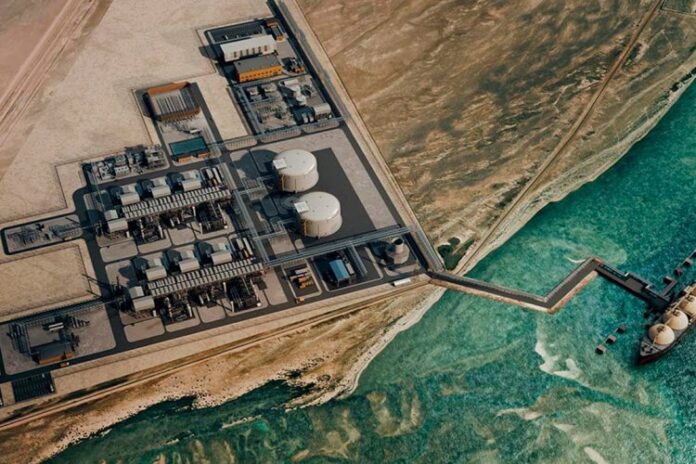
The LNG will primarily be sourced from ADNOC’s lower-carbon Ruwais LNG project, which is currently under development in Al Ruwais Industrial City, Abu Dhabi, and is expected to start commercial operations in 2028. Under the agreement, LNG cargoes will be shipped to the destination ports of Osaka Gas and its Singapore-based subsidiary, Osaka Gas Energy Supply and Trading Pte. Ltd. (OGEST).

Rashid Khalfan Al Mazrouei, ADNOC Senior Vice President, Marketing, said:

“This landmark LNG agreement, our first long-term LNG deal with Osaka Gas, underscores the strong, long-standing energy partnership between the UAE and Japan. This agreement further enhances ADNOC’s position as a reliable and responsible global energy provider and reflects our commitment to help meet Japan’s energy needs with secure and sustainable energy solutions. The Ruwais LNG project supports our broader strategy to expand our global LNG footprint to enable the energy transition.”

The agreement with Osaka Gas is one of several long-term LNG sales commitments ADNOC has signed with international partners for Ruwais LNG, which take the long-term sales commitments to 70% of the project’s total production capacity. 

Keiji Takemori, Osaka Gas Executive Vice President, said:

“Osaka Gas is delighted to secure LNG from ADNOC, a reliable and responsible global energy supplier. This agreement will significantly enhance the stability of Osaka Gas’ LNG procurement. It will also strengthen the foundation of our stable energy supply to customers, transition to lower carbon energy, and acceleration towards our net zero target. We will continue working on the stable procurement, development and supply of natural gas as a key transition fuel.”

The Ruwais LNG plant is set to be the first LNG export facility in the Middle East and Africa region to run on clean power, making it one of the lowest-carbon intensity LNG plants in the world. The facility will leverage artificial intelligence and the latest technologies to enhance safety, minimize emissions and drive efficiency. The Ruwais LNG project will consist of two 4.8mmtpa LNG liquefaction trains with a total capacity of 9.6mmtpa, more than doubling ADNOC’s existing UAE LNG production capacity to around 15mmtpa, as the company builds its international LNG portfolio. 

The agreement, ADNOC’s first long-term LNG deal with a Japanese energy company since the early 1990s, demonstrates the company’s renewed commitment to the Japanese market. ADNOC and Osaka Gas will work together to conclude a detailed Sale and Purchase Agreement in the coming months based on the terms of the LNG agreement.

Fugro completes survey for Atlantic Shores to advance US offshore wind projects

0

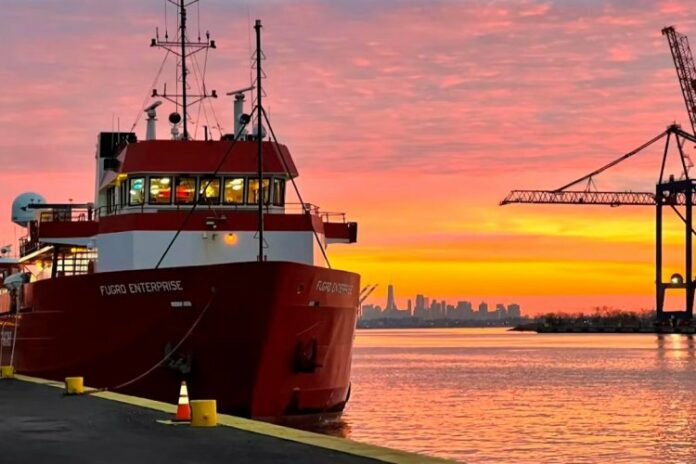
Supporting the site assessment of five projects across three lease areas totalling 1,000 km², Fugro worked with Atlantic Shores to pioneer a new data collection and management approach that increased survey efficiency by 30% and contributed to the recent federal approval of Atlantic Shores South, which will provide 2,800 MW of clean energy to New Jersey.

Traditionally, offshore wind site assessments have required multiple independent campaigns to gather oceanographic, seabed, soil and habitat data. Fugro streamlined this process by consolidating these efforts into a single, integrated programme aligned with Atlantic Shores’ portfolio strategy. To manage the large volumes of data associated with this approach—upwards of 100 TB—Fugro collaborated with Atlantic Shores to develop Fugro VirGeo®. This cloud-based Geo-data engagement and delivery platform provides internal stakeholders with real-time project information for faster decision‑making both in the field and office.

The platform also facilitated the first digital deliverables to federal regulators, supplementing the thousands of pages of reports required by current permitting standards. This push toward digital deliverables aims to increase transparency, build public trust, and further compress the development timeline through more efficient regulatory reviews, steps critical to achieving the aggressive national goal of deploying 30 GW of offshore wind energy by 2030.

Joris Veldhoven, Chief Executive Officer, Atlantic Shores Offshore Wind, said:

“Given the shared values between Fugro and Atlantic Shores, we are proud of the longstanding partnership and commitment to advancing New Jersey’s first offshore wind project. Over the last four years our teams have worked tirelessly to ensure we possess the most accurate data to develop our project portfolio safely and responsibly. Our partnership has led to industry innovations, advancements, and best practices that are charting the course for clean energy delivery now and for future generations.”

Céline Gerson, Fugro’s President and Group Director in the Americas, said,

“The energy transition will require companies that are willing to lead by example—that work smarter to move faster while maintaining the highest accuracy and safety standards. Atlantic Shores is that kind of company, and we’re incredibly proud to have partnered with them to accelerate their offshore wind development journey. We’ve achieved a great deal together in the last four years, and we’re excited to keep this momentum going during future phases of development, working together to increase renewable energy in the US.”

Throughout the four-year field programme, Fugro achieved Atlantic Shores’ stringent “Goal Zero” safety standard for people and the environment. This accomplishment was made possible by the safety excellence of Fugro’s own team, as well as their subcontractors Alpine and S.T. Hudson Engineers, two local survey companies whose work on the project contributes to Atlantic Shores’ commitment to New Jersey job creation.

Bernhard Schulte Shipmanagement joins SEA-LNG

0

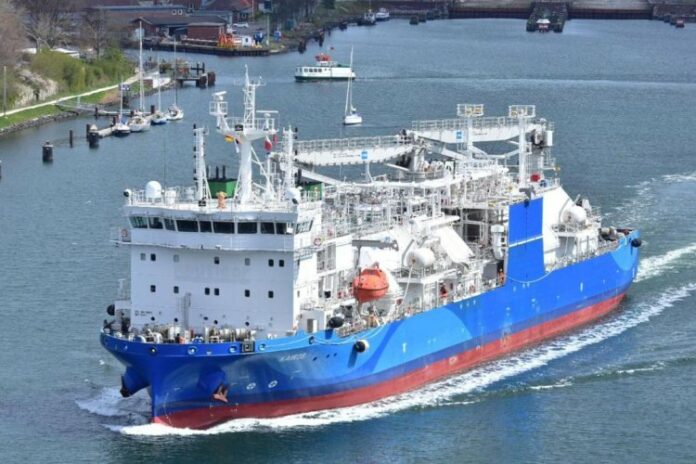
Bernhard Schulte Shipmanagement (BSM), an integrated maritime solutions provider, has joined the SEA-LNG coalition – bringing its decades of LNG operational experience and technical insight to SEA-LNG. BSM’s decision to join SEA-LNG reflects the decision of many others joining this year who recognise LNG as a practical and realistic lower-emission marine fuel.

BSM brings abundant operational experience and has a proven track record as the world’s largest third-party ship manager of gas carriers. It has more than 100 gas carriers under management, over half of which are LNG carriers. It also manages close to 30 LNG dual-fuel ships and presently 2 LNG bunker vessels, with more coming into management soon.  

All BSM vessels under management undergo reviews and audits from Oil Companies International Marine Forum’s (OCIMF) Tanker Management and Self-Assessment (TMSA) to ensure full compliance with International Safety Management (ISM) requirements, with no major safety incidents reported to date. These in-depth safety credentials will also enhance SEA-LNG coalition’s combined skillset.

LNG as a marine fuel requires rigorous training standards for seafarers and shoreside crew to ensure safe and efficient vessel operation. BSM has its own dedicated LNG training facilities for realistic training via Liquid Cargo Simulators (LCS) designed and developed by BSM’s in-house technical team that uses SEA-LNG member GTT’s Training software. BSM also operates an LNG Competence Centre (LCC), providing consultancy services across a wide range of LNG industry topics, including technical, crewing and commercial matters.

Nick Topham, Managing Director of Bernhard Schulte Shipmanagement Germany, added,

“At BSM, we are committed to LNG as a marine fuel. It is a proven, technically mature solution already being used on many ships, offering comprehensively developed supply and bunkering infrastructure. SEA-LNG provides an important network for exchanging ideas and pooling expertise with other stakeholders, jointly advancing LNG-related projects.”

Peter Keller, Chairman of SEA-LNG, said:

“BSM joining represents a significant milestone for SEA-LNG. We welcome our first ship manager into the coalition, adding valuable insight and many years of experience in LNG as a marine fuel. BSM has been at the forefront of using LNG operationally for decades, with no major safety incidents in port or at sea, ensuring safe operations for seafarers today.”

LNG as a marine fuel has more than 60 years of operational history without any major safety incidents. This is a testament to the LNG industry’s rigorous design guidelines for both ships and shore facilities, as well as high standards of training and operations, supported by global regulators. LNG has clear rules set by the International Maritime Organization (IMO) on the International Code of Safety for Ships Using Gases or Other Low-Flashpoint Fuels (IGF code).

Keller added:

“Thanks to the hard work of BSM and our other members, LNG as a marine fuel offers a low-risk, incremental pathway to net-zero GHG emissions in shipping via biomethane and e-methane. As a result, LNG is a proven solution today and for 2050 and beyond with biomethane and e-methane utilising existing LNG infrastructure and proven safe shipboard technology.”

Wallem Group and COSCO enter strategic cooperation agreement

0

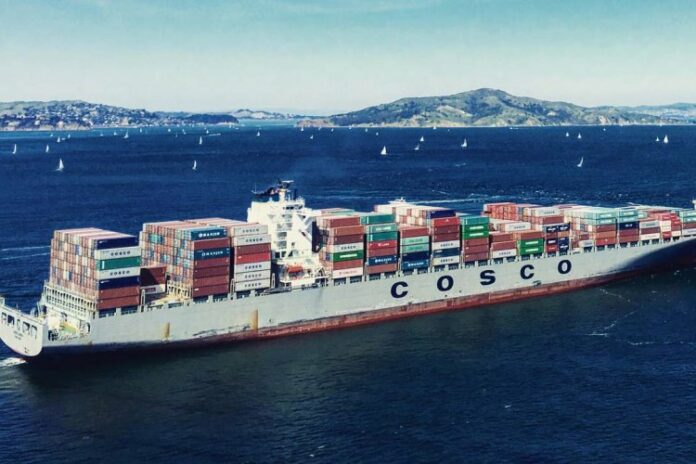
Han Chao, Chairman and Party Secretary of COSCO Shipping Seafarer Management Company, and John Rowley, CEO of Wallem Group, signed the agreement on behalf of both parties.

John Rowley, CEO, Wallem Group, said,

“We are honoured to partner with COSCO Shipping Seafarer Management Company to work together towards common goals on green, low-carbon, and intelligent shipping, and to leverage respective strengths to further integrate resources and jointly enhance competitiveness in ship management.”

Han Chao, Chairman and Party Secretary of COSCO Shipping Seafarer Management Company, commented,

“The agreement with Wallem Group is a significant move for COSCO Shipping Seafarer Management Company which expands cooperation with a leading global third-party ship management company, as part of COSCO’s strategy to continuously deepen reform and accelerate enhancements in productivity.”

This partnership underscores both companies’ commitment to innovation and sustainability in the maritime industry, aiming to set new benchmarks in ship management and crew services.

Damen signs with Lithuanian Ministry of National Defence for ASD Tug 3010

0

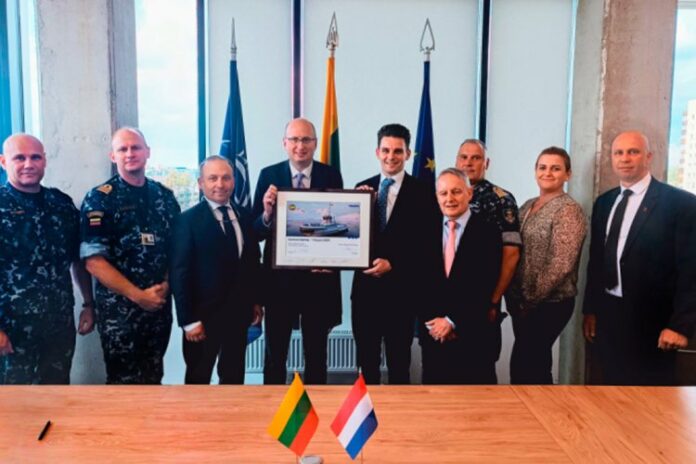
Damen has signed a contract with the Lithuanian Defence Resources Agency under the Ministry of National Defence for the acquisition of a new ASD Tug 3010. 

Lithuanian Minister of National Defence Laurynas Kasčiūnas stated,

“By acquiring this harbour tug, Lithuania strengthens its position as a maritime nation and provides the necessary operational capabilities to the Navy.”

Commander of the Lithuanian Navy Rear Admiral Giedrius Premeneckas added,

“The acquisition of the harbour tug will significantly contribute to the Lithuanian Navy’s ability to perform various tasks. This includes a wide range of missions related to host nation support for visiting allied ships and reinforcement movement through the Port of Klaipėda, ensuring port security, and supporting the execution of tasks by the naval fleet and other units in the Navy. It is noteworthy that the harbour tug will be the first newly built vessel to be included in the Naval Flotilla. Previous acquisition projects involved obtaining and modernising vessels from NATO countries to suit the needs of the Lithuanian Navy.”

Damen Sales Manager Justin Rietveld said,

“It is a great honour for us to sign the contract with the Lithuanian Defence Materiel Agency for the construction and delivery of a new ASD Tug for the Lithuanian Navy. Damen takes great pride in serving the needs of its naval partners around the world. The Damen ASD 3010 is a well proven design and very capable to serve the needs of Lithuanian Navy, both in terms of tug capabilities as well as performance in ice conditions. The large open working deck allows the vessel to carry out a wide range of activities, such as firefighting, towing targets, assisting in pollution control and other operations as specified in the technical requirements. We are confident that the ASD is a great fit with the operational need of Lithuanian armed forces. This project holds significant importance to us, and it will mark the commencement of a long and prosperous partnership together. We all look forward to a successful project and delivery of the vessel to the Lithuanian Navy in the first half of next year.”

The signing ceremony was also attended by the Ambassador of the Netherlands, Jack Twiss Quarles van Ufford.

Leonardo and Fincantieri to build EUR200 million OPV

0

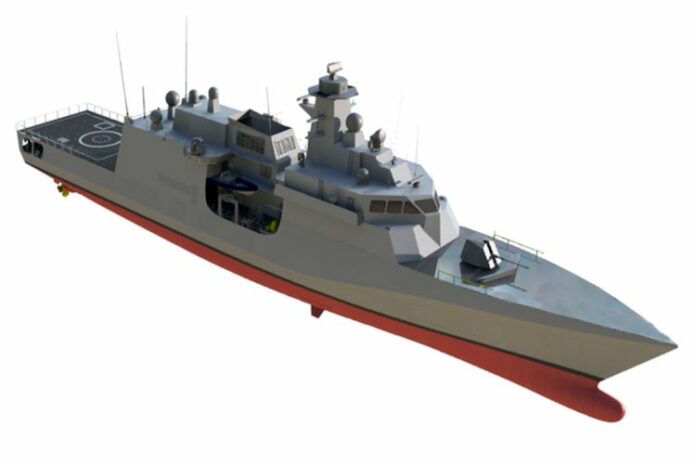
As part of the Italian Navy’s Offshore Patrol Vessel (OPV) program, Orizzonte Sistemi Navali (OSN), a joint venture owned by Fincantieri (51%) and Leonardo (49%), has received notification from the Italian Navy that it has exercised its option for the construction of the fourth next-generation patrol vessel and the related logistical support. The total value of the operation is about 236 million euros.

In the coming days, Orizzonte Sistemi Navali will finalize sub-contracts by notifying the option exercise to Fincantieri and Leonardo, with a value respectively of around 163 million euros and 70 million euros. The contract with Fincantieri constitutes a significant related-party transaction. For Leonardo, the sub-contract is a related-party transaction of lesser importance, considering its value and the applicable relevance indexes. Both transactions are in keeping with the applicable regulations and are exempt from the procedural regime for related-party transactions (including jointly), pursuant to current regulations and the respective procedures adopted.

The OPV program, put in place to contribute to the modernization and renewal of the Italian Navy’s units, responds to the need to ensure adequate capabilities for presence and surveillance, maritime patrolling, merchant traffic control, protection of lines of communication and the exclusive economic zone, as well as operations to protect against threats derived from marine pollution, such as toxic liquid spills.

With a length of about 95 meters, a displacement of 2,300 tons and the capacity to accommodate 97 crew members on board, the new patrol vessels, which will be built at Fincantieri’s Riva Trigoso and Muggiano Integrated Shipyard, will be marked by a package of technological solutions, as well as standards of excellence in automation and maneuverability that will make them suitable for operating in a wide range of tactical scenarios and weather conditions.

Among the most innovative features is the naval cockpit, developed for the Italian Navy’s Multipurpose Offshore Patrol Vessels (PPAs) based on a truly revolutionary requirement: an integrated workstation, co-produced by Leonardo and Fincantieri NexTech, that allows the conduct of the ship and airborne operations by just two operators, the pilot and co-pilot, who have incorporated the figures of the bridge watch officer and the captain. Indeed, from this station, located in the command bridge, it is possible to manage the machines, rudders and platform systems and some functions of the combat system.

Wind Energy Construction AS contracts VARD for one ECV

0

The parties have also agreed on an option for one additional vessel which can be declared later this year.

Wind Energy Construction AS is a Norwegian company partly owned by the founders and owners of Norwind Offshore AS. This is the 6th vessel the owners of Norwind Offshore have contracted with VARD since October 2021. The five previous vessels were CSOVs.

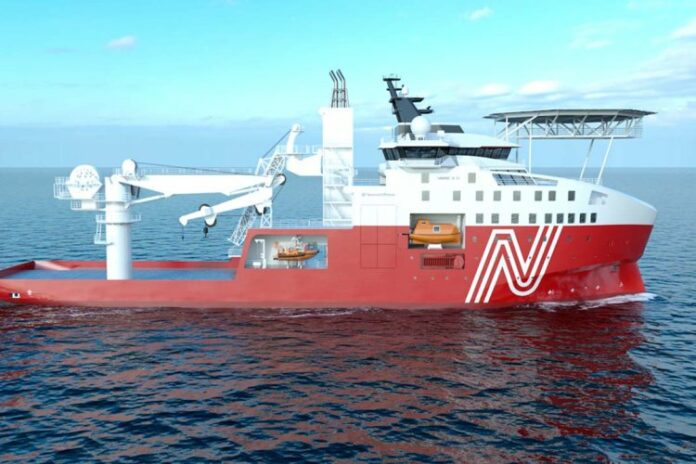
The Energy Construction Vessel (ECV) will be of VARD 3 11 design, a design tailor-made for the offshore wind and subsea market, including inspection, maintenance and repair of pipes, and construction and installation of infrastructure above and below sealevel.

The design is made for the best possible station-keeping, manoeuvrability, and sea keeping and allows for flexible configuration depending on the specific operations the vessel will perform.

This is the first construction vessel VARD will build with a motion-compensated gangway (walk-to-work) permanently installed. A walk-to-work Electric Controlled Motion Compensated (ECMC) gangway with integrated 3D compensated crane functionality will be installed. To expand capacities, especially towards the growing renewables market, a movement-compensated offshore crane of 150 tons is also being installed.

CEO in Norwind Offshore Svein Leon Aure says:

“We are pleased to have, together with VARD, developed a new vessel category which will enable the development of renewable energy to an even greater extent.

The concept builds on vessels within the construction market which we have previously built with VARD, and we feel confident that this will play an important role in the development of, among other things, offshore wind in the coming years.”

ClassNK issues world’s AiP for LNG carrier installed with Wind-Assisted Propulsion System

0

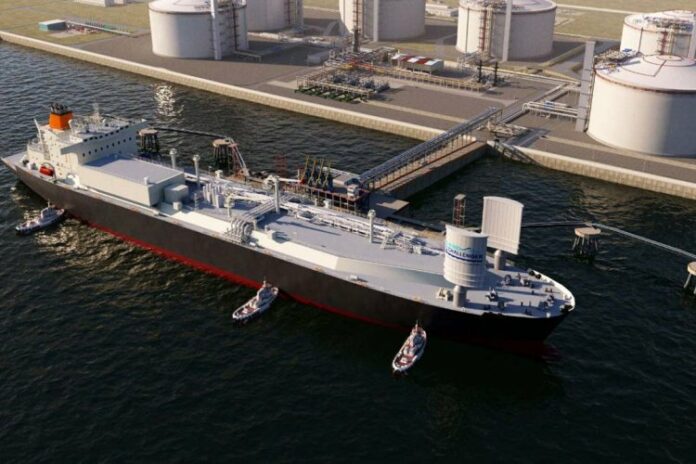
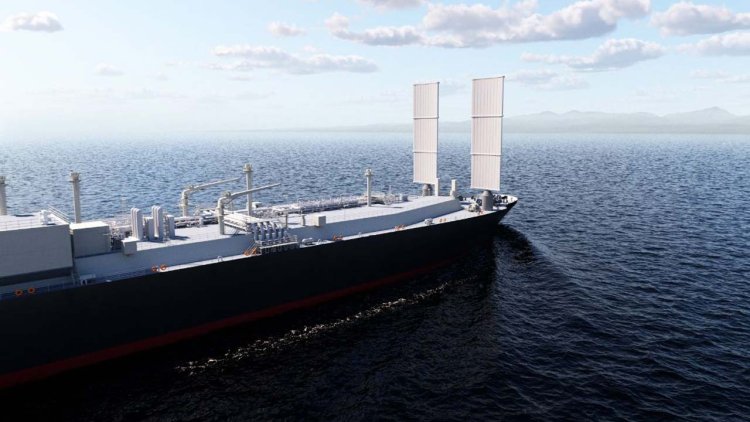
ClassNK has issued an Approval in Principle (AiP) for the membrane-type LNG carrier installed with the ‘Wind Challenger’, a hard sail wind propulsion system. 

The ship is jointly developed by Mitsui O.S.K. Lines, Ltd. and Hanwha Ocean Co., Ltd. This marks the world’s first AiP for an LNG carrier equipped with a Wind-Assisted Propulsion System (WAPS).
 
As a solution for responding to the environmental regulations and fuel cost reduction, the implementation of wind-assisted propulsion systems is in progress. When such systems are installed on board ships, it is expected to be effective in reducing CO2 emissions, etc., by taking advantage of wind power. However, depending on the scale and specifications, they also pose risks to ship’s structure, crew on board, and the surrounding environment.
 
To provide safety guidance for addressing these risks appropriately, ClassNK published the ‘Guidelines for Wind-Assisted Propulsion Systems for Ships’ as a standard for wind-assisted propulsion systems and ships equipped with these systems.
 
ClassNK carried out a review of the conceptual design of the ship based on its ‘Rules and Guidance for the Survey and Construction of Steel Ships’, ‘Guidelines for Wind-Assisted Propulsion Systems for Ships (Edition 2.0)’, and examined the result of required risk assessment. Upon confirming they comply with the prescribed requirements, ClassNK issued the AiP.