-12.3 C
New York
Home Blog Page 147

MPA and GCNS to collaborate in carbon accounting and management

0

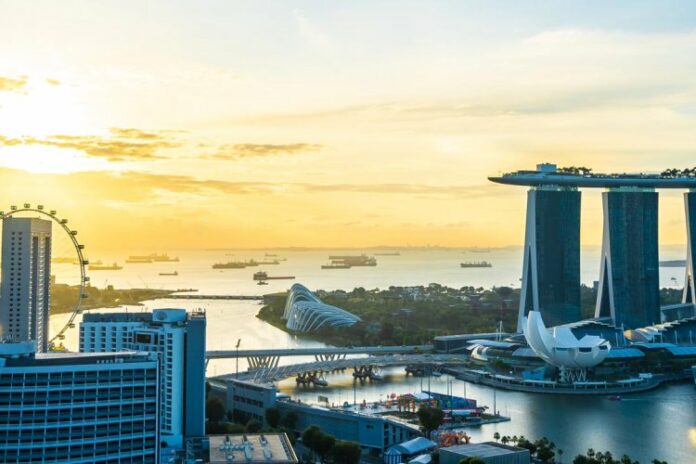
The Maritime and Port Authority of Singapore (MPA) and the UN Global Compact Network Singapore (GCNS) have signed a memorandum of understanding (MoU) to help strengthen the maritime industry’s capacity in carbon accounting and management. 

The MoU builds on the long-standing collaboration between MPA and GCNS to raise sustainability capabilities in the maritime sector, which includes an MoU signed in 2017 to provide maritime companies with training on sustainability reporting. The MoU was further expanded to include Singapore Shipping Association (SSA) in 2021 to support the development of capabilities in carbon accounting through training and recognition. Through the initiative, 15 companies have since been awarded the Maritime Singapore LowCarbon50 Award  over the past three years for their decarbonisation plans and accurate carbon accounting.

Under the new MoU signed today, MPA and GCNS will collaborate with key industry associations, including the Association of Regional Ferry Operators, Association of Singapore Marine & Offshore Energy Industries (ASMI), the Singapore Association of Shipsuppliers and Services (SASS), and SSA to train their members through workshops on the use of the Carbon Emissions Recording Tool (CERT) to measure and monitor their companies carbon emissions. 

The MoU partners will work together to develop training workshops to meet the carbon accounting and management needs of maritime companies, including information sharing on green financing and funding schemes that maritime companies can tap on to reduce their deployment cost of low and zero-carbon emission technologies and vessel designs. 

Mr Teo Eng Dih, Chief Executive of MPA, said,

“This MoU with GCNS reaffirms the importance of carbon accounting and management tools, to help maritime companies to accurately measure, report and verify their carbon emissions. We look forward to collaborating with GCNS and industry associations to help maritime companies meet their emission targets and compliance requirements.”   

Ms Veronica Lai, Vice President of GCNS, said,

“GCNS is delighted to strengthen this vital partnership with MPA and the trade associations of ASMI, ARFO, SASS and SSA. We firmly believe that collaboration within the industry is essential for advancing Singapore’s maritime decarbonisation efforts, and this MoU is a testament of that commitment.  We look forward to working hand in hand with MPA and our industry partners to equip local companies with the resources and knowledge to effectively manage their emissions. We are excited to support and facilitate the maritime sector in navigating their transition towards a low-carbon future.”

Mr Simon Kuik, President of ASMI, said,

“The Marine & Offshore Energy is transforming, pivoting towards greener and cleaner product solutions. Our sector is building up ESG competencies across its value chains. Through ASMI Decarbonisation Champion Initiative launched in April 2023, we have trained 86 individuals from 33 companies so far and aim to train a further 160 for our member companies. This MPA-GCNS-Industry MoU marks another significant milestone of our collective journey, contributing to the effective decarbonisation and green transition of the sector.”

Mr Danny Lien, President of SASS, said,

“SASS is looking forward to this collaboration with MPA, GCNS and the respective maritime associations to train and prepare the ship supplies industry in its decarbonization journey. Equipping the industry with resources, know-how, and best practices will certainly help accelerate the net zero transition in the maritime industry. SASS and its members are committed to the Singapore maritime industry’s net zero goal.”

Ms Caroline Yang, President of SSA, said,

“SSA is pleased to partner with GCNS and offer our members access to workshops where they will be introduced to CERT to manage their emissions. Additionally, they will benefit from shared information on green financing and funding initiatives. These advantages align with SSA’s 2030 Vision and support the industry’s transition to a greener future. Furthermore, we note that this collaboration brings together all maritime-related trade associations within the ecosystem, signalling a positive step towards a greener Maritime Singapore.”
RWE secures two sites with a total capacity of 4 gigawatts in the North Sea

0

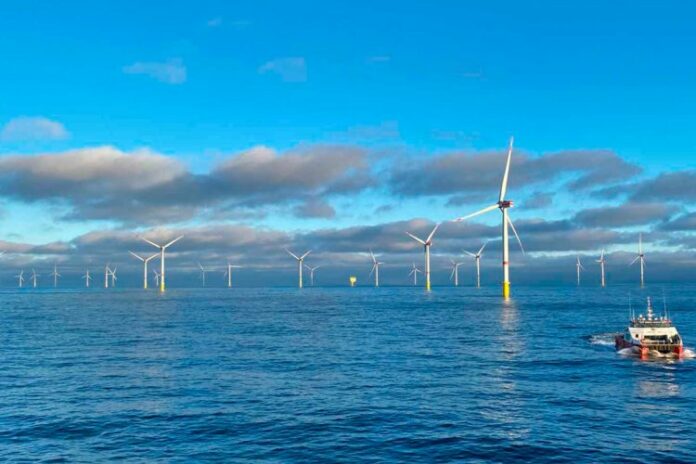
RWE has been awarded the N-9.1 and N-9.2 sites in the German North Sea in the offshore wind auction. 

The awarded sites are located approximately 110 – 115 kilometres north-west of the island of Borkum on the border with the Dutch Exclusive Economic Zone. The sites are large enough to accommodate offshore wind farms with a total capacity of 2,000 megawatts each. RWE will pay a total bid price of €250 million for these sites. RWE will explore the possibility of developing the offshore projects together with TotalEnergies.

Sven Utermöhlen, CEO RWE Offshore Wind:

“Offshore wind is one of the main pillars of Germany’s energy transition and RWE’s Growing Green strategy. With today’s success, we are adding two more large-scale wind farms to our already strong German offshore wind portfolio, and we look forward to realising the new projects – possibly with TotalEnergies. Our teams are already in the starting blocks.”

The investment decisions are expected to be taken by 2027 (N-9.1) and 2028 (N-9.2). Subject to the necessary permits, offshore construction could start in 2029 and 2030, with full commissioning planned for 2031 and 2032 respectively.

A total of three areas (N-9.1, N-9.2 and N-9.3) with a total capacity of 5,500 megawatts were put out to tender in the offshore wind tender in August 2024. The Federal Maritime and Hydrographic Agency (BSH) carried out preliminary studies for the areas awarded in the auction and collected essential information on the marine environment, the subsoil, and the wind and oceanographic conditions. The data is available to RWE and will be used as a basis for further planning of the wind farms. The projects have a legal right to be connected to the grid, which is planned for 2030 (N-9.1) and 2031 (N-9.2). The licences have a term of 25 years and can be extended to 35 years.

RWE already operates 19 offshore wind farms, including six off the German coast. The company is also currently building four large offshore wind farms: the Sofia offshore wind farm (1.4 GW) in the UK, the Thor offshore project (1.1 GW) in Denmark and the OranjeWind offshore wind farm (795 MW) in the Netherlands together with TotalEnergies, as well as the Nordseecluster with a total capacity of 1.6 GW north of the island of Juist in Germany. RWE aims to triple its global offshore wind capacity from 3.3 GW today to 10 GW by 2030.

AAL’s first Super B-Class Vessel completes record-breaking maiden voyage

0

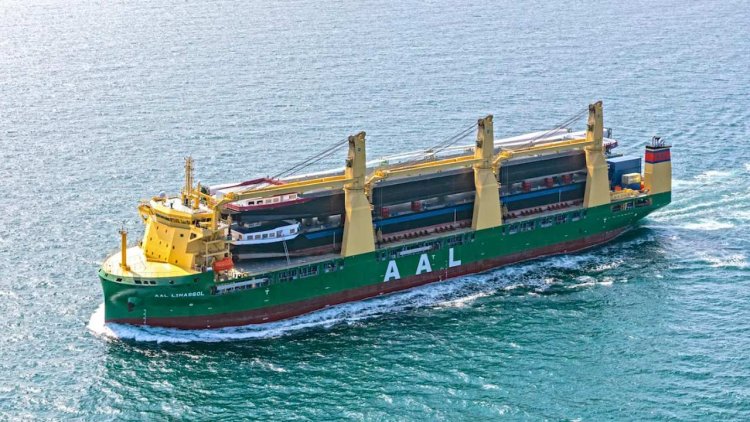
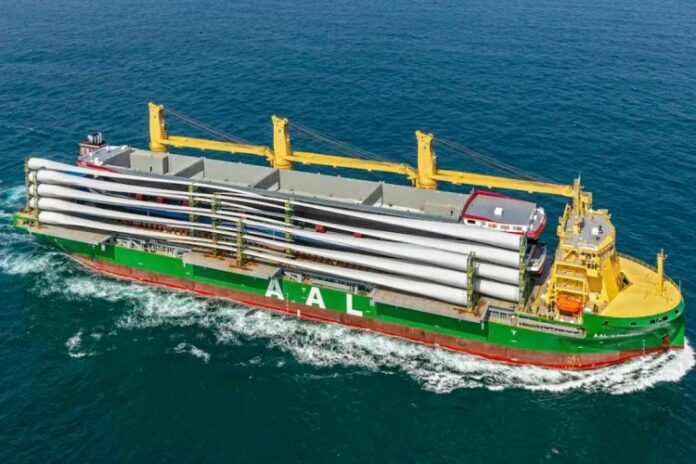
Premium project heavy lift carrier AAL Shipping’s 32,000 dwt Super B-Class vessel ‘AAL LIMASSOL’ has completed her maiden voyage to Europe, safely delivering over 89,000 freight tons of multipurpose cargo on a single sailing. 

Christophe Grammare, Managing Director at AAL Shipping, said:

“The delivery and maiden voyage of the AAL Limassol has been a highlight of the year for AAL. We were confident about the design of the Super B-Class and its capability and cargo intake. The completion of the first maiden voyage of these third generation newbuildings demonstrates that that confidence was well placed.

“The Super B-Class vessels are everything we have been hoping for and more. The ‘AAL Hamburg’ is now also in service, and the ‘AAL Houston’ will shortly follow – with another five of these vessels to also join the roster – further reinforcing our fleet of highly capable multipurpose heavy lift tonnage.”

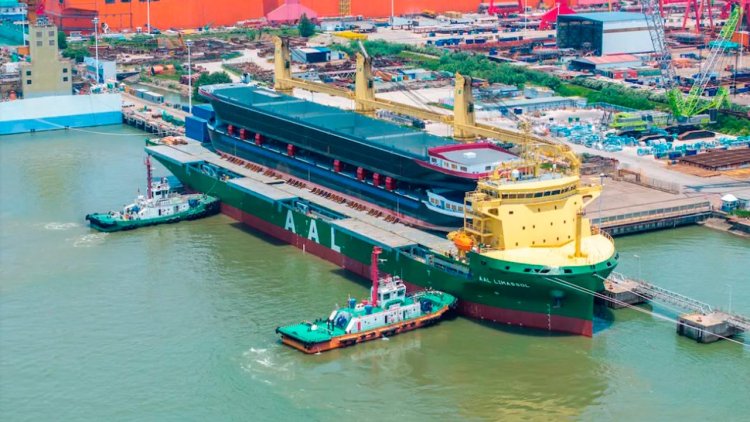
The first vessel in the Super B-Class fleet, the AAL Limassol, was delivered to AAL Shipping at a formal naming ceremony at the CSSC Huangpu Wenchong Shipyard in Guangzhou, China, on Friday 26th April. Shortly thereafter she began her maiden voyage from Asia to Europe, for which a wide variety of heavy lift and project cargo had been booked.

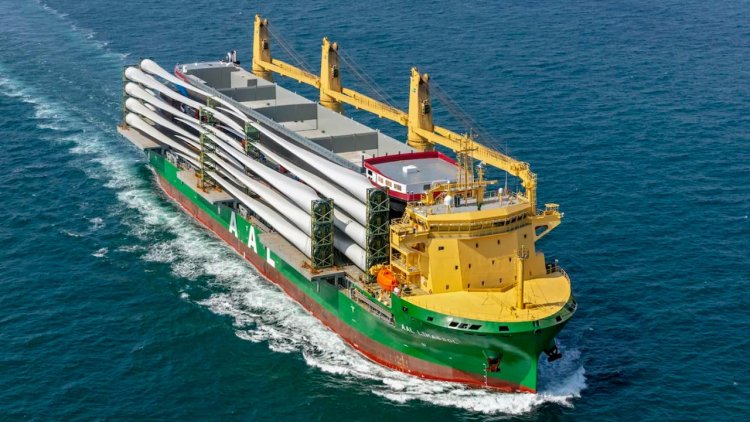
In China, a dismantled crane, transformers, modules, trucks, rotor houses as well as two 135 m-long barges, which weighed 1,650 tonnes and 1,425 tonnes, were loaded onboard. Her last call in Asia saw the vessel stop at the Indian port of Tuticorin. Here, the ‘AAL ECO-DECK’ was called into action to facilitate the loading of 15 onshore wind turbine blades, weighing 30.6 tonnes each. This cargo combination meant AAL Limassol’s maiden voyage accommodated 89,000 freight tons of cargo in total.

Once the cargoes were secured, AAL Limassol departed Tuticorin on course for Europe, transiting around the Cape of Good Hope and the English Channel to Klaipeda – her first European port of call – to discharge the wind turbine blades. AAL Limassol then continued her journey to deliver the remaining heavy cargoes in Rotterdam, Antwerp and Cuxhaven.

The AAL ECO-DECK is a revolutionary deck extension system that will be fitted on all 8 Super B-Class vessels joining the AAL fleet. It increases the clear weather deck space to over 5,000 sq m, using the vessel’s triple deck panels. With the deck extended, AAL Limassol was able to stow the 80.5 m-long wind blades alongside the sizeable barges and other cargoes already loaded onboard. They were positioned into place using the ship’s own heavy lift cranes that are capable of lifting a combined 700 tonnes.

Valentin Gherciu, Head of Operations at AAL Shipping, said:

“The maiden voyage of the AAL Limassol is the perfect example of the flexibility and functionality of the Super B-Class vessel design and its ability to accommodate a large and varied cargo intake. Compared to our A-Class vessels, which have a similar deadweight and underdeck volume, the Super B-Class fleet can handle more cargo as there are no restrictions with regard to the line of visibility.

“The highest volume carried on our A-Class fleet to date has been approximately 64,000 freight tons. AAL Limassol’s maiden voyage already set a record of more than 89,000 freight tons – roughly 40 percent more cargo volume in a single voyage – demonstrating what we can now offer to our worldwide project customers.”

Grammare added:

“The voyage has been an absolute success. The vessel’s configuration provides opportunities for us to not only enhance our offering to project cargo shippers around the world but also tap into new markets – like river barges on the AAL Limassol, or the burgeoning offshore segment and other major project types coming online.”

TotalEnergies Marine Fuels supplies its first B100 biofuel bunker in Singapore

0

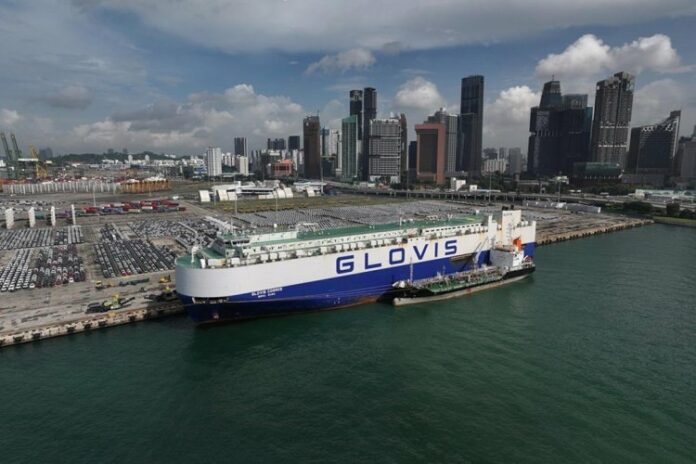
TotalEnergies Marine Fuels used an IMO Type II chemical bunker tanker, MAPLE, owned by Global Energy Group, to transfer 700 metric tons (mt) of the 100% Used Cooking Oil Methyl Ester (UCOME-based) biofuel to a Pure Car and Truck Carrier (PCTC), Glovis Cosmos, which is owned by Hyundai Glovis

The UCOME biodiesel supplied is a second-generation, waste-based fuel sourced in Southeast Asia. This circular economy approach minimizes competition with arable land and is certified under the International Sustainability & Carbon Certification (ISCC) system.

Globally, TotalEnergies Marine Fuels’ previous biofuel bunkering operations delivered VLSFO (Very Low Sulfur Fuel Oil) blended with UCOME-based biofuel of up to 30 percent. This is the first time that the entire quantity supplied was made up of biofuel and as such, has the potential to cut greenhouse gas (GHG) emissions by between 80% to 90% on a well-to-wake basis.

“I am very pleased to see that our first 100% biofuel bunker was delivered safely and smoothly. The operation reinforces our commitment to supporting the shipping industry’s decarbonization ambitions. We will continue to innovate and find sustainable low-carbon solutions for the shipping industry, which is navigating fast-changing market and regulatory conditions,” said Louise Tricoire, Senior Vice President Aviation and Marine Fuels, TotalEnergies.

An Electronic Bunker Delivery Note (eBDN) was issued for the delivery. TotalEnergies Marine Fuels has digitalized its bunker delivery reporting system since the start of the year, to optimize operations and make them safer. 

TotalEnergies Marine Fuels has been amongst the pioneers of low-carbon fuel solutions for the shipping industry. It first supplied biofuel bunkers in Singapore in March 2022 and at the start of 2023, launched its commercial biofuel bunker solution to serve this leading bunker hub. The marine fuels business entity of TotalEnergies has also performed biofuel pilot trials in collaboration with the Global Centre for Maritime Decarbonization (GCMD) and are testing advanced biofuel blends through TotalEnergies’ R&D Centre in France.

Beyond Singapore, it has also conducted biofuel bunker deliveries in France and in the Amsterdam-Rotterdam-Antwerp (ARA) region. 

Since 2020, the Company has been a key player in the supply of liquefied natural gas (LNG) and bio-methane bunker fuel in the ARA region and Marseille in Southern France, and more recently, Singapore.

WinGD and CMA CGM collaborate on trial of first VCR technology deployment at sea

0

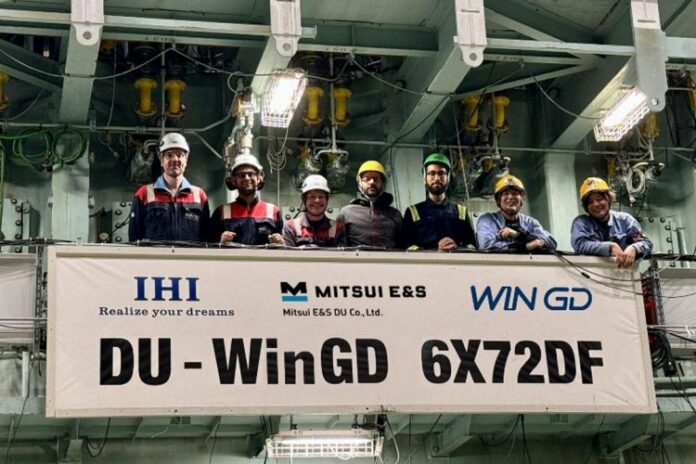
The collaboration marks the first field test for the new dual-fuel engine technology and follows successful factory tests showing significant efficiency improvements with both diesel and LNG fuel.

VCR dynamically adapts cylinder compression ratio in X-DF dual-fuel engines according to the fuel selection, ambient conditions and engine load, reducing both fuel consumption and greenhouse gas emissions. The innovative WinGD technology marks the first use of adjustable compression ratio – normally a fixed design parameter – in any marine engine.

The CMA CGM project comprises a long-term, full-scale test to confirm operability and reliability. Onboard testing is expected to begin following the dry-docking of the vessel in September, when VCR will be installed on the vessel’s WinGD RT‑flex50DF dual-fuel engine.

On its way to reach Net Zero Carbon by 2050, CMA CGM is committed to deploying sustainable solutions across its fleet, on both new built and existing ships. WinGD’s VCR technology is a new development that will help reduce fuel consumption of dual-fuel engines.

WinGD Vice President R&D, Sebastian Hensel said:

“Partnering with leading shipping companies is vital to prove the benefits of new technologies in real-life operating conditions. We applaud CMA CGM for their vision in promoting sustainable shipping and for recognising the potential for VCR to further these ambitions.”

The improved operational flexibility, fuel savings and methane slip reductions achieved by VCR technology will support ship owners and operators on their way to decarbonisation. WinGD envisions a transition from fossil to synthetic or biomass-derived LNG, accompanied by continuous improvements in methane emissions both from engines and across the fuel production and supply chain.

SeaTwirl, Serica to explore floating wind for oil and gas assets

0

Floating wind turbine developer SeaTwirl signs Memorandum of Understanding with offshore oil & gas operator Serica Energy to collaborate around exploring the feasibility of electrification of offshore assets and oil and gas activities with SeaTwirl’s floating wind turbine.

Swedish floating wind turbine developer SeaTwirl AB today announces that the company has signed a Memorandum of Understanding with UK based offshore oil & gas operator Serica Energy with the purpose of identifying and assessing potential opportunities to decarbonize offshore oil and gas production and other associated offshore electrification opportunities using renewable power and, where applicable, subsea energy storage. Working together to collate data from Serica’s operations will allow SeaTwirl to assess the commercial viability and suitability of SeaTwirl technology for offshore assets. 

Johan Sandberg, Chief Executive Officer SeaTwirl AB: 

“We are truly excited to enter into this MoU with such a strong and innovative oil & gas operator as Serica Energy, who operates multiple assets in the North Sea and who has a solid reputation around innovation and decarbonization of their operations. We will explore a range of options with a clear ambition to develop an electrification solution that could be the first of its kind in the industry.”

SeaTwirl is developing vertical-axis wind turbine technology. The company installed its first prototype in the sea in 2015.

Port of Aberdeen breaks ground on Scotland’s largest commercial shore power system

0

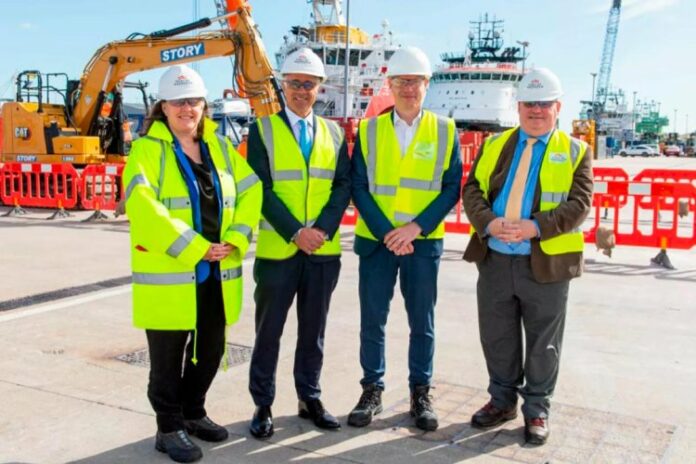
Construction of Scotland’s largest commercial shore power system started at Port of Aberdeen as part of a £4 million project designed to supply clean electricity to vessels at seven berths. The project is scheduled to deliver its first power in March 2025.

The ‘Shore Power in Operation’ demonstrator project is one of the first of its kind in the UK and was awarded match funding as part of the Department for Transport’s (DfT) Zero Emissions Vessels and Infrastructure (ZEVI) competition. 

“This is a great example of public and private partnership to drive forward advances in delivering green infrastructure for ports.”

Bob Sanguinetti, CEO, Port of Aberdeen, said: “We are delighted to be breaking ground on this project, which is pivotal on our journey to net zero by 2040. This is a great example of public and private partnership to drive forward advances in delivering green infrastructure for ports.” 

The shore power system, also known as ‘cold-ironing’, is being installed by PowerCon, the market leader in shore power technology. The installation includes connecting the modular shore power system to the grid, as well as establishing quayside connection points via mobile cable reels.

Vessels will receive clean, grid-powered electricity under the port’s renewable energy tariff while berthed at Albert Quay and Means Quay in the port’s North Harbour. This allows vessels to shut off their main and auxiliary engines while at berth and reduce their carbon emissions by more than 80% compared to marine gas oil (MGO) usage, and significantly lower particulates, nitrogen oxides (NOx), sulphur oxides (SOx), and noise.

Maritime Minister, Mike Kane, said:

“Today’s announcement marks a significant step forward in achieving this, putting the UK at the forefront of sustainable port technology.”

“Decarbonising shipping is crucial to our plans of creating more sustainable jobs and a cleaner environment.

“Today’s announcement marks a significant step forward in achieving this, putting the UK at the forefront of sustainable port technology and anchoring its position as a global leader in tackling climate change.”

The trailblazing initiative is being delivered in partnership with a consortium of technology and innovation centres, engineering specialists, state-of-the-art vessel owners and operators, a university and research centre, as well as public sector bodies.

The project will evaluate both land-side and vessel-side power infrastructure construction and performance, along with a commercial analysis to assess the financial and socio-economic benefits for the port and its stakeholders.

Building on prior funding for a feasibility study, this project has outlined the system design for demonstration-scale shore power facilities. Additionally, the partners will analyse the broader impact of transitioning to greener power within the port.

Peter Selway, Shore Power Specialist, PowerCon, said:

“Aberdeen is at the forefront of renewable and sustainable energy initiatives. We hope this project will provide substantial commercial and environmental benefits for the port, its surrounding wildlife, and the local community.”

Port of Aberdeen is investing up to £55 million over 10 years to become the UK’s first net zero port by 2040. It is notably the only UK port to be involved in three of the 10 projects supported by the Department for Transport’s ZEVI competition.

Two areas of the port’s North Harbour, Albert Quay West and Commercial Quay West, are already benefiting from shore power facilities, supporting operational activities for our renewable energy customers and towage providers. 

In addition to the ‘Shore Power in Operation’ project, this technology is being installed on Regent Quay as part of Bibby Marine’s electric Service Operation Vessel ZEVI project. Additionally, work is underway to install shore power infrastructure for Serco NorthLink’s passenger ferries, funded by a substantial seven-figure investment from Caledonian Maritime Assets Limited.

McDermott secures EPCI contract for gas project offshore Trinidad and Tobago

0

McDermott has been awarded an engineering, procurement, construction, installation (EPCI), hook up and commissioning contract by Shell Trinidad and Tobago Limited for the Manatee gas field development project, located 60 miles (100 kilometers) off the southeast coast of Trinidad and Tobago.

The award follows the successful delivery of the front-end engineering design, detailed engineering and long lead procurement service contracts for the project’s initial design and execution planning.

Under the contract scope, McDermott will design, procure, fabricate, hook up and commission a platform and jacket. The company will also provide design, installation, and commissioning services for a 32-inch gas pipeline that will connect the platform to a gas processing facility operated by Shell. The contract scope also includes design, procurement, installation, and testing services for a fiber optic cable. 

“This award leverages our unique, integrated EPCI capabilities and legacy of engineering excellence and innovation to successfully deliver large offshore platforms and complex subsea infrastructure worldwide,” said Mahesh Swaminathan, McDermott’s Senior Vice President, Subsea and Floating Facilities. “The Manatee project builds on our track record of successful project execution for Shell and exemplifies our commitment to building energy infrastructure required to meet demand.”

This contract award also demonstrates our continued commitment to working in Trinidad and Tobago to support the future supply of gas to its domestic and export market.

HD Hyundai starts to build first LCO₂ carrier first in Korean Shipbuilding Industry

0

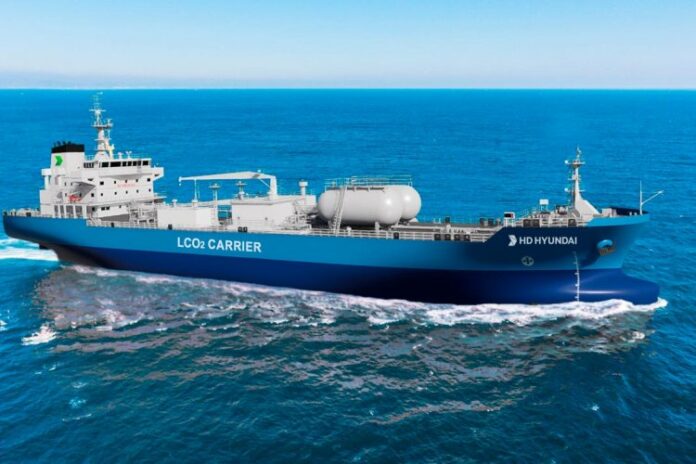
The LCO₂ carrier, which HD Hyundai Mipo launched to build, is the first of the four same-class linear ships awarded from the Greek shipowner ‘Capital Maritime Group’ from July last year to January this year. 

With a length of 159.9m, a width of 27.4m and a height of 17.8m, it is the largest LCO₂ carrier ordered worldwide to date. Starting with the groundbreaking ceremony, HD Hyundai Mipo plans to build four LCO₂ carriers sequentially and deliver them from November next year to the second half of 2026.

LCO₂, developed for the purpose of liquefying and transporting carbon dioxide (CO₂), is classified as a representative next-generation eco-friendly ship. As carbon capture, utilization, and storage (CCUS) technology is gaining more and more attention in the decarbonization field, demand for LCO₂ carriers that transfer collected carbon dioxide to storage facilities is also increasing. In particular, if CCUS technology is advanced, LCO₂ carriers are likely to become larger than today, so the shipbuilding industry is paying attention to it as the next generation of food.

HD Hyundai Mipo will load three “bi-lobe-type carbon dioxide storage tanks” on ships that can maintain a low-temperature environment of about minus 55 degrees Celsius and high-pressure conditions five times atmospheric pressure. This is because low temperature and high pressure conditions must be met in order to mass transport carbon dioxide that exists in a gaseous state at room temperature for liquefaction. For example, if the pressure of the tank is lowered, the liquefied carbon dioxide can turn into a solid “dry ice” form, putting a burden on the pipe. HD Hyundai Mipo is upgrading its LCO₂ pressure control technology through the “ship carbon neutral R&D demonstration facility” completed in April with HD Hyundai Shipbuilding affiliates such as HD Korea Shipbuilding & Marine Engineering and HD Hyundai Heavy Industries.

In addition, the virove-type carbon dioxide storage tank can carry various liquefied gas cargoes such as liquefied petroleum gas (LPG) and ammonia in addition to LCO₂. In addition, HD Hyundai Mipo has decided to apply an internal ice design technology that enables safe navigation in the ice sea to the construction of LCO₂ carriers. In addition, 2,500kW of land power supply (AMP) and nitrogen oxide reduction (SCR) will be applied to reduce air pollutants such as fine dust and sulfur oxides and use them as ammonia-powered ships through future renovation work.

An official from HD Hyundai Mipo said,

“We will be reborn as a solution company that leads the marine mobility sector with solid competitiveness in the next-generation ship market.”

Cotecmar and Damen sign contract for construction of frigate for Colombian Navy

0

In Cartagena, Colombia, the Corporación de Ciencia y Tecnología para el Desarrollo de la Industria Naval, Marítima y Fluvial (COTECMAR) and Damen Shipyards Group have signed the contract for technical support and the supply of components for the construction of the Plataforma Estratégica de Superficie (PES – Strategic Surface Platform) yesterday. 

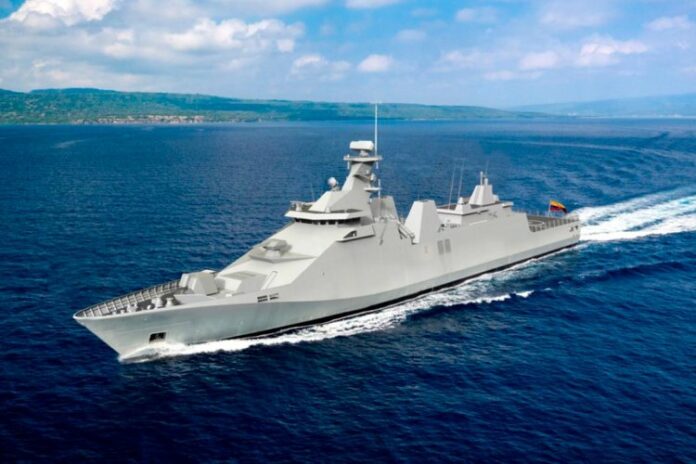
It will be the first frigate to be built in Colombia. This is being done by COTECMAR based on Damen’s SIGMA 10514 model.

The ship represents a significant investment in local employment and technological development of the Colombian maritime industry and thus in the national economy.

The ship will have a length of 107.5 meters and a beam of 14.02 meters. After Mexico and Brazil, Colombia will be the third country in Latin America that is able to build these types of complex naval vessels under license at its own shipyards.

The contract signing was attended by Reina Buijs, Ambassador of the Netherlands in Colombia, Vice Admiral Juan Ricardo Rozo Obregón, Comandante de la Armada de Colombia, Vice Admiral Luis Fernando Marquez Velosa, President of COTECMAR, Roland Briene, Managing Director of Damen Naval and Pieter Becker, Commercial Director PES Colombia of Damen Naval.

Admiral Rozo spoke of a “historic day, both for the Colombian Navy and for COTECMAR”. Roland Briene added that Damen Shipyards Group is particularly proud to be able to carry out this order together with COTECMAR. Pieter Becker indicated that he was looking forward to the start of the construction of this vessel and indicated that the order was partly due to the good cooperation that COTECMAR and Damen developed during the recent construction of the oceanographic and arctic research vessel Simón Bolívar.