-10.8 C
New York
Home Blog Page 143

WinGD takes hundredth order for VCR technology for dual-fuel X-DF engines

0

Swiss marine power company WinGD has received its hundredth order for Variable Compression Ratio (VCR) technology, which further optimises combustion for X-DF dual-fuel engines depending on the fuel used and engine load. 

The innovative solution was launched in June 2023 and has already become a favoured option for dual-fuel engine orders, especially in the LNG carrier segment.

The milestone order came via a series of four LNG carriers to be built for a Middle Eastern shipowner at a Korean shipyard. These join several other orders that have made X-DF engines and VCR technology the standard choice for the LNG carrier segment over the past year, with further orders coming from the pure car and truck carrier, bulk carrier and container ship segments. Overall, nearly 10 owners have selected the new technology as an option with their X-DF engines.

WinGD Director Sales Volkmar Galke said:

“Surpassing a hundred orders for our variable compression technology called VCR in the first year is a phenomenal achievement and indicates the strong market interest in technologies that can both reduce the environmental impact of gas-fuelled engines and eliminate any compromise in diesel performance. We’re grateful to those early adopters and see even greater opportunities for the industry to benefit from this unique engine technology in the future.”

VCR technology enables the engine’s compression ratio to be dynamically adjusted for the fuel type being used, engine load and combustion behaviour. This means higher compression ratios can be used when running on diesel, improving efficiency, while compression can also be tweaked during LNG use to optimise efficiency and reduce emissions. The simple hydraulic solution represents the first application of dynamic compression ratio adjustment in a marine engine.

VCR is the second X-DF2.0 technology introduced by WinGD as an enhancement to its well-established X-DF dual-fuel engine platform. The first addition, Intelligent Control by Exhaust Recycling (iCER), has also been well received and has been deployed on most orders for LNG carriers over the past two years. 

In recent tests, WinGD has established that X-DF engines with iCER and VCR achieve lower fuel consumption and emissions than rival low-pressure engine technologies. Compared on a system-level, including main and auxiliary engines as well as fuel supply, vessels can achieve a similar fuel consumption and emissions profile as those powered by high-pressure, Diesel cycle two-stroke engines, while maintaining a capex advantage due to the low cost of the auxiliary system required.

The new technology, combined with a reliable in-service record of more than 7.5 million running hours for the X-DF engine platform, make X-DF engines the clear market choice for the LNG carrier segment and competitive against high-pressure engines in other vessel segments.
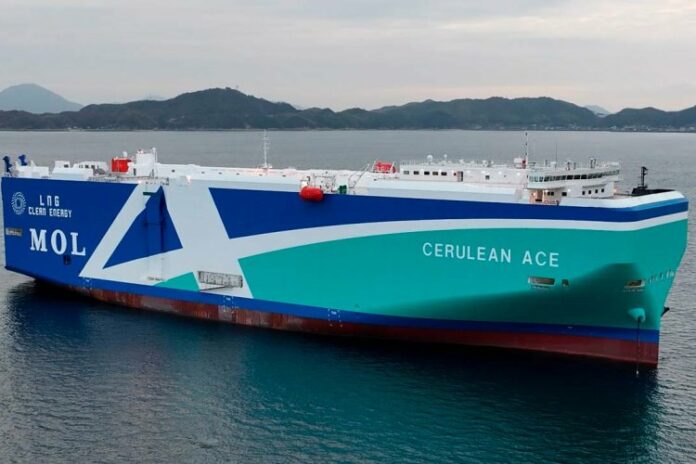
ClassNK awards first-ever notation for safe transportation of EVs to MOL’s car carrier ‘CERULEAN ACE’

0

ClassNK granted its ‘AFVC notations to ‘CERULEAN ACE,’ an LNG-fueled car carrier operated by Mitsui O.S.K. Lines, Ltd. and managed by MOL Ship Management Co., Ltd., for vessels equipped with additional firefighting measures for transporting electric vehicles (EVs). 

It is the first vessel in the ClassNK registry to receive the ‘AFVC’ notations, and it marks the world’s first case of a shipping company’s voluntary and customized approach to the safe maritime transport of EVs being recognized through a notation.

Shipping companies are implementing various measures to address EV fires, which raise concerns due to difficulties in extinguishing and the risk of re-ignition. To support these efforts, ClassNK has issued the ‘Guidelines for the Safe Transportation of Electric Vehicles.’ These guidelines explain the characteristics of EV fires and provide guidance on how to respond, while also setting out five types of ‘AFVC’ notations according to various safety measures.

ClassNK confirmed that the ‘CERULEAN ACE’ meets the requirements for three of these five notations: FD (Fire Detection), FF (Fire Fighting), and EFF (Enhanced Fixed Fire-extinguishing System) and affixed these notations accordingly. For the FD notation, it was recognized that the installation of system which sends an alarm to the crewmember onboard and to the onshore ship management company when the artificial intelligence detects abnormality in the images captured by camera, leads to an earlier identification of fire on cargo.

Archer secures contract with TotalEnergies for a floating offshore wind project

0

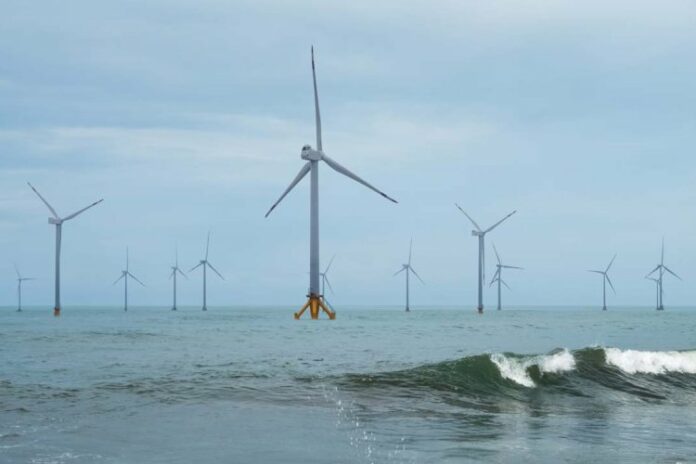
Archer Wind, Archer’s floating offshore wind solutions provider, has announced the award of its first contract by TotalEnergies for delivery of the floating wind foundation for the Culzean Wind Pilot.

The Culzean Wind Pilot will be connected to the Culzean platform, an offshore oil and gas facility 230 kilometres off the East coast of Scotland and will provide renewable electricity to supplement the existing power generation from gas turbines. 

Installation of the project will take place in late 2025 and Archer Wind is already progressing with detailed engineering and engaging key fabrication and assembly subcontractors to ensure timely execution of the project.

Wolfgang Wandl, CEO of Archer Wind commented:

“We are honoured to collaborate with TotalEnergies on this pilot project and combine our project execution expertise with Ocergy’s next generation floating foundation design. We are set to advance the standards in the floating wind industry and reduce the levelized cost of energy with one of the most promising floater designs in the market.

This contract underscores Archer’s development of renewable energy services with our customers and highlights the company’s capacity in floating offshore wind solutions.”

ABB and Wallenius Marine to trial OVERSEA Fleet Support services with Tärntank

0

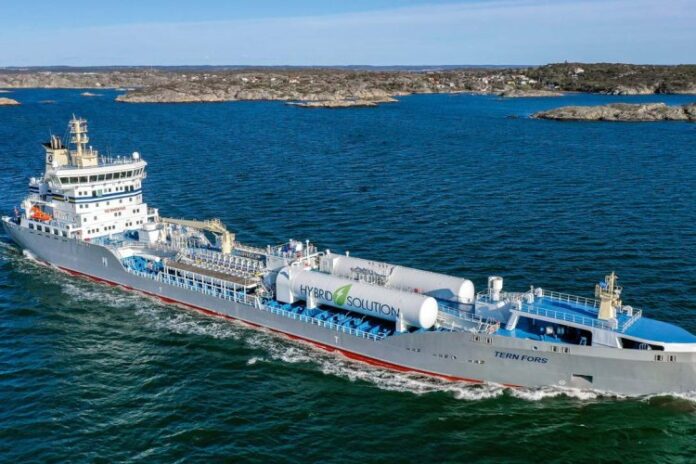
Danish tanker operator Tärntank is set to trial OVERSEA services, a collaboration between ABB and Wallenius Marine, across the fleet of six vessels, with the aim of exploring opportunities for improving operational performance.

The trial will cover the performance of the engine, hull and propeller and auxiliary systems as well as forecasting and monitoring of the Carbon Intensity Indicator (CII). The trial will also include shore-based support expertise, which will be provided as needed.

OVERSEA is a digital decision-support service collaboration between ABB and Wallenius Marine to help ship owners, managers and operators improve vessel operational performance, including reducing fuel consumption, costs and emissions, and improving reliability and safety. OVERSEA collaboration leverages ABB’s extensive expertise in ship technologies and the ABB Ability™ Genix Industrial Analytics and AI IoT platform, combined with decades of ship management and vessel performance management experience from Wallenius Marine.

Tärntank will trial a decision-support service for operational performance that not only consists of a tool, but a full scope of services. OVERSEA service offering will include support from center experts that covers the full improvement cycle and is particularly well suited for small or medium sized organizations, like Tärntank, to improve their vessel operational performance in a structured way.

“Initial trials will focus on OVERSEA capabilities covering the main engine, hull and propeller, auxiliaries and CII operational performance support for six 15,000 dwt product/chemical tankers,” said Claes Möller, CEO Tärntank Ship Management AB. “We look forward to our vessel crews and office-based staff collaborating with the OVERSEA Fleet Support Center experts on a common platform to turn insights into actions and further enhance vessel performance.” 

“We are excited to see the results of these trials in terms of creating value both for Tärntank and their customers,” said Niklas Sundén, Commercial Manager, OVERSEA. “Conventional solutions that offer performance insights often leave it to customers to contextualize the data and come up with actions to improve performance. OVERSEA will be utilized by both the customers’ onboard crews and shore-side personnel, together with OVERSEA’s Center experts who manage the process and workflows. For us, collaboration and full transparency are crucial in order to take the performance insights into actions.”

Tankers provide strong prospects for OVERSEA services, given that they number 10,000 worldwide and represent one third of the global fleet. Owners and operators can subscribe to support as a service, utilizing OVERSEA digital solution and collaborating with the center experts.

Offshore wind for green steel: Vattenfall and Salzgitter AG enter into electricity partnership

0

Energy company Vattenfall and steel producer Salzgitter are pushing ahead with their joint goal of decarbonising industrial production processes.

“The electricity partnership with Salzgitter underlines our long-term strategy at Vattenfall to enable a fossil-free life not only for ourselves, but also for our suppliers, partners and customers”, emphasises Martijn Hagens, responsible member of the Executive Board and Head of Markets at Vattenfall. He adds: “With our fossil-free electricity, we want to decarbonise entire value chains and support industry in particular on its path to green transformation.”

Gunnar Groebler, CEO of Salzgitter AG:

“With our SALCOS® program, we are already in the middle of the transformation of steel production towards low-CO2 production processes, making us a leader in the steel industry. Green steel needs green energy: This agreement is therefore the next important step in securing our energy requirements for low CO2 production. With Vattenfall, we have another powerful partner at our side and we look forward to working together.”

In detail, the agreement – a so-called Power Purchase Agreement (PPA) – provides for a share of 75 megawatts of connected load from the Nordlicht 1 offshore wind farm to be made available to the Salzgitter Group over a period of 15 years. The Nordlicht 1 wind farm is currently being developed around 85 kilometres north of the island of Borkum. It is due to be completed and connected to the grid in 2028. Salzgitter will then purchase around 300 gigawatt hours of electricity per year for steelmaking processes – equivalent to the annual electricity consumption of around 120,000 households.

“Fossil-free electricity from private supply contracts is highly valued by our customers. This is because it offers competitive costs and the guarantee that the electricity purchased actually comes from renewable sources – including proof of the type and location of green electricity generation”, explains Hagens. Vattenfall is building and developing the Nordlicht 1 offshore wind farm with 68 wind turbines and a total capacity of 980 megawatts in the German North Sea. Vattenfall holds a 51 per cent stake in Nordlicht 1, BASF holds a 49 per cent stake. Vattenfall intends to use its share of future electricity generation to supply customers in Germany with fossil-free electricity. 

Electricity partnerships primarily offer producers and consumers of renewable electricity investment security, price guarantees and risk diversification – with freedom of contract design. Observers expect demand for electricity partnerships between producers and industrial companies to increase in the coming years. According to an analysis by the German Energy Agency (Dena), the volume of PPAs in Germany could rise to 192 terawatt hours by 2030 – covering a quarter of Germany’s total electricity demand. A secure and competitive supply of clean energy plays a decisive role, not least for steelmaking processes in Germany.

Russia installs Tor-M2KM SAM on Sovetsk Corvette

0

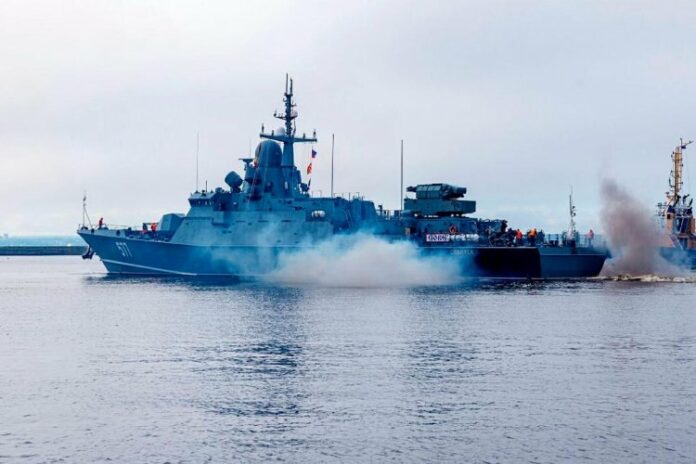
The warship was photographed in the port of Kronstadt.

The Sovetsk, as well as the first ship of the Mytishchi series, were developed as part of the original 22800 project and did not receive specialized anti-aircraft weapons. On these ships, air defense tasks were assigned to AK-630M artillery pieces.

A full-fledged anti-aircraft system was first installed on the Karakurt-class corvettes starting with the third ship in the series, integrating the ship’s version of the Pantsir-ME air defense system.

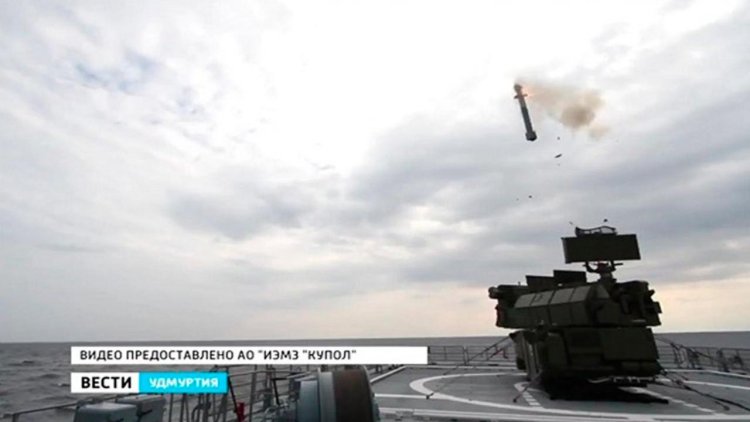
Probably, based on the experience of this war, in particular in the Black Sea scene, the Russian Navy decided to strengthen the capabilities of these ships and installed an autonomous combat module 9M331MKM of the Tor-M2KM complex on the aft superstructure.

Both AK-630M artillery systems, which can reinforce SAM fire and operate against surface targets, were left behind and retained their combat capability during the installation of the module.

The Tor-M2KM is a modular version of the Tor-M2 system that has been adapted to be deployed on any type of chassis, or on ship decks and stationary platforms.

The autonomous combat module of this version is armed with four 9M331 anti-aircraft guided missiles capable of intercepting air targets at a distance of up to 15 kilometers.

Previously, the Russian military also “modernized” the Pavel Derzhavin and Vasily Bykov patrol ships of Project 22160, which were used in the Black Sea.

These sjips, like the aforementioned Sovetsk, did not have proper air defense weapons as part of their project and relied only on the AK-176MA artillery system. An additional SAM was installed on the helicopter pad at the stern of the ship.

Similarly, the Russians retrofitted the Admiral Grigorovich frigate.

Source: Militarnyi

On Feb. 24, 2022, Russia launched its full-scale invasion of Ukraine, the largest military attack in Europe since World War II. 

Media reporting of and focus on the invasion has largely been on the terrestrial and aerial aspects – however, maritime engagements have been consequential during the war.  

The Russian Navy has lost eleven ships and submarines, including the Moskva, the flagship of the Black Sea Fleet, with a further five confirmed damaged. The Ukrainian Navy has lost nine ships, with a further one damaged, and seventeen captured.

Silverstream reaches over 200 orders with new 18-strong LNG carrier deal

0

The Silverstream® System will be installed onboard 18 new 271kcbm “QC-Max” class LNG carriers, which will be chartered by a global energy company and owned and operated by shipping majors.

Silverstream’s current orderbook includes 57 LNG carriers, spans 9 vessel segments, and includes 20 repeat customers, including 7 major ship owners and 13 of the world’s largest shipyards. The company also has 82 systems in operation onboard the existing fleet. 

Over the total lifetime of all contracted vessels, Silverstream estimates that its air lubrication technology will save its current customer base almost $5 billion in fuel costs and prevent the emission of over 19 million tonnes of CO2. Additionally, this CO2 reduction is projected to save approximately $2 billion through existing carbon tax systems.

These are the first 271kcbm LNG carriers to be wholly designed, build, maintained and serviced in China. 

Noah Silberschmidt, Founder & CEO, Silverstream Technologies said:

“Silverstream was founded in 2010 with a vision to have a positive impact on shipping’s decarbonisation journey. Surpassing over 200 orders is a significant milestone for us, highlighting the tangible emissions and cost savings we have delivered for shipowners and operators. This achievement also demonstrates the meaningful impact we are making on the industry’s green transition. Our market-leading Silverstream® System is fast becoming a standard choice on newbuild vessels and a leading retrofit option improving vessel efficiency and sustainability.” 

The Silverstream® System shears air from air release units (ARUs) in the hull to create a uniform carpet of microbubbles that coats the full flat bottom of a vessel. As a result, frictional resistance is decreased, cutting average net fuel consumption and GHG emissions by 5-10%. The system is fuel agnostic, effective in all sea states, and is applicable to all shipping segments. 

As the shipping industry’s decarbonisation transition progresses, evolving regulatory and market drivers are strengthening the rationale for adopting vessel fuel efficiency solutions. LNG carriers could fall into non-compliant categories (D and E) of the IMO’s Carbon Intensity Indicator (CII) framework, largely because of the way in which they handle boil-off gas. Meanwhile, the EU’s Emissions Trading System (ETS) is adding a progressive cost to emissions, increasing in scope from 40% of emissions in 2024 to 70% in 2025 and 100% in 2026. This means that technologies such as the Silverstream® System not only lower fuel consumption and emissions, but also help to cut the costs of regulatory compliance. 

According to recent Clarksons data, at least 33% of the world’s ships are fitted with a form of energy saving device by gross tonnage, but the number of vessels is only 8700, compared to a global fleet of 110,500.

By sector, container ships have seen the highest clean technology uptake with over 48% of fleet capacity fitted with at least one solution, followed by tankers and cruise ships, both over 38%, and bulkers over 35%. Air lubrication systems are attracting growing interest from shipowners with 500 systems either in operation or set to be installed on newbuilds on order.

Pliant Offshore partners with Exail to enhance wind turbine installation precision

0

These units will be integrated into Pliant Offshore’s Installation Measurement System (IMS) to improve the accuracy and efficiency of wind turbine installations.

Pliant Offshore’s IMS is an innovative technology designed to provide real-time measurements of the inclination and position of structures, such as monopiles, during installation. The system uses 3D point cloud technology combined with laser sensors to measure and virtually reconstruct objects with high accuracy. The integration of Exail Hydrins INS enhances the system performance by providing precise positioning and motion compensation, even on moving vessels. This enables the IMS to take continuous measurements during the pile-driving process, guaranteeing the correct positioning and stability of wind turbines in challenging offshore conditions.

Alex Heurkens, founder of Pliant Offshore, said:

“We particularly value the offshore capabilities of the Exail Hydrins INS for our operations. This system effectively meets the challenges of our working environment. The Hydrins is extremely robust, reliable and provides highly accurate data, ensuring excellent stabilization of our system and saving offshore contractors valuable time in the field”.

Hans-Willem de Leeuw, Sales Director at Exail B.V., said:

“We are delighted to continue supporting Pliant Offshore in this groundbreaking project. Our Hydrins INS, designed for offshore applications, offers exceptional accuracy in position, velocity and orientation measurements. They are the ideal solution for enhancing the performance of the IMS laser scanner system and ensuring highly efficient and accurate wind turbine installations”.

Exail Hydrins INS has a proven track record in various offshore projects, recognized for its reliability in a wide range of installations. The Pliant Offshore IMS system, now enhanced with Exail inertial sensors, will soon be available for rental as well, building on its success in the installation of over 1,000 wind turbines worldwide.

Vard to build a second hybrid Ocean Energy Construction Vessel for Island Offshore

0

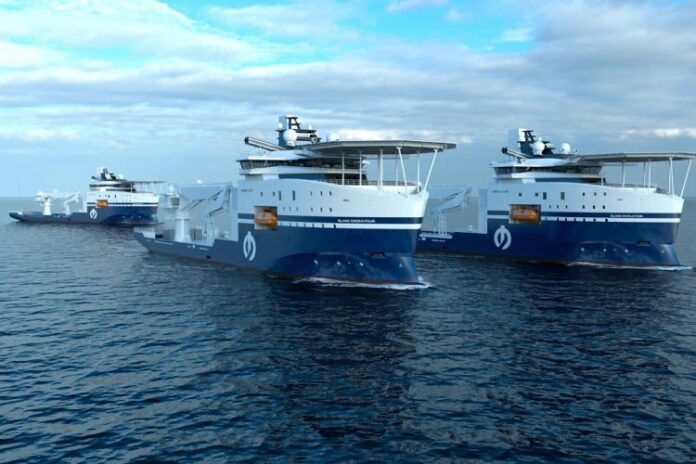
Vard, Norwegian subsidiary of the Fincantieri Group and one of the major global designers and shipbuilders of specialized vessels, has signed a contract with Island Offshore, a Norwegian shipping group operating in the Oil and Gas and Renewable market, to design and build a second hybrid-powered Ocean Energy Construction Vessel (OECV). 

The new contract refers to the exercise of one option foreseen in the contract for one firm OECV and the option for two sister vessels announced with Island Offshore in May 2024. 

Scheduled for delivery in Q1 2027, the new unit will be based on the VARD 3 25 design, developed in close collaboration with Island Offshore. It will be tailored to support a wide range of subsea operations, including inspection, maintenance, and repair (IMR), pipe laying, subsea infrastructure construction, installation, and diving support.

The vessel will measure 120 meters in length with a 25-meter beam and will feature a 250-ton heave-compensated offshore subsea crane. It will accommodate 130 people on board, providing top-tier facilities for crew and clients.

Additional features include a 1,7 MWh Energy Storage System for hybrid propulsion, a Heat Recovery System for enhanced energy efficiency, and preparation for alternative low-emission fuel. The vessel will also have two launch and recovery systems (LARS) for ROV operations and will be ready for walk-to-work gangway use, making it highly versatile for renewable energy projects like cable laying and trenching.

First of a new Z-Tech Tug design delivered to PSA Marine

0

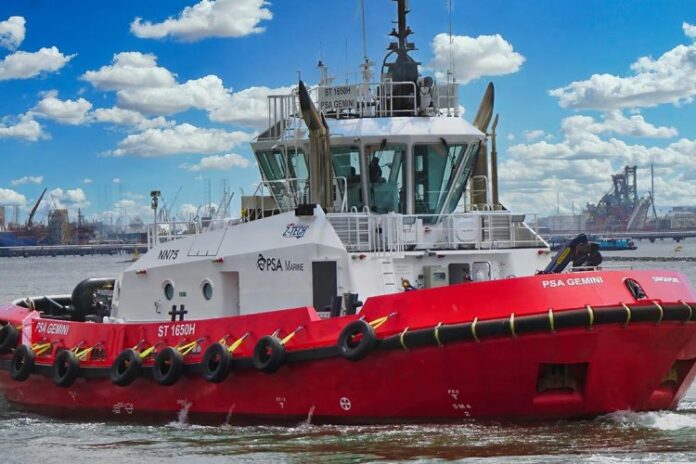
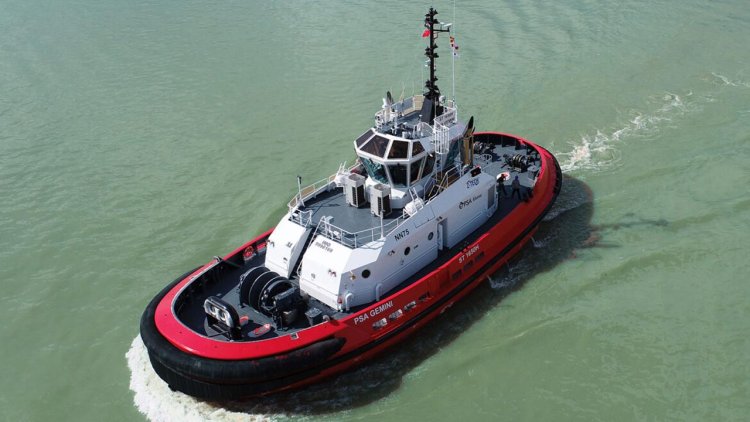
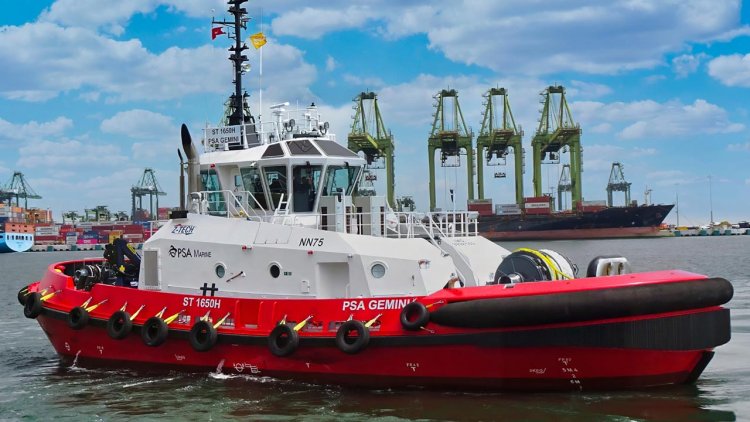
The PSA Gemini is the first tug built to the new Robert Allan Ltd. Z-Tech 6000 design. This design reflects lessons learned from PSA Marine’s 20 years of operations with the Z-Tech design to improve operations, habitability, and reduce maintenance. To date, 16 vessels are on order to this design for operations in Singapore, Panama, Thailand, and Peru.

Key particulars of the PSA Gemini are:

  • Length, overall (excluding fenders): 30.0 m
  • Beam, moulded: 12.0 m
  • Depth, least moulded: 5.19 m
  • Maximum draft (navigational): 5.2 m
  • Complement: 10 crew

Main tank capacities are:

  • Fuel oil: 130 m3
  • Potable water: 35 m3

The PSA Gemini was designed and constructed to the following ABS Notation:

  • ✠ A1, Ⓔ, Towing Vessel, BP (60MT), ✠ ABCU, UWILD, ✠ AMS

Equipped with Niigata 6L28HX medium speed engines rated at 1654 kW, driving 2.3 m Niigata ZP-31B Z-drives, the vessel achieved a bollard pull of 64.6 tonnes and a top speed of 12.6 knots on trials.

MLC compliant accommodations have been provided for a crew of ten.

The vessel is equipped with a towing winch on the forward working deck, with a deck crane and dual anchor windlasses aft. The winch and windlasses have been provided by Ibercisa of Spain, with Palfinger of Austria supplying the deck crane.

The bulwarks and fendering have been specifically tailored to PSA Marine’s operations with considerations for towline and fender wear while assisting a vessel ranging from containerships to low freeboard barges. The bow fendering consists of an upper course of strapless cylindrical fender, and a lower course of W-fender underneath. Shear line fendering consists of square fendering around the vessel with a smaller diameter cylindrical fender at the stern.

Providing a versatile base platform, alternative variants of the Z-Tech 6000 have been configured to suit operations worldwide with varied deck equipment, crew complement, bollard pull, and fire-fighting capabilities.