-10.8 C
New York
Home Blog Page 144

Saildrone completes survey of Gulf of Maine to identify potential deep-sea coral habitat

0

Saildrone has mapped 1,500 square nautical miles in the north-central Gulf of Maine in support of the National Oceanic and Atmospheric Administration (NOAA)’s efforts to survey deep-sea coral habitat. 

The Gulf of Maine is a productive and dynamic marine environment, with a diverse array of marine life, productive fisheries, unique underwater habitats, and a complex topography of deep basins, shallow banks, and steep slopes. However, there is extremely limited mapping data available, especially in deeper waters. 

Two Saildrone Voyager uncrewed surface vehicles (USVs) gathered data at depths up to 300 meters around the Jordan and Georges Basins. The data has revealed a complex and varied underwater landscape, reflecting its glacial history and dynamic oceanographic processes.

“The Saildrone Voyagers are filling in a substantial gap in seafloor data in the Gulf of Maine. NOAA and partners are very interested in better understanding habitats in the region that may support fish production. These high-resolution seafloor maps will inform future surveying and modeling efforts, as well as aid in the New England Fishery Management Council’s fishery management decisions,” said Heather Coleman, a researcher with the NOAA Fisheries Office of Habitat Conservation’s Deep Sea Coral Research and Technology Program.

These high-resolution maps will guide visual surveys of coral and sponge habitats using remotely operated vehicles for multiple NOAA cruises in 2024 and 2025. The data will also inform new species distribution models in the Gulf of Maine, which until now was not possible because of the lack of high-resolution seafloor information.

“This is the first successful demonstration of Saildrone Voyager mapping capabilities, pushing the envelope of what is possible using autonomous systems for shallow to mid-depth EEZ mapping. Its state-of-the-art Norbit multibeam echo sounder combined with near-silent operations and classification from the American Bureau of Shipping, make Saildrone’s Voyager the USV of choice for near-shore mapping. These capabilities can be applied for any number of missions, from habitat exploration to safety of navigation to site characterization for offshore wind,” said Brian Connon, Saildrone’s VP of Ocean Mapping.

Saildrone has been operating autonomous data collection missions for ocean research, seafloor mapping, and maritime security since 2015. To date, Saildrone has built more than 140 USVs across the three Explorer, Voyager, and Surveyor classes. The Saildrone fleet has already spent more than 42,000 days at sea and sailed more than 1,300,000 nautical miles from the High North to the Southern Ocean.
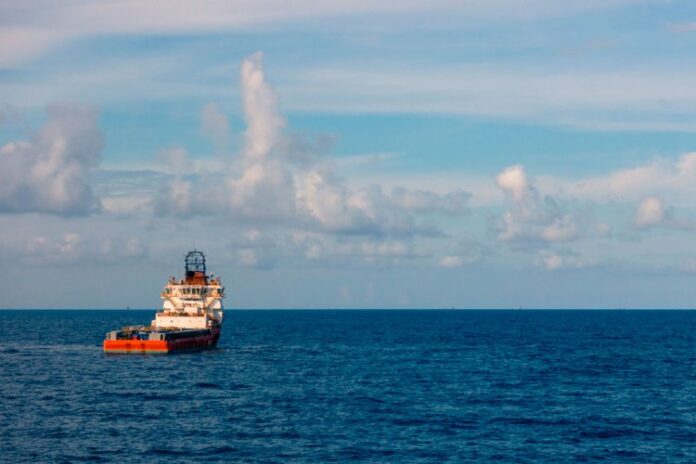
Wartsila and Eidesvik partner for conversion of supply vessel to ammonia

0

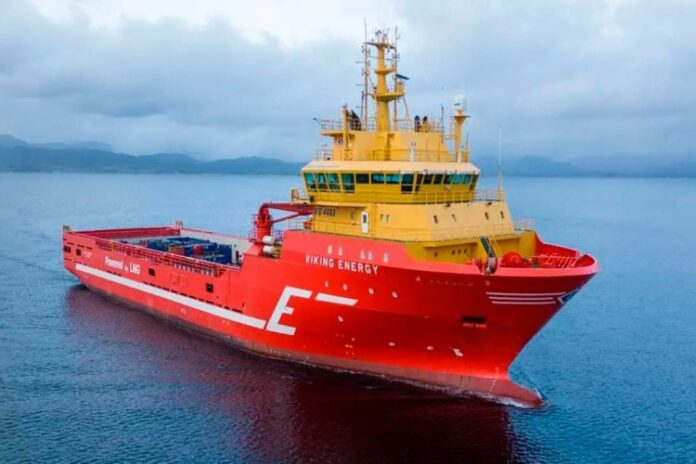
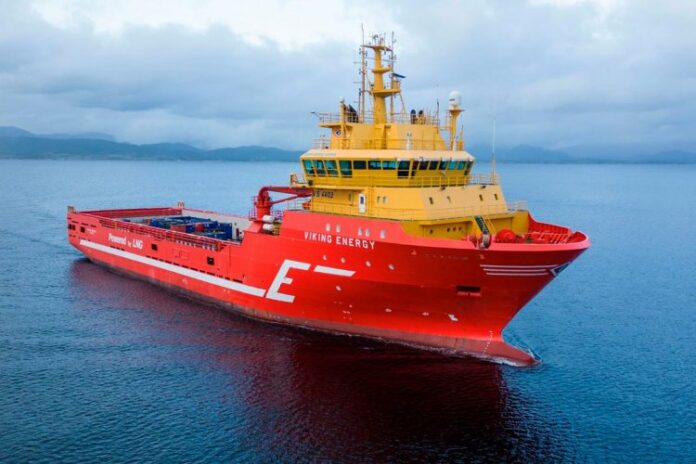
The vessel, ‘Viking Energy’, which is on contract to energy major Equinor, is scheduled for conversion in early 2026 and is expected to start operating on ammonia in the first half of 2026, becoming the world’s first ammonia-fuelled in-service ship.

In addition to chartering the vessel Equinor contributes with financing for the conversion. Wärtsilä will then supply the engine and complete fuel gas supply system and exhaust after-treatment needed for the conversion, making it also the first vessel to use Wärtsilä’s recently released ammonia solution. 

Ammonia has emerged as a promising alternative fuel as the shipping industry looks for more sustainable fuel options. With new global regulations having set a clear destination for shipping – net zero emissions by mid-century – ammonia will play a significant role in enabling the shipping industry to reduce its emissions.  

A recent report by Wärtsilä highlights the role that sustainable fuels will play in achieving this target which is set by the International Maritime Organization (IMO). According to the report, existing decarbonisation solutions, such as fuel efficiency measures, can cut shipping emissions by up to 27 percent; however, sustainable fuels, such as ammonia, will be a critical step in eliminating the remaining 73 percent. 

In this context, Håkan Agnevall, President and CEO of Wärtsilä highlights the importance of cross-industry collaboration:

“In just 25 years – the lifetime of a single vessel – shipping needs to get to net zero emissions. Achieving this will require coordinated action by all maritime industry stakeholders to bring about the system change needed to accept a new generation of sustainable fuels.”

“With this new contract, together with Eidesvik, Wärtsilä is proud to be at the forefront of this movement. Decarbonisation is front and centre of our strategy and we are committed to developing and delivering sustainable solutions which not only ensure the viability of sustainable fuels, but also their safety.” 

Wärtsilä, Eidesvik and Equinor share a commitment to support the industry’s efforts to decarbonise. The conversion of Viking Energy is the latest project in a history of collaboration between the three companies. Viking Energy has an impressive record of demonstrating new environmental technologies, which includes three “world records”.

For example, using Wärtsilä dual-fuel engine technology, Eidesvik was the world’s first shipowner to have an LNG-powered offshore platform supply vessel. It also received the world’s first Battery Power notation, given to Viking Energy, for a battery system installed by Wärtsilä.  

This latest partnership is a result of the ‘Apollo’ project which is co-funded by the Horizon Europe framework programme. The programme aims to accelerate the transition towards a climate-neutral Europe by 2050 through funding projects, such as Apollo, which contribute research and innovative solutions in various sectors related to climate, energy and mobility.  

“Close collaboration throughout the value chain is key to succeed in the green transition. Eidesvik has a unique history of pioneering the implementation of innovative emission-reducing technologies, and we are proud to spearhead yet another groundbreaking project together with Wärtsilä and Equinor,” said Gitte Gard Talmo, CEO & President of Eidesvik Offshore.

In addition to the Wärtsilä 25 Ammonia engine, Wärtsilä will supply the complete ammonia solution, including its AmmoniaPac Fuel Gas Supply System, the Wärtsilä Ammonia Release Mitigation System (WARMS), and a selective catalytic reduction (SCR) system designed for ammonia. A service agreement, covering maintenance, is a highly essential part of the deal. The conversion project is planned for early 2026, with final commissioning expected in Q2 2026.

Opsealog partners with Azule Energy to reduce emissions from OSV fleet

0

Opsealog, a provider of data integration and analysis services for the maritime and offshore industry, has been awarded a two-year contract with Azule Energy, Angola’s largest independent energy company, to reduce fuel consumption and greenhouse gas (GHG) emissions from its Offshore Supply Vessel (OSV) fleet. 

Through enhanced data collection, integration and analysis, the project could reduce the fleet’s GHG emissions by up to 10%, according to initial estimates by Opsealog.

The agreement covers an initial 28 Offshore Supply Vessels (OSVs) in the first year, expanding to Azule Energy’s full fleet of 33 vessels in 2025. The main objective is to reduce the fleet’s fuel consumption and greenhouse gas emissions, supporting regulatory compliance and Azule Energy’s own environmental commitments.

Opsealog’s e-reporting system Streamlog will fully digitise onboard reporting and deliver real-time vessel tracking for the fleet, which is operated across three oil blocks in Angola. This data will be integrated and analysed through Opsealog’s Marinsights platform to provide in-depth insights that will help boost operational efficiency, reduce fuel consumption and emissions, and maximise vessel safety and reliability.

By optimising operations, the project will help Azule Energy address challenges such as the frequent need for vessels to move urgently between the different blocks. It will use data-driven insights to develop a cost allocation system per block, tackling the additional costs and emissions associated with vessel scheduling deviations.  

Luis Buezas Jiménez, International Business Manager at Opsealog, said:

“This partnership with Azule Energy demonstrates how digitalisation is an essential foundation for progress on a wide range of operational aspects in the offshore sector – including the industry’s chief priorities of safety and sustainability. Through enhanced data collection and integration, teams will be equipped with data-driven insights to immediately improve operational efficiency and reduce harmful emissions. We are proud to embark on this project and support Azule Energy’s ambitions of delivering responsible energy development for the communities of Angola.”

Strengthening emergency preparedness in the Barents Sea

0

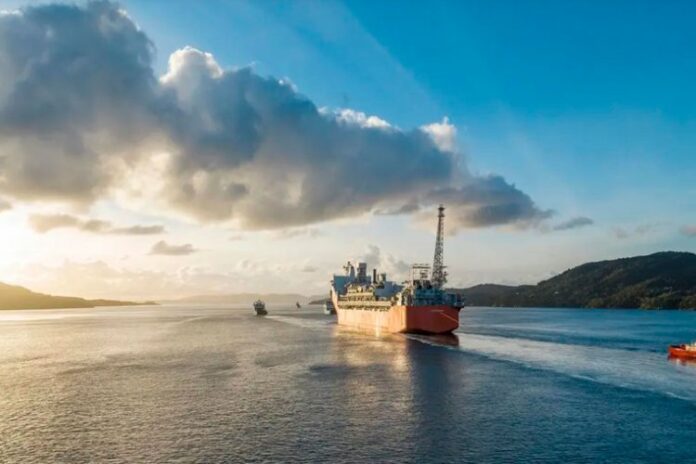
The solution will add new resources, expertise and capabilities that will strengthen safety and emergency preparedness in this ocean area.

“Safety is our number one priority, we must have a good emergency preparedness system in place wherever we operate. Together with the other operators, the authorities and the supply industry, we have through fifty years developed the preparedness for the fields in the North Sea and in the Norwegian Sea. With Johan Castberg coming on stream towards the end of the year and increased activity in the north, we are now establishing an area-wide emergency preparedness system in the Barents Sea in the Barents Sea,” says Grete B. Haaland, Equinor’s senior vice president for Exploration & Production North.

This is a collaboration with Vår Energi, operator of Goliat, initiated by the Barents Sea Operation Cooperation (BASOP). The Norwegian Ocean Industry Authority has given its consent to the establishment of the area-wide emergency preparedness system, which will be operational from 1 January 2025.

The emergency preparedness in the Barents Sea is already good with the solution that Vår Energi has established for the Goliat field.The new area-wide emergency preparedness system will further strengthen the emergency preparedness and is dimensioned to deal with emergency preparedness incidents in an ocean area characterized by long distances, harsh weather conditions and important natural resources. The solution enables interaction and sharing of common resources, and other companies may join later.

“This will help improve safety and strengthened emergency preparedness for the fisheries and other users of the sea in this area. We will, among other things, build a new emergency response and rescue vessel (ERRV) that will make a difference. We have worked closely with the fishing fleet on emergency preparedness in the Barents Sea since the start-up of Goliat, where we are a licensee,” Haaland adds.

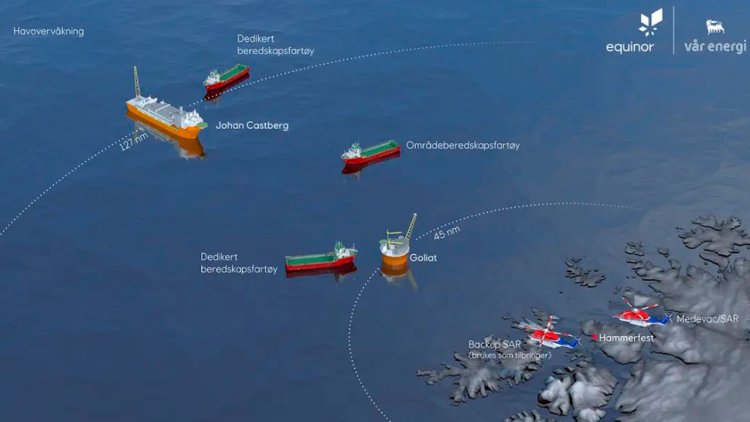
The area-wide emergency preparedness system for the southwestern Barents Sea includes:

  • One “all weather search and rescue” (AWSAR) helicopter of the type S-92, stationed at Hammerfest Airport.
  • Three emergency response and rescue vessels with standing oil spill response capabilities (NOFO standard). One vessel dedicated to Goliat and one dedicated to Johan Castberg, in addition to one joint emergency response and rescue vessel.
  • Equinor plans to build a new emergency response and rescue vessel that will feature IMR (inspection, maintenance and repair) capabilities to contribute to safety, short response times and inspections
  • In the long term, faster response times for SAR and improved medical preparedness in the area.
  • Continuous ocean and ice monitoring.
  • Monitoring and follow-up from Equinor’s operations centre in Bergen with physical infrastructure, digital systems and round-the-clock staffing.
  • Increased interaction, central coordination and mutual agreement between the companies that are part of the area-wide emergency preparedness.
  • In addition oil spill response equipment at the NOFO base in Hammerfest may be mobilised for supply vessels (PSVs).

Brunvoll Mar-El with New Hybrid System Contract

0

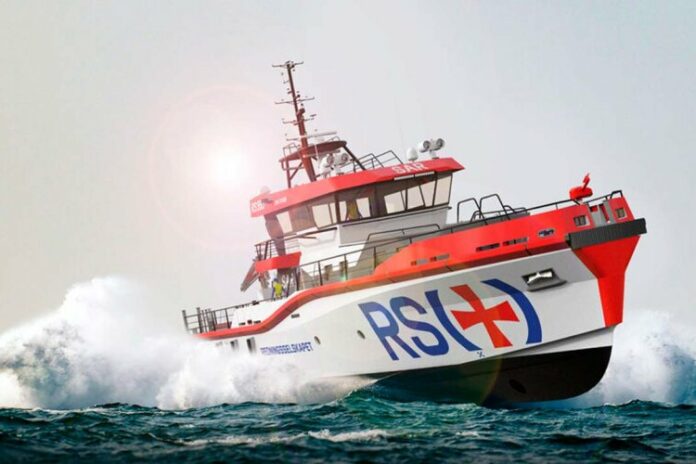
Construction will happen at GOT Marine AS in Mandal, with completion in 2026. The newbuild will then be the largest SAR vessel along the coast of Norway.

“GOT Marine AS has a long history of building rescue vessels, and we at Brunvoll Mar-El look forward to cooperating on this project,” says Birger Gauslå, Vice President Sales & Marketing at Brunvoll Mar-El.

The vessel will be operating out of the Northern part of Norway where the weather and seas are among the roughest.

The hybrid system solution from Brunvoll Mar-El consists of an Energy Management System and DC Switchboard from the Triton Hybrid product range, and includes electric motors, inverters, and batteries. The Triton CPP, Triton steering gear and Triton thruster control systems are supplied for propulsion and gear control and integrates nicely with the Triton Hybrid system solution. The vessel will be equipped with the latest Brunvoll BruCon DP and Joystick solution.

The contract is the latest in a series of upcoming deliveries of control and power systems by Brunvoll Mar-El. The offices of Brunvoll Mar-El are situated in the southern part of Norway and finds itself in a period of strong growth and expansion.

The vessel design, named NDS-32 MPV, has been developed in cooperation between GOT Marine AS and Naval Dynamics AS.

VIDEO: Twin-hull hydrofoiling catamaran smashes big-wave storm tests

0

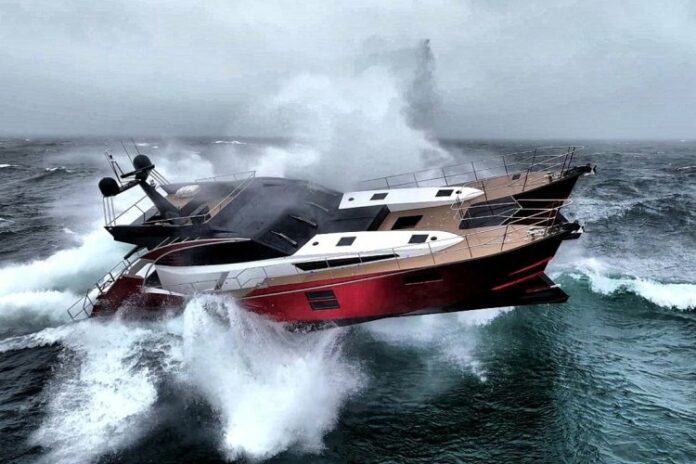
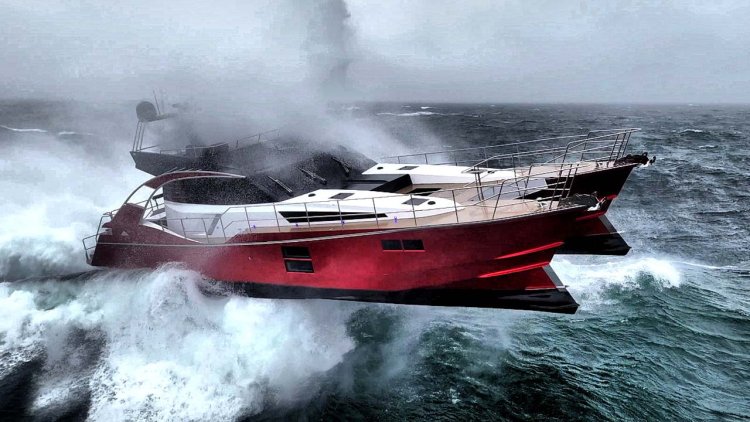
Ireland’s Safehaven Marine builds search and rescue craft, patrol boats and pilot boats designed to operate in “all weather” – up to and including Force 10 storms with waves up to 23 ft (7 m) high. The firm backs this up with some spectacular testing.

The company sees rough sea testing as a critical pre-delivery step, and often takes customers along for the ride; “it’s better,” writes Managing Director Frank Kowalski, “if crews don’t have to face these kinds of conditions for the first time alone” – and throwing these huge machines into seriously dangerous waves is the only real way to provoke the kinds of failures and leaks they’re checking for in the pre-delivery stage.

So, out they head into the treacherous entrance to Cork Harbour – the world’s second-largest natural harbor behind Sydney, and incidentally, the last stop before the big one for one RMS Titanic back in 1912. The entrance, writes Kowalski, “can produce some pretty extreme sea states during the winter storm months,” while being conveniently close to Safehaven HQ.

“Over the past 20 years,” writes Kowalski, “I’ve probably been out 100 times in weather conditions of Force 9 and above and waves over 5 m (16 ft), so have a pretty good understanding of, and respect for, the sea state and conditions that can exist at the entrance to the Harbour, and of course the limits of my designs.”

Safehaven often takes out a second all-weather boat for these tests, to operate both as a safety boat and as a camera boat – and in recent years it’s started taking drones out to capture the tests from above. “Good equipment is key,” writes Kowalski, “although the attrition rate can be high and we lose at least one camera a year.”

The red twin-hull catamaran in the images and video above is Safehaven’s new T-2000 Voyager, a 20-m (66-ft), long-range, high-performance, semi-wave piercing explorer boat capable of speeds over 50 knots (58 mph, 93 km/h).

A hydrofoil can be optioned, which lifts much of the hull out of the water, boosting fuel economy by around 25%, increasing range to 1,000 nautical miles (1,151 miles, 1,852 km), and “significantly” increasing the maximum speed.

It might look like a kid’s bath toy in the storm tests, but this is not a small vessel. It weighs some 40 metric tonnes fully loaded – all of which comes crashing back down into the water after smashing into a big wave. Perhaps seeing this shot with some people on board will put things in context.

Source: New Atlas

Equinor to use the world’s first ammonia-powered supply vessel

0

Equinor has signed a contract with Eidesvik Offshore for the conversion of the Viking Energy supply vessel to ammonia operation. The vessel will be fully converted and put into operation with low emissions in 2026.

The vessel supplies Equinor’s installations on the Norwegian continental shelf (NCS).

Viking Energy will be the world’s first supply vessel fuelled by ammonia. Wärtsilä will build the engine on behalf of Eidesvik Offshore.

“We have an ambition to halve the maritime emissions associated with our Norwegian operations by 2030. With this contract, we will, in collaboration with Eidesvik Offshore, employ a new low-emission technology. We strongly believe in the use of ammonia as a fuel on our supply vessels,” says Ørjan Kvelvane, Equinor’s senior vice president for joint operations support.

Converting the vessel to ammonia operation Eidesvik Offshore and Wärtsilä will cut emissions from Viking Energy by at least 70 percent. Equinor and Eidesvik Offshore have a 21-year history of collaboration on environmental technology on Viking Energy.

At the time of delivery in 2003, the vessel was the world’s first LNG-fuelled supply vessel. The vessel was also the first in the world to receive DNVs «Battery Power» notation.

In addition to using the vessel in operations, Equinor will contribute significantly to funding the conversion to ammonia operation. The project receives five million euros in support through the EU Horizon Europe programme. The necessary conversion and installation of the new engine together with the complete fuel gas supply system and exhaust after-treatment from Wärtsilä will take place in 2026.

“The offshore fleet on the NCS is ageing and needs renewal. Investing in new technology is expensive, and there are many uncertainties. At the same time, scaling up the use of operational technology to enable the necessary transformation is urgent. Cooperation with the authorities and competent suppliers on phasing in recent technology is essential to achieving the emission targets we have set,” says Kvelvane.

The government has announced that it will establish requirements for low-emission solutions from 2025, and zero emissions from new supply vessels from 2029. The orientation of these requirements has not yet been decided. In addition to this contract, Equinor has also made an inquiry in the market for supply vessels capable of running on ammonia.

Var Energi provides a schedule update for the Balder X development project

0

As previously communicated, the revised plan has limited impact on the Company’s 2024 production and no material impact on guided capital costs. The Company’s end-2025 production target of around 400 thousand barrels of oil equivalent per day (kboepd) is not affected by the updated project start-up.  

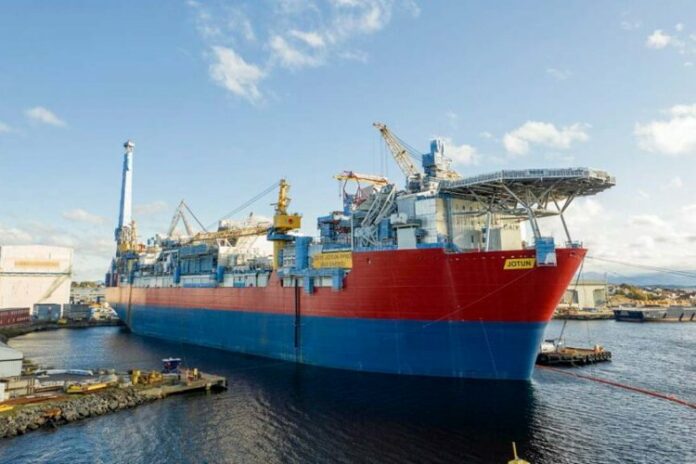
A key consideration has been to limit the carryover work into the offshore installation and start-up phase as much as possible. Together with our suppliers we have made every effort to complete the final work on the Jotun FPSO at the Rosenberg yard to enable field installation before the winter weather period. However, despite recent good progress, some onshore completion and commissioning work required prior to sail-away remains. Although achieving first oil by end of the fourth quarter 2024 is no longer possible this has limited impact on 2024 production and our guidance of 280-300 kboepd for the year is maintained, says CEO of Vår Energi, Nick Walker. 

With all development wells completed and all subsea production systems installed, the plan is now to complete the FPSO vessel fully onshore, enabling first oil within the second quarter next year. As part of the decision not to sail, the cost basis for the project has been updated reflecting a sail-away in the spring of 2025, this represents an additional project cost of around USD 400 million gross pre-tax (NOK ~4.27 billion¹) of which approximately 75% will be incurred in 2025.

The Company’s capital spend guidance for 2024 is revised down from USD 2.7-2.9 billion to around USD 2.6 billion, reflecting other cost reductions and a favourable NOK exchange rate. Vår Energi’s production target for 2025 remains unchanged and the Company is on track to reach around 400 kboepd by end of next year. 

Balder X, will secure production from the Balder Area beyond 2045, unlocking gross proved plus probable (2P) reserves of around 150 million barrels of oil equivalent (mmboe) and with a gross peak production of 80 kboepd².  

The Jotun FPSO will be an area host, enabling future growth opportunities. Balder Phase V is being progressed, including the drilling of six production wells to utilise the remaining subsea template well slots to capture gross 2P reserves of more than 30 mmboe. Drilling of these wells will commence in the first half of 2025 and be completed in 2026. In addition, the Balder Phase VI project is being matured, to add new subsea facilities and wells, with expected investment decision planned first half of 2025. There remains significant additional resource upside in the area and further exploration drilling and tie-back development phases are being planned. 

 Vår Energi is operator (90%) of the Balder Area with Kistos Energy (Norway) AS as partner (10%).  

NYK completes world’s first commercial-use ammonia-fueled vessel

0

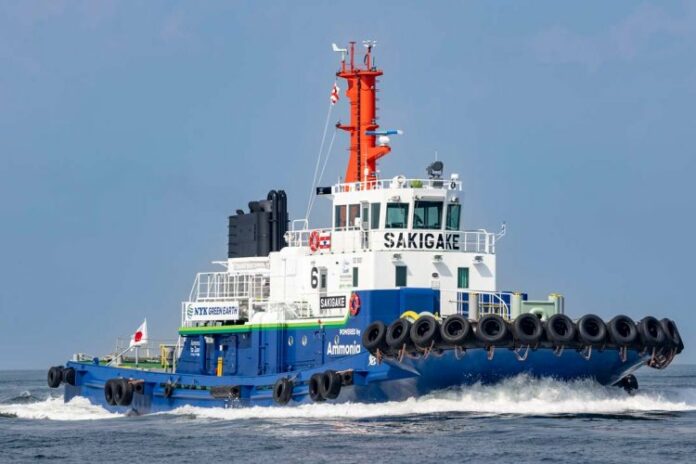
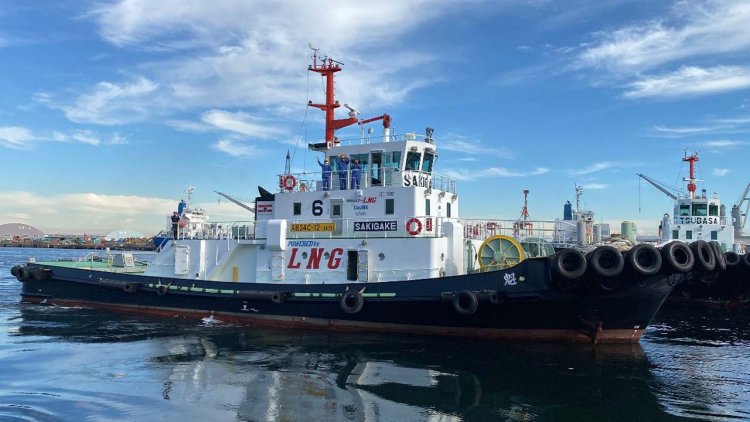
On August 23, the ammonia-fueled tugboat Sakigake was completed by NYK and IHI Power Systems Co., Ltd. (IHI Power Systems) in cooperation with Nippon Kaiji Kyokai (ClassNK). This is the world’s first ammonia-fueled vessel for commercial use. 

This vessel was a Green Innovation Fund Project initiated in October 2021 under Japan’s New Energy and Industrial Technology Development Organization (NEDO) to develop vessels equipped with domestically produced ammonia-fueled engines.

The predecessor, the LNG-fueled tugboat of the same name, was completed in August 2015 as the first LNG-fueled vessel in Japan. After eight years of tug service in Tokyo Bay, the vessel was docked at the NYK Group’s Keihin Dock Co. Ltd. for conversion to an ammonia-fueled vessel. 

The main engine, etc., were replaced with ammonia-fueled ones, and sea trials were conducted using ammonia as fuel. The completed vessel has taken the name Sakigake, hoping it will be a pioneer of ammonia-fueled vessels, just as it was of LNG-fueled vessels.

As part of the development of vessels equipped with domestically produced ammonia-fueled engines through NEDO’s Green Innovation Fund Project, NYK is conducting research and development on an ammonia-fueled medium gas carrier (AFMGC) with Japan Engine Corporation, Nihon Shipyard Co., Ltd., IHI Power Systems, and ClassNK. This vessel is scheduled for delivery in November 2026.

World’s most powerful floating wind turbine successfully sets sail

0

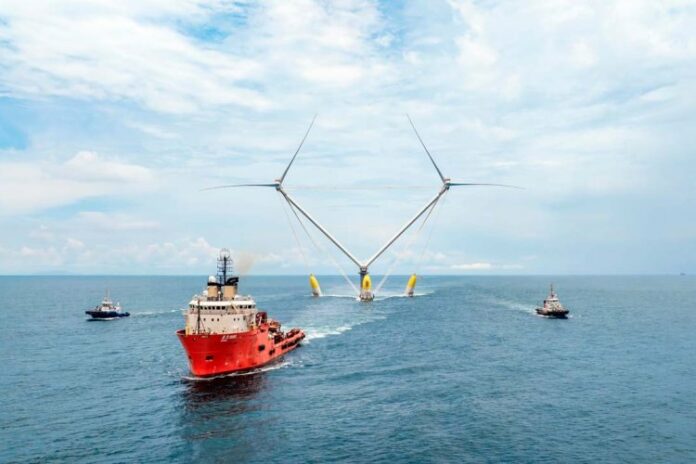
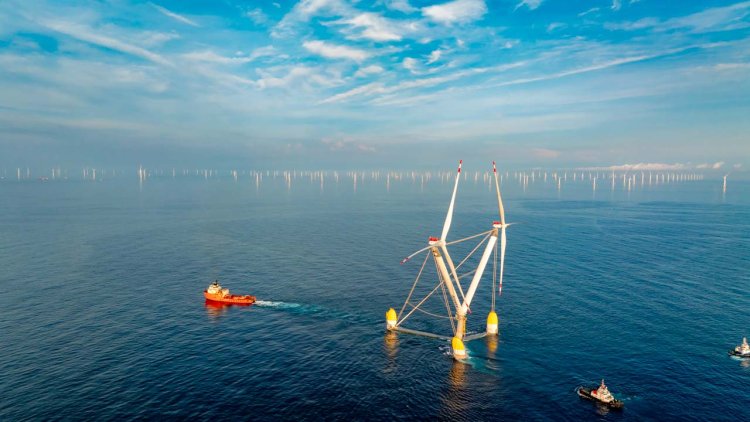
On August 13, OceanX, the world’s largest single capacity floating wind power platform, embarked on its journey from Guangzhou to the Yangjiang Mingyang Qingzhou IV offshore wind farm in Guangdong, China. 

After a 191-nautical-mile, over 50-hour tow, the platform’s arrival marks the commencement of a new era in green energy, poised to set the standard for offshore wind power technology.

Developed by Mingyang Group, this floating wind turbine platform is arranged in a ‘V’ shape and carries two 8.3 MW offshore wind turbines. With a total capacity of 16.6 MW, it can be used in a wide range of sea areas around the world with water depth of more than 35 metres.

OceanX impeller reaches 219 metres at its highest point and a maximum width of about 369 metres in the air. The whole wind turbine platform has a total displacement of 15,000 tonnes, and a towing draft of 5.5 meters. Once operational, it is expected to produce 54 million kWh annually, enough to power 30,000 three-person households for a year.

OceanX advances wind turbine innovation by enhancing core component technology, driving both aesthetic and functional refinement in design and manufacturing.

Floating foundation is the key component for floating wind turbines in the deep and distant sea. Unlike traditional steel floating foundations, OceanX’s floating foundation consists of three floats, concrete arms and connectors.

It pioneers the use of ultra-high performance concrete with a compressive strength exceeding 115 MPa for floating foundation construction, a material 4 times stronger than standard concrete, significantly enhancing load-bearing capacity. The floating foundation also utilizes a pre-stressed high-strength concrete assembly structure, facilitating modular and batched manufacturing, thereby substantially reducing construction costs.

Mingyang has leveraged caisson pre-tensioning technology in its precast concrete construction, emphasizing interface sealing and the precision of the pre-stressing process. With 1,500 steel strands expertly threaded through the floating body’s arm, it has meticulously controlled tensioning forces and ensured uniform stress across the end face throughout the construction.

OceanX also introduces a cutting-edge float design, using layered material to replace traditional steel or hybrid materials. The float lightens the floats and accommodates their curved form. The three streamlined ellipsoidal floats offer reduced wave resistance and enable lateral rotation, providing yawing power. Rigorous testing confirms that the streamlined shape strikes an ideal balance between stability and load-bearing.

Notably, housing two wind turbines on a single floating platform can significantly cut down the per-kilowatt cost, as well as reduce the required sea area and operational maintenance expenses.

OceanX, with its robust floating foundation, features the integration of two towers in a ‘V’ configuration, marking a first for offshore wind platforms.

OceanX’s tower, with its elongated elliptical design, maximizes wind exposure along its longer axis, significantly exceeding that on the shorter axis. By aligning the tower with the wind direction at an optimal angle, the wind platform’s area is effectively increased, allowing for swifter alignment to the wind and boosting the efficiency of wind energy capture. Additionally, the towers are fitted with a dual-access system for lifts and ladders, ensuring the comfort and safety of personnel during ascent and descent.

In addition to the evolution of the wind turbine form, Mingyang also expands the boundaries of the application of the cable-stayed system, installing it for the first time globally in a wind turbine.