7.9 C
New York
Home Blog Page 124

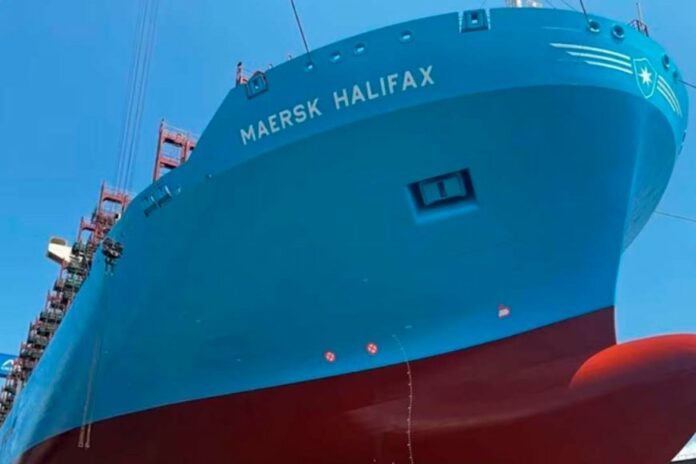
Maersk completes first large container vessel conversion to dual-fuel methanol engine

0

The container ship Maersk Halifax has been converted into a dual-fuel vessel able to operate on methanol. 

Leonardo Sonzio, Head of Fleet Management and Technology at Maersk, said:

“We are happy to announce that Maersk Halifax successfully has been retrofitted into a dual-fuel methanol vessel. Following the completion of the sea-trials, Maersk Halifax has returned to operation and is now servicing our customers on the Trans-Pacific trade.”

The engine conversion has been done by MAN Energy Solutions. Besides replacing machine parts and thereby making the engine able to operate on methanol, the retrofit operation at the yard has involved adding new fuel tanks, fuel preparation room and fuel supply system. The hull has also been expanded to accommodate the fuel tanks. With this change, the length of the ship was extended by 15 meters to 368 meters, increasing the capacity from around 15,000 to 15,690 TEU.

Leonardo Sonzio, Head of Fleet Management and Technology at Maersk, said:

“Since we set the ambitious climate goal of reaching net zero emissions by 2040, we have explored the potential in retrofitting existing vessels with dual-fuel engines. In the coming year, we will take learnings from this first conversion of a large vessel. Retrofits of existing vessels can be an important alternative to newbuilds in our transition from fossil fuels to low-emission fuels.”

Maersk Halifax, which is one of 11 vessels in Maersk’s Hong Kong-class, departed anchorage at the yard on 4 November 2024.

Portugal notices increased activity of Russian ships in its waters

0

There is an increase in the traffic of the Russian ships in Portuguese waters. This was reported by the Chief of Staff of the Portuguese Navy, Admiral Henrique Gouveia e Melo.

The Portugal News reported on this.

“There is a transit of ships from the Russian Federation in our waters, an increasingly intense transit, from north to south and from south to north,” the admiral said.

According to the admiral, nine Russian ships have passed through the Portuguese waters in a very short period of time. Among them are two frigates, a corvette, two refuelling vessels, three research vessels and “a spy ship that is usually engaged in electronic intelligence.”

Admiral Gouveia e Melo said that the Portuguese Navy was closely monitoring that flow of the Russian ships.

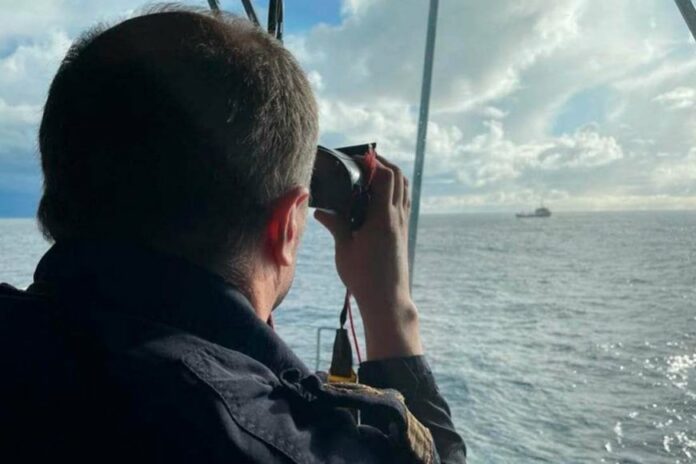
“Our response to this is to follow them, to control them, to keep them under constant pressure with our constant presence,” he told reporters.

On Sunday, November 17, 2024, the NATO’s Maritime Command published a post showing the crew of the Portuguese frigate Dom Francisco de Almeida observing the Russian Project 861M Medium Reconnaissance Ship near Portugal.

On November 14, 2024, the Irish Navy withdrew the Russian research vessel Yantar from the exclusive economic zone of Ireland.

The Russian ship was spotted east of Dublin and southwest of the Isle of Man, in an area where important underwater pipelines and cables for energy and internet networks run.

The vessel Yantar is officially classified as an auxiliary oceanographic research vessel – a carrier of underwater vehicles. It is subordinated to the Russian Ministry of Defense and is not part of the Navy.

The Irish Navy ship James Joyce took the Russian spy out of the Irish Exclusive economic zone around 3 a.m. on November 15, and the country’s Air Force continued to monitor his movements.

Source: Militarnyi

MSC welcomes updated whale chart and reiterates call for vessel re-routing to minimize collision risk

0

MSC has welcomed the launch of the second edition of the World Shipping Council’s (WSC) Whale Chart, a navigational aid for seafarers mapping all mandatory and voluntary governmental measures to reduce harm to whales.

The new updated edition, ‘WSC Whale Chart: A global voyage planning aid to protect whales’, now also includes:

Additional government measures, including cross-jurisdictional measures such as: US-Canada coordination in the Salish Sea, IMO Recommendatory two-way routing measures and newly established precautionary areas.

Measures endorsed or sponsored by port authorities, including in São Sebastião (Brazil) and New York/New Jersey (US); and
A focus on underwater radiated noise measures (and not just vessel strike measures).

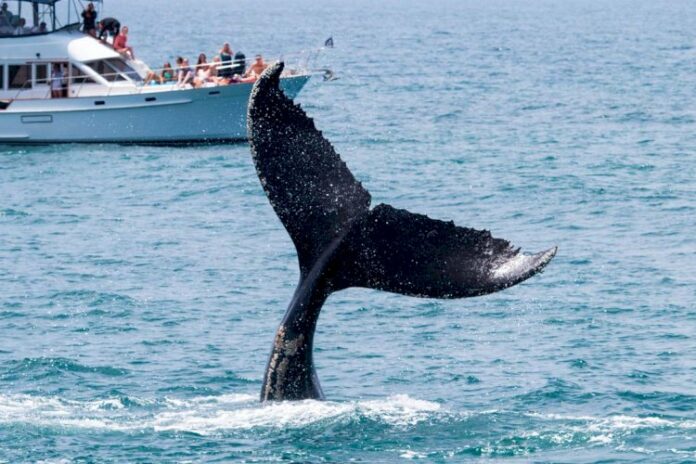
MSC has long been committed to protecting and supporting whales. The company was the first in the industry to reroute ships off the coasts of Greece and Sri Lanka to protect endangered whales and in 2023 the company adjusted the course of approximately 565 vessels. If all ships made similar adjustments, the risk of ship-strike to sperm whales off the coast of Greece could be reduced by almost 70%, and by as much as 95% for blue whales off the coast of Sri Lanka.

MSC also participates in voluntary speed reduction programmes in whale habitats. In the San Francisco and Monterey Bay Area, for example, speeds have been reduced to less than 10 knots leading MSC to receive the highest Sapphire Award (>85% compliance) for the sixth consecutive year. Meanwhile, voluntary vessel slowdown through Admiralty Inlet and north Puget Sound (Canada and USA) had a 96% compliance rate, lowering underwater noise and protecting the remaining 74 Southern Resident killer whale populations.

In addition, MSC has also been exploring the use of data and new technologies to better detect whales – including trialling high resolution thermal cameras on vessels to monitor whale activity. The company is also undertaking extensive crew training programme includes awareness raising as well as technical training for all deck officers – particularly during whale breeding season.

Commenting on the launch of whale chart, Group Executive Vice President of Maritime Policy and Government Affairs, Bud Darr, said:

 “We welcome the updated WSC Whale Chart, which stands as a testament to the power of collaboration to close information gaps for the maritime community committed to whale protection.”

“At MSC, we’ve long championed tangible actions like rerouting and speed reductions to protect whales. Today’s launch is an opportunity to once again urge the industry to join us in scaling these efforts to reduce the risk of collisions with these giants of the sea.”

Ocean Winds celebrates final wind turbine installed on Moray West

0

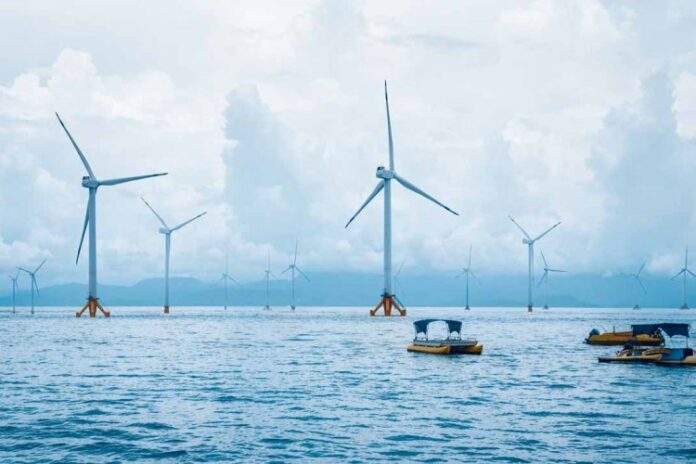
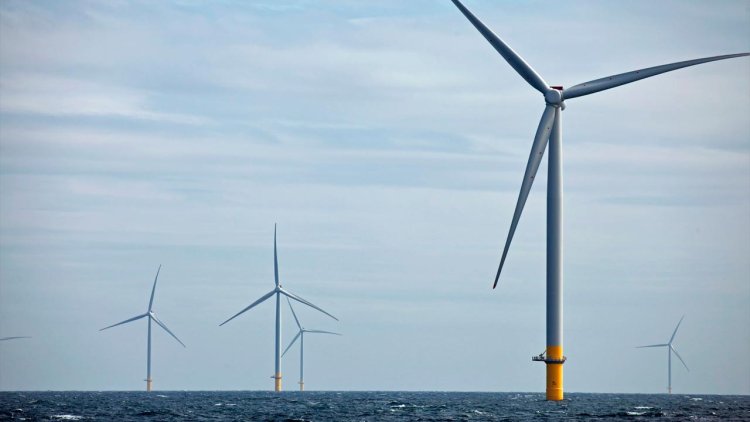
In the Moray Firth, located in northern Scotland, the 60th and final Siemens Gamesa SG 14-222 DD wind turbine has been successfully installed on the Ocean Winds’ Moray West project. Supplied with “Power Boost” each turbine can generate up to 14.7 MW output, making them the largest offshore commercial turbines in Europe. 

The 882MW wind farm is nearing the end of the construction phase and will become fully operational during 2025 in line with the originally projected commercial operations date.  When Moray West comes online, Ocean Winds will be the largest offshore wind operator in Scotland. 

The Moray West project, under the stewardship of Ocean Winds, has been remarkable in achieving this milestone in line with the project programme, delivering against a very rigorous timeline and the varied challenges of extreme weather, grid connection and supply chain constraints. 

The pre-assembly activity of the 60 turbines has been managed by Siemens Gamesa, Siemens Energy’s wind business, who also manufactured all the 180 blades for the project at their facility in Hull, UK. The Hull site has recruited more than 600 people in the last 12 months, and now employs around 1,300 people.   

Siemens Gamesa has been marshalling all turbine components at Port of Nigg from where the Cadeler heavy lift vessel ‘Wind Orca’ undertook the installation. Siemens Gamesa’s technicians on land and on board the vessel have overseen each installation and are in the process of commissioning each turbine. 

Following installation of all primary project components across foundations, the offshore and onshore substations, array and export cables and now the wind turbines – the project continues its commissioning and testing phase before full acceptance of the project in 2025. 

Pete Geddes, Project Director of Moray West, commented:

“What a journey– and what a result!  Subsea surveys, boulder clearance, bomb disposal, scour protection, monopiles, vibro-hammers, transition pieces, cables, onshore and offshore substations – and finally, the deployment of the world’s largest capacity offshore wind turbine to date. Moray West really has ‘set the bar high’ in terms of both technological innovation, and rock-solid project execution. More important than ever, the project has been delivered on time, on budget, and with the highest level of quality. Delivered by the best team in the business – congratulations to every person in Moray West – you can feel very proud of this tremendous milestone.”

Adam Morrison, Ocean Winds UK Country Manager, commented:

“This is a fantastic milestone to mark the installation of all the wind turbines for Moray West.  The project has some way to go before it is fully commissioned, nevertheless this landmark demonstrates Ocean Winds’ commitment to successful delivery through our fantastic professional and safe teams. With two more projects in development in the United Kingdom and Moray East already operating, we are proud to be leaders in the United Kingdom’s energy transition. Over more than a decade developing our projects in the Moray Firth region we have been key drivers in developing the supply chain, creating and support varied jobs in Scotland and the wider UK.

I am really pleased that our collaboration with Siemens Gamesa has reached this milestone on this state-of-the-art offshore wind project.  It is a great example of what Ocean Winds is delivering for the UK, Scotland and the region.  We don’t want to stop here.  Pipeline continuity is essential to the success of the energy transition in the north-east of Scotland and we need the support of both governments to ensure we can move promptly on to our next major project in the region, Caledonia.” 

Moray West, part of Ocean Winds’ 6GW portfolio of secured offshore wind farms in the UK, is expected to inject over £800 million in the local Scottish economy throughout its lifespan, and during construction phases it will create more than 1,500 Full Time Equivalent (FTE) years in Scotland, with more than 60 direct long-term operational roles based in Buckie. More than half of the investment and operating costs of Moray West will benefit the UK economy, underlining Ocean Winds’ commitment to local supply chains.

LNG bunkering vessel Kaguya conducts 100th supply of LNG

0

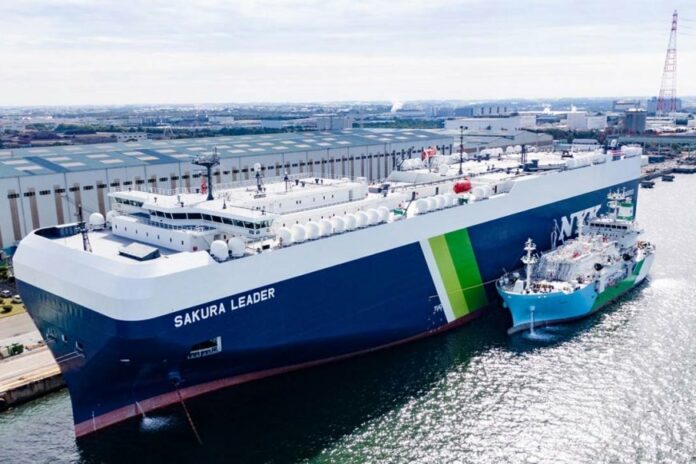
On November 5, the liquefied natural gas (LNG) bunkering vessel Kaguya conducted its 100th ship-to-ship supply of LNG fuel. This notable achievement occurred with the refueling of the car carrier Sakura Leader at the port of Mikawa in Aichi Prefecture.

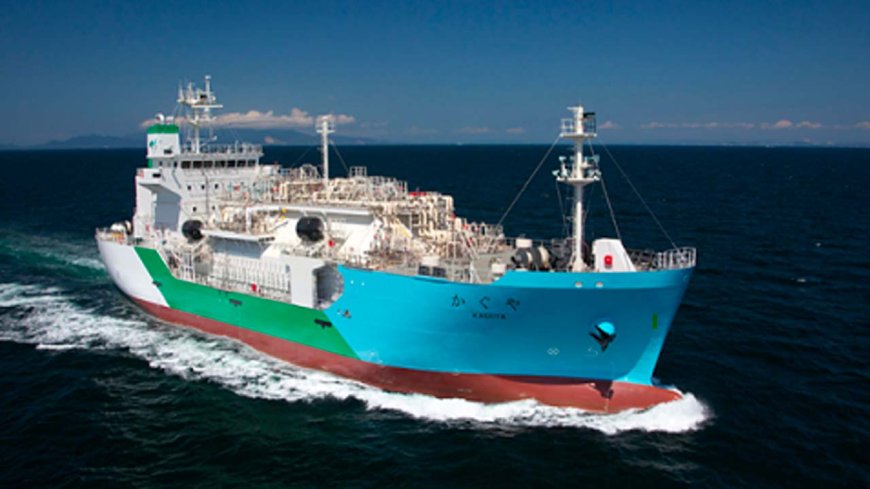
Kaguya was completed in 2020 as Japan’s first LNG bunkering vessel and is operated by Central LNG Marine Fuel Co., Ltd., a JV company among NYK, Kawasaki Kisen Kaisha, Ltd., JERA Co., Inc., and others. Since October of the same year, the vessel has been part of Japan’s first LNG bunkering business using the ship-to-ship supply method. Kaguya is currently based at the Kawagoe Thermal Power Station in Mie Prefecture.

The NYK Group is utilizing the knowledge and know-how it has gained through many years of LNG transport to continually work on fuel conversion to LNG as one of the solutions for environmental response. We will continue to work with various stakeholders and contribute to forming a carbon-neutral society and developing Japan’s LNG bunkering business by promoting the construction of an LNG fuel value chain at important bases around the world.

Principal Particulars of Kaguya

  • LNG cargo tank capacity: 3,500 m3
  • Gross tonnage: 4,044 tons
  • Length overall: 81.7 m
  • Breadth: 18.0 m
  • Shipyard: Kawasaki Heavy Industries, Ltd., Sakaide Works

Saipem: new offshore contract from TotalEnergies in Suriname for 1.9 billion USD

0

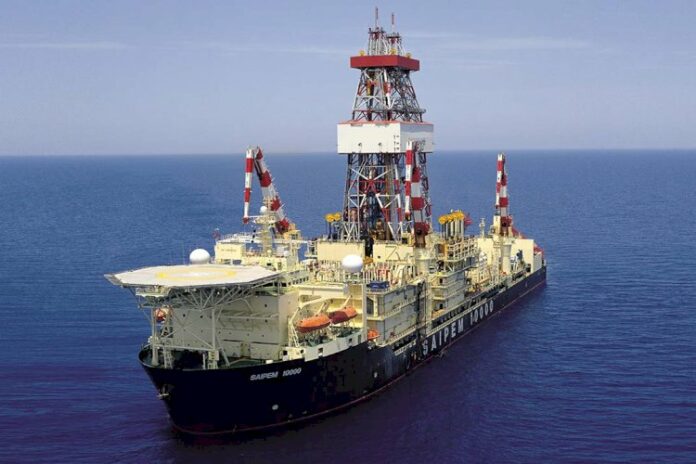
Saipem has been awarded an EPCI contract by TotalEnergies EP Suriname B.V., a subsidiary of TotalEnergies, for the subsea development of the GranMorgu project, located in the Block 58 oil and gas field, 150 km off the coast of Suriname. The contract is worth 1.9 billion USD.

The full project, expected to last 5 years with a First Oil in 2028, represents the first major subsea development in Suriname, and it is aimed at expanding the production of the block central area through a system of subsea wells connected to a Floating Production, Storage and Offloading (FPSO) vessel.

Saipem’s scope of work entails the engineering, procurement, supply, construction, installation, pre-commissioning and assistance for the commissioning and start-up of the Subsea Umbilicals, Risers and Flowlines (SURF) package. This includes the EPCI of approximately 100 km of 10″ to 12″ subsea production flowlines, 90 km of 8″ to 12″ water and gas injection lines, and the T&I of flexible risers, umbilicals and associated structures, at water depths ranging from 100 to 1,100 meters. For the offshore campaign, taking place in 2027 and 2028, Saipem will deploy a combination of S-Lay and J-Lay vessels, providing the optimal pipeline installation solution.  

Moreover, Saipem will execute the project in cooperation with TechnipFMC, the company in charge of the Subsea Production System (SPS) and flexible risers and umbilical equipment packages, to optimize the integration between ​the mutual scopes of work, thus demonstrating the successful collaborative model of the commercial alliance created by the two companies in 2021 for the pursuit of subsea projects including integrated SURF-SPS developments.

This important contract in Suriname, with its long-term commitment, contributes to the overall fleet booking until 2028. Moreover, it consolidates Saipem’s presence in South America and reinforces the company’s track record in the development of complex subsea projects.

Equinor brings on another rig

0

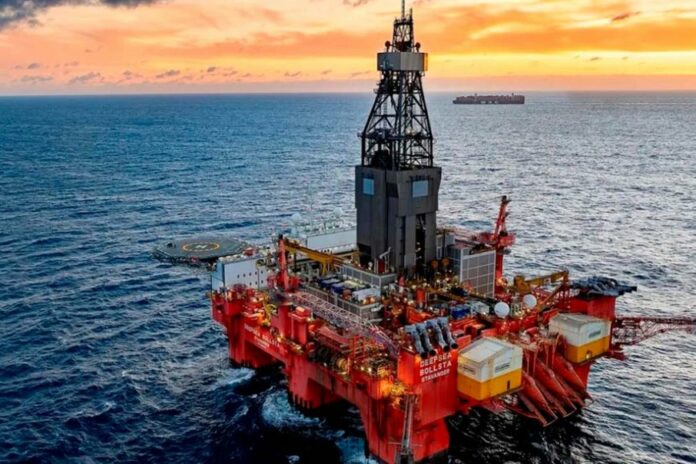
The contract value for the firm period is calculated at around USD 335 million, with planned start-up in the later part of 2025. The contract also includes five one-year options.

“We have an ambition to maintain our production from the Norwegian continental shelf at a high level towards 2035, supplying the energy that Europe demands. Our ability to continuously drill new wells is at the heart of this. There is still a large remaining resource potential in our producing fields. We also see attractive exploration opportunities in Norway,” says Kjetil Hove, executive vice president for Exploration and Production Norway (EPN).

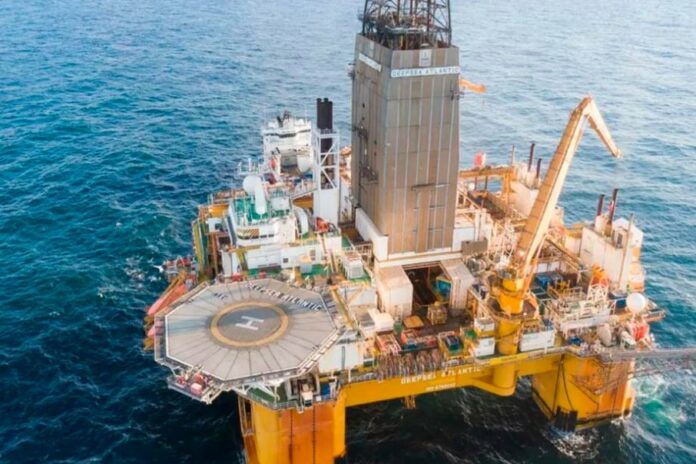
Northern Ocean Wind AS is a company owned by Northern Ocean Ltd. Deepsea Bollsta will be operated by Odfjell Drilling. They currently operate three rigs for Equinor, Deepsea Aberdeen, Deepsea Atlantic and Deepsea Stavanger. Currently, the rig is in Africa and has been drilling in Namibia but has previous track-record for operations in Norway.

“We are pleased to continue our cooperation with the Odfjell Drilling, who has demonstrated a strong safety and performance culture. This will add flexible capacity to our drilling portfolio. On average we have 25 active drilling operations on the Norwegian continental shelf. Rig capacity is important for us, we plan to deliver 50-70 increased recovery wells and 20-30 exploration wells annually going forward,” says Erik Kirkemo, senior vice president for Drilling and Well.

Deepsea Bollsta is a sixth-generation harsh environment, winterized, mobile rig.

The contract value does not include integrated rig services or mobilisation/demobilisation fees.

Oil and gas discovery in the North Sea

0

An exploration well with sidetrack has been drilled about 10 kilometres north of the Troll field in the North Sea. Petroleum was struck in both well trajectories.

Both oil and gas were discovered, slightly more than half being gas. The discoveries were made on the Rhombi prospect.

The license owners will consider tie-in to existing infrastructure and other prospects in the area.

“This is an exciting discovery in one of our core areas that has well-developed infrastructure for both oil and gas. We are actively exploring in this area and have made many discoveries here in recent years. We are now working on how these discoveries can best be developed to achieve good resource utilisation, good profitability and low emissions,” says Geir Sørtveit, Equinor’s senior vice president for Exploration & Production West in Norway.

This is the first discovery in this area in 2024, apart from an appraisal well in a previous discovery. The discovery is located in the part of the North Sea where a total of 12 discoveries were made from 2018 to 2023.

The well was drilled by the Deepsea Atlantic semi-submersible rig.

The license owners:

  • Equinor Energy AS: 45%
    Vår Energi ASA: 40%
    INPEX Idemitsu Norge AS: 15%

Woodside’s Trion Development passes major milestone

0

The first cutting of steel for the Trion FPU was marked with a ceremony on 13 November 2024 at the HD Hyundai Heavy Industries (HHI) facility in Ulsan, South Korea. 

Woodside awarded HHI the FPU engineering, procurement and construction (EPC) contract in June 2023.

“This is an exciting moment for all those involved with the Trion Development, and we are pleased to be embarking on this important phase of work with HHI, our contracting partner for the floating production unit,” said Woodside CEO Meg O’Neill.

“The steel-cutting ceremony kicks off a multi-year construction campaign for the Trion FPU, which is the critical path for the development as we progress towards targeted first oil in 2028.”

Ms O’Neill was joined at the ceremony by HHI President & CEO Lee Sang-kyun and Mexico’s Ambassador to Korea Carlos Penafiel Soto.

The Trion Development is currently more than 15% complete. It is being developed by Woodside in a joint venture with PEMEX.

Trion is a greenfield development that would represent the first oil production from Mexico’s deepwater. It is located in the Gulf of Mexico at a water depth of 2500 m, pproximately 180 km off the Mexican coastline. 

New funding propels Pier Wind at Port of Long Beach

0

The Long Beach Board of Harbor Commissioners on Monday strengthened its commitment to help California reach its renewable energy goals by taking a pair of actions to advance Pier Wind, a proposed 400-acre terminal at the Port of Long Beach to assemble and deploy floating offshore wind turbines.

Taken together, the approvals are aimed at attracting outside funding and authorization to build Pier Wind, which would be the largest facility of its kind in the United States.

“Pier Wind will contribute to creating a reliable electric grid that will enhance air quality and energy resilience, reduce California’s reliance on fossil fuels and help power the Port’s ongoing transition to zero-emissions equipment and vehicles,” said Port of Long Beach CEO Mario Cordero. “We look forward to making Pier Wind a reality and supporting California’s renewable energy portfolio.”

“The Port is pursuing development of Pier Wind to help California reach its renewable energy goals,” said Long Beach Harbor Commission President Bonnie Lowenthal. “Pier Wind will also be instrumental to the state’s economic growth by locally supporting 4,200 jobs during construction and another 1,800 green sector jobs during operations while potentially unlocking thousands of other jobs within the supply chain regionally and statewide.”

The Long Beach Harbor Commission agreed to commit up to $14 million in matching funds for a state grant that the Port will apply for in December, aimed at covering the cost of design, environmental review and community outreach for Pier Wind.

Additionally, the Harbor Commission authorized $6.5 million from the Port’s capital budget to continue with environmental documentation and project delivery activities while the Port’s grant application is under consideration.

Prior to voting, the Harbor Commission received a status update about Pier Wind, how it fits into the state’s clean-energy strategy and the grant application to the California Energy Commission.

A newly released preliminary economic impact analysis found that Pier Wind could generate $8 billion in cumulative labor income, $14.5 billion in economic output and $1.3 billion in state and local taxes from now through 2045.

The Harbor Commission’s approvals come the week after California voters authorized Proposition 4, also known as the Climate Bond, which sets aside $475 million for port infrastructure projects connected to offshore wind development. Staging and assembly seaport projects are critical to the success of floating offshore wind on the West Coast, according to a statewide strategic plan adopted in July.

The California Public Utilities Commission earlier this year adopted a goal to procure up to 7.6 gigawatts of offshore wind power by 2035. In September, Gov. Gavin Newsom signed a bill that would streamline the design and development of Pier Wind by allowing the Port of Long Beach to use alternative construction delivery methods. As the design process progresses, the proposed layout for Pier Wind was recently updated based on industry feedback.

Pier Wind would allow for the staging, storage and assembly of some of the world’s largest offshore wind turbines, standing as tall as the Eiffel Tower. The fully assembled turbines would be towed by sea from the Port of Long Beach to wind lease areas 20 to 30 miles off the coast in Central and Northern California.

The proposed project is undergoing extensive environmental review by local, state and federal regulatory agencies as the Port of Long Beach gathers input from the community. If approved, construction of the $4.7 billion project (in 2023 dollars) could start as soon as 2027, with the first 200 acres completed in 2031, and the final 200 acres coming online in 2035.

The Port of Long Beach is a global leader in green port initiatives and top-notch customer service, moving cargo with reliability, speed and efficiency. As the premier U.S. gateway for trans-Pacific trade, the Port handles trade valued at $200 billion annually and supports 2.6 million jobs across the United States, including 575,000 in Southern California. In 2024, industry leaders named it “The Best West Coast Seaport in North America” for the sixth consecutive year. During the next 10 years, the Port is planning $2.3 billion in capital improvements aimed at enhancing capacity, competitiveness and sustainability.