3.3 C
New York
Home Blog Page 120

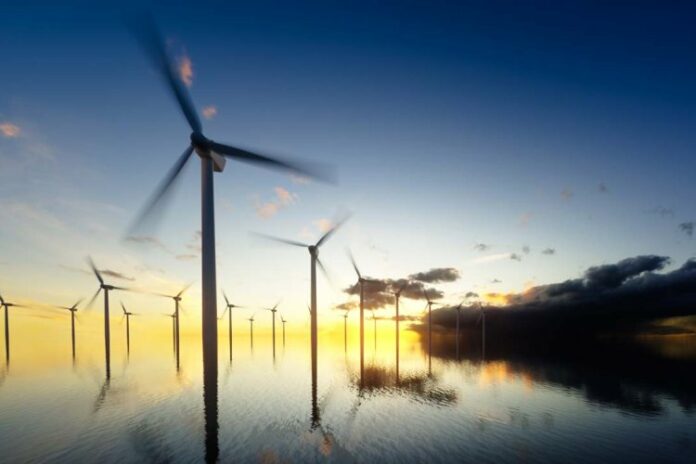
Finland’s first commercial-scale offshore wind power plant is up and running

0

To achieve carbon neutrality by 2035 and to enhance Finland’s energy self-sufficiency, more electricity from renewable sources is needed.

“Wind power, being a crucial energy source for decarbonisation, makes the Korsnäs project a vital contributor to this transition,” says Klaus Nissen, Project Director at Vattenfall. “Once completed, it will produce fossil-free electricity for over two million apartments or 350,000 electrically heated detached houses.” 

The Korsnäs wind park will be located near Vaasa in Finland. It will have a 1.3-2.5 GW capacity and a potential annual fossil-free electricity production of 5–7 TWh. 

Construction is set to begin in the 2030s, but many steps remain before then. As planning is crucial, the project is currently in its most important phase.  

“Geophysical surveys are being conducted to study the seabed, which provides critical input to the environmental impact assessment such as archaeological screening, highlighting of ground risks and data subsequent preliminary foundation design.?This is a pre-requisite for further development of the offshore wind farm,” Nissen says.  

Additionally birds and bats studies are being conducted along with the effects of ice conditions.

An Environmental Impact Assessment (EIA) report to evaluate potential environmental consequences is now being prepared together with Metsähallitus experts. Metsähallitus manages land and water areas of the Finnish state and selected Vattenfall in 2022 to build the Korsnäs wind farm. The calculations will take into account the entire life cycle of the project.  

Before the construction can begin, a multi-stage permitting process must be completed. This large project will impact nature and the environment on both land and sea, as well as national defence, border management, air traffic, shipping, and local industries like fishing. Vattenfall is collaborating with various parties and authorities to mitigate the effects and to secure that all legally required permits and clearances are met.  

Ports play a key role in the operation of offshore wind farms, serving as hubs in the local supply chain. In September 2024, Vattenfall signed a letter of intent with the Port of Kaskinen to explore the possibilities of using the port for logistics during the construction phase, and later for wind turbine maintenance. 

An offshore wind farm brings significant changes to a small coastal community, creating numerous jobs and opportunities for various industries beyond the energy sector. There will be a need for services, researchers, safety experts, logistics, and more. 

Twice a year, Vattenfall and Metsähallitus organise ‘Vind café’ events for local press and residents to share information, discuss concerns, and listen to feedback. In addition, Vattenfall visits the local schools. 

The Korsnäs development has been well received and we have been warmly welcomed by the local community.  

“It is our responsibility to show possibilities that come with the project. The locals’ interest in the wind farm and how it can benefit them is clear. As developers, we have an important role to play here, as we want society to be part of our process and also give something back in return, Nissen says.”
By Sandra Widh, Evwind

Wärtsilä to supply an integrated propulsion package for new Pritchard-Gordon tanker

0

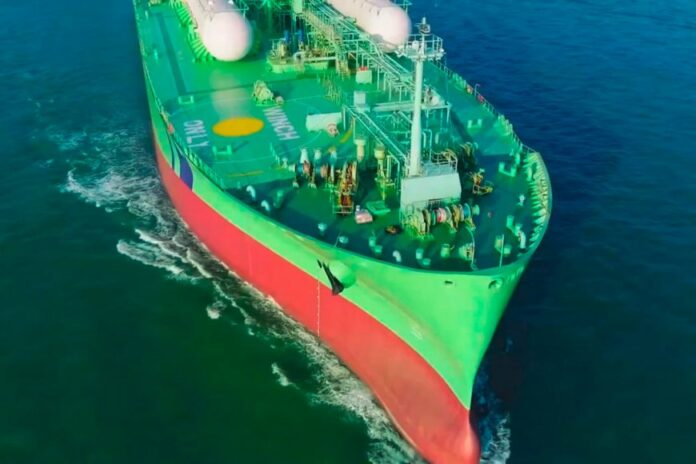
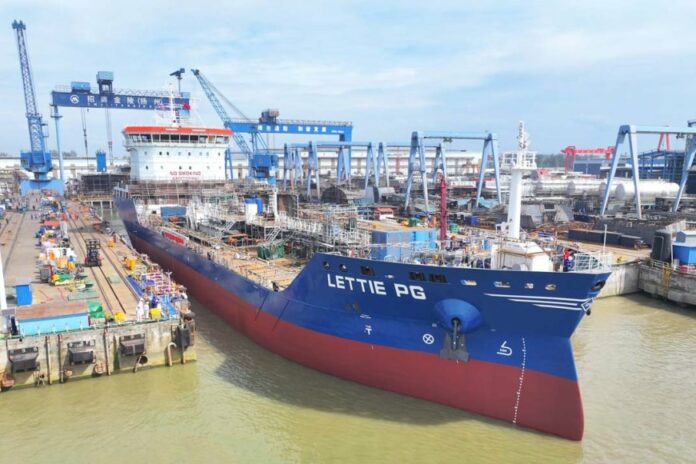
Technology group Wärtsilä will supply an integrated propulsion package for a new vessel being built for U.K. based tanker owner and operator, Pritchard-Gordon Tankers Ltd. (PGT). 

The integrated package includes the high-performance and fuel flexible Wärtsilä 32 main engine. This order is the third in a series of three such vessels, all with a similar Wärtsilä scope of supply. These three 10,600 DWT newbuild vessels are the latest in PGT’s fleet renewal programme, which is centred around efficiency and lower emissions. This latest order was booked by Wärtsilä in Q3 2024.

“The tanker sector is under increasing pressure to lessen its carbon footprint, and we are committed to having a fleet that is highly efficient and provides greater flexibility for new sustainable technologies and future fuels. For this reason, we are delighted to have the propulsion package supplied by Wärtsilä, a company with an outstanding track record in developing sustainable engine technology. Their support throughout the vessel design development process has been very much appreciated,” says Richard Groves – New Build Manager, Pritchard Gordon Tankers Ltd.

In addition to the Wärtsilä 32 main engine, the fully integrated Wärtsilä package for each of the three vessels includes the gearbox, shaft generator system, controllable pitch propeller (CPP), the Wärtsilä EnergoPac efficiency rudder, the Wärtsilä ProTouch propulsion control system, a selective catalytic reduction (SCR) system, and an Open Water lubricated sterntube.

“The integrated package approach is very much in demand as the industry moves rapidly towards greater efficiencies and decarbonised operations,” comments John Grant, Sales Manager for Newbuild, UK & Ireland, Wärtsilä Marine. “These three new vessels feature the very well proven and reliable Wärtsilä 32 main engine. The engine not only optimises fuel consumption but also has the ability to operate on various types of fuel today while being an engine design platform ready for future fuel marine market requirements. We are delighted to support Pritchard-Gordon Tankers with solutions that will complement its fleet renewal programme.”

The ships have been designed by FKAB Marine Design and are under construction at China Merchants Jinling Shipyard (Yangzhou) Dingheng shipyard. The Wärtsilä equipment for the first two ships is due to be delivered in 2024. The order for the equipment of these two vessels was booked by Wärtsilä in Q3 2023. The Wärtsilä equipment for the third vessel will be delivered during 2025 and 2026. 

DNO and its partners discover oil in the Othello prospect

0

The discovery was made in wildcat well 2/6-7 S in production licence 1086, which was awarded in the Awards in Predefined Areas (APA) in 2021.

DNO is the operator of the joint venture with partners Petoro, Aker BP and Source Energy.

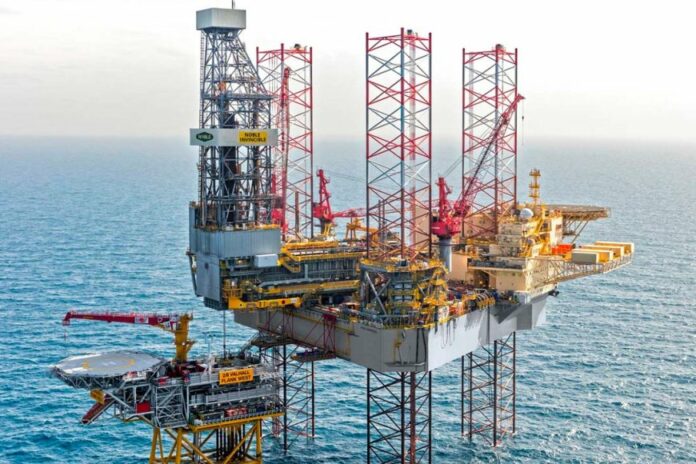
The well was drilled using the Noble Invincible jack-up rig. An appraisal well was also drilled; 2/6-7 A.

Preliminary estimates indicate the size of the discovery is between 4-9 million standard cubic metres of oil equivalent, which corresponds to 25-57 million barrels of oil equivalent.

The licensees will assess the discovery along with other discoveries and prospects in the vicinity, with a view towards potential future development.

The primary exploration target for wildcat well 2/6-7 S was to prove petroleum in Upper Jurassic reservoir rocks in the Ula Formation.

The secondary exploration target was to prove petroleum in Palaeocene reservoir rocks in the Borr Member in the Våle Formation. The objective of appraisal well 2/6-7 A was to confirm the size of the discovery in the Borr Member.

Wildcat well 2/6-7 S encountered an oil column in the Borr Member, spanning two sandstone layers totalling 16 metres with moderate to good reservoir quality. The oil/water contact was not encountered.

No reservoir was present in the primary exploration target in the Ula Formation.

Appraisal well 2/6-7 A encountered a 12-metre oil column in the Borr Member, 8 metres of which were in a sandstone reservoir. The Borr Member had a total thickness of 39 metres, 26 metres of which was net sand of moderate to good reservoir quality. A possible oil/water contact was encountered at 2929 metres below sea level.

The wells were not formation-tested, but extensive data acquisition and sampling have been carried out.

These are the two first exploration wells in production licence 1086.

Wildcat well 2/6-7 S was drilled to a vertical depth of 3642 metres below sea level and was terminated in the Smith Bank Formation in the Upper Triassic.

Appraisal well 2/6-7 A was drilled to vertical and measured depths of respective 2987 metres and 3386 metres below sea level, and was terminated in the Ekofisk Formation in the Lower Palaeocene.

Water depth at the site is 56 metres. The wells have been permanently plugged and abandoned.

BW LPG takes delivery of vessel BW Levant from Avance Gas

0

With reference to the stock exchange announcement on 15 August 2024 for the acquisition of 12 modern Very Large Gas Carriers (VLGCs) from Avance Gas Holdings Ltd has taken delivery of vessel BW Levant on 29 November 2024. 

BW LPG has issued 1,350,000 new BW LPG shares to Avance Gas as part-consideration for the above vessel. Following the issuance of the new shares, the total number of issued shares of BW LPG is 147,500,000, representing a total share capital in the amount of USD 416,627,548. The new shares have been legally and validly issued and are fully paid.

Following the above issuance, Avance Gas holds 7,500,000 shares in BW LPG, representing approximately 5.08% shareholding.

Port of Riga will produce renewable fuel for the Baltic market

0

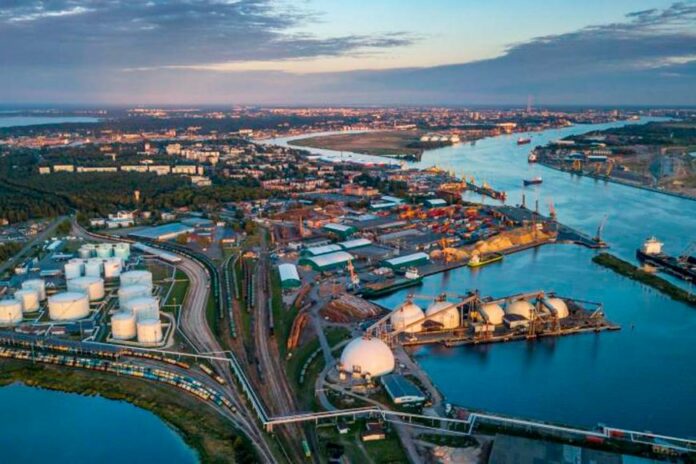
These innovative, high value-added products are in high demand in Latvia and Europe as they support climate neutrality and green goals, while the project will significantly boost Latvia’s export capacity and energy independence from foreign fuel supplies.

Minister for Climate and Energy Kaspars Melnis has visited the Port of Riga with the aim to have a closer look at the project implemented by SIA PARS TERMINALS, to inspect the planned site of the plant in Kundziņsala, and to discuss other renewable energy projects implemented in the port.

“Sustainable thinking, by creating a new, long-term demand renewable fuel production facility in the Freeport of Riga, is an economically forward-looking way to increase Latvia’s influence as a sustainable energy producer in the Baltics in a context of declining transit cargo volumes in the region. The renewable fuel plant will strengthen energy independence, create 120 highly skilled jobs, while providing Latvian farmers with stable demand for energy-intensive crops and helping Latvia to meet its climate neutrality goals,” said Minister for Climate and Energy Kaspars Melnis during his visit.

The production of renewable fuel is to be based on innovative technologies that enable the creation of environmentally friendly and competitive fuel alternatives from a variety of natural vegetable oil sources. Vegetable oils are to be used as the main biofuel feedstock. The planned plant is the first of its kind and will be unique in the Baltic region.

The planned capacity of the plant will be approximately 236 thousand tonnes of feedstock per year, of which 93 thousand tonnes of HVO and 87 thousand tonnes of SAF are to be produced. The total cost of the project is estimated at up to €120 million and it could be completed in 20 months, as all the equipment and technology are already available.

“The new plant is a step in the modernisation of our business. With Ukrainian partners we will ensure economic independence from foreign supplies, thus shortening logistics chains and obtaining high added value products that are currently only imported in the Baltics. This would also benefit our aviation sector, and the Latvian national airline AirBaltic would be a direct beneficiary, with immediate, significant economic benefits, especially looking beyond 2030, when at least 20% of aviation fuel will have to be renewable,” said Armands Sadauskis, owner of SIA PARS TERMINALS, highlighting the main benefits of the new plant.

The renewable fuel project is an important step towards promoting Latvia’s energy independence and the development of local production based on the resources available in Latvia. It will contribute both directly and indirectly to the local economy, improving the competitiveness of Latvian companies, given that biofuels will be needed not only by aviation companies. At the same time, economic cooperation will be developed with Ukrainian investors, which is particularly important for Latvia and Europe in today’s geopolitical situation.

Presenting the directions of the development of the Port of Riga to the Minister for Climate and Energy, Ansis Zeltiņš, the Freeport of Riga CEO, emphasised:

“The implementation of industrial projects, especially in the segment of green energy production, which has high added value and high demand, is one of the cornerstones of the future development of the Port of Riga. The SIA PARS TERMINALS project is an excellent example of how the Port of Riga can become a modern and sustainable platform for industrial projects.”

The discussions also addressed the progress of several green energy projects in the Port of Riga – the planned wind turbine component production and logistics infrastructure in Kundziņsala, as well as the future solar panel park in Spilve Meadows, which will be one of the largest in the Baltics and will be able to produce around 100 thousand MWh of green electricity per year. The participation of the Port of Riga in the hydrogen research project “BalticSeaH2 – Baltic – Nordic Hydrogen Valley” was also discussed, as well as several research projects related to climate neutrality – the possibility of shore power connection for ships and the modernisation of the technical fleet of the Freeport of Riga Authority’s capital company “LVR Flote”.

UECC and Titan agree landmark biomethane deal

0

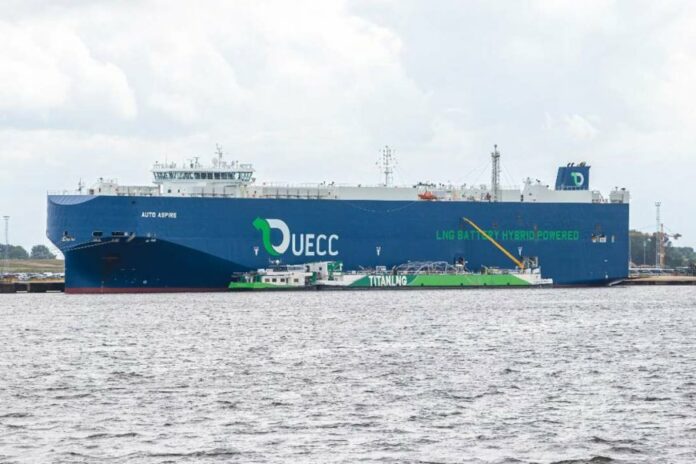
United European Car Carriers (UECC) and Titan Clean Fuels (Titan) have signed a new agreement that will see the vast majority of Liquified Gas supplied by Titan to UECC’s multi-fuel ships to have them run on biomethane (LBM/bio-LNG) for the remainder of 2024 and then most of 2025.
 
This deal expands upon UECC and Titan’s established commitment to using LBM. Since the 1st of July 2024, over 95% of the fuel delivered to UECC’s pure car and truck carriers (PCTCs) by Titan has been LBM; resulting in avoiding more than 30,000 tonnes of green houses gasses emitted.
 
According to Titan’s analysis, the quantity of LBM in 2025, which Titan and UECC are realistically targeting, will avoid more than 75,000 tonnes of greenhouse gases being emitted. That reduction is equivalent to the annual emissions of around 10,000 EU citizens or 540 million kilometers driven in an average car. Using LBM over oil-based fuels also virtually eliminates harmful local emissions Black Soot and other Particular Matters (PM), Nitrogen Oxides (NOx) and Sulphur Oxides (SOx).
 
This transition to biomethane amplifies the success of UECC’s ‘Sail for Change’ sustainability strategy, as it will exceed its carbon intensity targets, which use the same metric as the industry’s forthcoming FuelEU Maritime regulation. In fact, the use of LBM will offer UECC overcompliance with FuelEU Maritime across its overall fleet, and so it is actively exploring pooling and banking options.

Daniel Gent, Energy & Sustainability Manager at UECC, commented:

“Through our CO2 registry, this agreement offers our customers the opportunity to significantly reduce their scope three emissions, and we appreciate those that have already jumped at the offer. Toyota Motor Europe, Ford of Europe and another major European vehicle manufacturer quickly signed up to Green Gas Month in July 2024, and following its success every month will now essentially be Green Gas Month!

“The engagement in Sail for Change from our customers, alongside Titan’s in-depth expertise in clean fuel supply and bunkering, have allowed us to almost entirely transition from LNG to LBM, and to swiftly scale up our use of biomethane. With this expansion, we look forward to hearing from more customers who want to reduce their scope three emissions and use sustainable shipping services today.”

Caspar Gooren, Commercial Director Renewable Fuels, said:

 “As frontrunners with a strong and clear renewable fuels strategy, UECC has been pivotal in propelling the uptake of LBM, and we are excited to be supporting them as they sail towards a sustainable future. This agreement highlights that, just like LNG before it, LBM is quickly becoming a standardized product and gaining popularity as it is recognized as future fuel.

“The LBM delivery scale and consistency we’re able to achieve is, in part, thanks to robust mass balancing processes and related liquefaction LNG terminal infrastructure in the region. It’s now time for the whole of Europe and the world to follow suit. Looking ahead, both Titan and UECC are aligned on the need to geographically expand biomethane supply and diversify waste feedstocks to ensure certified LBM is accessible to those in shipping that want and need it.”
 

SIMEST and Fincantieri sign agreement for the growth of supply chain companies

0

Companies in Fincantieri’s supply chain will be able to access SIMEST’s internationalisation tools to invest in training, technological and digital innovation and sustainability, thus strengthening their competitiveness also in foreign markets.

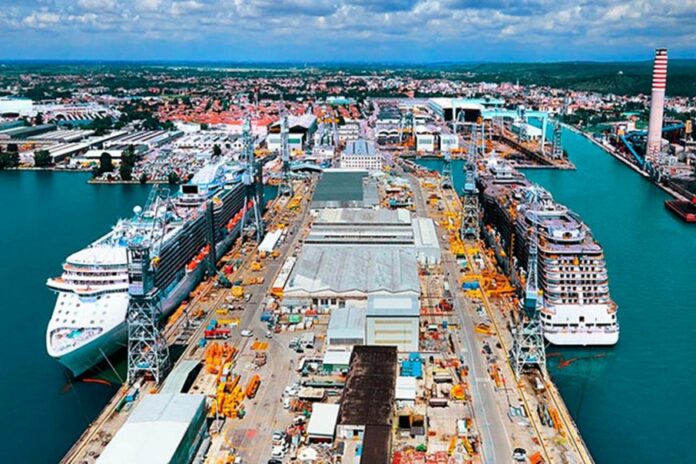
SIMEST, CDP Group’s company for the internationalisation of companies, and Fincantieri, a world leader in high complexity shipbuilding, today signed a memorandum of understanding aimed at promoting new investments, greater competitiveness, including internationally, and market growth for companies in the shipbuilding supply chain. The agreement was signed by Pierroberto Folgiero, Chief Executive Officer and General Manager of Fincantieri and Regina Corradini D’Arienzo, Chief Executive Officer of SIMEST.

The aim of the agreement is to increase the innovative capacity and skills of Fincantieri’s suppliers, enabling new investments for growth both in Italy and abroad, supporting the solidity and traceability of the supply chain and strengthening its profile in international markets.

The agreement will enable SIMEST to identify the needs of suppliers in line with Fincantieri’s industrial objectives, enabling access to subsidised financing for investments in innovation, sustainability and capital strengthening. These investments may also support the training of qualified personnel, the involvement of temporary managers to drive digital and ecological transitions, process innovation and safety improvements. In addition, the agreement aims to support growth in international markets through the establishment of facilities, the acquisition of certifications and patents, and specialised consultancy for internationalisation projects, all in line with Fincantieri’s growth strategy and efforts to diversify and increase market share.

Pierroberto Folgiero, CEO and General Manager of Fincantieri, commented: “It is a pleasure for us to sign this agreement with Simest, in Milan, during our second suppliers’ Summit. Fincantieri wanted to introduce a new and practical way of working with all partners, focused on innovation and competitiveness, also in view of the strong growth we are experiencing.  SIMEST’s innovative tools, available to the entire supply chain, are a major boost for our supplier system in terms of internationalisation and sustainable innovation”.

CEO of SIMEST (CDP Group), Regina Corradini D’Arienzo, stated: 

“Supporting companies in the supply chain is one of the main objectives behind SIMEST’s efforts. For this reason, the first “Filiere d’impatto” supply chain agreement signed today is of particular importance to us. This agreement is a concrete initiative that brings together Fincantieri, as the lead company, and its suppliers to assess the most appropriate industrial investments needed for sustainable competitiveness. SIMEST positions itself as a partner that not only finances these investments, but also helps companies in the supply chain – especially SMEs – to identify and select the most suitable international markets for their growth. 

This approach facilitates the process of choosing the internationalisation tools we provide to thousands of small and micro enterprises, including non-exporting companies within Fincantieri’s supply chain. With this support provided to the supply chain, many of these businesses, particularly those located in southern Italy, will be able to make effective use of initiatives such as the “Africa Measure”, implemented in collaboration with the Italian Ministry of Foreign Affairs and International Development, and part of the Mattei Plan. Initiatives that will enable sustainable and innovative investment, as well as the training of qualified workers from the African continent, helping businesses to grow while supporting a region with significant growth potential such as Africa.”

GDSC conducts end-to-end sustainability certification pilot for liquefied bio-methane bunkering

0

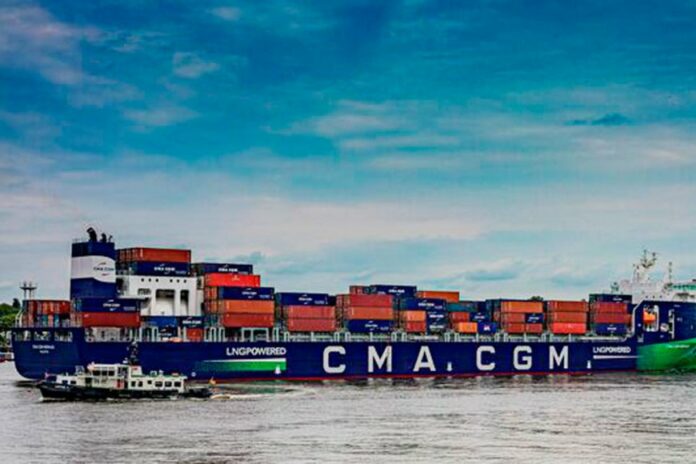
A total of 100 tonnes of mass-balanced LBM was supplied by Shell to CMA CGM’s liquefied natural gas-powered containership CMA CGM TIVOLI.

Produced from waste-based feedstock, the LBM used in this pilot provides a lower-emission alternative to conventional marine fuels. This initiative, led by the bio-methane working group, supports the GDSC’s broader commitment to advancing the adoption of near-zero emission fuels along one of the world’s busiest shipping trade routes.

As part of the pilot, Shell issued a Proof of Sustainability certificate verifying that the LBM fuel supplied complies with regulations by the European Union. The certificate will undergo auditing by third-parties accredited by International Sustainability and Carbon Certification-European Union (ISCC-EU).

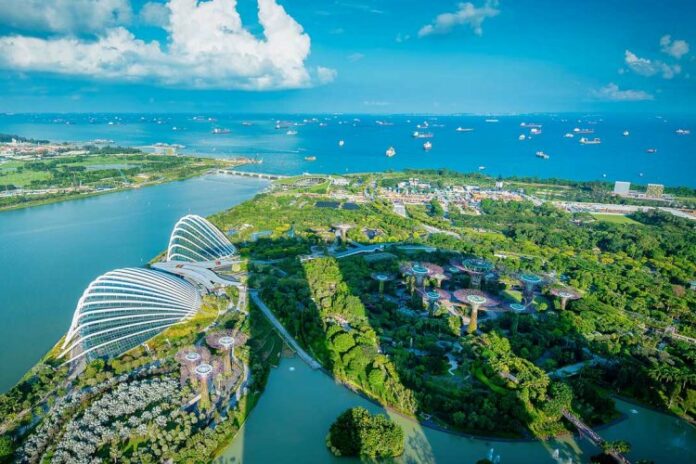
The pilot applied the mass balance methodology to track the movement of the LBM through the supply chain and ensure compliance with ISCC-EU certification standards, Renewable Energy Directive II, and FuelEU Maritime regulations. This end-to-end certificationand tracking supports the development of methodologies which will need to be consistent with the accounting framework adopted by countries under the UN Framework Convention on Climate Change. This test will also provide CMA CGM with the opportunity to ensure that mass balanced LBM is properly recognized by the authorities in relation to the EU Emissions Trading System (ETS) regulation. A similar LBM bunkering pilot with full sustainability certification is planned at the Port of Singapore.

Established in August 2022 by PoR and the Maritime and Port Authority of Singapore (MPA), the Rotterdam-Singapore GDSC aims to accelerate maritime decarbonisation and digitalisation and foster collaboration among global ports and stakeholders. To-date, the GDSC initiative has brought together 28 global value-chain partners across shipping lines, fuel suppliers, port authorities and operator, industry coalitions, banks, leading institutes of higher learning and knowledge partners.  

The bio-methane working group, led by SEA-LNG, is one of the working groups established to encourage the uptake of zero- and near-zero emission fuels. Other working groups are also exploring pathways for alternative fuels such as methanol, ammonia and hydrogen.

Damen Shiprepair Oranjewerf advances sustainable dockings with Shore power

0

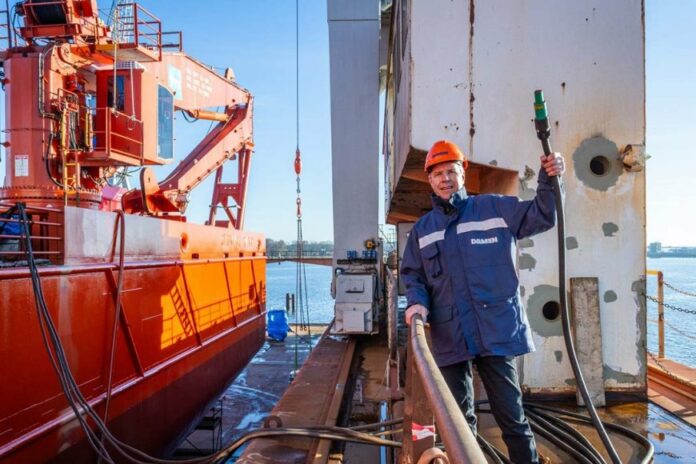
Damen Shiprepair Oranjewerf is giving a green boost to ship repair, maintenance, conversion and refit projects with a recent shore power installation. 

The yard had already installed shore power suited to many of its projects. However, with this latest installation, developed by Elma Systems, the availability of clean on-shore power converted to 60Hz has been widened to cover all types of vessel that call at the yard. 

As part of Damen Shipyards Group’s mission to become the most sustainable maritime solutions provider, the Amsterdam yard has provided shore power for many years. In this way, the yard provided low emissions energy to vessels undergoing work in its docks. It was, however, not a solution compatible with all vessels. 

Commercial Manager Damen Shiprepair Oranjewerf Jeen van der Werf explains,

“Previously, we were able to provide shore power with 50 hertz. However, we get a lot of offshore, navy and fishing vessels come to the yard for work, and many of these vessels operate on 60 hertz.”

As a result, he says, they often had to hire in a diesel powered generator, something the environmentally conscious yard was keen to avoid. 

“We’re always keen to play our part in advancing maritime sustainability so, when we heard about a 35% temporary subsidy for sea goings vessels from the RVO (Dutch Enterprise Agency) for shore power installations, we were very happy to take part with an investment of our own.”

First, the yard needed to find a company that could think along with them to create the right solution; one that would cover all the diverse vessels the yard caters for, and which would be optimally reliable. 

It was at this point that Damen Shiprepair Oranjewerf began discussions with Elma Systems. Together, the two companies set about the development of a solution in tune with the yard’s needs. Elma came up with a rotary convertor which converts the shore power to the desired 60hz (hertz). 

The shore power system of 355A (Ampere), which is installed to the yard’s floating dock, can support up to 250kVA. However, should more power be required, there is an option to add a battery or secondary power source. The Rotary Converter is therefore also equipped with a load sharing system. With this new shore power system, Damen Shiprepair Oranjewerf expects to see a reduction in carbon emission, making a significant contribution towards its sustainability ambitions. 

As an additional benefit, the wider use of shore power means that the yard no longer has to hire in costly diesel generators, and is, therefore, able to offer its clients a more competitively priced project. 

Marco Roman, of Elma Systems said,

“We’re very grateful to Damen Shiprepair Oranjewerf for placing their trust in us to develop this customised solution. Also, we value the collaboration that we experienced during this project, from development till installation. It has resulted in a solution that will help, not only Damen, but also the maritime industry as a whole to conduct operations in a cleaner, more environmentally conscious manner in a very smart way.”

PSA Singapore and EMC establish joint venture for container terminal operations in Singapore

0

PSA Singapore (PSA) and Evergreen Marine Corporation (EMC) have established a joint venture in Singapore, aiming to enhance operational excellence and achieve greater synergies in container operations.

This strategic partnership will offer long-term terminal capacity assurance to EMC’s fast expanding global vessel fleet in PSA Singapore.

PSA and EMC will continue to deepen their collaboration to enhance operational efficiency, drive digital innovation, and advance sustainability efforts. This strengthened partnership, with a shared commitment to leading technological advancements and innovation, will ensure PSA and EMC consistently deliver exceptional service and exceed customer expectations.

Mr Ong Kim Pong, Group CEO of PSA International, said, 

“Trade flows are the lifeblood of the global economy, fueling markets, driving growth and connecting communities worldwide with ports and shipping lines acting as its key enablers. PSA is proud to announce our latest collaboration with Evergreen Marine, a like-minded partner dedicated to advancing global trade and connectivity. Together, we see immense opportunities to embark on initiatives that will not only enhance supply chain resilience but also reimagine how ports and shipping lines can work in unison, as part of our Node-to-Network (N2N) strategy so as to ensure global trade flows as smoothly as water.”

Mr Nelson Quek, Regional CEO Southeast Asia, PSA International, said, 

“PSA is pleased to form this strategic joint venture with EMC, building on our longstanding relationship to enhance collaboration and meet the rapidly changing needs of the maritime industry. By integrating our strengths and capabilities, this mutually beneficial partnership will deliver greater value and deepen the synergies between the two organisations over the long term.”

Mr Y.I. Chang, Chairman of EMC, said, 

“Environmentally friendly ships and efficient terminals are at the core of our operations. As the company’s business expands, we are always looking for like-minded partners to build high-efficiency terminals in important locations. With the culmination of everyone’s hard work comes the launch of Evergreen Marine’s first joint venture terminal with PSA. This achievement not only strengthens our operations in Asia but also marks the beginning of a deeper global partnership between us.”