3.6 C
New York
Home Blog Page 119

NYK obtains AiP for the design concept for Long-Distance Subsea Cable-Laying Vessel

0

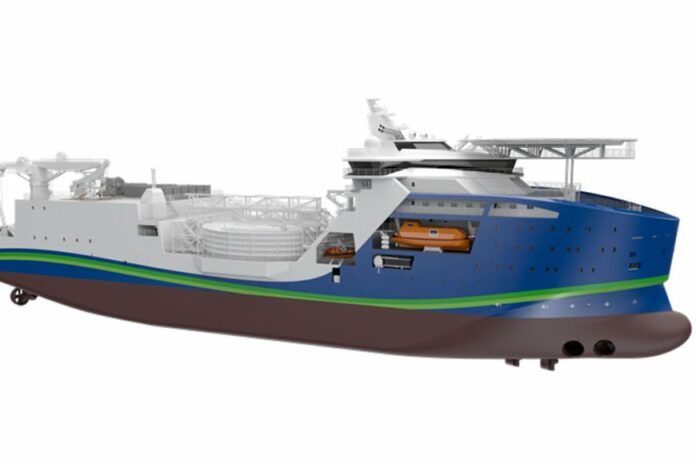
NYK has recently obtained Approval in Principle (AiP) from ClassNK for the design concept of a cable-laying vessel (“the vessel”) for the construction of a long-distance subsea direct current (“DC”) transmission network in Japan.

Since suitable locations for wind-power generation, such as Hokkaido, are far from areas of major electricity demand, developing a power transmission network is crucial to increase the amount of electricity generated in the future. One promising solution to this issue is the construction of a long-distance subsea DC transmission network using cable-laying vessels .

As part of a four-company consortium with Sumitomo Electric Industries, Ltd. (‘Sumitomo Electric’), Furukawa Electric Co., Ltd. (‘Furukawa Electric’), and Mitsui O.S.K. Lines, Ltd., NYK has been participating in the “Development of construction methods for the installation of cable protecting system, etc. and the development of new cable-laying vessels, etc.” of “Research and Development of a Multi-purpose and Multi-terminal HIGH Voltage Direct Current Transmission System (RIGHT Project)”, projects subsidized by Japan’s New Energy and Industrial Technology Development Organization (NEDO).

Cooperating with Sumitomo Electric, NYK is developing the basic technology for cable-laying vessels that will contribute to the development of a domestic DC subsea transmission network.

Fast Facts:

  • 2022: NYK was subcontracted by Sumitomo Electric to conduct the initial conceptual design of a self-propelled cable-laying vessel suitable for Japan’s unique conditions for NEDO’s ” Research and Development of a Multi-purpose and Multi-terminal HIGH Voltage Direct Current Transmission System (RIGHT Project)”
  • 2023: NYK was newly selected by NEDO for a public solicitation for “Development of construction methods for the installation of cable protecting system, etc. and the development of new cable-laying vessels, etc.” of “Research and Development of a Multi-purpose and Multi-terminal HIGH Voltage Direct Current Transmission System (RIGHT Project)”. NYK began designing a self-propelled cable-laying vessel in cooperation with Sumitomo Electric.
  • 2024: NYK obtained the AiP from ClassNK for the design concept of the cable-laying vessel.
  • Future: NYK will proceed with the detailed vessel design and aim to obtain basic design approval from Class
Incat Crowther: New fast ferry ready for peak tourist season in Australia

0

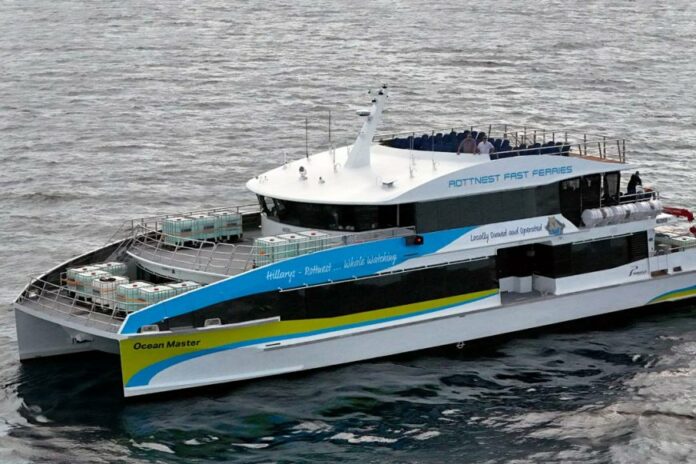
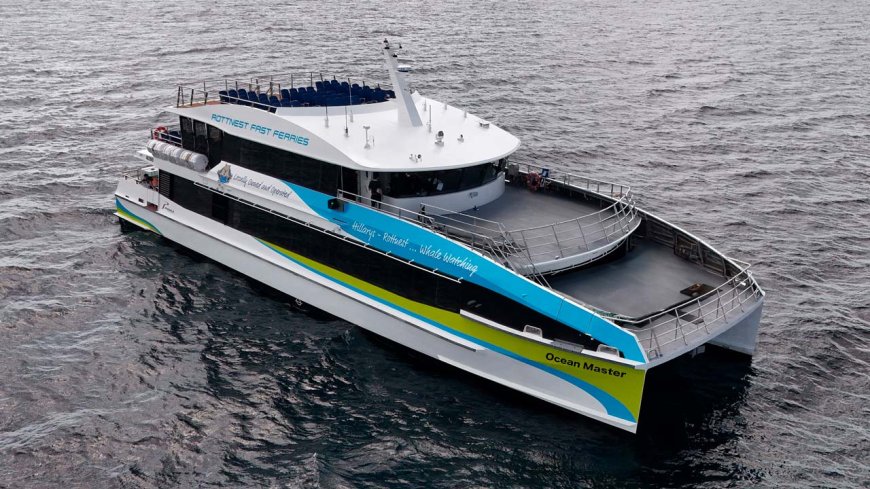
Commissioned by Rottnest Fast Ferries earlier in 2024 with the target of entering service before Christmas, Ocean Master is now ready to deliver a world-class customer experience during the peak tourism season.

The vessel, with a capacity of 400 passengers and five crew across three decks, will allow Rottnest Fast Ferries to optimise its operational efficiency while providing an elevated passenger experience. Ocean Master features spacious seating arrangements, a flexible configuration to accommodate wheelchair users, extensive luggage and bicycle storage areas, a large bar and kiosk, and five bathrooms, including an accessible facility.

Designed to complete the 30-kilometre journey from Hillarys Boat Harbour to Rottnest Island in just 45 minutes, Ocean Master is powered by two 1029kW MAN D2862 diesel engines driving fixed pitch propellers, achieving an operating speed of 25 knots.

The vessel’s design and construction process saw close collaboration between Incat Crowther, Austal Philippines and Rottnest Fast Ferries, to ensure Ocean Master meets all operational and regulatory requirements, while achieving an precise design and construction schedule.

Dan Mace, Technical Manager at Incat Crowther said:

“Successfully achieving design, construction, sea trials, delivery and operation in less a year is a great outcome for all involved. This vessel has been truly customised for Rottnest Fast Ferries. It’s a testament to the project team that we have been able to complete this project successfully and on-time. We are delighted to see it ready to enter service.”

Luke Crispin and James Mulholland, Directors of Rottnest Fast Ferries said:

“We’re thrilled this vessel has been completed so quickly and will enter service in time to help meet demand during our busiest period of the year. Incat Crowther and the project team were attentive and responsive throughout and we couldn’t be happier with the process and the final result. Ocean Master will deliver a first-class experience for passengers travelling to Rottnest Island and we are excited to have it in service this summer.”

Incat Crowther’s collaborative design and delivery process involved working closely with Austal Philippines during construction. This collaboration, which saw Incat Crowther provide accurate and timely guidance to the shipbuilder, ensured a prompt and on-time build schedule for the vessel.

President of Austal Asia, Wayne Murray said

“The Austal Philippines team has delivered this impressive new catamaran in less than 12 months – exceeding expectations for productivity, while maintaining the highest construction standards and product quality,” Mr Murray said.

Acquisition of FSRU Independence by KN Energiés completed

0

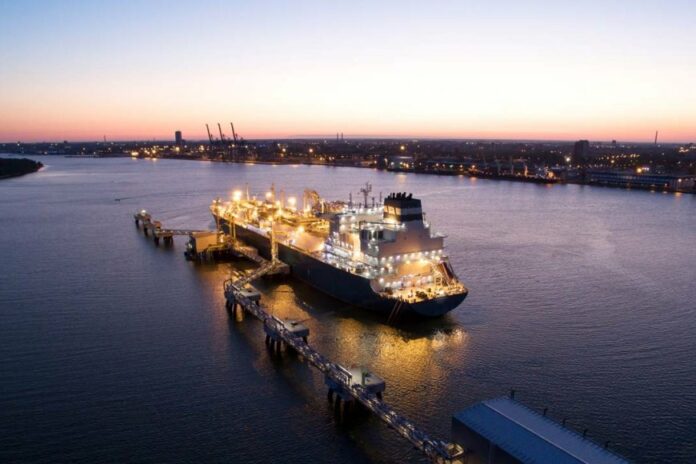
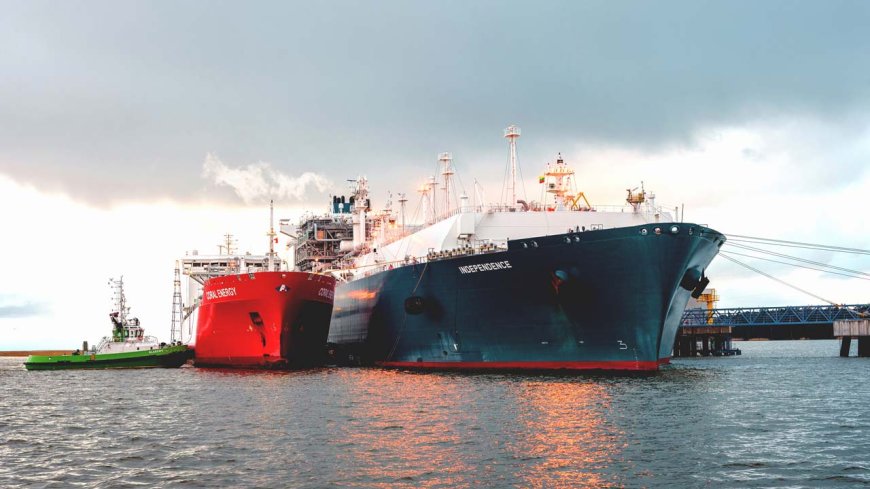
The Independence was commissioned by the Republic of Lithuania in 2014 and was engineered with regasification capacity to fully meet the country’s gas needs. 

The agreement between Höegh Evi and the Republic of Lithuania provided for the option to acquire and own the FSRU by the end of 2024. The transfer of ownership to the state underscores Lithuania’s long-term commitment to maintaining this critical asset. 

“Klaipėda’s LNG terminal stands as a powerful symbol of Lithuania’s political resolve, determination, and commitment to achieving energy independence. It has played a pivotal role in reshaping the country’s energy landscape and enhancing regional energy security, opening up new opportunities for diversification. The terminal represents Lithuania’s frontline in the ongoing pursuit of energy independence, and we take immense pride in the fact that the Lithuanian flag will now proudly fly over it,” said the President of the Republic of Lithuania, Gitanas Nausėda.

Under Höegh Evi’s management, the Independence has supplied nearly 16 billion cubic meters of natural gas to Lithuania and surrounding countries. It has maintained a strong operational record, with close to 500 ship-to-ship operations and no safety incidents.

“The acquisition of the FSRU Independence by Lithuania is a proud moment for Höegh Evi. A decade ago, Lithuania’s vision to leverage marine infrastructure for energy security set a powerful example. The Independence is now a cornerstone of the region’s critical energy infrastructure. Höegh Evi is honoured to continue working with KN Energiés to provide Lithuania and its neighbours with a reliable supply of natural gas,” said Erik Nyheim, President & CEO of Höegh Evi. 

After the transfer of ownership, Höegh Evi will continue to provide KN Energiés with technical and operational management of the vessel.    

“While the ownership of Independence is changing, our decade-long partnership with Höegh Evi remains strong. Hoegh LNG Klaipėda, part of the Höegh Evi group, will continue to provide technical operation and maintenance of the FSRU for the next five years, with an option to extend this cooperation for an additional five years. Over the years, the company has proven to be a reliable and trusted partner, and we are pleased to see this mutually beneficial and growth-oriented partnership continue,” said Darius Šilenskis, CEO of KN Energies.


Konecranes receives $46.8 million portal jib order from the US Navy

0

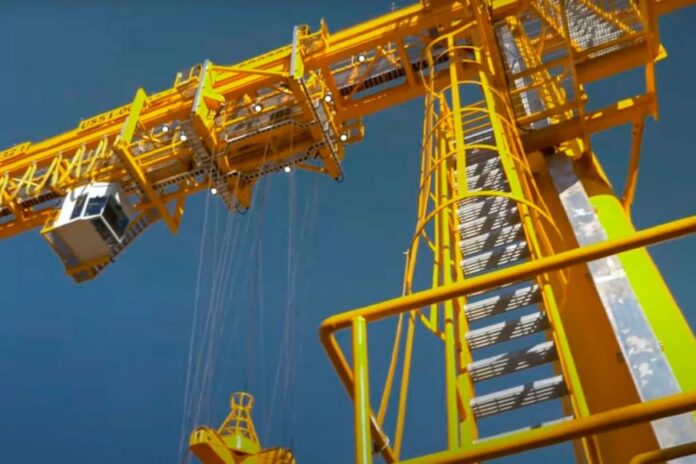
This latest process crane order, worth $46.8 million, was booked in November 2024 and the jib will be delivered to the Norfolk Naval Shipyard in Virginia. 

The US Navy has the option for 2 additional portal jib cranes over the next 2 years, putting the potential total value of the agreement at around the previously estimated $330 million. 

The 175-ton heavy-lift portal crane will be built in Wisconsin and installed at Norfolk, the Navy’s largest shipyard on the country’s east coast. The newest crane is similar to previous orders: customized design with unique features that allow the crane to operate on straight or curved tracks. The crane design can also be used globally in other naval shipyards with similar configurations. The modular configuration of the jib allows it to be modified if necessary to run on other gage sizes if moved to another shipyard in the future. 

A strong focus on customers and commitment to business growth and continuous improvement make Konecranes a material handling industry leader. This is underpinned by investments in digitalization and technology, plus our work to make material flows more efficient with solutions that decarbonize the economy and advance circularity and safety. 

Shell and Equinor to create the UK’s largest independent oil and gas company

0

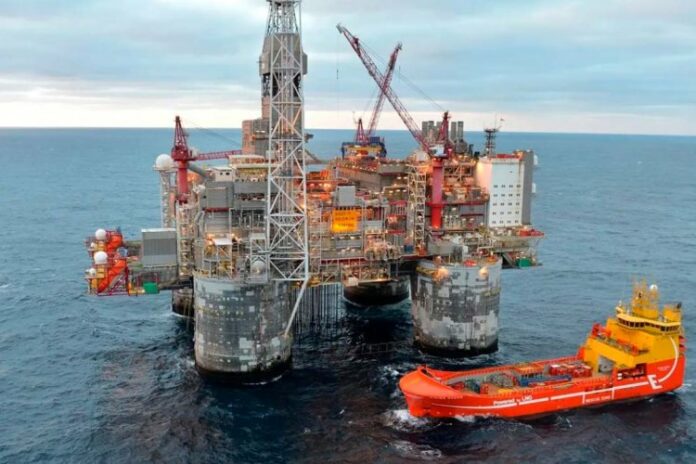
Equinor UK Ltd and Shell U.K. Limited are to combine their UK offshore oil and gas assets and expertise to form a new company which will be the UK North Sea’s biggest independent producer. 

The incorporated joint venture (IJV) will be set up to sustain domestic oil and gas production and security of energy supply in the UK.

On deal completion, the new independent producer will be jointly owned by Equinor (50%) and Shell (50%), two leading global energy companies with decades of experience operating in the UK North Sea. With the once prolific basin now maturing and production naturally declining, the combination of portfolios and expertise will allow continued economic recovery of this vital UK resource. The new company will be more agile, focused, cost-competitive, and strategically well positioned to maximise the value of its combined portfolios on the UK Continental Shelf.

The new company will invest to provide a long-term sustainable future for individual oil and gas fields and platforms, helping extend the life of this crucial sector for the benefit of the UK. Based in Aberdeen, the heart of the nation’s energy sector, the joint venture will include Equinor’s equity interests in Mariner, Rosebank and Buzzard; and Shell’s equity interests in Shearwater, Penguins, Gannet, Nelson, Pierce, Jackdaw, Victory, Clair and Schiehallion. A range of exploration licences will also be part of the transaction.

Both Shell and Equinor are proud to continue the development of the North Sea as investing partners rather than individual operators, opening a new chapter in which they will remain significant players in the UK energy sector.

Equinor’s Executive Vice President for Exploration and Production International, Philippe Mathieu, said:

 “Equinor has been a reliable energy partner to the UK for over 40 years, providing oil and gas, developing the offshore wind industry, and advancing decarbonisation. This transaction strengthens Equinor’s near-term cash flow, and by combining Equinor’s and Shell’s long-standing expertise and competitive assets, this new entity will play a crucial role in securing the UK’s energy supply.”

Shell plc’s Integrated Gas and Upstream Director, Zoë Yujnovich, commented:

“Domestically produced oil and gas is expected to have a significant role to play in the future of the UK’s energy system. To achieve this in an already mature basin, we are combining forces with Equinor, a partner of many years. The new venture will help play a critical role in a balanced energy transition providing the heat for millions of UK homes, the power for industry and the secure supply of fuels people rely on.”

Completion of the transaction remains subject to approvals and is expected by the end of 2025.

New NYK LNG carrier Quest Kirishima delivered

0

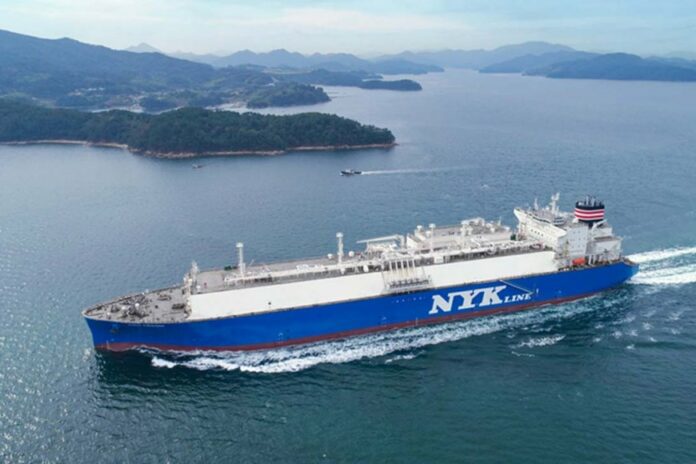
A liquefied natural gas (LNG) carrier that NYK ordered from Samsung Heavy Industries Co., Ltd. (SHI) was completed and delivered at the SHI Geoje Shipyard on December 2. 

The vessel, Quest Kirishima, will be deployed under a time-charter contract with Q United Energy Supply & Trading Co., a wholly owned subsidiary of Kyushu Electric Power Co., Inc,

Quest Kirishima was built to realize operations that are significantly more efficient, economical, and environment-friendly. The ship’s membrane-type cargo tanks have a 174,000 cubic meter capacity and use a tank system that features excellent heat insulation. The vessel is also equipped with a WinGD-made dual-fuel slow-speed diesel engine (i.e., X-DF diesel engine) that has superior fuel-consumption efficiency and can operate on marine gas oil or boil-off gas stored in the cargo tank. The ship additionally has a re-liquefaction system that efficiently uses surplus boil-off gas.

The core strategy of the NYK Group’s medium-term management plan, “Sail Green, Drive Transformations 2026,” is to deepen the Group’s existing core businesses and invest in new growth businesses. In its Energy Business Division, NYK has centered its strengthened efforts on the LNG/LPG carrier business, which the company has positioned as a growth area. NYK will contribute to realizing a stable energy supply in Japan by leveraging the experience, know-how, and networks the NYK Group has cultivated as one of the world’s largest LNG carrier-owning and management companies.

In addition to LNG transport, NYK will continue to strengthen its cooperative relationship with the Kyuden Group in a wide range of fields, including the LNG-fuel supply business for ships, the construction of the world’s first LNG-fueled Panamax, and the establishment of a supply chain for next-generation energy such as green ammonia.

Svitzer begins operations at Brazil’s Itaqui Port

0

Svitzer has begun operations in the Port of Itaqui in São Luís, Maranhão, marking another significant milestone in its expansion across Brazil. Over the past nine years, Svitzer has invested more than R$650 million in the country, reflecting its commitment to the Brazilian market and its strategy of delivering safe and reliable marine services to its customers.

The Port of Itaqui, located in one of Brazil’s largest port complexes, is a critical logistical hub for the Central-North and Central Brazil corridors. With advanced infrastructure – including grain and fuel storage, deep berths for large vessels, and multimodal transport connections – the port is vital to regional and national economic development.

By commencing operations in Maranhão, Svitzer continues its growth trajectory in Brazil. The start of operations in Maranhão marks its ninth port entry in nine years and significantly strengthens Svitzer’s presence along the Brazilian coast. Besides Itaqui, Svitzer operates in Pecém and Fortaleza (Mucuripe), Suape, Salvador and Aratu, Vitória, Santos, Paranaguá and Antonina, São Francisco do Sul and Itapoá, and Rio Grande. Across all these locations workforce development through continuous training programmes and investments in advanced tugboat technology to ensure efficient and safe operations is a key priority for Svitzer.

“The Port of Itaqui serves as a critical hub for cargo from the Corredor Centro-Norte and Brazil’s Central-West region”, said Arjen Van Dijk, Managing Director Americas, Svitzer. “Its importance as a central trade hub connecting with domestic and international markets is immense. We are proud to be able to serve our customers while at the same time supporting the continued development of Brazil’s national trade and logistics.”

Svitzer’s entry into Maranhão is supported by two high-performance tugboats, the Svitzer Denise and Svitzer Joaquim R. These modern Azimuth Stern Drive (ASD) models, with static bollard pulls of 72 and 76 tonnes, are tailored to meet the operational demands of the ports of Itaqui, Ponta da Madeira, and Alumar. The vessels are designed to provide safe, efficient manoeuvring and an ideal outset for serving customers in the port effectively.

“Our entry into yet another port underscores our long-term commitment to the Brazilian market. Itaqui is the largest public port in northern and northeastern Brazil and ranks as the fourth-largest public port nationwide. It is a strategic hub for regional production and exports, including iron ore and soybeans,” said Daniel Cohen, President of Svitzer Brazil. “As Brazil’s economy continues to flourish, we remain highly dedicated to continue strengthening our position in the country, investing in our people and modern, highly efficient equipment.”

Svitzer Brazil currently operates a fleet of 22 tugboats, with three additional ASD vessels under construction. Showcasing Svitzer’s commitment to leveraging local expertise and contributing to the development of Brazil’s maritime infrastructure, these vessels, designed by Robert Allan Ltd., are being built at the Rio Maguari shipyard in Belém, Pará.

Through these expansions and investments, Svitzer reaffirms its dedication to enhancing operational safety and efficiency while supporting the economic growth of Brazil’s vital port complexes. 

Viking takes delivery of newest ocean ship

0

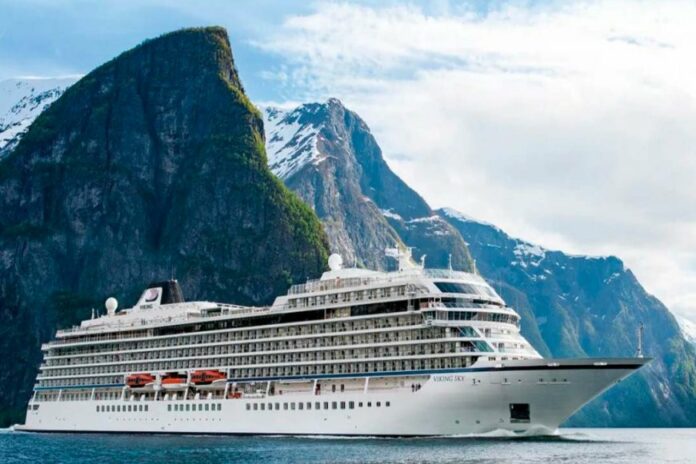
Viking® has taken delivery of the company’s newest ocean ship, the Viking Vela®. The delivery ceremony occurred on 3rd December, when the ship was presented at Fincantieri’s shipyard in Ancona, Italy. 

Classified as a small ship, as are all Viking ocean ships, the Viking Vela has 499 staterooms that can host 998 guests. The Viking Vela joins the company’s growing fleet of award-winning ocean ships and will spend her inaugural season sailing itineraries in the Mediterranean and in Northern Europe.

“We are proud to welcome the newest sister ship to our award-winning ocean fleet,” said Torstein Hagen, Chairman and CEO of Viking. “Together with Fincantieri we have built the world’s most elegant small ocean ships. With the arrival of our newest vessel, we look forward to introducing even more curious travelers to the Viking way of exploration.”

Viking is working on a project for a partial hybrid propulsion system for future ocean ships based on liquid hydrogen and fuel cells, which could allow the company to operate at zero-emission in the Norwegian Fjords and other sensitive environments. While the Viking Vela has a traditional propulsion platform, she is considered hydrogen-ready and can be retrofitted in the future.

The delivery of the Viking Vela follows a string of recent accolades for the company. Viking was rated #1 for Oceans, #1 for Rivers and #1 for Expeditions by Condé Nast Traveler in the 2024 Readers’ Choice Awards for the second consecutive year. This achievement marked the first time a travel company won these three categories in back-to-back years. Viking was also named Best Luxury Line, Best Line for Couples and Best Line in the Mediterranean in U.S. News & World Report’s 2025 Best Cruise Lines ranking for the fourth consecutive year. Viking’s ocean ships have been rated and “Recommended” as part of the Forbes Travel Guide 2024 Star Awards, an annual independent evaluation for luxury travel brands. Additionally, Viking received seven awards at the 2023 Cruise Critic Editors’ Picks Awards—more than any other line—across the luxury, river and expedition categories.

WinGD wins late engine orders for eight newbuild LNG carriers

0

The company was influenced by WinGD’s extensive track record for reliable operations, continuous improvements to the market-leading X-DF concept and successful operational experience since the first series of X-DF2.0 engines were delivered earlier this year. 

The order was received relatively late in the newbuilding planning phase as operational and delivery concerns arose around the engines originally selected. Despite the timing, close collaboration with engine builder, yard and ship owner – which already uses X-DF engines on several LNG carriers – ensured that construction was not delayed.

WinGD Director Sales, Volkmar Galke said:

“Although we aim to be the first choice, we were delighted to add to our orderbook from a significant customer. With the longest established low-pressure two-stroke engine in the market and strong relationships with engine builders and shipyards, we were well placed to pick up the process quickly once the owner decided to switch engine type.”

X-DF was first introduced to the market in 2016 and has since recorded more than 8 million reliable running hours, with more than 800 engines in service and on the orderbook. Advances including Intelligent Control by Exhaust Recycling (iCER) and Variable Compression Ratio (VCR) technology mean X-DF is now not only the leading low-pressure design, but also more competitive than high-pressure Diesel-cycle engines.  X-DF2.0 with VCR offers lower overall operating and system costs, and emissions, making it a favourite amongst LNG operators.

Recent upgrades to the next generation of X-DF engines have significantly enhanced the appeal in the LNGC segment. The latest version, 2.2, uses a smaller bedplate and A-frame tailored to the five-cylinder models usually deployed on LNG carriers. The result is a smaller engine footprint and greater ship design flexibility, with the same high performance and efficiency within the engine ratings typically used.

Consistent development work with engine builders and shipyards means that X-DF2.0 engines with VCR can now be incorporated into most standard vessel designs. Indeed, with WinGD dominating orders for newbuild vessels over the past two years, it could be argued that X-DF powered vessels are now the standard design. And with a recent reorganisation intended to strengthen cooperation at the vessel integration stage, WinGD is geared to support owners that need ready solutions to any emerging engine power requirements.

NYK and KNCC conduct joint constructability study of LCO2 vessel together with NSY

0

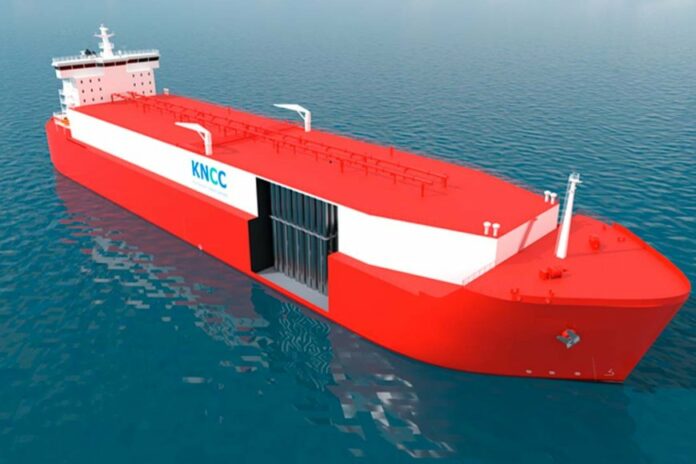
Nippon Yusen Kabushiki Kaisha (NYK) and NYK’s affiliate Knutsen NYK Carbon Carriers AS (KNCC) are conducting a joint constructability study of a 40,000 cbm terminal-to-terminal liquefied CO2 (LCO2) vessel based on KNCC’s proprietary technology of LCO2-Elevated Pressure (LCO2-EP) Cargo Tanks together with Nihon Shipyard Co., Ltd. (NSY), which is a joint venture for ship design and sales between Imabari Shipbuilding Co., Ltd. and Japan Marine United Corporation.

CCS (Carbon dioxide Capture and Storage) is a technology to capture CO2 at the source — such as power plants, chemical plants, and the like — by separating CO2 from other gases, compressing the CO2 for transportation, and then injecting the CO2 deep into underground or undersea rock formations at a carefully selected and safe site, where the CO2 is permanently stored. CCS technology is attracting attention as a way to achieve a carbon-neutral society. This initiative aims to contribute to the establishment of a CCS value chain and to the reduction of greenhouse gas emissions.

Tsutomu Yokoyama, Executive Officer, NYK, said:

“This joint study with NSY will be another key milestone for us as it will provide the capability through KNCC to offer LCO2-EP marine transportation service in addition to MP and LP. We will continue to study the establishment of a system for the construction of LCO2-EP vessels to support the development of CCS projects globally.”

Oliver Hagen-Smith, CEO, KNCC, said:

“We are pleased to announce a joint study with NSY on constructability of LCO2-EP terminal-to-terminal vessels. The innovative design of the LCO2-EP Cargo Tanks features vertical cylinders that can be mass-produced through automated processes using standard materials. This may optimize and reduce the construction time. The modular design potentially allows more shipyards to participate, utilizing existing facilities and infrastructure, which broadens industry engagement and enhances efficiency. We are confident that this study will bring significant benefits in cost-effectiveness, quality, and scalability to the maritime construction sector.”

Tomoaki Takahira, Director, Chief of Design Division, NSY, said:

“While CCS is still in its developmental stage in terms of technology and market structure, the joint study of the LCO2-EP terminal-to-terminal vessel with KNCC and NYK is an important step for us to bring one of the viable options to the market.

In addition to medium-pressure and low-pressure vessels, we will continue to study the construction of LCO2-EP vessels to contribute to the establishment of the CCS value chain.”