9.8 C
New York
Home Blog Page 12

Damen LST 100 design selected by NAVSEA for US Navy Landing Ship Medium initiative

0

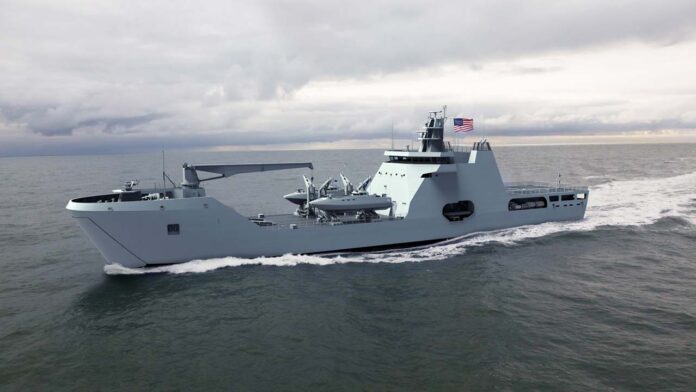
Damen Shipyards Group has announced the selection of its Landing Ship Transport (LST) 100 design by Naval Sea Systems Command (NAVSEA). According to the navy, up to 35 LST100 vessels will be constructed at shipyards in the United States for the Medium Landing Ship programme (LSM).

NAVSEA released the RFI (Request for Information) to the industry at the beginning of 2025. Following this, in July, Damen received a Technical Data Package (TDP) award from NAVSEA for the LST100. The design has now been selected as the basis for the LSM class, following which up to 35 LST100s will be constructed at American yards. To ensure speed of delivery to the fleet, the Navy was seeking a non-developmental sea-going vessel design. Damen has previously delivered an LST100, providing the opportunity for NAVSEA representatives to visit an in-service example for themselves.

Additionally, last year, the Australian Government announced its selection of the LST100 for the Australian Defence Force’s Landing Craft Heavy programme. With this, up to eight of the vessels will be constructed by Australian shipyards.

Damen has supported shipyards around the world with the construction of its designs since 1977. We provide everything from a licensed design to a materials package, to building support.
In this way, over 150 Damen-designed vessels have been built in the USA to date. This includes the Sentinel Class and Protector Class patrol vessels in operation with the US Coast Guard.

The LST100 is 100.68 metres long with a beam of 16 metres and a draught of 3.58 metres. It is suited to a diverse range of operations. With its ability to transport personnel, vehicles, equipment and cargo, the vessel can be used in patrol, landing, survey and reconnaissance operations, as well as for the delivery of humanitarian aid & disaster relief.

In its standard design it features bunks for 282 personnel. Cargo can be transported on the RoRo deck (500m2), vehicle deck (400m2) and on the helicopter deck. The vessel is able to sail at speeds of up to 14 knots, with an endurance of 3,890 nautical miles. At endurance speed of 10 knots, it can reach up to 7,530 nautical miles.

The LST100 features extensive flexibility. Its modular design enables straightforward adaptation and upgrade without compromising the benefits of standardisation. For example, with the addition of a standard, 20-metre modular block, the vessel can be enlarged to the LST120 design during construction.

Damen Area Manager Americas Alan Borde said, “We are delighted at NAVSEA’s selection of the LST100 for its LSM programme. We are very much looking forward to continuing our cooperation with American shipyards during the construction of these vessels in the coming years. We enjoy long-standing relationships with a number of these yards, having supported their construction of our vessel designs over the last decades.

“I would like to thank the Embassy of the Netherlands in the USA, as well as my colleagues at Damen Naval, for their support in the process so far. And of course, my extreme gratitude goes to NAVSEA for placing their trust in Damen. The LST100 has proven itself in operation already, and we have full confidence in the design’s suitability to meet the operational requirements of the US Navy.”
Gas/condensate discovery in the North Sea

0

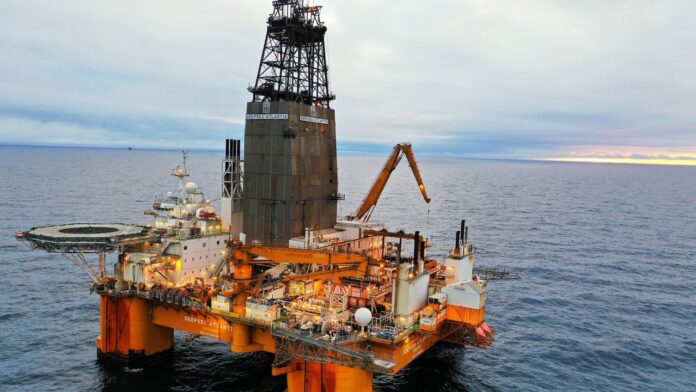
Wildcat wells 15/5-8 S and 15/5-8 A were drilled 7 kilometres north of the Eirin field (15/5-2) and 240 kilometres west of Stavanger in production licence 1140.

The preliminary calculation of the size of the discovery in “Lofn” is 3.5 – 10 million standard cubic metres (Sm3) of recoverable oil equivalent (o.e.). This corresponds to 22-63 million barrels o.e..

The preliminary calculation of the size of the discovery in “Langemann” is 1 – 8 million Sm3 of recoverable o.e. This corresponds to 6-50 million barrels.

Production licence 1140 was awarded in 2022 (Awards in pre-defined areas 2021). 15/5-8 S and 15/5-8 A are the first and second exploration wells to be drilled in the production licence.

Moving forward, the licensees will consider the opportunities to develop the discoveries towards existing infrastructure in the area.

The wells were drilled by the Deepsea Atlantic rig.

Geological information

The primary exploration target for wells 15/5-8 S and 15/5-8 A was to prove petroleum in two separate prospects in Middle Jurassic reservoir rocks in the Hugin Formation and Triassic reservoir rocks in the Skagerrak Formation.

Wildcat well 15/5-8 S encountered gas/condensate-bearing sandstone layers in the Hugin Formation with a thickness of 116 metres, 36 metres of which were sandstone layers with moderate to very good reservoir quality. The gas/water contact was not encountered.

In the second exploration target in the Skagerrak Formation, the well encountered a 173-metre thick reservoir interval, 59 metres of which were sandstone layers with moderate to very poor reservoir quality. The reservoir was aquiferous.

The well was drilled to respective measured and vertical depths of 4636 metres and 4319 metres below sea level in the Skagerrak Formation.

Wildcat well 15/5-8 A encountered gas/condensate-bearing sandstone layers in the Hugin Formation with a thickness of 125 metres, 31 metres of which were sandstone layers with moderate to good reservoir quality. A possible gas/water contact was interpreted between 4141 – 4148 metres below sea level.

In the second exploration target in the Skagerrak Formation, the well encountered a 95-metre thick reservoir interval, 17 metres of which were sandstone layers with very poor reservoir quality. The reservoir was aquiferous.

The well was drilled to respective measured and vertical depths of 4932 metres and 4357 metres below sea level in the Skagerrak Formation.

The well was not formation-tested, but extensive volumes of data and samples were collected.

Water depth at the site is 107 metres, and the well has been permanently plugged and abandoned.

ABB’s new DP2 functionality delivers major improvement in vessel control during DEME sea trials

0
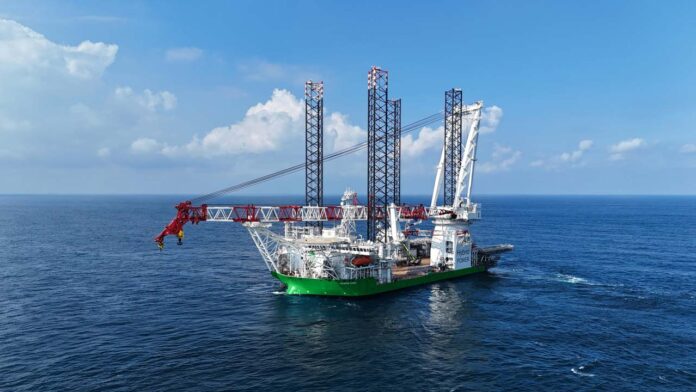
DEME`s newbuild wind turbine installation vessel Norse Wind

ABB has verified a major advancement in vessel Dynamic Positioning (DP) technology, following successful Failure Mode and Effects Analysis (FMEA) proving trials and sea trials on board the new wind turbine installation vessel (WTIV) Norse Wind.

By integrating ABB Ability™ Marine Pilot Control – a ship control system that unifies dynamic positioning, maneuvering, and transit functionalities into one intuitive interface – with Azipod® propulsion units, the vessel showcases distinctive advantages of system-level synergy. Meeting all performance expectations, ABB’s new Dynamic Positioning Class 2 (DP2) control system draws on input from DP operators, studies of accident logs and model-based control algorithms. Offering full control at all operational stages, the DP solution enhances vessel safety and operational decision making.

Sea trials onboard the DEME vessel Norse Wind verified the solution’s continuous control capability, integrated with ABB’s PEMS™ power and energy management system allowing for closed bus-tie operations. In addition, ABB’s tactile AX Bridge levers and user interface enable a clear situational overview of both the vessel and DP. The solution’s functionality leverages dynamic vessel and thruster models that update in real time to account for speed-induced changes in hydrodynamics.

Jeroen Vanden Branden, Head of Fleet at DEME, said:

“As an industry leader in innovation and advanced technologies, we sought a dynamic positioning solution that would raise the benchmark beyond the long-standing standard. ABB’s new DP2 control system delivers an advanced, intuitive, and user-friendly experience, providing operators with all essential information in a clean, modern interface. This system empowers our crews with precision, reliability, and real-time insights – delivering the performance and safety standards that modern DP operations demand.

The DEME sister ship Norse Energi will also feature the new ABB DP2 solution on its entry into service in early 2026.

“In developing the DP2 functionality for ABB Ability™ Marine Pilot Control, combining it with Azipod® propulsion, and subsequently verifying its performance at sea, our team has shown great vision, craft and dedication,” said Rune Braastad, Business Line Manager, Marine Systems, ABB’s Marine & Ports division. “DEME has been an excellent pioneering partner, fully buying into our vision for a safer and more user-friendly DP control solution. I am proud of the collaboration and excited to see a safer operating environment for crews and vessels alike.”

Ukrainian drones hit Russian oil platform in the Caspian Sea for the first time, halting production

0

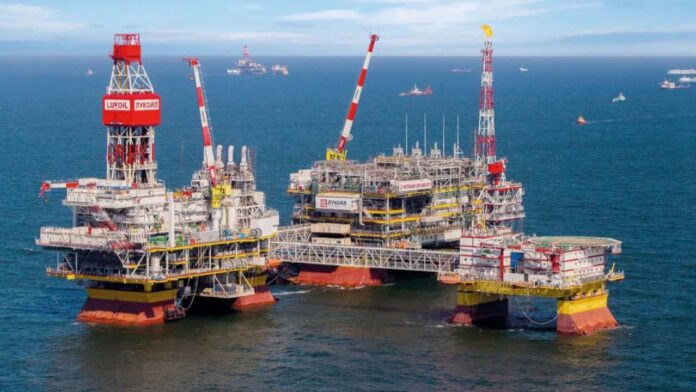
Ukrinform reported this, citing sources within the Ukrainian security service (SSU).

The target was the Filanovsky oil platform, owned by the company Lukoil-Nizhnevolzhskneft.

According to the sources, operators of the Alfa Special Operations Center executed the operation.

“At least four hits on the offshore platform were recorded. As a result of the attack, oil and gas extraction from more than 20 wells serviced by the platform has stopped,” the SSU source said.

This is the first strike on Russian oil infrastructure facilities in the Caspian Sea since the start of the full-scale war.

The Filanovsky field is one of the largest discovered in Russia and in the Russian sector of the Caspian Sea. Its reserves are estimated at 129 million tonnes of oil and 30 billion cubic meters of gas. The extracted resources were exported through the Caspian Pipeline Consortium.

ClassNK issues General Design Approval for low-pressure LCO2cargo tank

0

ClassNK has issued a General Design Approval (GDA) for Low-pressure LCO2 Cargo Tank developed by Mitsubishi Shipbuilding Co., Ltd.

This approval verifies the tank’s compliance with relevant rules at the detailed design level. GDA for a liquefied CO₂ cargo tank made of KF460 steel and applying technology that omits PWHT marks the world’s first case.

This GDA includes a tank safety assessment process based on a fracture mechanics technique called Engineering Critical Assessment (ECA) to omit post-weld heat treatment (PWHT), which can be a bottleneck in tank manufacturing. An Approval in Principle (AiP) for Mitsubishi Shipbuilding’s ECA evaluation process was issued in September 2024.

Based on the detailed design evaluation conducted by the Company and the material property assessment for a new steel conforming to NK standard ‘KF460’ developed by Nippon Steel Corporation, the structural integrity of the tank under the specified design temperature conditions has been demonstrated through ECA. In light of these assessments, ClassNK conducted a review of the tank in accordance with Part N of its ‘Rules and Guidance for the Survey and Construction of Steel Ships’. Upon confirming that the tank meets the prescribed requirements even without PWHT, ClassNK has issued the GDA. This marks the first time ClassNK has issued a GDA for a LCO2 cargo tank.

South Korea’s first state-owned all-electric ferry powered by ABB

0

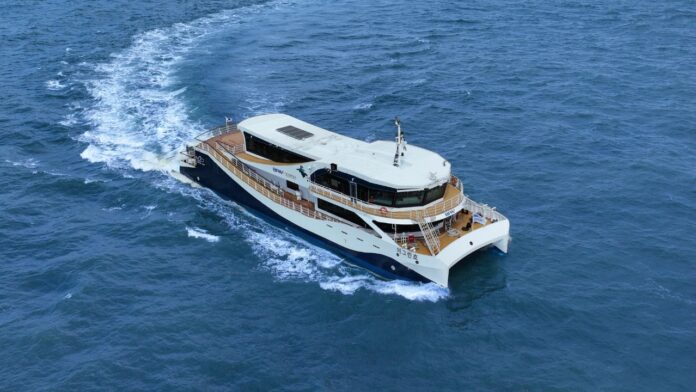
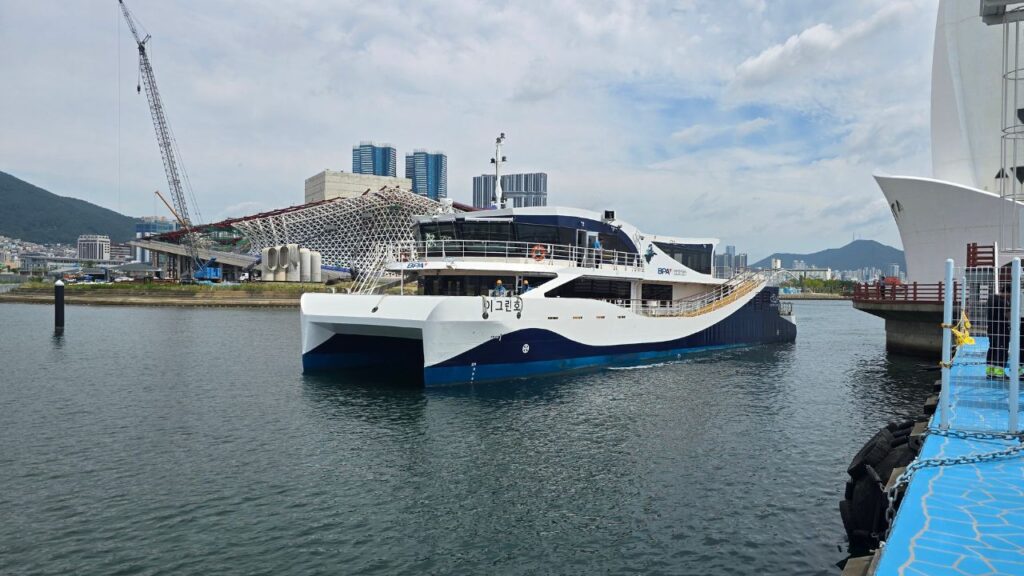
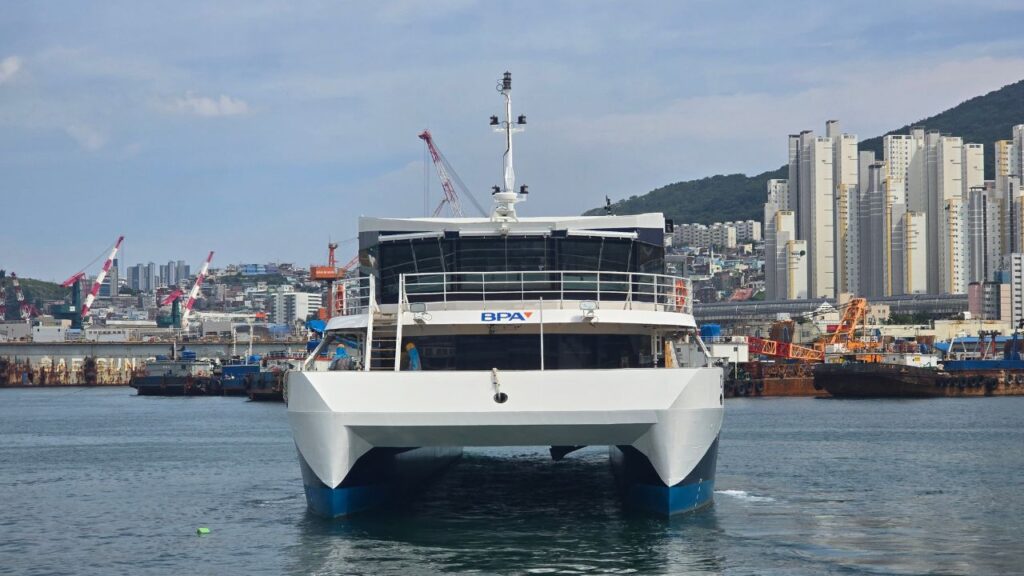
Demonstrating a significant advance in South Korea’s strategy for maritime decarbonization, Busan Port Authority (BPA) has officially launched the first state-owned all-electric ferry, with the end-to-end electric power and propulsion system supplied by ABB.

Built by Busan’s Kangnam Corporation, the new passenger ferry is the first realization by South Korean authorities of their plan to replace 140 state-owned assets with ships running on cleaner energy sources by 20301, in line with environmental legislation. Sustainable ferries will play a significant role in South Korea’s goal to achieve net-zero emissions by 2050, as set out in the country’s Green New Deal announced in 2020.

“This vessel demonstrates Busan Port Authority’s commitment to cleaner, smarter port operations,” said Woong-Ki Lee, Port Manager, Busan Port Authority. “By introducing an all-electric ferry to serve our North–South Port connection, we are reducing local emissions and noise while providing a replicable model for future harbor craft. ABB’s integrated electric propulsion and energy storage system has given us the efficiency, safety, and reliability we need to deliver a better experience for passengers and a healthier environment for our city.”

ABB’s Onboard DC Grid™ power distribution system ensures optimal delivery of battery output to the vessel’s subsystems, with ABB’s PEMS™ power and energy management system controlling overall power distribution, increasing fault tolerance, and providing a high degree of reliability.

During operations, the ferry is remotely monitored and supported by experts from ABB’s global network of ABB Ability™ Collaborative Operations Centers. Remote support and connectivity, together with advanced data analytics enabled by the ABB Ability™ Remote Diagnostics System, further enhance the vessel’s operational safety and optimize performance while helping to promptly detect and correct faults on board.

Equipped with two 1,068-kilowatt-hour battery packs for emissions-free operations, the vessel will take approximately one hour and 30 minutes to fully charge the battery using 500 kW of power, which enables about two hours of operation.

While the vessel is berthed, it is connected to the shore charging station via a stable optical communication link, allowing automatic control of charging and discharging from aboard.

“The launch of this new passenger ferry is testament to both Busan Port Authority’s and South Korea’s decarbonization ambitions and provides a blueprint in pursuit of increasing energy-efficiency and reducing emissions,” said Riccardo Repetto, Global Segment Manager, Short Distance Shipping, ABB’s Marine & Ports division. “The project also demonstrates the power of ABB’s Onboard DC Grid™ as an enabling platform for cleaner maritime operations. We are proud to have played an integral role in delivering South Korea’s first state-owned all-electric ferry.”

Deltamarin celebrates multiple AiP approvals for next-generation eco-efficient vessel designs

0

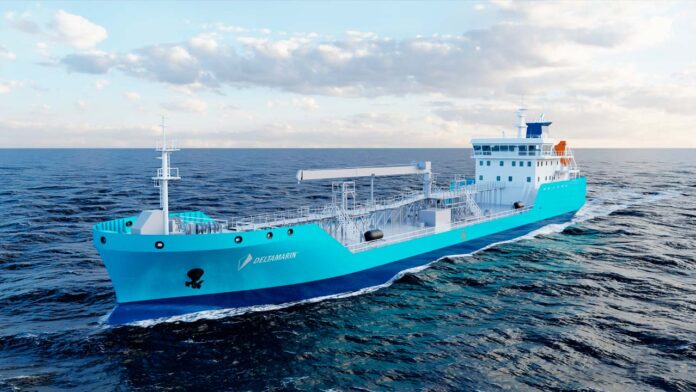
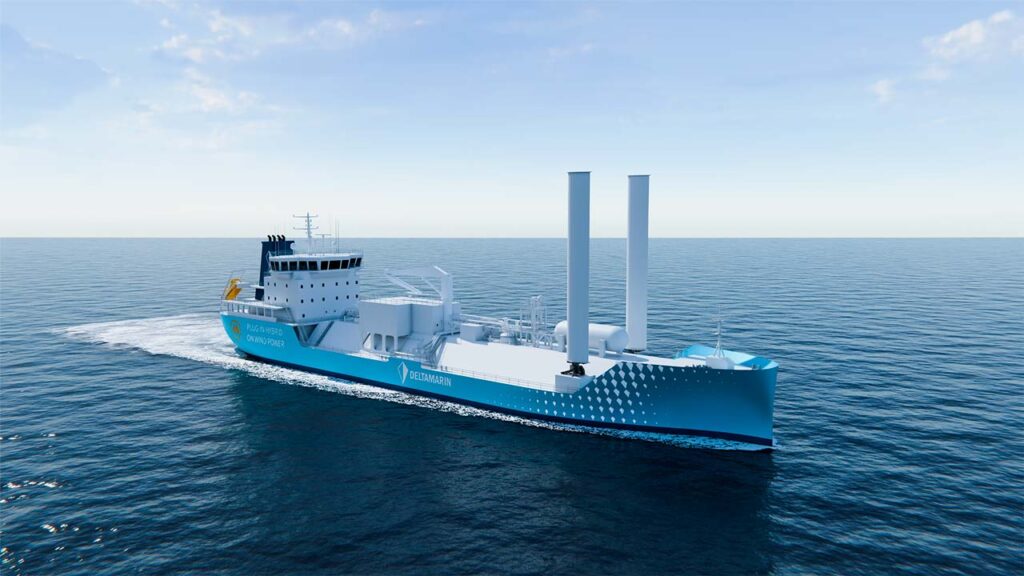
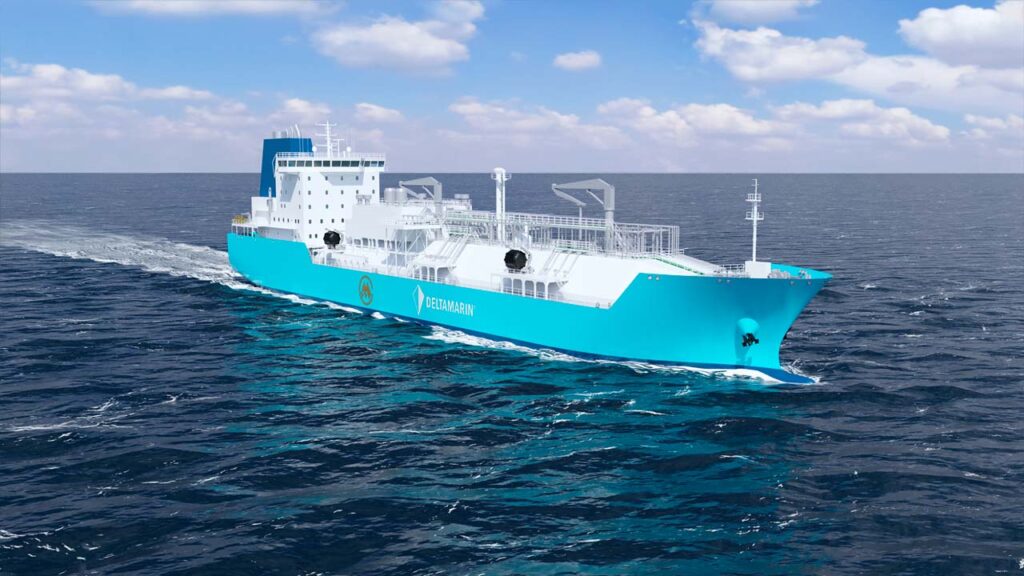
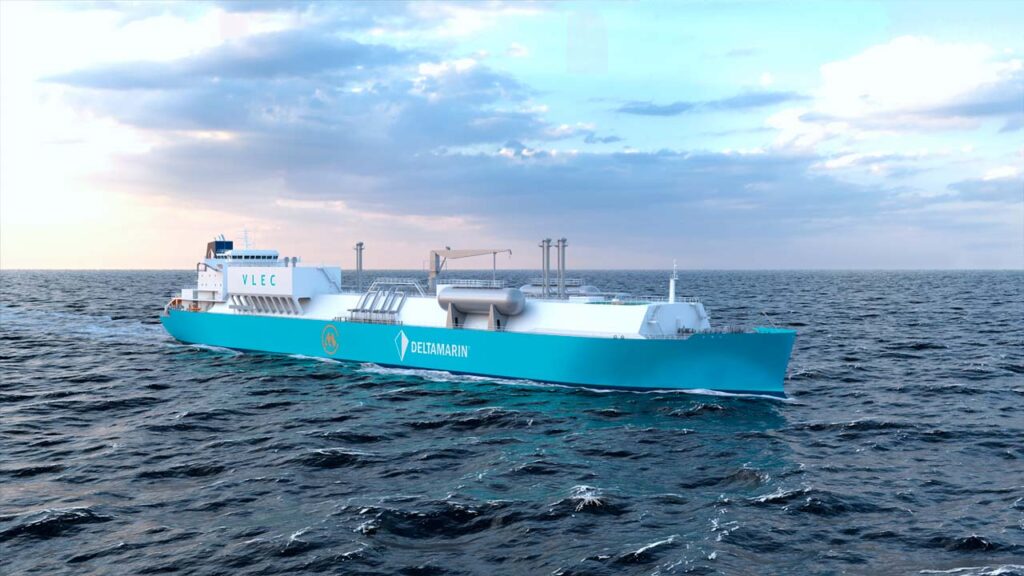
Deltamarin has received five Approvals in Principle (AiPs) from DNV and Lloyd’s Register (LR) for its next-generation vessel designs, awarded at Marintec China in Shanghai.

The approved next-generation vessel designs include a 20,000 CBM LNG bunkering vessel, a hybrid and wind-assisted 9,500 CBM liquefied ethylene gas carrier, a 6,200 DWT duplex stainless steel chemical tanker, a 103,000 CBM very large ethane carrier, and an 8,000 TEU methanol-ready container vessel.

This dedicated LNG bunkering vessel has a tank capacity of 20,000 cubic meters and is designed to supply large-scale liquefied natural gas (LNG) to a variety of large vessels. As a key part of future LNG bunkering infrastructure, the vessel supports the shipping industry’s transition to cleaner energy, enhances safety and operational efficiency, and helps achieve emission reduction goals.

This liquefied gas transport vessel has a capacity of 9,500 cubic meters for liquefied ethylene gas and is designed to operate in Ice Class 1A areas with ice up to 80 centimeters thick. Its standout feature is the “green dual-power system,” which combines battery-hybrid technology with wind-assisted propulsion. This innovative design significantly enhances energy efficiency and represents a new step forward in applying clean energy solutions to small gas carriers.

This small chemical tanker has a deadweight tonnage (DWT) of 6,200 tons and features duplex stainless steel cargo tanks. Its design overcomes the traditional “no redundancy” limitation for small ships: if the main engine fails suddenly, the shaft generator can provide reverse propulsion, ensuring the vessel can return safely. This capability significantly reduces the risk of leaks and environmental pollution from hazardous cargo in the event of engine failure.

Notably, the design strategically leverages the European Union Emissions Trading System (EU ETS) exemption for ships under 5,000 gross tonnage (GT). By optimizing the hull design, the vessel maximizes deadweight to the physical limit of 6,200 tons, offering customers a green transportation solution that balances efficiency, safety, and operational flexibility.

This cutting-edge gas carrier has a tank capacity of 103,000 cubic meters and features an innovative three-tank design. It is specifically built for the safe and efficient transport of gaseous cargo, including liquefied ethane. Its large scale and high efficiency are designed to significantly enhance the efficiency of global supply chain for clean gaseous energy.

This large container vessel has a capacity of 8,000 TEU and features “methanol readiness,” meaning it is technically prepared to use green methanol as a clean fuel in the future. The design reflects a forward-looking approach, supporting the shipping industry’s transition toward decarbonization.

Each AiP recognizes the technical features of Deltamarin’s latest designs—from hybrid and wind-assisted propulsion solutions and enhanced safety redundancy on small tankers to large-scale clean-fuel logistics, high-efficiency ethane transport, and methanol-ready capabilities for major vessel types. These approvals affirm the technical strength and innovative character of our next-generation vessel designs, highlighting their contribution to safer, cleaner, and more efficient shipping.

Bulgarian Navy received its first national ship in 100 years

0

The Bulgarian Navy has raised the flag on its first multi-purpose patrol ship Hrabri (Braves) of the MMPV 90 project.

Bulgaria will also soon receive approval from the European Commission for nine projects under the SAFE mechanism, two of which are related to the purchase of additional missiles for two new ships.

SAFE is a new EU financial instrument that will support those member states that want to invest in defense industrial production.

In 2020, the Bulgarian government signed a €503 million contract with the German shipbuilding group Fr. Lürssen Werft GmbH & Co. KG for the construction of two Multipurpose Modular Patrol Vessels (MMPV) of the MMPV 90 project.

The construction is being carried out according to the design and with the participation of Lürssen as the general contractor at the Bulgarian shipyard MTG Delfin in Varna.

In 2021, the role of the general contractor on the German side was transferred to the newly established NVL Group (Naval Vessels Lürssen), to which the Lürssen Group transferred its warship assets (in September 2025, it was announced that an agreement had been reached on the sale of NVL Group by the Lürssen Group to another German group, Rheinmetall, with the deal expected to be completed in 2026).

A subsidiary of NVL Group, Naval Technology Bulgaria, was established in Varna to provide technical design of ships and support construction.

The Bulgarian program for the construction of two promising surface ships was severely limited by a financial limit of BGN 1 billion (just over €500 million), which led to the early elimination of the former favorite of the Bulgarian Navy, the much more expensive corvette of the French Gowind Combat project (Gowind 2500).

As a result, it was not a full-fledged corvette that was chosen, but actually a medium-sized coast guard patrol ship with enhanced weapons.

The Lürssen MMPV 90 (Multipurpose Modular Patrol Vessel) project chosen by the Bulgarian side is actually a variant of the 90-meter OPV 90 patrol ship previously presented on the world market.

In turn, the OPV 90 is an enlarged version of the 80-meter patrol vessel PV 80 project, according to which Lürssen previously built four Darussalam patrol vessels for the Brunei Navy, and is currently building six Arafura patrol vessels in Australia.

Initially, the MMPV 90 project ships were scheduled to enter service in the third quarter of 2025 and the third quarter of 2026, respectively, and are to become the core of the renewed Bulgarian fleet.

MMPV 90 armaments

NVL Group reported that the Bulgarian ship has a standard displacement of 2100 tons and a gross displacement of 2300 tons, a length of 90 meters and a width of 14 meters.

The power plant is diesel, twin-shaft; the full speed is up to 25 knots, the range of navigation at an economical speed of 14 knots will be 3000 miles. Autonomy – seven days, crew – about 70 people.

The ship’s armament includes:

  • four launchers of the Saab RBS-15 Mk 3+ anti-ship complex;
  • an eight-container vertical launcher of the MBDA VL-MICA air defense system;
  • 76-mm Leonardo Oto Super Rapid universal artillery system;
  • 35-mm anti-aircraft artillery system Rheinmetall Oerlikon Millennium;
  • two 324-mm three-tube torpedo launchers for Leonardo A244/S anti-submarine torpedoes.
    The ship is equipped with a hangar for basing an Airbus Helicopters AS565MB Panther helicopter (the Bulgarian Navy has three such aircraft).

The ship’s electronic weapons, mostly supplied by the Swedish group Saab AB, include:

  • Sea Giraffe AMB general-purpose radar,
  • Ceros 200 fire control system,
  • electro-optical system EOS 500,
  • Saab 9LV combat information and control system,
  • TactiCall communication system.

The ships are equipped with a Saab electronic warfare system and a Rheinmetall TKWA/MASS decoy system.

Source: militarnyi

Sanctioned oil tanker is stranded off Bulgaria’s Black Sea coast after suspected Ukrainian strike

0

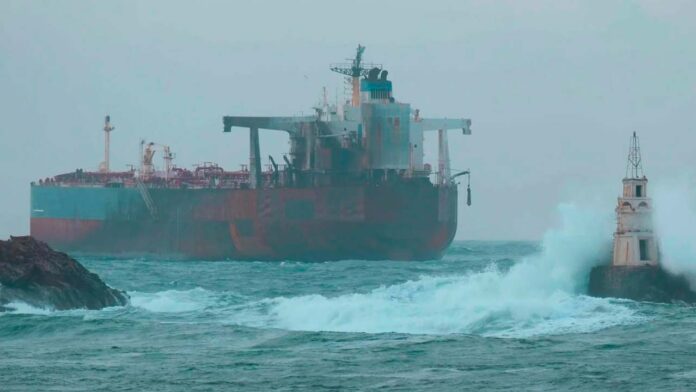
Bulgarian maritime authorities on Saturday launched efforts to evacuate the crew of the oil tanker Kairos stranded off the Black Sea port of Ahtopol and believed to be part of the “shadow fleet” used by Russia to evade international sanctions linked to its war in Ukraine.

Last week, the Gambian-flagged 274-meter Kairos caught fire after an alleged attack with Ukrainian naval drones in the Black Sea near the Turkish coast. It was sailing empty from Egypt toward the Russian port of Novorossiysk.

The 149,000-ton Kairos, formerly flagged as Panamanian, Greek and Liberian, was built in 2002. It was sanctioned by the EU in July this year, followed by the U.K. and Switzerland.

The ship entered Bulgaria’s territorial waters on Friday under tow by a Turkish vessel, but the mission was abruptly abandoned, leaving the tanker to drift across the sea without power like a ghost ship before stranding less than a nautical mile off the shore.

On Saturday, Rumen Nikolov, in charge of rescue operations at the Bulgarian Maritime Agency, said that it must be established through diplomatic channels why the tanker was brought into Bulgaria’s territorial waters.

Nikolov explained that the empty tanker is stable despite the bad weather, adding that there is no danger to either the crew or the environment. He said that all 10 crew members, of different nationalities, are in good condition and have enough food and water for about three days. “When the weather calms down, the ship will be towed to a safe place,” he added.

The head of border police, Anton Zlatanov, told the Nova TV channel, that communication was established with the crew, who had complied with orders and dropped anchor, and the ship is currently stable in a position off Ahtopol. “The crew expressed their desire to be evacuated, but this must be done in the safest way possible,” Zlatanov added.

Zlatanov noted that the tanker is being monitored by a radio communication system, thermal cameras from the shore, and a radar system, while communication with the crew is being maintained.

Source: apnews

Ørsted’s largest offshore wind farm in Germany produces first power

0

Ørsted and Nuveen have leveraged leading European suppliers to deliver the 913 MW offshore wind farm, which will enable German industry to decarbonise at a large scale once fully operational.

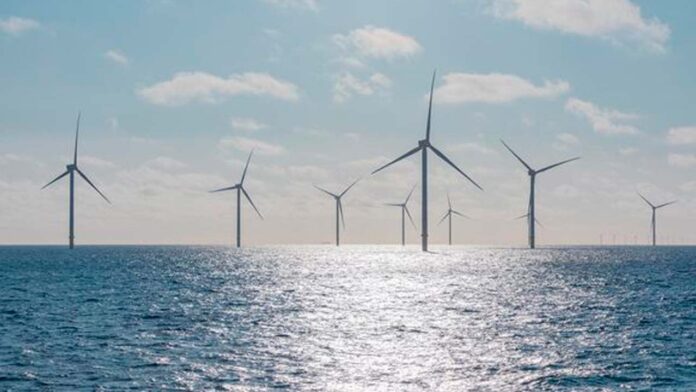
The offshore wind farm Borkum Riffgrund 3, jointly owned by Ørsted and Nuveen Infrastructure, has delivered its first power to the German grid on 3 December 2025. With an installed capacity of 913 MW, it will become by far the largest offshore wind farm in Ørsted’s German portfolio. Borkum Riffgrund 3 shows the breadth of the European offshore wind supply chain as the project has been constructed using wind turbines and foundations from Germany and Denmark, cables from Germany and France, and installation vessels from the Netherlands and Belgium.

The renewable electricity from Borkum Riffgrund 3, which has now started to flow into the German grid, will, through several long-term corporate power purchase agreements (CPPAs), help industry and technology customers decarbonise their business. The offshore wind farm is expected to be fully commissioned in Q1 2026.

Patrick Harnett, Chief Construction Officer at Ørsted, said:

“Offshore wind will play a key role in securing European energy independence and manufacturing jobs. Borkum Riffgrund 3 is a prime example of both. The project has been constructed by European companies, creating local manufacturing jobs. And, once completed, it will produce the same amount of electricity that a large city uses every year, supporting European industry with a significant amount of green energy through CPPAs. At Ørsted, we’re proud to deliver the first electrons to the grid, and we look forward to having Borkum Riffgrund 3 fully up and running.”

Jordi Francesch, Managing Director Renewable Energy Investments at Nuveen Infrastructure, said:

“The generation of the first power at Borkum Riffgrund 3 is both a significant landmark for German offshore wind and our commitment to accelerating the EU energy transition. Our partnership with Ørsted will deliver 913 MW of clean energy to German households and European corporates making this project a new benchmark for decarbonisation while also supporting long-term energy security for Germany and the EU.”

Felix Gschnell, Programme Director for Borkum Riffgrund 3, at Ørsted adds:

“With first power produced at Borkum Riffgrund 3, we’re taking a major step towards completion of this large-scale project. Our team and suppliers did a tremendous job getting us to this point, and I’m very grateful for their firm dedication and continuous motivation since we took the final investment decision. We’re now focused on commissioning all remaining wind turbines – so we can start full commercial operation in Q1 2026, thereby contributing a significant amount of additional electricity from offshore wind to the German grid.”

Borkum Riffgrund 3 is located about 72 km off the coast in the German North Sea and covers an area of approx. 75 km². A total of 83 wind turbines, each with a rated capacity of 11 MW, have been installed at the offshore wind farm. Furthermore, Borkum Riffgrund 3 is the first offshore wind farm to be built by Ørsted in Germany without an offshore substation (OSS). The new connection concept provides a direct connection between the wind turbines via a 66 kV connection to the DolWin epsilon offshore converter platform, installed and operated by the German transmission system operator, TenneT.

Borkum Riffgrund 3 is supported by several long-term corporate power purchase agreements (CPPA), which Ørsted has signed with industrial and technology customers. Offtake agreements totalling 786 MW have been entered into with Amazon (350 MW), BASF (186 MW), Covestro (100 MW), Energie-Handels-Gesellschaft/REWE Group (100 MW), and Google (50 MW). The contracts range from 10 to 25 years in duration. The agreements create long-term price security for the project developer and for the customers.

Earlier this year, Ørsted and Nuveen Infrastructure’s other jointly owned offshore wind farm, Gode Wind 3, was fully commissioned, producing enough renewable energy to power the equivalent of 250,000 homes in Germany. The project is located close to Ørsted’s existing wind farms: Borkum Riffgrund 1 and 2 and Gode Wind 1 and 2. With these recent additions, Ørsted’s installed offshore wind power capacity in Germany increases to around 2.5 GW in early 2026 – or the equivalent of 2.5 million homes powered. Ørsted is the market leader in Germany, operating over 20 % of the country’s total offshore wind capacity. Operation and maintenance for all Ørsted’s German offshore wind farms is carried out from Norden-Norddeich and Emden in East Frisia.