3.7 C
New York
Home Blog Page 118

Delimited discovery in the Norwegian Sea

0

The preliminary estimate of the size of the discovery in the Lange Formation (“Sabina”) is between 2.7 and 6.2 million standard cubic metres (Sm3) of recoverable oil equivalent. This corresponds to about 17-39 million barrels of oil equivalent.

In the Lysing Formation (“Adriana”), the well confirms the size of the discovery at 4-7 million Sm3 of recoverable oil equivalent, which corresponds to around 28-43 million barrels of oil equivalent.

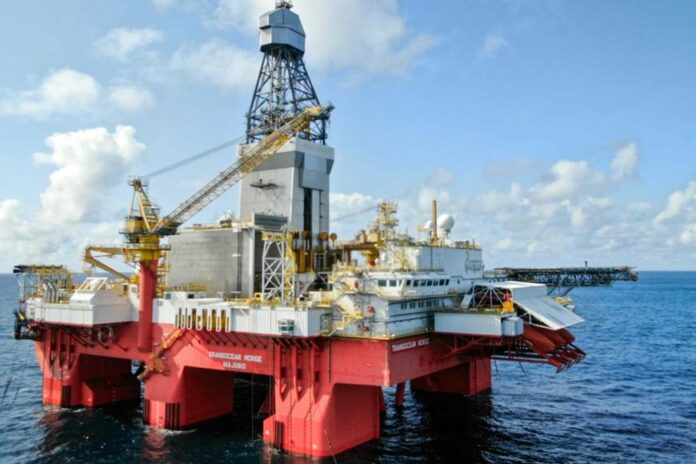
The well was drilled by the Transocean Norge rig.

Wintershall Dea (Harbour Energy) is the operator of production licence 211 CS, while Petoro, Aker BP and Orlen are the other licensees. The licensees are considering tying the discoveries back to existing infrastructure in the area.

Before appraisal well 6507/4-5 S was drilled, the operator’s resource estimate for the primary exploration target was 3-9 million Sm3 of recoverable oil equivalent, while the resource estimate for the secondary exploration target was 4-7 million Sm3 of recoverable oil equivalent.

The primary objective of the well was to delineate the gas/condensate discovery from wildcat well 6507/4-2 S in the Lange Formation (“Sabina”), and to carry out formation testing.

The secondary objective was to delineate the gas/condensate discovery (6507/4-2 S) in the Lysing Formation (“Adriana”).

In the primary exploration target, the well encountered a 41-metre gas column in sandstone rocks totalling 17 metres, with poor to moderate reservoir quality. The gas/water contact was not encountered. The well also encountered two sandstone layers in the Middle and Lower Lange Formation of around 4 and 21 metres, with poor reservoir quality but with traces of hydrocarbons.

In the secondary exploration target, the well encountered a 30-metre gas column in sandstone rocks totalling 23 metres with good to very good reservoir quality. The gas/water contact was encountered at 2897 metres below sea level. Extensive data acquisition and sampling have been carried out.

A successful production test was conducted in the upper part of the Lange Formation. The maximum production rate was 530,000 Sm3 of gas and 80 Sm3 of condensate per flow day through a 28/64-inch nozzle opening.

The appraisal well was drilled to a vertical depth of 4111 metres and a measured depth of 4150 metres below sea level, and was terminated in the Lange Formation in the Lower Cretaceous.

Water depth at the site is 455 metres. Appraisal well 6507/4-5 S has been permanently plugged and abandoned.
GTMaritime launches GTMailPlus Cloud Access

0

GTMaritime has launched a new remote access feature for GTMailPlus which allows users to access their emails from anywhere, even if their onboard systems are offline.

A recent Uptime Institute report revealed that 35% of businesses had experienced outages lasting more than eight hours in the last five years, with 54% reporting their most recent outage cost as over $100,000.

Available as standard to GTMailPlus customers, GTMailPlus Cloud Access enables seamless real-time synchronisation between ship and shore, ensuring uninterrupted communications for vessel operators. Users always have access to their emails from any device – desktop, tablet, or mobile – from anywhere in the world, without any need for additional back-up solutions.

The secure webmail-based service is hosted within GTMaritime’s cloud infrastructure and requires no additional hardware or software. Customers can access their webmail anywhere, at any time, using their existing credentials, with customisable storage aligned with the user’s archiving settings. Automated mailbox synchronisation eliminates confusion and minimises strain on IT resources.

Jamie Jones, Operations Director at GTMaritime, said:

“In today’s increasingly digitalised shipping industry, maintaining email access is crucial for keeping business operations up and running. With GTMailPlus Cloud Access, shipowners can stay connected anywhere, on any device to ensure that business operations run smoothly, with users retaining access to both live and historical emails even during system downtime.”

Damen Naval signs contract with Lloyd’s Register for new frigate for Colombia

0

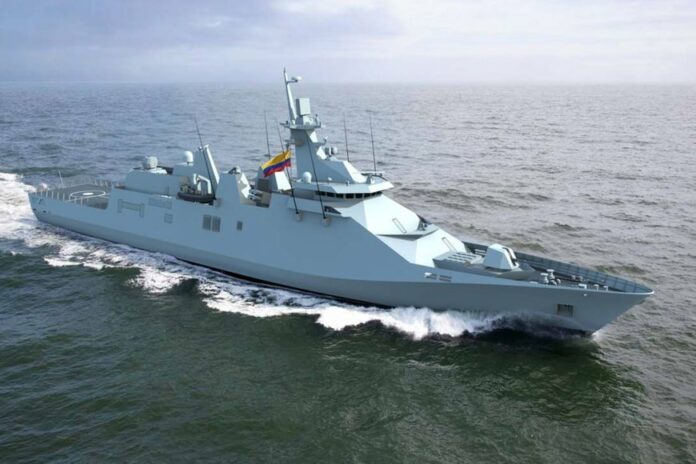
Damen Naval is signing a contract with classification society, Lloyd’s Register, on the Plataforma Estratégica de Superficie (PES) frigate for Colombia. 

Colombian shipbuilder COTECMAR will build the frigate on its shipyard in Colombia. 

Following a successful design study contract with COTECMAR, Damen Naval signed a contract for the delivery of engineering, technical support and the shipbuilding materials and equipment for the first frigate in August 2024. Lloyd’s Register has been involved with the project since the end of 2022, initially for Plan Approval Services within the design study contract. The company has now been contracted to execute the full Plan Approval in the project execution phase. 

“This project allows Damen Naval, as a trusted partner, to enable COTECMAR, the Colombian Navy and the Colombian maritime industry to construct a frigate locally for the first time. In this way, it contributes to a strong, self-sufficient defense industry in Colombia,” says Damen Naval Project Director Jasper Oreel. “Our partnership with Lloyd’s Register will help ensure that the vessel will live up to a modern-day safety standard.” 

The PES design is based on the successful Damen Naval SIGMA 10514 series, which has previously been built for Indonesia and Mexico. The SIGMA 10514 offers versatility and combat capability and is customised to meet Colombia’s specific requirements.

 “Lloyd’s Register will assess the design and provide support to maximise the safety and assurance of the vessel”, says Yorick Spoelstra, Business Development Manager Navy. “Lloyd’s is very proud to be part of this project, building further on our longstanding relationship with Damen Naval”.

The Colombian frigate will have a length of 107 meters and a beam of 14 meters. 

COTECMAR is Colombia’s leading shipyard in Cartagena. The partnership with Damen Naval allows the yard to construct a national frigate on Colombian soil for the first time. The project represents a significant investment in generating skilled local employment, promotes knowledge transfer, and strengthens Colombia’s defence industry with a focus on self-sufficiency. Colombia will be the third country in Latin America that is able to build these types of complex naval vessels under license at its own shipyards.

The first PES frigate is scheduled to be delivered to the Colombian Navy in 2030.

Test of groundbreaking ship design for the world’s first wind-powered PCTC vessel

0

The tests are being carried out in Gothenburg, at one of Europe’s most advanced wind tunnels, with wind speeds of up to 250 km/h.

Our vision is to offer zero-emission shipping. Over the years, we have put a lot of effort into research and innovation. Many tests have been carried out, and great collaborations with academia and partners have brought us to where we are today. And the journey continues.

Between 6-9 of december, Wallenius Marine is gathered with experts from RISE, KTH, and Oceanbird in Gothenburg for a series of crucial tests to validate the latest design for wind-powered PCTC vessels, a groundbreaking innovation in maritime transport. These tests will not only confirm the design but also contribute to the development of new data simulation models for wind-powered ships.

“We are currently at a central stage in the design process where we want to ensure that our design meets all technical and operational requirements before we finalise the tender design,” says Carl Fagergren, Senior Project Manager at Wallenius Marine.

The tests are being conducted by RISE Maritime Department (former SSPA), which has also constructed a 5 x 2 meter model using advanced technology. The model weighs 1.2 tons and is used to simulate the full aerodynamic performance of the ship in the wind tunnel. Previously, wing sails have been tested independently without a hull, but this combination of hull and multiple wings in a large tunnel with a full-scale model makes this test unique. 

This round of tests includes:

  • The interaction between the vessel’s hull and six high-tech wing sails.
  • Testing the optimal distance between hull and wing for maximum performance.
  • Testing three different types of command bridges and their impact on the vessel’s performance.
  • How “off-design conditions” affect the ship’s operation, such as when a wing sail is positioned at the wrong angle or location.
  • Data for the development of wing control systems

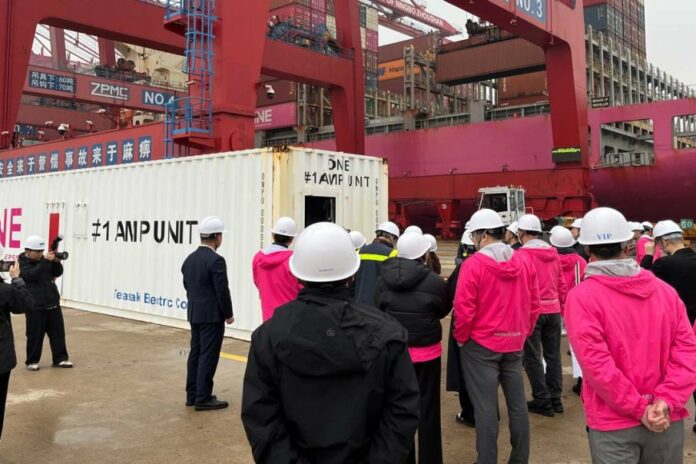
ONE and NZPG collaborate on shore power innovation in China

0

The event highlighted ONE’s nearly decade-long experience in utilizing Alternative Marine Power (AMP) containers on the U.S. West Coast.

Prior to the symposium day, a milestone was achieved on December 4th with the successful trial and commissioning of ONE’s AMP container at NZPG’s terminal. This marked the first time a vessel at a Chinese port utilized shore power through Lift-on/Lift-off operations of an AMP container, a proven approach to boosting cold ironing and reducing emissions while in port.

The symposium kicked off with an opening speech from ONE Global Chief Officer, Hiroki Tsujii. He stated,

“One approach to reduce carbon footprint is through shore power usage. Today we will introduce the utilization of a containerized AMP unit to support further reduction. The use of an AMP unit is a familiar and effective approach within this industry. To be successful, close cooperation among various concerned parties is necessary. We believe this will contribute to carbon footprint reduction in a practical and expedited way, and we hope it is a good symbol of collaboration among relevant parties.”

The symposium featured a range of activities, including:

  • Technical Presentations: Experts from ONE and NZPG shared insights into the benefits of shore power, operational procedures, and technical specifications of AMP container and its application.
  • On-Site Demonstration: Attendees witnessed a live demonstration of AMP container and shore power usage on a vessel equipped with an AMP container. (At about 3pm on December 6th, the vessel successfully connected to shore power, marking the official landing of the country’s first ship-shore collaborative mobile AMP container power connection mode after the above commissioning).
  • Terminal Tour: A guided tour of the NZP terminal allowed participants to observe the operational processes and the physical structure of the AMP container.

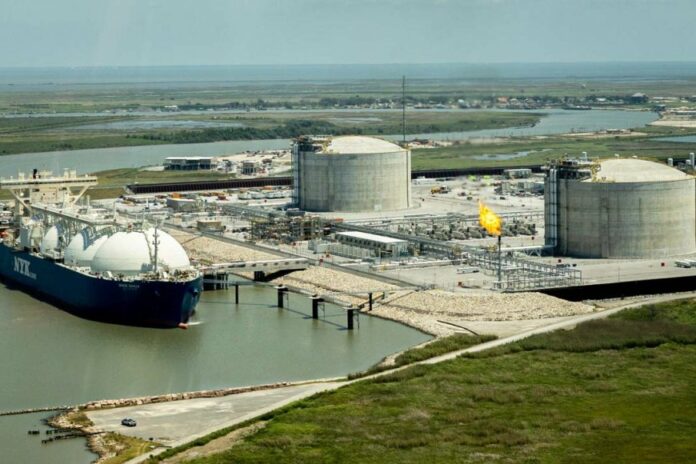
Woodside signs agreement for Louisiana LNG

0

Bechtel has worked on site since the acquisition and will continue work under a limited notice to proceed (LNTP) executed under the revised EPC contract. The LNTP provides for continued site construction and commitment to certain key materials and services required for the foundation project.

Woodside CEO Meg O’Neill said the signing of the EPC contract and continuation of engineering and construction activities contemplated by the LNTP represented an important step in the development of Louisiana LNG.

“Louisiana LNG is positioned to provide LNG into the growing global market and generate value for shareholders in accordance with our capital allocation framework.

“We continue to move at pace. In a short period of time, we have completed the acquisition, secured competitive revised EPC pricing that covers all three trains, and opened the data room with strong interest from potential project partners.

“Louisiana LNG is an advantaged project that is fully permitted and has Bechtel as the EPC contractor. The competitive pricing and schedule certainty we have now secured compounds this advantage in the current uncertain market environment for competing projects.”

Woodside continues to target final investment decision (FID) readiness from the first quarter of 2025.

Total Louisiana LNG expenditure from December to end of the first quarter of 2025 is forecast to be up to $1.3 billion, which is included in the overall estimated cost for the foundation development.

The estimated forward cost for the foundation development is $900-960/tonne, unchanged from the range at the time of acquisition.

Approaching start-up for Johan Castberg

0

The Johan Castberg FPSO (floating production, storage and offloading vessel) was anchored on the field in the Barents Sea in September.

The FPSO has been hooked up to the subsea facility and the project is now in a final phase towards start-up.

”Norway’s role as a reliable and long-term energy supplier will be strengthened when Johan Castberg comes on stream. The field opens a new province for oil recovery and will be an important starting point for several opportunities in the Barents Sea. We have made new discoveries that we are in the process of turning into future tie-backs to Johan Castberg” says Geir Tungesvik, Equinor’s executive vice president for Projects, Drilling and Procurement.

So far 14 wells have been drilled on the field, 12 are already ready for production, which is sufficient to bring the field to plateau production (220 000 barrels per day) Estimated recoverable volumes in Johan Castberg are between 450 to 650 million barrels of oil.

“We are now in the final phase of completion. The operations have been somewhat delayed by bad weather. Our plan is to start up Johan Castberg in January/February 2025, ” says Tungesvik.

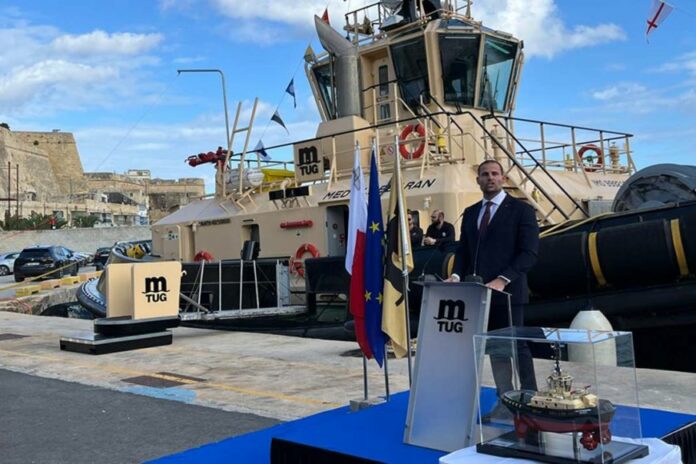
Damen RSD Tug 2513 named Med Aldebaran in Tug Malta ceremony

0

Tug Malta has held a naming ceremony for its latest vessel, a Damen RSD Tug 2513, in Malta. During a celebration attended by the Prime Minister of Malta Robert Abela, the vessel was named Med Aldebaran. 

The RSD Tug 2513 is a compact, manoeuvrable vessel combining elements of ASD and tractor tugs to deliver an ‘always bow first’ approach to towage. Damen offers a number of options to tailor the proven tug to its clients’ unique operational requirements. 

In the case of Med Aldebaran, the tug has been outfitted with a Damen Marine NOX Reduction System. With this selective catalytic reduction (SCR) system, the vessel’s performance becomes compliant with IMO Tier III requirements. The lower NOX and noise emissions that result help the vessel contribute to a healthier, more sustainable maritime sector. 

As a further boost to efficiency, the tug is installed with Damen Triton. Damen’s IoT solution collects and analyses data gathered from sensors all around the vessel, providing the crew with the information they need to sail in the most optimal fashion. Med Aldebaran also features FiFi1 firefighting capabilities. 

Damen and Tug Malta signed the contract for the vessel in March this year. Following completion of construction at Damen Song Cam Shipyard in Vietnam, the tug sailed to Malta on her own keel, via the Cape of Good Hope. 

Med Aldebaran joins a number of Damen tugs in the company’s fleet. This includes ASD Tugs, and another RSD Tug 2513 that Damen delivered in 2021. Since that delivery, Tug Malta has come under the ownership of MSC’s MedTug Group. The group operates a fleet of over 160 tugs in more than 20 major international ports. 

Speaking on the occasion of the naming ceremony, Damen’s Antonio Marte said,

“I would like to offer my sincere gratitude to Tug Malta and MedTug for their firm trust in Damen. It is a privilege to stand here today, as we celebrate the delivery and naming of Med Aldebaran – a vessel embodying innovation, sustainability, and partnership. The vessel continues a legacy of trust and collaboration between our companies. As such, it symbolises not only a new addition to Tug Malta’s already impressive fleet, but a shared vision of excellence in maritime operations.”

Giacomo Gavarone, International Managing Director of MedTug said,

“This tug is without any doubt the top technology in its category, as far as performance, safety and security are concerned. I would also like to mention that Med Aldebaran is the first tug in our fleet equipped with IMO Tier III Technology. This represents an important first step for the reduction in the emissions of our fleet according to our commitment to a better world, and to helping achieve the government’s vision for carbon neutrality by 2050.”

Prime Minister Robert Abela emphasised the critical need for Malta to develop a fully integrated maritime hub and highlighted that the green investment in the state-of-the-art tug aligns seamlessly with Malta’s bold vision of achieving carbon neutrality by 2050. He said, “The Grand Harbour boasts prime sites with immense potential, and it is crucial that we take decisive action to transform these areas. By strengthening infrastructure, attracting investment, and fostering opportunities for services of all sizes, we can unlock this potential and drive sustainable economic growth.”

Haivanship expands into northern Vietnam with two new Konecranes equipment

0

The order for the first crane was booked in Q3 2024 and the second in Q4, with both to be delivered at the end of 2025.

Haivanship is currently providing coal transshipment using two Konecranes Gottwald HPK 7400B cranes at transshipment buoys in Go Gia, Ho Chi Minh City, servicing power plants in southern Vietnam, especially in the Mekong Delta. The Vietnamese operator specializes in bulk handling of coal imported from Australia and Indonesia. Coal is still a critical energy resource in Vietnam, fueling approximately half of the nation’s electricity supply.

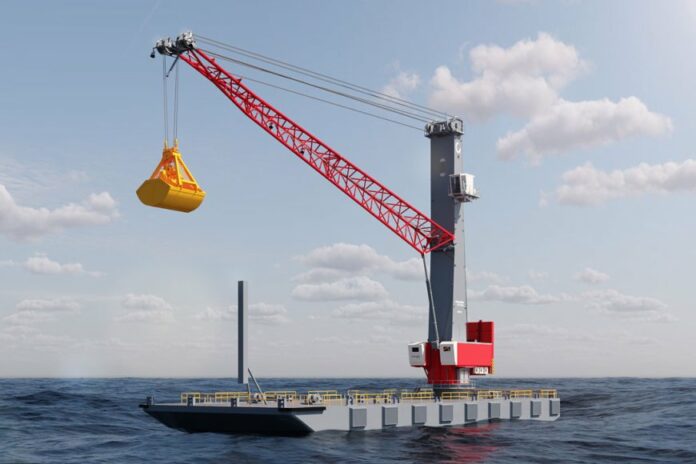
HVS is now expanding its coal transshipment business in northern Vietnam, starting a project at the South Cat Ba Deep Water Anchorage, with a depth of approximately 20 meters for vessels up to 210,000 DWT (near Haiphong port and Hon Mieu, Cam Pha Anchorage of Quang Ninh), using two Lloyd’s-certified Generation 6 Konecranes Gottwald ESP.9B crane on barges.

“Our experience working with Konecranes equipment in the south has been very positive. The cranes are efficient and have consistently delivered reliable performance. Now this new Konecranes equipment will play a key role in handling coal transshipments on the open sea and expanding our services into the north,” says Tran The Vinh, General Manager at Haivanship.

The Generation 6 Konecranes Gottwald ESP.9B Mobile Harbor Crane is fully certified for barge operations under the Lloyd’s Register Code for Lifting Appliances in Marine Environments. Engineered to perform in demanding open-sea environments, the crane can withstand wind speeds reaching 24 meters per second and wave heights up to 2.5 meters. The cranes come equipped with Konecranes TRUCONNECT remote monitoring, providing HVS with vital crane data for predictive maintenance planning.

“Haivanship is a valued partner in Vietnam and we’re very pleased to add to their fleet with our Generation 6 technology. Supporting the company’s expansion is perfectly aligned with Konecranes’ goal of growing our business in the country,” says Holger Wagner, Sales Manager for Asia-Pacific at Konecranes.

A strong focus on customers and commitment to business growth and continuous improvement make Konecranes a material handling industry leader. This is underpinned by investments in digitalization and technology, plus our work to make material flows more efficient with solutions that decarbonize the economy and advance circularity and safety.

Equinor realises value from exits in international upstream business

0

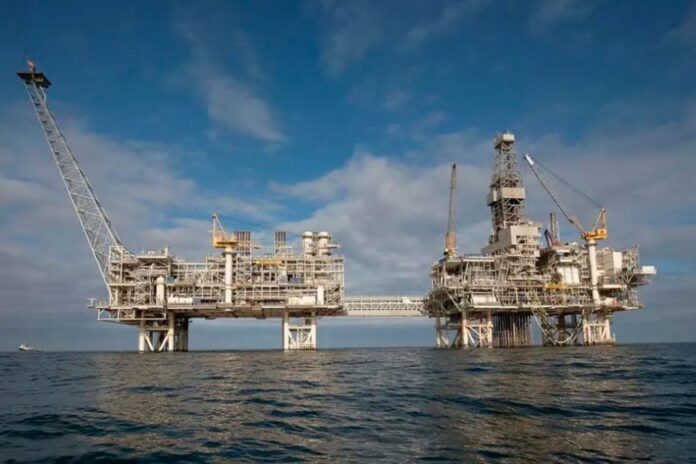
After more than 30 years as a business partner in Azerbaijan and Nigeria, transactions leading to Equinor exiting the countries have now been closed on 29 November and 6 December respectively.

“With these exits we realise value and execute on our strategy to focus the international portfolio, and in combination with recent acquisitions and investments in our competitive projects, we seek to sustain long-term production and profitability,” says Philippe Mathieu, executive vice president for international exploration and production in Equinor.

For the divestment of the full portfolio in Azerbaijan, Equinor will receive a total cash consideration of USD 745 million. The value of the transaction in Nigeria amounts to up to USD 1.2 billion, consisting of a purchase price of USD 710 million and the remainder in contingent payments.

“Azerbaijan and Nigeria have been important countries in our international portfolio for decades. Together with partners and suppliers, we have created significant value for Equinor and society at large. I would like to thank them and our employees in Azerbaijan and Nigeria for their great work and dedication over the years and wish our people well in the transition of their professional journey,” Mathieu continues.

The divestments of assets and exits from operations in Azerbaijan and Nigeria were announced in 2023 and are in line with the strategy of optimising the oil and gas portfolio. The exits enable investments to deepen further in countries where Equinor can add the most value and build a more focused and robust international portfolio.

The total equity production from the assets in Azerbaijan and Nigeria has been on average 24,600 and 18,700 barrels of oil per day, respectively, in the first three quarters of 2024. The closing of these transactions will have a positive impact on the cash flow for fourth quarter 2024.

At the capital markets update in February 2024 Equinor stated the expectation to sustain an average cash flow from operations after tax from oil, gas and trading of around USD 20 billion through 2035. The international upstream business is key to deliver on this with expected 50% increase in the cash flow from this segment by 2030.