3.7 C
New York
Home Blog Page 117

Aker BP and its partners drill wildcat well Kaldafjell in North Sea well

0

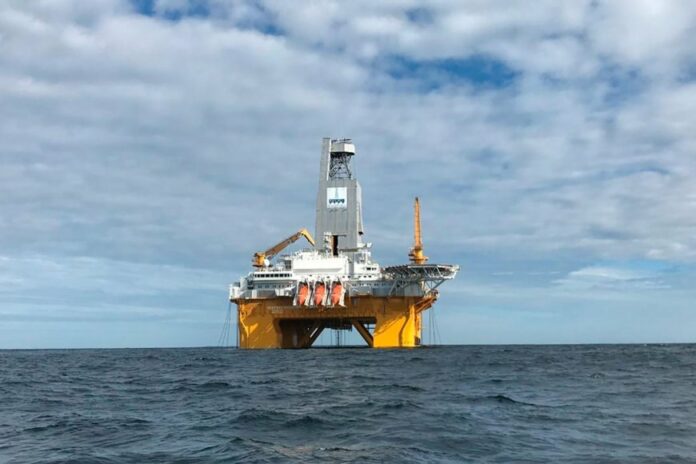
The drilling was carried out by the Deepsea Nordkapp rig. The well was dry.

The drilling was carried out by the Deepsea Nordkapp rig, about 40 kilometres north of the Visund field. Equinor and Vår are partners in the production licence.

The objective of the well was to prove petroleum in Lower Jurassic reservoir rocks in the Cook Formation.

Wildcat well 34/6-7 S encountered the Cook Formation in a total of around 117 metres of reservoir rocks, 90 metres of which were sandstone with moderate to good reservoir quality.

Well 34/6-7 S was drilled to a vertical depth of 4472 metres below sea level and was terminated in the Burton Formation in the Lower Jurassic.

Water depth at the site is 403 metres. The well has been permanently plugged and abandoned.

Autonomous mine hunting technology trialled on the Clyde

0

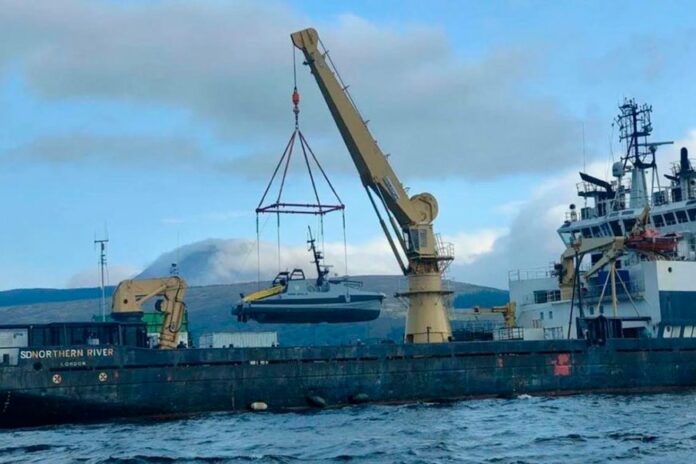
The prototype Apollo vessel is a small uncrewed boat bristling with mine hunting kit – including towed sensor/synthetic aperture sonar – that can be launched from a mothership into the water to scan the seabed for various mine types.

During a trial in the Firth of Clyde in Scotland, Apollo was launched from SD Northern River, a Defence Marine Services’ ship – helping prove that the boat can be used from a commercial vessel, which could be an option in some operational scenarios.

Ultimately, the successful trial in a challenging environment with good water depth and coastal currents, means the Royal Navy will now take full delivery of Apollo once final upgrades are fitted by Thales, having so far been used as a concept demonstrator over the last three years.

Commander Daniel Herridge, the Commanding Officer of the Royal Navy’s Mine & Threat Exploitation Group, said:

“Building on previous success this has been another step in the paradigm shift of delivering Mine Counter Measures capability in a completely new way, harnessing technology and building on the skills of our people to continue to deliver world leading capability.

“Utilising the MMCM system in the SD Northern River, the team has operated prototype and demonstrator equipment with improved sensors and effectors from a Vessel of Opportunity to enhance sustainability and reach to this rapidly evolving concept of capability delivery.

“The Mine & Threat Exploitation Group will continue to support the enterprise in delivering these important trials to progress operational evaluation and accelerate capability delivery for provision of a modern and high-tech operational capability within the maritime environment, safeguarding the UK’s interests both at home and overseas.”

Apollo comes under the Maritime Mine Counter Measure (MMCM) programme that aims to provide advanced autonomous mine hunting equipment to the Royal Navy and France’s Marine Nationale through an agreement managed by Organisation for Joint Armament Co-operation (OCCAR).

Apollo was manufactured by L3 Harris under a contract with Thales (France) and delivered to the UK as a concept demonstrator in 2021. Following this successful trial, Apollo has been handed back to Thales for retrofit and upgrades ahead of being handed to the Royal Navy in 12 months’ time.

The total contract value for UK and France is €430m, of which £184m is from the UK. Work under the full production contract will support more than 200 jobs in the UK. This includes jobs with Thales in Templecombe in Somerset and Plymouth in Devon, and across its supply chain including L3 Harris in Portsmouth, Stonehaven in Aberdeen and Alba Ultrasound in Glasgow.

Andy Lapsley, DE&S MHC Team Leader said:

“This trial, which successfully demonstrated the potential for the Maritime Mine Counter Measures capability to be deployed flexibly and at pace for the Royal Navy, is a result of years of dedicated effort and collaboration by the MHC team, demonstrating our commitment to advancing mine countermeasures technology and commercial platform integration.”

“I am immensely grateful to all participants across the Defence enterprise who came together to make this happen.”

Navy Force Generation Defence Marine Services delivers eight MOD Service Delivery Areas through two DE&S Marine Services contracts. The SDAs include provision of two offshore ships that support military training and exercises worldwide. 

Wärtsilä to equip new Vitol LNG bunkering vessel

0

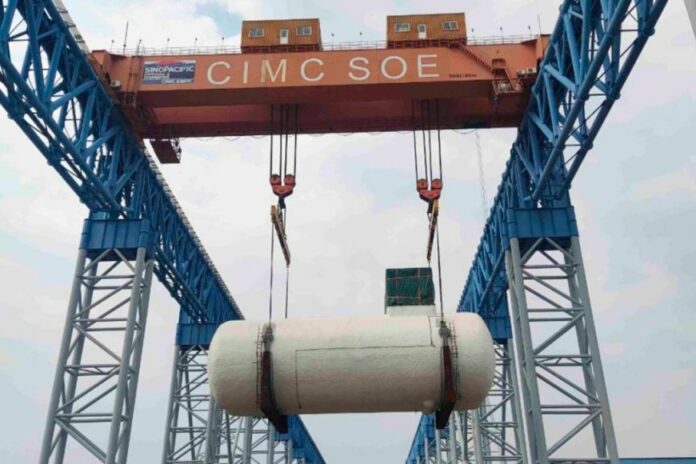
A new 12,500 cbm LNG bunkering vessel is being built at the Nantong CIMC Sinopacific Offshore & Engineering shipyard in China, for global energy company Vitol. It will feature Wärtsilä Cargo Handling and Fuel Gas Supply systems, the order for which was booked by Wärtsilä in Q4, 2024. 

Wärtsilä’s ability to engineer, design and deliver a complete system, including the Boil-Off Gas (BOG) management, integrated fuel supply, custody transfer and bunkering transfer systems, was central to the contract award. Wärtsilä is extremely experienced in solutions for small-scale LNG applications. This track record coupled with the company’s proven ability to engineer, design and deliver was central to the contract award.

“LNG is today an important marine fuel and is rapidly becoming the preferred choice for owners and operators seeking more sustainable fuel options. The market for LNG bunkering vessels is increasing in line with this trend, and we have established a leading position in supplying modern and reliable systems that optimise overall cargo handling efficiency for such vessels,” commented Richie Zhu, Sales Manager, Wärtsilä Gas Solutions, China.

Wärtsilä has a long-standing relationship with Nantong CIMC Sinopacific Offshore & Engineering, and has supplied cargo handling systems for a number of LNG, LPG, ethane/ethylene, and multi-gas carriers built by the yard.

Saipem signs $684m pipeline installation deal for UK CCS projects

0

Saipem has received the final award for the two projects Northern Endurance Partnership (NEP) and Net Zero Teesside Power (NZT) for the development of offshore facilities for the transportation and storage of CO2 of the East Coast Cluster in the United Kingdom. The overall value of the two projects is approximately €650 million, with a duration of 30 months.

On March 15, Saipem announced that it had signed a letter of intent for the aforementioned projects.

The first project has been awarded by the NEP’s entity called Net Zero North Sea Storage Limited, an incorporated joint venture between the operator bp, Equinor and Total Energies. The second project has been awarded by Net Zero Teesside Power Limited, an incorporated joint venture between bp and Equinor.

The final award follows the completion of the regulatory clearances and positive Final Investment Decisions (FID) taken by the clients and the UK government.

As previously announced, Saipem’s scope of work encompasses the Engineering, Procurement, Construction and Installation (EPCI) of 143 km of 28″ offshore pipeline with associated landfalls and onshore outlet facilities for the NEP project, and the EPCI of the water outfall for the NZT project.

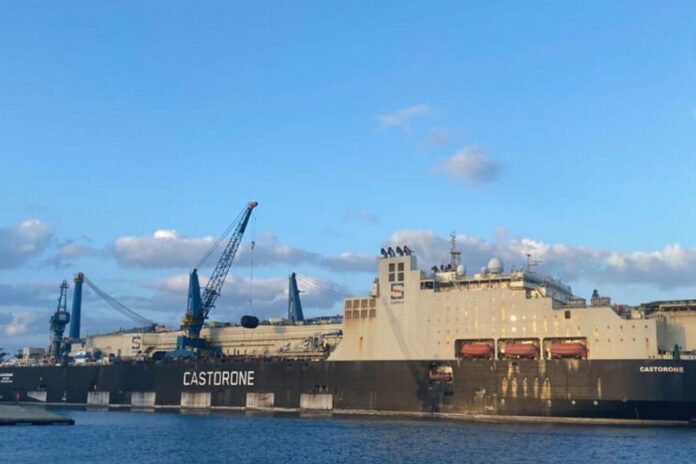
The offshore installation of the pipeline will be performed by Saipem’s flagship vessel Castorone, and the nearshore operations will be performed by the Saipem’s shallow water pipelay Castoro 10.

When completed, the projects will contribute to the realization of the first zero emission industrial hub in the Northeast of England and to the achievement of UK’s Net Zero targets with the transportation and storage of around 4 million tonnes of CO2 per year from 2028.

PaxOcean inks contract with Penta-Ocean Construction for cable laying vessel

0

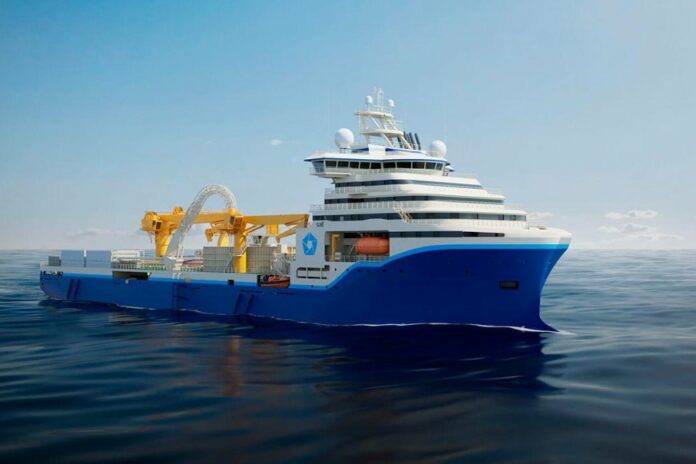
PaxOcean has announced the signing of a significant contract for the construction of a Cable Laying Vessel (CLV), a key project in Japan’s rapidly growing offshore wind industry. This partnership marks the second collaboration between PaxOcean and Penta-Ocean Construction, further solidifying their long-standing relationship and shared commitment towards supporting the renewable energy sector.

The contract was signed by Mr. Takuzo Shimizu, President, Chief Executive Officer, and Representative Director of Penta-Ocean Construction Co., Ltd., and Mr. Tan Thai Yong, Managing Director and Chief Executive Officer of PaxOcean Group, at a ceremony held on 3 December 2024.

The CLV, designed by a renowned European partner, will be built at PaxOcean’s Batam yard. With a deadweight capacity of 14,000 tonnes and classed by Nippon Kaiji Kyokai (NK), the vessel is expected to be completed in February 2028. This collaboration combines PaxOcean’s extensive shipbuilding capabilities with advanced design and technology, ensuring the vessel meets the highest industry standards.

This project builds on the successful delivery of the Wind Turbine Installation Vessel (WTIV) by PaxOcean and Penta-Ocean Construction in September 2023, a landmark achievement in advancing the offshore wind sector. The new vessel is set to play a critical role in supporting Japan’s offshore wind infrastructure.

“We are proud of our continued partnership with Penta-Ocean Construction. Today’s signing is a strong testament to the collaboration and enduring relationship we have built over the years. We deeply value the trust Penta-Ocean has placed in us, and we are excited to support the expansion of their fleet while contributing to Japan’s renewable energy goals.” said Mr. Tan Thai Yong, Managing Director and Chief Executive Officer of PaxOcean Group.

Mr. Takuzo Shimizu, President of Penta-Ocean Construction, said:

 “It’s my great pleasure to initiate the construction of a world’s largest and most advanced cable laying vessel, in collaboration with PaxOcean. This CLV, building on the success of the CP-16001 wind turbine installation vessel, will equip us to venture into the power cable laying field, making a significant contribution to the expansion of offshore wind in Japan.”

Japan has made significant strides in developing offshore wind energy, and this new vessel will play a crucial role in meeting the country’s growing demand for offshore wind infrastructure. By partnering with Penta-Ocean, PaxOcean is committed to delivering a state-of-the-art cable-laying vessel that adheres to the highest industry standards for safety and quality.

Svitzer orders construction of four TRAnsverse tugs from Cheoy Lee Shipyards

0

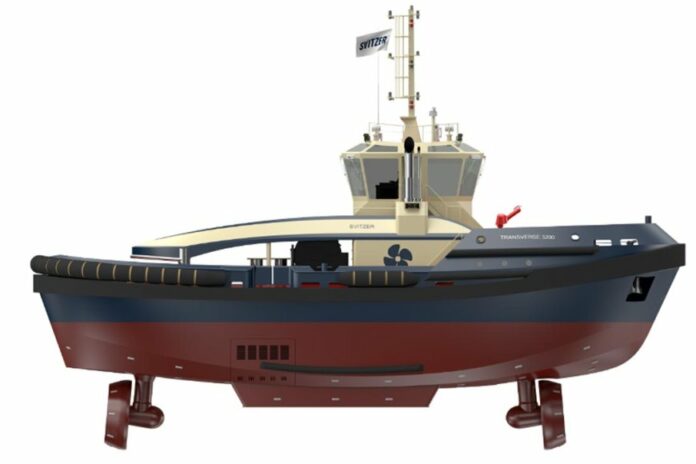
Svitzer has signed a contract with the Hong Kong shipyard, Cheoy Lee, for four new Svitzer TRAnsverse 2900 tugs – for delivery in 2026. 

The TRAnsverse tug was designed by Svitzer in collaboration with naval architect Robert Allan Ltd. Each of the tugs ordered from Cheoy Lee will have an overall length of 29 meters, deliver bollard pulls of up to 80 tonnes and come with impressive side pushing capabilities. With a top speed of 13 knots, and 8 knots side-stepping, the omni-directional hull form and propulsion provides for significantly higher steering and breaking forces than similar sized ASD tugs, with lower fuel consumption.

Svitzer is continuously evaluating its fleet against customer and operational requirements across the more than 180 ports and terminals where it operates. This is done with a constant striving to meet customer demands, leverage innovation and technology, and ensure flexibility to support the transition to more sustainable energy sources.

While the new vessels are planned as fleet replacements globally, they can also be deployed in new growth projects. Hence, the contract with Cheoy Lee Shipyards includes an option for four additional tugs of the same type that can be called on in case of need.

Commenting on the agreement, Kasper Karlsen, Chief Operating Officer at Svitzer, said:

“This order enables us to continue renewing our fleet to deliver on our customers’ needs and our decarbonisation targets, while providing a strong basis for engaging in growth projects. The new TRAnsverse tug will undoubtedly be our preferred design going forward, and with even more of these tugs in our fleet, we are able to continuously improve operational capabilities and fuel efficiency to the benefit of our customers as well as the environment.”

Ken Lo, Director at Cheoy Lee Shipyards commented:

“We are delighted to be selected as a construction partner to Svitzer and look forward to working with their team to build these four TRAnsverse tugs for their global fleet. As with all our work, our team will deliver the project in line with our guiding focus on quality, service and reliability.”

Odfjell SE exercises purchase options for super-segregator vessels

0

Odfjell has now exercised purchase options for an additional four vessels currently on long-term lease to the company. 

All vessels are fully stainless-steel chemical tankers, classified as super-segregators with sizes ranging from 35 to 41,000 dwt. The vessels were built between 2016 and 2020, two in Japan and five in China.

All seven vessels are part of the core fleet today and are currently on lease to Odfjell, five on operational lease, two on financial lease. The operating leases’ purchase option prices are around 30 % below current market prices.

Six of the vessels will be acquired during first half 2025 and financed by a syndicate of Odfjell’s relationships banks under a new revolving credit facility of up to USD 242 million, secured on favorable terms. The facility is set to close early in 1Q25.

With these transactions, Odfjell has secured long-term ownership for seven of its core vessels and in average reduced the cash break-even for these vessels by more than USD 3,000 per day given the attractive purchase prices and competitive financing.

Incat Crowther commissioned to design all-electric cargo vessel for Singapore’s marinEV

0

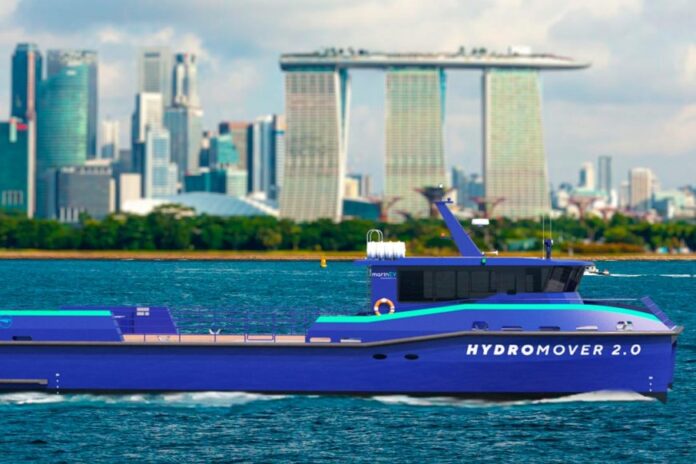
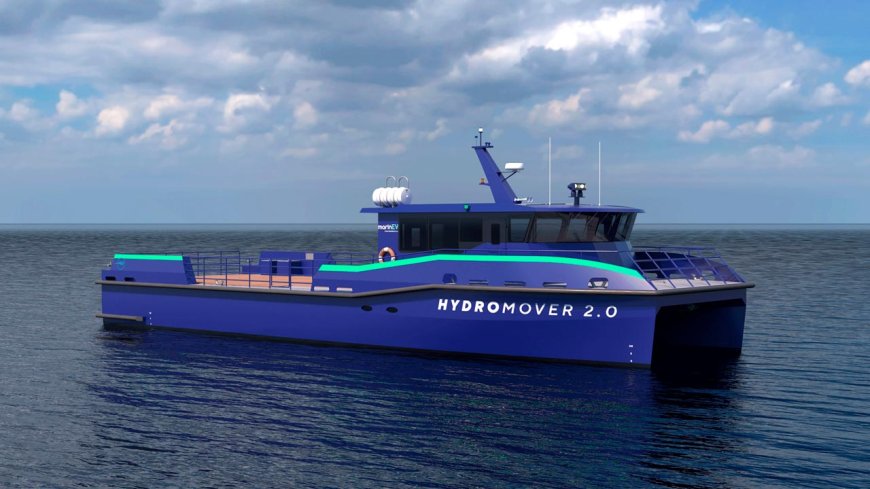
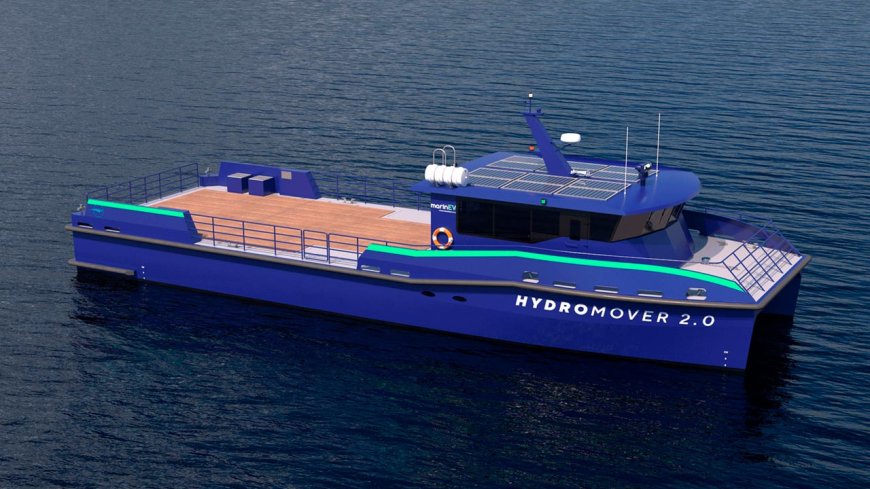
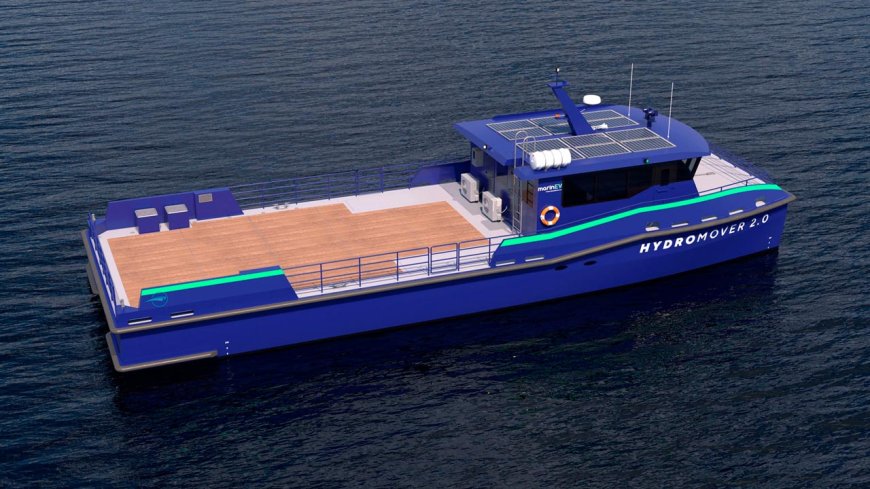
Global digital shipbuilder Incat Crowther has been commissioned to design an ultra-efficient, all-electric light cargo transfer vessel for Singapore’s marinEV, a business of Yinson GreenTech. 

The vessel, Hydromover 2.0, will transport light cargo such as stores, food and maintenance items to vessels anchored in the Singapore Strait, waiting to dock at the Port of Singapore. Hydromover 2.0 builds on the success of the prototype Hydromover 1.0.

Hydromover 2.0 will feature Incat Crowther’s efficient hull form, maximising the vessel’s operational range and making the vessel highly effective for transporting light cargo. This technology ensures smooth navigation in rough seas while optimising energy use. The 24-metre vessel will be designed to carry a payload of 25 tonnes via its large 65m² cargo deck and will be powered by a lithium-ion battery system.

Part of marinEV’s innovative line of zero emission electric vessels, Hydromover 2.0 will contribute to the Maritime and Port Authority of Singapore’s decarbonisation target to have all new harbour craft fully electric or operating on lower carbon fuels by 2030.

Hydromover 2.0 features comfortable accommodation for up to four crew while the main deck features a spacious wheelhouse, comfortable mess seating for up to seven people, a fully equipped food preparation area and pantry, and a generous-sized bathroom. The wheelhouse features dual touchscreen displays that offer real-time updates to the crew, enhancing safety onboard. Hydromover 2.0 also incorporates advanced decision-making features such as energy optimisation, waypoint calculation, collision detection, and the ability to coordinate remote and autonomous functions. These capabilities ensure efficient and safe operations, reducing the risk of human error.

“This collaboration with Incat Crowther marks a significant step forward in sustainable shipping in Singapore. Hydromover 2.0 builds on the success of Hydromover 1.0 which has recently completed successful commercial trials. Hydromover 2.0 is a testament to our commitment to innovation and a crucial step in our mission to drive sustainable practices in maritime transport. We’re looking forward to Hydromover 2.0 joining our fleet in 2025 as we continue to accelerate the industry’s transition to net zero,” said Jan-Viggo Johansen, Managing Director of marinEV.

“Incat Crowther has a proven track record of delivering bespoke zero emissions solutions to operators around the world and we are looking forward to bringing our expertise to this groundbreaking project. Low and zero emission vessels are the future of shipping, and Hydromover 2.0 exemplifies the power of combining cutting-edge expertise and technology to deliver outstanding operational performance, safety and efficiency,” said Sam Mackay, Technical Manager at Incat Crowther.

“As Hydromover 2.0 progresses toward sea trials in 2025, Incat Crowther is pleased to be partnering with marinEV to help bring their commitment to transforming maritime transport with innovative, sustainable solutions to life,” said Mr Mackay.

The final stages of designing Hydromover 2.0 are now underway with the selection and evaluation of key equipment in progress. Hydromover 2.0 will be classed by Bureau Veritas with the Battery System notation. Incat Crowther’s project scope also covers design assessment for the battery system functionality and safety features, including fire protection and system certification.

Trelleborg acquires Mampaey Offshore Industries

0

Trelleborg Marine & Infrastructure has signed and finalized an agreement to acquire Mampaey Offshore Industries. The acquisition will significantly enhance Trelleborg’s capabilities in the vessel berthing sector and expand its offerings for the marine industry.  

Mampaey, based in Dordrecht, Netherlands, has over 120 years of experience delivering advanced solutions for the marine industry. The company is globally recognized for the design and manufacture of integrated berthing, mooring, ship-to-shore links, and towing systems for LNG, petrochemical, and commercial port applications.  

“This acquisition marks an important step for Trelleborg,” said Richard Hepworth, Business Unit President at Trelleborg Marine and Infrastructure. “By leveraging the synergies between Mampaey and our existing docking, mooring, and gas transfer businesses, we will be better equipped to meet the evolving needs of our customers, while creating new opportunities for growth and innovation.”  

As part of the agreement, Mampaey’s manufacturing facility in Dordrecht will be integrated into Trelleborg’s operations, establishing a central European hub to bolster the company’s presence in the region. This move is expected to enhance production efficiency, ensure quality control, and improve customer service for European markets.  

The combined installed base of Trelleborg and Mampaey projects will also support the expansion of site services, enabling Trelleborg to provide a higher level of global customer support.  

“This is an exciting addition to our business, and we look forward to welcoming Mampaey’s team into the Trelleborg family,” added Hepworth. “Our combined capabilities will ensure we continue to meet region-specific customer needs with even greater precision and quality.”  

Equinor and partners approve execution of UK’s first carbon capture and storage projects

0

Equinor, alongside project partners, has announced financial close after taking a Final Investment Decision (FID) to progress to execution phase on two of the UK’s first carbon capture and storage (CCS) projects in Teesside, the Northern Endurance Partnership (NEP) and Net Zero Teesside Power (NZT Power).

“It is a major milestone to have agreed Final Investment Decision and financial close on two of the UK’s first carbon capture, transport and storage infrastructure projects. This demonstrates how the industry, alongside the UK Government, have progressed a business model for new power supply and carbon capture, transport and storage services to decarbonise the most carbon intensive region in the UK”, says Irene Rummelhoff, executive vice president of Marketing, Midstream and Processing at Equinor.

“We look forward to continued collaboration with our partners and the UK Government as we prepare to progress the projects, with an estimated operational date from 2028 onwards.”NEP, in which Equinor is a key partner, is the CO2transportation and storage provider for the East Coast Cluster (ECC), one of the UK Government’s first selected CCS clusters.

The project expects to commence construction from mid-2025 with start-up in 2028. It includes a CO2 gathering network and onshore compression facilities as well as a 145km offshore pipeline and subsea injection and monitoring facilities for the Endurance saline aquifer located around 1000m below the seabed. It could transport and store up to 4 million tonnes of captured carbon

 dioxide emissions per year from three Teesside projects initially, rising to an average of up to 23 million tonnes by 2035 with future expansion of the East Coast Cluster.

“The UK is a key market for Equinor and we have a history of delivering significant energy provision along its East Coast, transitioning from traditional oil and gas demand to include renewables and low carbon options such as CCS and hydrogen. This is a major step for both Equinor and the UK, helping to decarbonise the country’s industrial heartlands and achieve its net zero ambitions whilst providing jobs and supply chain opportunities. We look forward to working with the Government to deliver further low carbon projects across the UK including in the Humber and in Scotland”, says Alex Grant, UK country manager at Equinor.
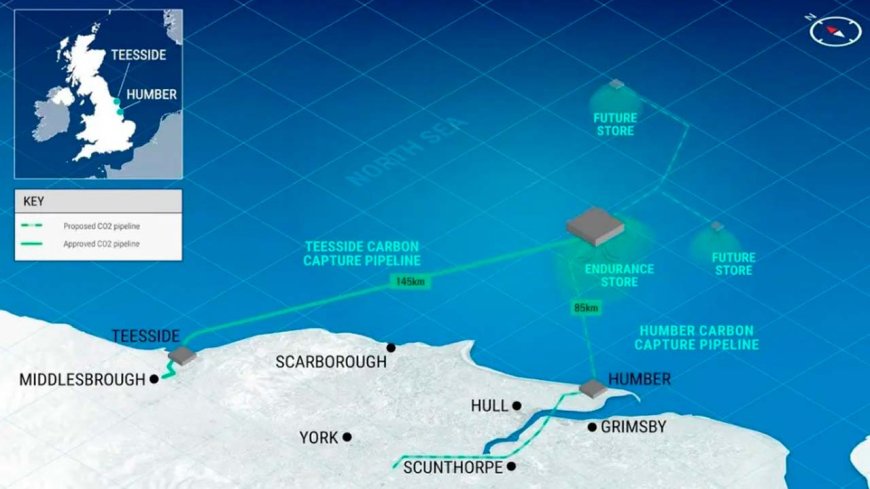
Equinor is also a partner in NZT Power, which is part of the East Coast Cluster. NZT Power will be a new first-of-a-kind gas-fired power plant with carboncapture, which supports the decarbonisation ambitions across the north-east of England’s industrial regions.

The plant will have the capacity to generate up to 742 megawatts of decarbonised, flexible power, complementing a growing share of intermittent renewable power. This capacity is equivalent to the average electricity demand of around 1 million UK homes. It will have a capacity to capture up to 2 million tonnes of CO2per year for transport and secure storage by the NEP project.

Equinor has a 45 per cent stake in NEP with the remaining 45 per cent owned by bp and 10 per cent by TotalEnergies, and a 25 per cent stake in the NZT Power project with the remaining 75 per cent owned by bp. bp provides operator services on both projects.

Building work for both projects will be completed by nine leading engineering, procurement, and construction contractors with a combined value of around £4billion. The work will bring thousands of jobs and wider socio-economic benefits to the north-east of England.

NEP has also been granted government approval to progress development engineering for the Humber Carbon Capture Pipeline (HCCP), the proposed onshore infrastructure project that would transport CO2 from future selected carbon capture projects in the Humber region.

These decarbonisation projects support Equinor’s wider corporate ambition, including a 50 per cent reduction in operated emissions and 50 per cent gross capex investment in low carbon and renewable technologies by 2030. In the low carbon solutions space, Equinor has an aim to have a 30-50 mtpa CO2 transport and storage capacity by 2035.

Equinor has been a leading energy provider to the UK for more than 40 years, delivering over 25 per cent of its natural gas requirements, enough to heat eight million homes, much of which is landed by pipeline on the East Yorkshire coast. It is also a partner in Dogger Bank in the southern North Sea, which once completed will be the world’s largest offshore windfarm.