2.9 C
New York
Home Blog Page 116

Delimited oil discovery near the Goliat field

0

The well was drilled to delineate the “Countach” discovery near the Goliat field.

After the appraisal well, the preliminary estimate of the size of the discovery is between 1.6 and 8.3 million standard cubic metres (Sm3) of recoverable oil equivalent. This corresponds to 10-52 million barrels.

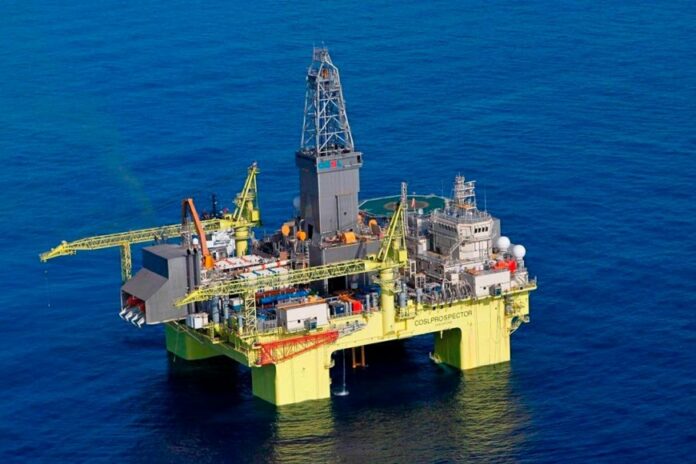
The appraisal well was drilled by the Cosl Prospector in the same production licence as Goliat. This was the tenth exploration well in this licence.

The licensees are considering tying the discovery back to existing infrastructure on Goliat.

“Countach” (7122/8-1 S) was proven in 2023.

Production licence 229 was awarded in 1997, in the Barents Sea Project 97, which was a supplementary round for the Barents Sea.

Vår Energi is active in the area surrounding Goliat, and is continuing to explore in production licences 229 and 1131.

Geological information
The discovery was proven in 2022 in Lower Jurassic and Middle Triassic reservoir rocks. Prior to the drilling of well 7122/8-2 S, the operator’s resource estimate for the discovery was 1.3-4.8 million Sm3 of recoverable oil equivalent.

The objective of the well was to delineate the 7122/8-1 S (Countach) discovery in Lower Jurassic and Middle Triassic reservoir rocks in the Realgrunnen Subgroup and the Kobbe Formation, respectively.

Well 7122/8-2 S encountered a 35-metre oil column in the upper part of the Kobbe Formation in sandstone layers totalling 19 metres with good reservoir quality. The oil/water contact was not proven. Sandstone layers totalling 27 metres in the middle and lower part of the Kobbe Formation were aquiferous.
The reservoir in the Realgrunnen Subgroup had very good to good reservoir quality and a total thickness of 5 metres, but was water-filled.

An oil column totalling 217 metres was also proven in the Klappmyss Formation, in thin sandstone layers with moderate to poor reservoir quality. Preliminary estimates place the size of the discovery in Klappmyss at 0.3-0.8 million Sm3 of recoverable oil equivalent.

The well was not formation-tested, but extensive data acquisition and sampling have been carried out.

Appraisal well 7122/8-2 S was drilled to respective vertical and measured depths of 3120 metres and 3209 metres below sea level, and was terminated in the Havert Formation in the Lower Triassic.

Water depth at the site is 406 metres. The well will be permanently plugged and abandoned.
Project to improve the infrastructure of the Port of Riga has been completed

0

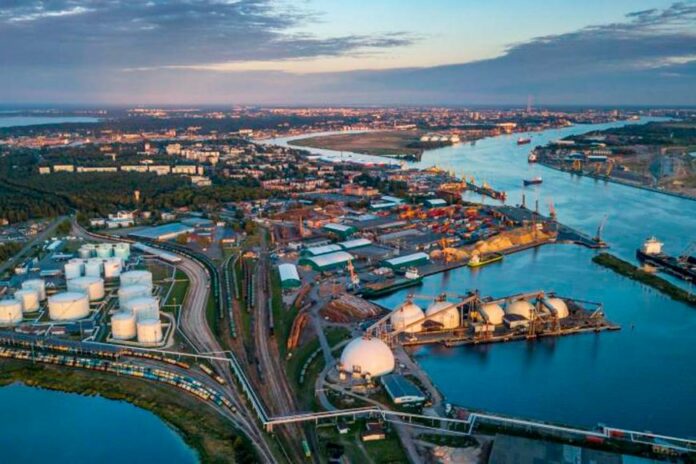
With the completion of the dredging works for the vessel access to the newly built extension of the SIA “Baltic Container Terminal” berth, the final stage of the Freeport of Riga Authority’s project “Increasing the dual use capacity of the transport infrastructure by modernising road/rail and berth infrastructure” was successfully implemented in December 2024.  

The project is an important part of the Port of Riga development plan, which aims to make Kundziņsala the most modern port area with a digitised and automated logistics infrastructure to meet the requirements of the port’s clients. Together with the construction of a new traffic overpass to Kundziņsala and the construction of a state-of-the-art port access control point, the modernisation of the infrastructure carried out under this project will facilitate the development of the port’s industrial areas and the entry of new merchants into the Port of Riga.

The project comprised several interconnected and sequential stages of infrastructure construction. The first stage of the project – the reconstruction of the road and railway bridge over Sarkandaugava – was completed in 2023 on commission of the Freeport of Riga Authority. During the reconstruction of the bridge, its load-bearing part was renewed, providing for a safe crossing of the bridge for road and rail transport, as well as for pedestrians. Decorative lighting was installed to illuminate the metal structures of the bridge during the dark hours. The next stage of the project – the reconstruction of the motor road from the reconstructed bridge to the territory of SIA “Baltic Container Terminal” in Kundziņsala – was completed at the end of last year.

“As a result of the project, we have significantly improved the traffic infrastructure in Kundziņsala, the area that is currently developing into the port’s most active freight logistics hub. Several large-scale developers are interested in doing business in Kundziņsala, looking for sites for renewable energy projects, e.g. related to wind energy or its components.” said Ansis Zeltiņš, the Freeport of Riga CEO.

Given that the port terminals in Kundziņsala handle more than 1,000 truck units daily, improving the speed of cargo handling and the road infrastructure will reduce truck congestion and the time spent by trucks in the port, thus decreasing the impact of truck traffic (noise, dust) on the life quality of Kundziņsala residents.

This summer, work was completed on the extension of the berth line for the SIA “Baltic Container Terminal”. The berth at the port’s largest container terminal was modernized by constructing an additional section and extending it by 57.3 metres. As a result, the BCT’s quay line, which combines three berths, now totals 506.3 metres.

In future, the berths at Baltic Container Terminal will be able to simultaneously accommodate and service two large vessels – i.e. container ships, cargo ferries or military vessels, as well as extra-large vessels up to 340 metres in length. The loading and unloading process at the terminal will be speeded up, boosting the terminal’s efficiency and commercial competitiveness. As the BCT is one of the most important port terminals for the logistics of allied military equipment in line with NATO requirements, speeding up of vessel handling will contribute to boosting the military mobility of our country.

During this year, the reconstruction of railway crossing at Uriekstes Street near the port access control point to Kundziņsala, which will speed up commercial and military cargo flow, as well as the construction of a new connecting road from the Baltic Container Terminal to the parking lot in the Kundziņsala area, were completed and put into operation on commission of the Freeport of Riga Authority.

The idea for the project was conceptualized in early 2022, when studies and design work started, leading to the submission of the application to CINEA with a high level of readiness. A tripartite agreement was concluded in May 2023 between the Freeport of Riga Authority, the European Executive Agency for Climate, Infrastructure and Environment (CINEA) and the SIA “Baltic Container Terminal”, a private operator of the container terminal in Kundziņsala. Its aim – to improve the port infrastructure in Kundziņsala in order to increase the commercial competitiveness of the Port of Riga while boosting Latvia’s military mobility and defence capacity.

The project was co-funded by CINEA under the CEF Transport Military Mobility Programme. The total investment in the project is €12.51 million, 50% of which is co-financed by CINEA.

Russian oil tankers wrecked, spilling oil into Kerch Strait

0

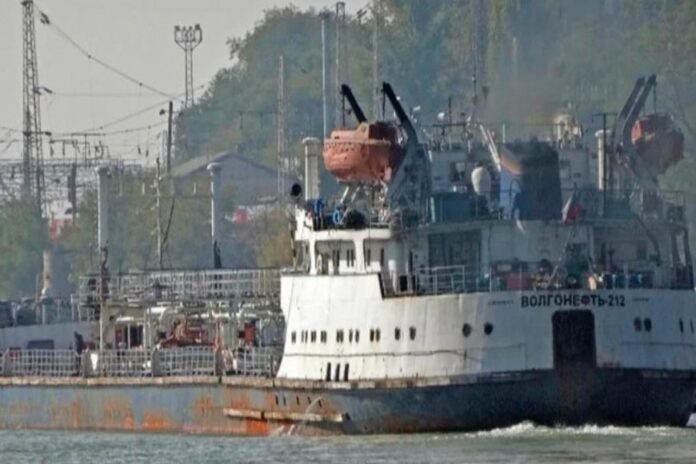
The Russian propaganda outlet Interfax reported Volgoneft 212’s situation on Dec. 15, citing emergency services.

“In the morning, we received information that the fuel oil tanker Volgoneft 212, registered in the port of St. Petersburg, is in distress eight kilometers from the Kerch Strait,” a spokesperson said.

Footage released by Russia’s Southern Transport Prosecutor’s Office showed the bow of one tanker completely broken off, with streaks of oil visible in the water.

Both tankers are believed to have drifted before running aground offshore. At least one crew member was reportedly killed.

The incident took place in the Kerch Strait, which separates Russia from Crimea – the Ukrainian peninsula illegally annexed by Moscow in 2014.

A rescue operation involving tugboats, helicopters and more than 50 personnel saw 13 crew members rescued from one tanker, before being suspended due to bad weather.

The 14 remaining crew members aboard the second tanker are said to have “everything necessary for immediate life support” on board with them, but look set to be stranded until conditions improve.

Michelle Bockmann, an analyst at shipping industry journal Lloyd’s List, told the BBC the two vessels are owned by the company Volgatanker and were relatively small.

They had been carrying around 4,300 dead weight tonnes of oil each, according to Russian officials quoted by Tass news agency.

A tanker used for trading Russian crude oil internationally generally has a much larger carrying capacity of around 120,000 dead weight tonnes, Bockmann said, meaning it is likely these tankers were used for transporting oil through Russia’s rivers or in coastal waters.

The Kerch Strait is a key route for exports of Russian grain and it is also used for exports of crude oil, fuel oil and liquefied natural gas.

In 2007, another oil tanker – Volgoneft-139 – split in half during a storm while anchored off the Kerch Strait, spilling more than 1,000 tonnes of oil.

Russian oil imports have been heavily sanctioned by allies of Ukraine since the Kremlin ordered the full-scale invasion of the country in February 2022.

In recent years, Russia has been accused of using a so-called ghost fleet of tankers, which are often poorly maintained and lack proper insurance, to move oil and circumvent sanctions – though Bockmann said it did not appear the tankers involved in Sunday’s incident were part of that fleet.

Forth Ports announces £50 million investment in Leith

0

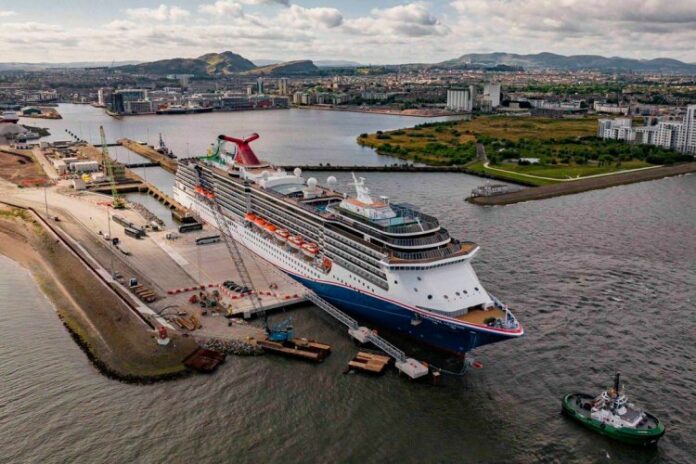
This latest investment in infrastructure at the Port of Leith will enhance the port’s marine access, infrastructure and vessel assets and includes plant and equipment that will be used to deliver Inch Cape. It will also create up to 50 new and upskilled green energy jobs to support the project.

Forth Ports’ agreement with Inch Cape, to be sited off the Angus coast, will utilise the port operator’s bespoke facilities and expertise at newly created renewable energy hubs at both the Port of Leith and Port of Dundee.

Visiting the Port of Leith, Deputy First Minister, Kate Forbes, said:

 “Investment in key sectors such as Scotland’s ports can reap rewards. This is why the Scottish Budget commits £150 million to the offshore wind infrastructure and supply – to attract private investment such as this announcement from Forth Ports.

“Supported by Forth Green Freeport incentives, the Leith Renewables Hub will bring well-paid green jobs and ensure Scotland is best placed to develop a world leading renewables sector while progressing to net zero.

“The Scottish Government’s Green Industrial Strategy identifies how we can work better, smarter and quicker to create an investor-friendly environment and seize the many opportunities for green growth which lie ahead. This is a great example of how this has been achieved.”

Forth Projects – Forth Ports’ in-house logistics division – will handle Inch Cape’s monopile and jacket foundations at the Port of Leith. The specialist pre-assembly and marshalling of the wind farm’s 72 turbines – comprising 72 nacelles, 216 blades and 72 towers – will be undertaken by Vestas in the Port of Dundee (Dundee was previously announced as a hub for Inch Cape in 2022).

Leith and Dundee were chosen after a competitive selection process due to their proximity to the project site off the Angus coast, coupled with the first-class storage and assembly capacity and purpose-built offshore renewables quayside facilities. 

The £50 million investment is the second phase of delivery of the vision behind the 175-acre Leith Renewables Hub which also forms part of one of the strategically located tax sites within the Forth Green Freeport.

Once completed in 2027, Inch Cape – one of Scotland’s largest offshore wind farms – will generate enough green energy to power half of Scotland’s homes. It will feature state-of-the-art Vestas 15 megawatt (MW) turbines, the tallest ever deployed in Scottish waters at a height of 274m (20m taller than Arthur’s Seat in Edinburgh) and a new onshore substation now under construction on the brownfield site of the former Cockenzie Power Station, East Lothian.

New Major Vessels project reaches milestone with BC Ferries Commissioner application

0

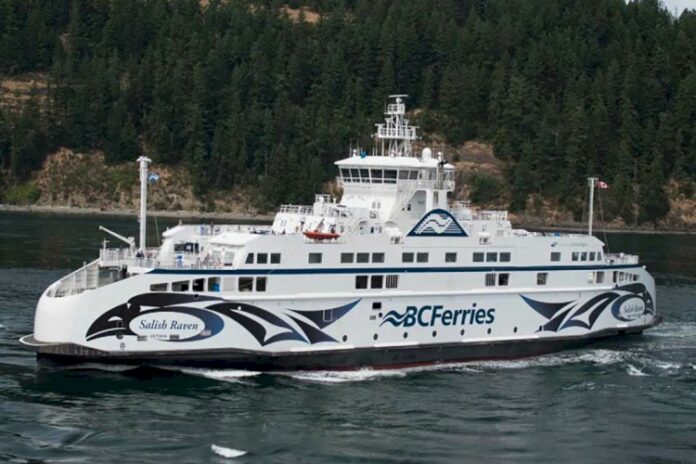
If approved, this project would be the largest capital investment in the organization’s history, increasing ferry capacity, resiliency, and reliability for BC’s coastal communities and economies.

In 2024, BC Ferries handled its highest peak season traffic ever, and with BC’s population continuing to rise, travel demands are mounting year-round. The necessary retirement of aging vessels means maintaining the status quo is no longer an option. The NMV project proposes to replace four aging vessels and add one new vessel to the fleet, adding critical space on the busiest routes between Metro Vancouver and Vancouver Island. This will reduce wait times and boost overall capacity by up to 28% for passengers and 19% for vehicles. The first of these vessels is expected to enter service in 2029, with five operational by 2031.

To meet the public interest, these new ships will enhance BC Ferries’ capacity and resiliency, provide reliable marine transportation for coastal economies, support residents and tourism industries, and reduce climate impacts. With global shipbuilding costs already rising over 40% in just the past four years, delaying the procurement of these vessels would lead to significantly higher costs in the future, including for customers. The project costs were already partially included in BC Ferries’ last fare application and work will continue with the Province to balance affordability with the reliable service that customers expect.

“The New Major Vessels Project will enable BC Ferries to better serve the region and province by providing greater capacity on major routes with new larger vessels and operational flexibility to address current and future demands from businesses, travellers, and residents,” shares Bridgitte Anderson, President and CEO, Greater Vancouver Board of Trade.

Without these new vessels, BC Ferries will continue to face escalating operational pressures, more frequent mechanical issues, and worsening capacity constraints. The busiest routes would exceed capacity on every sailing during the peak season within the next decade, leading to longer wait times, customers being turned away and more frequent mechanical disruptions. This would affect not only BC residents who rely on the ferry system for their daily commutes and essential travel, but also the livelihoods of those who rely on BC’s robust visitor economy. In fact, the additional capacity of the NMVs is projected to enable nearly 130,000 incremental tourists to travel through the region. 

“Destination BC is actively working to inspire more travelers to discover more destinations within BC – travelers who expect the provincial transportation infrastructure to support them through these journeys,” says Richard Porges, CEO, Destination British Columbia. “For our strategy to succeed, it is critical that BC Ferries have the capacity to meet rising demand and deliver reliable, enjoyable service for all.”

Scottish Power Renewables picks Great Yarmouth port for EA2

0

The agreement will see the various components for the windfarm’s 64 latest-generation offshore wind turbines pre-assembled on shore – including the 192 blades being manufactured at the Siemens Gamesa factory in Hull – before installation offshore. 

Siemens Gamesa turbine components and sections will arrive at the Norfolk site for assembly, before installation in the southern North Sea in 2028.

“It’s fantastic to be working with Peel Ports Great Yarmouth to bring that to life for people and businesses across East Anglia, while showcasing the world-class facilities we have here on our doorstep to support a global industry”, said ScottishPower Renewabsles Managing Director for Offshore Ross Ovens.

Richard Goffin, Port Director, Peel Ports Group said: “We’re very proud that ScottishPower Renewables has once again chosen Great Yarmouth to support this huge project, having previously worked together on the East Anglia One development.

“Great Yarmouth has proved itself to be an outstanding base for the growing offshore renewables market, not just in the southern North Sea but extending further afield, including the North Sea”.

Offshore construction for East Anglia Two is expected to get underway in 2027, with the windfarm becoming operational in 2028.

Intertek expands testing support for ASC Shipbuilding’s Hunter Class Frigate Program in Australia

0

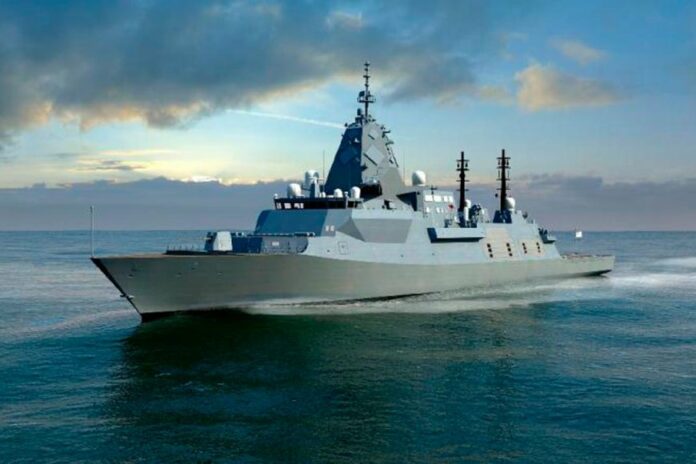
Intertek has been contracted by ASC Shipbuilding, a subsidiary of BAE Systems Australia, to provide non-destructive testing, destructive testing and materials testing solutions for the construction of ship units and blocks for ASC’s Hunter Class Frigate (HCF) Program. 

Following the successful completion of services provided during the prototype scope of the program, Intertek is contracted to provide technical services that support construction of the Hunter class frigates. Non-destructive testing such as ultrasonic testing and radiographic testing, destructive testing such as tensile testing and chemical analysis, welder qualifications, and associated quality inspections will take place at the Osborne Naval Shipyard, South Australia, and Intertek Adelaide Inspection Services’ (AIS) laboratory in Adelaide.

Non-destructive and similar testing techniques are vital for ensuring the safe and efficient operation of equipment and assets. Intertek experts utilise data captured during these tests to detect defects and irregularities. Early detection helps owners and operators make decisions that help avoid damage, operating inefficiencies and in-service failure.

The HCF Program is the largest ever surface ship project in Australia’s defence history. Intertek’s AIS team’s long-standing history with ASC Shipbuilding will continue for years to come as the first three Hunter class frigates are built and delivered to the Royal Australian Navy. As this first batch commences sea trials, construction of three more frigates will begin at the shipyards. The state-of-the-art frigates will not only be used by the Royal Australian Navy for defence, but also for humanitarian and disaster relief efforts.  

Simon Mortimore, General Manager, Intertek AIS, said:

“Through AIS, Intertek has had a long association with shipbuilding in South Australia, and we are very pleased to be able to extend our great working partnership with BAE Systems Australia on the batch one production of the Hunter Class Frigate Program. Intertek’s uncompromising commitment to quality, safety and sustainability, backed by the global expertise of our people, pioneering technological innovations and our science‐based customer excellence advantage, allows us to continue delivering the technical services that BAE Systems has come to expect. The award of this contract cements Intertek’s AIS team as a leading provider of Total Quality Assurance solutions and inspection services in South Australia, and we are proud to be part of such an important program.”

Acquisition Director for BAE Systems Australia – Maritime, Andy Coxall, welcomed the contract award with Intertek AIS.

“The Hunter program is embedding a sovereign continuous naval shipbuilding capability in Australia, and our work with Australian suppliers is key to this,” Andy said. “The exceptional quality we have achieved, first on prototype blocks and now on units which make up part of the first Hunter class frigate, is a testament to the highly skilled people we have working at the Osborne Naval Shipyard.”

Hanwha Ocean Standard FPSO design receives AiP from Bureau Veritas

0

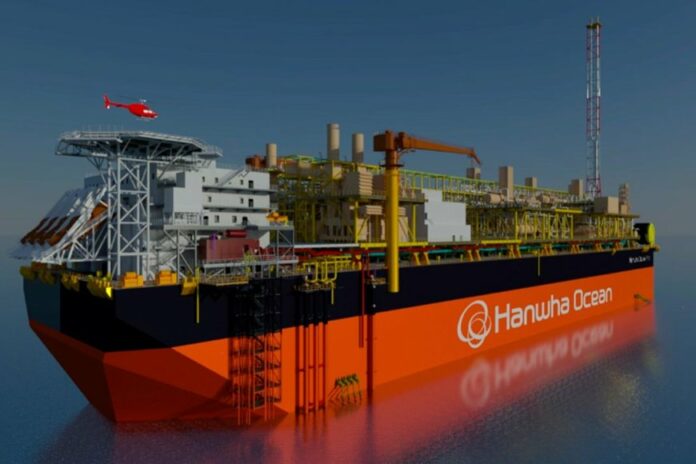
Standard FPSO design of Hanwha Ocean measures 340 meters in length and 62 meters in width, with a crude oil storage capacity of 2.38 million barrels and a production capacity of 190,000 barrels per day. 

The FPSO is designed to accommodate topsides of up to 55,000 tons and 17,600 square meters, with a hull that can operate for up to 20 years without dry docking.

The FPSO will incorporate technologies such as zero-flaring, GHG monitoring, and an energy management system to comply with environmental regulations. It will also feature advanced digital solutions, including cybersecurity, digital twin, and predictive maintenance due to their complexity, use of cutting-edge tools, and their transformative potential across industries.

Hanwha Ocean’s transition to an Engineering, Procurement, Construction, Installation, and Operation (EPCIO) solution provider offers products such as FPSOs, floating liquified natural gas (FLNG)s, Offshore Renewables, and other Floating Production Units.

Alex Gregg-Smith, Senior Vice President, Asia Pacific (APA), Bureau Veritas Marine & Offshore, said: 

“Bureau Veritas is pleased to have provided Approval in Principle (AiP) for standard FPSO design of Hanwha Ocean. The features of this FPSO design are impressive, showcasing Hanwha Ocean’s engineering expertise. Bureau Veritas looks forward to continuing our collaboration with Hanwha Ocean, supporting technological advancements and contributing to the development of sustainable offshore solutions.”

Engineering Manager of Standard FPSO Project and Company officials of Hanwha Ocean Co., Ltd, said: 

“The demand for offshore plants in West Africa, where the FPSO is being designed for deployment, is expected to grow. With this AiP award from Bureau Veritas, the development of standardized FPSOs that can be deployed in other regions, such as South America, is also expected to gain momentum. Additionally, we are fully committed to leveraging the success of this Pre-FEED design phase to secure an EPCIO contract.”

Research project develops innovative models that cut offshore wind energy costs by up to 9%

0

Offshore wind turbines face higher wind speeds than onshore turbines and face strong ocean currents, requiring more robust designs and significantly higher capital costs. 

While they generate more energy due to stronger winds, these increased costs result in a higher levelized cost of energy (LCOE). 

This year, wind energy reached a cumulative installation capacity of 1TW. The capacity is expected to grow up to 10TW by 2050. On this scale, reducing costs by 9% is monumental.

“HIPERWIND set out to achieve a significant reduction in the LCOE by understanding how to deal with uncertainties in the wind turbine design modelling chain,” says Project Coordinator Nikolay Dimitrov from DTU Wind. “We examined how to quantify and identify various uncertainties, ranging from environmental conditions to loads and wind turbine reliability. With this information, we focused on reducing material use by better understanding model performance and reducing uncertainty. This approach helped minimize material use and lower energy costs. This methodology has demonstrated the feasibility of designing more efficient systems.”

At the core of HIPERWIND is managing uncertainties. Uncertainties translate into higher safety margins, adding materials to components, shorter maintenance cycles, and increases in the cost of financing wind farms. Uncertainty management is consequently a driver in reducing costs and risk – thereby improving the production reliability, and ultimately, the value of offshore wind.

“HIPERWIND could be a game changer,” Clément Jacquet from EPRI Europe says. “We delivered a significant reduction of the LCOE of up to 9% – and even 10% is achievable if we consider the most optimistic case we have. In the least optimistic case, the reduction will still be 5%.” EPRI assessed the impact of HIPERWIND technologies on LCOE, requiring both a holistic approach and detailed analysis of offshore wind farm costs. This work resulted in a new, adaptable framework that EPRI will use in future projects to improve the economic efficiency of both onshore and offshore wind farms.

The project used a real-world case study involving the Teesside offshore wind farm off the coast of England, owned by project partner EDF. Data and models specific to the wind farm were used to identify and quantify uncertainties in turbine tower and foundation design. The team then assessed whether the improved knowledge could reduce costs if the wind farm were rebuilt.

HIPERWIND thereby demonstrated that using less material in turbine construction can reduce upfront costs (capital expenditure), which make up about 30% of the overall cost of energy. Additional cost reductions were achieved by scheduling maintenance during low energy price periods, boosting both cost savings and operational efficiency.

Leveraging the measured data and advanced physics-based and data-driven models, this uncertainty management and reduction philosophy was applied throughout the offshore wind turbine design modelling chain – and beyond.

IFP Energies Nouvelles (IFPEN) is also already applying HIPERWIND results, improving chain modelling by accurately quantifying wind turbine fatigue loads.

“The project has produced some significant reliability design procedures that are market-ready and thereby go beyond the research domain,” explains Martin Guiton from IFPEN. “Taking uncertainties into account, we obtain a reduction of 21% of the mass of the wind turbine structure, which is a lot.”

Likewise, ETH Zurich is now using these methodologies not just to solve wind-related problems but also earthquake-related problems, such as the seismic fragility of buildings in complex environments and the design of high-rise buildings under random wind excitation.

“The project required us to develop a new methodology from scratch to handle uncertainties in high-dimensional inputs and responses,” says Senior Scientist Stefano Marelli, Chair of Risk, Safety and Uncertainty Quantification at ETH Zürich. “Our work on surrogate modelling techniques, which accelerated algorithm development and enabled cross-partner collaboration, proved to be successful.” 

New CSS for the Royal Netherlands Navy arrives at Damen Naval shipyard

0

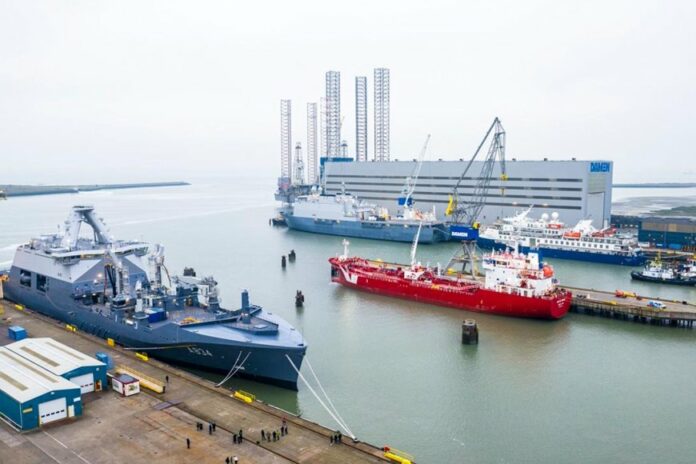
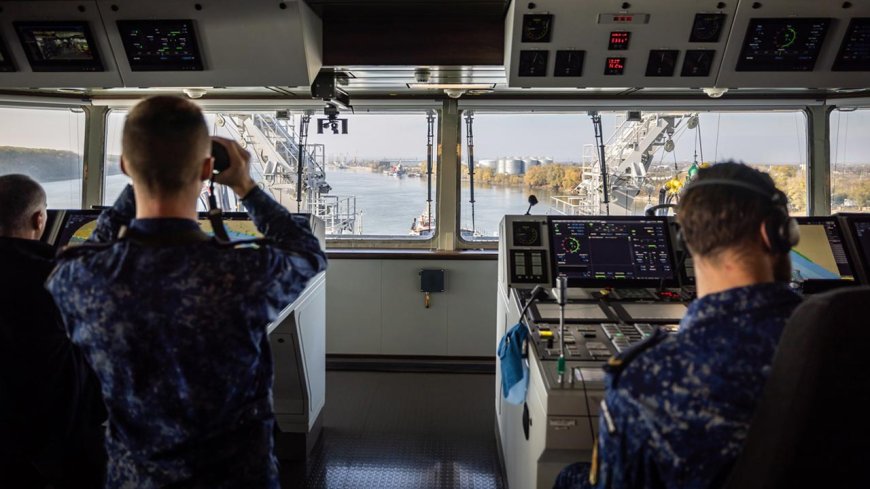
The new supply ship for the Royal Netherlands Navy departed from the Damen Naval shipyard in Galați, Romania on 16 November for her Sea Acceptance Tests (SATs) and is now in Vlissingen-Oost for the final outfitting phase of the project. In the coming months, the finishing work will be carried out before the CSS is handed over to the Netherlands Ministry of Defence’s Materiel & IT Command (COMMIT) in spring 2025.

Damen Naval Managing Director Roland Briene said:

“Designing and then working with numerous suppliers to construct a large and complex naval ship like the CSS is a process of years and it is great to now be able to admire the result of all that hard work. This unique ship is the first of a whole series of vessels that we as national naval shipbuilder and strategic partner of the Netherlands Ministry of Defence will deliver to the Royal Netherlands Navy in the coming years. Working together with our national suppliers, we are accelerating and intensifying the coming programs for the renewal of our naval fleet. In Vlissingen, we are already rolling out the Maritime Manufacturing Industry Sector Agenda, which is receiving growing political support.  We are bringing the core of naval construction back to Vlissingen and Zeeland, giving a major boost to the region.”

Damen Naval CSS Project Director Arjan Risseeuw was on board for the entirety of the sea trials from Galați to Vlissingen.

“We carried out a large number of SATs along the way and simulated various emergency scenarios on board to see how the ship reacts. We are very satisfied with how the sea trials went and the cooperation between the different parties on board: our engineers and commissioners, the crew and COMMIT. It is a great ship that will strengthen the support and supply of our own fleet and our NATO partners.”

COMMIT Project Manager CSS captain (RNLN) Joost Meesters expressed his confidence that the Royal Netherlands Navy will gain a “beautiful and robust ship”.

“We found no major problems during the sea trials and the propulsion in particular is performing well,” he said. “CSS Den Helder is the second tanker besides HNLMS Karel Doorman, and we really need it for the Royal Netherlands Navy’s permanent supply capacity. The idea was to add a robust tanker to the fleet, and I am confident that after finishing the remaining works we will have achieved that goal in the foreseeable future.”

The sea trials are an important part of a ship’s construction and pre-eminently meant to test the whole vessel, says CSS commander Stefjan Veenstra.

“It was imperative that we left Romania with a robust ship. Considering the area through which we sailed, we did not have the option of going back in case of problems. The ship had to be good enough to do the whole return trip and we succeeded in that.”

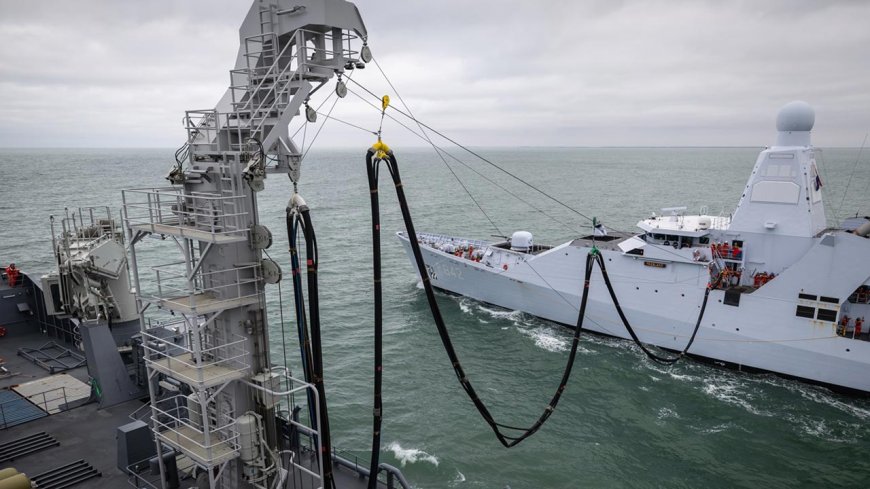
CSS Den Helder is the replacement for the supply ship HNLMS Amsterdam, which was decommissioned in 2014. The state-of-the-art supply ship can provide naval vessels with fuel, ammunition, water, food and spare parts. The CSS is deployable worldwide and can operate under high threat, protected by frigates. It can also be used to provide emergency assistance and transport goods. The ship will soon be equipped with a Role-2 medical facility and can carry a helicopter. The nearly 180-metre-long ship will have a 75-strong crew and can take another 75 people on board. 

Den Helder has about as much cargo capacity as big half-sister HNLMS Karel Doorman. On board, there is room for 7,600 m3 of diesel (F76) including self-use, 1,000 m3 of helicopter fuel (F44) including self-use, 226 m3 of drinking water, 290 m3 of urea, 434 tonnes of other goods including ammunition and 24 containers. In addition, the vessel has two 40-tonne cranes. Even in bad weather, the new tanker should be able to support a task force of six ships.

In December 2020, the first steel was cut to build the ship in Galați, Romania, followed by the keel laying in June 2021. The ship was built in several modules and a large part of the hull was launched on 11 April 2022. The hull was then towed to dry dock, where it was assembled with the other modules. In May 2023, the ship left the dock and arrived at the quay in Galați for further work and commissioning. Exactly 48 months after the first steel was cut, the ship is now at the quay in Vlissingen for final works. In 2025, the ship will be christened and handed over to COMMIT for the installation of the combat systems. Commissioning is scheduled for the second half of 2025, after which the CSS will be handed over to the Royal Netherlands Navy Command (CZSK) in 2026.