-4.7 C
New York
Home Blog Page 1148

Global shipping makes the connection on Cyber Security

0

The emerging risk associated with cyber threat requires not only better training for seafarers, but also spreading awareness of best cyber security practices, argued Peter Broadhurst, Senior VP of Safety and Security, Inmarsat Maritime, adding that there is still 'a long way to go' when it comes to effective cyber protection.

Whether in pursuit of personal data or money, cyber crime is now a big and highly automated business, ready to strike at the most vulnerable part of an organisation’s defences 24/7, anywhere in the world.

Speaking on a panel at the World Economic Forum earlier this year, A.P. Møller-Maersk Chairman Jim Hagemann Snabe revealed that responding to the NotPetya ransomware attack of June 2017 had required the reinstallation of 4,000 new servers, 45,000 new PCs, and 2,500 applications, all within ten days. During this period, the company reverted to manual systems.

In hitting a company equipped with experienced cyber security specialists, NotPetya showed that the cyber threat is as real for shipping as it is for any other connected business, especially where legacy systems proliferate.

If the warning should be sinking in, an Inmarsat Research Programme report, The Industrial IoT on land and at sea (2018) suggests that maritime minds are slow to change. The unique study drew on testimony from 750 survey respondents across a range of industries to establish preparedness and perceptions regarding the adoption of IoT-based solutions.

The survey found 87% of maritime respondents saying they believed that their cyber security arrangements could be improved. It also saw more of them identifying data storage methods (55%), poor network security (50%) and potential mishandling/misuse of data (44%) as likely to lead to breaches in cybersecurity than outright cyberattack (39%).

Given the self-diagnosis, it is perhaps surprising to find that only 25% of maritime respondents said they were working on new IoT-based security policies.

In fact, Inmarsat’s research exposed ambivalence as one of shipping’s leading feelings towards IoT-based solutions. With some owners engaging at the level of blockchain, others take their lead from their need to comply with regulation: this is an industry which simultaneously sustains just over 30% of shipping respondents as ‘IoT leaders’ and just under 30% as ‘IoT laggards’, the report says. For every owner signed up to the benefits of condition-based monitoring and predictive maintenance based on real-time connectivity, there appears to be another for whom maintenance is something that takes place at regular and predictable intervals, or whenever is most convenient.

Inconsistent views on cyber security also appear free to coexist with immature ones. Around 70% of respondents identify reducing  marine insurance premiums as a main driver for IoT uptake, where insurers have shown themselves as especially sensitive to cyber threats. At the same time, other studies have found attitudes such as “I’m not the target /we have security in place, don’t we?/I will be protected by AntiVirus” alive and well among seafarers.

For those prepared to engage in the IoT, ships today sustain crews in small numbers, representing both an opportunity and challenge for automation, and indeed for cyber security. On the one hand, low crew numbers align strongly with operational technology that is remotely updated, self-managing and supported by automated security and from third parties and OEMs, such as voyage planning, weather routing, navigation, fuel management, etc. On the other hand, the opportunities to ‘patch’ embedded operational technologies (OT) safely are not frequent, and patches usually require certification by control system manufacturers.

The broader point, though, is that cyber security is not just about software patching and systems configuration. Ship operators do not buy computer processors, disk storage and software and then build them into a system: they procure turnkey systems. Again, shipboard engineers may well be IT-literate, but no space has been made on the crew roster for cybersecurity specialists.

In these circumstances, the integrity of the systems on ships is best maintained by software which can identify, contain and resolve threats wherever they appear in the network. Such Unified Threat Management (UTM) detects all deviations from the ‘known good’ configuration as anomalies and potential threats to security and can update securely, even during operation. Some specialist functions such as a deep analysis of alerts or security forensics will need to be delivered remotely.

Inmarsat believes that a collaborative approach – that includes shipboard systems, but also the crew operating them and the processes involved – is vital to develop the maturity response demanded by multiple threats from cyber villains, whatever their origin. For this reason, we have been working with some of the best security-focused experts available to tailor products and services to meet shipping’s requirement.

As noted, however, software is only part of the answer: cyber security and vigilance for ‘the human element’ and a well thought-out recovery strategy to mitigate against multiple, automated assaults are also critical. Failures in processes and mistakes by people can present the security loophole that, if unchecked by the UTM, compromise the entire network.

Weaknesses at the first line of defence (to phishing, plugging infected USB in, downloading from untrusted source etc.) are common but, in the case of satellite-connected ships, it is also common to see updates turned off and no AV software in operation. Today, cyber security training is not compulsory for the world’s 1.6 million seafarers, while expertise in antivirus software is inevitably more likely to be based ashore.

As far as awareness is concerned, it is fair to say that there is likely to be more temptation to risk plugging in a memory stick that might be infected once a vessel is under way. Creating awareness for seafarers and staff is a continuous task because good cybersecurity practice is shipping’s first line of defence against ‘attack’.

Inmarsat recently participated in discussions with academics at the World Maritime University in Malmö over what future classroom-based and e-learning cyber security course content might include for Maritime Safety and Security Diploma students.

Inmarsat is not and does not aspire to be a training company, but it is an interested party. As such, we are fully aware that training is not just a tick box exercise and must be backed up with monitoring and reinforcement. We also know that using tools to identify breaches of policies such as USB usage help reinforce the message: constant reminders and real-life examples are often the quickest ways to stop bad practice.

But to address the cyber security risks of the future effectively, we need the involvement of ship designers, builders, regulators, verifiers, equipment manufacturers, service providers and, of course owners and operators. We were therefore one of the founding partners in a Joint Working Group run by the International Association of Classification Societies (IACS) whose members survey and certificate more than 90% of the world’s commercial vessels, ensuring that ships are fit-for-purpose and comply with safety and quality regulations.

The Working Group, which includes representatives from across the maritime sector, has developed a cyber security framework that is likely to form a basis for risk management that will contribute to future seafarer training requirements and the International Maritime Organization’s (IMO) International Safety Management (ISM) Code, a standard for the safe operation of ships. A further outcome is likely to be a recommendation relating to how a cyber security module can best be integrated into standard seafarer training courses, probably as part of the Standards of Training, Certification and Watchkeeping (STCW) Code.

There is no doubt that digitalisation and new smart technologies are transforming ship operation at an exponential pace but Inmarsat’s view is that, to accelerate this transformation, all stakeholders interested in optimising the efficiency of ships and crew welfare must exert themselves if the industry is to be carried over the line.

This means we must not only be training our seafarers more effectively, better managing our processes and protecting our systems, but nurturing awareness of best cyber security practice even on vessels that have little or no cyber security protection at all. Clearly, there is a long way to go.

Source:safety4sea

EU adopts proposal to revise system for shipping emissions monitoring

0

The European Commission adopted a proposal on February 4, to revise the EU system for monitoring, reporting and verification of CO2 emissions from maritime transport. This aims to take appropriate account of the global data collection system for fuel oil consumption of ships established by IMO.

The goal of the proposal is to facilitate the harmonious implementation of the EU MRV and the IMO DCS, while also preserving the objectives of the current EU legislation. Namely, to keep the collection of robust and verified CO2 emissions data at individual ship level to stimulate the uptake of energy efficiency solutions and inform future policy making decisions.

By streamlining some aspects of the two monitoring, reporting and verification (MRV) systems such as specific definitions or monitoring parameters, the proposal aims at reducing the administrative burden and associated costs for ships having to report under both systems.

The main objective of this proposal is to amend the EU MRV Regulation in order to take appropriate account of the new global IMO DCS, with a view to enable the streamlining and reducing administrative effort for companies and administrations as possible, while at the same time preserving the objectives of the EU MRV Regulation.

Speaking about this development, NGO Transport & Environment (T&E) said that publishing data about the emissions of all ships calling at EU ports, will give incentives to shipping companies to reduce their CO2 while also better informing regulations to reduce emissions.

It added that, the transparency of the EU system, 'unlike the IMO’s data collection system (DCS)', will prevent dirty ships to pass as efficient. The Commission's proposal also includes other key elements of the EU’s MRV, such as reporting data showing ships’ air pollution in ports.

Faig Abbasov, shipping officer at Transport & Environment, mentioned:"Shippers need to be able to identify the most efficient ships to cut their fuel costs and climate impact. The EU’s system provides this high quality data which will also influence the ambition and the effectiveness of climate measures in the shipping sector. Without accurate data collection, the reduction measures won’t be worth the paper they are written on."

Nevertheless, the NGO believes that the Commission caved in to pressure to remove the obligation on ships to collect and report cargo data, something that is important for analysing the real-world performance of ships. Currently, the IMO system excludes shipping companies from collecting data about their cargo.

Hamburg Süd presents Remote Container Management for reefers

0

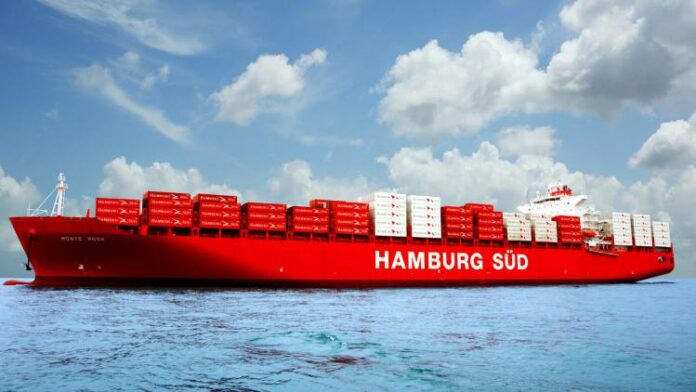
Hamburg Süd announced that it will present its future use of Remote Container Management (RCM). Using satellite and mobile radio technology, RCM makes it possible to monitor the refrigerated container and the condition of the cargo inside it.

Recently, all the reefer containers used by Hamburg Süd have been equipped with RCM technology. Using satellite and mobile radio technology, RCM enables the monitoring of the refrigerated container and the condition of the cargo inside it, including its location, temperature profile, relative humidity, and concentrations of oxygen and CO2. What is more, certain settings can be adjusted remotely.

Specifically, an online platform or an app provides an overview of the conditions of the cargo in the container at any time. Moreover, they automatically notify when individually defined parameters or limit values are reached.

Frank Smet, Chief Commercial Officer (CCO) of Hamburg Süd, said:"The added value lies in the fact that customers can use this data not only to monitor their supply chain better, but also to make it significantly more efficient and secure."

Every single one of Hamburg Süd's reefer containers is outfitted with RCM. Now, testing is being performed, and RCM is planned to become available to all customers as from the third quarter of 2019.

According to Mr. Smet, RCM can lead to cost savings, while because the demands that customers place on carriers are increasing, carriers must be able to respond to these demands efficiently.

Source:safety4sea

Total finds gas off Africa

0

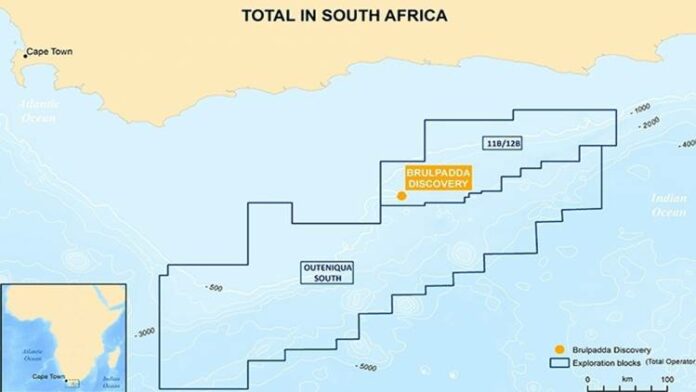
France’s Total has made a significant gas condensate discovery on the Brulpadda prospects, located on Block 11B/12B in the Outeniqua Basin, 175 kilometers off the southern coast of South Africa.

Mainly, the Brulpadda well encountered 57 meters of net gas condensate pay in Lower Cretaceous reservoirs.

After reaching the main goal, the well was deepened to a final depth of 3,633 meters and has also been successful in the Brulpadda-deep prospect.

Total drilled this exploration well with the latest generation drilling vessel and was able to leverage its experience in similar environments, such as the West of Shetland, UK.

In addition, Kevin McLachlan, Senior Vice President Exploration at Total addressed that after the successful drilling, the company will continue to test several follow-on prospects on the same block.

Concluding, Total along with its partners plan to acquire 3D seismic this year, followed by up to four exploration wells on this license.

The Block 11B/12B covers an area of 19,000 square kilometers, with water depths ranging from 200 to 1,800 meters, and is operated by Total with a 45% working interest, alongside Qatar Petroleum,25%, CNR international, 20% and Main Street, a South African consortium, 10%.

Source:safety4sea

TechnipFMC awarded Mero 1 contract by Petrobras

0

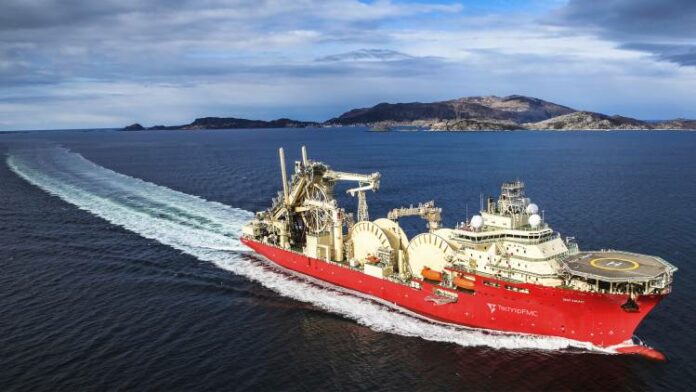
Offshore services firm TechnipFMC has been awarded a large engineering, procurement, construction and installation (EPCI) contract by Petrobras, on behalf of the Libra Consortium for the Mero 1 pre-salt field in the Santos Basin offshore Brazil.

The work scope includes engineering, procurement, construction of all rigid lines, as well as the installation and pre-commissioning of all the infield riser and flowline system for interconnecting 13 wells to the FPSO. It also includes the installation of rigid pipelines, flexible risers and flowlines, steel tube umbilicals and other required subsea equipment.

Arnaud Piéton, president subsea at TechnipFMC, commented: “We are extremely honored to have been selected to execute this EPCI project for the Mero 1 pre-salt field in Brazil. We are looking forward to collaborating with the Libra Consortium in the development of this important project. TechnipFMC is a long-term partner of Petrobras, committed to deepwater and to helping Brazil develop its natural resources.”

TechnipFMC says the contract is valued at somewhere between $500m and $1bn.

Source:splash247

Top 10 Shipowning Nations: China Sees Biggest Increase

0

1. Greece

The Greek fleet has increased its total value by over $5 billion in one year. This is the second biggest increase in value for any of the top 10 shipping nations. The total asset value of the Greek owned fleet has topped $100 billion, a significant milestone.

The increased fortune comes from growth in LNG ordering and a tanker value uptick. Greece has moved into pole position as owning the highest valued LNG fleet in the world, up from $13 billion at the start of 2018 to $18.4 billion. This puts Greek owners ahead of Japan, whose fleet comes in second at $15.2 billion.

Their biggest loss comes in from the mobile offshore drilling unit (MODU) sector, with George Economou’s drill ship sell off and lower asset values overall which have depressed the net value.

2. Japan

Japan remains in second place of the top owning countries. The rebound in bulker values was the largest boost to the end of year fleet valuation, followed by tankers and LNG carriers. Japan based companies saw the largest addition of value from LPG carriers, a segment in which many other nations saw an erosion of value.

3. China

The Chinese fleet has seen the largest increase in value for any of the top 10 highest valued fleets. An additional $6.3 billion has been added, bringing up the total fleet value to just over $90 billion. At the same time, they suffered the largest drop in total container fleet value.

China has been responsible for much of the incremental demand in LNG consumption, so it's not surprising to see companies based here see a significant increase in value in this market. Asset values surged in line with spot and term market returns.   

COSL leads the way on the offshore front, owning the fourth highest number of vessels in the world and sixth most valuable. The Chinese government owns the next highest at 52 with a much lower value of $332.6 million. Tianjin Offshore owns the second most valuable fleet of $1.085 billion.

Continuing the trend from last year, China has increased its standing from third to second for most vessels on order, however in terms of offshore, the country is in fifth position. This is most likely due to its oversupply hangover after the crash in 2015/16.

4. Singapore

Singaporean owners have jumped up a spot into fourth place, increasing their fleet value by $3.1 billion. They now sit comfortably above the U.S. and Norway yet are a long way from a podium position. The majority of their increase comes from their container growth, most notably attracting the Japanese container liner merger ONE to locate to Singapore.

Ownership of offshore vessels continues to be spread more evenly across the key regions with a high presence in the Mexican Gulf and West Africa, and a small presence in the North Sea. The highest concentration of these vessels remains in South East Asia and the Middle East.

5. Norway

Norway maintains pole position as the number one home for offshore assets. Over $20 billion in assets puts it above U.S.-based owners, who clock in at almost $17 billion. The country maintains a sizeable presence in the tanker markets as well.

Despite Solstad’s troubles, its offshore prestige is still reflected by its ownership of the world’s second most valuable fleet of AHTS and third most valuable fleet of PSVs, despite having the sixth highest in number.

6. United States 

U.S. exposure to the offshore markets, which have suffered further asset value declines, has knocked the nation down to sixth place in terms of corporate ownership.

One major contributing factor to their declining asset value is that the country has the highest number of offshore vessels aged 15 years and older. This percentage of old, potential scrap candidates will have a negative effect on overall asset value.

7. Germany

Germany’s fleet continues to contract year on year, with the majority of this year’s woes coming from their container vessel types. Down a further $1.7 billion, their container fleet continues to shrink from high seller and demolition activity. China now takes the lead as the highest valued container fleet owner, cinching the crown with $17.3 billion versus Germany’s $16.4 billion fleet.

8. South Korea

It has been a very positive year for South Korean owners who have increased their fleet value by over $5 billion in the three largest markets of bulkers, tankers and container ships. Container ship assets comprised over $3 billion of the value added. One interesting trend is the decline in LNG asset values held by Korean owners, which is due in part to the removal of some older, steam powered units from service.

9. United Kingdom

The U.K. slips down a notch from its 2018 slot to ninth place. The ownership by segment is diverse, and no one flagship market decline is responsible for the drop. There could be some risk aversion ahead of the country’s planned exit from the E.U. that is driving investment to other locales.

10. Denmark

The Danish fleet is heavily dependent on the container markets, but this segment saw little volatility, adding modestly to the net value under the Danish masthead. However, weakness in clean tanker asset values dragged down the total value of the fleet. The country clings to its top 10 ranking though.

Elengy LNG Terminal Hit Records in 2018

0

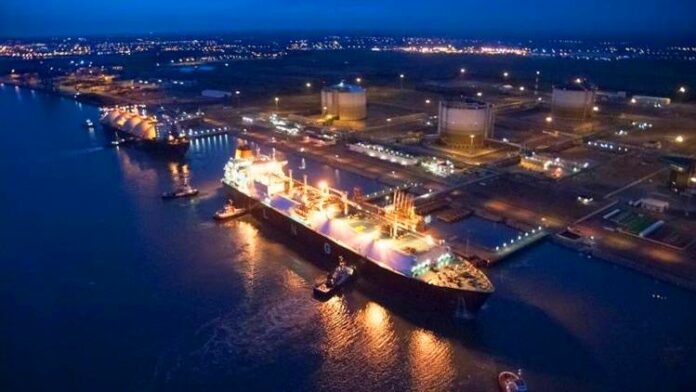
Elengy, a unit of the French energy company and LNG player Engie, reported record activities at its liquefied natural gas (LNG) terminals during 2018.

The French LNG operator said in a press release thatits Montoir-de-Bretagne terminal also reached a number of milestones during the year.  

Elengy and its subsidiary Fosmax LNG berthed 215 vessels  at its facilities, with 106 TWh of natural gas delivered to the transmission network, a 13 percent jump on 2017 figures, it said.

It reported 21 LNG transshipment operations (berth to berth) and 19 reloading of standard LNG carriers (from shore to vessel). It loaded 843 trucks,  registering an increase of 50 % on 2017.

The 2018 figures for the Montoir-de-Bretagne LNG terminal, a key LNG hub in Northwest Europe, represented: 106 vessels berthed: 52 unloading operations, 11 ship reloading operations, 21 LNG transshipments,  40.6 TWh of natural gas delivered to the network and  2 370 trucks loaded with LNG.

The terminal broke several records by completing three LNG transshipments in seven days in August, then received fifteen LNG carriers in September with six LNG transshipments, two unloading operations and one ship reloading.

As an LNG terminal operator since 1965, Elengy celebrated the 9600th unloading of LNG cargo on its sites. This represents around 10 % of all LNG delivered around the world since this industry was established.

Elengy set a new record in December 2018 with the arrival of the 220th different LNG tanker to berth at one of its terminals. This represents over a third of all LNG tankers ever built, from the first ship with a capacity of 25 500 m3 (the Jules Verne) up to the largest supertankers in the world (Q-Max, 267 000 m3).

Source:marinelink

Seadrill and Sonangol form new drillship joint venture

0

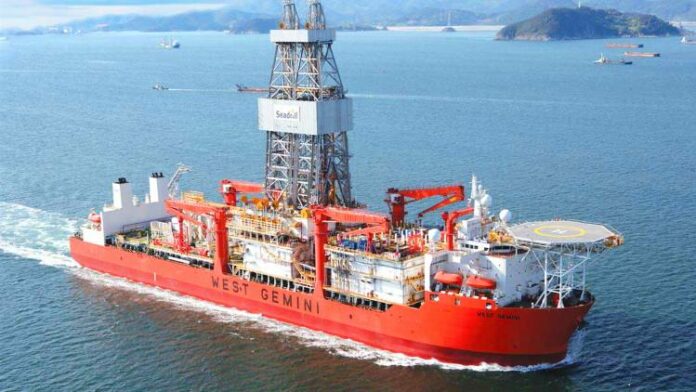
Seadrill Limited and Empresa de Servicos e Sondagens de Angola, an affiliate of Sonangol, have formed a 50:50 joint venture named Sonadrill to operate four drillships in Angolan waters.

Each of the joint venture parties will bareboat two drillships into Sonadrill.

The Seadrill drillships will be from its existing owned or managed fleet, while the Sonangol drillships, Libongos and Quenguela, are currently under construction at DSME yard in Korea and expected to be delivered in the first half of 2019. Both the Korean-built drillships are 7th generation high-spec ultra-deepwater drillships.

Seadrill will manage the delivery and mobilisation to Angolan waters under a separate Commissioning and Mobilization Agreement with Sonangol. Seadrill will also manage and operate the four drillships on behalf of Sonadrill which will have an initial term of five years.

Anton Dibowitz, ceo of Seadrill, commented: "Sonadrill will give us the opportunity to gain incremental access to a market that is expected to show significant growth over the next years, further strengthen our relationship with key customers and provides an attractive opportunity to continue expanding our fleet of premium ultra-deepwater rigs."

Source:seatrade-maritime

New platform in prospect at North Sea Ula complex

0

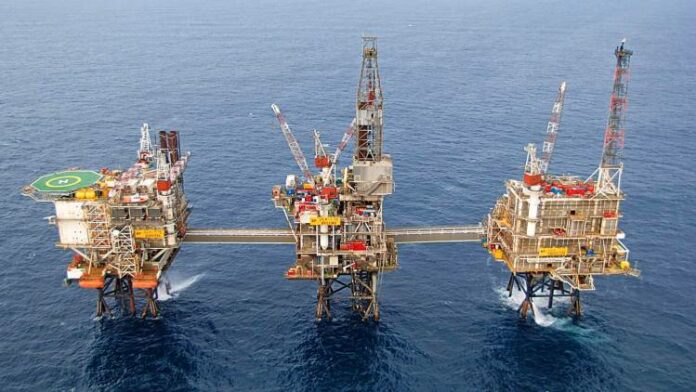
 Aker BP is considering adding a new platform at the Ula field in the southern Norwegian North Sea, the company revealed in its latest results statement.

Although the company’s net production from the Ula area was only 8.4 MMboe/d during 4Q 2018, it sees significant resource potential via increased oil recovery from the Ula and Tambar fields, tiebacks of other discoveries including King Lear (recently acquired from Equinor), and from exploration.

Aker BP’s initial priority will be to improve the technical condition and extend the life of the existing Ula facilities to ensure stable performance.

Development of the Spirit Energy-operated Oda field, through a tieback to the Ula platform, is in its final stages, with drilling operations finishing late last year.

Production should get under way during the first half of the year.

Elsewhere in the southern North Sea, Aker BP achieved 4Q production from the Valhall area of 39.6 MMboe/d net, 10% up on the previous quarter, thanks to output from new wells and production efficiency.

Drilling from the IP platform continued with the G22 well coming onstream followed by drilling and completion of the G11 well featuring the new Fishbones technology in one section.

This involves extending titanium tubes from the main wellbore to create long channels, leading to improved reservoir productivity.

Test production from G11 should start this month, and if the outcome is successful, use of the technology could be extended to reduce the time to production for other new wells.

The first phase of a campaign to permanently plug old wells at Valhall concluded in early October, with the jackup Maersk Invincibletransferring to the Valhall Flank North development to drill a new water injection well.

The rig has now redeployed to Valhall Flank South to drill two infill wells.

As for the Valhall Flank West development, engineering has finished for the topsides and jacket, and subsea engineering and planning are ahead of schedule for this summer’s offshore campaign.

Source:offshore-mag

ExxonMobil makes two more discoveries offshore Guyana

0

 ExxonMobil and its partners have brought the total number of discoveries on the Stabroek block offshore Guyana to 12 with the Tilapia-1 and Haimara-1 wells.

Tilapia-1 is the fourth discovery in the Turbot area that includes the Turbot, Longtail, and Pluma discoveries. Tilapia-1 encountered about 305 ft (93 m) of high-quality oil-bearing sandstone reservoir and was drilled to a depth of 18,786 ft (5,726 m) in 5,850 ft (1,783 m) of water. The well is about 3.4 mi (5.5 km) west of the Longtail-1 well.

The drillship Noble Tom Madden began drilling the well on Jan. 7 and will next drill the Yellowtail-1 well, approximately 6 mi (10 km) west of Tilapia-1 in the Turbot area. Baseline 4D seismic data acquisition is under way.

“We see a lot of development potential in the Turbot area and continue to prioritize exploration of high-potential prospects here,” said Steve Greenlee, president of ExxonMobil Exploration Co. “We expect this area to progress to a major development hub providing substantial value to Guyana, our partners, and ExxonMobil.”

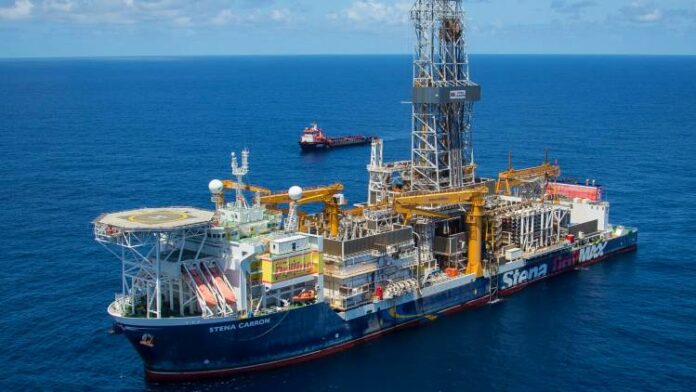
The other discovery was at the Haimara-1 well, which encountered about 207 ft (63 m) of high-quality, gas-condensate bearing sandstone reservoir. The well was drilled to a depth of 18,289 ft (5,575 m) in 4,590 ft (1,399 m) of water. It is about 19 mi (31 km) east of the Pluma-1 discovery and is a potential new area for development. The drillship Stena Carron spudded the well on Jan. 3 and will next return to the Longtail discovery to complete a well test.

According to ExxonMobil, there is potential for at least five FPSOs on the Stabroek block producing more than 750,000 b/d of oil by 2025. The Liza Phase 1 development is progressing on schedule and is expected to begin producing up to 120,000 b/d of oil in early 2020, using the FPSO Liza Destiny.

Pending government and regulatory approvals, the company said that it expects to sanction Liza Phase 2 in 1Q 2019. This phase will use a second FPSO designed to produce up to 220,000 b/d. Liza Phase 2 is expected to startup by mid-2022.

Sanctioning of a third development, Payara, is also expected in 2019, and startup is expected as early as 2023.

The Stabroek block is 6.6 million acres (26,800 sq km). ExxonMobil affiliate Esso Exploration and Production Guyana Ltd. is the operator and holds 45% interest, Hess Guyana Exploration Ltd. holds 30% interest and CNOOC Petroleum Guyana Ltd., a wholly-owned subsidiary of CNOOC Ltd., holds 25% interest.

Source:offshore-mag